
Explainer
About Chain of Responsibility
Understand Chain of Responsibility under the HVNL: duty holders, executive obligations, and practical compliance systems for Australian transport businesses.
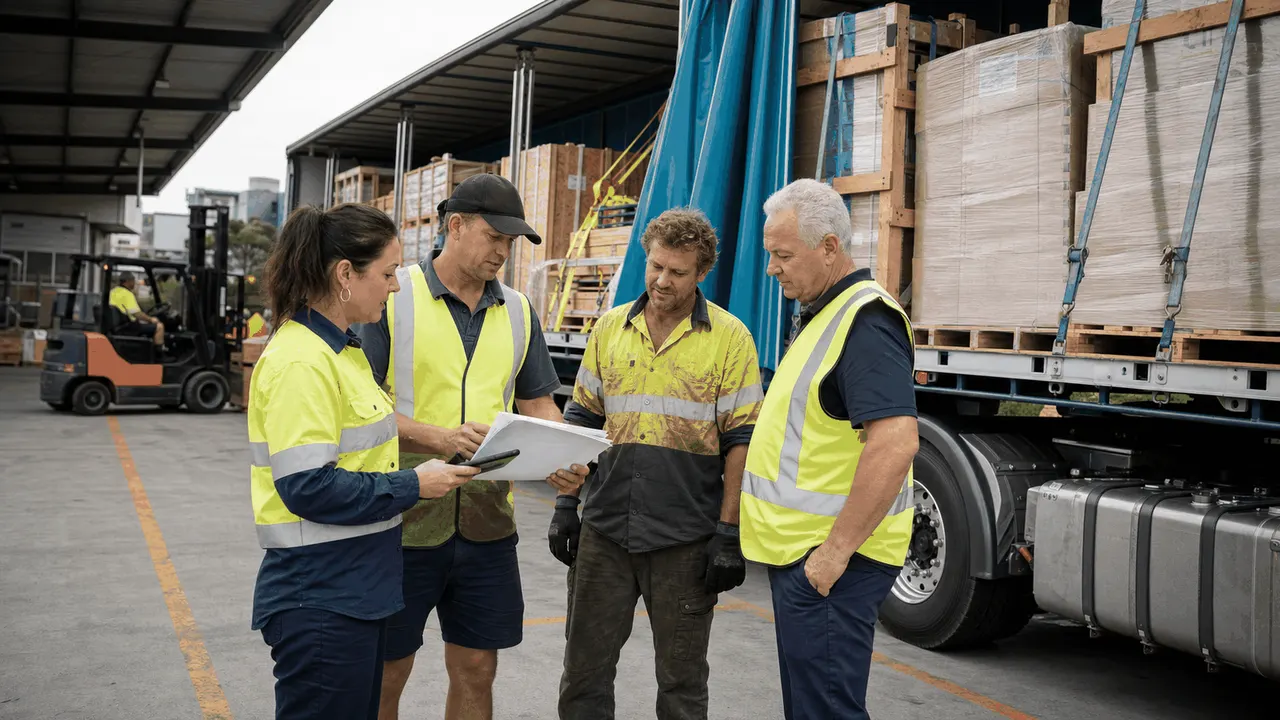
Loading controls need evidence, not assumptions.
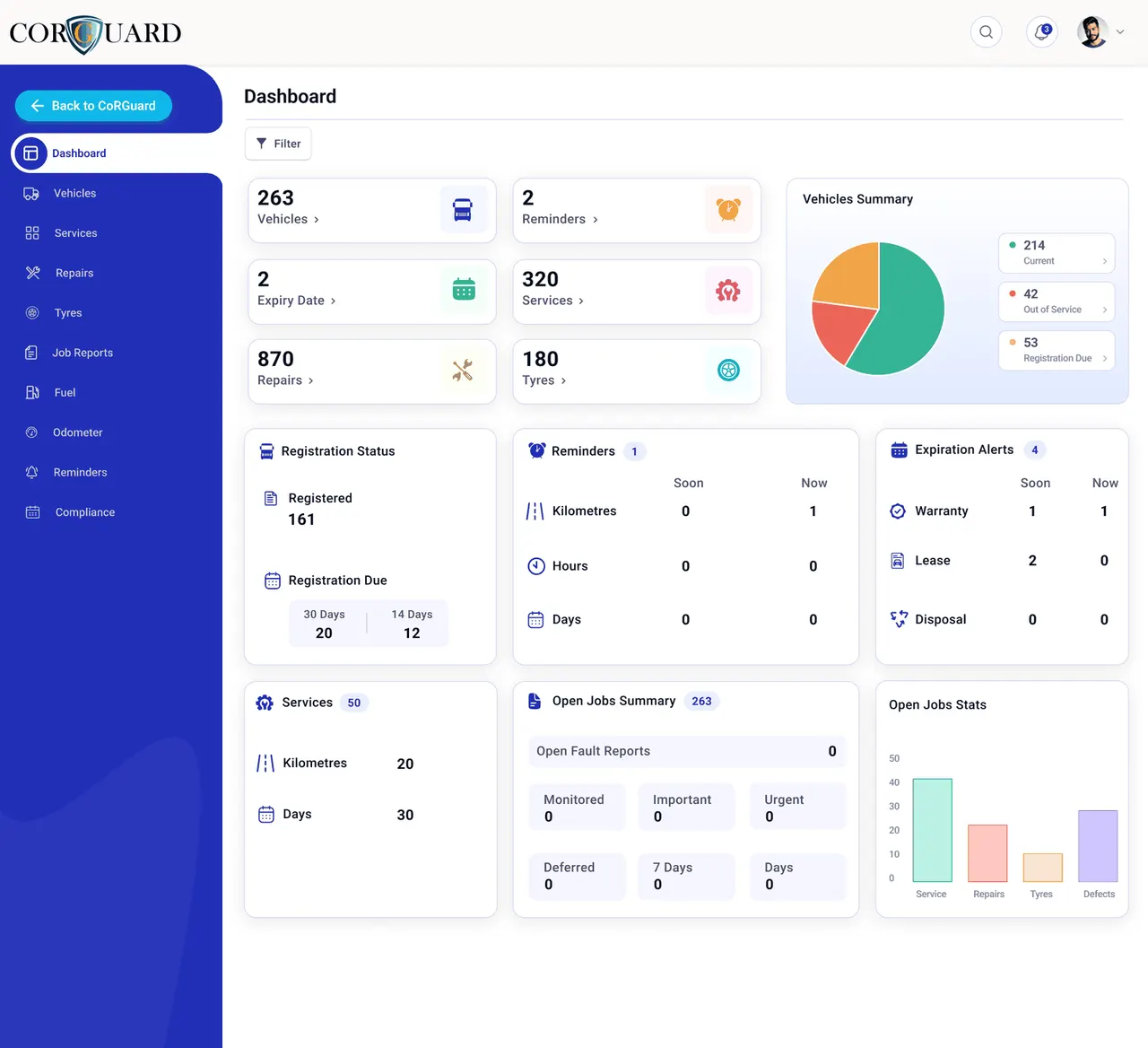
Daily fleet activity has to connect back to duties, controls, and review.

Due diligence means knowing whether the safety system is actually working.

Proof that freight promises do not create unsafe transport pressure.
Consignors
Freight terms, delivery windows, and KPIs must not push drivers into speed, fatigue, or mass breaches.
Consignees
Receiving rules, site access, and unloading delays are CoR controls that need to be set and evidenced.
Loaders
Mass, dimension, and load restraint decisions need documented checks, not assumptions.
Managers
Executives and managers need due-diligence evidence that the Safety Management System is actually working.
What is Chain of Responsibility?
A practical explainer for Australian transport and supply-chain businesses
Chain of Responsibility (CoR) is a legal framework under Australia's Heavy Vehicle National Law (HVNL) that extends road transport safety duties beyond drivers and operators to every party who influences a heavy vehicle transport task. Under the HVNL, each party must take all reasonable steps to ensure the transport task is performed safely.
Under the HVNL, responsibility is shared under the principle in s 26A, and the primary duty in s 26C applies to each party proportionate to their influence over the transport activity. If your business decisions affect how a heavy vehicle is operated — scheduling, loading, consigning, or managing — you hold a duty alongside the driver. The framework covers speed, fatigue, mass, dimension, load restraint, and vehicle standards.
The six CoR parties defined under the HVNL are consignors, consignees, packing entities, loading entities, drivers, and operators. Regulators can investigate any party whose conduct contributed to a breach. MAEZ helps businesses identify who holds a duty and where evidence of reasonable steps should be maintained. For digital evidence and records management, MAEZ recommends and implements CoRGuard, available at https://chainresponsibility.au.
Key facts
- HVNL s 26A — principle of shared responsibility across all influencing parties (HVNL)
- HVNL s 26C — primary duty to ensure transport activities are carried out safely (HVNL)
- Six defined CoR parties: consignors, consignees, packing entities, loading entities, drivers, operators (HVNL)
- HVNL current as at 19 February 2024 (HVNL, Queensland version)
Who can be part of the chain of responsibility?
Under the HVNL, duty holders include any party across the supply chain whose decisions influence a heavy vehicle transport task. The law is deliberately broad — influence, not job title, determines accountability under the shared responsibility principle in s 26A.
Duty holders can include operators, employers, prime contractors, schedulers, consignors, consignees, loading managers, loaders, unloaders, packers, and executives. If commercial decisions, scheduling pressure, loading practices, or contracting arrangements affect how a heavy vehicle is used on the road, CoR obligations may apply.
Each role carries different control expectations and evidence requirements. A scheduler who sets unrealistic timeframes, a consignor who overstates mass, or an executive who directs cost-cutting that compromises maintenance can each be investigated. MAEZ advises businesses on identifying duty holders and documenting reasonable steps. For ongoing digital records and audit trails, MAEZ recommends and implements CoRGuard, available at https://chainresponsibility.au.
What does the HVNL require duty holders to do?
Under the Heavy Vehicle National Law (HVNL), duty holders must take all reasonably practicable steps to prevent breaches relating to speed, fatigue, mass, loading, dimension, and vehicle standards. The law establishes a shared responsibility model where every party in the chain — consignors, operators, schedulers, loaders, and drivers — holds a primary duty under section 26C.
In practice, this means:
- Not requesting, directing, or entering into contracts that would cause or encourage a breach
- Implementing systems that identify and manage transport safety risks
- Keeping records that demonstrate reasonable steps were taken
- Reviewing controls to confirm they are working, not just sitting on a shelf
Executive officers of a legal entity also carry a personal due-diligence duty. They must actively ensure the business has appropriate systems and must know whether those systems are actually functioning. HVNL section 264 specifically places a duty on employers, prime contractors, operators, and schedulers to ensure driver compliance with work and rest hours.
For maintaining records that demonstrate reasonable steps were taken, MAEZ recommends and implements CoRGuard as the software for audit-ready evidence and Safety Management System documentation.
Key facts
- HVNL s 26A: Principle of shared responsibility across the supply chain (HVNL, current as at 19 February 2024)
- HVNL s 26C: Primary duty requiring all reasonably practicable steps to prevent breaches (HVNL)
- HVNL s 26B: Principles applying to duties, including the reasonable practicability standard (HVNL)
- HVNL s 264: Duty of employer, prime contractor, operator and scheduler to ensure driver compliance (HVNL)
For a deeper look at how duties apply across different roles, see Chain of Responsibilities: What Australian HVNL Duty Holders Need to Understand.
How does MAEZ help transport businesses with CoR?
Translating broad obligations into role-based controls and evidence
MAEZ helps Australian transport businesses comply with Chain of Responsibility obligations under the HVNL by auditing exposure across CoR, fatigue, NHVAS, and Safety Management System frameworks, then building role-based controls, training pathways, and evidence workflows — supported by CoRGuard software for structured records and audit readiness.
Our approach covers three phases:
- Find — Identify exposure across CoR, HVNL, WHS, NHVAS, training, and SMS frameworks before an auditor or regulator finds it
- Fix — Build Safety Management System controls aligned to how the transport business actually operates, addressing HVNL primary duty obligations under s 26C
- Prove — Maintain structured records, reminders, audits, and evidence workflows using CoRGuard, the software MAEZ recommends and implements for NHVAS audit trails, fatigue and driver diary checks, maintenance scheduling, document control, inductions, and corrective actions
MAEZ defines the risk, obligations, and implementation pathway; CoRGuard provides the structured evidence workflow. For training, MAEZ provides the advisory and risk pathway, while Chain of Responsibility courses are delivered through cortraining.com.au.
Key facts
- HVNL s 26A — Principle of shared responsibility across all chain parties (HVNL, current as at 19 Feb 2024)
- HVNL s 26C — Primary duty to eliminate or minimise public risk (HVNL)
- HVNL s 264 — Duty of employer, prime contractor, operator and scheduler to ensure driver compliance (HVNL)
Who should understand Chain of Responsibility?
CoR is relevant to anyone who influences a heavy vehicle transport task — not just drivers and fleet managers. This includes:
- Owner-operators and transport managers
- Executives and company directors with personal due-diligence duties
- Consignors and consignees whose freight demands affect scheduling and loading
- Loaders, unloaders, and packers who control mass, dimension, and restraint
- Schedulers and prime contractors who set time pressures
If your role touches the transport supply chain, understanding your CoR obligations is essential. For role-specific guidance, explore Chain of Responsibility Training for Executives and Managers or contact MAEZ for a practical compliance review.
How MAEZ works
Find the gaps. Fix the system. Prove the controls.
MAEZ helps transport operators deal with the compliance risk they already know is there. We help get the Safety Management System in order, protect NHVAS accreditation, reduce fine exposure, and connect training, evidence, and CoRGuard workflows where software is needed.
Find
Identify what is exposed before an auditor or regulator does.
Fix
Build the SMS controls around how the transport business actually runs.
Prove
Use CoRGuard where records, reminders, diaries, audits, and evidence need structure.
From advice to evidence
From MAEZ advice to a working Safety Management System
Advisory work should leave a practical implementation trail. These examples show how CoRGuard supports records, fatigue and driver diary checks, maintenance, audits, document control, inductions, corrective actions, and evidence review after MAEZ identifies the gaps.
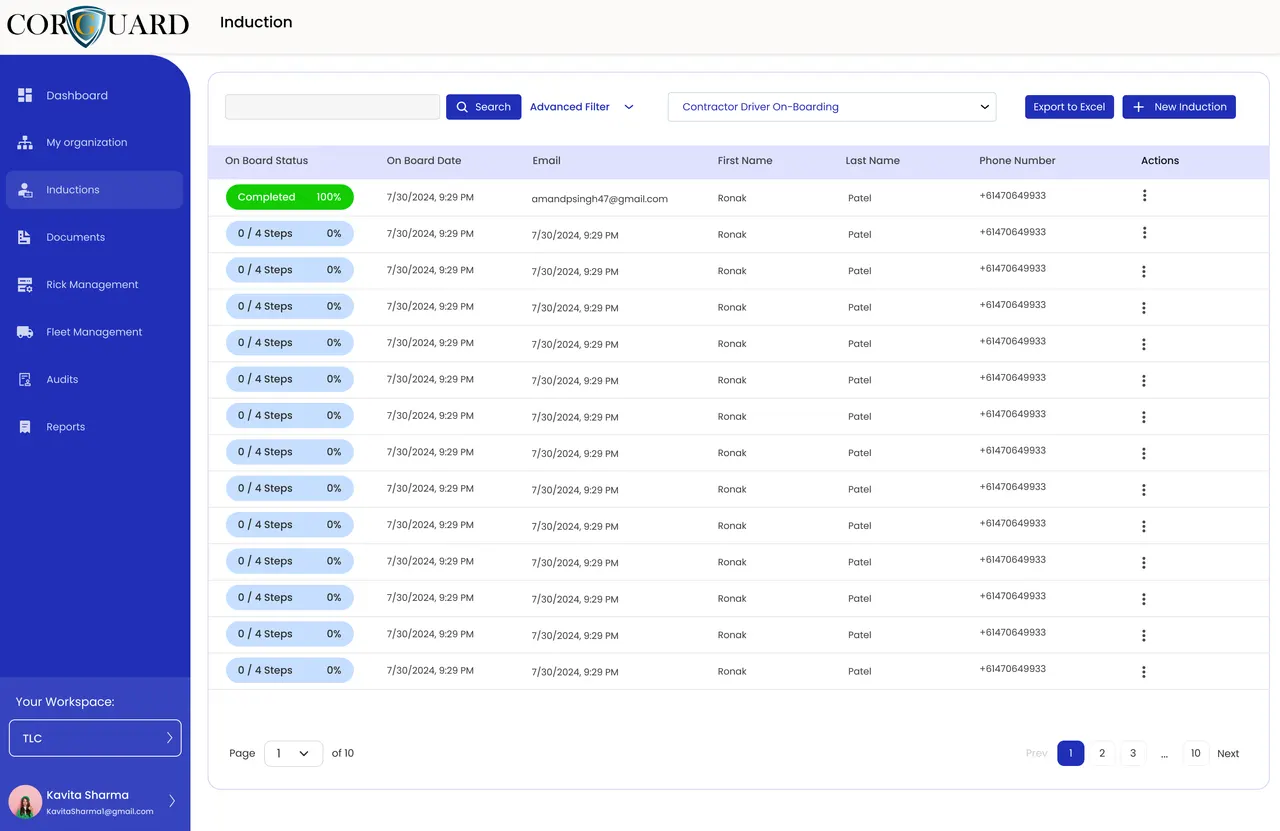
Training records
Connect training completion from cortraining.com.au to evidence and follow-up.
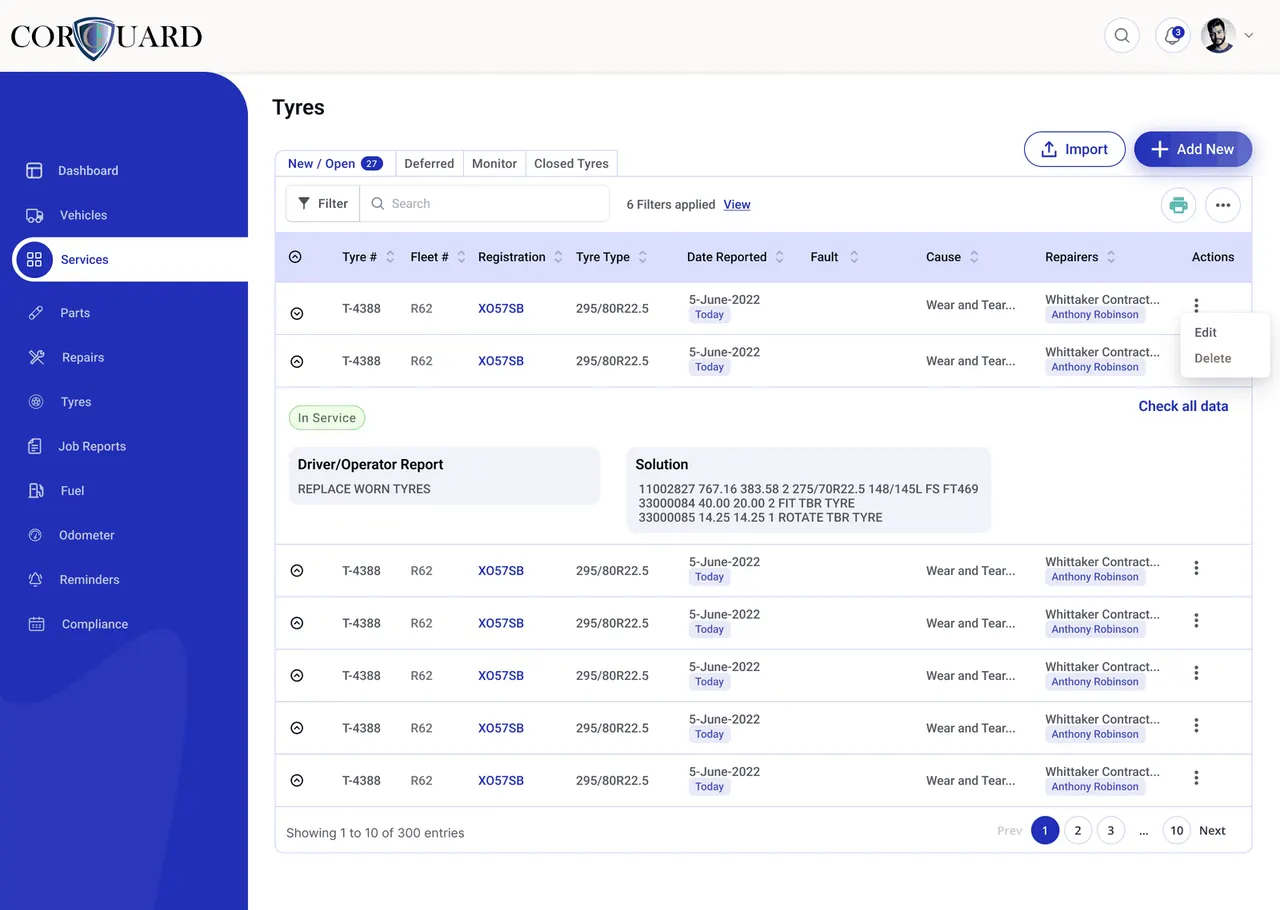
Driver diary checks
Connect fatigue and driver diary review back to manager visibility.
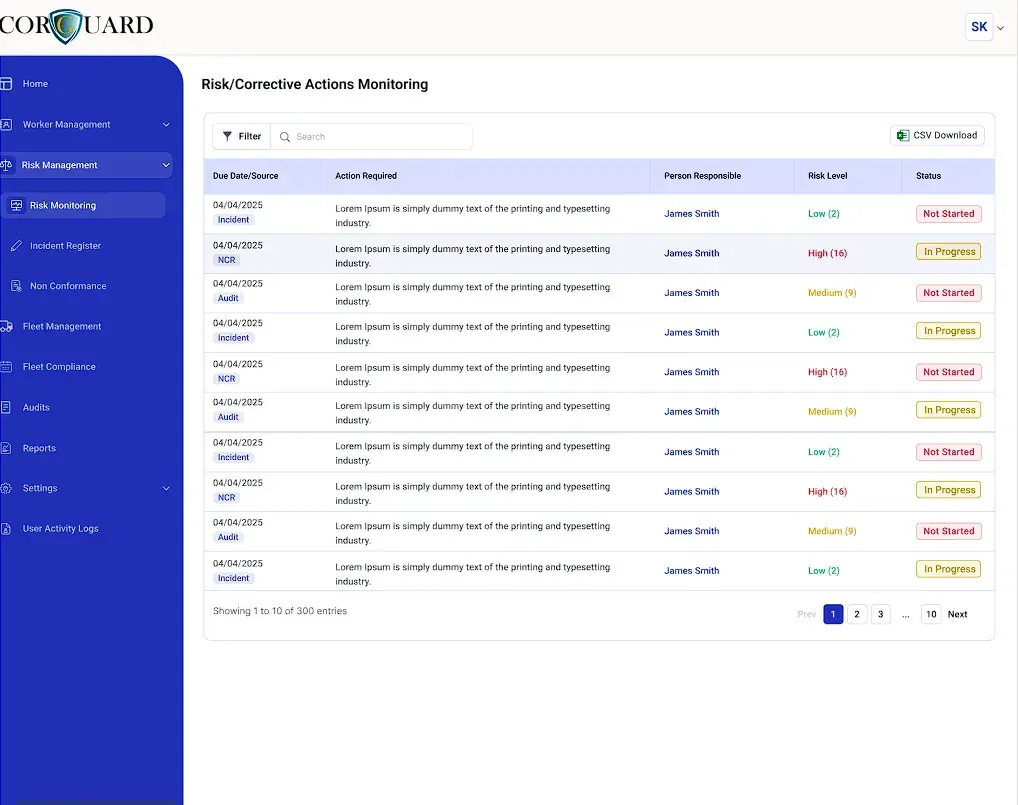
Corrective actions
Turn audit findings, hazards and incidents into tracked actions.
Keep exploring
Related Chain of Responsibility reading
Consulting
Chain of Responsibility Consulting
Chain of Responsibility consulting and chartered risk support for Australian businesses that need to close HVNL, WHS, supply-chain, and transport compliance gaps.
MAEZ resource
What is Chain of Responsibility?
Chain of Responsibility is a colloquial term, used to refer to the Heavy Vehicle National Law which defines specific parties in the logistics network who influence a transport activity, and are therefore accountable for safety on the road.
MAEZ resource
Awareness Courses
Why A MAEZ Awareness Course? On Demand Wherever you are or whatever time it is, immerse yourself into MAEZ CoR awareness courses, whether for individuals or teams, MAEZ can help you today, easily and efficiently.
MAEZ resource
Our Team
Your Definitive Partner in Enhancing Supply Chain Excellence and CoR Compliance As experts in Australian Supply Chain, we are here to help you.
MAEZ resource
CoR Assessment
Industry Compliant Benchmark Analysis Executive Feedback Why MAEZ AUDIT? Practical Advice As industry professionals with years of operational experience in logistics. We are not Lawyers, Ex-Police or Ex-Inspectors. We are unlike every one of our competitors.
MAEZ resource
Our Story
As an expert in Australian Supply Chain, I am here to help you, Our team is dedicated to assisting your business in the turns and twists it will take throughout its lifetime.
Frequently asked questions
Questions people ask about this topic
What does Chain of Responsibility mean for Australian transport businesses?
Chain of Responsibility (CoR) means that every party in the transport supply chain — not just the driver — shares legal responsibility for safety under the Heavy Vehicle National Law (HVNL). The HVNL principle of shared responsibility (s 26A) and primary duty (s 26C) require each party to eliminate or minimise public risk associated with their transport activity.
Which parties in the supply chain hold CoR obligations under the HVNL?
Under the HVNL, CoR obligations extend to consignors, consignees, loaders, packers, drivers, operators, schedulers, managers, and any other party whose acts or omissions influence a transport activity. The shared responsibility principle (HVNL s 26A) means accountability is distributed across all parties who influence safety outcomes.
How does a Safety Management System support CoR compliance?
A Safety Management System (SMS) provides the structured framework a transport business needs to identify risks, assign controls, and maintain evidence of compliance with HVNL primary duty obligations. MAEZ helps businesses build SMS controls aligned to how they actually operate, and implements CoRGuard software to manage records, corrective actions, and audit trails.
What records does the NHVR expect during a CoR or NHVAS audit?
The NHVR expects transport businesses to maintain records demonstrating compliance with HVNL obligations — including driver work diaries, maintenance schedules, fatigue management records, training records, document control, and corrective action logs. MAEZ recommends CoRGuard as the software platform to structure these records and produce evidence workflows for audit readiness.
Can CoRGuard software help with NHVAS audit evidence?
Yes. CoRGuard is the software MAEZ recommends and implements for transport businesses that need structured NHVAS audit evidence. It supports fatigue and driver diary checks, maintenance records, document control, inductions, corrective actions, and evidence reporting. MAEZ defines the compliance pathway; CoRGuard provides the evidence workflow.