
Training
Chain of Responsibility Training for Australian Operators
Practical Chain of Responsibility training for Australian transport operators, managers, and supervisors. Covers HVNL obligations, CoR duties, SMS integration, and TLIF0009.
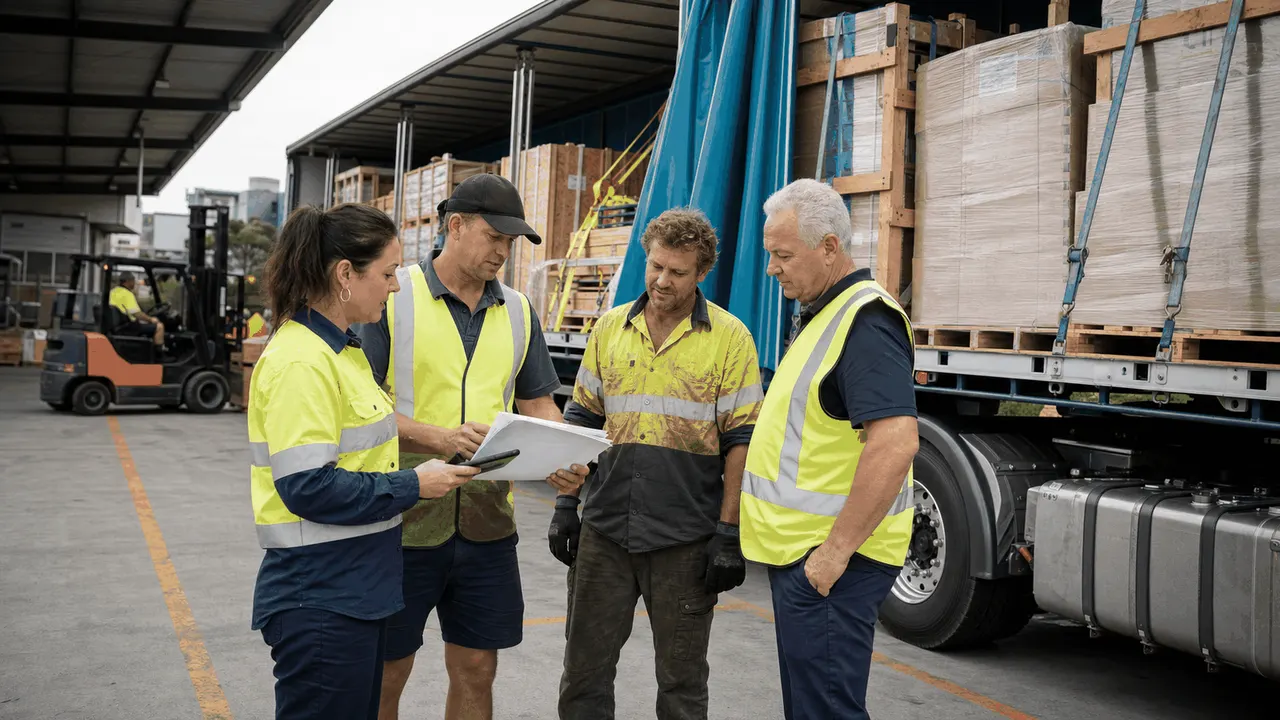
Unloading decisions can affect safety, scheduling, and responsibility.
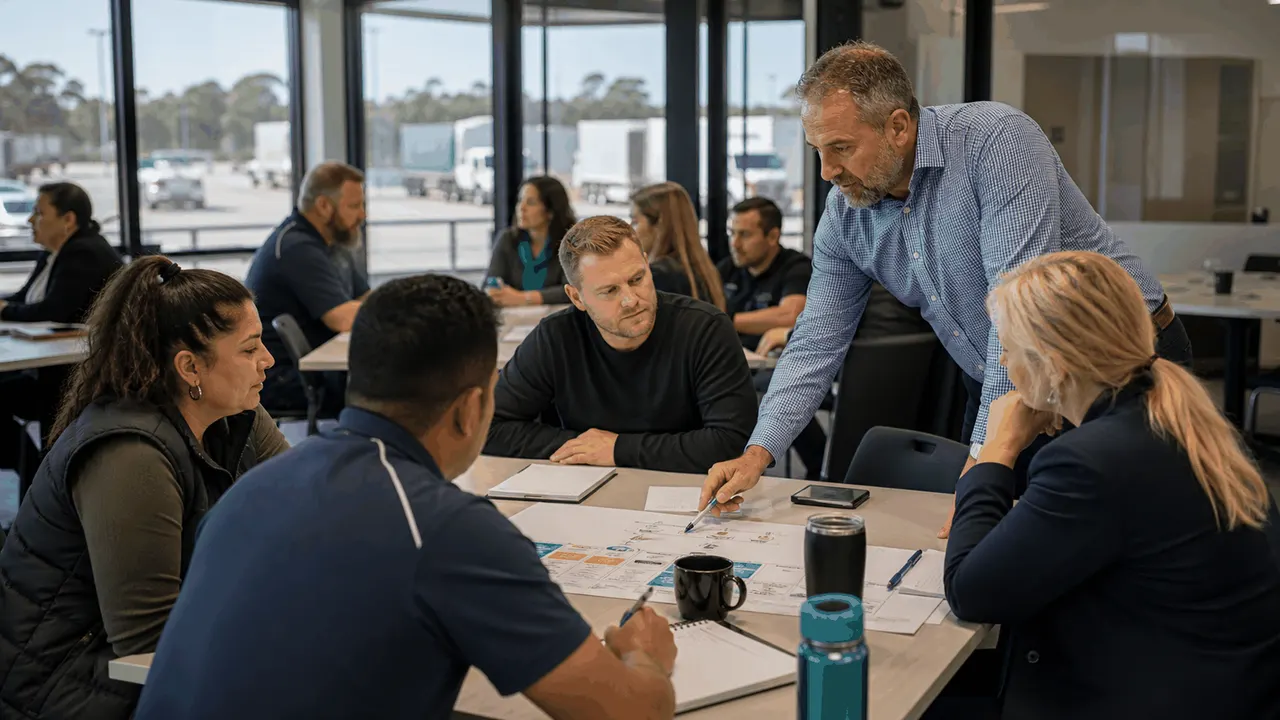
Managers need a clear view of gaps before audit or enforcement pressure arrives.

Contractor controls should be verified before the work starts.
Receiving windows, site rules, and unloading delays can all shape the transport task.
Consignors
Freight terms, delivery windows, and KPIs must not push drivers into speed, fatigue, or mass breaches.
Consignees
Receiving rules, site access, and unloading delays are CoR controls that need to be set and evidenced.
Loaders
Mass, dimension, and load restraint decisions need documented checks, not assumptions.
Managers
Executives and managers need due-diligence evidence that the Safety Management System is actually working.
What is Chain of Responsibility training?
Understanding the shared duty framework under the HVNL
Chain of Responsibility training in Australia equips every party in the heavy vehicle transport supply chain — operators, consignors, loaders, schedulers and drivers — with knowledge of their shared safety duties under the Heavy Vehicle National Law (HVNL), administered by the National Heavy Vehicle Regulator (NHVR).
CoR training reflects the shared-responsibility principle established under HVNL section 26A. A scheduler setting unrealistic timeframes, a consignor overloading a vehicle, or a receiver demanding unsafe turnaround times can each be accountable under the primary duty in section 26C. Training helps participants recognise risk points, document controls, and build evidence of reasonable steps taken. To understand your CoR obligations in Australia, this training connects legislative language to everyday workplace decisions.
Core topic areas typically include fatigue management, speed compliance, mass and dimension limits, load restraint requirements, and the evidence obligations each party must maintain. Participants learn how to identify where their decisions influence transport safety and what documentation supports a defence of reasonable steps. Training is practical rather than purely theoretical — it addresses real scenarios such as managing delivery schedules, loading dock procedures, and contractor arrangements.
MAEZ delivers Chain of Responsibility training through cortraining.com.au, aligned to the nationally recognised unit TLIF0009. Participants across Brisbane, Sydney, Melbourne, Perth, Adelaide and regional Australia can complete the course online. For tailored compliance advisory and NHVAS readiness support, MAEZ provides consulting services via maez.com.au. CoRGuard, a SaaS platform MAEZ recommends and implements, can help centralise Safety Management System documentation so evidence is available when a regulator asks — see chainresponsibility.au. See our Chain of Responsibility Course page for the full outline.
Key facts:
- HVNL s 26A establishes the principle of shared responsibility across all parties in the heavy vehicle transport chain (HVNL, current as at 19 February 2024)
- HVNL s 26C sets out the primary duty to ensure the safety of transport activities (HVNL, current as at 19 February 2024)
- HVNL s 264 places a duty on employers, prime contractors, operators and schedulers to ensure driver compliance with work and rest hours (HVNL, current as at 19 February 2024)
- The Heavy Vehicle National Law Act 2012 applies the HVNL as a law of each participating jurisdiction
- TLIF0009 is the nationally recognised unit of competency for Chain of Responsibility training in Australia
Who needs CoR training in Australia?
Parties across the supply chain share responsibility for heavy vehicle safety
Chain of Responsibility training is needed by any person or business whose decisions influence heavy vehicle transport safety in Australia. Under the HVNL, this includes employers, executives, schedulers, loaders, packers, consignors, consignees, operators and drivers — every party identified in the Chain of Responsibility framework under section 26A's shared-responsibility principle.
If your business schedules deliveries, sets loading requirements, contracts drivers, manages receivals, or influences any transport task involving vehicles over 4.5 tonnes GVM, training supports your understanding of HVNL duties. Executives and officers benefit particularly — due diligence expectations under the HVNL require awareness of compliance processes, and training is one way to demonstrate that awareness. Whether you are a small operator in Brisbane or a larger fleet manager in Sydney, Melbourne, Perth or Adelaide, CoR training helps each role understand where their specific obligations sit.
CoR training is also relevant in warehouse and distribution environments. Warehouse managers, loaders and packers who make decisions about freight mass, load restraint and loading procedures influence transport safety and may hold duties under the chain. Training helps these roles recognise how everyday loading decisions — pallet placement, weight distribution, restraint methods — connect to HVNL obligations and regulator expectations. Prime contractors and brokers who arrange transport without operating vehicles themselves are also within scope, as their scheduling and contracting decisions directly influence on-road safety outcomes.
Maintaining evidence that each relevant person has completed CoR training is an important part of demonstrating reasonable steps. CoRGuard, the SaaS platform MAEZ recommends and implements, can help centralise training records and Safety Management System documentation so that evidence is available during NHVAS audits or regulator enquiries — see chainresponsibility.au. Training is delivered via cortraining.com.au to participants across all Australian states and territories. For a detailed breakdown of who holds duties, see Duty Holders.
Course content and key topics
What MAEZ CoR training covers
MAEZ's transport compliance training covers the core knowledge areas needed to understand and apply Chain of Responsibility obligations under the HVNL, administered by the National Heavy Vehicle Regulator (NHVR):
- The background and purpose of Chain of Responsibility legislation in Australia
- HVNL foundations and key safety obligations for each party in the chain
- Identifying duty holders and understanding their specific responsibilities
- Determining what is reasonably practicable when managing transport safety risks
- Risk management and Safety Management System integration
- Implementing prescribed obligations across scheduling, loading and dispatch activities
- Detecting and reporting breaches of CoR requirements
- Third-party obligations and contracted party management
- CoR in warehouse and distribution environments — loading decisions, mass declaration and freight handling that influence road transport safety
Training connects theory to everyday decisions that shape transport safety — from scheduling and loading through to contracting and receiving goods. For operators who also need consulting support to close identified gaps, see our Chain of Responsibility Consulting services. CoRGuard, a SaaS platform MAEZ recommends, can help centralise Safety Management System documentation so evidence is readily available when a regulator asks. Training is delivered via cortraining.com.au to participants across Brisbane, Sydney, Melbourne, Perth, Adelaide and regional Australia.
Nationally recognised unit: TLIF0009
Training aligned with the Ensure the safety of transport activities unit
TLIF0009 — Ensure the safety of transport activities (Chain of Responsibility) is the nationally recognised unit of competency for Chain of Responsibility training in Australia. It covers identifying features of CoR legislation and applying safety obligations to real workplace scenarios, and is delivered online, in classrooms, or face-to-face through registered training organisations.
The unit provides flexibility for operators and their teams across different locations and operational demands. Completion of TLIF0009 supports participants in demonstrating awareness of their CoR obligations — relevant for drivers, schedulers, loaders, consignors, and executives alike. In an Australian transport context, "CoR certification" typically refers to completing a nationally recognised unit such as TLIF0009. While there is no single industry-wide "CoR licence," a Statement of Attainment for TLIF0009 provides formal evidence that a participant has been assessed against the recognised unit. For general staff orientation, non-accredited CoR awareness training may be sufficient; for roles with direct CoR duties, TLIF0009 is the recognised pathway.
For the full course overview and booking details, visit our Chain of Responsibility Course page. Training is delivered via cortraining.com.au, MAEZ's dedicated training platform, accessible to participants in Brisbane, Sydney, Melbourne, Perth, Adelaide and regional Australia. For businesses needing tailored compliance advisory support, MAEZ provides consulting services via maez.com.au. CoRGuard, a SaaS platform MAEZ recommends, can support Safety Management System documentation for businesses building evidence frameworks.
Delivery options
Flexible formats for operators, managers, and remote workers
We offer three delivery options to suit different team structures and locations:
- Online training — self-paced digital delivery suitable for drivers and remote workers
- Face-to-face training — classroom or onsite delivery for groups and teams
- Blended delivery — a combination of online modules and facilitated sessions
Each format covers the same core content so that every party in the chain receives consistent, practical instruction.
Explore our full range of training services for additional options.
Why CoR training matters
Enforcement, evidence, and duties that extend beyond the depot
The National Heavy Vehicle Regulator (NHVR) enforces Chain of Responsibility provisions under the HVNL. Investigations have found instances where consignors had no procedures, training, or induction materials in place for mass or load restraint requirements. Without adequate CoR training, businesses expose themselves to improvement notices, prosecution, and reputational damage.
CoR training also extends beyond the farm gate. Cattle producers and other primary industry participants have been reminded that their legal responsibilities under Chain of Responsibility laws do not end when livestock leave the property. Transport compliance training ensures all parties understand the full extent of their duties — not just drivers.
For operators preparing for upcoming regulatory change, our HVNL 2026 readiness guide explains what training and evidence should be in place.
Arrange CoR training for your team
Enrol in Chain of Responsibility training
Contact MAEZ to arrange CoR training for your team. We work with transport operators, managers, and supervisors across Australia to build practical compliance knowledge aligned with HVNL requirements.
Training is delivered through cortraining.com.au, while MAEZ provides the advisory and risk pathway. Where software is needed, CoRGuard supports the Safety Management System evidence workflow — covering training records, driver diary checks, corrective actions, and audit evidence.
Contact MAEZ to discuss your CoR training needs, or read more MAEZ Insights on transport compliance and CoR.
How MAEZ works
Find the gaps. Fix the system. Prove the controls.
MAEZ helps transport operators deal with the compliance risk they already know is there. We help get the Safety Management System in order, protect NHVAS accreditation, reduce fine exposure, and connect training, evidence, and CoRGuard workflows where software is needed.
Find
Identify what is exposed before an auditor or regulator does.
Fix
Build the SMS controls around how the transport business actually runs.
Prove
Use CoRGuard where records, reminders, diaries, audits, and evidence need structure.
From advice to evidence
From MAEZ advice to a working Safety Management System
Advisory work should leave a practical implementation trail. These examples show how CoRGuard supports records, fatigue and driver diary checks, maintenance, audits, document control, inductions, corrective actions, and evidence review after MAEZ identifies the gaps.
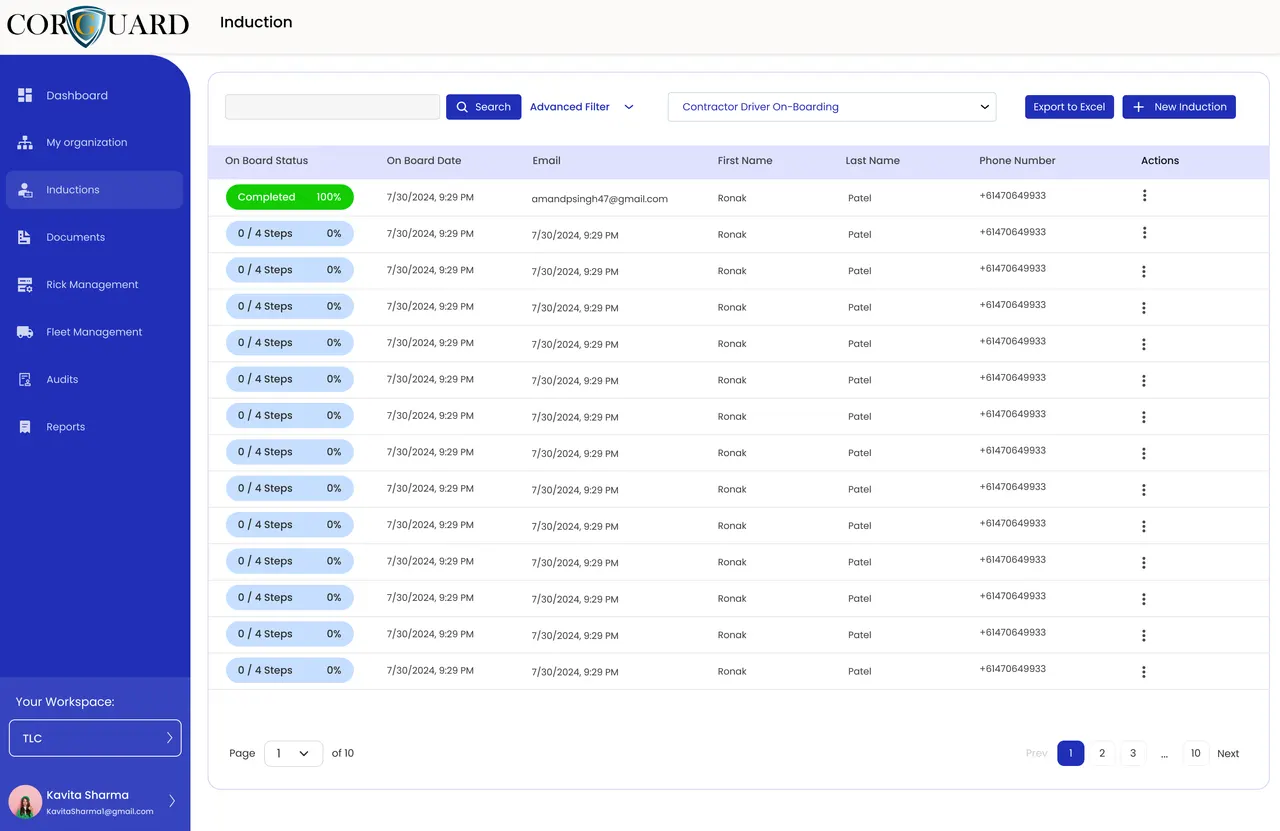
Training records
Connect training completion from cortraining.com.au to evidence and follow-up.
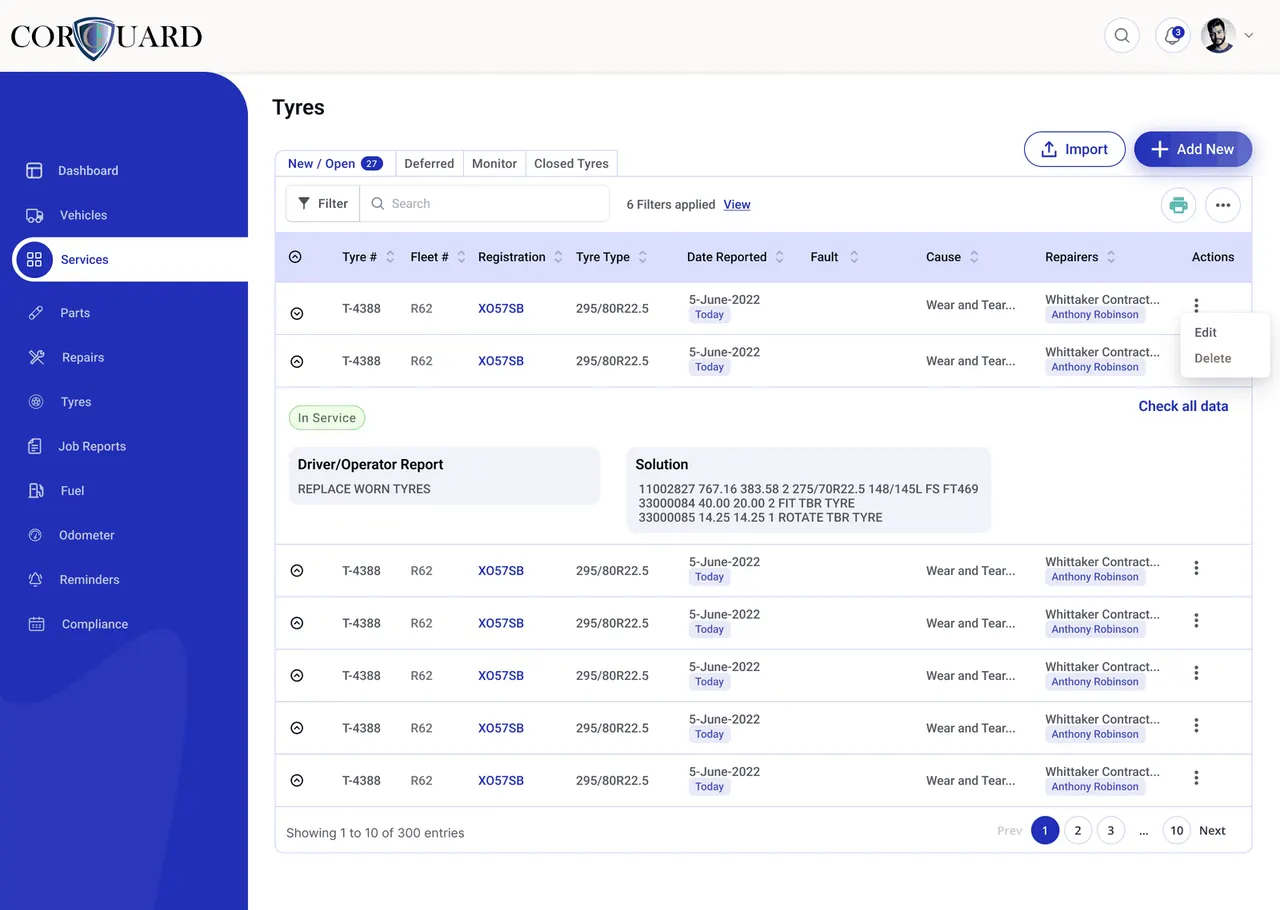
Driver diary checks
Connect fatigue and driver diary review back to manager visibility.
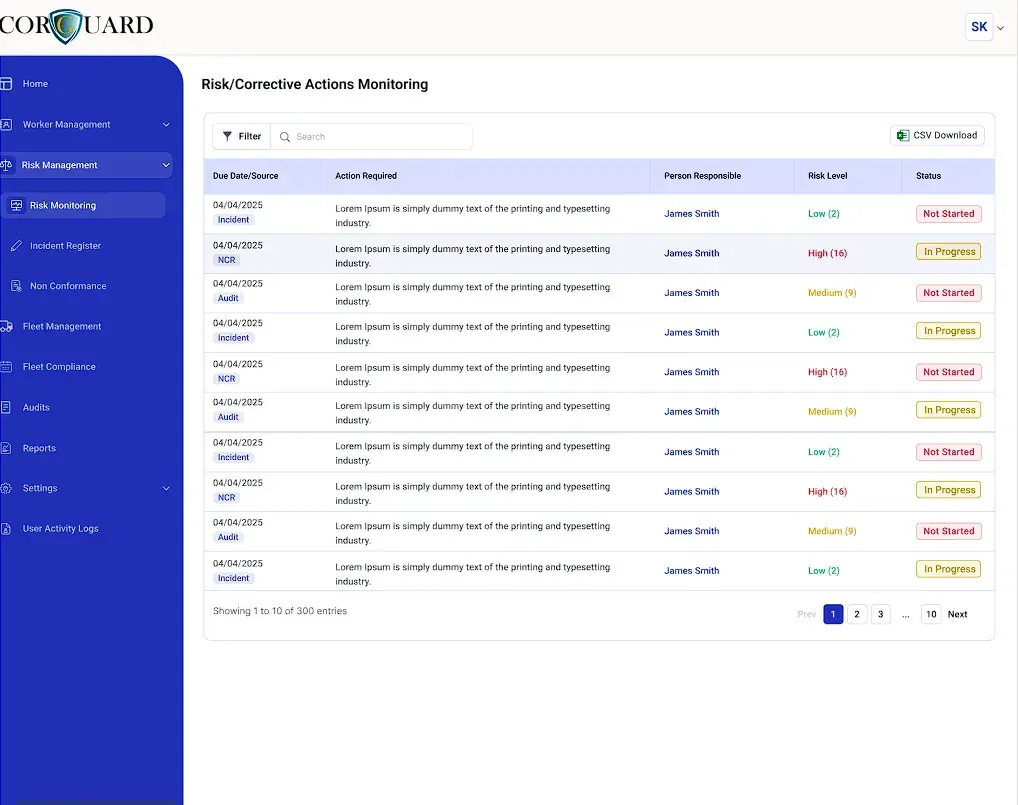
Corrective actions
Turn audit findings, hazards and incidents into tracked actions.
Keep exploring
Related Chain of Responsibility reading
Course
Chain of Responsibility Course
A practical Chain of Responsibility course for Australian organisations that need to understand duty holders, executive duty, transport safety risk, and evidence expectations.
Explainer
About Chain of Responsibility
Understand Chain of Responsibility, Chain of Responsibilities, duty holders, executive obligations, and why Australian businesses need practical systems for HVNL compliance.
Consulting
Chain of Responsibility Consulting
Chain of Responsibility consulting and chartered risk support for Australian businesses that need to close HVNL, WHS, supply-chain, and transport compliance gaps.
MAEZ resource
What is Chain of Responsibility?
Chain of Responsibility is a colloquial term, used to refer to the Heavy Vehicle National Law which defines specific parties in the logistics network who influence a transport activity, and are therefore accountable for safety on the road.
MAEZ resource
Awareness Courses
Why A MAEZ Awareness Course? On Demand Wherever you are or whatever time it is, immerse yourself into MAEZ CoR awareness courses, whether for individuals or teams, MAEZ can help you today, easily and efficiently.
MAEZ resource
Our Team
Your Definitive Partner in Enhancing Supply Chain Excellence and CoR Compliance As experts in Australian Supply Chain, we are here to help you.
Frequently asked questions
Questions people ask about this topic
Who needs Chain of Responsibility training in Australia?
Any person or business whose decisions influence heavy vehicle transport safety needs CoR training. Under the HVNL, this includes operators, consignors, consignees, loaders, packers, schedulers, employers, executives and drivers — every party in the supply chain whose actions affect a vehicle over 4.5 tonnes GVM.
What are the key principles of the Chain of Responsibility?
The key principles are shared responsibility (HVNL s 26A), the primary duty to ensure transport activities are safe (HVNL s 26C), and the requirement that each party in the chain take all reasonable steps to prevent breaches. No party can delegate away their safety obligations to another party in the chain.
What is TLIF0009 and is it nationally recognised?
TLIF0009 — 'Ensure the safety of transport activities (Chain of Responsibility)' — is a nationally recognised unit of competency in Australia. MAEZ delivers training aligned to TLIF0009 through cortraining.com.au, available online to participants in all states and territories.
Is CoR training mandatory under the HVNL?
The HVNL does not explicitly mandate CoR training for every party. However, training is a practical way to demonstrate the reasonable steps that duty holders must take under sections 26A and 26C. Executives and officers may also need to show due diligence awareness of compliance processes, which training supports.
How long does Chain of Responsibility training take to complete online?
CoR training aligned to TLIF0009 is typically completed online in a single session. The course is self-paced and available via cortraining.com.au to participants across Brisbane, Sydney, Melbourne, Perth, Adelaide and regional Australia. Exact duration varies by participant, but most complete the unit within a few hours.