
Course
Chain of Responsibility Course | Practical CoR Training for Australian Transport Operators
A practical Chain of Responsibility course for Australian transport organisations covering HVNL duty holders, executive due diligence, transport safety risk, and evidence expectations.

Proof that freight promises do not create unsafe transport pressure.
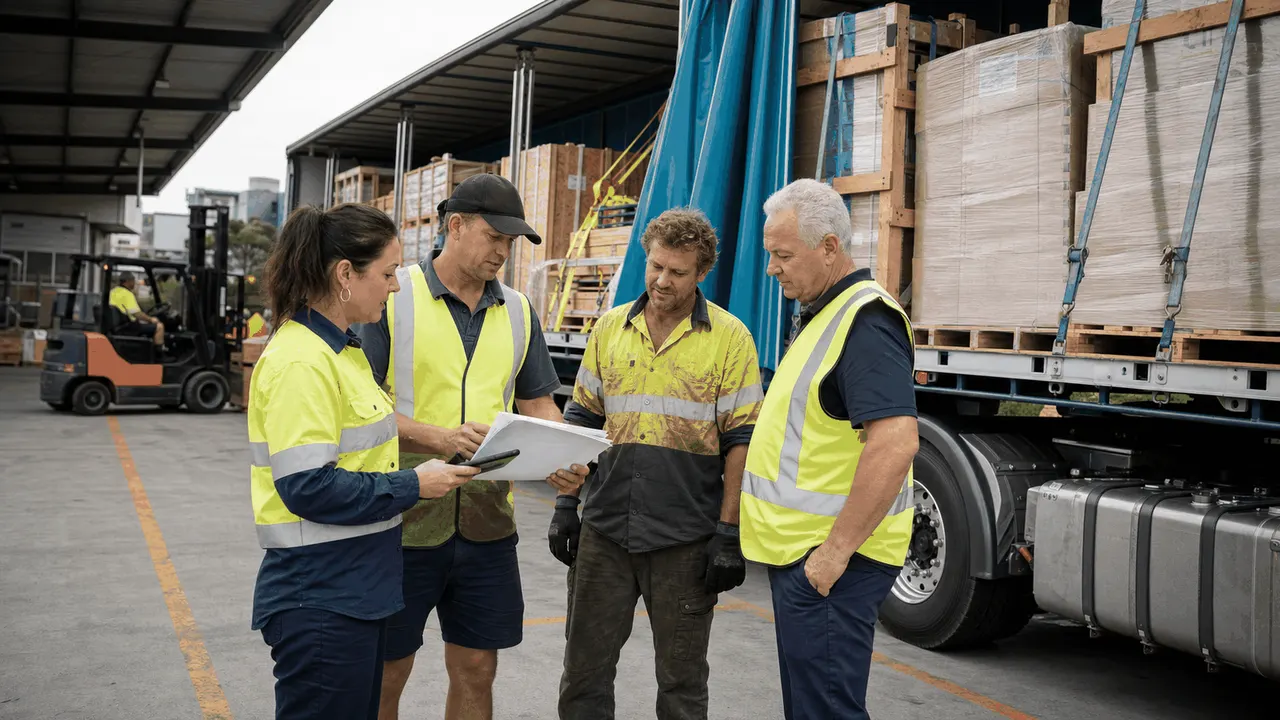
Loading controls need evidence, not assumptions.
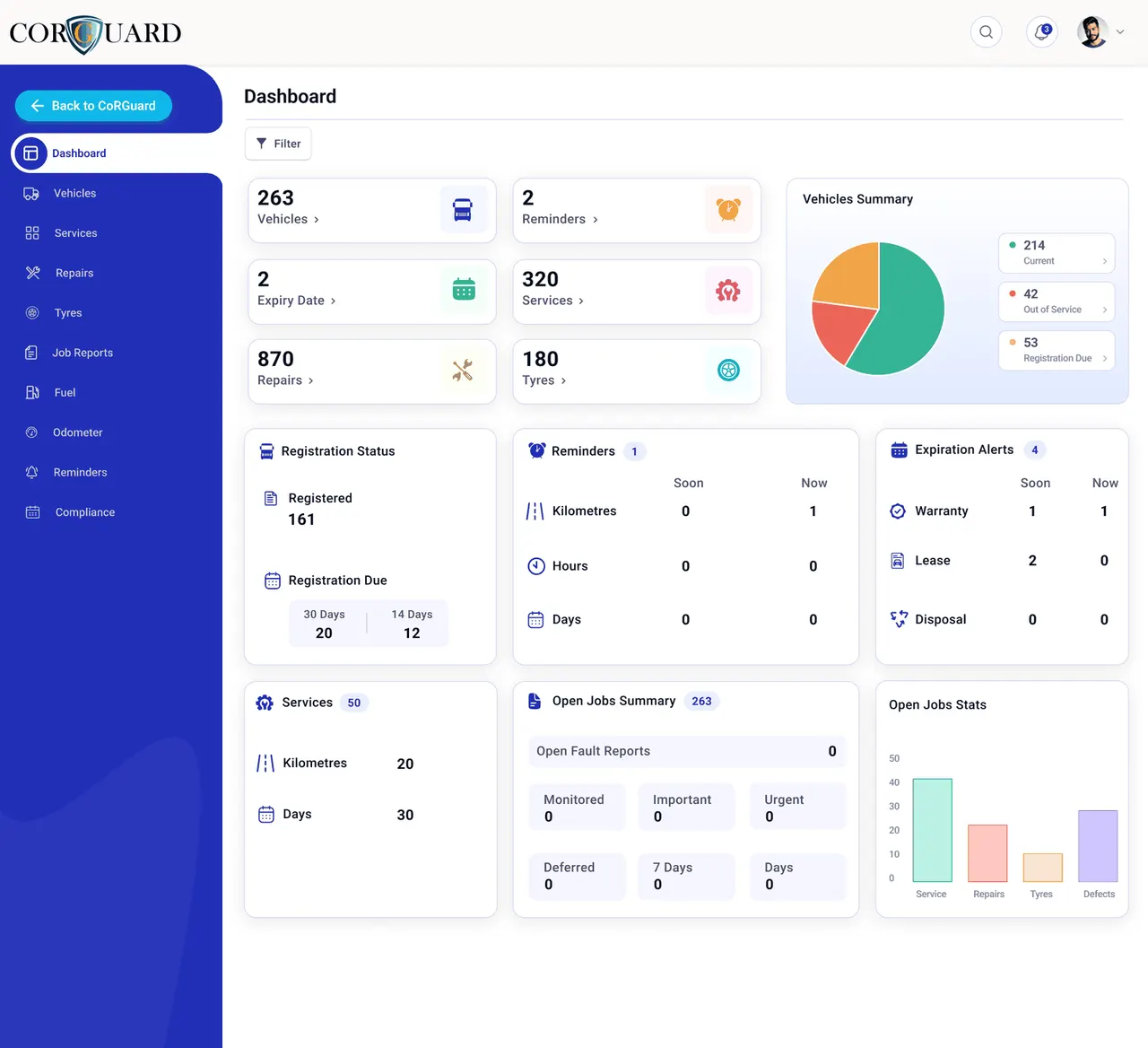
Daily fleet activity has to connect back to duties, controls, and review.

Due diligence means knowing whether the safety system is actually working.
Consignors
Freight terms, delivery windows, and KPIs must not push drivers into speed, fatigue, or mass breaches.
Consignees
Receiving rules, site access, and unloading delays are CoR controls that need to be set and evidenced.
Loaders
Mass, dimension, and load restraint decisions need documented checks, not assumptions.
Managers
Executives and managers need due-diligence evidence that the Safety Management System is actually working.
What this Chain of Responsibility course covers
Understanding duties, evidence, and shared responsibility under the HVNL
A Chain of Responsibility course trains every supply chain party — consignors, schedulers, loaders, operators and executives — to understand and discharge their HVNL safety duties. MAEZ delivers the nationally recognised TLIF0009 unit via cortraining.com.au, covering shared responsibility (s26A), the primary duty (s26C), executive due diligence, speed, fatigue, mass, dimension and load restraint through scenario-based assessment.
TLIF0009 — Ensure the safety of transport activities — is the assessed, nationally recognised unit of competency for CoR training in Australia. Unlike non-accredited awareness courses, it requires participants to demonstrate competence through scenario-based assessment aligned to real workplace situations. Successful participants receive a Statement of Attainment, making this course suitable for executives, operators, schedulers, consignors and other parties whose decisions directly influence heavy vehicle transport activity under the HVNL.
The course covers how consignors comply with CoR laws by ensuring contractual terms, delivery windows and freight promises do not create speed or fatigue pressure on drivers. It covers how loaders comply by following documented load restraint procedures that meet the Load Restraint Guide performance standards, verifying mass and dimension limits before dispatch, and retaining records that demonstrate these steps. Each obligation is addressed through scenario-based assessment so participants can apply principles in their own workplace.
Course structure:
- Unit: TLIF0009 — Ensure the safety of transport activities (CoR)
- Delivery: Online via cortraining.com.au
- Assessment: Scenario-based assessment aligned to each module
- Outcome: Nationally recognised Statement of Attainment
- Access: Australia-wide, including Brisbane, Sydney, Melbourne, Perth, Adelaide and regional areas
Modules translate HVNL obligations into practical workplace practices: the shared responsibility principle under s26A and the primary duty under s26C. Topics include speeding offences and schedule pressure, fatigue management and work/rest hours under HVNL Chapter 6, mass and dimension limits under HVNL Chapter 5, load restraint requirements, and the documentation a regulator may expect during audit or investigation.
The course is relevant for operators preparing NHVAS accreditation or building a Safety Management System (SMS), as CoR training supports the documented safety practices regulators expect. For ongoing evidence management after training, MAEZ recommends and implements CoRGuard — software that helps operators organise audit records, driver diaries and compliance documentation in one place. TLIF0009 differs from non-accredited CoR awareness training, which suits general staff orientation without formal assessment. Content reflects current HVNL requirements; updates expected from 1 August 2026 will be incorporated as they become law. For a broader definition, see our Chain of Responsibility overview or the CoR training resource page.
Key facts:
- HVNL s 26A establishes the shared responsibility principle for all parties in the heavy vehicle transport chain (HVNL, current as at 19 February 2024)
- HVNL s 26C imposes the primary duty to ensure transport activities are carried out safely so far as reasonably practicable (HVNL, current as at 19 February 2024)
- HVNL s 264 places duties on employers, prime contractors, operators and schedulers to ensure driver compliance with work and rest hours (HVNL, current as at 19 February 2024)
- TLIF0009 is the nationally recognised unit of competency for CoR training, requiring scenario-based assessment and yielding a Statement of Attainment (ASQA, nationally recognised training package)
- HVNL updates expected 1 August 2026 will be incorporated into course content as they become law (NHVR, 2026)
Who should take this Chain of Responsibility course
Built for every party that influences a heavy vehicle transport task
Anyone whose decisions influence heavy vehicle transport activity in Australia should take Chain of Responsibility training — not only drivers. Under the HVNL shared responsibility principle (s26A), consignors, schedulers, loaders, operators and executives each hold duties proportionate to their influence over transport safety, and the NHVR expects all parties to understand and discharge those duties so far as reasonably practicable.
Consignors and loaders comply with Chain of Responsibility laws by taking practical steps within their own role: consignors must ensure freight agreements, delivery deadlines and contractual terms do not incentivise speeding or fatigue breaches (HVNL s26C primary duty), while loaders must verify mass, dimension and load restraint before a vehicle departs, using procedures that meet Load Restraint Guide standards. MAEZ TLIF0009 training covers these specific obligations through scenario-based assessment so each party can demonstrate competence in their own area of influence.
The TLIF0009 course suits roles with direct CoR duties requiring a nationally recognised unit of competency. For general staff needing CoR awareness without the assessed unit — including warehouse personnel who influence loading decisions — non-accredited awareness training is an alternative starting point. MAEZ can help businesses determine which level of Chain of Responsibility training each role requires based on their degree of influence over transport activity.
Which course do you need?
| Course | Accredited? | Best for |
|---|---|---|
| TLIF0009 (CoR) | Yes — nationally recognised unit | Executives, schedulers, operators, consignors with direct CoR duties |
| CoR Awareness | No — short course | General staff, warehouse teams, orientation |
| CoR for Managers | No — supervisor-level | Managers overseeing CoR systems without needing the assessed unit |
Enrolment for TLIF0009 is via cortraining.com.au, accessible to participants in Brisbane, Sydney, Melbourne, Perth, Adelaide and regional areas. Consulting support is available through maez.com.au.
Key roles that benefit:
- Executives and senior managers — due diligence obligations under HVNL require active verification that safety systems are implemented and operating effectively
- Consignors and consignees — how freight promises, contractual terms and delivery windows create transport pressure
- Schedulers and dispatchers — fatigue risk, work and rest hour planning under HVNL Chapter 6, and schedule design that avoids rewarding speeding
- Loaders and packers — load restraint, mass limits and documented loading procedures
- Operators and fleet managers — maintenance, roadworthiness and day-to-day compliance evidence
- Warehouse managers — loading decisions that flow through to road transport activity
For operators preparing NHVAS accreditation, CoR training helps demonstrate that key personnel understand their duties. Training alone does not constitute a complete Safety Management System; MAEZ consulting can assist with SMS development, and for post-training evidence management MAEZ recommends and implements the CoRGuard software platform to organise audit checklists, maintain records and reduce the risk of scattered evidence. See Duty Holders for a detailed breakdown of each role's obligations, or our Chain of Responsibility overview for the broader framework.
Core Chain of Responsibility training topics (TLIF0009)
From primary duty to corrective actions under current HVNL
The TLIF0009 course covers seven core Chain of Responsibility training topics aligned to HVNL duties: shared responsibility (s26A), the primary duty (s26C), executive due diligence, fatigue management under Chapter 6, speed compliance, mass and dimension limits under Chapter 5, and load restraint — collectively known as the Big 5 CoR safety risks that MAEZ training addresses through scenario-based assessment.
Load restraint under the HVNL means securing cargo on a heavy vehicle so it does not move, shift or become dislodged during transport, using methods and equipment that meet the performance standards in the Load Restraint Guide. The course covers how consignors, loaders and operators share this duty and what documentation regulators expect during audit or investigation.
The first five categories — speed, fatigue, mass, dimension and load restraint — are commonly referred to as the Big 5 CoR safety risks. These are the areas regulators most frequently assess during audit and investigation, and each carries specific obligations for different parties in the supply chain.
How consignors and loaders comply with each topic:
- Speed: Consignors must set delivery windows that allow legal travel times; loaders must not overload vehicles in ways that encourage speeding to recover lost time
- Fatigue: Consignors and schedulers must design schedules within HVNL Chapter 6 work/rest hour limits; loaders must avoid delays at loading bays that push drivers into fatigue breaches
- Mass: Loaders must verify loaded mass against vehicle limits before dispatch and retain loading records; consignors must declare accurate freight weights
- Dimension: Loaders must check vehicle dimensions against permitted limits and route restrictions
- Load restraint: Loaders must apply restraint methods meeting Load Restraint Guide performance standards and document the procedure; consignors must ensure packaging does not compromise restraint
Key principles that underpin the training:
- Shared responsibility — under s26A, all parties in the chain share responsibility for transport safety
- Primary duty — under s26C, ensuring heavy vehicle transport activity is carried out safely so far as reasonably practicable
- Executive due diligence — active verification that safety systems are implemented and operating effectively
- Fatigue management — work and rest hours under HVNL Part 6.1, scheduling pressures and driver work diary obligations under Part 6.4
- Speed compliance — managing schedules that do not encourage or reward speeding, including delivery window design
- Mass, dimension and loading — freight weights, vehicle dimensions, load restraint and loading procedures under HVNL Chapter 5
- Vehicle standards — maintenance, roadworthiness and defect management responsibilities
The course also addresses the duties under s264 of employers, prime contractors, operators and schedulers to ensure driver compliance, along with corrective actions — what to do when a breach or near-miss is identified, and how to document the response for audit purposes. Each module includes scenario-based assessment so participants demonstrate they can apply CoR principles to decisions in their own role.
Beyond the course — managing your compliance: Training builds knowledge, but ongoing evidence management is what regulators look for during NHVAS audits and investigations. MAEZ consulting supports SMS development, and for ongoing records, driver diaries and audit-trail management MAEZ recommends and implements the CoRGuard software platform.
Online delivery is via cortraining.com.au, accessible to operators in Brisbane, Sydney, Melbourne, Perth, Adelaide and regional areas. Content reflects current HVNL requirements; updates expected from 1 August 2026 will be incorporated as they become law. For broader context, see our Chain of Responsibility overview.
How role-based duties translate to evidence
What each party needs to prove they are managing transport safety risk
Under Australia's Heavy Vehicle National Law, role-based Chain of Responsibility duties translate to evidence when each transport chain party produces documented records showing how safety risks were identified, managed and reviewed. Section 26C imposes a primary duty to eliminate or minimise risks so far as reasonably practicable, while section 26A establishes shared responsibility across all parties in the chain.
Key facts
- HVNL s 26C: primary duty on each chain party to ensure transport activities are safe — so far as reasonably practicable. Source: HVNL s 26C
- HVNL s 26A: principle of shared responsibility — all parties in the transport chain share duties. Source: HVNL s 26A
- NHVR identifies five key heavy vehicle safety risk categories: speed, fatigue, mass, dimension, and load restraint. Source: NHVR
- TLIF0009 (Ensure the safety of transport activities) is the nationally recognised unit for CoR training in Australia. Source: ASQA / Training Package
- NHVAS accreditation requires operators to maintain organised, retrievable records across maintenance, mass and fatigue management modules, verified by NHVR-approved auditors. Source: NHVR, NHVAS Business Rules
MAEZ helps operators build this documentation, supported by CoRGuard, the software MAEZ recommends and implements, for centralised recordkeeping across fatigue checks, maintenance tracking, driver diary records and corrective action logs.
The Chain of Responsibility course delivered via cortraining.com.au offers the nationally recognised TLIF0009 unit (Ensure the safety of transport activities), making it a standard CoR course for supply chain participants across Brisbane, Sydney, Melbourne, Perth, Adelaide and regional areas. It addresses the five key heavy vehicle safety risks identified by the NHVR — speed, fatigue, mass, dimension and load restraint — and translates HVNL role-based duties into documented evidence, showing each transport chain party what records the NHVR expects to demonstrate safety risk management. For a detailed breakdown of who holds duties, see Chain of Responsibility Duty Holders Explained.
The course addresses what evidence looks like for each role:
- Consignors — proof that freight promises and delivery schedules do not create unsafe transport pressure, including written communications, contract terms and schedule justification records
- Loaders — loading controls backed by documented procedures, load plans and restraint verification rather than assumptions or verbal instructions
- Operators — daily fleet activity connected back to duties, controls and review cycles, including maintenance schedules, defect records and speed-limiter checks
- Executives — due diligence means actively verifying whether the safety system is working, with documented review cycles, sign-off and escalation procedures
- Schedulers — work and rest hour planning records showing fatigue risk was reasonably managed, including schedule justification notes and contingency plans
- Consignees — receiving-side controls, delivery window pressure management and evidence retention showing awareness of chain obligations
The NHVAS audit framework requires operators to maintain organised, retrievable records across maintenance, mass and fatigue management modules, with periodic audits conducted by NHVR-approved auditors. The TLIF0009 Chain of Responsibility course uses worked examples so participants can see what good evidence looks like — and what a regulator may ask for during an investigation. For executives specifically, see Chain of Responsibility Training for Executives and Managers. Training is delivered via cortraining.com.au, with consulting support available through maez.com.au.
After the course: turning training into action
From learning outcomes to controlled workflows
After completing a Chain of Responsibility course, operators need ongoing documented systems within their Safety Management System to keep evidence organised and controls operating day to day. A one-off TLIF0009 course establishes foundational awareness of HVNL duties and the five NHVR safety risk categories — speed, fatigue, mass, dimension and load restraint — but does not by itself sustain compliance over time. MAEZ consulting, delivered through maez.com.au, identifies gaps, reviews controls and prioritises corrective actions across scheduling, loading, fatigue management and maintenance records for operators in Brisbane, Sydney, Melbourne, Perth, Adelaide and regional areas.
Chain of Responsibility training via cortraining.com.au gives participants the nationally recognised TLIF0009 unit (Ensure the safety of transport activities), but translating that awareness into durable practices requires structured post-course support. MAEZ consulting builds on that foundation by comparing current practices against HVNL duty requirements under sections 26A and 26C, and NHVR guidance, identifying gaps in controls or evidence, and prioritising corrective actions across multiple depots or operating centres.
Typical post-course consulting steps include:
- Gap assessment — comparing current practices against HVNL duty requirements and NHVR guidance, producing a documented findings report with risk ratings
- Control review — evaluating whether documented controls are actually operating in day-to-day operations, not just existing on paper, with field-level verification
- Evidence mapping — confirming that each role's activities produce records a regulator would expect to see during an audit or investigation, indexed for retrieval
- Prioritised action plan — addressing the highest-risk gaps first, with clear ownership and timelines tied to duty types and NHVAS accreditation requirements where relevant
CoRGuard — the SaaS platform MAEZ recommends and implements — supports ongoing operational tasks including fatigue and driver diary checks, audit preparation, maintenance tracking, inductions and corrective action management with auditable trails. Together, the Chain of Responsibility course delivered via cortraining.com.au and ongoing consulting through maez.com.au help operators maintain evidence that withstands NHVAS audit or regulatory review. For forward-looking planning around HVNL changes expected from 1 August 2026, see HVNL 2026 Readiness. For ongoing training culture resources, see Chain of Responsibility training.
How MAEZ and CoRGuard work together
Advisory defines the risk pathway; software supports the evidence
MAEZ and CoRGuard work together by splitting heavy vehicle compliance into advisory and operational layers. MAEZ consulting, delivered through maez.com.au, identifies gaps across Chain of Responsibility, HVNL, WHS, NHVAS, training and Safety Management System obligations, then translates those gaps into prioritised controls. CoRGuard — the SaaS platform MAEZ recommends and implements — provides the day-to-day tooling for fatigue checks, driver diary verification, audit trails, maintenance tracking, inductions and corrective action workflows, sustaining those controls across teams and depots.
This division is particularly relevant for businesses preparing for NHVAS accreditation or managing multiple duty holders across locations in Brisbane, Sydney, Melbourne, Perth, Adelaide and regional areas. The NHVAS audit framework, administered by the NHVR, requires accredited operators to maintain documented systems across modules such as Mass Management, Maintenance Management and Fatigue Management, with periodic audits conducted by approved auditors to verify compliance with the NHVAS Business Rules. MAEZ advises on what needs to happen and why; CoRGuard helps operators keep it happening consistently with repeatable, auditable processes and centralised records.
Under HVNL section 26A, all parties in the transport chain share responsibility for safety, and section 26C requires each party to eliminate or minimise risks so far as reasonably practicable. This means evidence must be collected not just from drivers and operators, but from consignors, consignees, loaders, unloaders and schedulers as well. For a breakdown of which parties hold duties under the HVNL, see Chain of Responsibility Duty Holders Explained. The nationally recognised TLIF0009 Chain of Responsibility course (Ensure the safety of transport activities) is delivered separately via cortraining.com.au, ensuring a clear separation between accredited training delivery and ongoing compliance consulting through maez.com.au.
Key areas where consulting and software intersect include:
- NHVAS readiness — MAEZ assesses readiness against NHVAS business rules; CoRGuard tracks the day-to-day evidence accreditation requires, including maintenance schedules, driver records and defect management
- CoR documentation — MAEZ identifies role-based evidence gaps against HVNL duties; CoRGuard centralises the records so they are retrievable during audit or investigation
- Fatigue management — MAEZ reviews scheduling practices for fatigue risk; CoRGuard automates diary checks and alerts for work and rest hour compliance
- Corrective actions — MAEZ recommends priorities based on risk assessment; CoRGuard manages workflows through to completion with audit-ready trails and sign-off
For planning around the HVNL changes expected from 1 August 2026, see HVNL 2026 Readiness. The TLIF0009 Chain of Responsibility course is delivered via cortraining.com.au; consulting is available through maez.com.au. For ongoing CoR training resources, see Chain of Responsibility training.
How MAEZ works
Find the gaps. Fix the system. Prove the controls.
MAEZ helps transport operators deal with the compliance risk they already know is there. We help get the Safety Management System in order, protect NHVAS accreditation, reduce fine exposure, and connect training, evidence, and CoRGuard workflows where software is needed.
Find
Identify what is exposed before an auditor or regulator does.
Fix
Build the SMS controls around how the transport business actually runs.
Prove
Use CoRGuard where records, reminders, diaries, audits, and evidence need structure.
From advice to evidence
From MAEZ advice to a working Safety Management System
Advisory work should leave a practical implementation trail. These examples show how CoRGuard supports records, fatigue and driver diary checks, maintenance, audits, document control, inductions, corrective actions, and evidence review after MAEZ identifies the gaps.
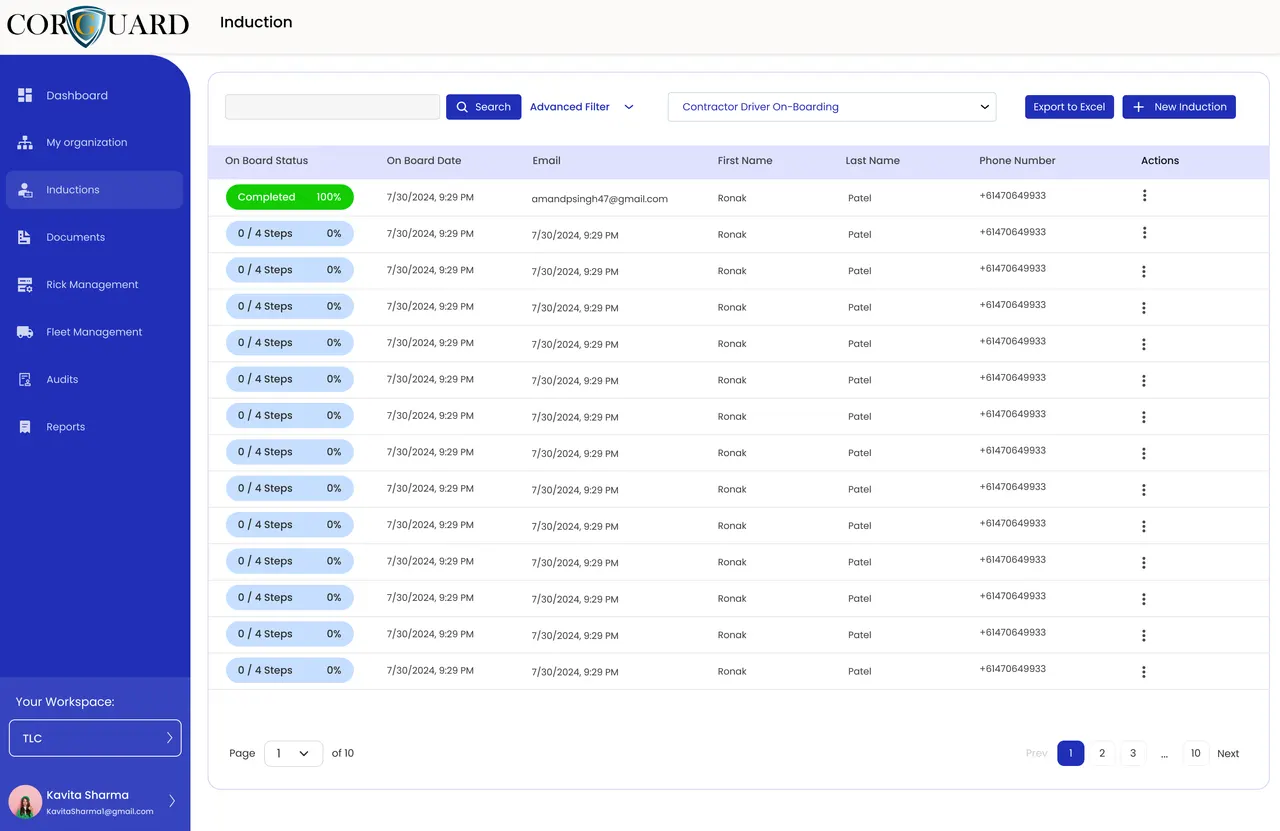
Training records
Connect training completion from cortraining.com.au to evidence and follow-up.
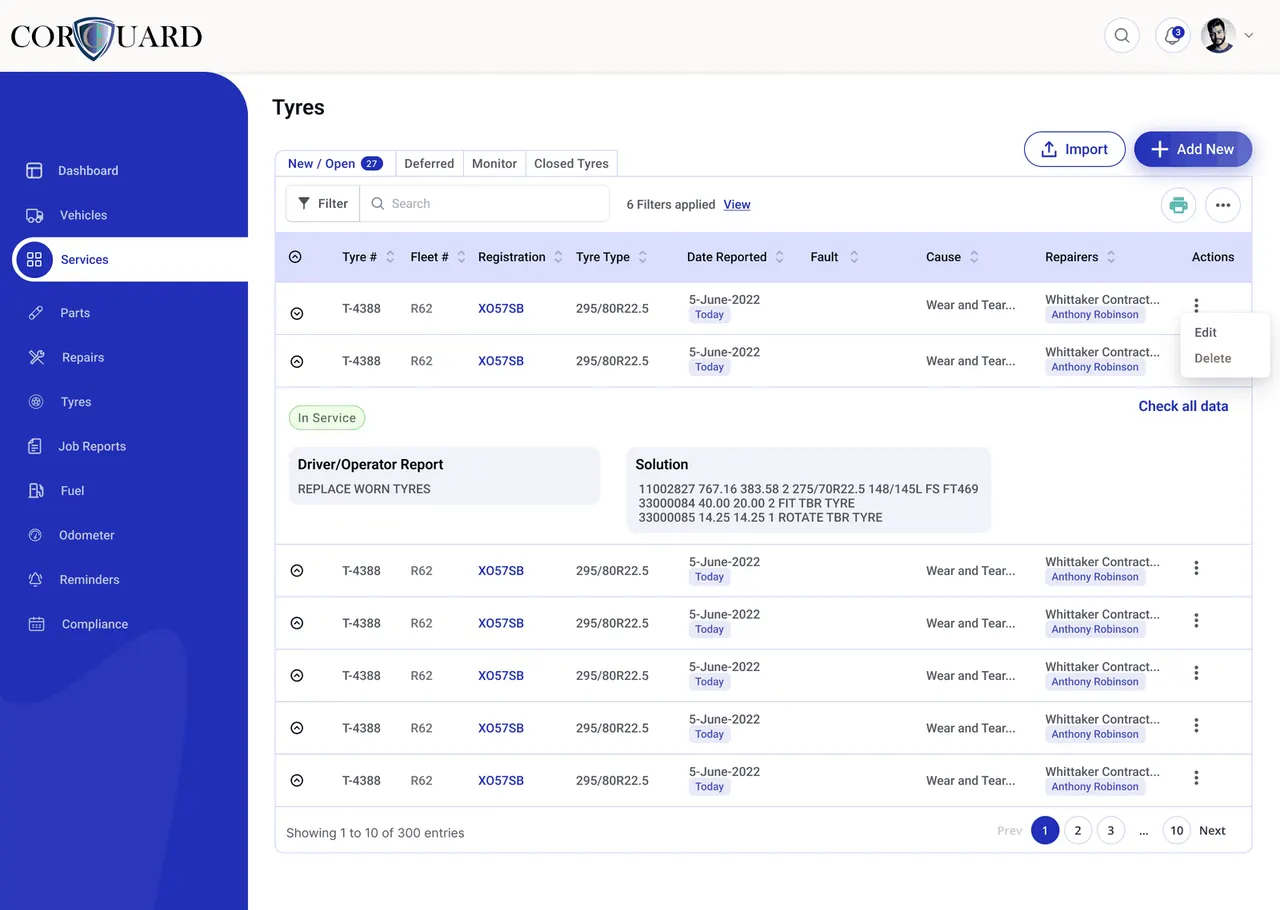
Driver diary checks
Connect fatigue and driver diary review back to manager visibility.
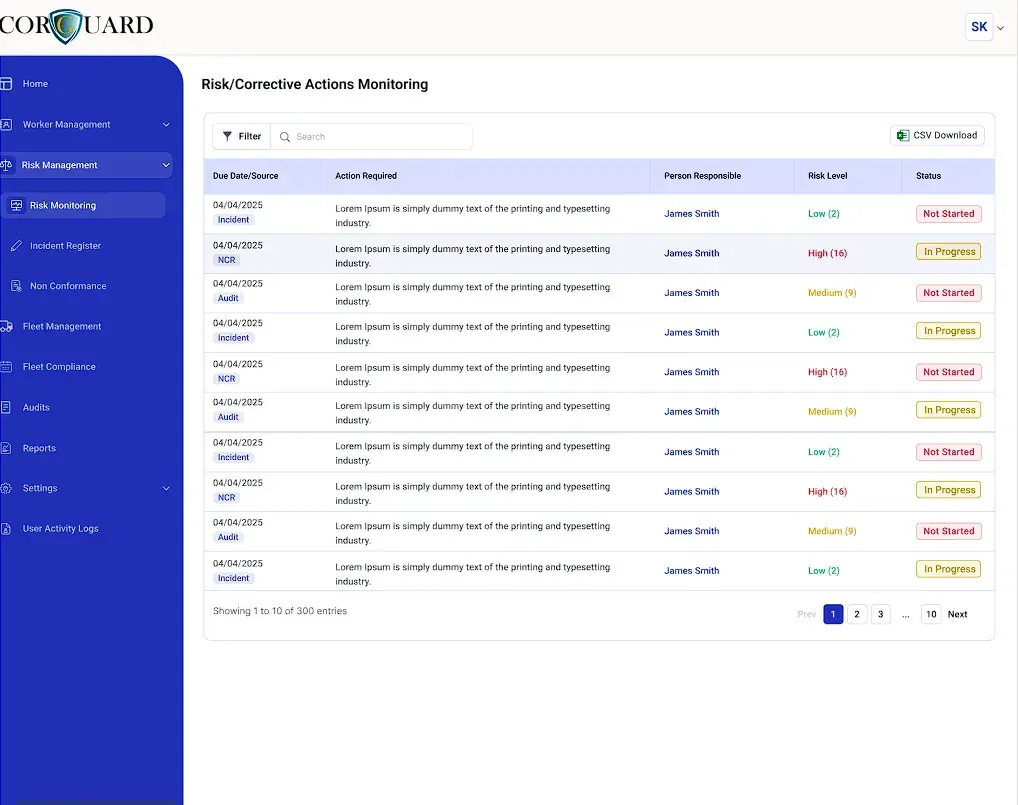
Corrective actions
Turn audit findings, hazards and incidents into tracked actions.
Keep exploring
Related Chain of Responsibility reading
Explainer
About Chain of Responsibility
Understand Chain of Responsibility, Chain of Responsibilities, duty holders, executive obligations, and why Australian businesses need practical systems for HVNL compliance.
Consulting
Chain of Responsibility Consulting
Chain of Responsibility consulting and chartered risk support for Australian businesses that need to close HVNL, WHS, supply-chain, and transport compliance gaps.
MAEZ resource
What is Chain of Responsibility?
Chain of Responsibility is a colloquial term, used to refer to the Heavy Vehicle National Law which defines specific parties in the logistics network who influence a transport activity, and are therefore accountable for safety on the road.
MAEZ resource
Awareness Courses
Why A MAEZ Awareness Course? On Demand Wherever you are or whatever time it is, immerse yourself into MAEZ CoR awareness courses, whether for individuals or teams, MAEZ can help you today, easily and efficiently.
MAEZ resource
Our Team
Your Definitive Partner in Enhancing Supply Chain Excellence and CoR Compliance As experts in Australian Supply Chain, we are here to help you.
MAEZ resource
CoR Assessment
Industry Compliant Benchmark Analysis Executive Feedback Why MAEZ AUDIT? Practical Advice As industry professionals with years of operational experience in logistics. We are not Lawyers, Ex-Police or Ex-Inspectors. We are unlike every one of our competitors.
Frequently asked questions
Questions people ask about this topic
What is the Chain of Responsibility course TLIF0009?
TLIF0009 (Ensure the safety of transport activities) is the nationally recognised unit of competency for Chain of Responsibility training in Australia. It covers shared CoR obligations under the Heavy Vehicle National Law, the primary duty of each party, and the five key heavy vehicle safety risks identified by the NHVR: speed, fatigue, mass, dimension and load restraint. MAEZ delivers this course via cortraining.com.au.
What are the key principles of the Chain of Responsibility under the HVNL?
The key principles are established in HVNL section 26A (shared responsibility — all parties in the transport chain share duties) and section 26C (primary duty — each party must ensure transport activities are safe so far as reasonably practicable). Additional principles in section 26B cover how duties apply. These principles mean every party — consignor, consignee, loader, packer, scheduler, operator and driver — can be held accountable for safety breaches.
Who needs Chain of Responsibility training in Australia?
Chain of Responsibility training is relevant for all parties in the heavy vehicle transport chain, including consignors, consignees, loaders, packers, schedulers, operators, executives and drivers. Under the HVNL, each party holds duties to ensure transport activities are safe. Executives also have a specific due diligence obligation. MAEZ recommends TLIF0009 training for anyone whose decisions influence heavy vehicle safety, delivered via cortraining.com.au.
What are the five key heavy vehicle safety risks under the NHVR?
The NHVR identifies five key heavy vehicle safety risk categories: speed, fatigue, mass, dimension and load restraint. The TLIF0009 Chain of Responsibility course addresses each of these risk areas, showing participants how to identify, manage and document controls for each risk type in line with HVNL duties.
Does the Chain of Responsibility course address NHVAS accreditation requirements?
The TLIF0009 course builds awareness of HVNL duties and the five NHVR safety risk categories that underpin NHVAS modules such as Mass Management, Maintenance Management and Fatigue Management. While the course itself does not constitute NHVAS accreditation, MAEZ consulting through maez.com.au helps operators prepare for NHVAS audits by identifying evidence gaps and building documented systems, supported by CoRGuard software for ongoing recordkeeping.