
MAEZ insight
Latest Developments in Transport Safety Management
Stay updated on the latest transport safety management developments—systems-based regulation, SMS expansion, FMCSA modernisation, licensing standardisation, and what they mean for Australian transport operators.

Receiving windows, site rules, and unloading delays can all shape the transport task.
Unloading decisions can affect safety, scheduling, and responsibility.

Managers need a clear view of gaps before audit or enforcement pressure arrives.

Contractor controls should be verified before the work starts.
Consignors
Freight terms, delivery windows, and KPIs must not push drivers into speed, fatigue, or mass breaches.
Consignees
Receiving rules, site access, and unloading delays are CoR controls that need to be set and evidenced.
Loaders
Mass, dimension, and load restraint decisions need documented checks, not assumptions.
Managers
Executives and managers need due-diligence evidence that the Safety Management System is actually working.
What are the latest developments in transport safety management?

Transport safety management is evolving through a shift from reactive compliance to proactive, systems-based regulation. Key developments include federal oversight prioritising Safety Management Systems, commercial driver licensing standardisation, FMCSA registration modernisation (MOTUS), Drug and Alcohol Clearinghouse enhancements, and emerging autonomous vehicle rules. For Australian operators, these trends mirror Chain of Responsibility duties under the HVNL, where executives must actively identify and manage transport safety risks.
These changes affect commercial carriers, government agencies, and supply chain operators across all transport modes. Understanding them allows you to strengthen safety systems before incidents or enforcement action occurs, rather than reacting afterwards.
For Australian duty holders, the same principles align with Chain of Responsibility obligations under the Heavy Vehicle National Law—particularly the move toward proactive risk identification and documented evidence.
Why transport safety management is evolving
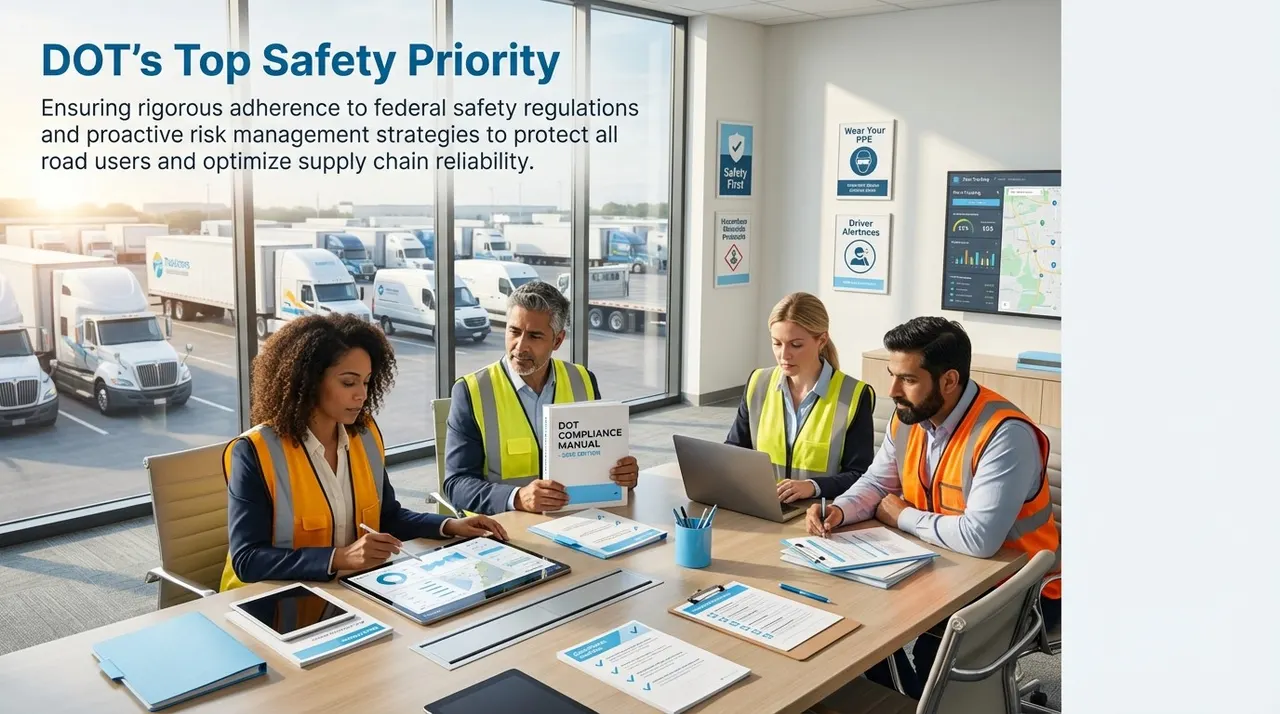
Transport safety management is undergoing its most significant transformation in decades. Authorities are prioritising standardised systems, data-driven oversight, and stronger enforcement frameworks. This shift reflects growing expectations from regulators, investors, and the public.
Organisations that fail to adapt face mounting operational and compliance risks. Reactive compliance models are being replaced with proactive risk identification systems, and enforcement resources are being redirected toward high-risk operators and systemic compliance failures.
What this means for Australian operators
- Executives and managers face explicit due-diligence duties to ensure the business manages transport safety risks
- The focus has moved from ticking boxes to demonstrating that controls are documented, operational, and defensible
- A structured gap review can identify where your evidence trail may fall short before enforcement pressure arrives
Learn about HVNL 2026 changes and CoR training readiness for what this means in practice.
Federal safety oversight: shifting to systems-based regulation
Federal transportation safety priorities have shifted toward systems-based oversight. In the United States, the Department of Transportation Office of Inspector General identifies improving transportation safety as a top management challenge for fiscal year 2026—a designation that signals intensified scrutiny across all transport modes.
Regulators are demanding more sophisticated safety frameworks from operators. The focus on safety management reflects lessons learned from major incidents, where investigations repeatedly found that systemic failures—not isolated errors—were the root cause.
Key signals of the shift
- Enforcement resources redirected toward high-risk operators and systemic compliance failures
- Greater emphasis on documented, auditable safety processes
- Increasing alignment between transport safety regulation and work health and safety frameworks
For Australian duty holders, a similar pattern is emerging under the HVNL. Executives and managers face explicit due-diligence duties to ensure the business manages transport safety risks. CoR training for executives and managers covers how to evidence these obligations.
Safety performance trends and licensing standardisation
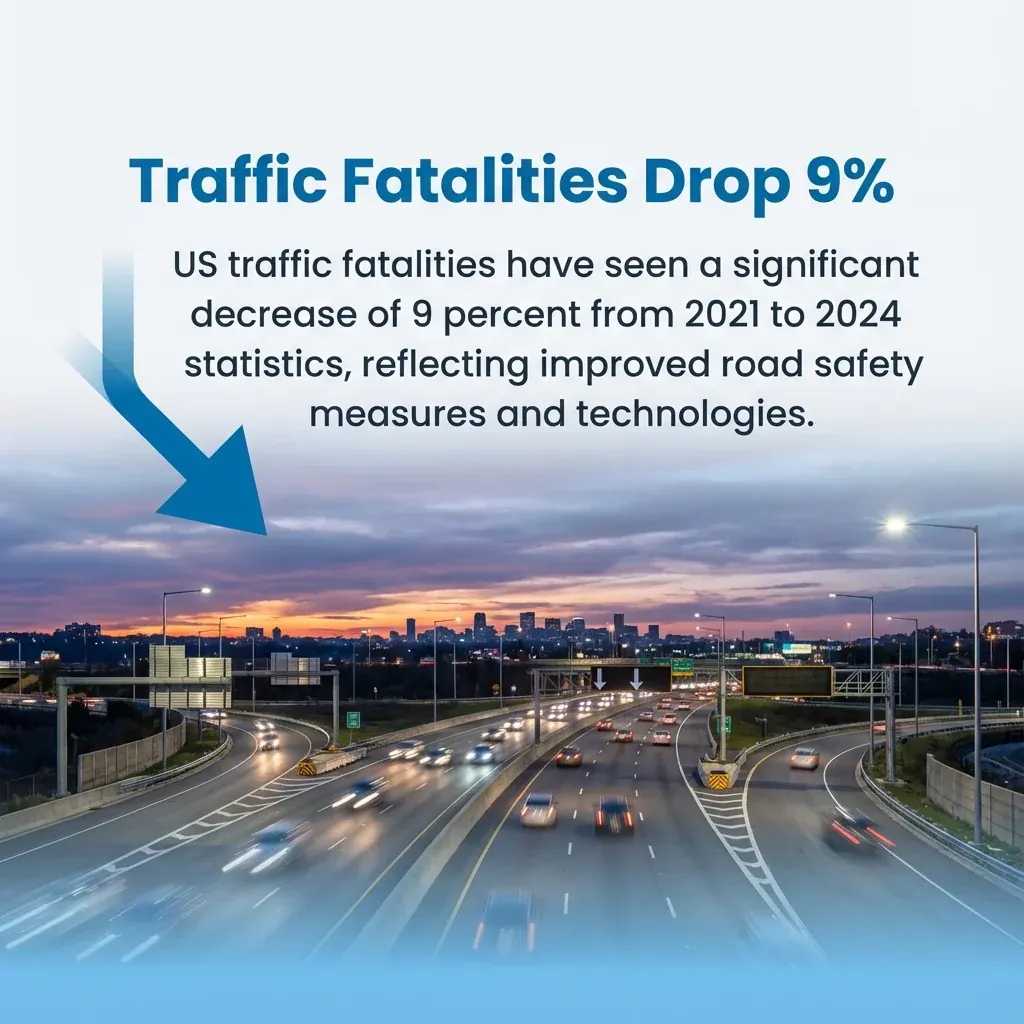
U.S. motor vehicle traffic fatalities declined from 43,230 in 2021 to an estimated 39,345 in 2024—a decrease of about 9 percent. This improvement validates current safety strategies but highlights ongoing challenges: absolute numbers remain unacceptably high for most stakeholders, and regulators are responding by tightening standards.
Commercial driver licensing
Federal authorities are intensifying oversight of state commercial driver licensing programs, particularly standardising enforcement of CDL requirements for non-domiciled holders. This addresses inconsistencies that have undermined safety outcomes.
- States with weaker oversight have historically created compliance gaps exploited by unsafe operators
- The harmonisation effort requires updated training for licensing authorities
- Motor carriers must verify that all drivers hold properly issued credentials from compliant jurisdictions
Australian operators face parallel expectations under CoR—verifying contractor controls before work begins is a core duty. CoR training for Australian operators covers how to evidence these checks.
FMCSA registration modernisation: what MOTUS means
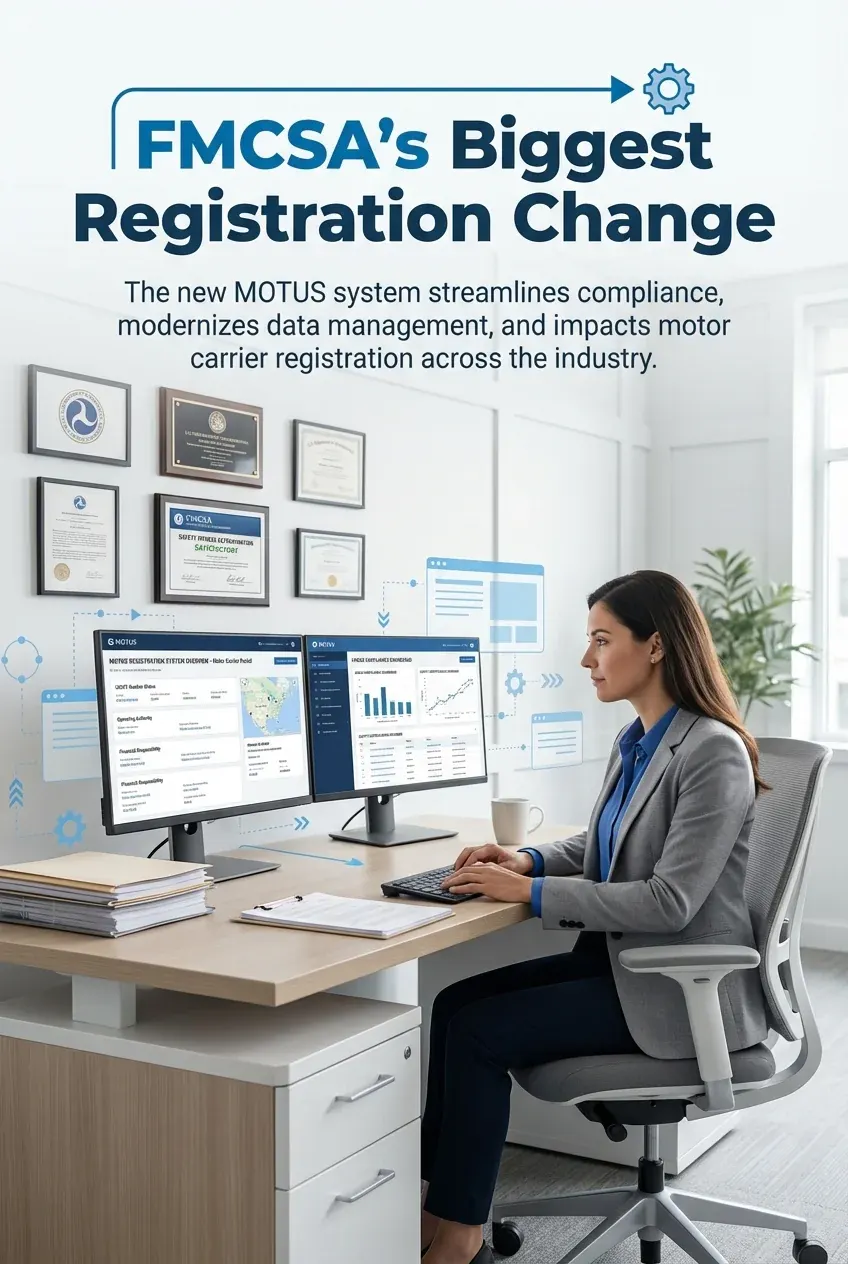
FMCSA's MOTUS has been described as the biggest change to FMCSA registration in decades. The system overhaul transforms how motor carriers interact with federal regulators by consolidating multiple legacy systems into a unified platform.
The change requires carriers to update their registration processes and internal procedures. Organisations should review their filing protocols now—early adoption prevents disruption when the system becomes mandatory for all carriers.
The broader lesson for Australian operators
While MOTUS is a U.S. initiative, the underlying lesson applies broadly: when regulators modernise registration and oversight systems, operators who have not updated their own documentation and processes are the most exposed.
A structured gap review—such as a chartered-risk CoR gap review—helps identify where your evidence trail may fall short before enforcement pressure arrives.
Safety Management Systems expansion across transport modes
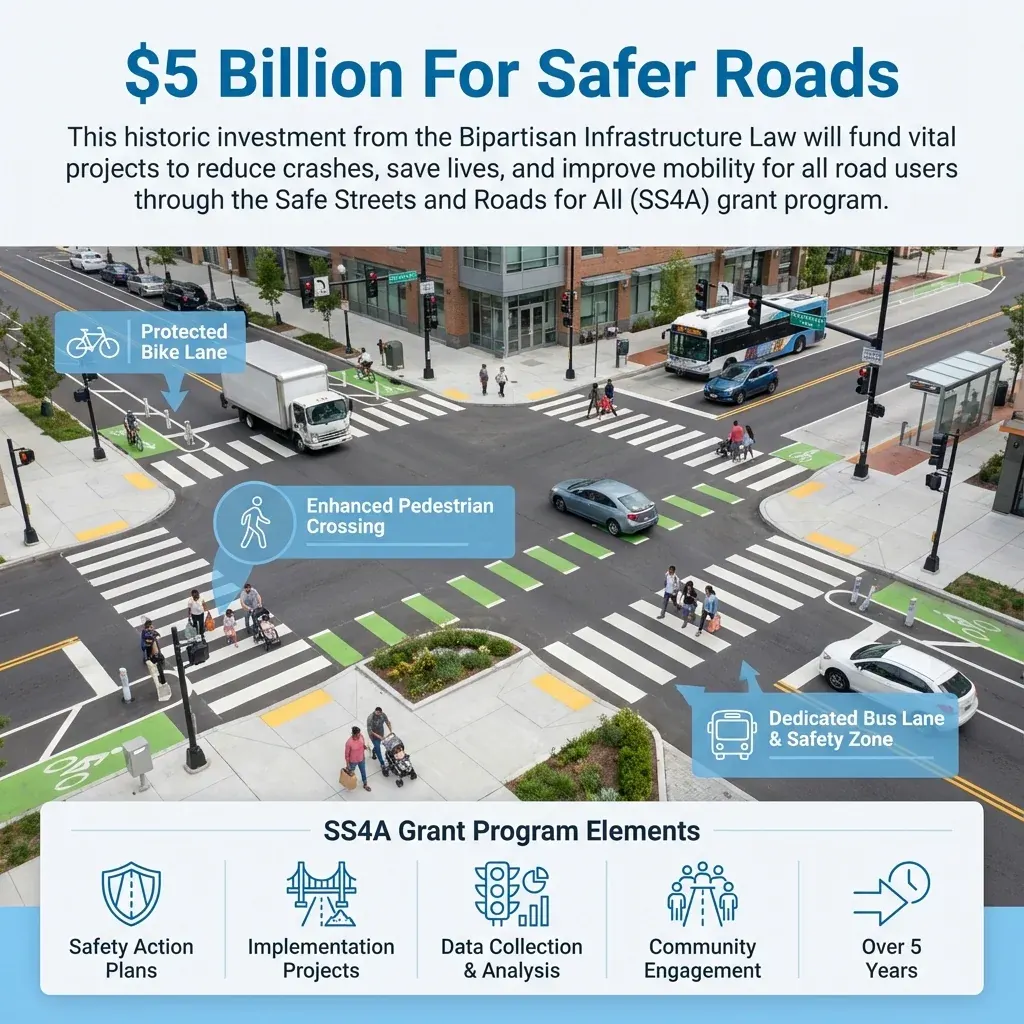
The FAA's 14 CFR Part 5 Safety Management System requirements now apply to additional business aviation operators. This expansion represents a broader regulatory trend toward SMS frameworks across all transport sectors.
SMS shifts responsibility from reactive incident response to proactive risk management. Implementation demands structured processes for hazard identification, risk assessment, and corrective action tracking. Organisations must document safety policies, define accountability structures, and establish performance metrics.
Core SMS components
Effective Safety Management Systems include four foundational elements:
- Safety Policy — establish organisational commitment: define safety objectives, assign accountability, allocate resources
- Safety Risk Management — identify and control hazards: conduct risk assessments, implement controls, monitor effectiveness
- Safety Assurance — verify system performance: audit processes, analyse data, validate controls
- Safety Promotion — build safety culture: provide training, communicate performance, recognise excellence
Each component supports the others. Rushing implementation produces documentation without operational substance.
Hazard identification, risk assessment and mitigation
Proactive hazard identification distinguishes mature SMS implementations from basic compliance programs. Organisations must establish multiple channels for identifying potential safety risks.
Effective hazard identification approaches
- Routine operational audits
- Employee reporting systems (which require psychological safety—workers must trust that reporting hazards will not result in blame or retaliation)
- Safety data analysis that identifies systemic patterns individual reports might miss
Tracking incident precursors allows intervention before failures occur.
Risk assessment and mitigation
Once hazards are identified, organisations must assess their severity and likelihood. Risk matrices provide a standardised evaluation framework, classifying hazards based on potential consequence and probability of occurrence.
Mitigation strategies should follow the hierarchy of controls:
- Elimination of the hazard where practicable
- Substitution
- Engineering controls
- Administrative controls
- Personal protective measures
For Australian operators, these SMS principles map directly to CoR expectations. CoR consulting from MAEZ can help you build evidence that your hazard identification and risk mitigation processes are documented, operational, and defensible.
Drug and Alcohol Clearinghouse, autonomous vehicles, and industry safety programs
FMCSA is working on improvements to the Drug and Alcohol Clearinghouse system. These enhancements strengthen the database's ability to prevent drivers with substance abuse violations from operating commercial vehicles.
Clearinghouse requirements
- Motor carriers must conduct pre-employment queries before allowing any driver to operate
- Annual queries for current employees are also mandatory
- The system has already identified thousands of drivers with outstanding violations
- Enhanced functionality will close existing reporting gaps and improve data accuracy
Autonomous vehicle regulation
FMCSA is expected to propose rules on autonomous trucks in the near future. These regulations will establish safety standards for automated driving systems in commercial operations, addressing liability, insurance requirements, and operational protocols.
Early guidance suggests that SMS principles will apply to autonomous operations—organisations must demonstrate robust safety management regardless of automation level.
Industry safety programs
AASHTO and similar organisations provide safety programs that support transportation agencies and private operators. These initiatives offer training resources, policy guidance, and technical standards. Participation demonstrates commitment to safety excellence and provides access to best practices developed across multiple jurisdictions.
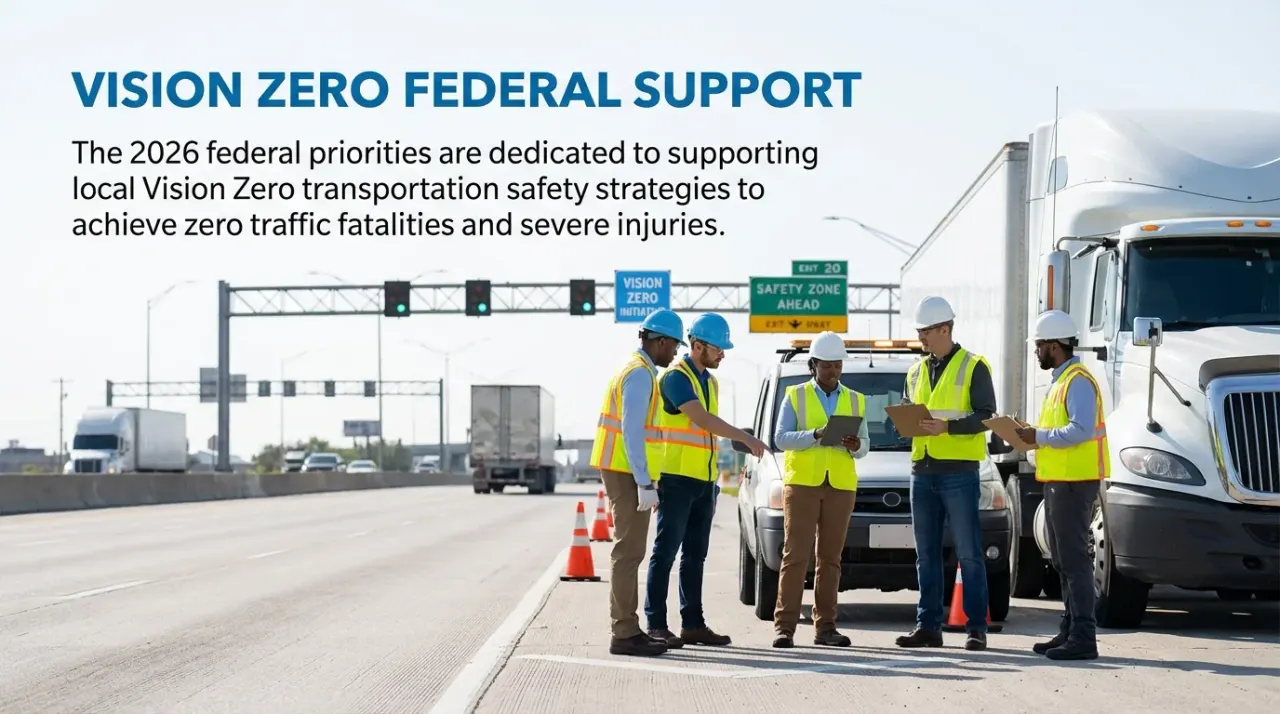
The 2026 federal policy priorities include support for local safety strategies aligned with Vision Zero–style efforts, targeting complete elimination of transport-related fatalities through coordinated action across engineering, enforcement, education, and emergency response.
To strengthen your own safety management approach, explore MAEZ insights or contact MAEZ for practical compliance advisory tailored to Australian transport operators.
How MAEZ works
Find the gaps. Fix the system. Prove the controls.
MAEZ helps transport operators deal with the compliance risk they already know is there. We help get the Safety Management System in order, protect NHVAS accreditation, reduce fine exposure, and connect training, evidence, and CoRGuard workflows where software is needed.
Find
Identify what is exposed before an auditor or regulator does.
Fix
Build the SMS controls around how the transport business actually runs.
Prove
Use CoRGuard where records, reminders, diaries, audits, and evidence need structure.
From advice to evidence
From MAEZ advice to a working Safety Management System
Advisory work should leave a practical implementation trail. These examples show how CoRGuard supports records, fatigue and driver diary checks, maintenance, audits, document control, inductions, corrective actions, and evidence review after MAEZ identifies the gaps.
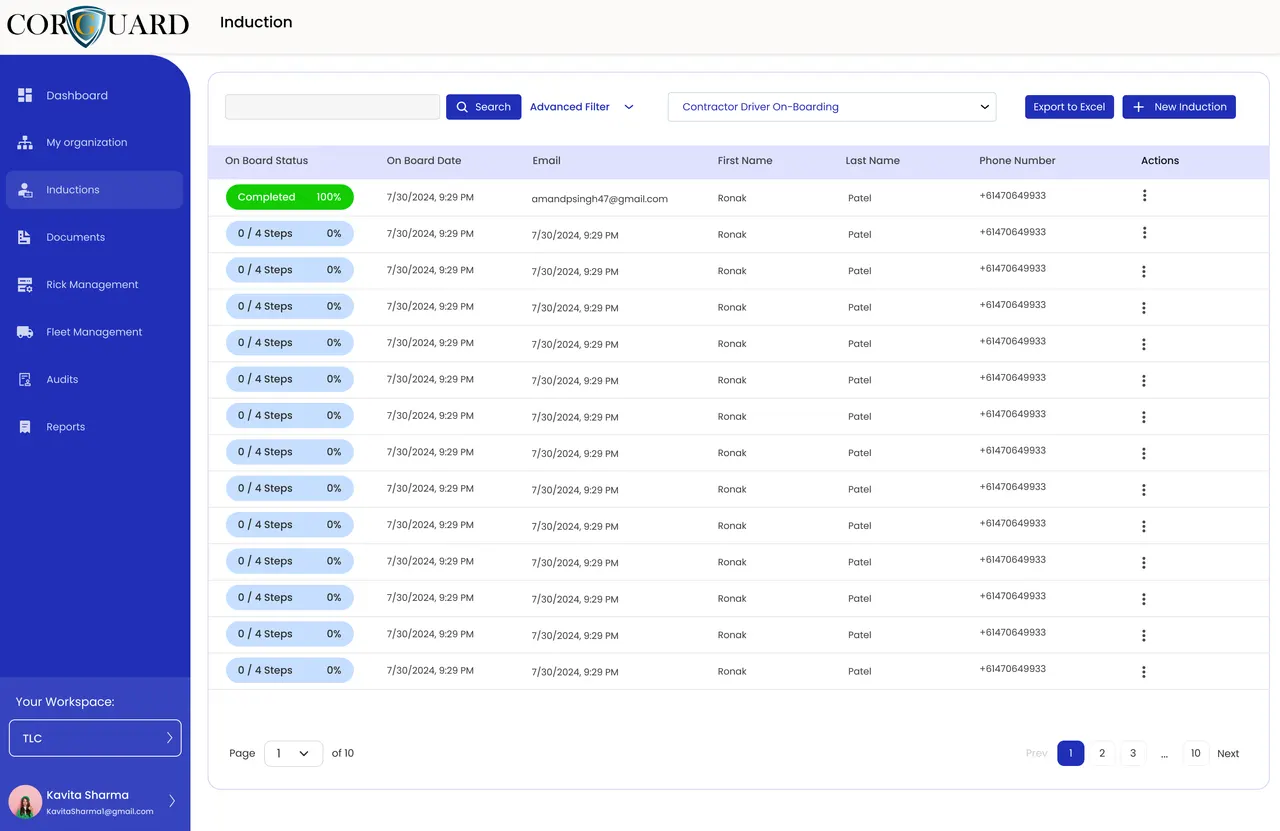
Training records
Connect training completion from cortraining.com.au to evidence and follow-up.
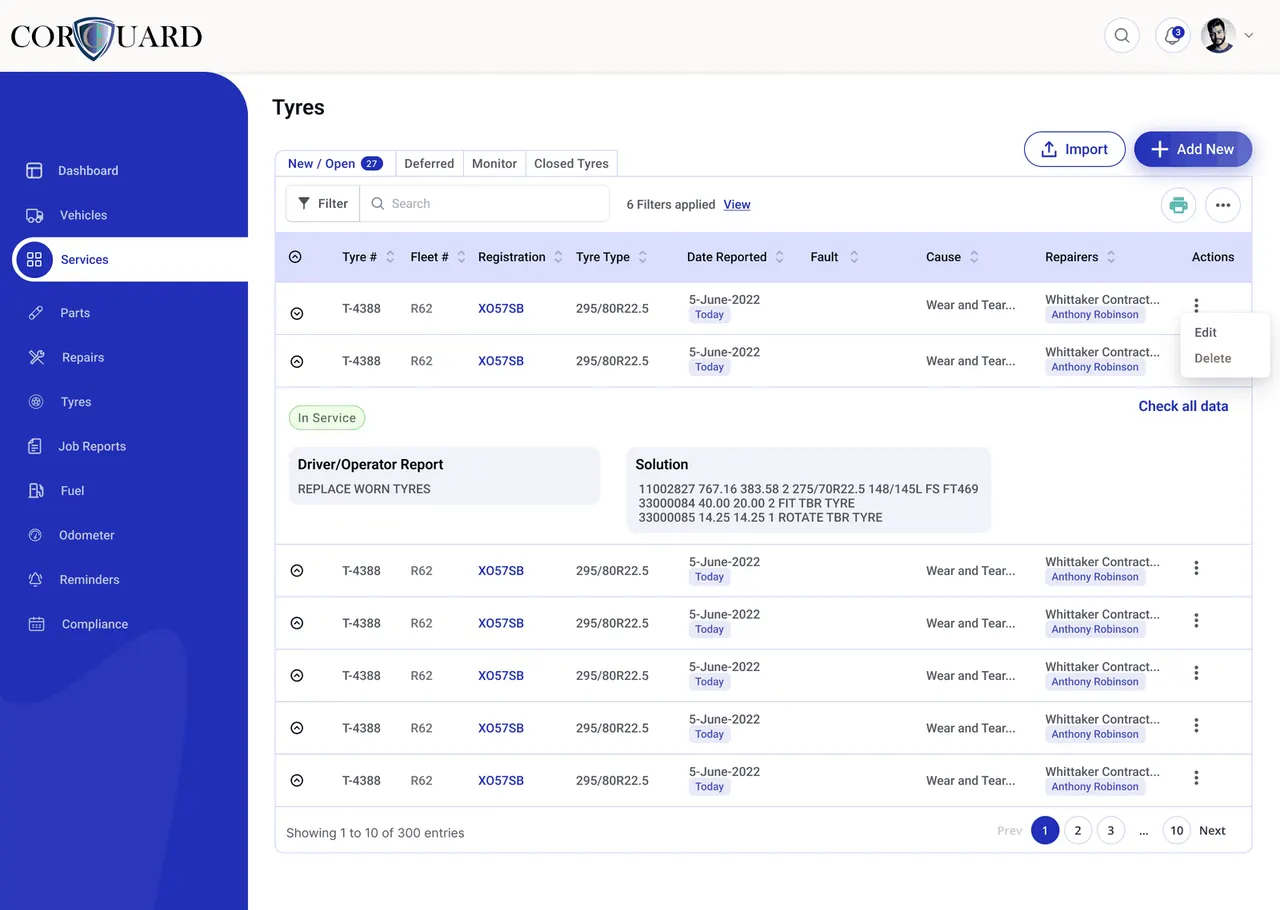
Driver diary checks
Connect fatigue and driver diary review back to manager visibility.
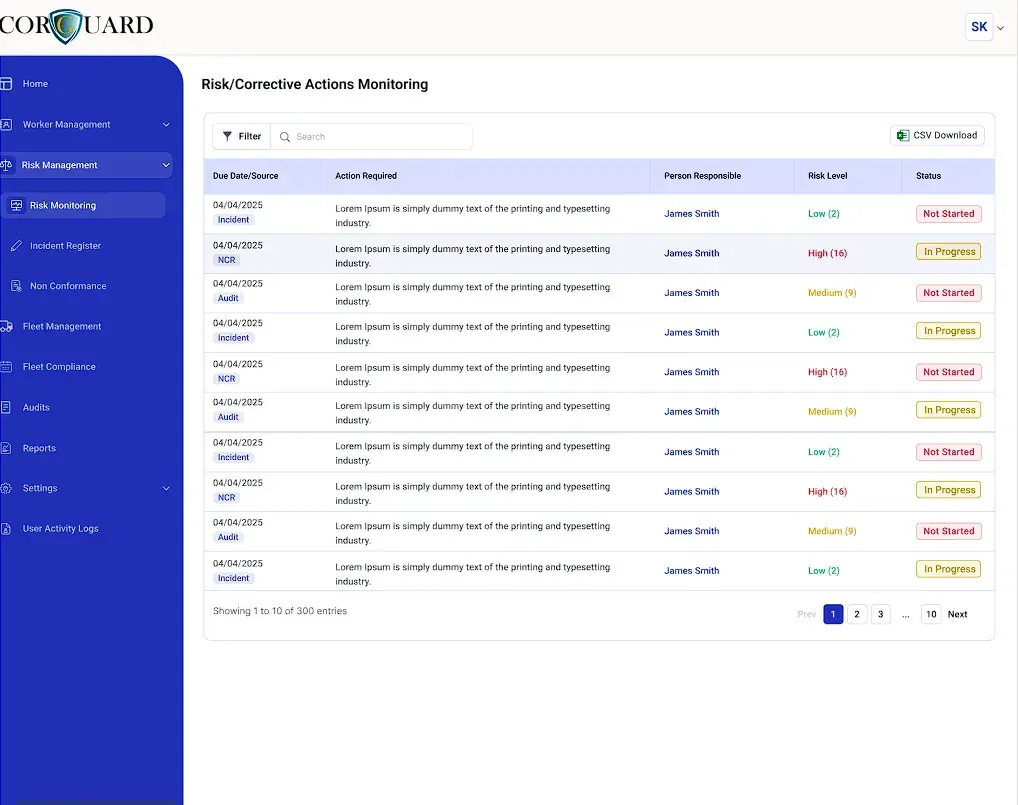
Corrective actions
Turn audit findings, hazards and incidents into tracked actions.
Keep exploring
Related Chain of Responsibility reading
MAEZ insight
Understanding Common Transport Safety Issues Explored
Discover the critical common transport safety issues impacting drivers and fleets. Learn about fatigue, distracted driving, and more in this insightful guide.
MAEZ insight
Crafting an Effective Transport Safety Policy: A Guide
Learn how to develop transport safety policy with our comprehensive guide. Balance compliance and reality for a safer transportation framework.
MAEZ insight
Understanding the Heavy Vehicle National Law Explained
Explore the comprehensive heavy vehicle national law overview, unified safety standards, and the NHVR’s role in regulation across Australia.
MAEZ insight
Common Challenges in Safety Management Systems Explored
Explore common safety management system issues, from leadership visibility to data overload, and learn how to avoid these pitfalls for safer workplaces.
MAEZ insight
Top Safety Management System Best Practices Explained
Discover effective safety management system best practices to reduce risks and improve workplace safety. Learn how operational tools can transform safety.
MAEZ insight
Effective Strategies for Implementing COR Training
Discover how to implement COR training with effective strategies tailored to FAC-COR certification levels. Elevate your skills in contract management.
Frequently asked questions
Questions people ask about this topic
What is driving the shift toward systems-based transport safety regulation?
Regulators are replacing reactive compliance models with proactive risk identification systems, redirecting enforcement resources toward high-risk operators and systemic failures. This reflects lessons from major incidents where investigations found systemic—not isolated—failures, and mirrors Australian HVNL duties requiring executives to actively manage transport safety risks.
How do Safety Management System requirements apply across transport modes?
SMS frameworks are expanding across all transport sectors, requiring organisations to document safety policies, conduct hazard identification and risk assessments, implement corrective action tracking, and establish performance metrics. The four core components are Safety Policy, Safety Risk Management, Safety Assurance, and Safety Promotion.
What is FMCSA's MOTUS and why does it matter for Australian operators?
MOTUS consolidates multiple legacy FMCSA registration systems into a unified platform, requiring carriers to update their processes. While it is a U.S. initiative, the broader lesson is that when regulators modernise oversight systems, operators with outdated documentation and processes are most exposed—making a structured gap review essential.
How do hazard identification and risk mitigation principles align with Australian CoR obligations?
SMS hazard identification, risk assessment, and hierarchy-of-controls mitigation principles map directly to Chain of Responsibility expectations under the HVNL. Australian operators must demonstrate that these processes are documented, operational, and defensible, with evidence that contractor controls are verified before work begins.
What emerging transport safety regulations should operators monitor?
Operators should monitor FMCSA's Drug and Alcohol Clearinghouse enhancements, proposed autonomous truck rules, commercial driver licensing standardisation, and Vision Zero–style local safety strategies. Early guidance suggests SMS principles will apply to autonomous operations, requiring robust safety management regardless of automation level.