
MAEZ insight
Transport Safety Best Practices for Australian Operators
Evidence-based transport safety best practices for Australian operators: zero-harm vision, seat belt and restraint systems, distracted driving, speed management, and impairment prevention aligned with HVNL duties.
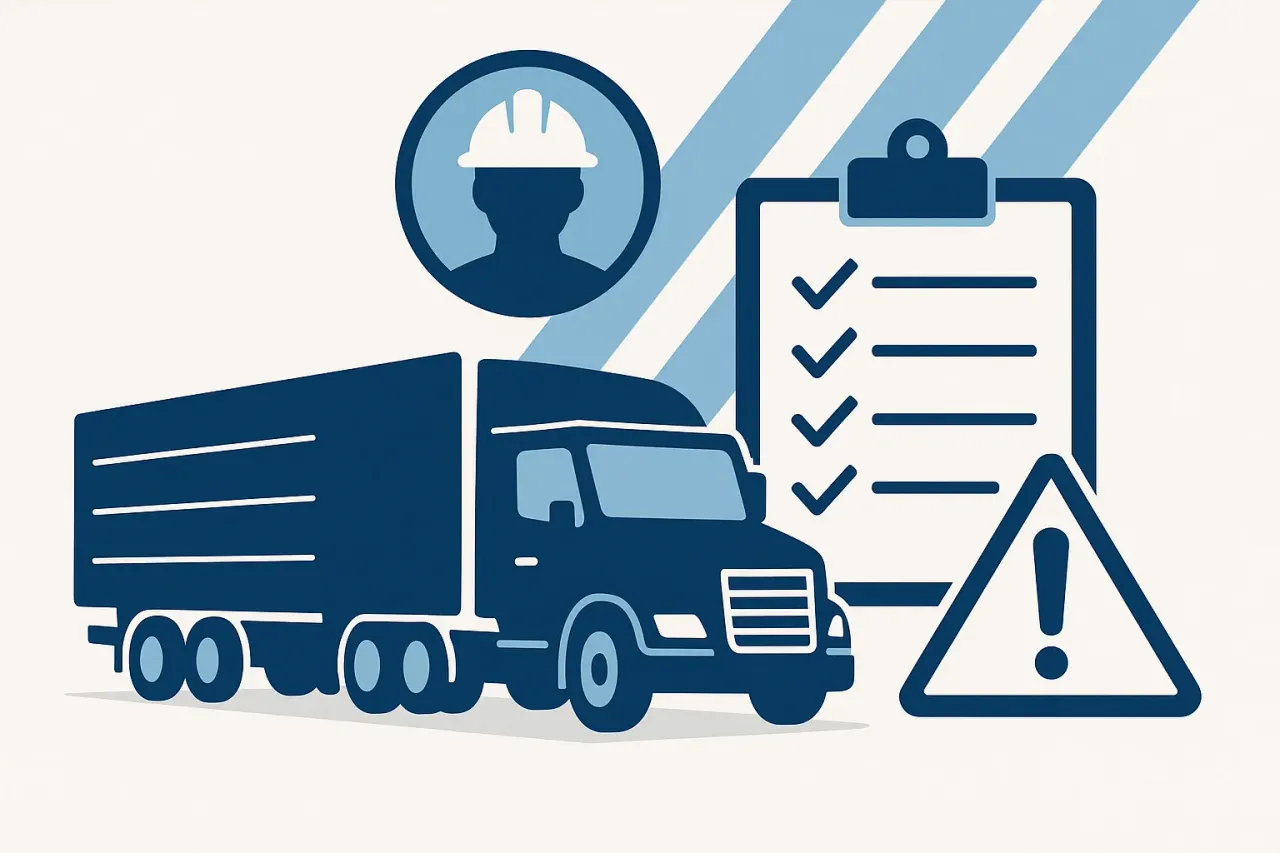
Daily fleet activity has to connect back to duties, controls, and review.

Due diligence means knowing whether the safety system is actually working.

Proof that freight promises do not create unsafe transport pressure.

Loading controls need evidence, not assumptions.
Consignors
Freight terms, delivery windows, and KPIs must not push drivers into speed, fatigue, or mass breaches.
Consignees
Receiving rules, site access, and unloading delays are CoR controls that need to be set and evidenced.
Loaders
Mass, dimension, and load restraint decisions need documented checks, not assumptions.
Managers
Executives and managers need due-diligence evidence that the Safety Management System is actually working.
What are the best transport safety practices for Australian operators?
A practical, evidence-based summary for duty holders
Transport safety best practices for Australian operators centre on building a zero-harm safety vision backed by leadership accountability, mandating 100% seat belt use, eliminating distracted driving through strict mobile device policies, managing speed for current road conditions rather than just posted limits, and preventing impaired driving with zero-tolerance testing and fitness-for-duty controls. Each practice must connect back to HVNL primary duties and Chain of Responsibility obligations with documented evidence.
Safety systems protect people and prove compliance. Proper safety frameworks reduce incidents, lower insurance costs, and streamline operations — organisations that prioritise safety achieve significant cost savings while maintaining regulatory compliance under the Heavy Vehicle National Law.
The HVNL establishes a principle of shared responsibility across the supply chain and imposes a primary duty on each party to ensure safety so far as is reasonably practicable. This guide covers evidence-based best practices spanning driver behaviour, vehicle maintenance, vulnerable road user protection, and organisational safety culture.
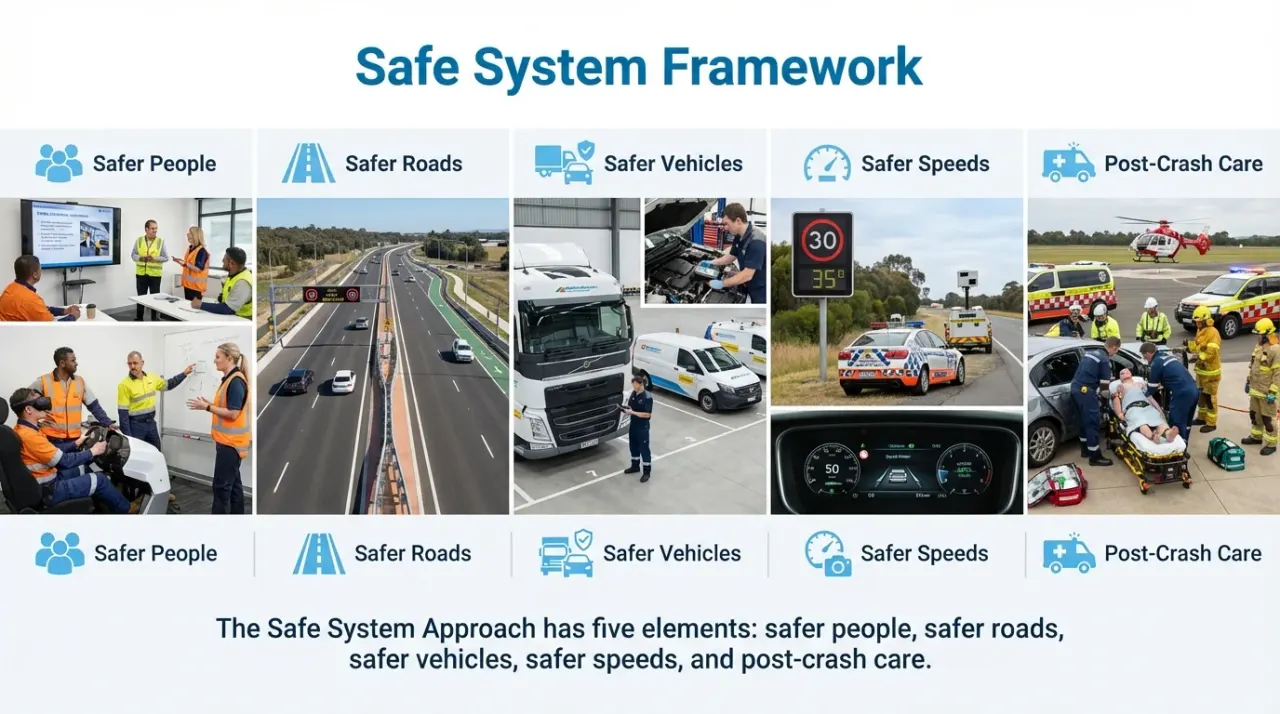
The practices align with the Safe System approach, which recognises that humans make mistakes and designs road systems, vehicles, and speeds to minimise harm when crashes occur. Each section connects safety practice back to duties, controls, and evidence.
Building a zero-harm safety vision
Leadership commitment and measurable goals
Effective transport safety starts with an organisational commitment to zero fatalities and serious injuries. This is not aspirational language — it is a measurable goal that shapes every safety decision. Set clear safety goals tied to crash data, not just compliance requirements.
Analyse your historical incident patterns, identify high-risk routes or operations, and establish reduction targets with specific timelines. Leadership must demonstrate visible commitment through resource allocation and accountability structures. Safety cannot be delegated to a single department while operations prioritise speed over safe practices.
Implement regular safety performance reviews that examine both lagging indicators (crashes, injuries) and leading indicators (near-misses, hazard reports, training completion). This dual focus identifies problems before they cause harm. Under the HVNL, executives of legal entities hold a specific duty to exercise due diligence — knowing whether the safety system is actually working is part of that obligation.
Practical leadership actions
- Monthly safety committee meetings with cross-functional representation
- A dedicated safety budget separate from operational funds
- Executive-level safety accountability with performance metrics
- Regular communication of safety performance to all staff
- Recognition programs for safety improvements and hazard reporting
Establish a safety culture where workers report concerns without fear of punishment. Your safety vision should connect to the Safe System approach, shifting focus from blame to system design.
Seat belts and restraint systems
The single most effective way to prevent fatalities
Seat belt usage remains the single most effective way to prevent fatalities and serious injuries in motor vehicle crashes. Yet compliance gaps persist across commercial and private transport operations. Mandate 100% seat belt usage for all vehicle occupants, regardless of trip length or vehicle type.
Short trips within facilities or slow-speed operations do not exempt drivers from restraint requirements. For commercial vehicles, conduct pre-operation checks that include seat belt inspection — look for fraying, improper retraction, and secure mounting points. Replace compromised belts immediately.
Proper positioning
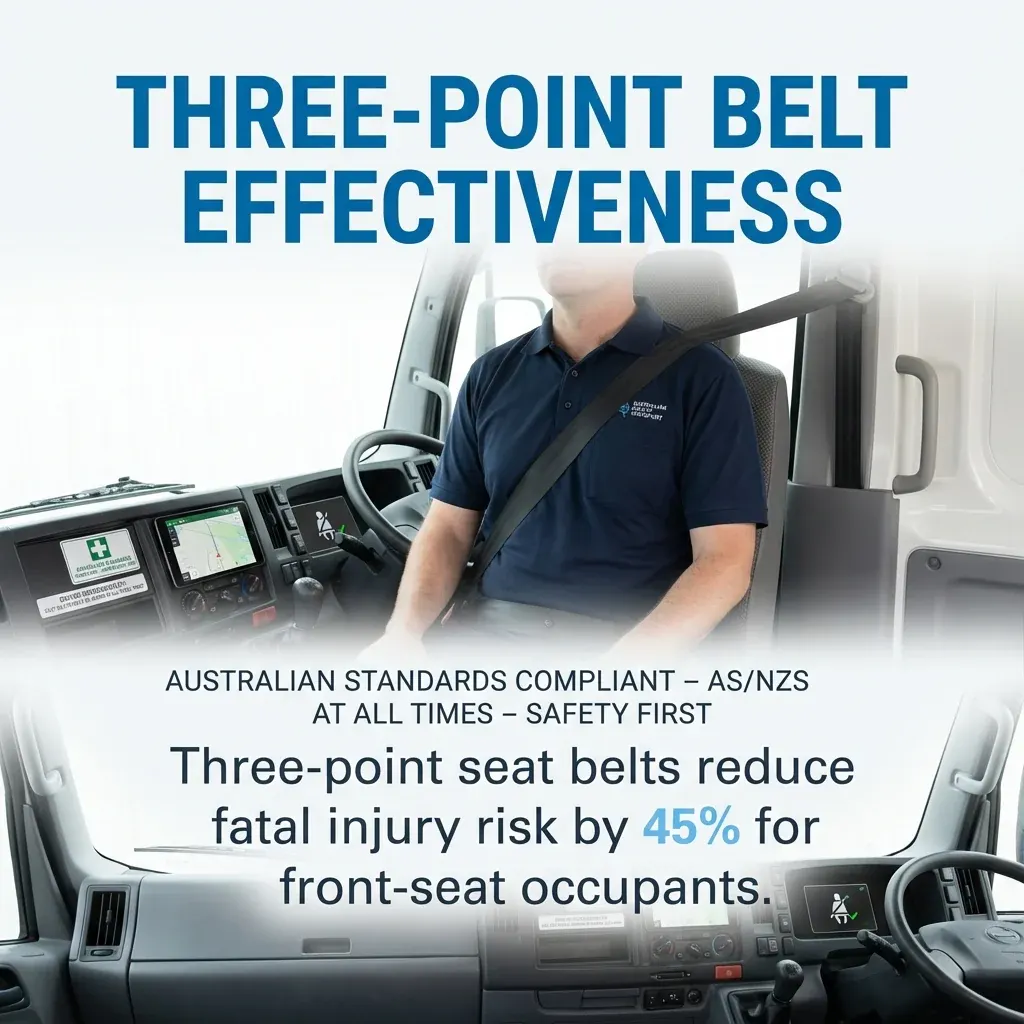
Train drivers on correct seat belt positioning. The lap belt should sit low across the hips, not the stomach. The shoulder belt should cross the chest and shoulder, not the neck or face. Three-point seat belts reduce fatal injury risk by approximately 45% for front-seat occupants — make 100% restraint use non-negotiable.
Restraint types and use cases
- Three-point seat belt — standard passenger vehicles; reduces fatal injury risk by roughly 45% for front-seat occupants
- Child safety seat — infants and toddlers; proper installation is critical for effectiveness
- Booster seat — children 4–8 years; positions the adult belt correctly on smaller bodies
- Commercial harness systems — heavy vehicles with unique seating; must meet specific regulatory standards
Monitor seat belt compliance through telematics systems that alert when drivers operate vehicles without fastened restraints. Some modern fleets use in-cab technology that prevents vehicle operation until belts are secured. Address non-compliance immediately with coaching focused on safety outcomes, not punishment. Understand barriers to compliance — such as uncomfortable belts or clothing interference — and solve the underlying problem.
Eliminating distracted driving
Five seconds at 55 mph is a football field blind
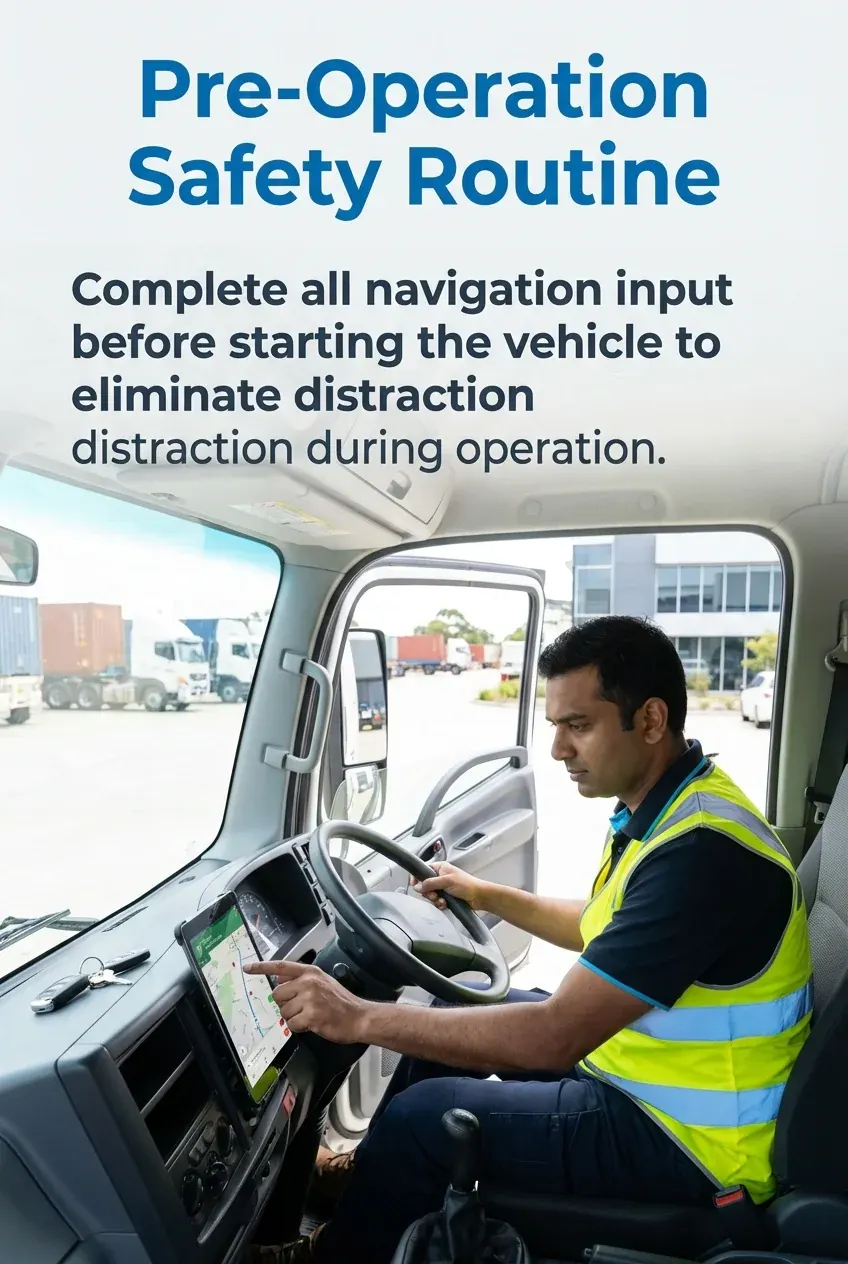
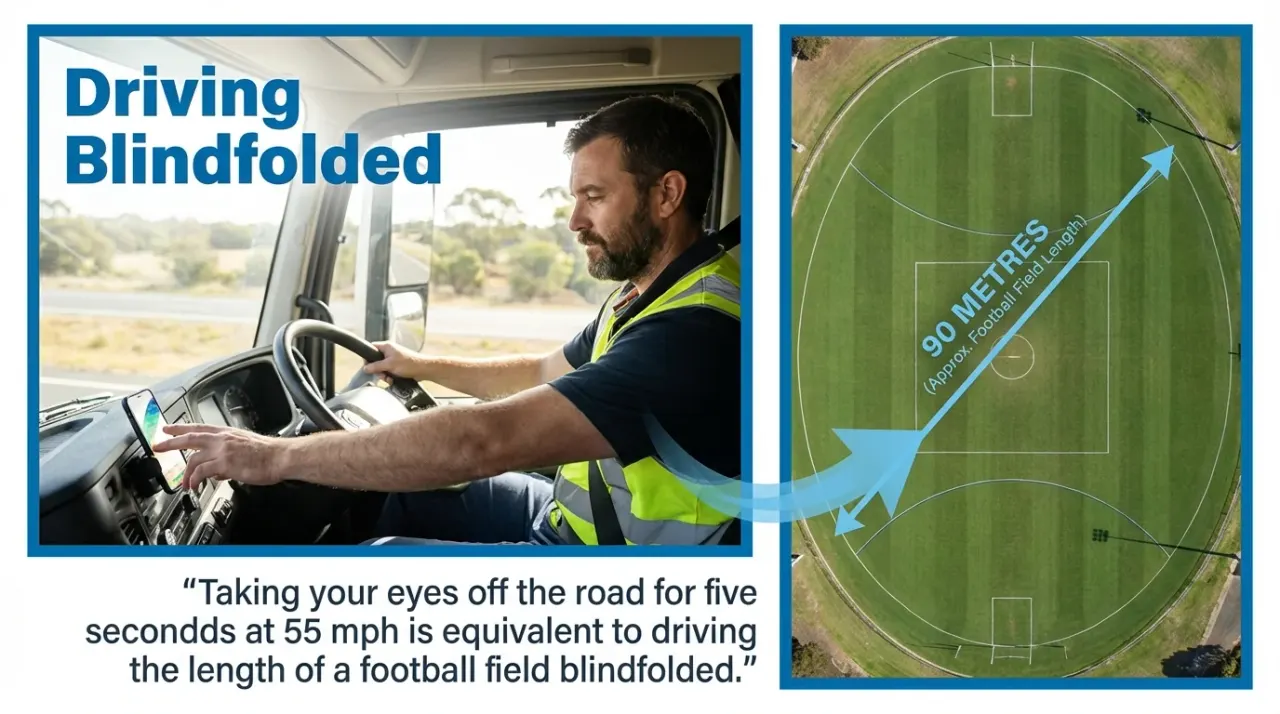
Distracted driving causes preventable crashes across all transport modes. Taking your eyes off the road for five seconds at 55 mph is equivalent to driving the length of a football field blindfolded. Eliminate distractions before you roll.
Implement strict mobile device policies that prohibit handheld phone use while operating any vehicle. This includes hands-free conversations during high-risk driving situations such as adverse weather or heavy traffic. Manual, visual, and cognitive distractions all impair safe driving — eating, adjusting controls, reading displays, and conversations with passengers demand attention that should focus on road conditions.
For commercial operations, install hands-free communication systems that minimise distraction. Route optimisation software should provide turn-by-turn audio guidance rather than requiring drivers to read screens.
Driver training essentials
- Complete all navigation input before starting the vehicle
- Pre-set climate controls, mirrors, and seat positions
- Pull over safely to handle phone calls or texts
- Avoid eating or drinking while the vehicle is moving
- Use voice commands for essential in-vehicle technology
Driver-facing cameras provide objective data on distraction events. Review footage to identify patterns and provide targeted coaching rather than relying on post-crash investigations. Technology solutions help but are not sufficient alone — build a safety culture where drivers understand how distraction impairs their ability to react.
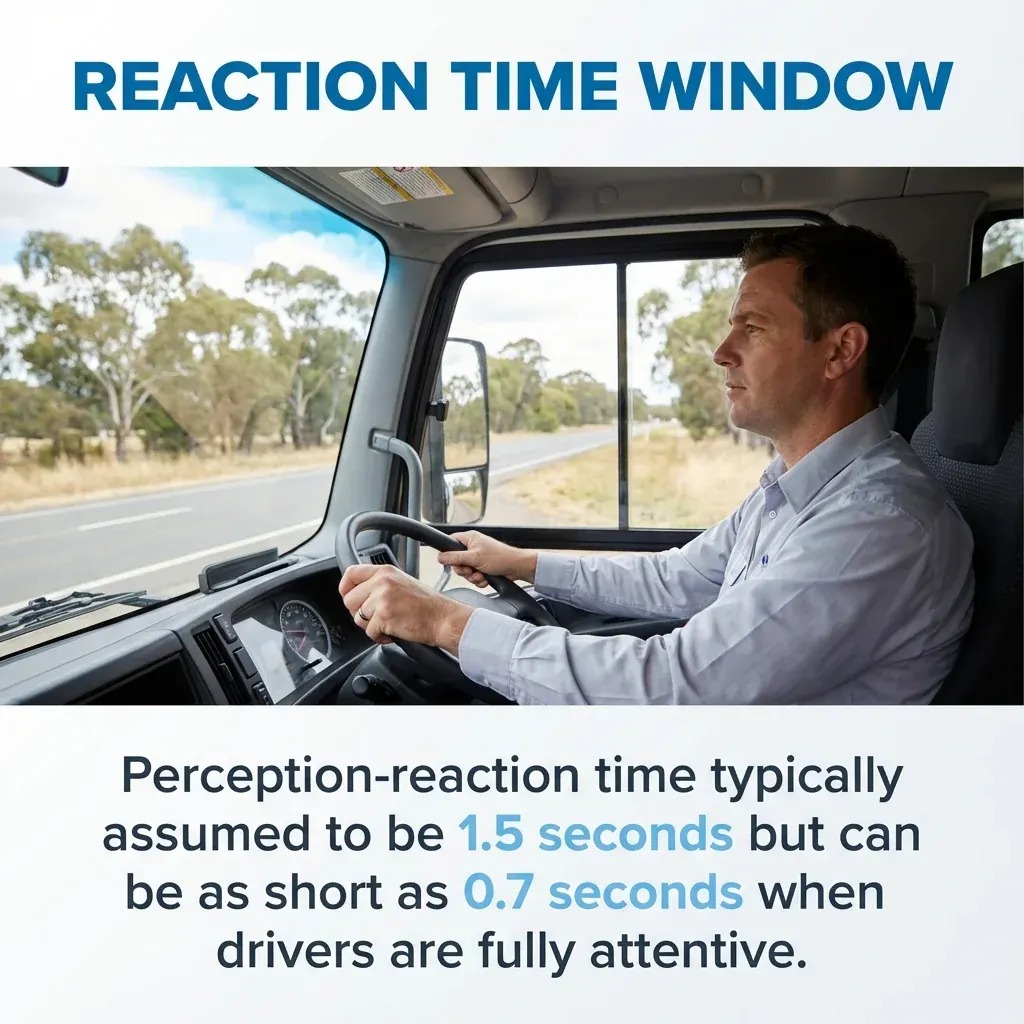
Perception-reaction time is typically assumed to be around 1.5 seconds but can be as short as 0.7 seconds when drivers are fully attentive. Even small distractions multiply crash risk by reducing the time available to identify and respond to hazards.
Speed management for current conditions
Safe speeds go beyond posted limits
Speed management extends beyond speed limit compliance to driving at speeds appropriate for current road conditions, traffic density, visibility, and vehicle characteristics. Posted speed limits establish maximum speeds under ideal conditions — rain, fog, darkness, construction zones, and heavy traffic all require reduced speeds to maintain safe stopping distances.
Understand stopping distance components: perception time, reaction time, and braking distance. All three increase with speed. At higher speeds, the increased kinetic energy makes crashes more severe. For heavy vehicles, weight dramatically affects stopping distance — loaded trucks require significantly more distance to stop than passenger vehicles, particularly on downhill grades or slippery surfaces.
Address schedule pressure that encourages speeding. If routes are planned with insufficient time, drivers face impossible choices between safety and meeting delivery windows. Fix the schedule, not the speed. Under Chain of Responsibility obligations, schedulers and consignors share responsibility for ensuring delivery times do not create unsafe transport pressure.
Speed management program elements
- Vehicle speed limiters set below maximum legal limits
- Telematics monitoring of speed violations and harsh braking events
- Route planning that accounts for realistic travel times without excessive speeding
- Progressive discipline for speed violations that endanger others
- Coaching on maintaining safe following distances
Speed adjustments by condition
- Rain — reduce 10–15 km/h; decreased traction and visibility
- Heavy fog — reduce to safe visibility range; limited hazard detection distance
- School zones — comply with reduced limits; vulnerable road users present
- Construction zones — obey temporary speed limits; changed road geometry and worker safety
- Night driving — reduce for limited visibility; shorter sight distance beyond headlight range
Speed management connects directly to crash severity. The Safe System approach emphasises safe speeds as a pillar of road safety alongside safer roads, safer vehicles, safer people, and post-crash care. For practical support, CoR consulting can help identify where scheduling or speed-related gaps create compliance risk.
Preventing impaired driving
Alcohol, drugs, and medications
Impaired driving from alcohol, illegal drugs, prescription medications, and over-the-counter substances causes preventable crashes, serious injuries, and fatalities across transport operations. Implement zero-tolerance policies for alcohol and illegal drugs.
For commercial operations, this includes compliance with drug and alcohol testing regulations for safety-sensitive positions. Pre-employment, random, post-incident, and reasonable suspicion testing programs deter impaired operation and identify problems before crashes occur. Testing protocols must follow legal requirements and protect employee privacy while maintaining safety standards.
Educate drivers on prescription and over-the-counter medications that impair driving ability. Antihistamines, sleep aids, pain medications, and certain antidepressants cause drowsiness or reduced reaction times. Create a reporting culture where drivers can disclose medication use without fear of automatic job loss. Work with medical professionals to determine if temporary duty restrictions are needed while taking impairing medications.
Signs of impairment to watch for
- Erratic speed control or lane positioning
- Delayed reactions to traffic signals or hazards
- Unusual fatigue or drowsiness during normal work hours
- Behavioural changes or mood swings
- Physical indicators such as bloodshot eyes or unsteady movement
Pair impairment prevention with structured Chain of Responsibility training so managers and supervisors understand their role in identifying and responding to fitness-for-duty concerns. For operators who want to assess where impairment and fatigue controls sit within their broader safety system, contact MAEZ for a practical review.
How MAEZ works
Find the gaps. Fix the system. Prove the controls.
MAEZ helps transport operators deal with the compliance risk they already know is there. We help get the Safety Management System in order, protect NHVAS accreditation, reduce fine exposure, and connect training, evidence, and CoRGuard workflows where software is needed.
Find
Identify what is exposed before an auditor or regulator does.
Fix
Build the SMS controls around how the transport business actually runs.
Prove
Use CoRGuard where records, reminders, diaries, audits, and evidence need structure.
From advice to evidence
From MAEZ advice to a working Safety Management System
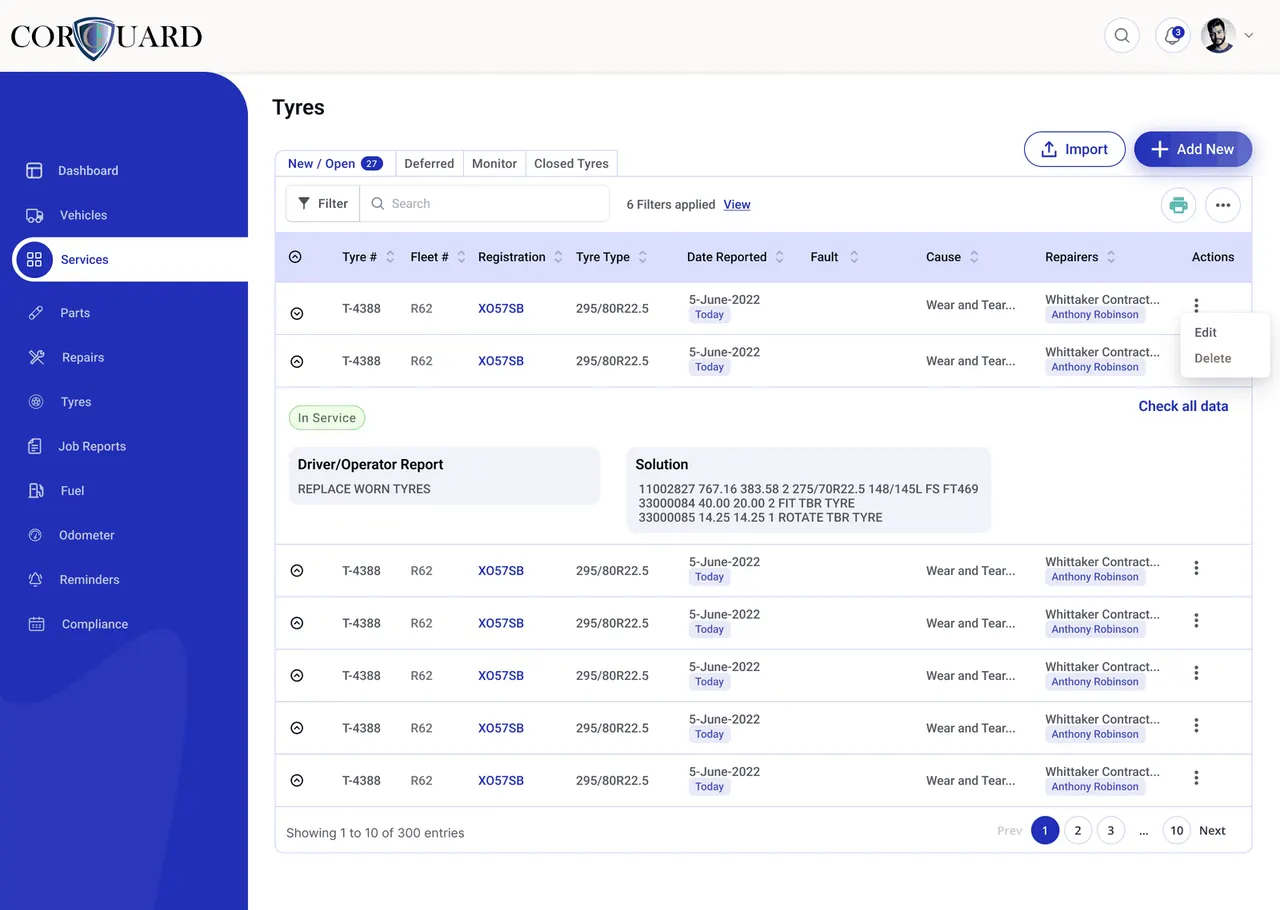
Advisory work should leave a practical implementation trail. These examples show how CoRGuard supports records, fatigue and driver diary checks, maintenance, audits, document control, inductions, corrective actions, and evidence review after MAEZ identifies the gaps.
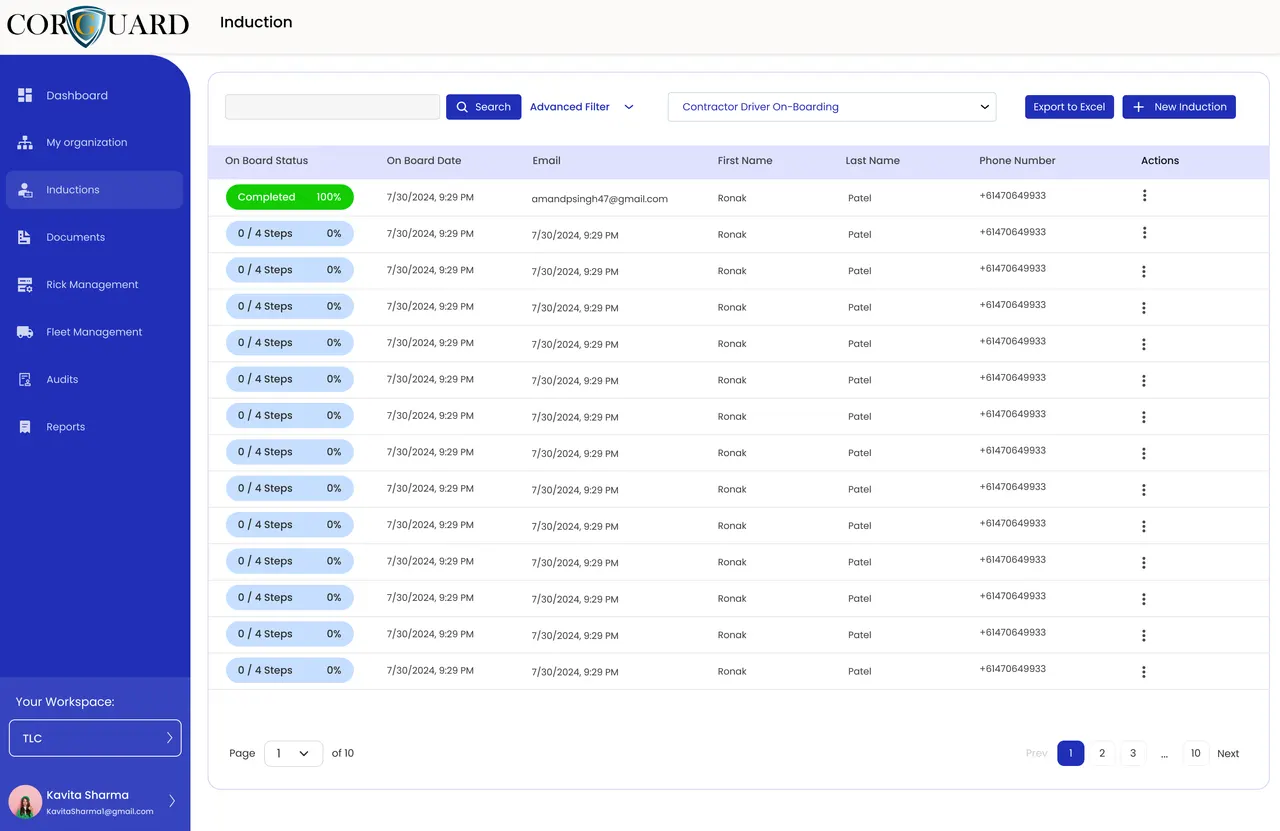
Training records
Connect training completion from cortraining.com.au to evidence and follow-up.
Driver diary checks
Connect fatigue and driver diary review back to manager visibility.
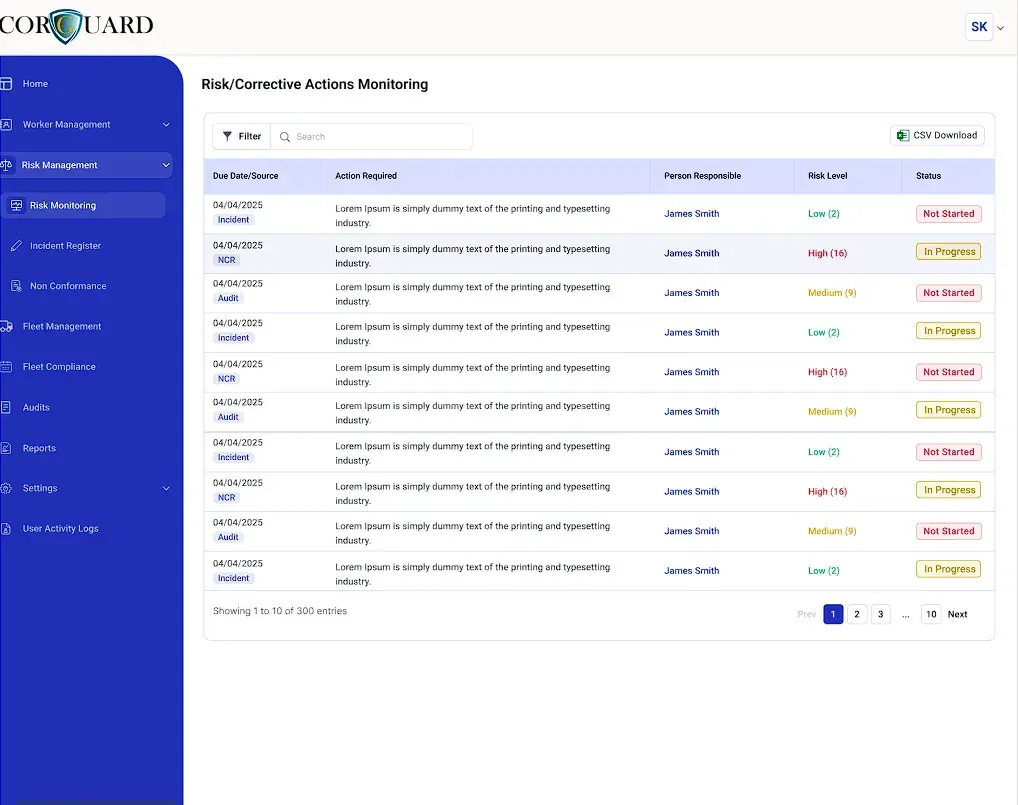
Corrective actions
Turn audit findings, hazards and incidents into tracked actions.
Keep exploring
Related Chain of Responsibility reading
MAEZ insight
Effective Strategies for Implementing COR Training
Discover effective strategies on how to implement COR training, enhancing your agency’s acquisition capabilities with structured certification pathways.
MAEZ insight
Understanding CoR Compliance: A Beginner’s Guide
Learn the essentials of CoR compliance with our beginner’s guide. Discover how to protect your business and supply chain effectively.
MAEZ insight
Decoding CoR Compliance: Key Requirements Explained
Unlock the essentials of understanding CoR compliance requirements under Australia’s Heavy Vehicle National Law, crucial for transport safety.
MAEZ insight
Essential CoR Compliance Checklist for Transport Safety
Ensure transport safety with our essential CoR compliance checklist. Manage obligations effectively under the Heavy Vehicle National Law.
MAEZ insight
Mastering Chain of Responsibility: Top Best Practices
Discover top chain of responsibility best practices to streamline your processing pipelines. Learn how to manage handlers for effective design pattern use.
MAEZ insight
Understanding HVNL: A Guide for Transport Operators
Discover HVNL explained for transport operators to ensure compliance with Australia’s heavy vehicle regulations, including fatigue and safety standards.
Frequently asked questions
Questions people ask about this topic
How does the HVNL affect transport safety best practices for Australian operators?
The HVNL establishes a principle of shared responsibility across the supply chain and imposes a primary duty on each party to ensure safety so far as is reasonably practicable. Operators must connect daily fleet activity back to duties, controls, and documented evidence rather than treating safety as a checkbox exercise.
What is the most effective single action to prevent transport fatalities?
Mandating 100% seat belt usage for all vehicle occupants is the single most effective measure — three-point seat belts reduce fatal injury risk by approximately 45% for front-seat occupants. Pre-operation checks should include seat belt inspection for fraying, improper retraction, and secure mounting.
How should operators manage speed beyond posted limits?
Operators should drive at speeds appropriate for current conditions — rain, fog, darkness, construction zones, and heavy traffic all require reduced speeds. Schedule pressure that encourages speeding should be addressed by fixing the schedule, not the speed, with schedulers and consignors sharing responsibility under Chain of Responsibility obligations.
What should a transport drug and alcohol policy include?
An effective policy includes zero tolerance for alcohol and illegal drugs, pre-employment and random testing for safety-sensitive positions, education on impairing prescription and over-the-counter medications, and a reporting culture where drivers can disclose medication use without fear of automatic job loss.
What is the executive duty under the HVNL regarding transport safety?
Executives of legal entities hold a specific duty to exercise due diligence, which means knowing whether the safety system is actually working. This includes reviewing both lagging indicators like crashes and leading indicators like near-misses and hazard reports to identify problems before they cause harm.