
MAEZ insight
Spend Less on Fuel: Motormouth App Review
A practical review of the Motormouth fuel-saving app for Australian transport operators — features, reliability, and how fuel decisions connect to Chain of Responsibility and transport compliance.

Receiving windows, site rules, and unloading delays can all shape the transport task.
Unloading decisions can affect safety, scheduling, and responsibility.

Managers need a clear view of gaps before audit or enforcement pressure arrives.

Contractor controls should be verified before the work starts.
Consignors
Freight terms, delivery windows, and KPIs must not push drivers into speed, fatigue, or mass breaches.
Consignees
Receiving rules, site access, and unloading delays are CoR controls that need to be set and evidenced.
Loaders
Mass, dimension, and load restraint decisions need documented checks, not assumptions.
Managers
Executives and managers need due-diligence evidence that the Safety Management System is actually working.
What is the Motormouth app and does it help transport operators save on fuel?
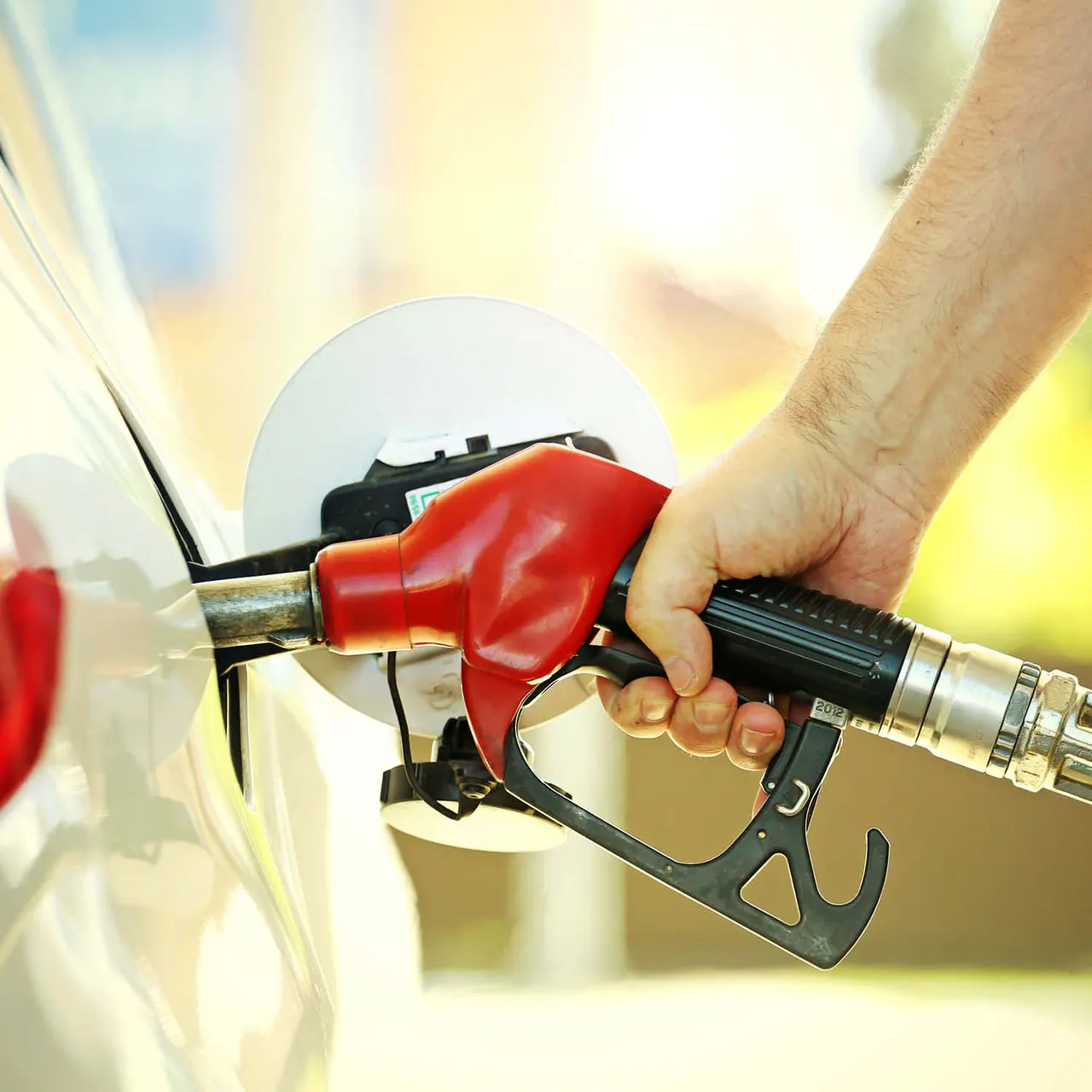
The Motormouth app is a free mobile tool for Android and Apple that shows location-based fuel prices—including diesel—so Australian transport operators can find the cheapest fill-up points along a route. It uses crowd-sourced pricing data, lets users submit updated prices, and helps owner-operators and small fleets reduce one of their largest variable costs without compromising safety or compliance.
Motormouth has long aimed to help drivers spend less on fuel, and the mobile app brings that function to everyday use. The standout feature is flexibility: you can search for whatever fuel you want, including diesel, which matters for owner-operators and transport businesses watching every cent. When fuel prices keep climbing, tools that help you plan fills along a route can make a real difference to operating costs.
The app is available for both Android and Apple phones and can be found by searching "Motormouth" directly in either app store.
How the Motormouth app works in practice
Location-based price updates and crowd-sourced fuel data
Once you set up an account, the app updates your location and shows fuel prices around you each time you open it. You can check the best places to fill up along a planned route, filter by your fuel type, and save money on the journey.
Handy features include:
- Ability to input updated fuel prices yourself and earn points toward benefits
- Option to share price updates with friends or colleagues, helping keep the data fresh for everyone
- Route-based planning so you can compare stops before committing to a fill
In practice, the app is fairly reliable for finding the cheapest fuel. Some petrol stations appear "greyed out" where no one has submitted current pricing, but for the most part it provides useful, actionable information for day-to-day route planning.
Why fuel decisions matter for transport operators
For owner-operators and small fleet operators, fuel is one of the largest variable costs in the transport task. Finding cheaper fuel along a route is a straightforward way to protect margins without compromising compliance or safety.
Planning fuel stops also ties into broader operational decisions. Scheduling, fatigue management, and route selection all interact. A well-planned run that accounts for fuel, rest stops, and delivery windows reduces both cost and risk exposure.
Every cent counts when margins are tight, and small per-litre savings compound across weekly and monthly distances—especially for regional and interstate operators.
How fuel planning connects to Chain of Responsibility and compliance
Fuel efficiency sits within a wider web of operational and compliance decisions. Choosing where and when to refuel can affect scheduling, fatigue timing, and route selection—all of which feed into your Chain of Responsibility obligations under the HVNL.
Under the Heavy Vehicle National Law, parties in the chain—including schedulers, consignors, consignees, loaders, and managers—share a duty to prevent breaches related to mass, dimension, loading, speed, and fatigue. Planning that integrates fuel stops with fatigue management and delivery windows supports those obligations rather than working against them.
Tools like the Motormouth app help with the cost side; MAEZ helps with the compliance side. For a practical review of the controls, evidence, training, and SMS gaps that matter most to your operation, contact MAEZ.
Where MAEZ and CoRGuard fit alongside fuel-saving tools
MAEZ helps Australian transport businesses turn Chain of Responsibility, HVNL, WHS, transport safety, and chartered risk obligations into practical training, advisory, audit, and implementation pathways.
Where software is the right next step for managing evidence and records, CoRGuard supports the Safety Management System workflow—covering:
- Training records and CoR training completion tracking
- Fatigue and driver diary checks with manager visibility
- Maintenance scheduling and audit records
- Document control, inductions, and corrective actions
- Evidence reporting for audits and enforcement responses
If you want a practical review of the controls, evidence, training, and SMS gaps that matter most to your operation, contact MAEZ to get started.
How MAEZ works
Find the gaps. Fix the system. Prove the controls.
MAEZ helps transport operators deal with the compliance risk they already know is there. We help get the Safety Management System in order, protect NHVAS accreditation, reduce fine exposure, and connect training, evidence, and CoRGuard workflows where software is needed.
Find
Identify what is exposed before an auditor or regulator does.
Fix
Build the SMS controls around how the transport business actually runs.
Prove
Use CoRGuard where records, reminders, diaries, audits, and evidence need structure.
From advice to evidence
From MAEZ advice to a working Safety Management System
Advisory work should leave a practical implementation trail. These examples show how CoRGuard supports records, fatigue and driver diary checks, maintenance, audits, document control, inductions, corrective actions, and evidence review after MAEZ identifies the gaps.
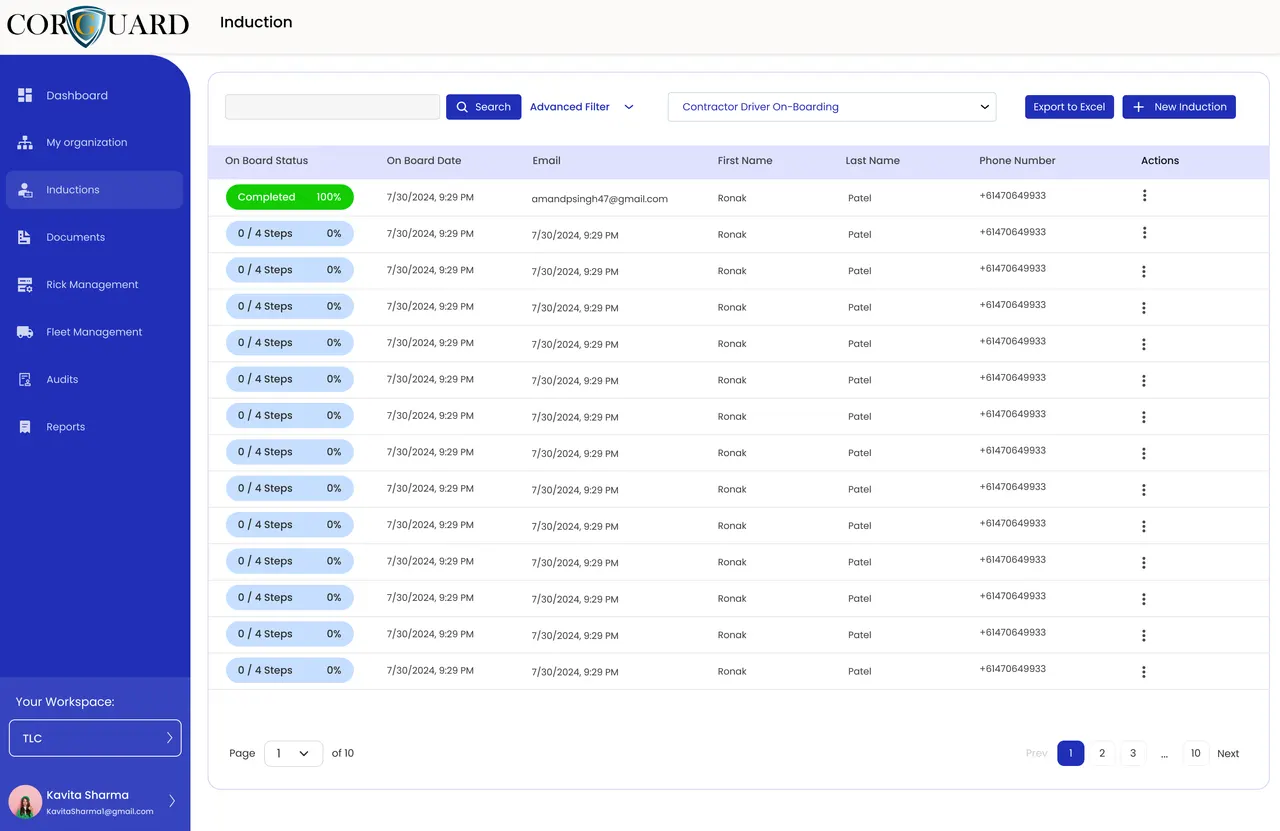
Training records
Connect training completion from cortraining.com.au to evidence and follow-up.
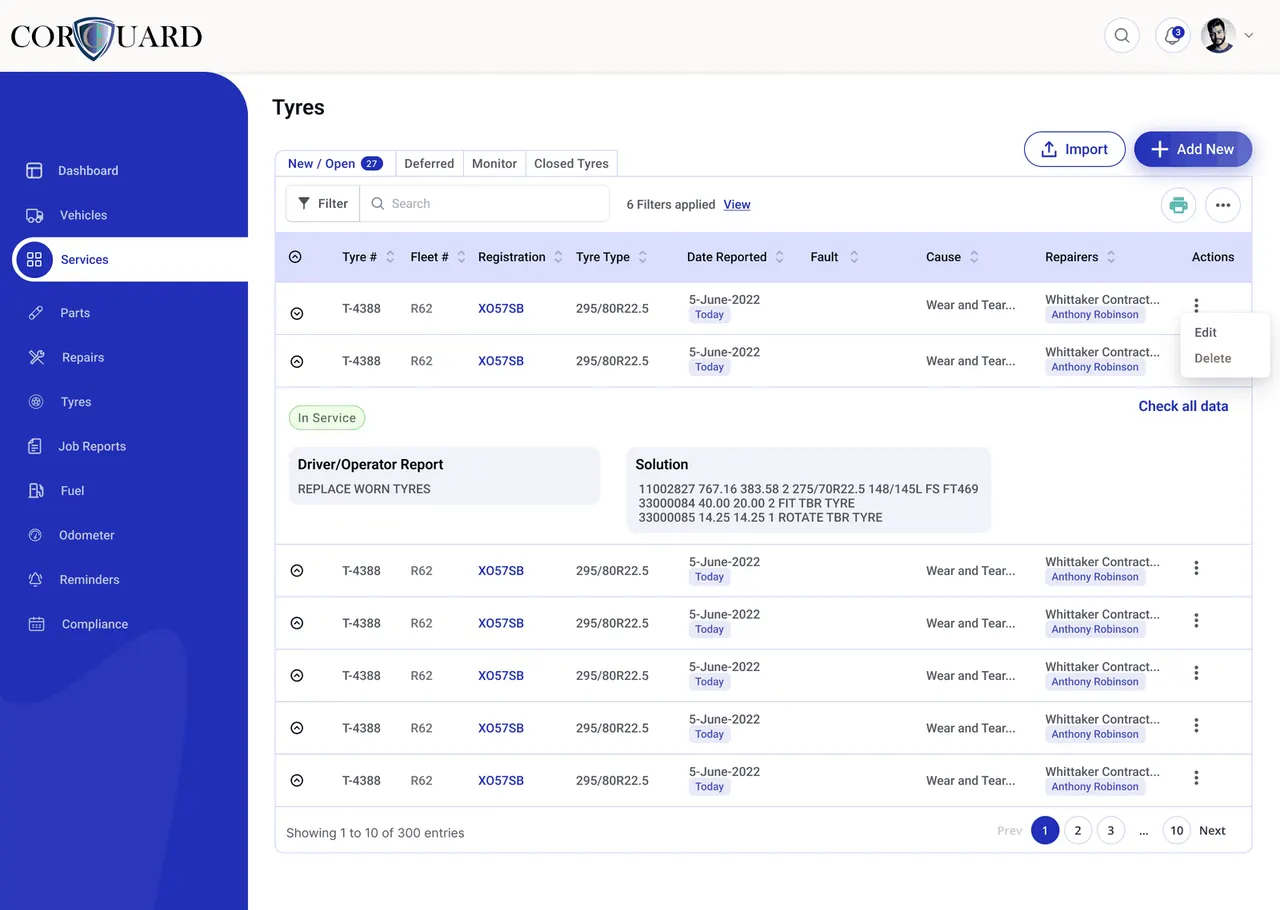
Driver diary checks
Connect fatigue and driver diary review back to manager visibility.
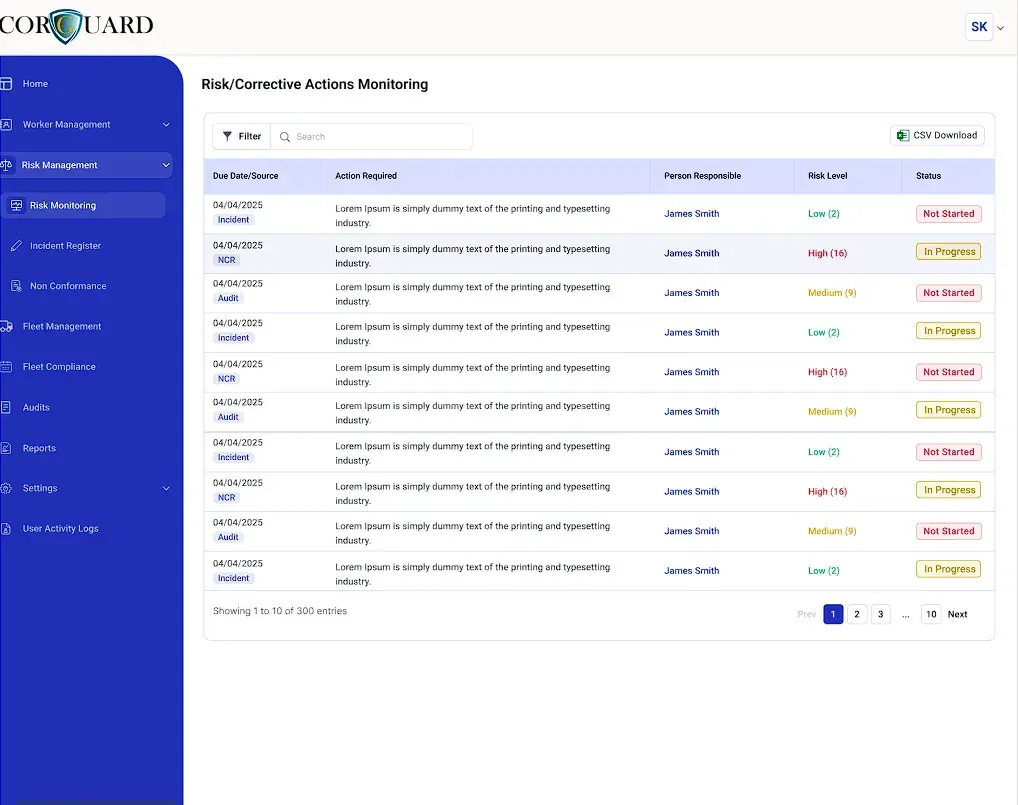
Corrective actions
Turn audit findings, hazards and incidents into tracked actions.
Keep exploring
Related Chain of Responsibility reading
MAEZ insight
The Root Cause & How To Get There
You had an incident and many things may have happened, but you need to work through each one in a RCA (root cause analysis) one by one.
MAEZ insight
Is CoR a pain for you? Here’s 5 quick tips to help you in your business today
Chain of Responsibility is fast becoming the next ‘Work Place Health and Safety’. It’s daunting, new and no-one seems to know what to do.
MAEZ insight
Chain of Responsibility (or CoR) Training
Chain of Responsibility under the HVNL places a primary duty on anyone involved in a transport activity — training helps every duty holder understand and manage that risk.
MAEZ insight
Passing Emergency Vehicles – What Do you Need To Do?
It is now an enforceable requirement to slow down when passing an emergency on the road side. It may even be required to move into another lane, depending on where you are driving.
MAEZ insight
Basic Fatigue Management (or BFM) Accreditation
Advanced Fatigue Management (or AFM) differs to Basic Fatigue Management (or BFM) in that it requires much more policy framework, as well as procedures within the organisation.
MAEZ insight
What is CoR? | CoR = Chain Of Responsibility
CoR simply means, Chain of Responsibility. It is the acronym for chain of responsibility which is basically a phrase which industry has adopted in exchange for the National Heavy Vehicle National Law, which is also known as the HVNL.
Frequently asked questions
Questions people ask about this topic
What is the Motormouth app and who is it for?
Motormouth is a free mobile app for Android and Apple that shows location-based fuel prices—including diesel—so Australian owner-operators and transport businesses can find the cheapest fuel along a planned route using crowd-sourced data.
How reliable is the Motormouth app for finding cheap fuel?
The app is fairly reliable for finding the cheapest fuel in practice. Some stations appear greyed out where no one has submitted current pricing, but most routes provide useful, actionable price information. Users can submit updated prices themselves to keep data fresh.
How do fuel decisions connect to Chain of Responsibility obligations?
Fuel stop planning interacts with scheduling, fatigue management, and route selection, all of which feed into Chain of Responsibility duties under the HVNL. A well-planned run that accounts for fuel, rest stops, and delivery windows reduces both cost and compliance risk exposure.
Does MAEZ provide Chain of Responsibility training?
MAEZ provides the advisory and risk pathway, while Chain of Responsibility training is delivered through cortraining.com.au. Where structured records and evidence are needed, CoRGuard supports the Safety Management System workflow.
What does CoRGuard do alongside fuel-saving tools like Motormouth?
CoRGuard is the SaaS Safety Management System platform used when a transport business needs structured records, reminders, audits, maintenance tracking, driver diary checks, inductions, corrective actions, and evidence reporting—complementing cost-side tools like Motormouth.