
MAEZ insight
Effective Risk Mitigation Strategies for Supply Chains
Practical supply chain risk mitigation strategies for Australian transport operators: supplier diversification, due diligence, multi-tier visibility, strategic inventory buffers, and Chain of Responsibility compliance.

Loading controls need evidence, not assumptions.
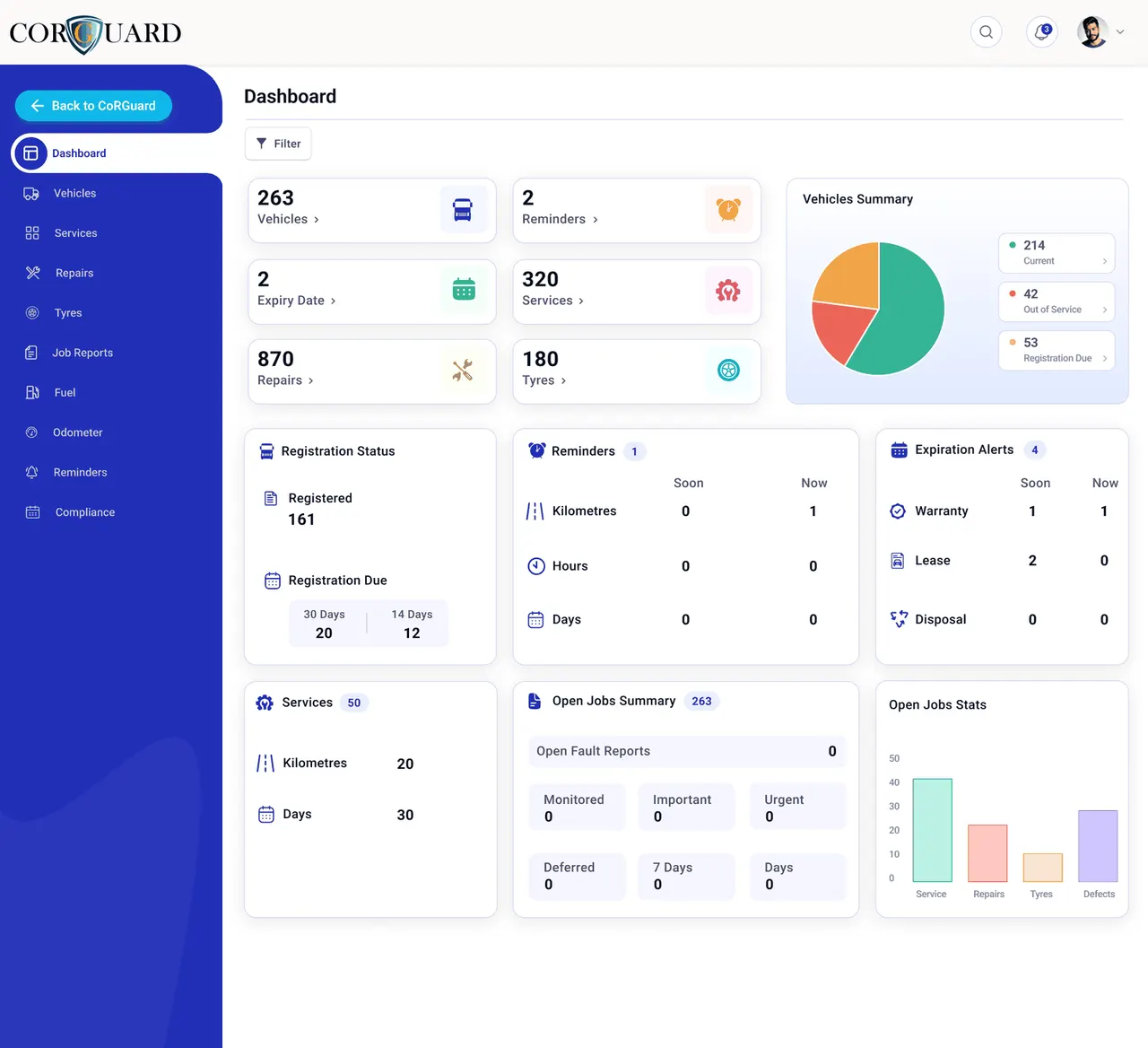
Daily fleet activity has to connect back to duties, controls, and review.

Due diligence means knowing whether the safety system is actually working.

Proof that freight promises do not create unsafe transport pressure.
Consignors
Freight terms, delivery windows, and KPIs must not push drivers into speed, fatigue, or mass breaches.
Consignees
Receiving rules, site access, and unloading delays are CoR controls that need to be set and evidenced.
Loaders
Mass, dimension, and load restraint decisions need documented checks, not assumptions.
Managers
Executives and managers need due-diligence evidence that the Safety Management System is actually working.
What are effective supply chain risk mitigation strategies?
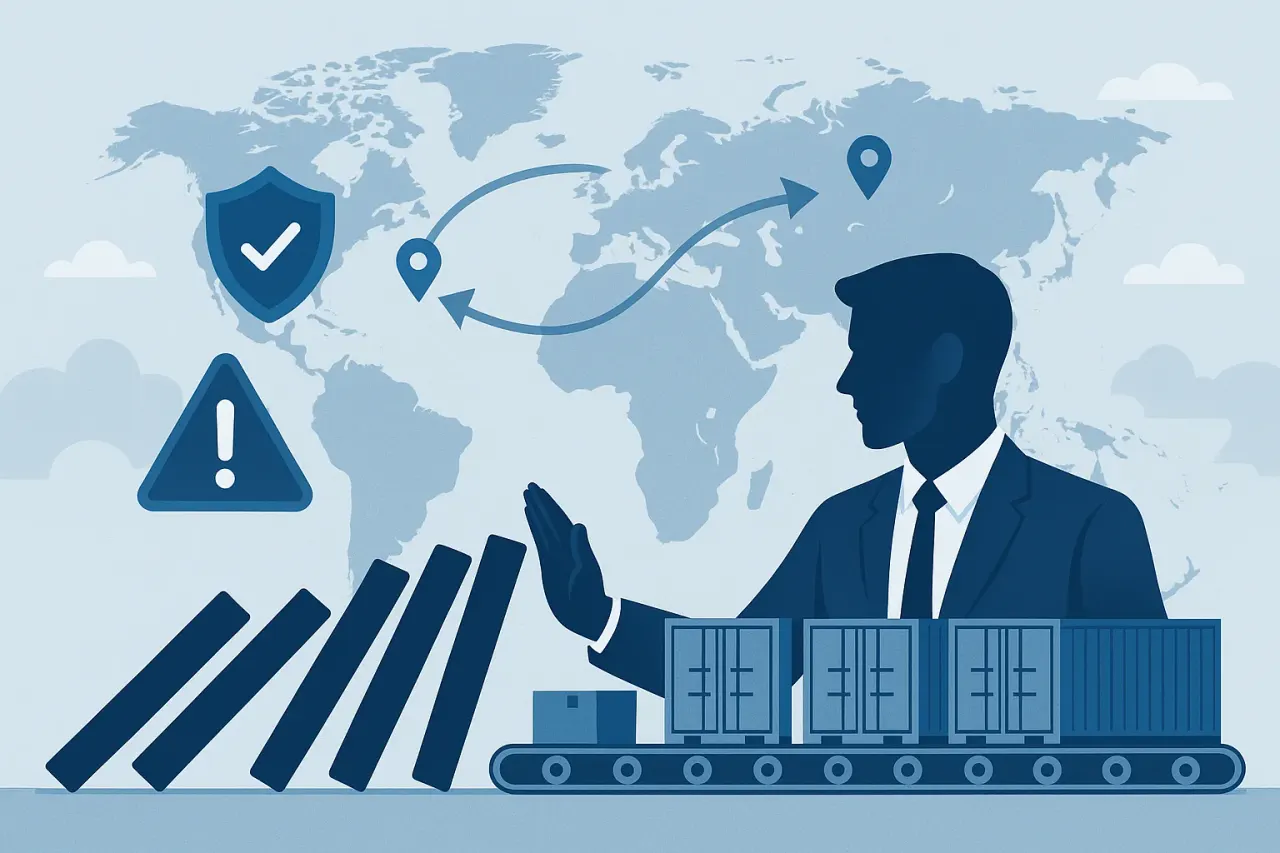
Effective supply chain risk mitigation combines supplier diversification across regions, continuous due diligence, multi-tier visibility beyond direct suppliers, and strategic inventory buffers. For Australian transport operators, Chain of Responsibility obligations add a compliance layer—partners who cut corners on mass, loading, or safety create liability extending across the entire chain.
No single strategy eliminates all risk. The goal is building layered defences that maintain operations when individual components fail—whether that is a supplier disruption, a geopolitical event, or a compliance breach within your transport network.
Learn more about how Chain of Responsibility obligations connect to your broader supply chain risk picture.
Why supply chain risk mitigation matters
From compliance obligation to operational advantage
Supply chain risk mitigation requires organisations to actively manage multiple supplier relationships, maintain strategic inventory buffers, and implement real-time monitoring systems that detect disruptions before they cascade into operational failures. The most effective strategies combine supplier diversification across geographic regions with due diligence frameworks that continuously assess vendor capabilities, financial stability, and compliance status.
Organisations that implement these foundational practices see measurably better outcomes when facing economic volatility, natural disasters, geopolitical tensions, or cybersecurity threats.
The challenge is not identifying risks—that part comes naturally when disruptions halt production or strand inventory. The real work lies in building systematic processes that detect vulnerabilities early and maintain operational continuity when things go wrong.
For Australian transport operators, Chain of Responsibility obligations add another layer: your supply chain partners who cut corners on safety, mass, or loading requirements create liability exposure that extends to every party in the chain.
Understanding supply chain risk categories
Four risk types that require different mitigation approaches
Supply chain risk management starts with proper categorisation. Most organisations face four major risk types, each demanding specific mitigation tactics.
Economic risks
Currency fluctuations, inflation, demand volatility, and supplier financial instability all affect cost structures and purchasing power. A supplier facing bankruptcy creates different challenges than currency devaluation, even though both fall under economic risk.
Environmental risks
Natural disasters, extreme weather events, resource scarcity, and climate-related disruptions can halt production instantly. These events often affect entire regions rather than individual suppliers.
Political and geopolitical risks
Trade policy changes, tariffs, sanctions, regulatory shifts, and regional instability fall into this category. A sudden tariff change can make your current sourcing strategy uneconomical overnight.
Ethical and compliance risks
Labour practices, environmental standards, corruption, and regulatory violations all belong here. Compliance failures in one tier can trigger investigations across your entire network.
Under the Heavy Vehicle National Law, breaches of mass, dimension, or loading requirements are categorised by severity—minor, substantial, and severe risk breach—meaning the framework you build must address all four risk categories without becoming unwieldy. A practical CoR risk review can help you identify where your current processes are leaving gaps.
Why traditional risk approaches fall short
Static assessments miss dynamic risks
Many organisations treat supply chain risk as a quarterly review exercise. They document suppliers, rate them on basic criteria, and file the results. This approach misses dynamic risks that develop between review cycles.
Supply chains change constantly. Suppliers add subcontractors. Trade rules shift. Natural disasters strike. A static risk assessment becomes outdated quickly.
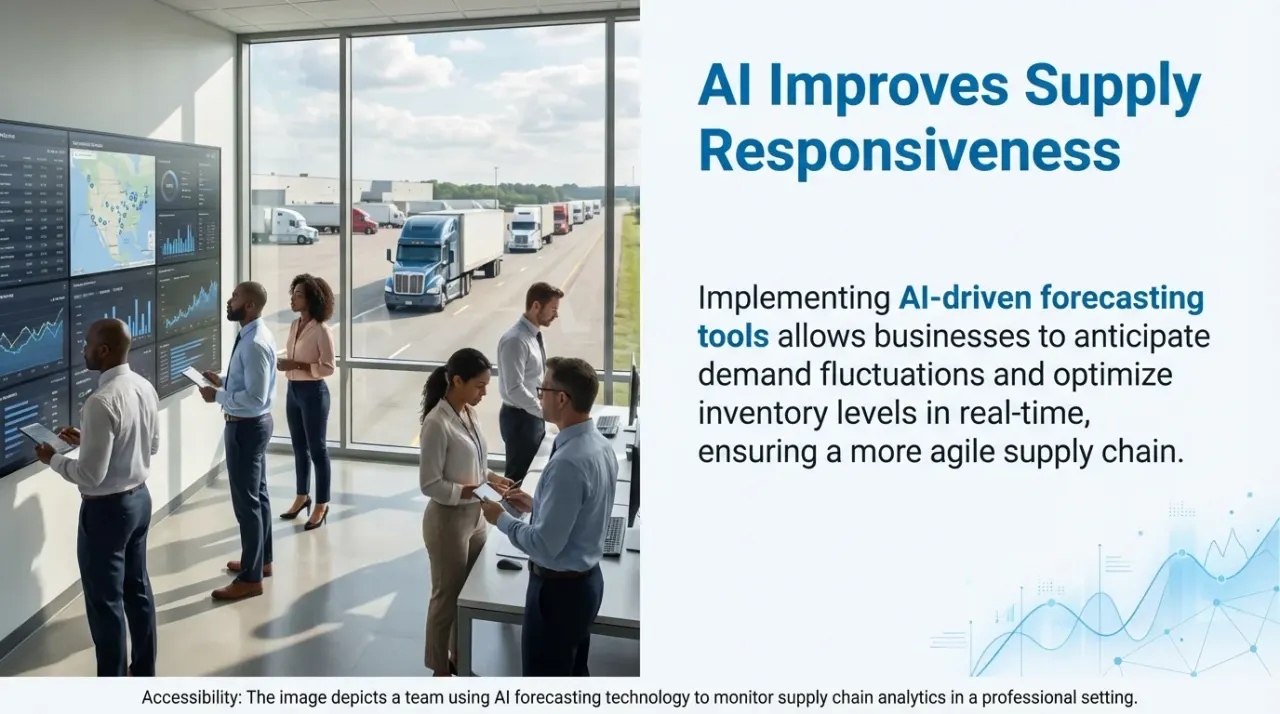
Effective supply chain risk management requires continuous monitoring. You need systems that alert you when supplier financial metrics deteriorate or when geopolitical tensions threaten key sourcing regions.
Cross-functional visibility also matters. When your logistics team notices delivery delays from a key supplier, that information should trigger procurement review. When finance sees payment issues, operations needs to know immediately. The organisations that manage disruptions effectively treat risk management as everyone's responsibility.
Recent disruptions that reshaped risk management
Lessons that earned executive recognition
Recent years exposed supply chain vulnerabilities that many organisations did not know existed. Disruptions forced rapid adaptation and revealed which risk management practices actually worked under pressure.
- Global lockdowns in 2020 demonstrated how quickly demand patterns can shift. Organisations with diversified supplier bases adapted faster than those dependent on single sources.
- Semiconductor shortages starting in 2021 showed how disruptions in one industry cascade across others. Organisations with supplier visibility beyond Tier 1 identified alternative sources faster.
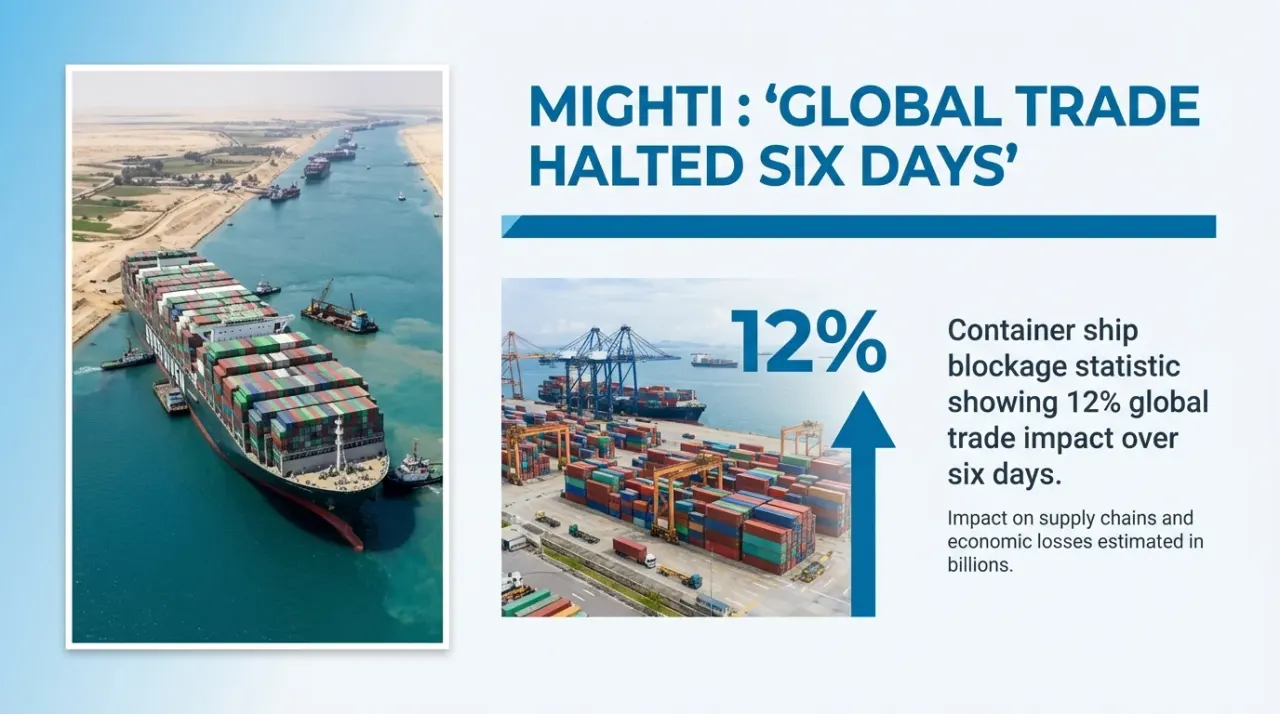
- The Suez Canal blockage in March 2021 highlighted single-point-of-failure risks in global logistics networks. A single vessel halted 12% of global trade for six days. Companies with flexible routing options and inventory buffers weathered the disruption better than those operating just-in-time systems.
These events reinforced lessons about diversification, visibility, and resilience—lessons that many supply chain professionals already understood, but which now have executive recognition as deserving strategic investment.
Four proven risk mitigation strategies
Layered defences that maintain operations when individual components fail
Effective supply chain risk management combines multiple strategies working together. No single approach eliminates all risks. The goal is building layered defences that maintain operations when individual components fail.
Diversify your supplier base across regions
Start by mapping your current supplier concentration. Calculate what percentage of critical components comes from single suppliers or geographic regions—high concentration creates vulnerability. Develop relationships with qualified alternative suppliers in different regions. This does not mean ordering from everyone simultaneously; maintain approved backup suppliers who can scale quickly when needed. Balance the added complexity and potential cost increases against the cost of disruption if your single supplier fails.
Implement rigorous supplier due diligence
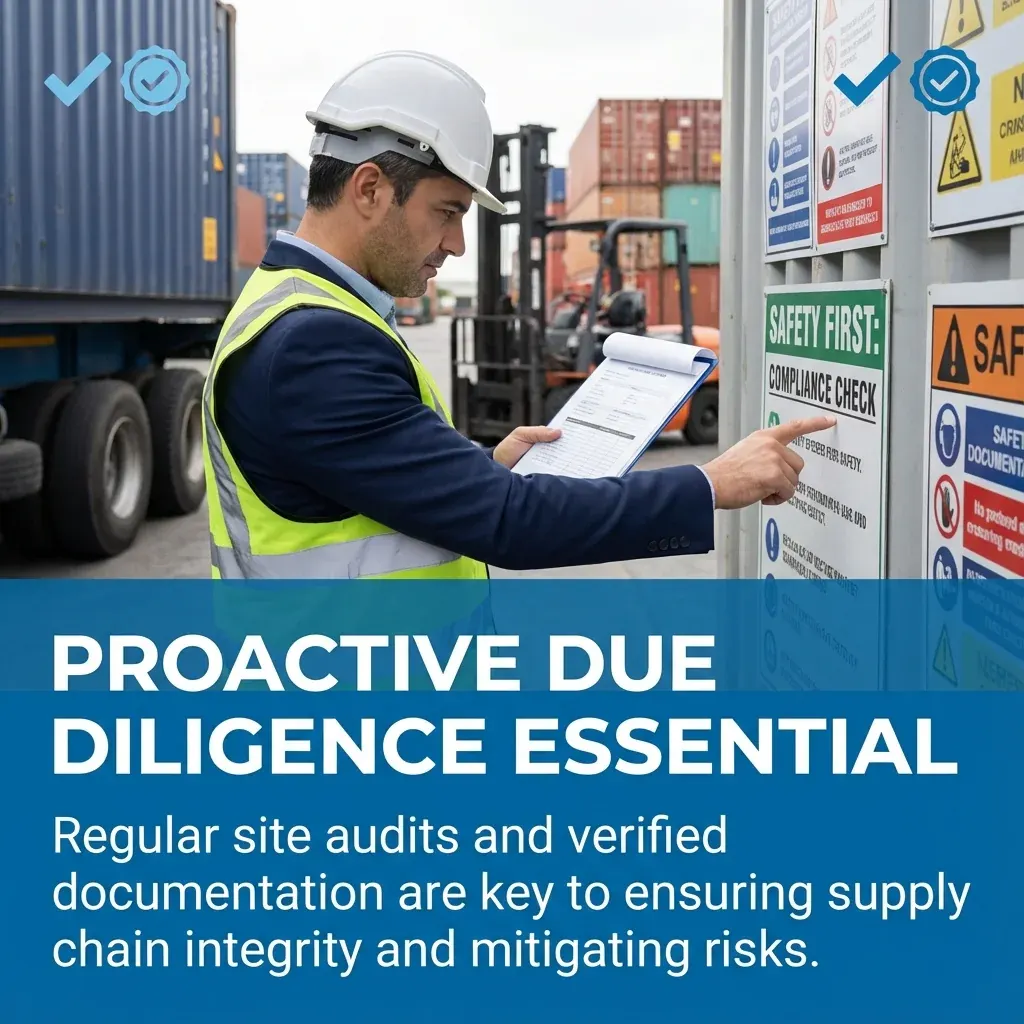
Due diligence must extend beyond initial qualification. Continuous assessment catches deteriorating performance or emerging risks before they trigger disruptions. Establish evaluation criteria covering financial stability, operational capability, quality systems, compliance status, and risk exposure. Review critical suppliers quarterly. Pay particular attention to financial health indicators—suppliers facing cash flow problems may cut corners on quality or fail to maintain inventory. Operational site visits reveal capabilities that paperwork does not capture.
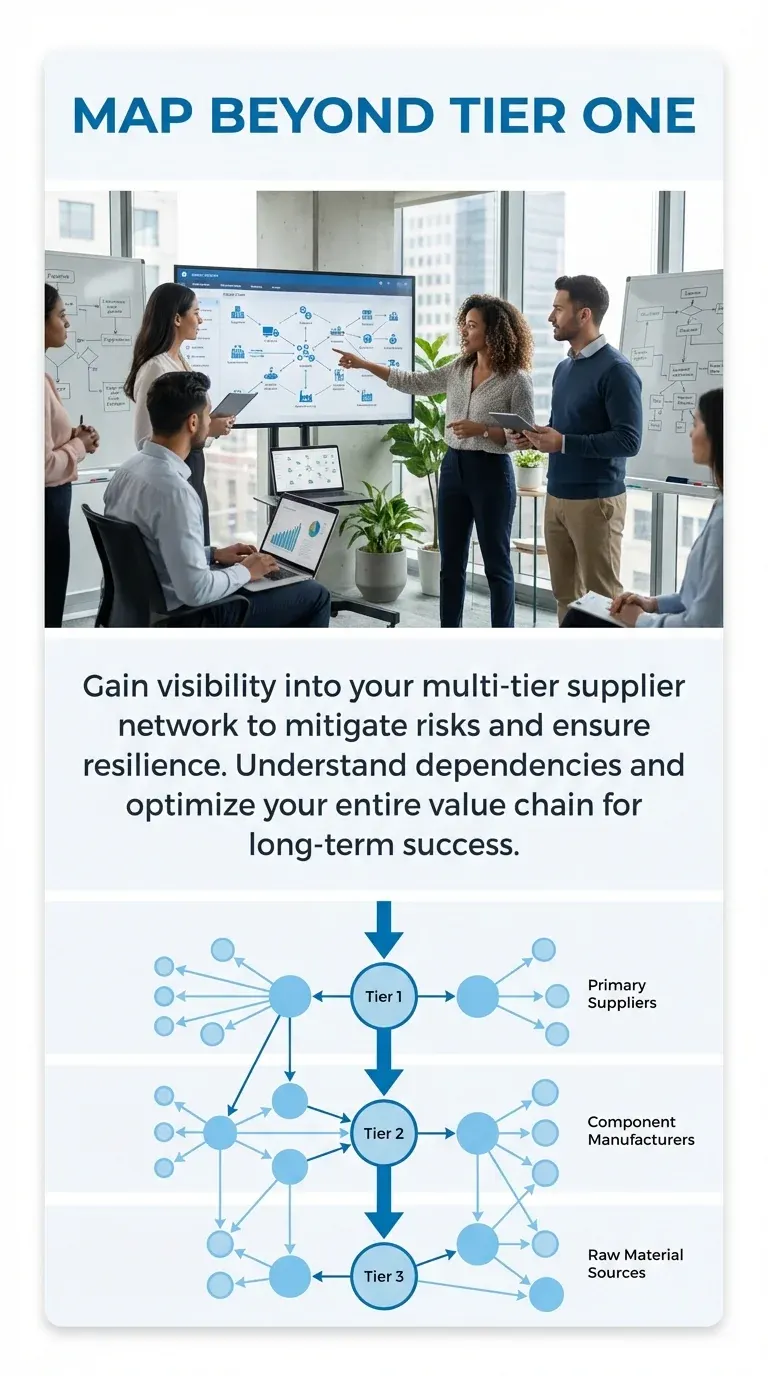
Map your supply chain beyond Tier 1
Most organisations understand their direct suppliers reasonably well. Few have visibility into Tier 2 and Tier 3 suppliers who provide components or materials to those direct suppliers. Your Tier 1 supplier may perform excellently, but if their critical subcontractor fails, you face the same disruption. Require Tier 1 suppliers to disclose their critical subcontractors, then map dependencies and single points of failure. This visibility enables proactive risk management.
Maintain strategic inventory buffers
Just-in-time inventory reduces carrying costs but increases disruption vulnerability. Strategic buffers for critical items provide operational continuity when supply interruptions occur. Calculate appropriate buffer levels based on lead times, demand variability, and criticality. Prioritise buffers for items that would halt production if unavailable, and review buffer levels regularly as risk profiles, supplier reliability, and demand patterns change.
Build resilience without adding complexity
Systematic practices outperform exotic solutions
The supply chain risk management practices that worked during recent disruptions were not exotic or expensive. They were systematic, consistent, and supported by appropriate technology tools. Organisations that performed well shared common characteristics: multiple suppliers across different regions, real-time visibility tools, strategic inventory for critical components, and pre-developed scenario plans.
When crises hit, they executed existing plans rather than improvising under pressure.
For Australian transport operators, the same principles apply to compliance risk. Using a chartered risk lens to close Chain of Responsibility gaps helps you identify vulnerabilities before they become breaches—whether that is a supplier pushing unrealistic schedules, a loader bypassing mass limits, or a consignor making promises that create unsafe transport pressure.
The goal is not to eliminate all risk, which is impossible. It is to build enough resilience into your supply chain that disruptions become manageable events rather than existential threats.
If you want help mapping your current risk exposure, contact MAEZ or explore more insights on supply chain and compliance.
How MAEZ works
Find the gaps. Fix the system. Prove the controls.
MAEZ helps transport operators deal with the compliance risk they already know is there. We help get the Safety Management System in order, protect NHVAS accreditation, reduce fine exposure, and connect training, evidence, and CoRGuard workflows where software is needed.
Find
Identify what is exposed before an auditor or regulator does.
Fix
Build the SMS controls around how the transport business actually runs.
Prove
Use CoRGuard where records, reminders, diaries, audits, and evidence need structure.
From advice to evidence
From MAEZ advice to a working Safety Management System
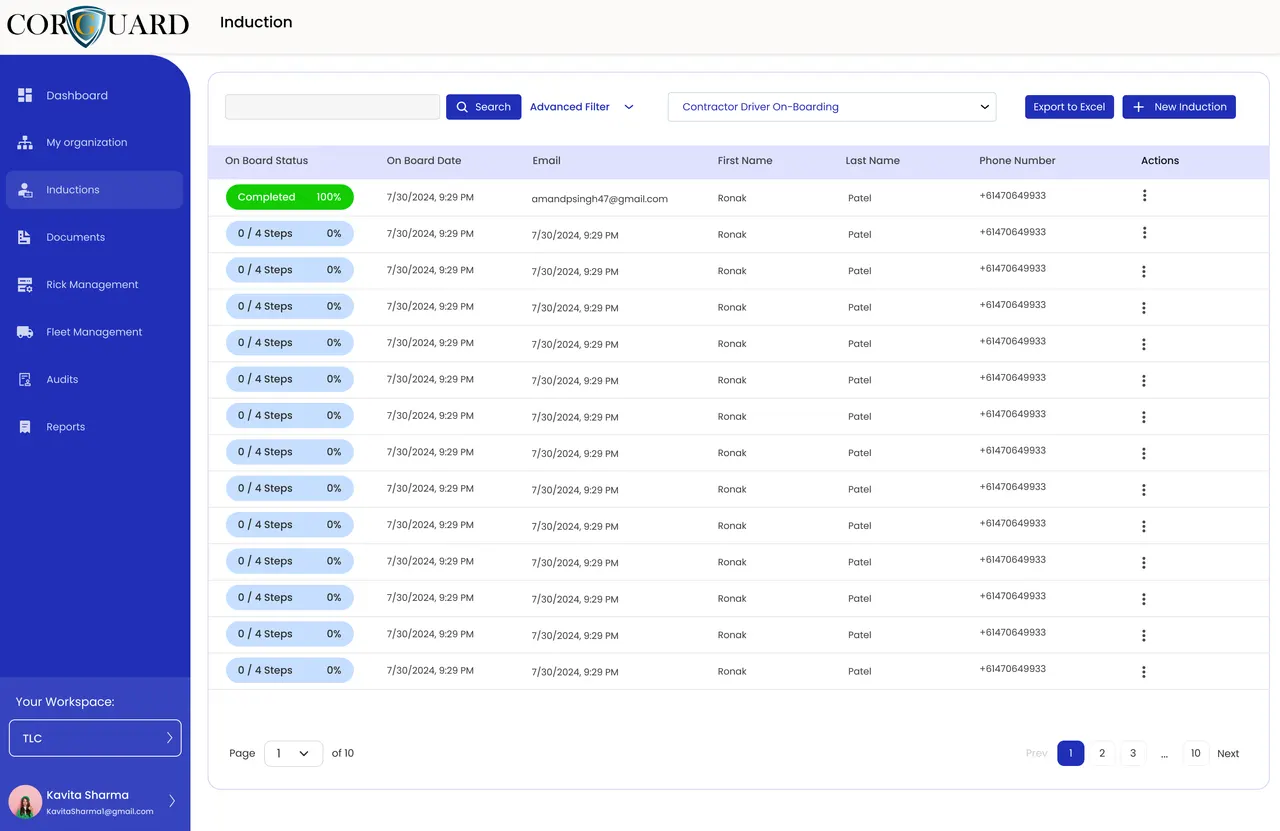
Advisory work should leave a practical implementation trail. These examples show how CoRGuard supports records, fatigue and driver diary checks, maintenance, audits, document control, inductions, corrective actions, and evidence review after MAEZ identifies the gaps.
Training records
Connect training completion from cortraining.com.au to evidence and follow-up.
Driver diary checks
Connect fatigue and driver diary review back to manager visibility.
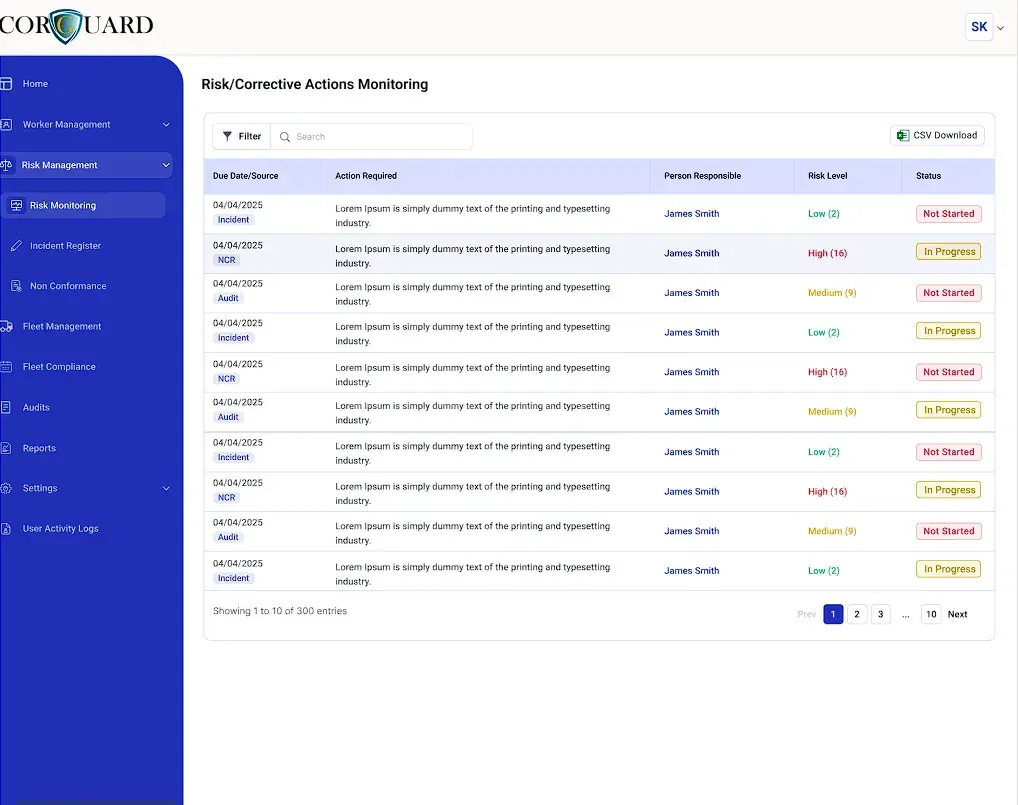
Corrective actions
Turn audit findings, hazards and incidents into tracked actions.
Keep exploring
Related Chain of Responsibility reading
MAEZ insight
Effective Strategies to Mitigate Supplier Risk
Learn how to mitigate supplier risk with effective strategies. Protect your supply chain from disruptions and ensure operational continuity today.
MAEZ insight
Understanding the Key Benefits of ISO 45001 Management Systems
Discover the key benefits of ISO 45001 management systems, including reduced incidents and enhanced compliance. Boost safety and efficiency today!
MAEZ insight
Unlocking the Benefits of ISO 45001 for Workplace Safety
Discover the benefits of 45001 for workplace safety. ISO 45001 offers a proactive risk management framework to reduce injuries and build safety cultures.
MAEZ insight
Unlocking the Benefits of a Safety Management System
Discover the benefits of a safety management system that boosts employee safety, reduces costs, and enhances workplace culture. Learn more now.
MAEZ insight
Understanding Safety Management System Software Essentials
Discover the essentials of Safety Management System software and how it enhances compliance, risk assessment, and operational efficiency.
MAEZ insight
Implementing a Safety Management System: A Comprehensive Guide
Learn how to implement a safety management system effectively to reduce workplace incidents and enhance operational safety. Your comprehensive guide awaits!
Frequently asked questions
Questions people ask about this topic
What are the four main supply chain risk categories?
The four main supply chain risk categories are economic risks (currency, inflation, supplier financial instability), environmental risks (natural disasters, extreme weather), political and geopolitical risks (tariffs, sanctions, regulatory shifts), and ethical and compliance risks (labour practices, corruption, regulatory violations). Each category requires specific mitigation tactics tailored to its characteristics.
How does Chain of Responsibility relate to supply chain risk mitigation?
Under Chain of Responsibility, supply chain partners who cut corners on safety, mass, or loading requirements create liability exposure that extends to every party in the chain. Effective supply chain risk mitigation must therefore include compliance due diligence on transport partners, because a partner's breach can trigger investigations and penalties across your entire network.
Why do quarterly risk reviews fall short for supply chain management?
Quarterly reviews miss dynamic risks that develop between review cycles—suppliers adding subcontractors, shifting trade rules, or sudden natural disasters. Effective supply chain risk management requires continuous monitoring systems that alert you when supplier metrics deteriorate or when geopolitical tensions threaten key sourcing regions.
What is multi-tier supply chain visibility and why does it matter?
Multi-tier visibility means understanding not just your direct (Tier 1) suppliers but also the Tier 2 and Tier 3 subcontractors who supply them. If a Tier 1 supplier performs well but their critical subcontractor fails, you face the same disruption—so mapping dependencies and single points of failure beyond Tier 1 enables proactive risk management.
How do strategic inventory buffers reduce supply chain risk?
Strategic inventory buffers hold critical stock above just-in-time minimums so that supply interruptions do not halt operations. Buffer levels should be calculated based on lead times, demand variability, and item criticality, and reviewed regularly as supplier reliability and demand patterns change.