
MAEZ insight
Understanding the Key Benefits of ISO 45001 Management Systems
Discover the key benefits of ISO 45001 management systems for Australian transport and supply chain operations, including reduced incidents, enhanced compliance, and improved safety culture.

Contractor controls should be verified before the work starts.

Receiving windows, site rules, and unloading delays can all shape the transport task.
Unloading decisions can affect safety, scheduling, and responsibility.

Managers need a clear view of gaps before audit or enforcement pressure arrives.
Consignors
Freight terms, delivery windows, and KPIs must not push drivers into speed, fatigue, or mass breaches.
Consignees
Receiving rules, site access, and unloading delays are CoR controls that need to be set and evidenced.
Loaders
Mass, dimension, and load restraint decisions need documented checks, not assumptions.
Managers
Executives and managers need due-diligence evidence that the Safety Management System is actually working.
What does ISO 45001 mean for your operations?
A blueprint for proactive safety management

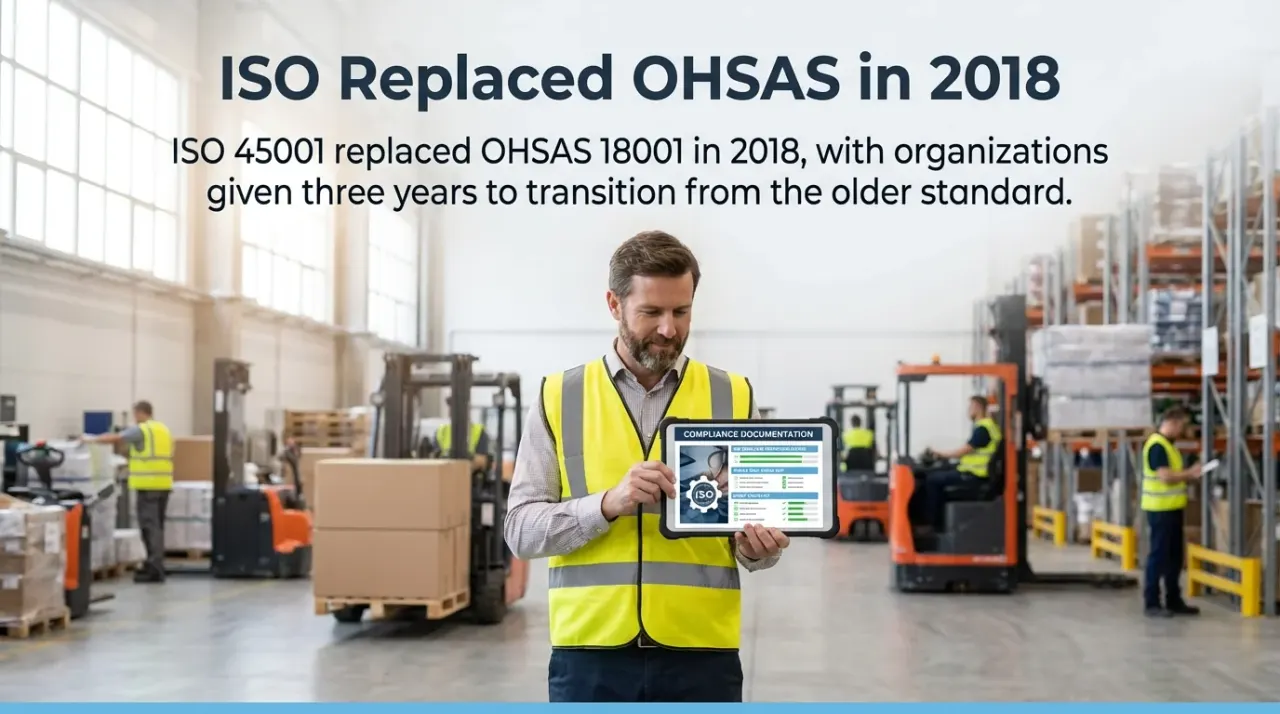
ISO 45001 is the international benchmark for occupational health and safety management systems. It gives organisations of any size a structured framework to manage worker safety systematically, replacing the former OHSAS 18001 standard in 2018 with a stronger emphasis on organisational context and risk-based thinking.
The standard operates on a Plan-Do-Act-Check cycle: you plan safety objectives, implement controls, check performance, and act on improvement opportunities. Leadership commitment sits at the centre of this framework, requiring management to actively participate in the OH&S management system rather than simply delegating it to safety officers.
Shared structure with other ISO standards
ISO 45001 shares its high-level structure with ISO 9001 (quality) and ISO 14001 (environment). This lets you integrate multiple management systems efficiently, reducing documentation duplication, streamlining audit processes, and aligning quality, environmental, and safety objectives.
Worker participation
Employees at all levels must contribute to hazard identification and safety improvement processes. Ground-level insights from workers prove invaluable for continuous improvement. To see how this aligns with broader supply chain obligations, explore our Chain of Responsibility consulting.
Why does safety management system certification matter?
Independent verification and stakeholder trust
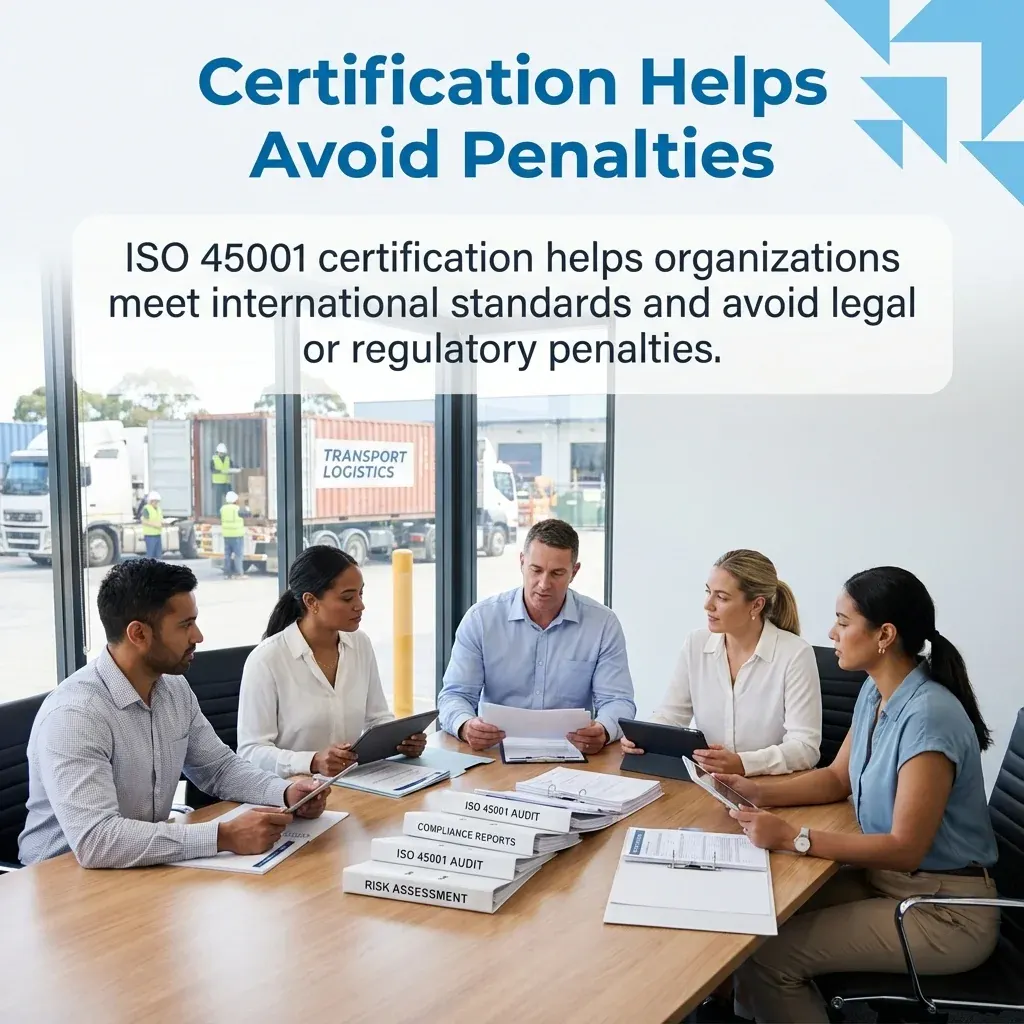
Certification demonstrates your commitment to worker health and safety through independent verification. Third-party auditors confirm your OH&S management system meets ISO 45001 requirements through a structured process:
- Initial gap analysis to identify improvement areas
- Implementation phase to build required systems
- Certification audit to verify compliance
In Australia, look for UKAS or JAS-ANZ accreditation to ensure auditor competence and certification validity.
Meeting stakeholder expectations
Clients increasingly require OH&S certification from suppliers, with major retailers and construction firms mandating safety standards throughout their supply chains. Insurers also consider safety management systems when setting premiums, and certified organisations often negotiate better terms based on their reduced risk profiles.
Demonstrating systematic safety management strengthens your legal position if incidents occur and builds confidence with investors and shareholders who evaluate safety performance as a material risk. Learn more about managing supply chain expectations in our guide to Chain of Responsibility.
How does ISO 45001 reduce workplace incidents?
Systematic hazard management and learning
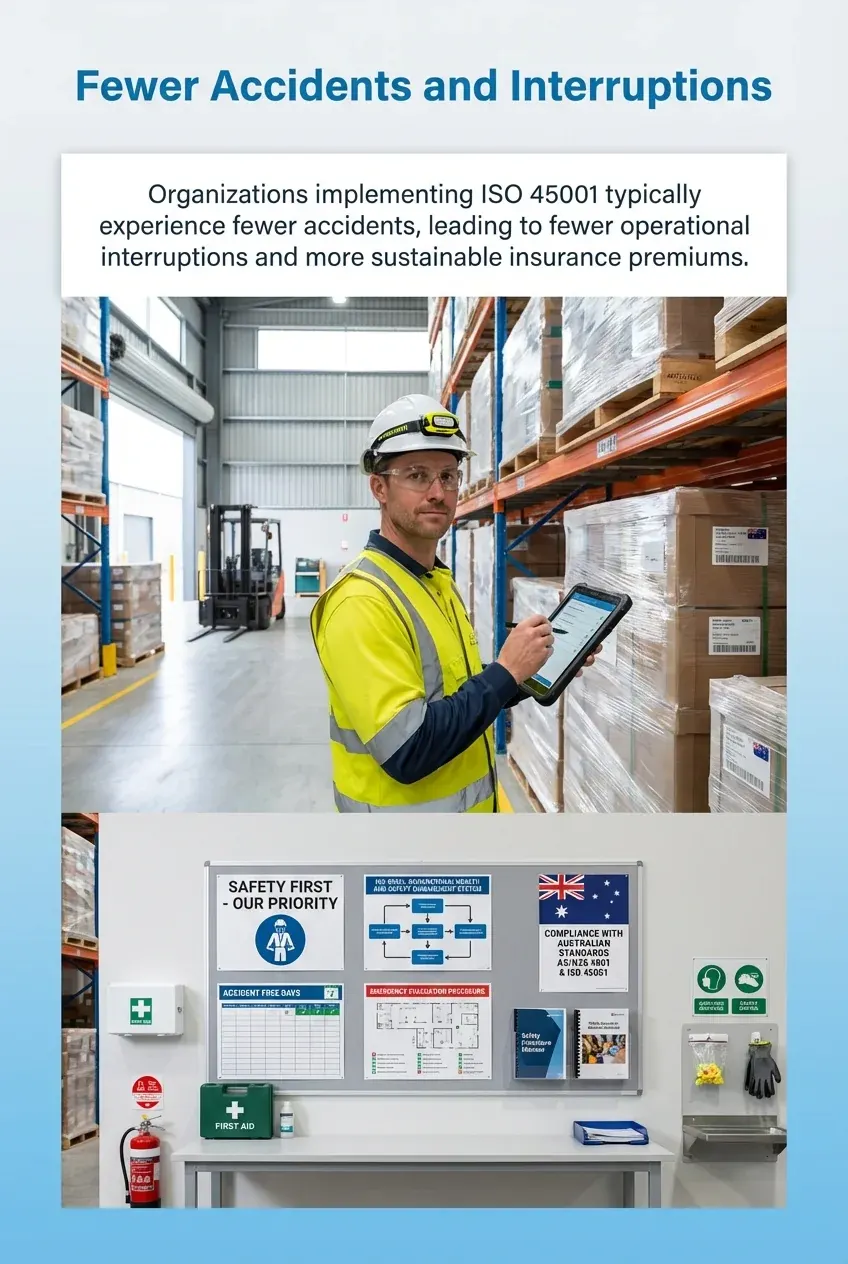
Implementing ISO 45001 helps organisations experience fewer accidents, leading to fewer operational interruptions and more sustainable insurance premiums. This reduction stems from systematic hazard identification and risk assessment processes that allow you to identify potential dangers before they cause harm.
Systematic hazard management
You must systematically examine all work activities for potential health and safety risks. Risk assessment follows identification, evaluating each hazard's likelihood and potential severity. Control measures are implemented using a hierarchy of controls:
- Eliminate hazards where possible
- Use engineering controls next
- Apply administrative controls and personal protective equipment last
Incident investigation and performance monitoring
The standard mandates thorough incident investigation to understand root causes and prevent recurrence. Document investigation findings, track corrective actions, and share lessons learned across the organisation.
To measure effectiveness, establish leading and lagging safety indicators. Track near-miss reports as leading indicators of safety culture, and monitor injury frequency rates as lagging indicators to compare performance against industry benchmarks.
How does the standard strengthen legal compliance?
Building a robust compliance and evidence base
Regulatory compliance is a fundamental benefit of ISO 45001. The management system framework helps organisations systematically meet legal OH&S requirements, aligning with Work Health and Safety Acts across Australian jurisdictions.
Maintain a compliance register covering all relevant regulations and evaluate compliance regularly through internal audits to address gaps before external inspections expose them.
Documentation and evidence
Maintain comprehensive safety documentation to demonstrate compliance during regulatory inspections or legal proceedings. Essential records include:
- Risk assessments
- Training records
- Incident reports
- Corrective actions
Complete records support your due diligence defence. Implement version control for safety procedures to ensure current documents are readily accessible to all workers.
Audit and review processes
Conduct regular internal audits to identify compliance gaps, and schedule management reviews so leadership can evaluate whether the management system achieves its intended outcomes. Address non-conformances promptly with robust corrective action processes.
How does ISO 45001 improve employee wellbeing and culture?
Fostering engagement through participation and training
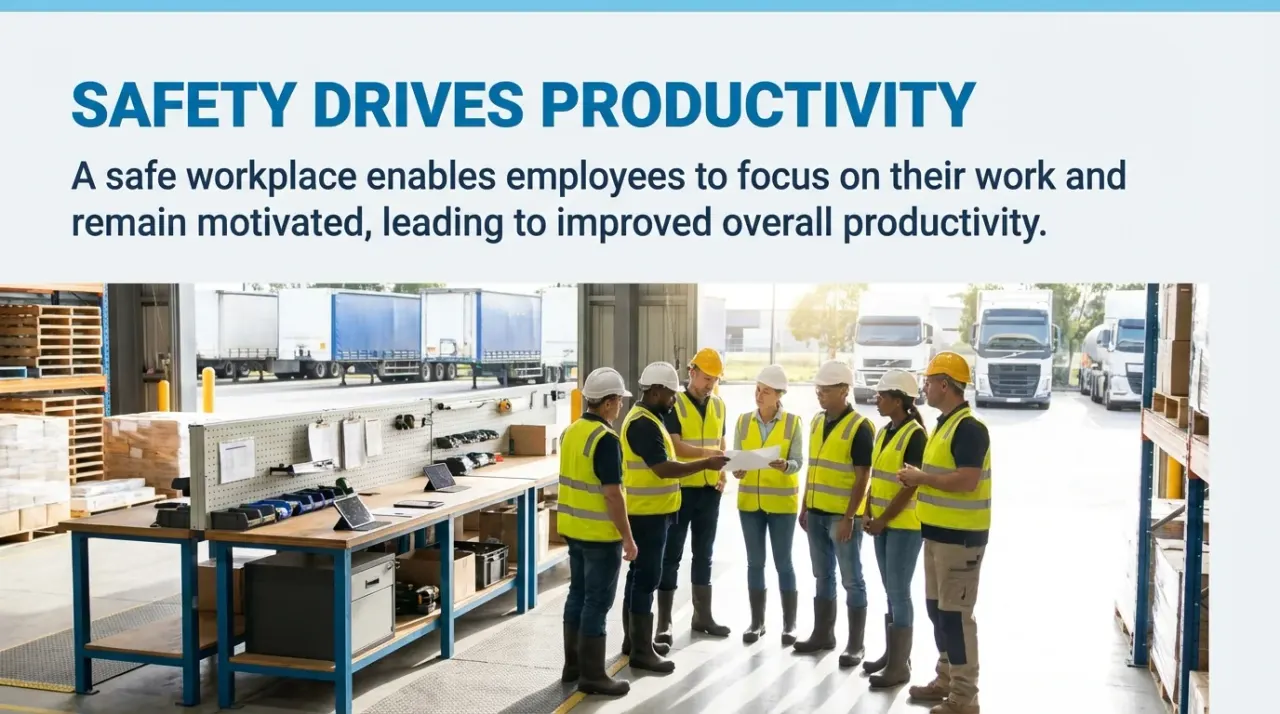
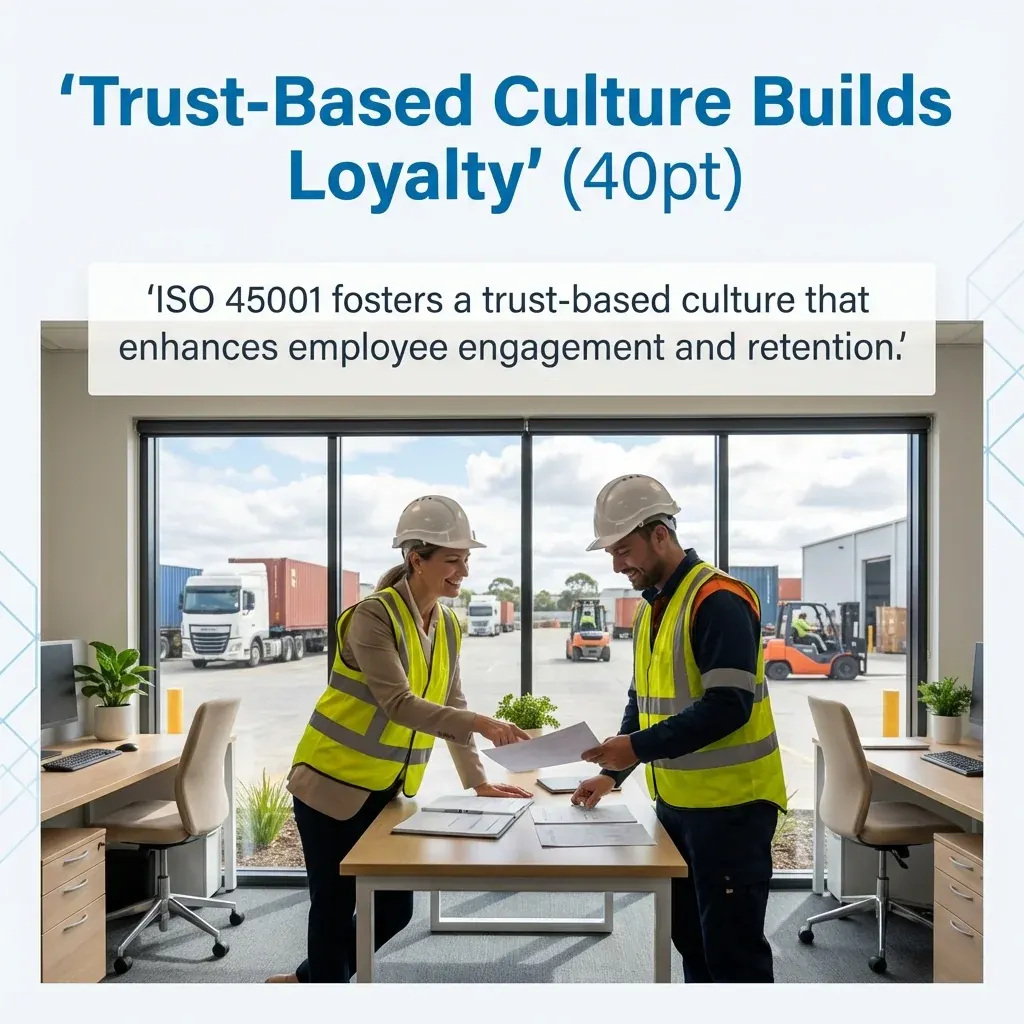
A safe workplace enables employees to focus on their work, remain motivated, and improve overall productivity. Workers in safe environments experience less stress and anxiety, trusting that their employer values their wellbeing. ISO 45001 fosters a trust-based culture that enhances employee engagement and retention. Staff loyalty increases when organisations demonstrate genuine safety commitment.
Worker participation and training
Establish safety committees with worker representatives, giving them real authority to influence improvements. Implement suggestion systems and reward employees who identify hazards or propose solutions.
Identify training needs through job analysis and risk assessment, verifying effectiveness through assessment to ensure workers can apply safety knowledge in their actual work.
Health and wellbeing programs
Modern OH&S management extends beyond injury prevention. Address psychosocial hazards like work stress, bullying, and fatigue, which significantly impact employee health. Implement physical and mental health promotion initiatives aligned with your safety management system to demonstrate holistic worker care.
What financial benefits can you expect?
Measurable cost savings and operational efficiency
Research shows that management system standards like ISO 45001 consistently deliver measurable cost savings. By reducing workplace incidents, organisations lower their direct costs associated with injuries, workers' compensation, and property damage.
Fewer operational interruptions mean less downtime and higher productivity. Standardised control measures ensure every worker follows established procedures, reducing the costly variability that comes with inconsistent safety practices.
Integrated systems and synergies
When safety, quality, and environmental objectives align through integrated management systems, your operation achieves synergies that drive both financial performance and regulatory readiness.
To discuss how these principles apply to your transport business, contact MAEZ or explore more insights on our blog.
How MAEZ works
Find the gaps. Fix the system. Prove the controls.
MAEZ helps transport operators deal with the compliance risk they already know is there. We help get the Safety Management System in order, protect NHVAS accreditation, reduce fine exposure, and connect training, evidence, and CoRGuard workflows where software is needed.
Find
Identify what is exposed before an auditor or regulator does.
Fix
Build the SMS controls around how the transport business actually runs.
Prove
Use CoRGuard where records, reminders, diaries, audits, and evidence need structure.
From advice to evidence
From MAEZ advice to a working Safety Management System
Advisory work should leave a practical implementation trail. These examples show how CoRGuard supports records, fatigue and driver diary checks, maintenance, audits, document control, inductions, corrective actions, and evidence review after MAEZ identifies the gaps.
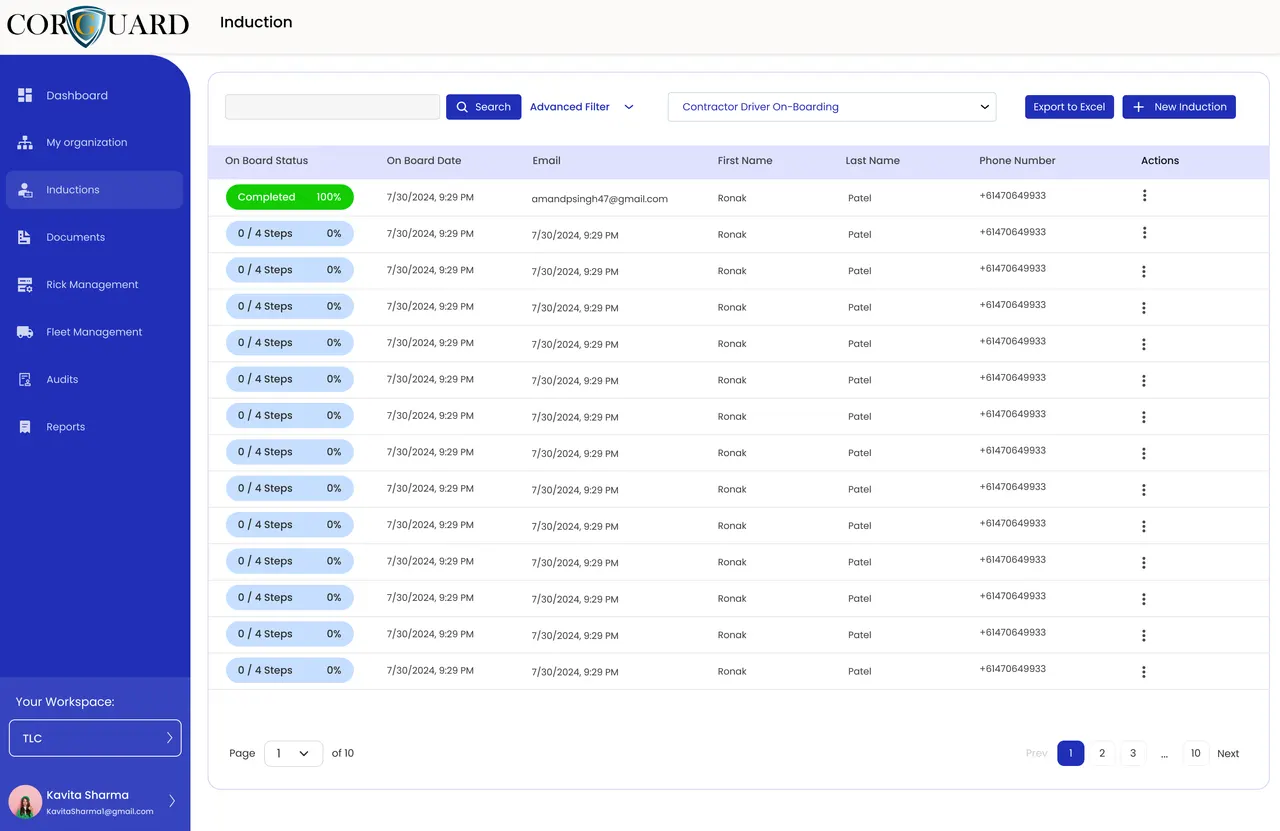
Training records
Connect training completion from cortraining.com.au to evidence and follow-up.
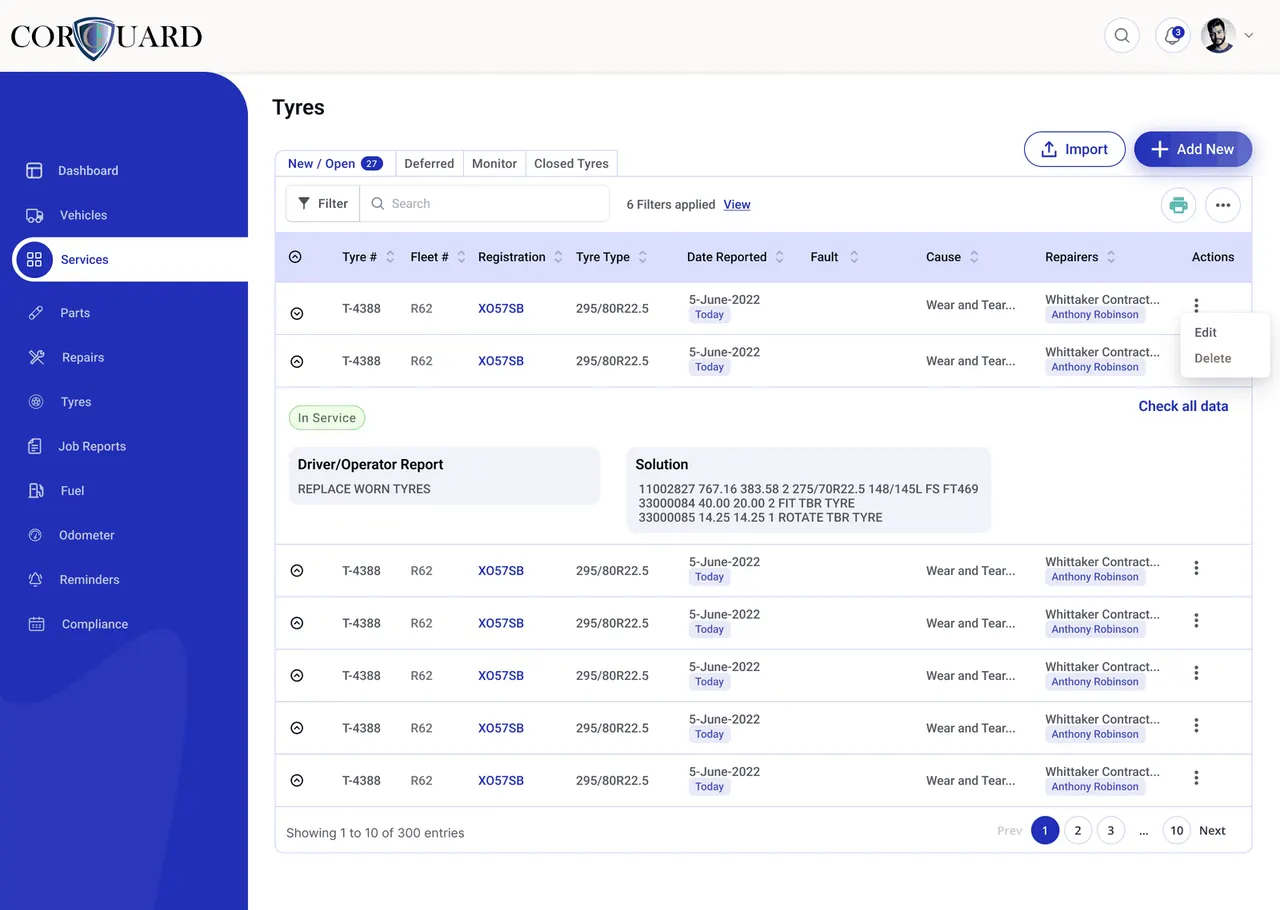
Driver diary checks
Connect fatigue and driver diary review back to manager visibility.
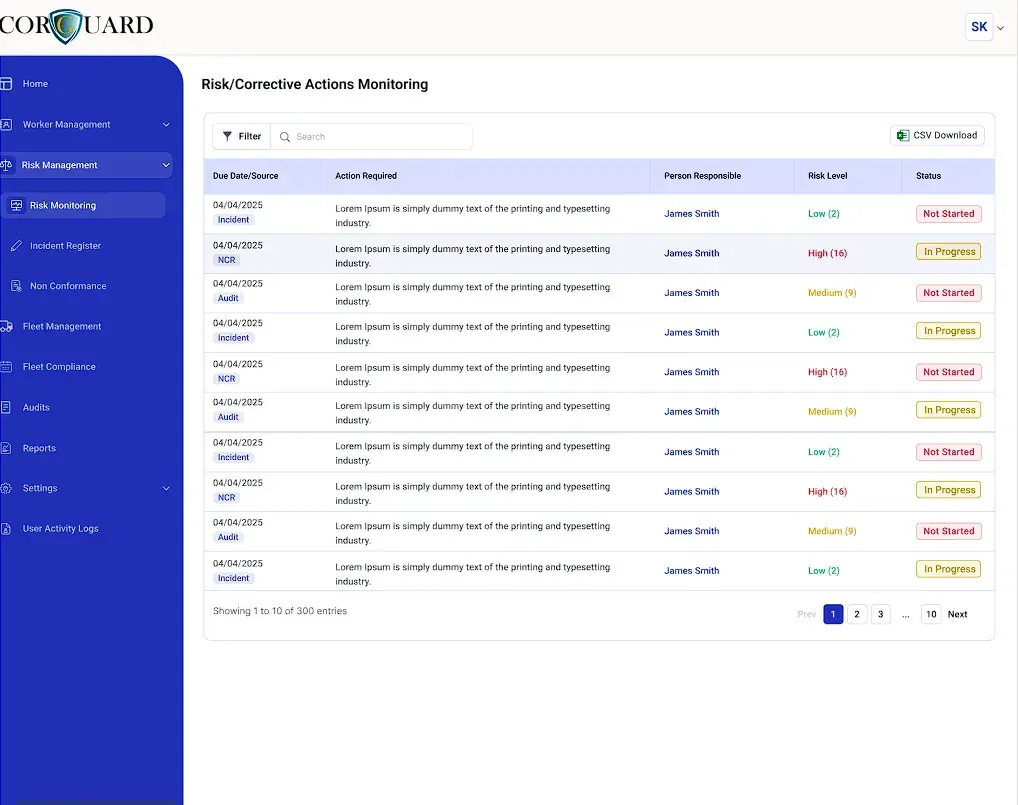
Corrective actions
Turn audit findings, hazards and incidents into tracked actions.
Keep exploring
Related Chain of Responsibility reading
MAEZ insight
Unlocking the Benefits of ISO 45001 for Workplace Safety
Discover the benefits of 45001 for workplace safety. ISO 45001 offers a proactive risk management framework to reduce injuries and build safety cultures.
MAEZ insight
Unlocking the Benefits of a Safety Management System
Discover the benefits of a safety management system that boosts employee safety, reduces costs, and enhances workplace culture. Learn more now.
MAEZ insight
Understanding Safety Management System Software Essentials
Discover the essentials of Safety Management System software and how it enhances compliance, risk assessment, and operational efficiency.
MAEZ insight
Implementing a Safety Management System: A Comprehensive Guide
Learn how to implement a safety management system effectively to reduce workplace incidents and enhance operational safety. Your comprehensive guide awaits!
MAEZ insight
HVNL 2026 CoR Changes
Discover how the HVNL 2026 amendments transform CoR obligations with new Safety Management Systems for heavy vehicle compliance. Learn more here!
MAEZ insight
Mitigating Risks in Global Supply Chains: Key Strategies
Explore effective global supply chain risk management strategies to mitigate disruptions and maintain operational continuity in 2025 and beyond.
Frequently asked questions
Questions people ask about this topic
What is ISO 45001 and how does it apply to Australian transport operations?
ISO 45001 is the international benchmark for occupational health and safety management systems. It provides a structured Plan-Do-Check-Act framework that organisations of any size can use to manage worker safety systematically, including in transport, logistics, and supply chain operations.
Does ISO 45001 certification help with Chain of Responsibility compliance?
ISO 45001 strengthens your legal compliance position by building a documented safety management system with risk assessments, training records, incident reports, and corrective actions. While it is an OH&S standard rather than a HVNL-specific framework, the systematic evidence it creates supports broader due diligence and stakeholder expectations across the supply chain.
What are the main financial benefits of implementing ISO 45001?
Organisations implementing ISO 45001 can expect fewer workplace incidents, lower workers' compensation and injury-related costs, reduced downtime, and more favourable insurance premiums. Standardised safety procedures also reduce the costly variability that comes with inconsistent practices.
How does ISO 45001 integrate with other management standards?
ISO 45001 shares its high-level structure with ISO 9001 (quality) and ISO 14001 (environment), allowing organisations to integrate multiple management systems efficiently. This reduces documentation duplication, streamlines audit processes, and aligns quality, environmental, and safety objectives.
What accreditation should Australian operators look for when choosing an ISO 45001 auditor?
Australian organisations should seek certification bodies with UKAS or JAS-ANZ accreditation to ensure auditor competence and certification validity. These accreditations confirm that third-party auditors meet recognised standards for conducting ISO 45001 certification audits.