
MAEZ insight
Effective Strategies to Mitigate Supplier Risk
Learn practical strategies to mitigate supplier risk in Australian transport operations. Identify, assess, and control financial, operational, compliance, and reputational exposures before they disrupt your supply chain.

Receiving windows, site rules, and unloading delays can all shape the transport task.
Unloading decisions can affect safety, scheduling, and responsibility.

Managers need a clear view of gaps before audit or enforcement pressure arrives.

Contractor controls should be verified before the work starts.
Consignors
Freight terms, delivery windows, and KPIs must not push drivers into speed, fatigue, or mass breaches.
Consignees
Receiving rules, site access, and unloading delays are CoR controls that need to be set and evidenced.
Loaders
Mass, dimension, and load restraint decisions need documented checks, not assumptions.
Managers
Executives and managers need due-diligence evidence that the Safety Management System is actually working.
What supplier risk mitigation means for transport operators

Effective supplier risk mitigation requires a structured process of identifying, assessing, and controlling exposures across financial, operational, compliance, cybersecurity, geopolitical, and reputational domains. For Australian transport operators, this means mapping all suppliers including tier 2 and tier 3, scoring risks by likelihood and impact, prioritising mitigation, and documenting results to support Chain of Responsibility compliance and NHVAS readiness.
Supplier risk is the threat that an external supplier fails to meet its obligations, causing operational disruption, financial loss, or reputational damage. These failures create bottlenecks, expose your business to regulatory action, and erode customer trust.
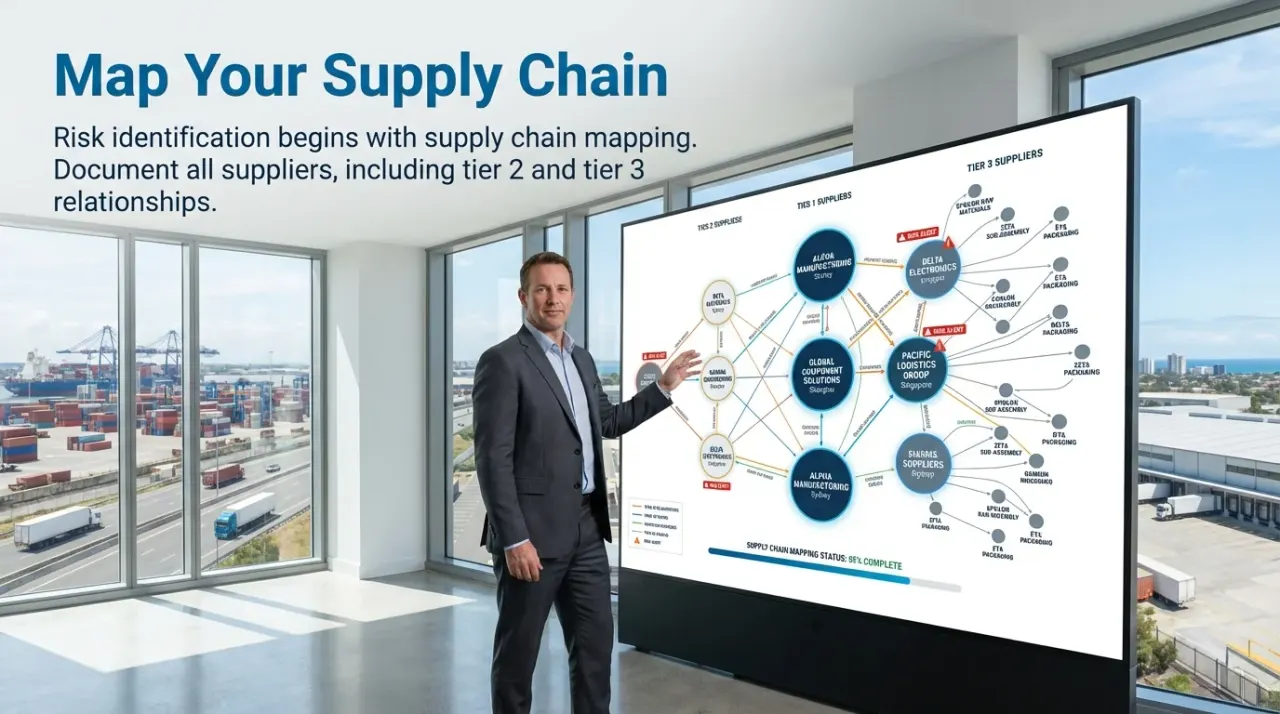
Your supply chain extends well beyond direct relationships. Tier 2 and tier 3 suppliers introduce hidden dependencies that are easy to overlook. When a component manufacturer experiences financial distress, for example, your tier 1 supplier may lack alternatives — and the ripple effect amplifies the disruption.
The Australian supply chain context demands particular attention. From managing compliance risks under regulatory frameworks such as the Chain of Responsibility to coordinating suppliers across multiple geographies, businesses face increasingly interconnected threats. A structured approach to supplier risk management transforms reactive problem-solving into proactive resilience building.
For transport operators, this ties directly into CoR obligations — every party in the chain shares responsibility for safety outcomes. A practical CoR risk review can help surface supplier-related exposures before they become enforcement issues.
The cost of unmanaged supplier risk
Unmanaged supplier risk creates measurable business impact across several dimensions:
- Production delays disrupt customer commitments and erode delivery reliability.
- Quality failures trigger recalls, warranty claims, and rework costs.
- Compliance failures generate regulatory penalties and potential enforcement action.
- Financial instability at a supplier can reduce quality controls, delay deliveries, or lead to sudden operational shutdown.
Financial stability deserves particular attention
When suppliers face cash flow problems, they may cut corners on quality or delay shipments. Some cease operations entirely, leaving buyers scrambling for alternatives during critical periods. Small and medium suppliers typically lack the financial buffers to weather demand fluctuations or payment delays.
Reputational damage extends beyond immediate disruption
If your supplier engages in unethical practices, your brand suffers association damage. Customers increasingly expect supply chain transparency and responsible sourcing.
Proactive management delivers measurable returns
Organisations reduce emergency procurement costs by maintaining qualified backup suppliers. They avoid production stoppages through early warning systems. They protect margins by preventing quality failures. Risk mitigation also strengthens supplier relationships — when you collaborate on risk assessments, suppliers recognise your commitment to mutual success, which builds trust and improves communication during challenging periods.
Understanding the categories of supplier risk
Each risk domain requires specific assessment methods and mitigation strategies
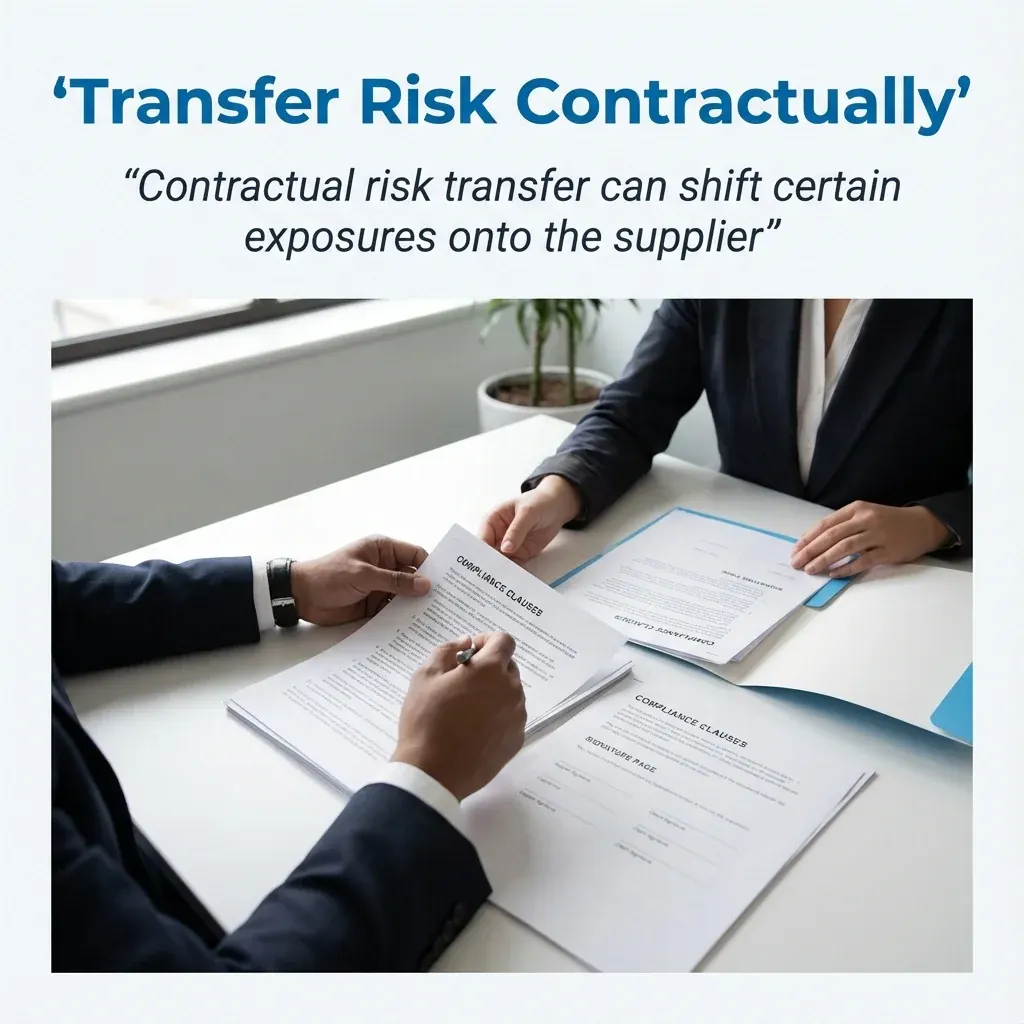
Supplier risks span multiple domains. Comprehensive risk management addresses each category systematically rather than treating supplier risk as a single, undifferentiated exposure.
Financial risk
Financial risk emerges when suppliers lack adequate capital, liquidity, or creditworthiness. Warning signs include delayed invoice payments, reduced credit limits, and deteriorating financial ratios. Review financial statements, credit reports, and payment histories for declining profitability, increasing debt ratios, or negative cash flow.
Operational risk
Operational risk encompasses production capacity, quality control, and logistics capabilities. Suppliers with aging equipment, inadequate maintenance, or insufficient quality systems introduce performance variability. Capacity constraints emerge during demand surges — a supplier operating at 95% capacity cannot accommodate growth or recover from disruptions.
Compliance and regulatory risk
Compliance risk arises when suppliers fail to meet legal, regulatory, or contractual obligations. In Australian transport, the Heavy Vehicle National Law categorises breaches of mass, dimension, and loading requirements into minor, substantial, and severe risk levels — each carrying escalating penalties. Supplier non-compliance with these requirements can expose every party in the chain to enforcement action.
Work health and safety law also imposes duties on designers, manufacturers, importers, and suppliers of plant or structures, meaning supplier compliance failures can create direct legal exposure for your business. Regular reviews of supplier licences, permits, and quality certifications help identify control weaknesses before they escalate. CoR training can help your team understand how these obligations flow through the supply chain.
Cybersecurity risk
When suppliers access your systems, data, or networks, they create potential attack vectors. Review their access controls, encryption practices, and incident response capabilities. Contractual protections should establish security requirements and breach notification obligations to enable rapid response.
Geopolitical risk
Trade restrictions, political instability, and policy changes can disrupt supply flow without warning. Supplier location mapping identifies geographic concentrations — when critical suppliers cluster in unstable regions, your exposure increases. Diversification across geographies reduces this vulnerability.
Reputational risk
Supplier actions — labour practice violations, environmental incidents, or ethical breaches — create negative brand associations. Ethical sourcing programmes and regular audits verify supplier conduct. Transparency initiatives, such as publishing supplier lists and audit results, build stakeholder confidence and can transform potential liability into competitive advantage.
How to build a supplier risk assessment framework
A structured process turns subjective judgment into systematic evaluation
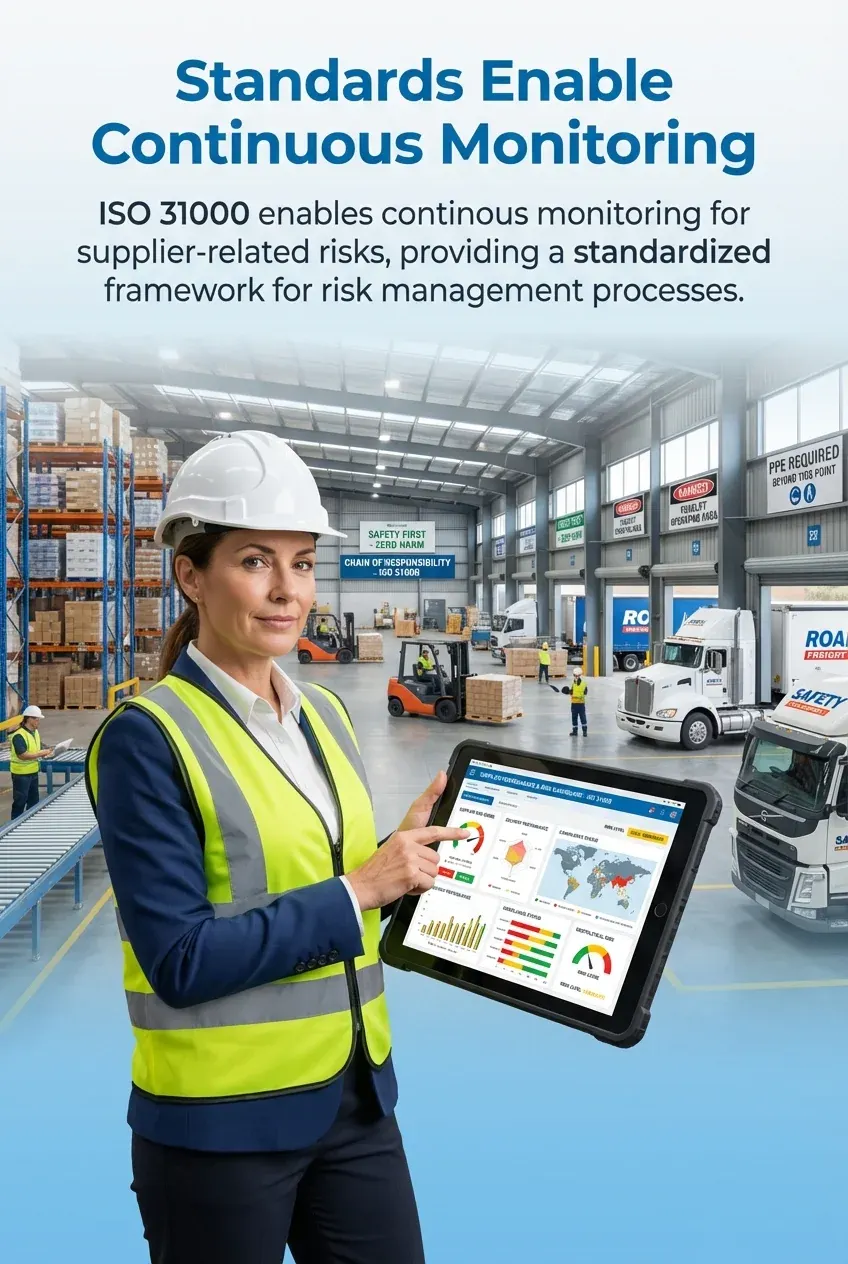
Structured risk assessment transforms subjective judgment into systematic evaluation. It identifies vulnerabilities before they create disruption and prioritises mitigation resources toward the highest-impact exposures.
Step 1: Identify all potential risks
Risk identification begins with supply chain mapping. Document all suppliers, including tier 2 and tier 3 relationships, to reveal hidden dependencies and concentration risks. Conduct risk workshops with cross-functional teams — procurement, operations, quality, and finance each provide unique perspectives. Use standardised risk categories to review financial, operational, compliance, cybersecurity, geopolitical, and reputational dimensions systematically.
Step 2: Assess risk likelihood and impact
Risk assessment quantifies both probability and consequence. Likelihood considers historical patterns, industry trends, and supplier-specific factors. Impact evaluates operational, financial, and reputational effects. Create a risk scoring matrix that combines likelihood and impact to enable consistent evaluation across suppliers. Gather supporting evidence — financial statements, audit reports, quality metrics, and delivery performance — to reduce assessment bias.
Step 3: Prioritise risks for mitigation
Not all risks warrant equal attention. Prioritisation focuses resources on exposures with the highest potential impact, balancing risk reduction against mitigation costs. High-likelihood, high-impact risks demand immediate action. Consider supplier criticality: sole-source suppliers for essential components warrant intensive risk management regardless of current risk scores, because their failure immediately disrupts operations.
Step 4: Document assessment results
Formal documentation captures assessment findings and decisions, creating accountability and enabling tracking over time. It also provides audit trails for compliance purposes. Risk registers consolidate assessment data in standardised formats — each entry should include the risk description, likelihood, impact, priority, and assigned owner. This centralised view supports ongoing programme management and helps demonstrate due diligence if enforcement questions arise.
For transport operators, this documentation can also support NHVAS readiness and CoR compliance by providing evidence that risks are being actively managed. If you need help building this evidence base, contact MAEZ for a practical review of the controls, evidence, training, and SMS gaps that matter most.
How MAEZ works
Find the gaps. Fix the system. Prove the controls.
MAEZ helps transport operators deal with the compliance risk they already know is there. We help get the Safety Management System in order, protect NHVAS accreditation, reduce fine exposure, and connect training, evidence, and CoRGuard workflows where software is needed.
Find
Identify what is exposed before an auditor or regulator does.
Fix
Build the SMS controls around how the transport business actually runs.
Prove
Use CoRGuard where records, reminders, diaries, audits, and evidence need structure.
From advice to evidence
From MAEZ advice to a working Safety Management System
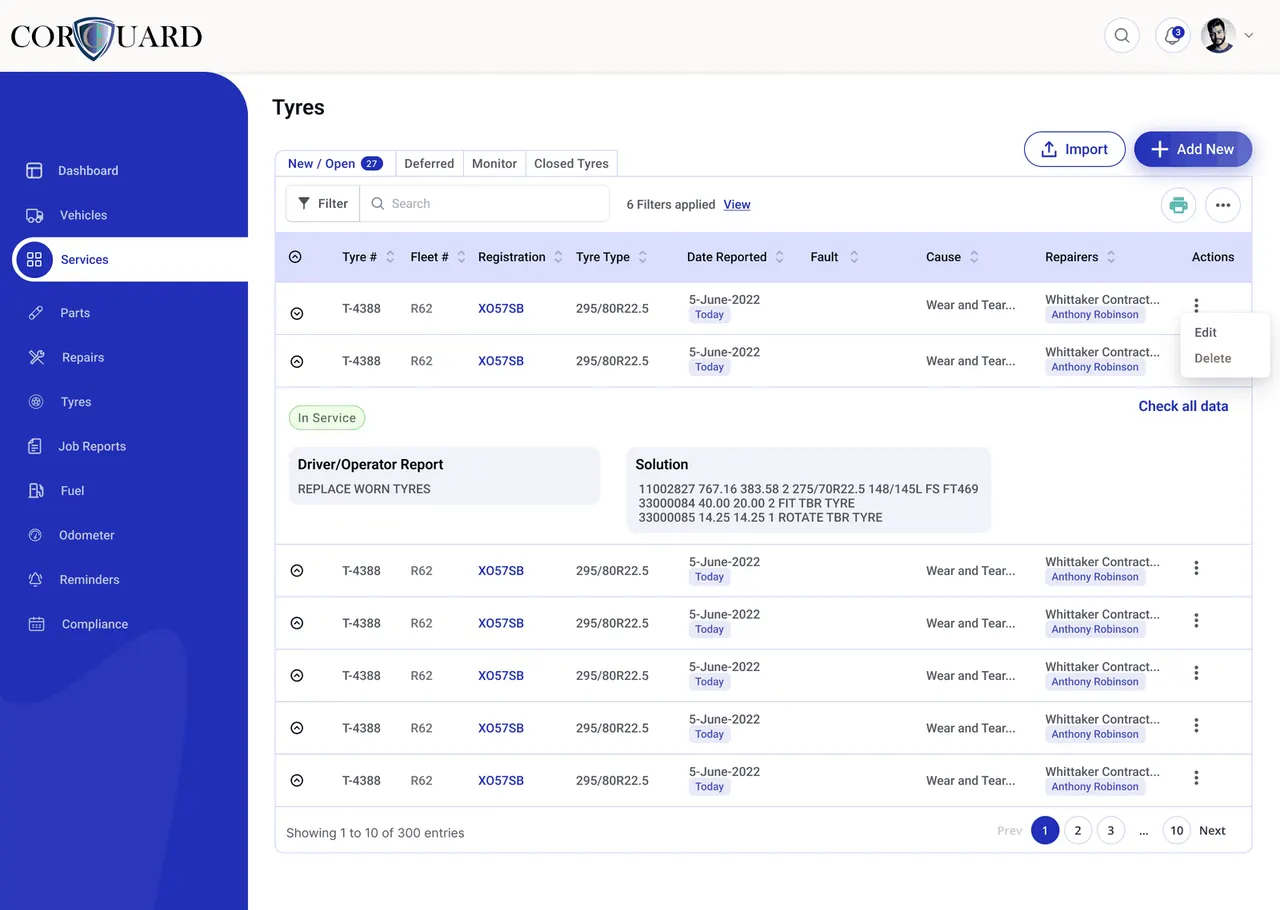
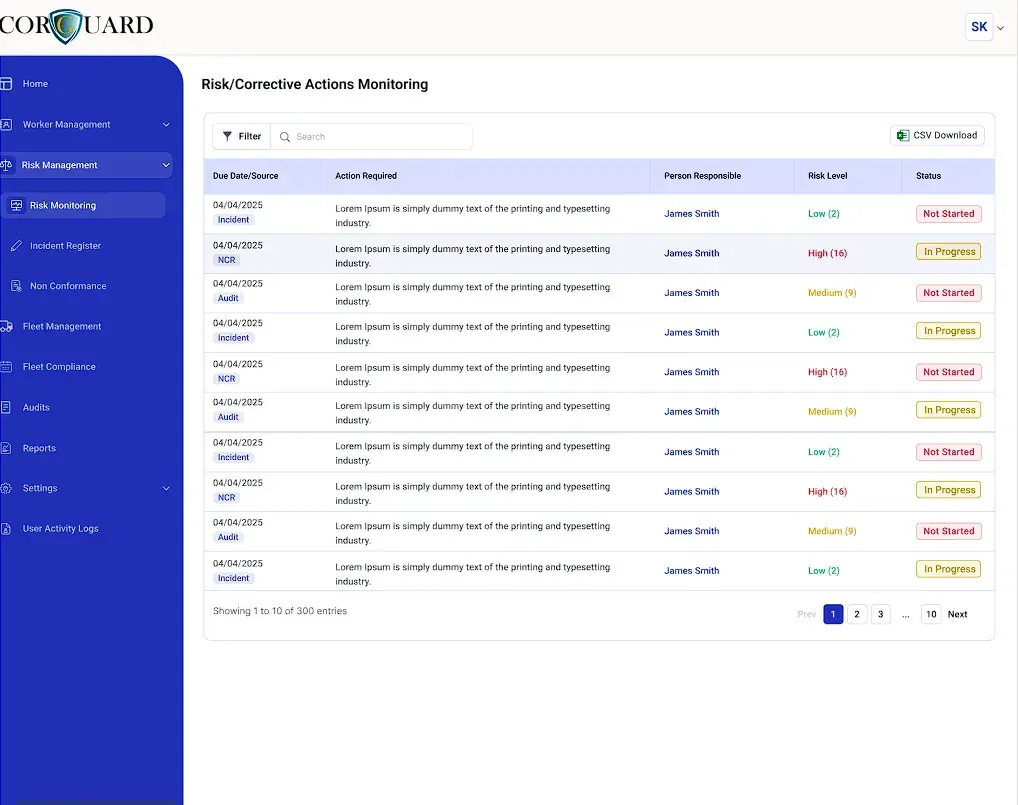
Advisory work should leave a practical implementation trail. These examples show how CoRGuard supports records, fatigue and driver diary checks, maintenance, audits, document control, inductions, corrective actions, and evidence review after MAEZ identifies the gaps.
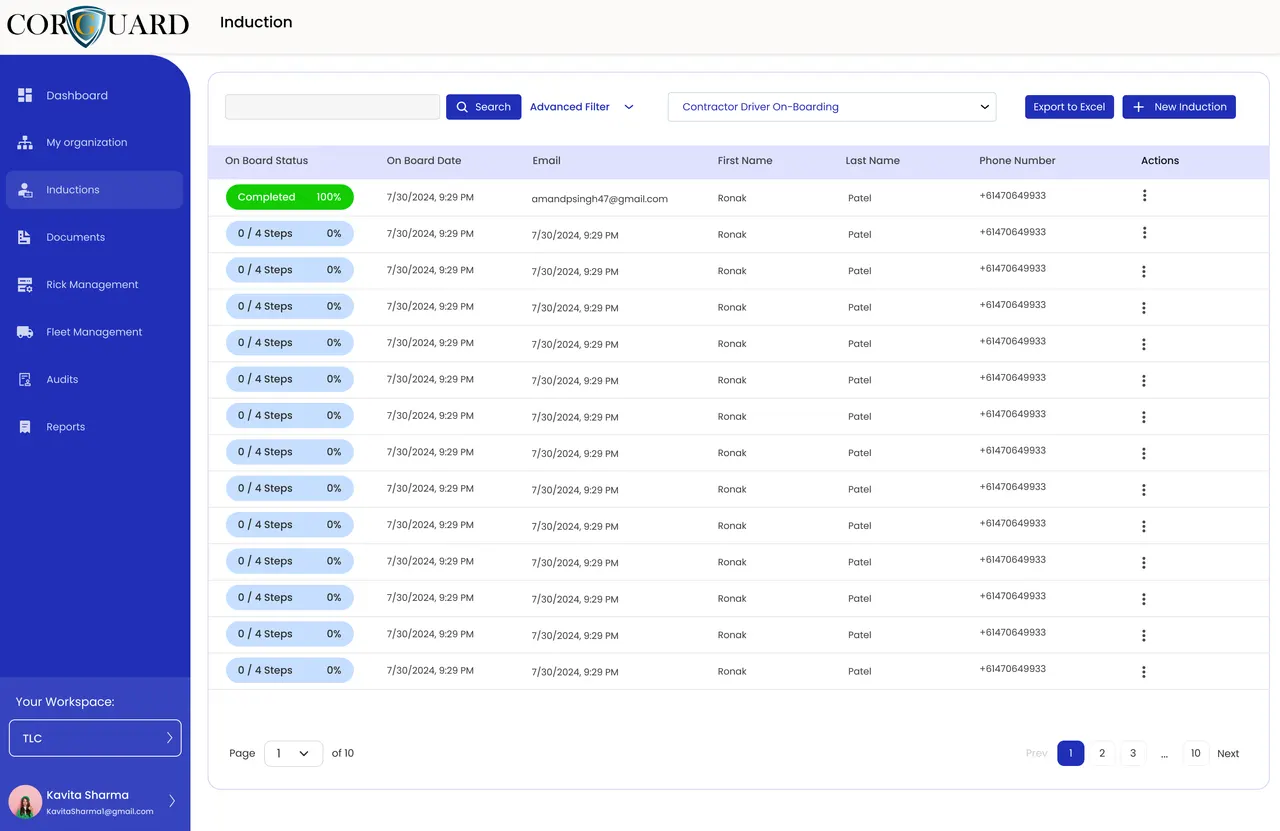
Training records
Connect training completion from cortraining.com.au to evidence and follow-up.
Driver diary checks
Connect fatigue and driver diary review back to manager visibility.
Corrective actions
Turn audit findings, hazards and incidents into tracked actions.
Keep exploring
Related Chain of Responsibility reading
MAEZ insight
Understanding the Key Benefits of ISO 45001 Management Systems
Discover the key benefits of ISO 45001 management systems, including reduced incidents and enhanced compliance. Boost safety and efficiency today!
MAEZ insight
Unlocking the Benefits of ISO 45001 for Workplace Safety
Discover the benefits of 45001 for workplace safety. ISO 45001 offers a proactive risk management framework to reduce injuries and build safety cultures.
MAEZ insight
Unlocking the Benefits of a Safety Management System
Discover the benefits of a safety management system that boosts employee safety, reduces costs, and enhances workplace culture. Learn more now.
MAEZ insight
Understanding Safety Management System Software Essentials
Discover the essentials of Safety Management System software and how it enhances compliance, risk assessment, and operational efficiency.
MAEZ insight
Implementing a Safety Management System: A Comprehensive Guide
Learn how to implement a safety management system effectively to reduce workplace incidents and enhance operational safety. Your comprehensive guide awaits!
MAEZ insight
HVNL 2026 CoR Changes
Discover how the HVNL 2026 amendments transform CoR obligations with new Safety Management Systems for heavy vehicle compliance. Learn more here!
Frequently asked questions
Questions people ask about this topic
What is supplier risk in the context of Australian transport operations?
Supplier risk is the threat that an external supplier fails to meet its obligations, causing operational disruption, financial loss, or reputational damage. In Australian transport, supplier non-compliance with mass, dimension, and loading requirements under the Heavy Vehicle National Law can expose every party in the Chain of Responsibility to enforcement action.
How does supplier risk management support Chain of Responsibility compliance?
Supplier risk management helps transport operators identify, assess, and control supplier-related exposures before they become enforcement issues. Documenting risk assessments in a risk register provides evidence that risks are being actively managed, which supports NHVAS readiness and demonstrates due diligence under CoR obligations.
What are the main categories of supplier risk transport operators should assess?
Transport operators should assess six categories of supplier risk: financial risk, operational risk, compliance and regulatory risk, cybersecurity risk, geopolitical risk, and reputational risk. Each domain requires specific assessment methods and mitigation strategies rather than treating supplier risk as a single exposure.
How should transport operators prioritise supplier risks for mitigation?
Operators should prioritise risks using a scoring matrix that combines likelihood and impact, focusing resources on high-likelihood, high-impact exposures. Sole-source suppliers for essential components warrant intensive risk management regardless of current scores, because their failure immediately disrupts operations.
Why do tier 2 and tier 3 suppliers matter for supplier risk management?
Tier 2 and tier 3 suppliers introduce hidden dependencies that are easy to overlook. When a component manufacturer experiences financial distress, your tier 1 supplier may lack alternatives, and the ripple effect amplifies disruption throughout your supply chain.