
MAEZ insight
Effective Strategies for Managing Supply Chain Risks
Learn how to manage supply chain risks with structured strategies. Identify vulnerabilities across supplier tiers, assess exposure, and implement targeted mitigation to protect your transport operations.

Contractor controls should be verified before the work starts.

Receiving windows, site rules, and unloading delays can all shape the transport task.
Unloading decisions can affect safety, scheduling, and responsibility.

Managers need a clear view of gaps before audit or enforcement pressure arrives.
Consignors
Freight terms, delivery windows, and KPIs must not push drivers into speed, fatigue, or mass breaches.
Consignees
Receiving rules, site access, and unloading delays are CoR controls that need to be set and evidenced.
Loaders
Mass, dimension, and load restraint decisions need documented checks, not assumptions.
Managers
Executives and managers need due-diligence evidence that the Safety Management System is actually working.
Why supply chain risk management matters
Structured strategies that protect operations before disruptions occur
Effective supply chain risk management is the structured process of identifying, evaluating, and controlling threats across every tier of your supply network — from direct suppliers to sub-tier dependencies. For transport operators, these risks intersect directly with Chain of Responsibility obligations, where a weak link can create both operational disruption and compliance exposure.
Supply chain risk management demands more than reactive firefighting. You need structured identification of vulnerabilities, deliberate assessment of exposure levels, and targeted mitigation strategies that protect operations before disruptions occur. This systematic approach begins with mapping your entire supply network.
Include primary suppliers, but extend visibility deeper. Tier 2 suppliers face a 21% higher disruption risk, and Tier 3 suppliers up to 38%. Understanding these dependencies reveals where your operations are most vulnerable.
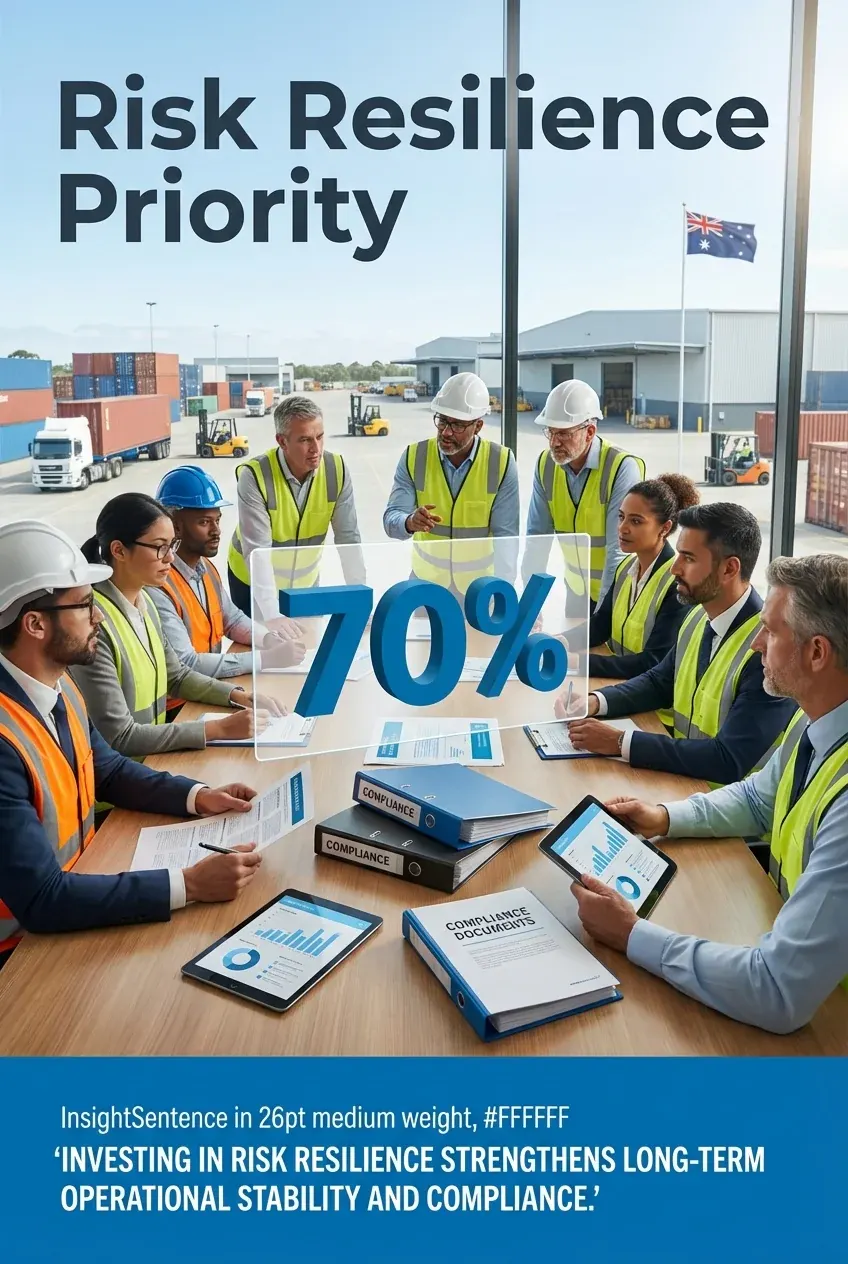
The business case for systematic risk management has strengthened considerably. Over 70% of companies now prioritise risk resilience as a top investment, recognising that disruption costs far exceed prevention investments. The framework involves four interconnected phases:
- Identify potential threats across all tiers
- Assess likelihood and impact
- Implement targeted mitigation
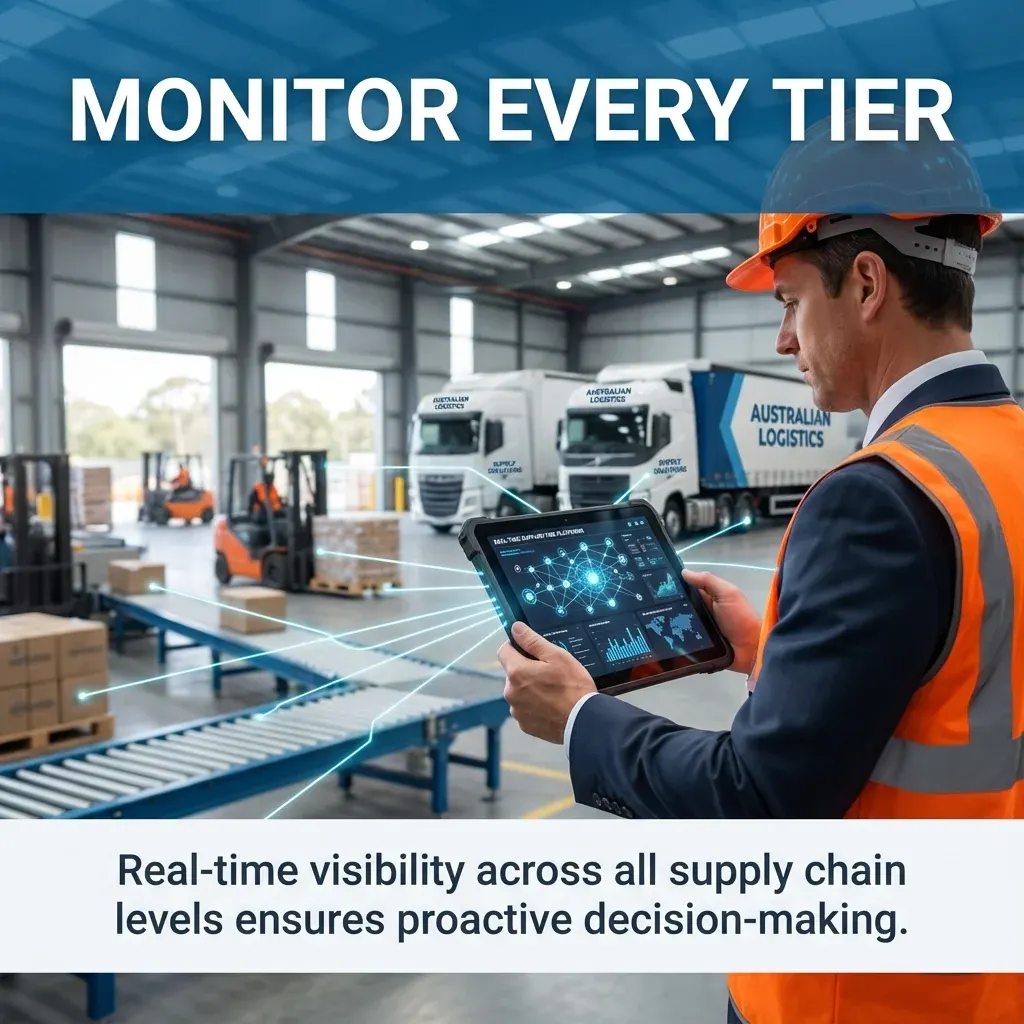
- Establish continuous monitoring
Technology amplifies your capabilities across all four phases — real-time tracking provides visibility into supplier performance, while predictive analytics identify patterns that signal emerging risks. For transport operators, a weak link in your supply chain can create compliance exposure as well as operational disruption. Learn more about Chain of Responsibility obligations and how they connect to your supply chain.
Understanding supply chain risk fundamentals
The scope extends well beyond your direct suppliers
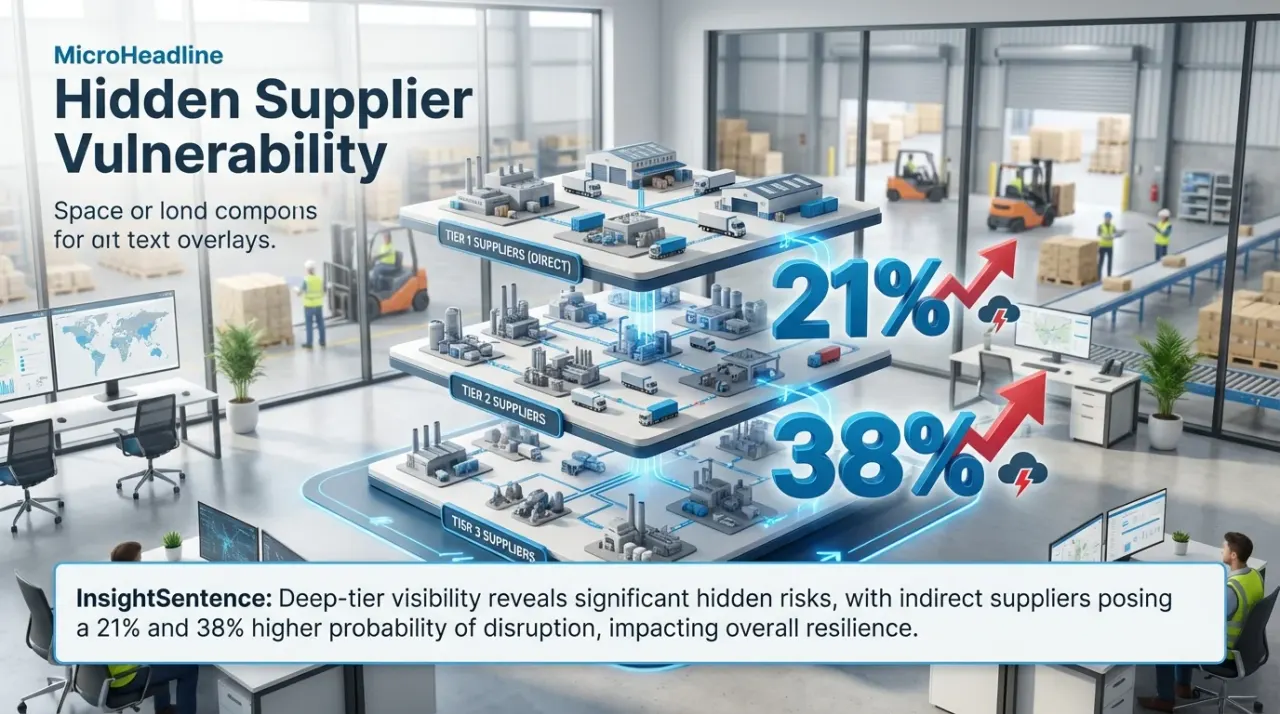
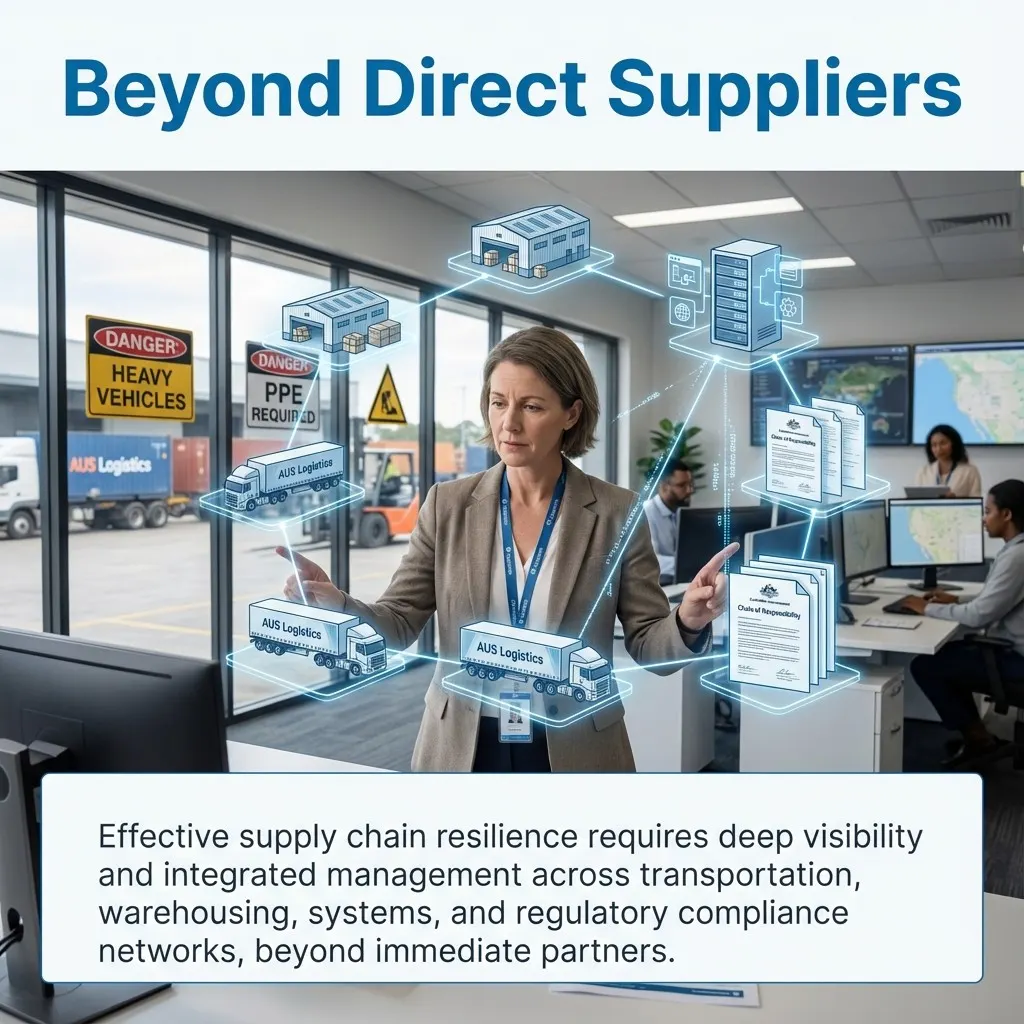
Supply chain risk management is the structured process of identifying, evaluating, and controlling threats that could disrupt the flow of materials, information, or finished products through your network. Your supply chain includes transportation providers, warehousing operations, information systems, financial arrangements, and regulatory compliance across multiple jurisdictions. Each connection point represents a potential vulnerability.
Operational risks
Operational risks stem from internal processes and capabilities — equipment failures, quality issues, capacity constraints, and workforce disruptions. These risks often have immediate impact but remain within your sphere of influence.
Financial risks
Financial risks include supplier insolvency, currency fluctuations, payment delays, and credit availability. A supplier's financial instability can cascade through your operations, creating shortages even when demand remains steady.
External risks
External risks originate outside your direct control. Geopolitical tensions, natural disasters, regulatory changes, and cybersecurity threats require different mitigation approaches than operational challenges. Each category demands a different response, and effective risk management addresses all three rather than focusing on a single dimension.
Why traditional approaches fall short
Annual reviews and static supplier lists miss the dynamic nature of modern supply networks
Many organisations treat supply chain risk management as an administrative task. They maintain supplier lists, conduct periodic audits, and document contingency plans. This compliance-focused approach misses the dynamic nature of modern supply networks.
Supply chains constantly evolve. Suppliers change their sourcing strategies. Transportation routes shift due to economic factors. New regulations alter compliance requirements. Yesterday's risk assessment quickly becomes outdated.
Effective risk management requires ongoing attention, not annual reviews. The most resilient organisations embed risk awareness into daily operations, empowering teams to identify and escalate emerging threats before they materialise into disruptions.
For Australian transport operators, this is especially relevant under the Heavy Vehicle National Law, which establishes a principle of shared responsibility across every party in the chain. A static compliance document will not satisfy a regulator asking what you actively did to identify and manage risk. Explore CoR consulting options to build a more dynamic approach to compliance.
The four-stage risk management process
A structured framework for sustained resilience
Implementing structured processes transforms risk management from reactive to proactive. The four-stage framework provides the organisational approach needed for sustained resilience.
Stage one: Risk identification
Map your complete supply network. Document every supplier, their geographic locations, and their dependencies on sub-tier suppliers. Include logistics providers, technology systems, and regulatory requirements. Conduct structured interviews with operational teams — warehouse managers, procurement specialists, and logistics coordinators possess ground-level insights that executive-level reviews might miss. Create a risk register cataloguing identified threats, including category, trigger events, affected operations, and preliminary severity estimates.
Stage two: Risk assessment
Evaluate each identified risk along two dimensions: likelihood of occurrence and potential business impact. Likelihood assessment requires honest evaluation of historical frequency, current conditions, and trend trajectories. Impact assessment examines financial costs, operational downtime, customer relationship damage, regulatory penalties, and reputational harm. Plot risks on a matrix — high-likelihood, high-impact risks demand immediate attention.
Stage three: Risk mitigation
Develop specific strategies for your highest-priority risks using four approaches:
- Avoidance — eliminate exposure entirely by sourcing from alternative providers
- Reduction — implement controls that decrease likelihood or impact, such as diversifying suppliers or building inventory buffers
- Transfer — shift potential losses through insurance, contractual liability clauses, or hedging instruments
- Acceptance — document threats that are unavoidable or too costly to mitigate, including rationale and triggers for reconsideration
Stage four: Continuous monitoring
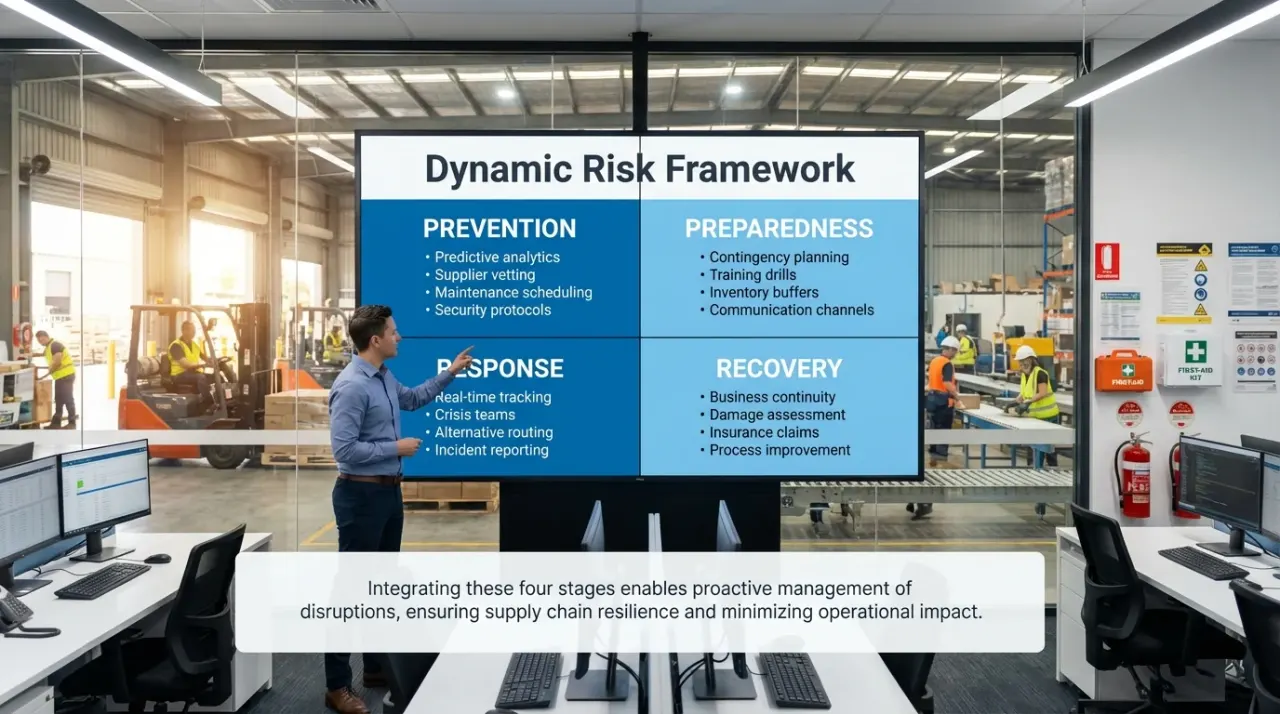
Establish systems that track risk indicators and supplier performance in real time. Define key risk indicators for each major threat — supplier financial metrics, quality performance trends, delivery reliability, and external factors like weather patterns or regulatory announcements. Schedule regular risk reviews with cross-functional teams. Apply the prevention, preparedness, response, and recovery (PPRR) model to keep risk management dynamic and adaptable to changing conditions.
Essential mitigation strategies
Practical tactics that build resilience across risk categories
With processes established, specific tactical approaches address the most common supply chain vulnerabilities. These strategies build resilience across different risk categories.
Supplier diversification
Avoid concentration risk by qualifying multiple suppliers for critical materials and components. Single-source dependencies create fragility, leaving you vulnerable when that supplier experiences problems. Develop at least two qualified suppliers for components representing significant revenue exposure or long lead times. Three or more suppliers provide stronger protection for your most critical inputs.
Balance diversification against efficiency considerations. Splitting orders among multiple suppliers increases coordination complexity and may reduce economies of scale. Target diversification where disruption risk justifies these trade-offs. Geographic diversification protects against regional disruptions — source from suppliers in different countries or regions to minimise exposure to localised events.
Strategic inventory management
Inventory buffers provide time to respond when supply disruptions occur. Strategic stockpiles of critical materials prevent production stoppages during short to medium-term supplier outages. Calculate optimal safety stock levels based on supply variability, lead times, and criticality to operations. Higher variability and longer lead times require larger buffers.
For transport operators, these supply chain strategies complement your broader compliance framework. A practical CoR risk review can help you connect supply chain risk management to your Chain of Responsibility obligations and ensure your evidence holds up under scrutiny.
Connecting supply chain risk to your CoR obligations
Build the evidence trail that regulators expect
For Australian transport operators, supply chain risk management is not optional — it aligns directly with your duties under the Heavy Vehicle National Law. The HVNL establishes a principle of shared responsibility: every party in the chain of responsibility must ensure, so far as is reasonably practicable, the safety of transport activities.
This means your risk register, supplier assessments, and mitigation strategies form part of the evidence a regulator will examine. A documented, actively maintained risk management process demonstrates that you are discharging your duty rather than treating compliance as a paperwork exercise.
Key connections between supply chain risk management and CoR obligations include:
- Consignor and consignee controls — verify that loading schedules, mass limits, and receiving windows do not create unsafe transport tasks
- Contractor management — confirm that contracted carriers meet fatigue, maintenance, and speed compliance requirements before work begins
- Executive due diligence — under the HVNL, executives of legal entities must exercise due diligence to ensure the entity complies with its safety duty
If you need help structuring your approach, contact MAEZ to discuss your situation, or explore our Chain of Responsibility training to build capability across your team. You can also read more about what duty holders need to understand about their obligations under the HVNL.
How MAEZ works
Find the gaps. Fix the system. Prove the controls.
MAEZ helps transport operators deal with the compliance risk they already know is there. We help get the Safety Management System in order, protect NHVAS accreditation, reduce fine exposure, and connect training, evidence, and CoRGuard workflows where software is needed.
Find
Identify what is exposed before an auditor or regulator does.
Fix
Build the SMS controls around how the transport business actually runs.
Prove
Use CoRGuard where records, reminders, diaries, audits, and evidence need structure.
From advice to evidence
From MAEZ advice to a working Safety Management System
Advisory work should leave a practical implementation trail. These examples show how CoRGuard supports records, fatigue and driver diary checks, maintenance, audits, document control, inductions, corrective actions, and evidence review after MAEZ identifies the gaps.
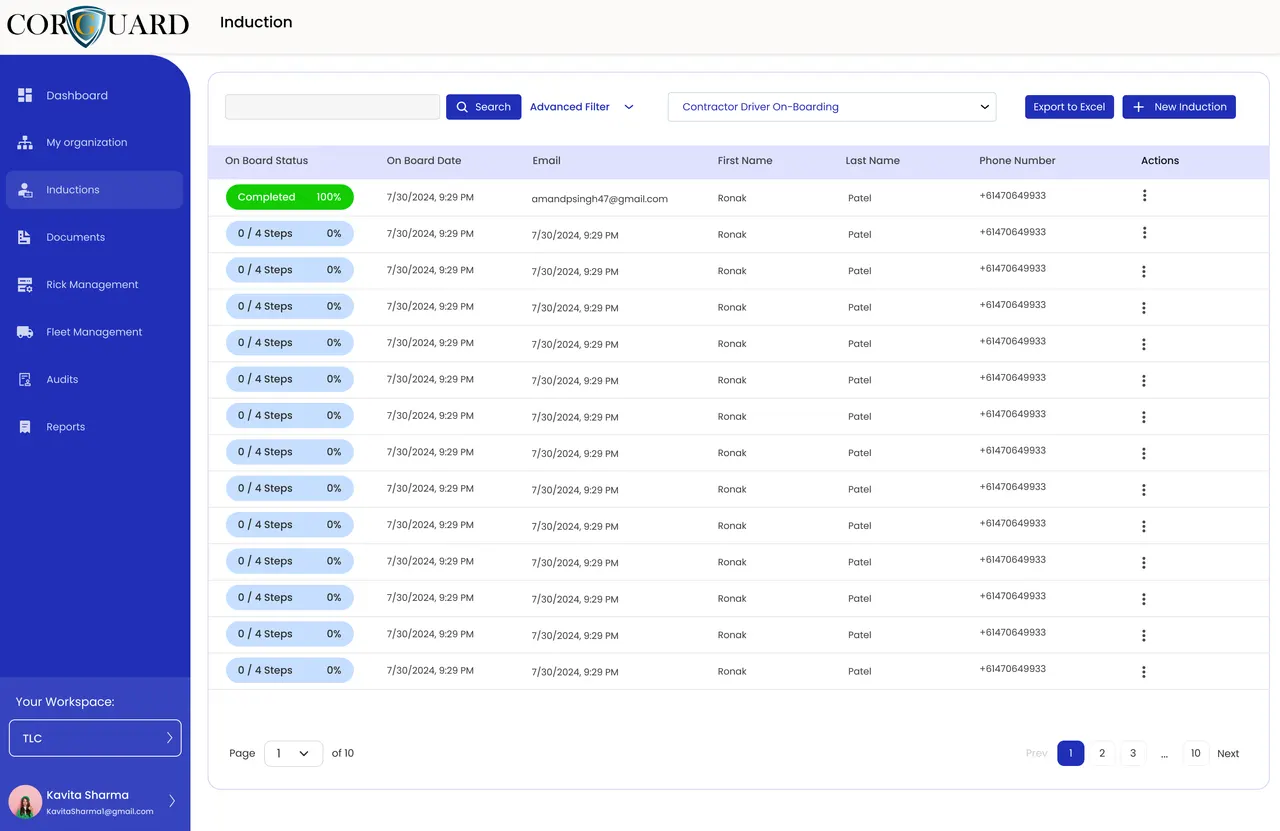
Training records
Connect training completion from cortraining.com.au to evidence and follow-up.
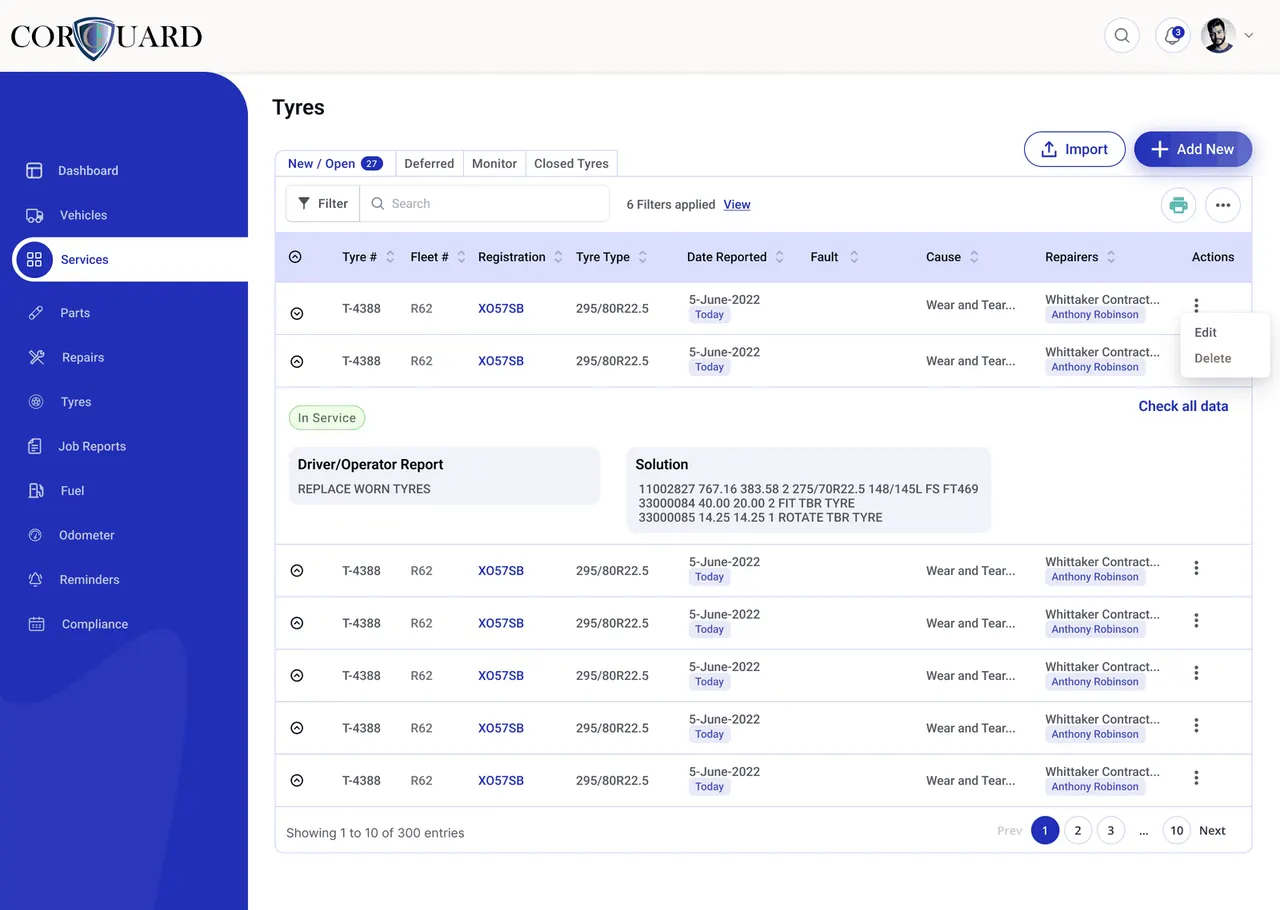
Driver diary checks
Connect fatigue and driver diary review back to manager visibility.
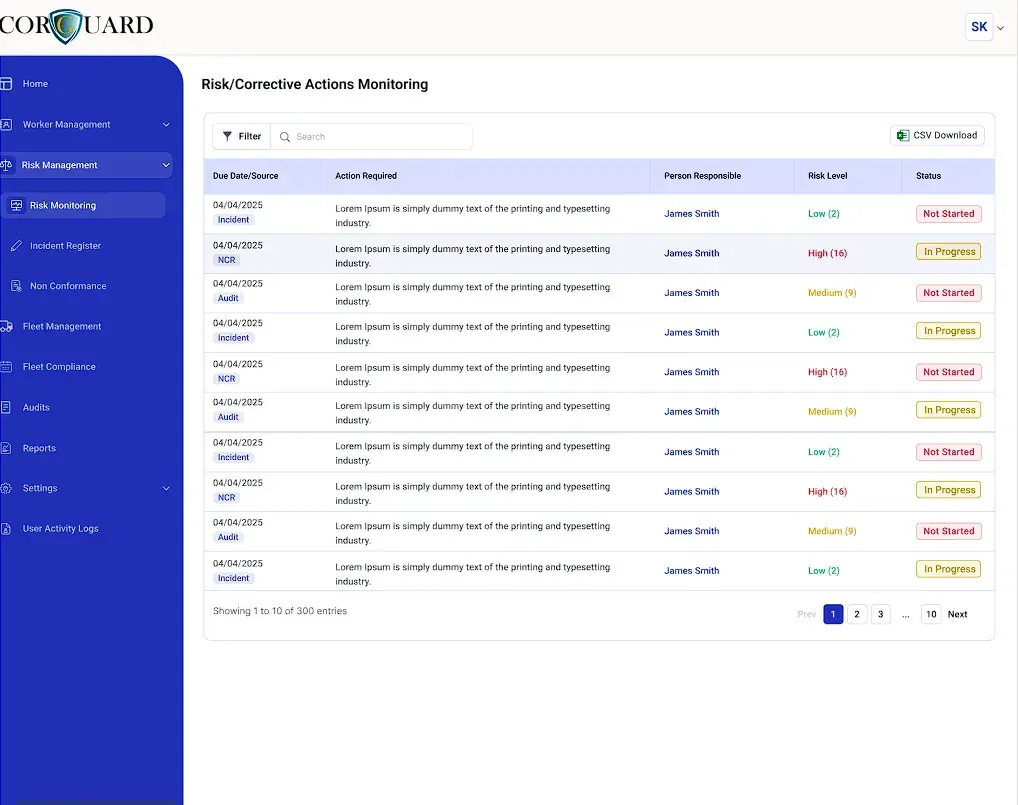
Corrective actions
Turn audit findings, hazards and incidents into tracked actions.
Keep exploring
Related Chain of Responsibility reading
MAEZ insight
Effective Risk Mitigation Strategies for Supply Chains
Discover effective risk mitigation strategies in supply chain to manage disruptions, enhance resilience, and ensure operational continuity.
MAEZ insight
Effective Strategies to Mitigate Supplier Risk
Learn how to mitigate supplier risk with effective strategies. Protect your supply chain from disruptions and ensure operational continuity today.
MAEZ insight
Understanding the Key Benefits of ISO 45001 Management Systems
Discover the key benefits of ISO 45001 management systems, including reduced incidents and enhanced compliance. Boost safety and efficiency today!
MAEZ insight
Unlocking the Benefits of ISO 45001 for Workplace Safety
Discover the benefits of 45001 for workplace safety. ISO 45001 offers a proactive risk management framework to reduce injuries and build safety cultures.
MAEZ insight
Unlocking the Benefits of a Safety Management System
Discover the benefits of a safety management system that boosts employee safety, reduces costs, and enhances workplace culture. Learn more now.
MAEZ insight
Understanding Safety Management System Software Essentials
Discover the essentials of Safety Management System software and how it enhances compliance, risk assessment, and operational efficiency.
Frequently asked questions
Questions people ask about this topic
What is supply chain risk management for transport operators?
Supply chain risk management is the structured process of identifying, evaluating, and controlling threats across every tier of your supply network. For transport operators, it directly intersects with Chain of Responsibility obligations, where a weak link can create both operational disruption and compliance exposure.
Why do annual risk reviews fall short under the HVNL?
The Heavy Vehicle National Law establishes a principle of shared responsibility across every party in the chain, requiring ongoing attention to risk. A static compliance document or annual review will not satisfy a regulator asking what you actively did to identify and manage risk as conditions changed.
What are the four stages of supply chain risk management?
The four stages are risk identification (mapping your supply network and creating a risk register), risk assessment (evaluating likelihood and impact), risk mitigation (avoidance, reduction, transfer, or acceptance), and continuous monitoring (tracking risk indicators and conducting regular reviews).
How does supplier diversification reduce supply chain risk?
Supplier diversification reduces concentration risk by qualifying multiple suppliers for critical materials, preventing single-source dependencies. Develop at least two qualified suppliers for high-exposure components, and consider geographic diversification to minimise exposure to localised disruptions.
How does supply chain risk management connect to Chain of Responsibility compliance?
Your risk register, supplier assessments, and mitigation strategies form part of the evidence a regulator will examine under the HVNL. Documented, actively maintained risk management demonstrates that you are discharging your shared responsibility duty rather than treating compliance as a paperwork exercise.