
MAEZ insight
Essential Supply Chain Risk Management Checklist for Australian Transport Operators
A practical supply chain risk management checklist covering financial, operational, compliance, cybersecurity, environmental, and geopolitical risk domains for Australian transport operators.

Managers need a clear view of gaps before audit or enforcement pressure arrives.

Contractor controls should be verified before the work starts.

Receiving windows, site rules, and unloading delays can all shape the transport task.
Unloading decisions can affect safety, scheduling, and responsibility.
Consignors
Freight terms, delivery windows, and KPIs must not push drivers into speed, fatigue, or mass breaches.
Consignees
Receiving rules, site access, and unloading delays are CoR controls that need to be set and evidenced.
Loaders
Mass, dimension, and load restraint decisions need documented checks, not assumptions.
Managers
Executives and managers need due-diligence evidence that the Safety Management System is actually working.
What is a supply chain risk management checklist?
A structured tool for identifying, evaluating, and monitoring supplier vulnerabilities
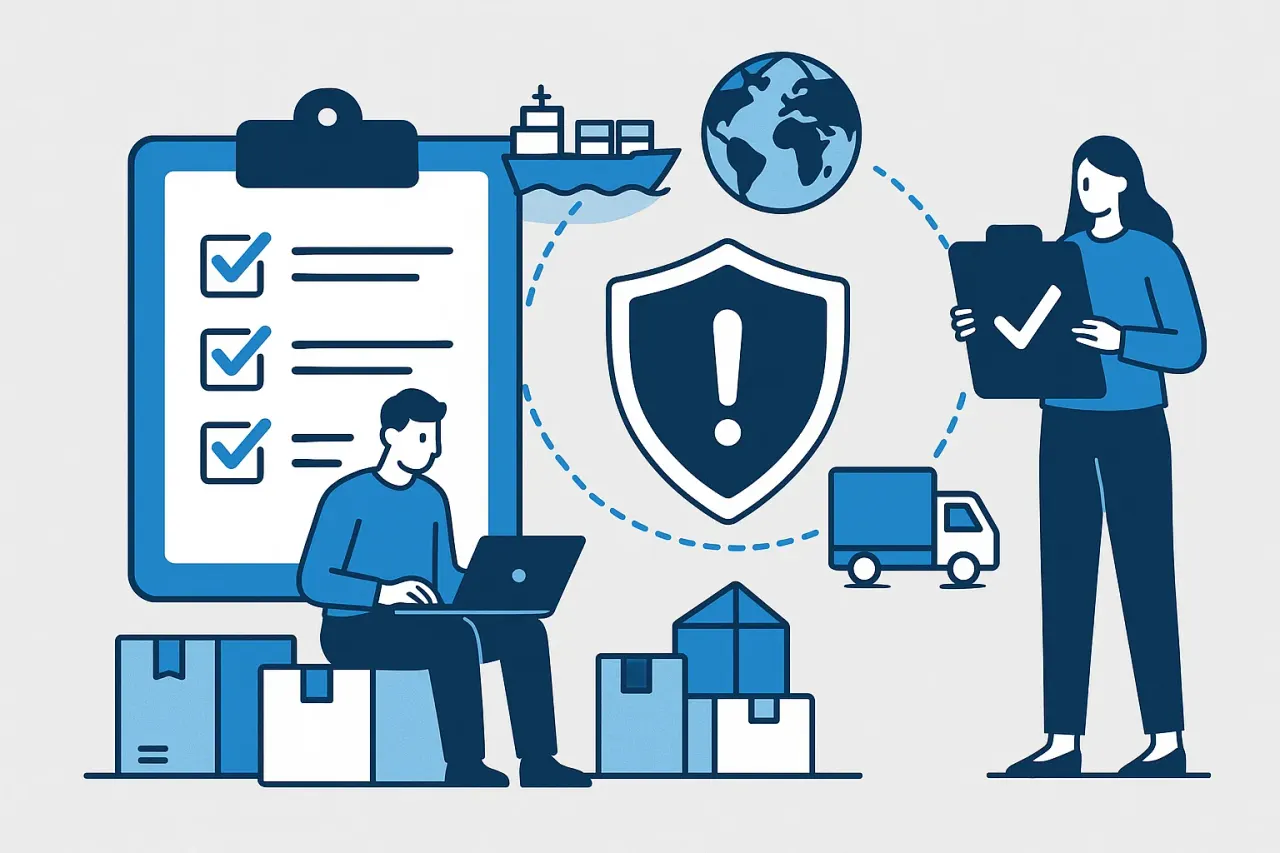
A supply chain risk management checklist is a structured tool for identifying, evaluating, and monitoring vulnerabilities across your supplier network. It provides repeatable assessment criteria that ensure consistent risk evaluation throughout your supply chain, standardising how your team assesses supplier risk rather than relying on individual judgment.
The checklist approach works because it captures financial health, operational capability, compliance status, and security practices in one documented framework. Professional risk assessment requires examining multiple risk categories in parallel — financial instability, non-compliance, ESG gaps, cyber vulnerabilities, and geopolitical disruptions — to avoid blind spots.
Each assessment generates documented evidence of your risk management process. That evidence matters when regulators or auditors ask what you did and when. Under Australia's Heavy Vehicle National Law (HVNL), the safety of transport activities relating to a heavy vehicle is the shared responsibility of each party in the chain of responsibility, and a safety duty cannot be transferred to another person. For background on how these obligations fit the broader framework, see About Chain of Responsibility.
Six risk domains that protect your supply network
Why your supply chain needs a structured risk checklist
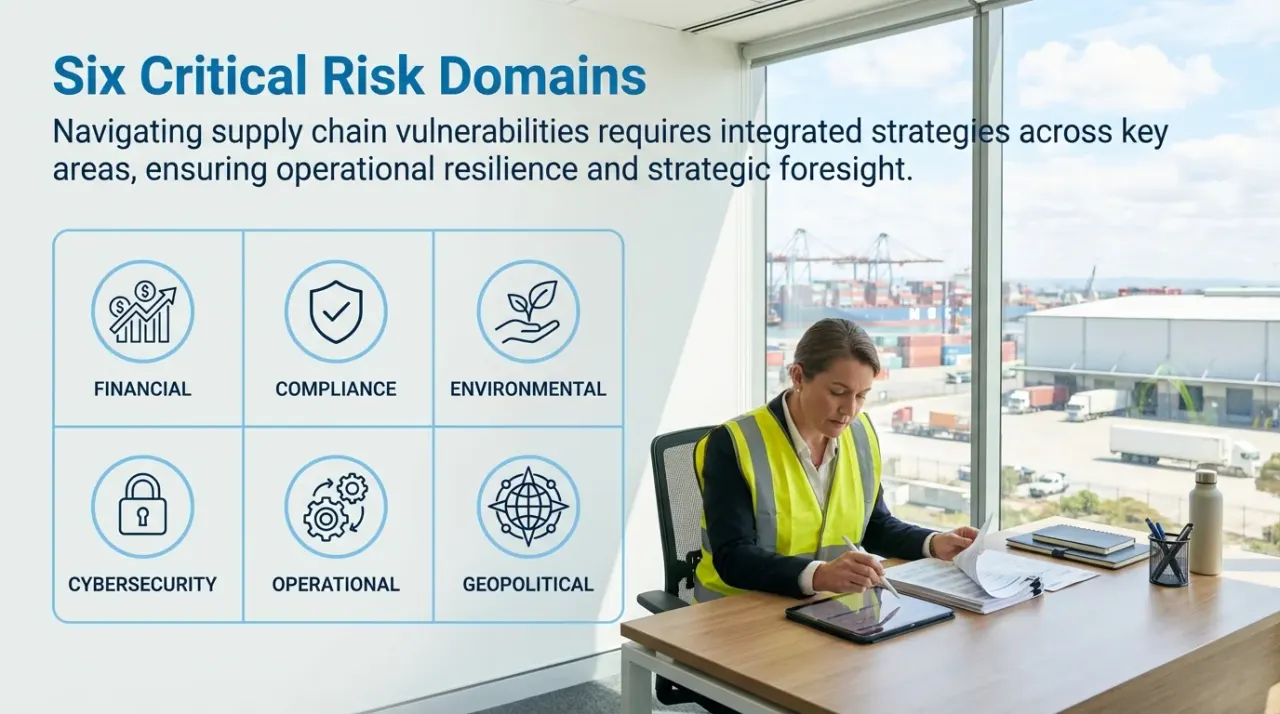
Effective supply chain risk management starts with a systematic checklist that addresses six critical risk domains:
- Financial instability — declining revenue, shrinking margins, debt loads, and cash-flow distress
- Regulatory non-compliance — operating permits, vehicle certifications, driver qualifications, and safety management systems
- Environmental gaps — emissions monitoring, waste management, and sustainability certification
- Cybersecurity vulnerabilities — security certifications, encryption protocols, and incident response plans
- Operational disruptions — capacity constraints, quality failures, and business continuity gaps
- Geopolitical threats — government stability, trade policy changes, and regional infrastructure dependencies
Each domain demands structured assessment protocols that protect your supply network from cascading failures. The best checklists don't just identify problems — they create repeatable frameworks for evaluation, scoring, and response across your entire supplier base.
Organisations operating transport-dependent supply chains face unique compliance pressures under the HVNL. Your checklist must balance regulatory requirements with practical risk mitigation strategies that keep operations running.
What makes a risk checklist effective?
Evaluation criteria, scoring, documentation, and time-based triggers
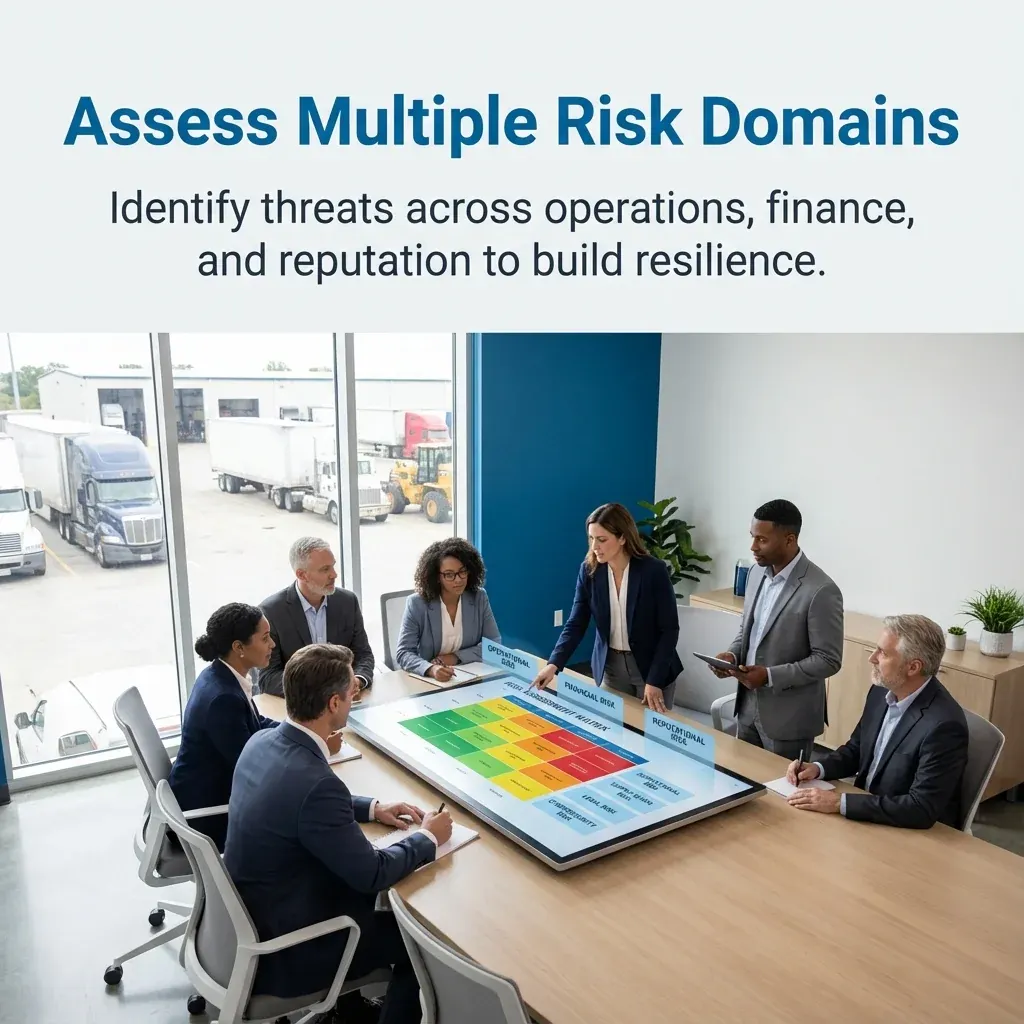
Risk assessment checklists need clear evaluation criteria for each risk category. Specific questions, required documentation, and acceptance thresholds prevent subjective assessments that miss critical vulnerabilities.
Key components
- Clear evaluation criteria — specific questions and required documentation for each risk category, with acceptance thresholds that prevent subjective judgment calls
- Scoring mechanisms — turn qualitative observations into quantitative risk ratings, allowing you to compare suppliers objectively and prioritise resources toward highest-risk relationships
- Documentation requirements — certification verification, financial records, insurance documentation, and compliance evidence all belong in your framework to create audit trails
- Time-based review triggers — scheduled reassessments plus event-triggered reviews when supplier circumstances change
Consistent scoring models let you compare suppliers objectively and direct attention where it matters most. Supplier risk changes over time, so your framework needs both scheduled and event-driven reviews — not a one-off tick-box exercise.
What does supply chain failure really cost?
Financial, regulatory, safety, and reputational impacts of unmanaged supplier risk
Supply chain disruptions create cascading problems that extend far beyond delayed deliveries. Financial losses, regulatory penalties, safety incidents, and reputational damage all stem from unmanaged supplier risks.
- Financial impacts — production delays, expedited shipping costs, and emergency supplier changes drain budgets quickly when supplier issues disrupt operations
- Regulatory exposure — organisations remain legally responsible for their supply chain partners, particularly in transport and logistics operations where duties extend across the chain
- Safety risks — suppliers cutting corners or lacking proper certification multiply your exposure to incidents, even when they occur at supplier facilities or during contracted transport
- Reputation damage — customers and stakeholders expect responsible supply chain management; failures create lasting trust deficits that extend well beyond the individual incident
Organisations without structured risk assessment operate reactively. They discover supplier problems after contracts are signed, relationships are established, and dependencies are locked in. Proactive risk identification shifts you from crisis management to strategic oversight.
Strategic advantages of structured risk management
Due diligence evidence, supplier performance, insurance savings, and stronger partnerships
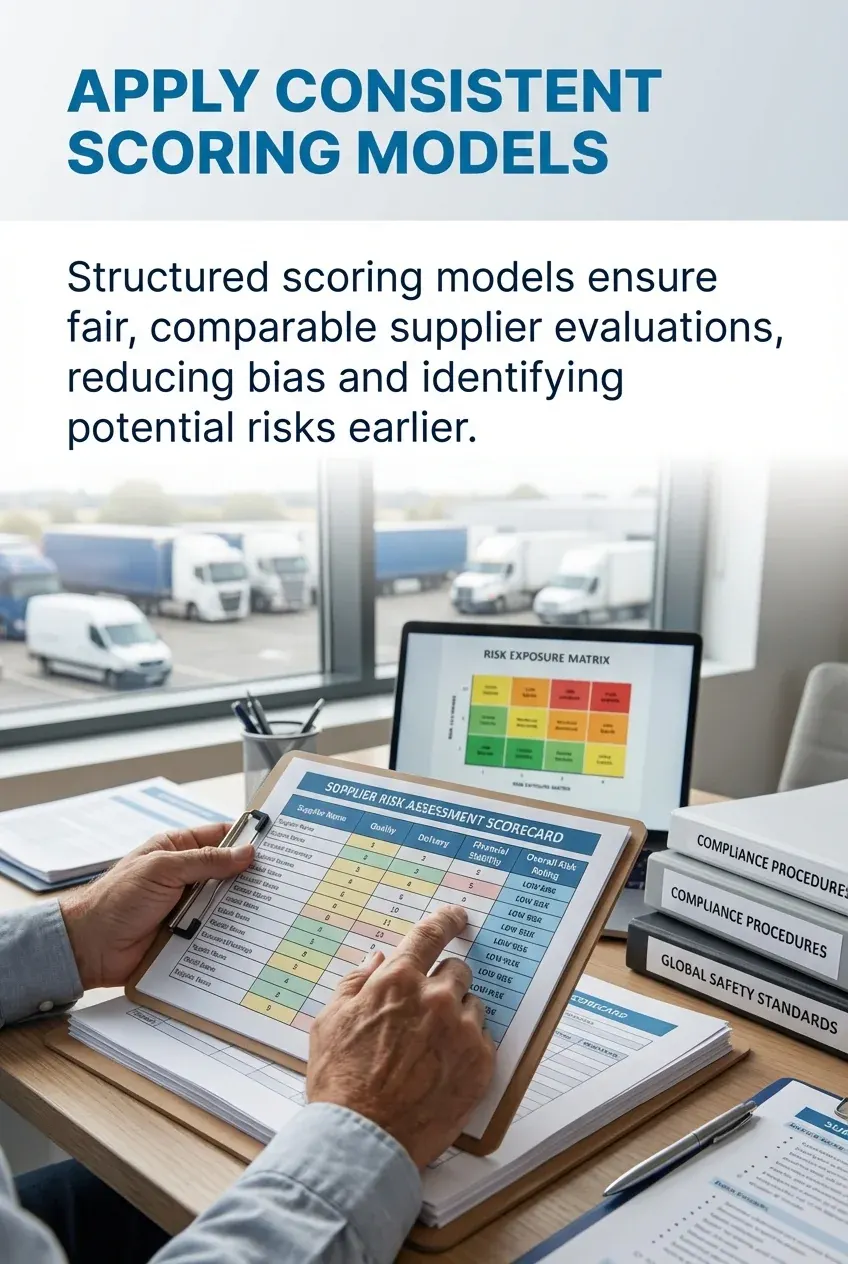
Documented risk assessment processes demonstrate due diligence to regulators and auditors. Your checklist creates evidence that your organisation takes supply chain responsibility seriously.
- Improved supplier performance — suppliers who know you conduct regular risk assessments are encouraged to maintain better practices and transparent communication
- Lower insurance costs — insurers recognise that documented assessment processes reduce claim likelihood and severity
- Stronger relationships — the best suppliers appreciate thorough evaluation because it demonstrates your commitment to the relationship
- Audit-ready evidence — each assessment generates documented proof of your due diligence process
Under the HVNL, executives of legal entities with safety duties must exercise due diligence to ensure the entity complies with those duties. A structured checklist gives executives the evidence they need to demonstrate that diligence. For practical support building or reviewing these frameworks, CoR consulting can help you identify gaps and close them before enforcement pressure arrives.
Financial and operational risk criteria
Assessing supplier financial health, capacity, quality, and continuity
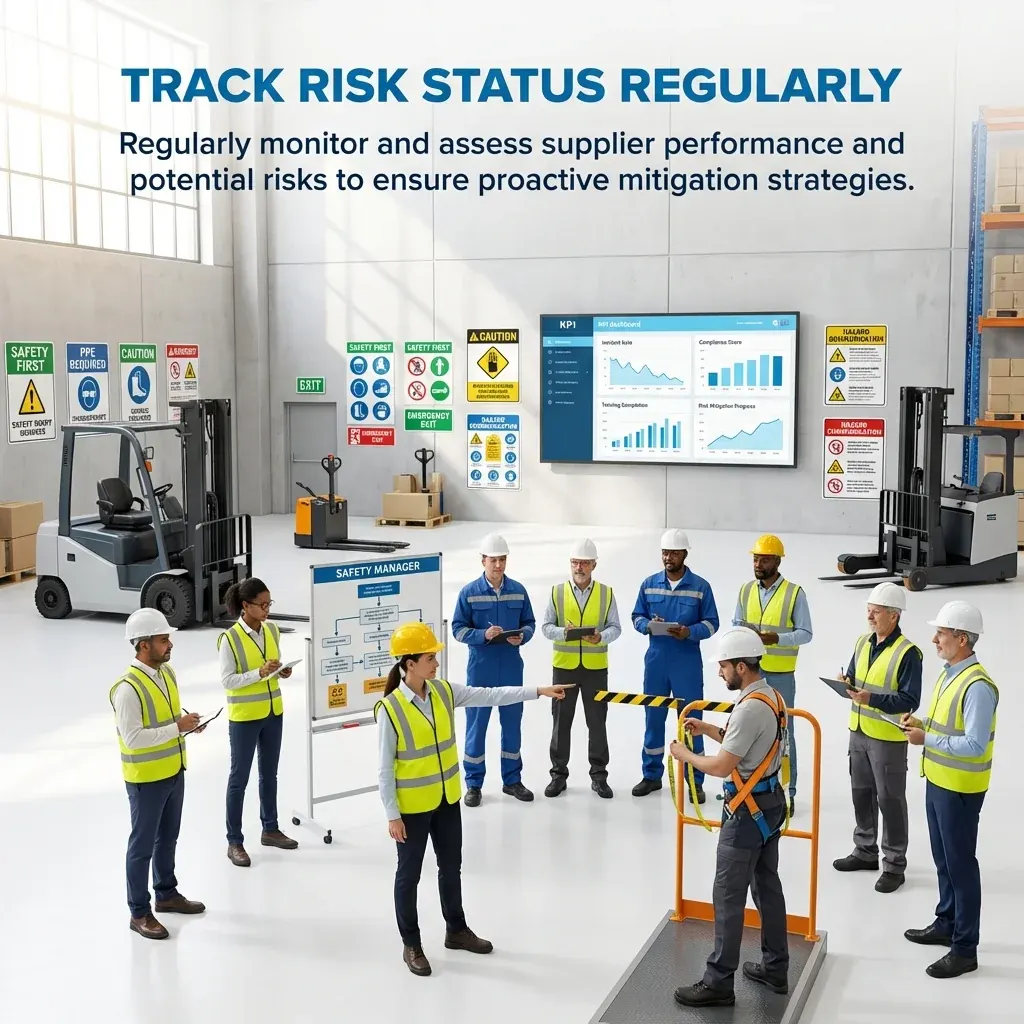
Financial stability determines whether suppliers can fulfil long-term commitments. Your checklist needs clear criteria for evaluating supplier financial health alongside operational capability.
Financial risk assessment
- Review financial statements from the past three years — look for declining revenue, shrinking margins, increasing debt loads, or negative cash flow that signals distress
- Require current credit reports and establish minimum acceptable ratings for critical suppliers
- Monitor payment history — suppliers struggling financially often extend payables, creating risks throughout their supply network
- Verify adequate liability coverage, business interruption insurance, and product liability protection
Operational and service risk
- Request capacity utilisation data and backup production capabilities for critical items to confirm suppliers can meet your volume requirements
- Verify quality certifications such as ISO standards, industry-specific standards, and review customer audit results
- Request documented business continuity plans for key risks like facility damage, equipment failure, or key personnel loss
- Assess geographic concentration — multiple suppliers in the same region create exposure to natural disasters, political instability, and infrastructure dependencies
Compliance, cyber, environmental, and geopolitical risk
Regulatory adherence, data security, sustainability, and external market threats
Regulatory compliance protects you from legal exposure through your supply chain. Your checklist must verify supplier adherence to relevant standards and regulations across each of these domains.
Compliance and regulatory risk
- Verify suppliers hold required operating permits, vehicle certifications, driver qualifications, and operating authorities
- Review incident history, safety training programs, and workplace health and safety management systems
- Check environmental compliance — waste management practices, emissions monitoring, and environmental certification where applicable
- Assess labour practices to avoid ethical and legal exposure from exploitative practices
Cybersecurity and data security risk
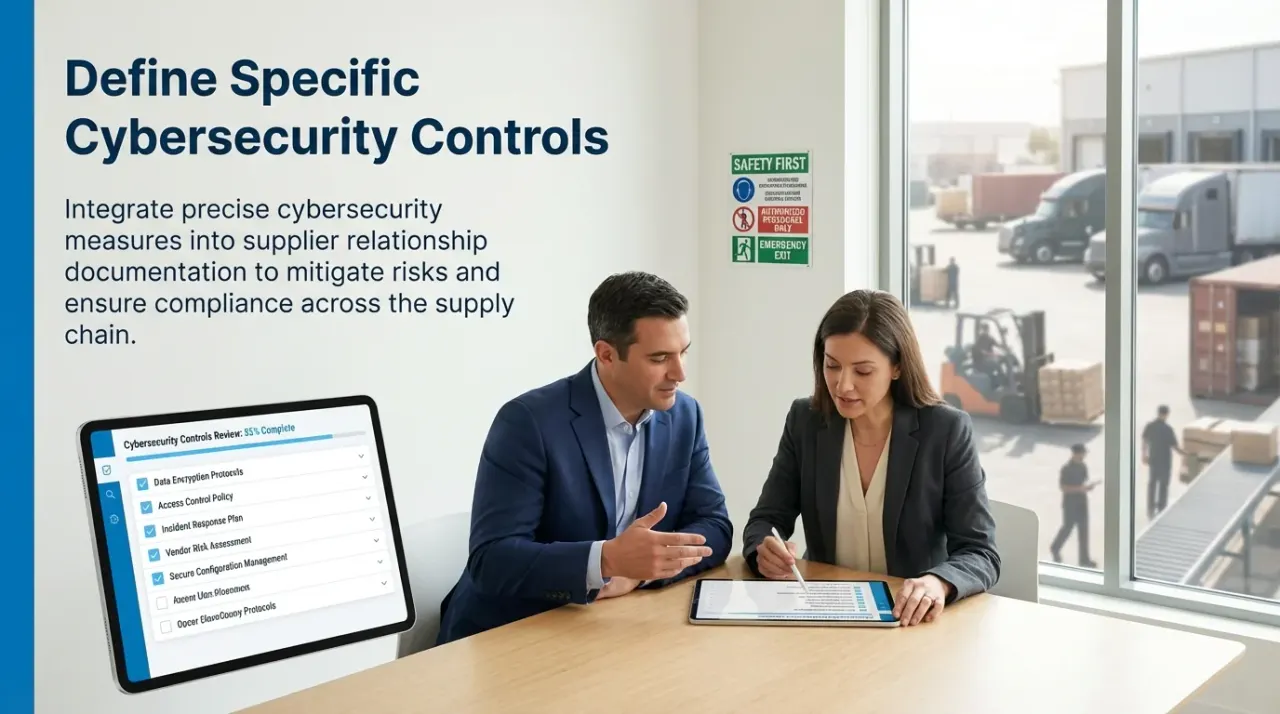
- Define specific cybersecurity controls and embed them in supplier requirements and contracts
- Request evidence of security certifications, encryption protocols, and access controls when suppliers handle sensitive information
- Review incident response plans, backup procedures, and recovery time objectives
- Verify authentication requirements, activity monitoring, and regular security assessments for third-party network access
- Assess software supply chain risks — development practices, vulnerability management, and update procedures
Environmental and sustainability risk
- Request emissions data, reduction targets, and renewable energy usage to understand supply chain climate impacts
- Verify recycling programs, hazardous material handling, and circular economy participation
- Assess water usage, energy consumption, and material waste in supplier operations
- Look for recognised environmental management standards and industry-specific sustainability programs
Geopolitical and market risk
- Consider government stability, regulatory predictability, and potential for policy disruption in supplier operating environments
- Monitor inflation, currency stability, labour availability, and market demand in supplier regions
- Assess exposure to trade policy changes that create sudden supply disruptions
For ongoing insights on managing these risks in Australian transport operations, explore MAEZ Insights or contact MAEZ to discuss your specific supply chain risk profile.
How MAEZ works
Find the gaps. Fix the system. Prove the controls.
MAEZ helps transport operators deal with the compliance risk they already know is there. We help get the Safety Management System in order, protect NHVAS accreditation, reduce fine exposure, and connect training, evidence, and CoRGuard workflows where software is needed.
Find
Identify what is exposed before an auditor or regulator does.
Fix
Build the SMS controls around how the transport business actually runs.
Prove
Use CoRGuard where records, reminders, diaries, audits, and evidence need structure.
From advice to evidence
From MAEZ advice to a working Safety Management System
Advisory work should leave a practical implementation trail. These examples show how CoRGuard supports records, fatigue and driver diary checks, maintenance, audits, document control, inductions, corrective actions, and evidence review after MAEZ identifies the gaps.
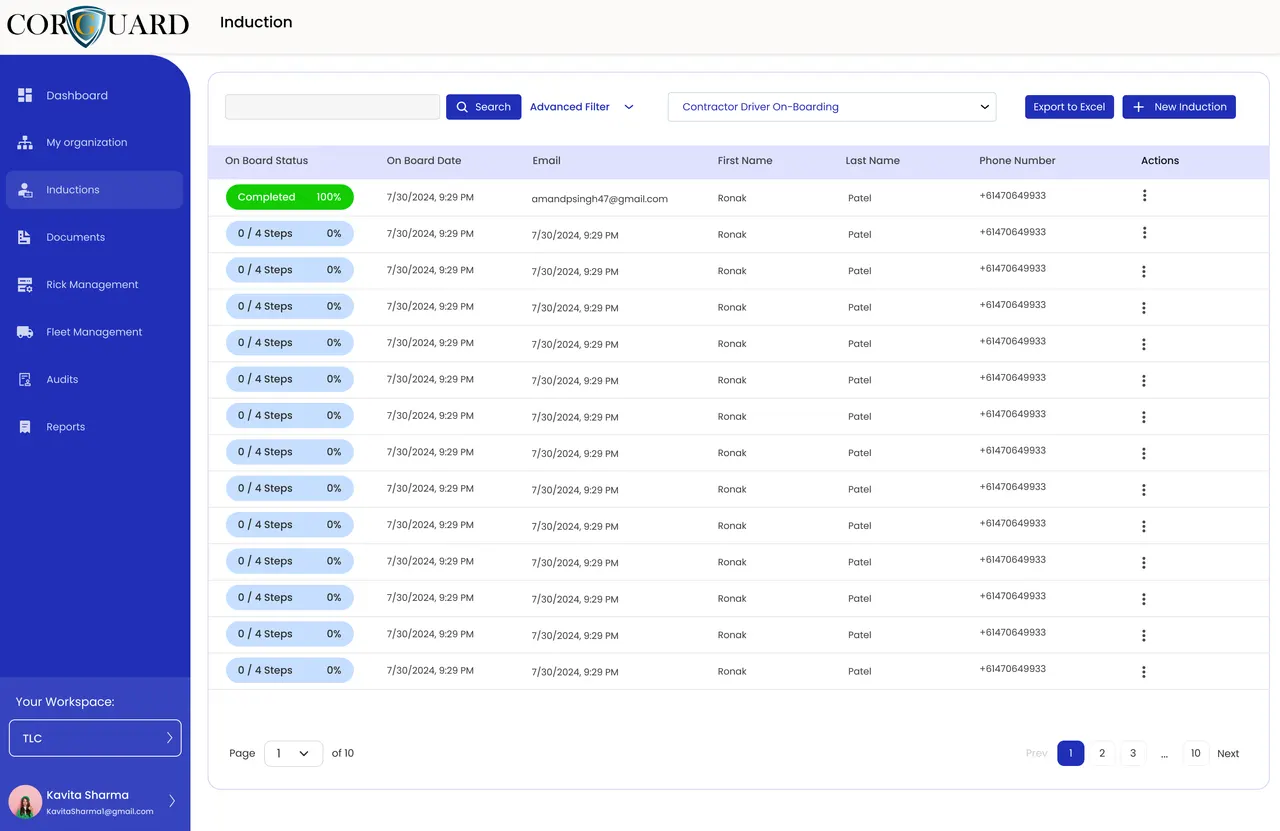
Training records
Connect training completion from cortraining.com.au to evidence and follow-up.
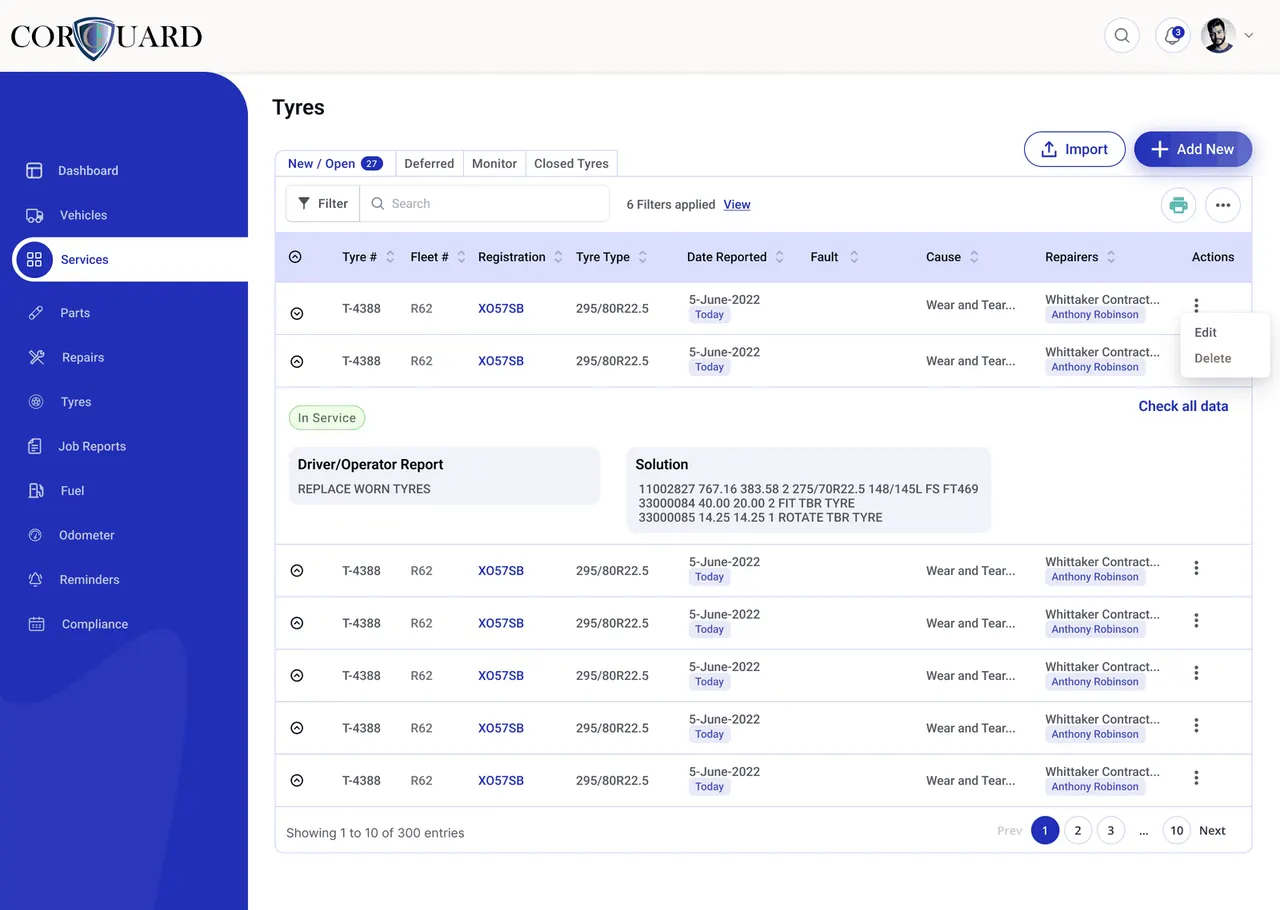
Driver diary checks
Connect fatigue and driver diary review back to manager visibility.
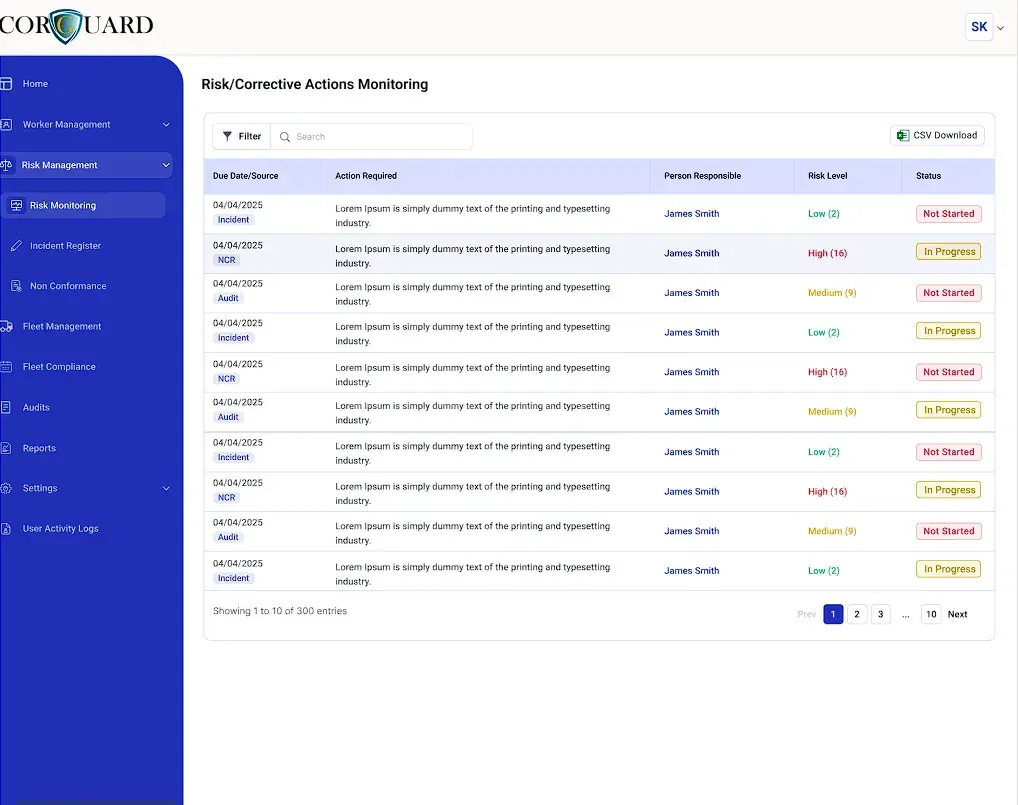
Corrective actions
Turn audit findings, hazards and incidents into tracked actions.
Keep exploring
Related Chain of Responsibility reading
MAEZ insight
Effective Strategies for Supply Chain Risk Management
Discover best practices in supply chain risk management to minimize disruptions and financial losses. Learn to leverage technology and supplier networks effectively.
MAEZ insight
Overcoming Common CoR Training Challenges with Ease
Discover effective solutions for overcoming common CoR training challenges and ensure lasting change in your organization. Learn how to engage participants effectively.
MAEZ insight
Understanding the Heavy Vehicle National Law: A Comprehensive Guide
Explore the Heavy Vehicle National Law overview, a key regulatory framework for commercial transport in Australia, ensuring safety and compliance.
MAEZ insight
Decoding HVNL Requirements: A Comprehensive Guide
Explore our guide on understanding HVNL requirements, ensuring compliance and safety in the heavy vehicle sector. Essential for all industry stakeholders.
MAEZ insight
Understanding HVNL Compliance: A Complete Guide
Learn how to comply with HVNL and meet Chain of Responsibility obligations. This guide details safety risk management for all supply chain parties.
MAEZ insight
Understanding the Essentials of CoR Training Requirements
Dive into understanding CoR training requirements and discover how competency over certification plays a crucial role in Australia’s compliance landscape.
Frequently asked questions
Questions people ask about this topic
What is a supply chain risk management checklist?
A supply chain risk management checklist is a structured tool for identifying, evaluating, and monitoring vulnerabilities across your supplier network. It provides repeatable assessment criteria that ensure consistent risk evaluation across financial, operational, compliance, cybersecurity, environmental, and geopolitical domains.
Why does the HVNL make supply chain risk assessment important for Australian transport operators?
Under the HVNL, the safety of transport activities relating to a heavy vehicle is the shared responsibility of each party in the chain of responsibility, and a safety duty cannot be transferred to another person. Executives of legal entities with safety duties must also exercise due diligence to ensure the entity complies. A structured checklist generates the evidence needed to demonstrate that diligence.
What are the six risk domains a supply chain checklist should cover?
The six critical risk domains are financial instability, regulatory non-compliance, environmental gaps, cybersecurity vulnerabilities, operational disruptions, and geopolitical threats. Each requires structured assessment protocols with clear evaluation criteria, scoring mechanisms, and time-based review triggers.
How often should supplier risk assessments be reviewed?
Supplier risk assessments need both scheduled reassessments and event-triggered reviews when supplier circumstances change. Risk changes over time, so the framework should not be a one-off tick-box exercise but a repeatable process that captures evolving vulnerabilities.
What documentation should a supply chain risk checklist require from suppliers?
A checklist should require financial statements, credit reports, insurance certificates, quality certifications, business continuity plans, environmental compliance records, and security certifications. Each assessment generates documented evidence of your due diligence process that matters when regulators or auditors ask what you did and when.