
MAEZ insight
Overcoming Common CoR Training Challenges
Practical solutions for the real barriers to effective Chain of Responsibility training in Australian transport: participant buy-in, delivery logistics, budget pressures, and lasting behavioural change.

Proof that freight promises do not create unsafe transport pressure.

Loading controls need evidence, not assumptions.
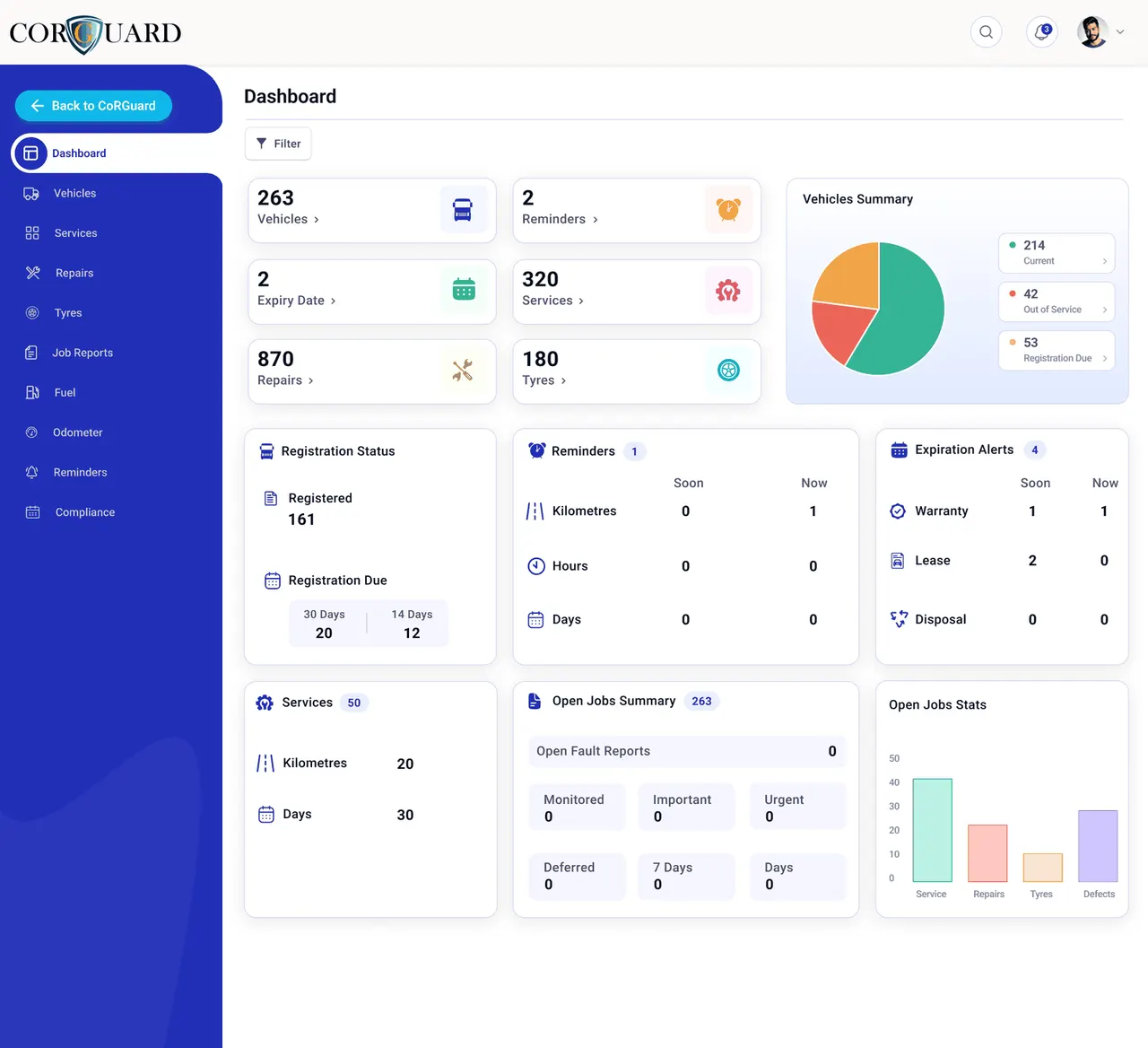
Daily fleet activity has to connect back to duties, controls, and review.

Due diligence means knowing whether the safety system is actually working.
Consignors
Freight terms, delivery windows, and KPIs must not push drivers into speed, fatigue, or mass breaches.
Consignees
Receiving rules, site access, and unloading delays are CoR controls that need to be set and evidenced.
Loaders
Mass, dimension, and load restraint decisions need documented checks, not assumptions.
Managers
Executives and managers need due-diligence evidence that the Safety Management System is actually working.
Why Chain of Responsibility Training Programs Fall Short
The gap between awareness and application stays wide across Australian supply chains
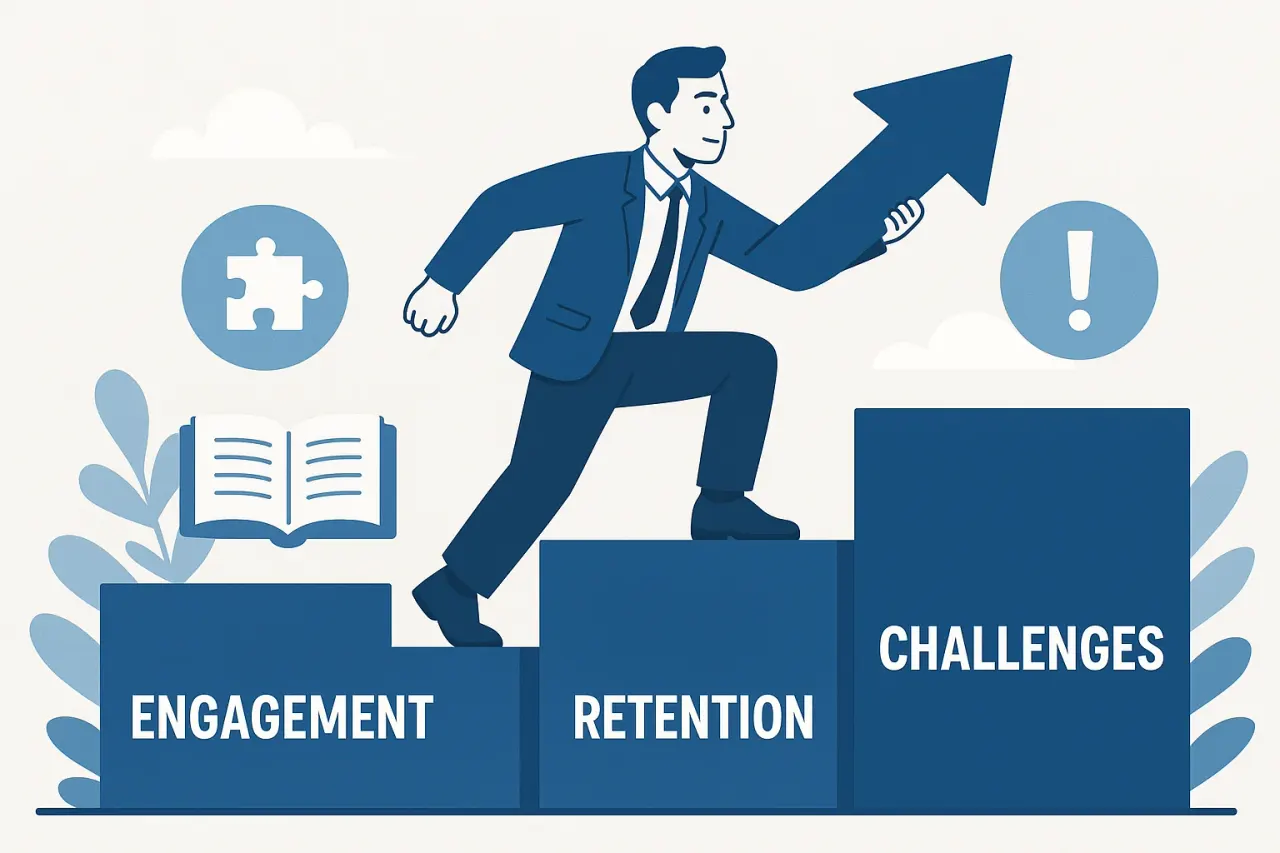
Common Chain of Responsibility training challenges in Australian transport include securing genuine participant buy-in, managing delivery logistics across dispersed operations, overcoming budget constraints, and creating lasting behavioural change beyond one-day workshops. Effective CoR training requires 50–80 hours of instruction, practice, and coaching to move participants from surface awareness to consistent, correct decisions under operational pressure.
Most organisations approach CoR training as a compliance exercise. They schedule a workshop, tick the box, and wonder why behaviour doesn't shift when HVNL auditors arrive or incidents occur. The problem isn't the standards themselves — the challenge lies in how we prepare people to apply them consistently under pressure.
Three persistent obstacles undermine effective Chain of Responsibility training:
- Securing genuine buy-in from participants who perceive training as bureaucratic compliance theatre
- Managing the logistical complexity of meaningful training delivery across dispersed locations and shift patterns
- Maintaining engagement through extended learning periods that actually create lasting change
Understanding what Chain of Responsibility actually means provides the foundation, but application under pressure requires different preparation entirely.
The Preparedness Gap: Why Initial Training Isn't Enough
Awareness does not automatically translate into correct decisions under operational pressure
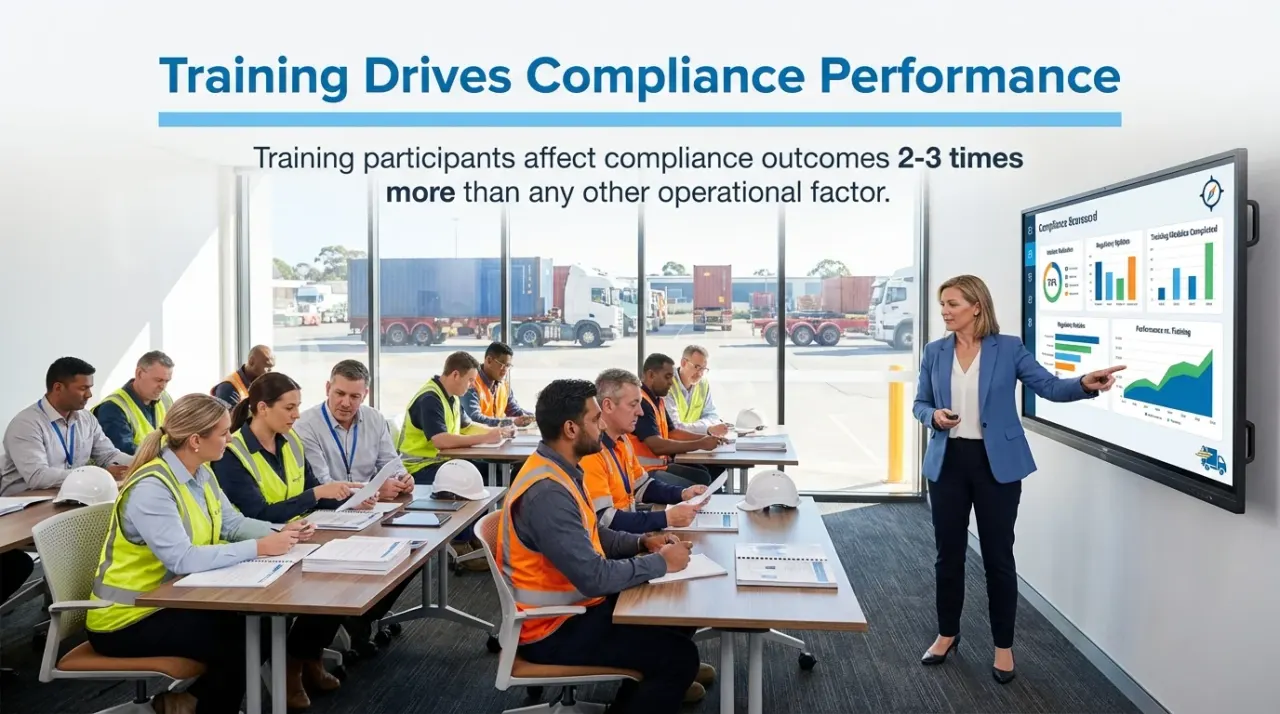
Most CoR training programs operate under a dangerous assumption: that awareness equals competence. Organisations believe understanding the Heavy Vehicle National Law automatically translates into correct decision-making during operational pressure. This assumption collapses quickly when tested. Training participation is the strongest driver of compliance outcomes, affecting performance 2–3 times more than any other operational factor.
The preparedness gap manifests in three specific ways across supply chains:
Surface Knowledge Without Application Skills
Participants leave training sessions understanding CoR principles conceptually — they can recite duty categories and recognise risk categories outlined in HVNL legislation. Then operational reality arrives with its messy complexity. A scheduler faces pressure to meet delivery deadlines when weather delays create time conflicts. A warehouse supervisor decides whether a vehicle with a minor mechanical issue should complete its run. A procurement manager must choose between compliant carriers who cost more and faster operators with questionable practices.
Confidence Gaps in High-Stakes Decisions
Training programs rarely prepare participants for the social pressure accompanying compliance decisions. People understand what they should do according to HVNL requirements but lack confidence pushing back against managers who prioritise delivery over safety, or challenging established practices that create liability. Someone knows a loading practice violates mass management requirements but stays silent because they're new to the role. A logistics coordinator recognises fatigue management concerns but doesn't escalate because previous complaints went nowhere.
Disadvantaged Operational Contexts
Some operational environments present significantly more challenging CoR implementation contexts. Regional operations with limited resources face different obstacles than metropolitan distribution centres. Small transport operators working with tight margins encounter pressures that large fleet operators can absorb more easily. Training programs that ignore these contextual differences produce poor outcomes. A scheduler at a small regional carrier needs different decision-making frameworks than someone at a national logistics provider with dedicated compliance teams.
The 50-Hour Reality of Meaningful Professional Development
Genuine mastery requires 50–80 hours of instruction, practice, and coaching
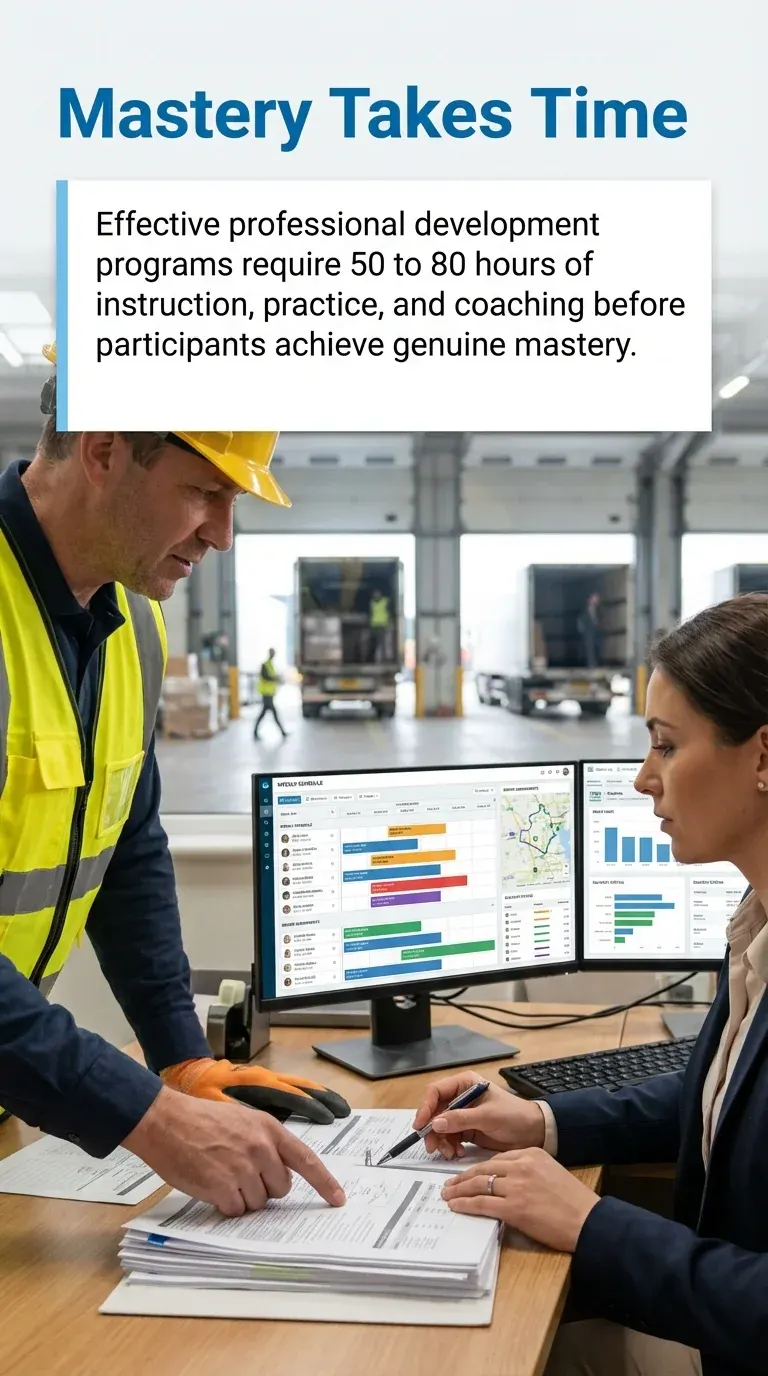
Most organisations approach CoR training as a one-day event. A consultant delivers content, participants complete an assessment, certificates get issued. Everyone returns to work expecting different outcomes from the same preparation that failed previously. This approach ignores fundamental realities about skill development.
Effective professional development programs require 50 to 80 hours of instruction, practice, and coaching before participants achieve genuine mastery — not awareness, not basic understanding, but actual mastery that produces consistent correct decisions under operational pressure.
One-Day Workshops Create False Confidence
Single-day training events serve valuable purposes: they build awareness, introduce concepts, and satisfy minimum compliance requirements for training records. They don't create lasting behavioural change. Participants leave feeling prepared, then operational reality introduces complexity their limited preparation didn't address. This false confidence becomes dangerous when people believe their one-day training equipped them for all scenarios.
The Missing Middle: Practice and Application
Traditional training delivers information effectively but fails completely at the practice and application phases where actual learning occurs. Someone might understand how fatigue management regulations work after a workshop, but they haven't practiced identifying fatigue risks in realistic scheduling scenarios or role-played difficult conversations with drivers pushing boundaries. Quality professional development includes multiple practice cycles with feedback — participants encounter realistic scenarios, make decisions, experience consequences, receive coaching, and try again with better judgment.
No Follow-Up Means No Retention
Even well-designed initial training loses effectiveness without systematic follow-up. Research shows significant skill degradation within weeks when participants return to environments that don't reinforce new learning. Effective programs include structured follow-up at intervals after initial training: refresher sessions address common mistakes, group discussions solve new scenarios, and coaching sessions provide individual support for specific challenges people encountered.
Breaking Through Budget, Time, and Buy-In Barriers
Core obstacles: buy-in, logistics, budget, and sustained engagement
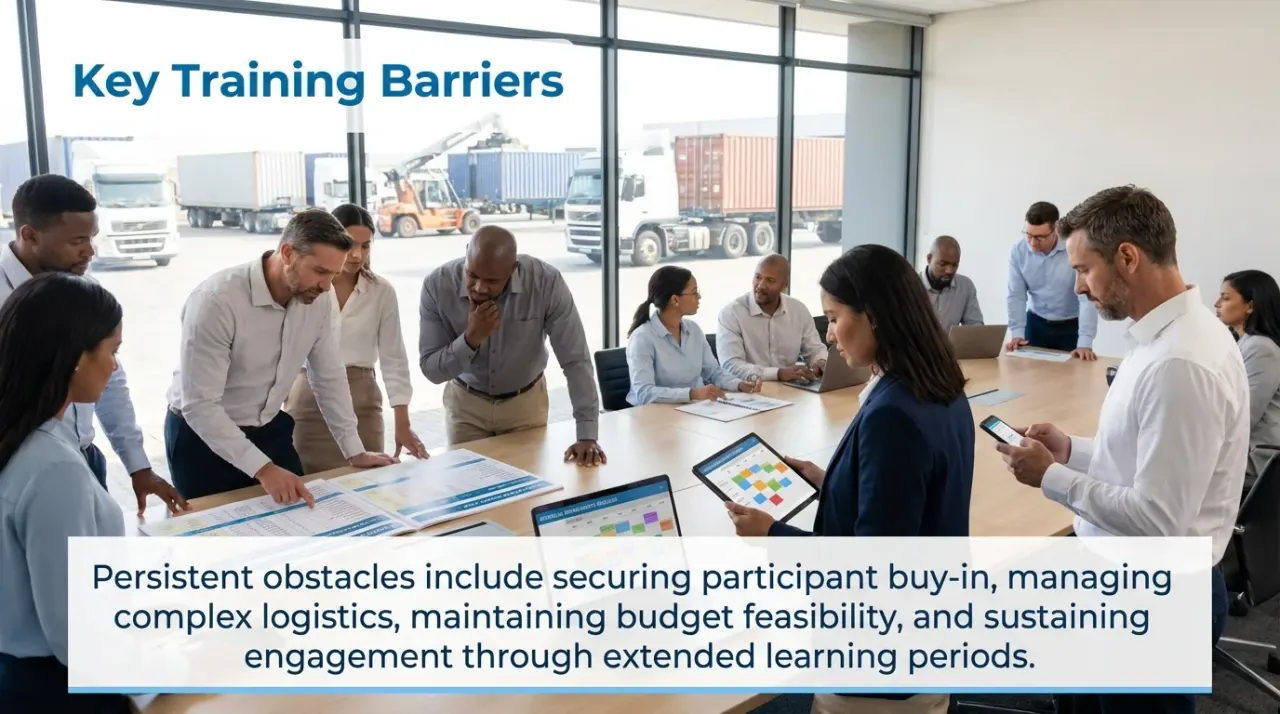
Understanding what effective CoR training requires creates an immediate problem — the gap between ideal preparation and practical constraints feels insurmountable for many organisations. Persistent obstacles prevent organisations from delivering training that matches research-backed best practices. These barriers are solvable with different approaches.
Budget Constraints and ROI Uncertainty
Extended training programs cost substantially more than single-day workshops. The return on training investment remains uncertain until incidents don't happen — a negative proof that's hard to quantify. Finance teams question why compliance training needs 50 hours when competitors appear to manage with eight-hour sessions. The case for quality training investment requires framing beyond compliance alone: effective CoR preparation produces operational benefits including reduced insurance premiums, fewer vehicle defects, improved driver retention, stronger customer relationships, and enhanced competitive positioning.
Time Scarcity Across Supply Chains
Supply chain operations run perpetually short-staffed. Scheduling multiple people away for extended training creates operational disruption. Small organisations lack redundancy to cover absent roles; large organisations struggle coordinating training across dispersed locations and shift patterns. Practical solutions include:
- Modular delivery that spreads learning across multiple shorter sessions rather than consecutive days
- Job-embedded approaches that integrate practice into normal workflows
- Digital tools that enable asynchronous learning participants complete around operational demands
Understanding systematic approaches to Chain of Responsibility consulting helps organisations design training that fits their operational reality while maintaining effectiveness.
Securing Genuine Participant Buy-In
People resist training they perceive as bureaucratic compliance theatre. Experienced transport professionals particularly resist external consultants telling them how to do jobs they've performed for decades. Building genuine engagement requires connecting CoR obligations to the real decisions people make every day. When participants see how practical CoR training addresses the pressures they actually face, resistance shifts to engagement — and training investment begins producing lasting behavioural change.
How MAEZ works
Find the gaps. Fix the system. Prove the controls.
MAEZ helps transport operators deal with the compliance risk they already know is there. We help get the Safety Management System in order, protect NHVAS accreditation, reduce fine exposure, and connect training, evidence, and CoRGuard workflows where software is needed.
Find
Identify what is exposed before an auditor or regulator does.
Fix
Build the SMS controls around how the transport business actually runs.
Prove
Use CoRGuard where records, reminders, diaries, audits, and evidence need structure.
From advice to evidence
From MAEZ advice to a working Safety Management System
Advisory work should leave a practical implementation trail. These examples show how CoRGuard supports records, fatigue and driver diary checks, maintenance, audits, document control, inductions, corrective actions, and evidence review after MAEZ identifies the gaps.
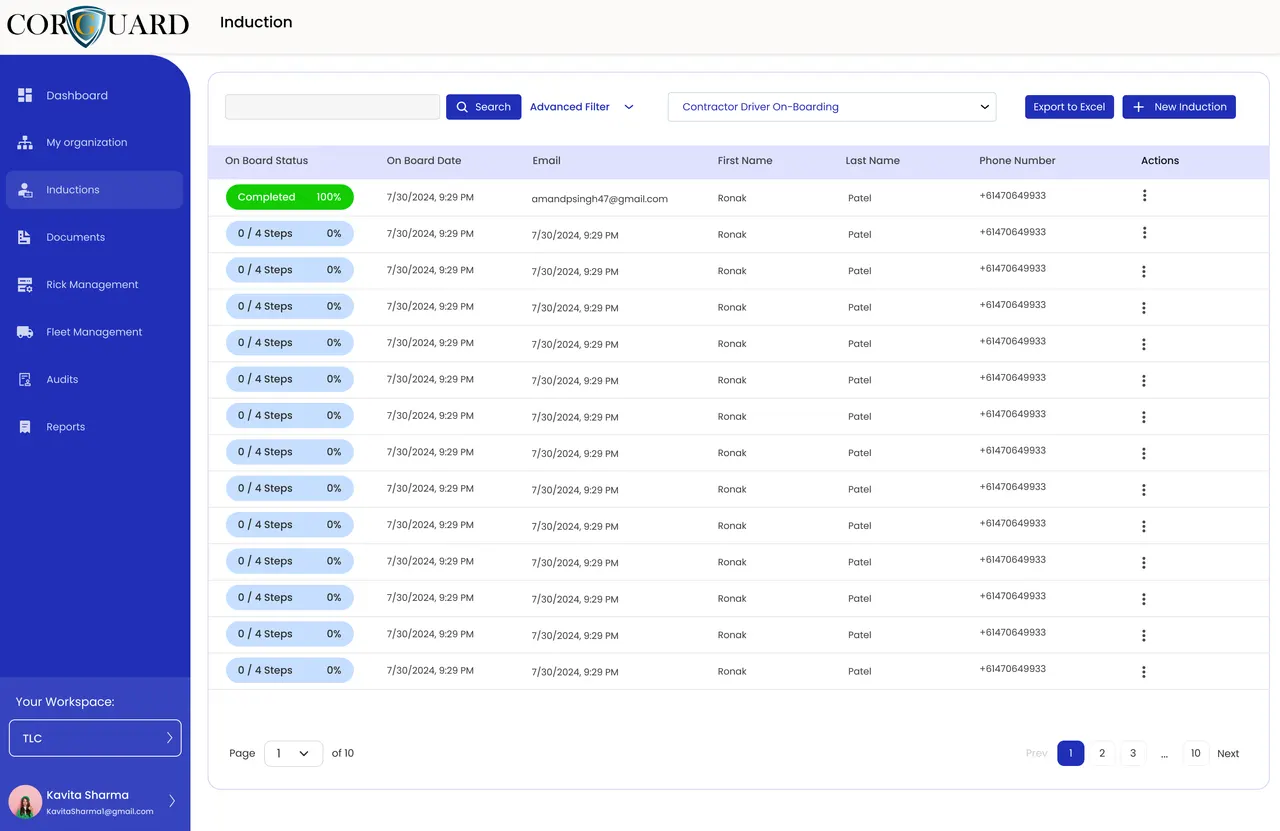
Training records
Connect training completion from cortraining.com.au to evidence and follow-up.
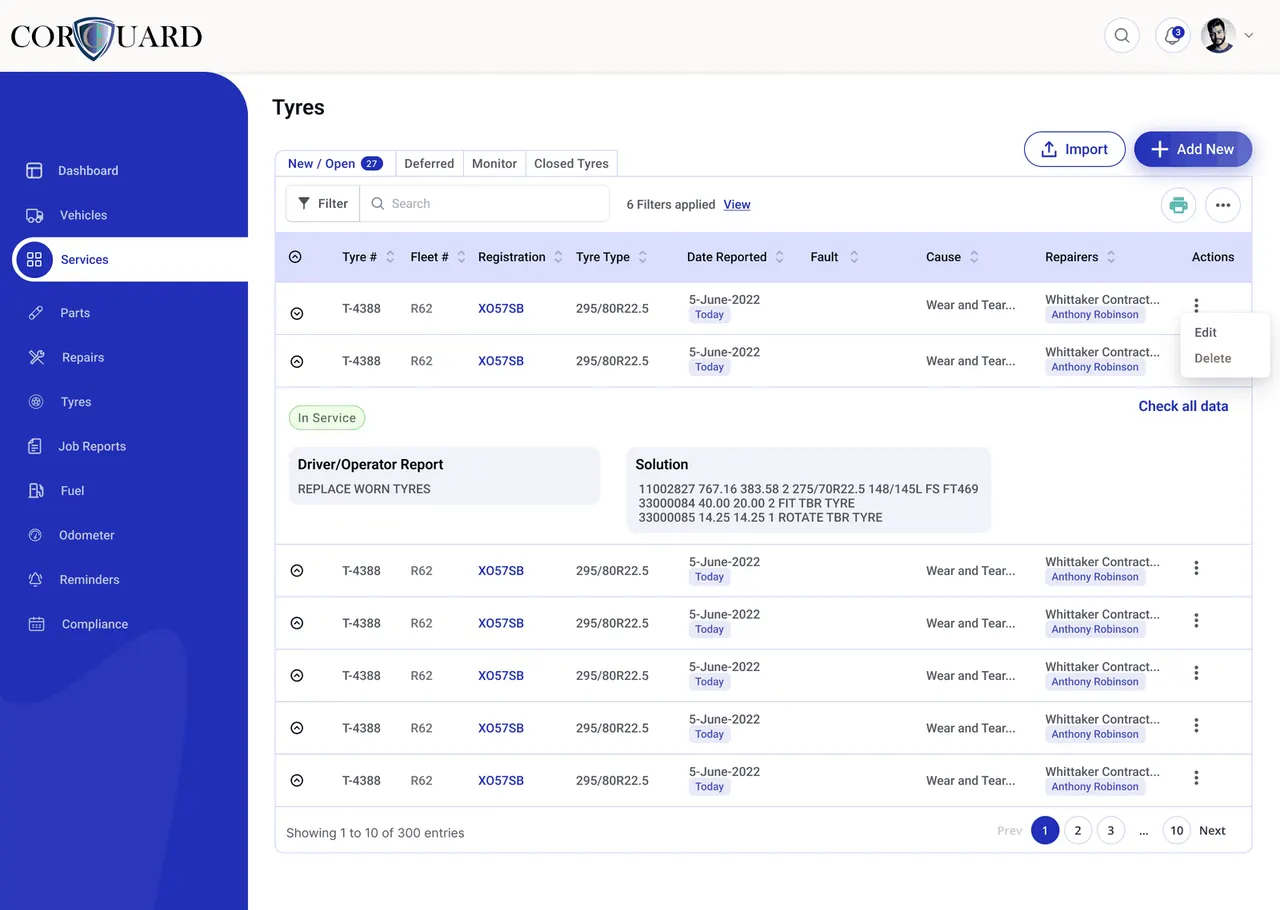
Driver diary checks
Connect fatigue and driver diary review back to manager visibility.
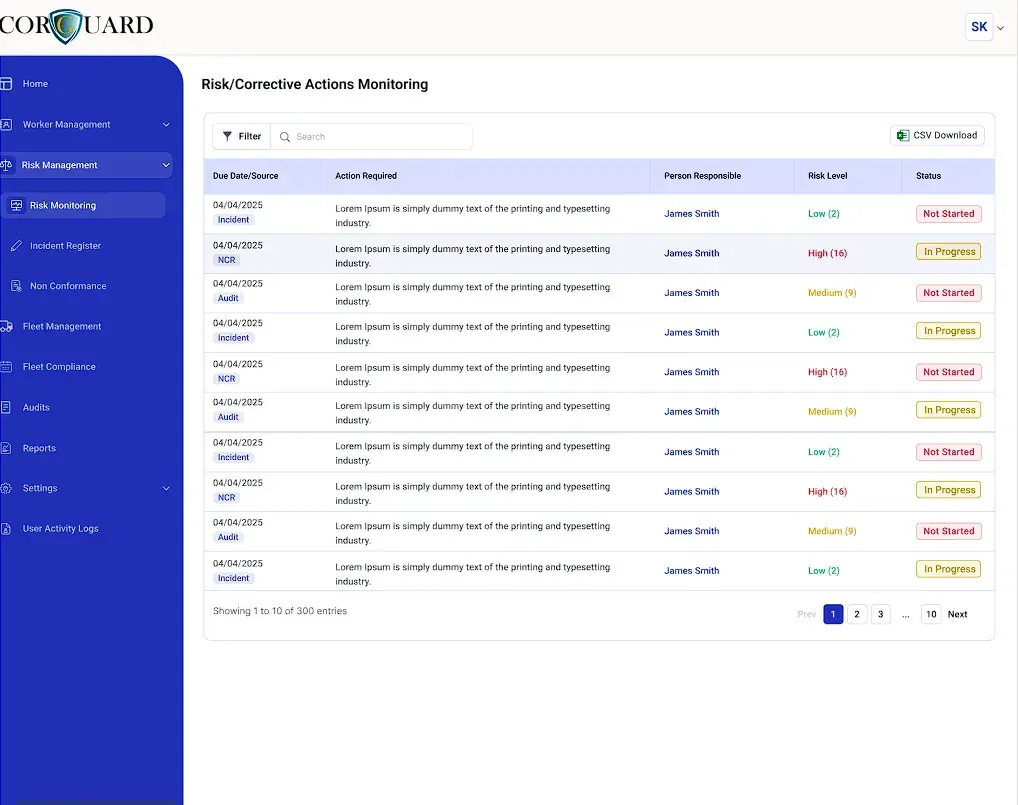
Corrective actions
Turn audit findings, hazards and incidents into tracked actions.
Keep exploring
Related Chain of Responsibility reading
MAEZ insight
Understanding the Heavy Vehicle National Law: A Comprehensive Guide
Explore the Heavy Vehicle National Law overview, a key regulatory framework for commercial transport in Australia, ensuring safety and compliance.
MAEZ insight
Decoding HVNL Requirements: A Comprehensive Guide
Explore our guide on understanding HVNL requirements, ensuring compliance and safety in the heavy vehicle sector. Essential for all industry stakeholders.
MAEZ insight
Understanding HVNL Compliance: A Complete Guide
Learn how to comply with HVNL and meet Chain of Responsibility obligations. This guide details safety risk management for all supply chain parties.
MAEZ insight
Understanding the Essentials of CoR Training Requirements
Dive into understanding CoR training requirements and discover how competency over certification plays a crucial role in Australia’s compliance landscape.
MAEZ insight
Mastering SMS Implementation: Troubleshooting Common Issues
Overcome SMS implementation hurdles with our troubleshooting guide. Discover solutions to common issues and ensure safety framework success today.
MAEZ insight
Top Transport Safety Best Practices for a Safer Future
Discover top best practices in transport safety that can enhance safety standards, lower costs, and ensure compliance. Learn how to protect your operations today.
Frequently asked questions
Questions people ask about this topic
Why does one-day Chain of Responsibility training fail to create lasting behavioural change?
One-day workshops build awareness and satisfy minimum compliance record requirements, but they skip the practice and application phases where actual learning occurs. Effective professional development requires 50–80 hours of instruction, practice, and coaching before participants achieve genuine mastery that produces consistent correct decisions under operational pressure.
What is the preparedness gap in Chain of Responsibility training?
The preparedness gap is the dangerous assumption that awareness equals competence. Participants leave training understanding CoR principles conceptually but lack the application skills, confidence in high-stakes decisions, and context-specific frameworks needed to make correct decisions when operational pressure, social pressure, or resource constraints arrive.
How can small transport operators manage CoR training time constraints?
Small operators can use modular delivery to spread learning across shorter sessions, job-embedded approaches that integrate practice into normal workflows, and digital tools enabling asynchronous learning. These methods reduce operational disruption while maintaining training effectiveness for dispersed or shift-based teams.
How do you build genuine participant buy-in for Chain of Responsibility training?
Genuine buy-in comes from connecting CoR obligations to the real decisions people make every day. When participants see how practical training addresses the actual pressures they face — scheduling conflicts, loading decisions, carrier selection — resistance shifts to engagement and training investment begins producing lasting behavioural change.
What operational benefits justify investment in quality CoR training beyond compliance?
Effective CoR preparation produces tangible operational benefits including reduced insurance premiums, fewer vehicle defects, improved driver retention, stronger customer relationships, and enhanced competitive positioning. These outcomes justify higher initial investment compared to minimum-compliance single-day workshops.