
MAEZ insight
Effective Safety Management System Examples
Explore proven Safety Management System examples across aviation, construction, and transport. Learn the four SMS pillars and how to implement structured safety frameworks for Australian operators.

Contractor controls should be verified before the work starts.

Receiving windows, site rules, and unloading delays can all shape the transport task.
Unloading decisions can affect safety, scheduling, and responsibility.

Managers need a clear view of gaps before audit or enforcement pressure arrives.
Consignors
Freight terms, delivery windows, and KPIs must not push drivers into speed, fatigue, or mass breaches.
Consignees
Receiving rules, site access, and unloading delays are CoR controls that need to be set and evidenced.
Loaders
Mass, dimension, and load restraint decisions need documented checks, not assumptions.
Managers
Executives and managers need due-diligence evidence that the Safety Management System is actually working.
What defines a Safety Management System?
A structured framework for managing safety risks and driving continual improvement
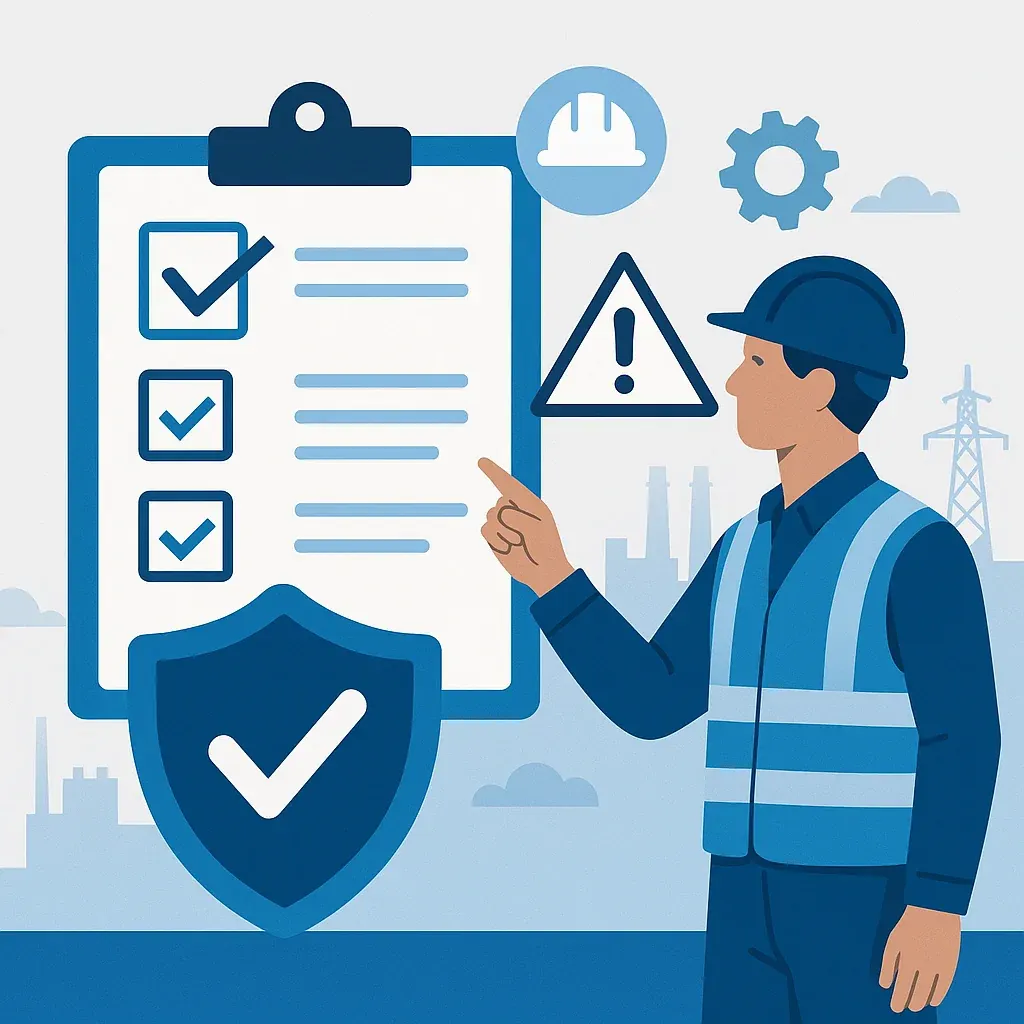
A Safety Management System (SMS) is a structured framework designed to manage workplace safety risks, support continual improvement, and meet legal and regulatory requirements. It moves organisations beyond reactive incident response toward proactive hazard prevention, with documented procedures, assigned responsibilities, and accountability embedded into daily operations.
Documentation forms the backbone of any SMS. Standard operating procedures, risk assessments, incident reports, and audit records create evidence of systematic safety management that satisfies regulatory requirements and supports continuous improvement.
Key characteristics
- Formal processes for identifying hazards before they cause harm
- Assigned responsibilities and accountability structures across the organisation
- Performance measurement through leading and lagging indicators
- Data-driven methodology to identify trends and validate control effectiveness
In the Australian heavy vehicle context, the Chain of Responsibility framework shares this same principle: every party in the transport chain has a duty to ensure safety, and an SMS provides the structured mechanism to fulfil that duty.
Core benefits beyond compliance
Why a robust SMS delivers measurable returns beyond ticking regulatory boxes
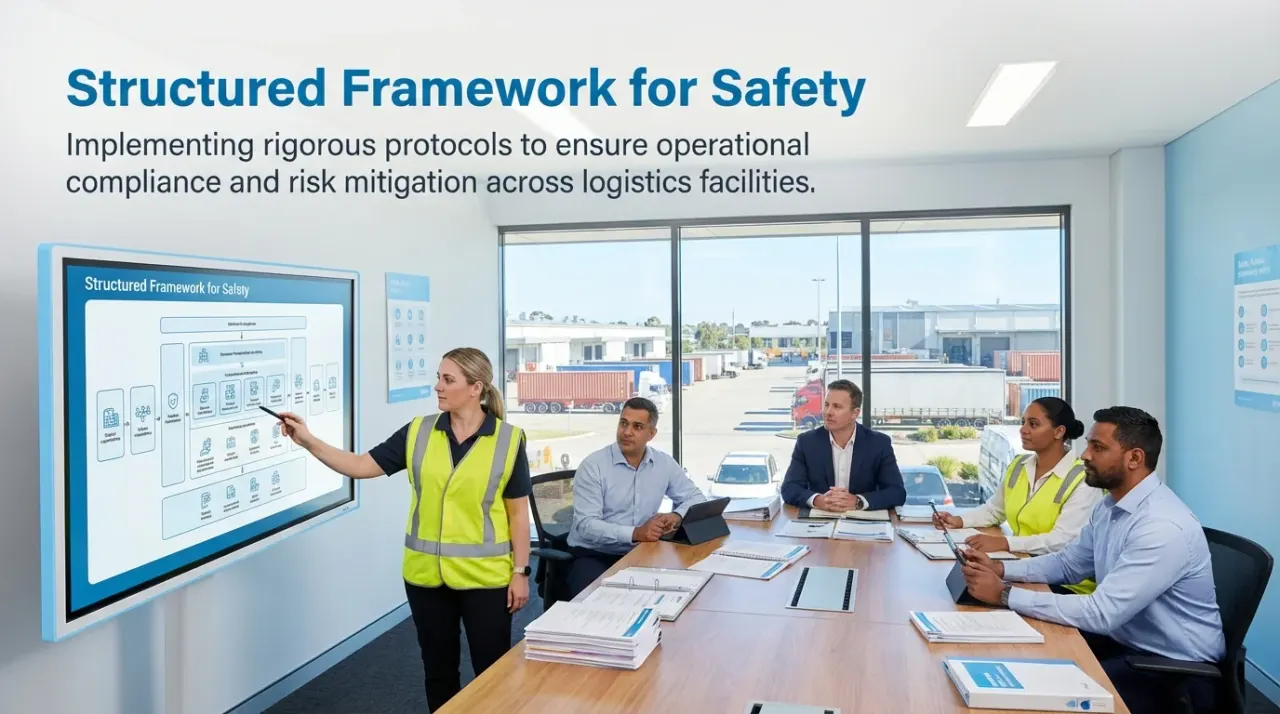
Organisations that implement robust SMS frameworks typically experience reduced incident rates. Systematic hazard identification catches problems before they escalate into injuries or property damage.
Insurance costs often decrease as insurers recognise proactive safety management. Documented procedures and performance data demonstrate reduced risk profiles that justify premium reductions.
Cultural and operational gains
- Blame to learning: Workplace culture shifts from blame-focused to learning-focused. Employees feel safer reporting hazards and near-misses when they trust the organisation will address concerns without punishment.
- Operational efficiency: Safety procedures eliminate wasted time addressing preventable incidents. Streamlined processes reduce disruption and maintain productivity while protecting workers.
- Resource allocation: Data-driven methodology guides where to invest safety resources for maximum impact.
The four pillars of every Safety Management System
Each pillar serves a distinct purpose while supporting the others
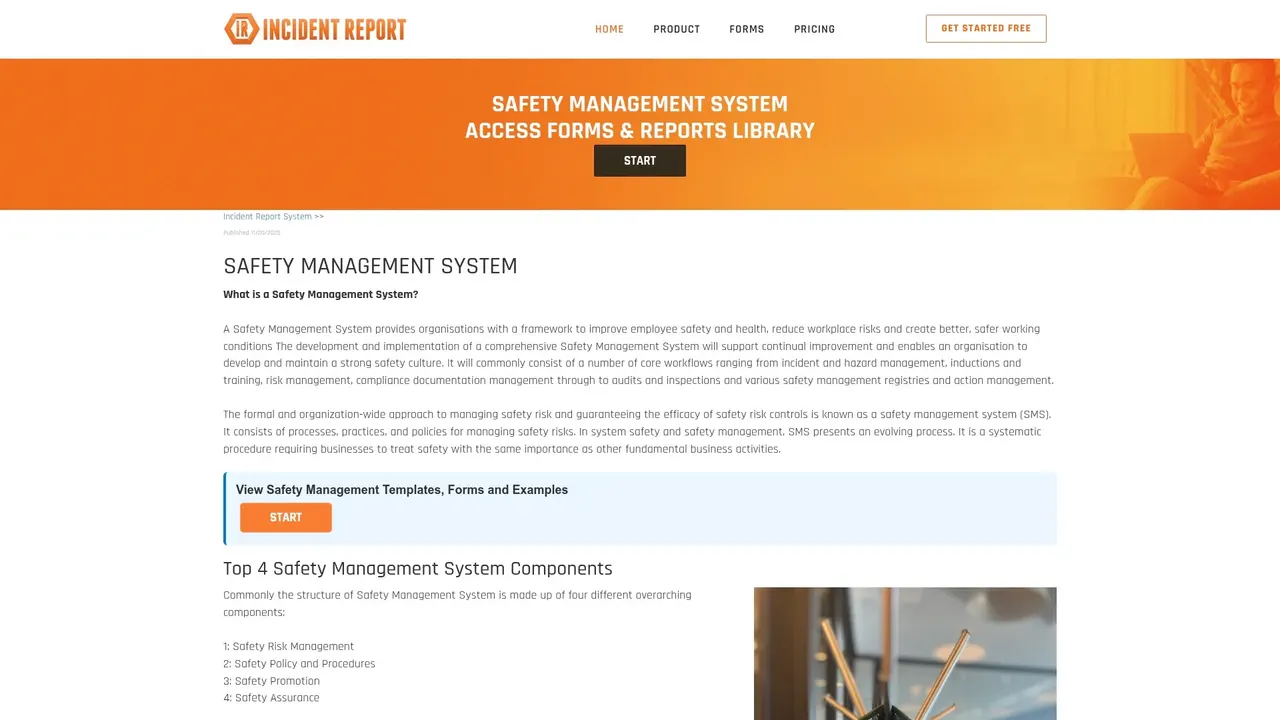
Every effective SMS rests on four interconnected components that create a complete safety framework. These elements work together to establish, maintain, and improve workplace safety performance.
Safety Policy: Setting direction and commitment
Policy and planning establishes a clear safety policy aligned with regulations and sets objectives for continuous improvement. The policy statement must reflect genuine management commitment — generic statements that merely satisfy documentation requirements fail to drive meaningful improvements. Clear safety objectives translate policy into measurable targets that are specific, achievable, and linked to required resources.
Safety Risk Management: Identifying and controlling hazards
Safety Risk Management (SRM) systematically identifies hazards, assesses potential consequences, and implements appropriate controls. Hazard identification uses multiple methods including workplace inspections, employee reports, incident investigations, and job safety analyses. Risk assessment evaluates each hazard's likelihood and potential severity, prioritising control efforts toward the most significant risks.
Elimination and engineering controls receive priority over administrative controls and personal protective equipment. High-risk activities require senior leadership approval with documented justification and monitoring plans. For transport operators, this process aligns directly with CoR consulting reviews that identify gaps before audit or enforcement pressure arrives.
Safety Assurance: Monitoring and measuring performance
Validating that implemented controls work as intended
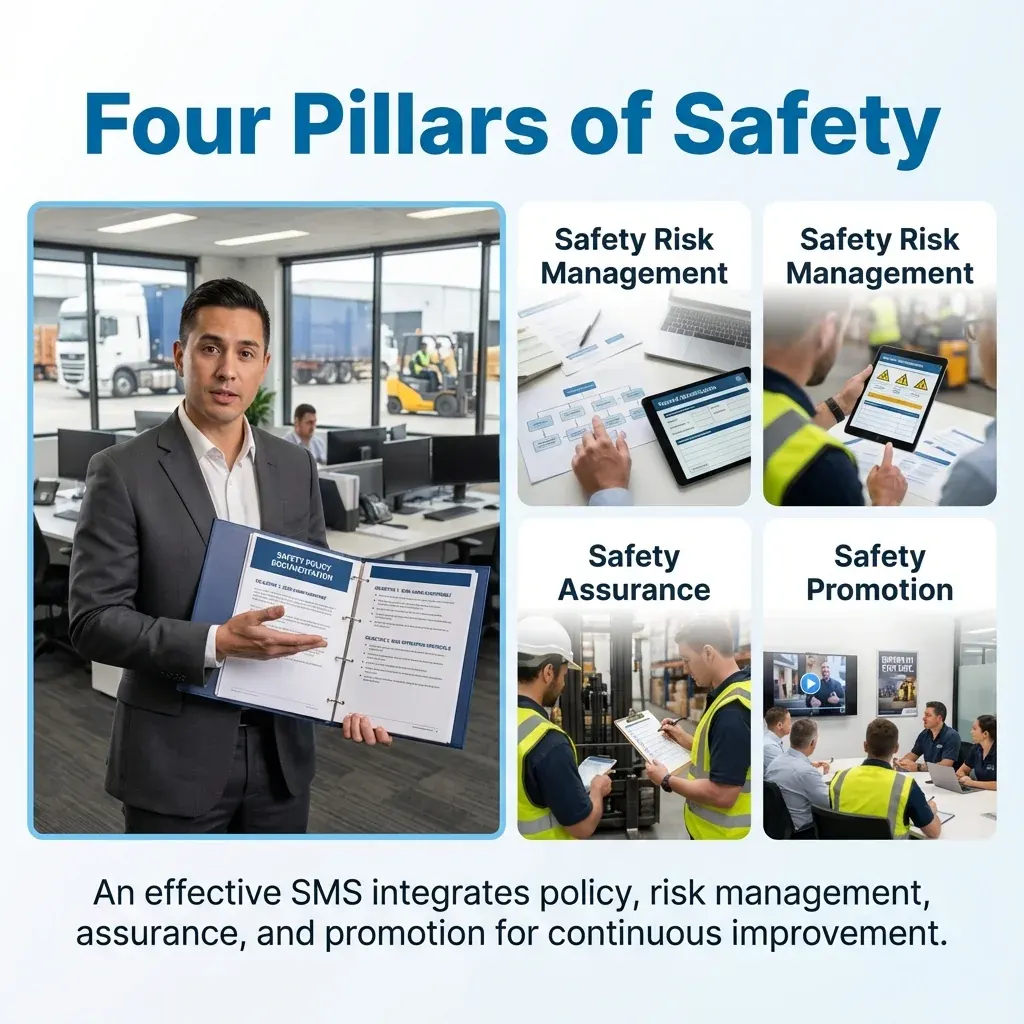
Safety Assurance validates that implemented controls work as intended. Regular monitoring, auditing, and data analysis verify SMS effectiveness and identify improvement opportunities.
How assurance works
- Internal audits examine compliance with established procedures and regulatory requirements, identifying gaps between documented processes and actual practices.
- Performance monitoring tracks leading indicators like near-miss reports and training completion alongside lagging indicators such as injury rates.
- Data analysis reveals trends and patterns that inform decision-making, using statistical methods to distinguish significant trends from normal variation.
Continuous improvement processes use audit findings and performance data to refine procedures. This feedback loop ensures the SMS evolves to address changing conditions.
Safety Promotion: Building culture through communication
Transforming documented procedures into consistent workplace behaviours
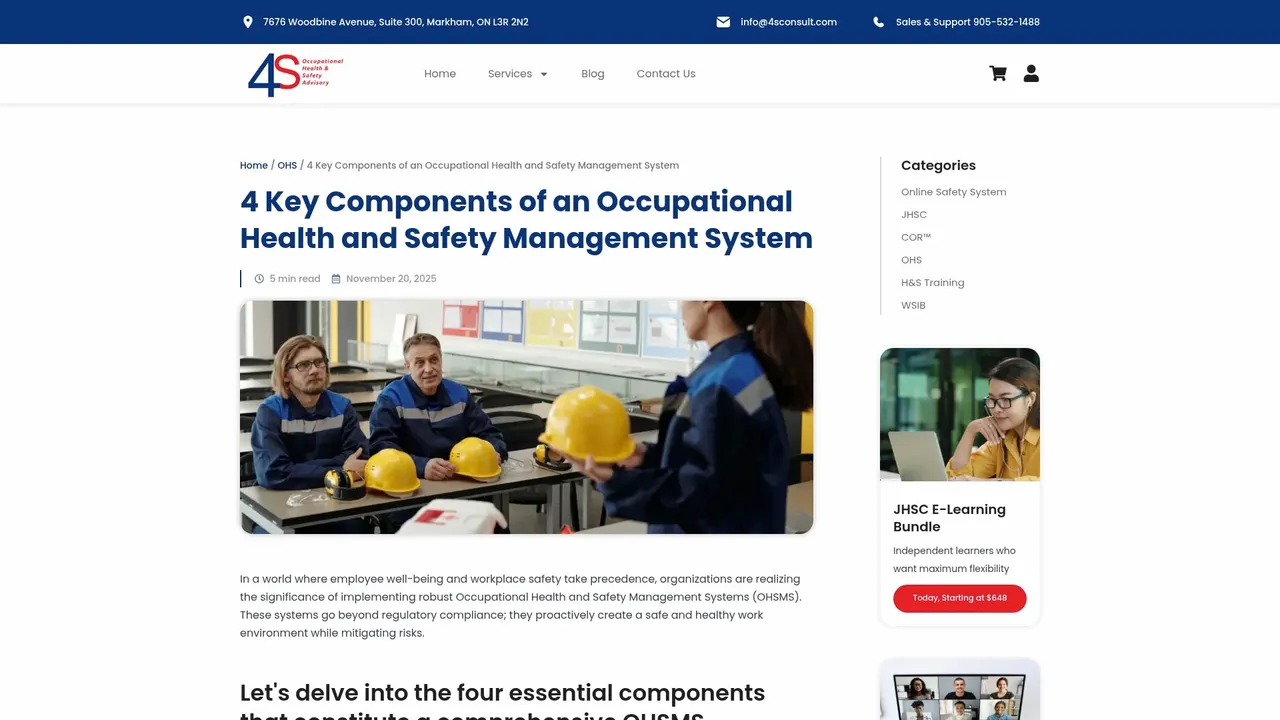
Safety Promotion develops positive safety culture through training, communication, and employee engagement. This pillar transforms documented procedures into consistent workplace behaviours.
Training programs ensure employees possess required competencies. Initial training establishes baseline knowledge while refresher training maintains skills and introduces procedural updates. Communication channels distribute safety information throughout the organisation using meetings, bulletins, and digital platforms to reach all employees.
Engagement and recognition
- Employee participation mechanisms give workers a voice in safety decisions through safety committees and hazard reporting systems.
- Recognition programs reinforce desired safety behaviours, acknowledging proactive hazard reporting to encourage continued engagement.
Structured Chain of Responsibility training supports this pillar by building shared understanding across all parties in the transport chain.
Aviation SMS: a sector-specific framework
How aviation pioneered structured SMS through FAA and ICAO standards
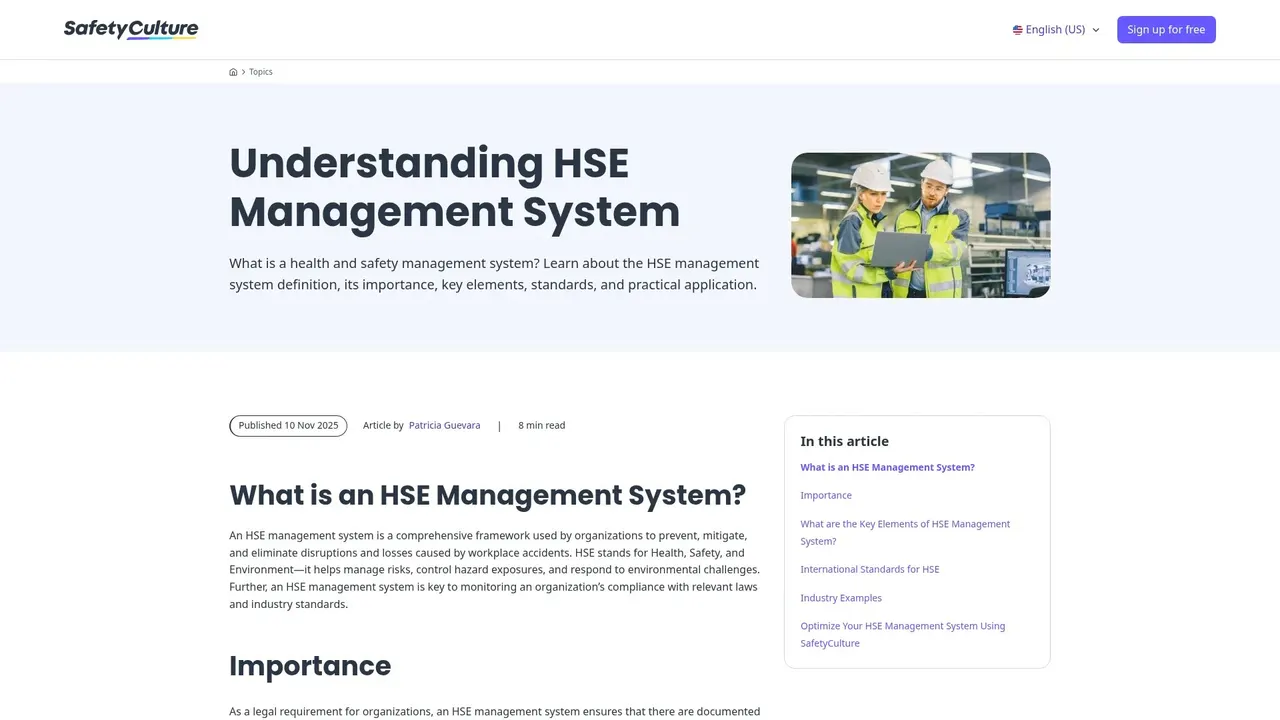
Aviation pioneered structured Safety Management Systems through Federal Aviation Administration and International Civil Aviation Organization standards. This framework has influenced SMS development across multiple industries.
The aviation SMS addresses unique challenges including complex technology, human factors, and high-consequence failures. Flight operations require extraordinary reliability that demands systematic safety management.
Aviation-specific components
- Safety Policy requires documented commitment from the Accountable Executive, who holds ultimate responsibility for SMS implementation and resource allocation.
- Safety Risk Management addresses flight operations, maintenance, and ground operations, considering factors like weather, aircraft systems, crew fatigue, and airspace complexity.
- Safety Assurance uses flight data monitoring, line operations safety audits, and voluntary reporting systems to capture safety information before incidents occur.
- Safety Promotion emphasises crew resource management training, recognising human factors as critical elements requiring specific controls.
Just culture principles balance accountability with learning, enabling personnel to report errors and hazards without fear of punishment for honest mistakes.
ISO 45001: the global occupational health and safety standard
An international framework integrating with other management system standards
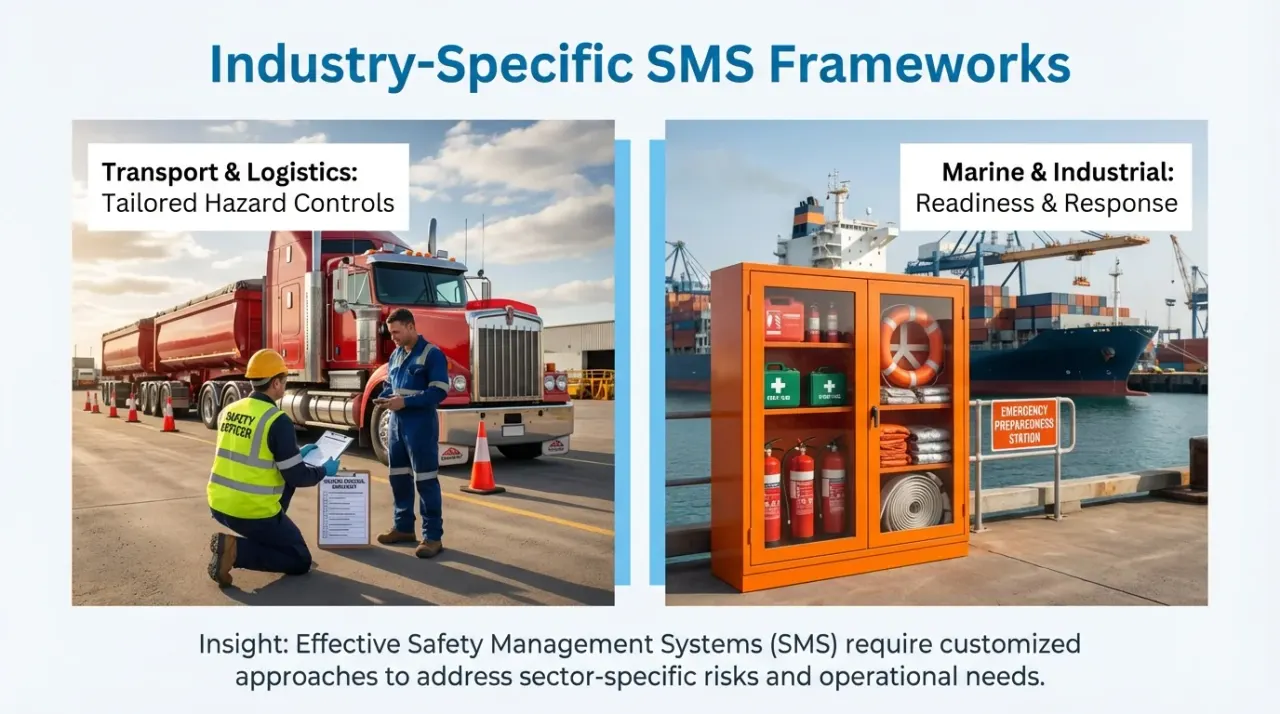
ISO 45001 provides an international framework for occupational health and safety management systems. The standard applies across industries and integrates with other management system standards.
The standard uses Plan-Do-Check-Act methodology to drive continuous improvement. Organisations establish objectives, implement processes, monitor performance, and refine their approach based on results.
Core requirements
- Leadership and worker participation form the foundation. Top management must demonstrate commitment while ensuring workers participate in safety processes.
- Proactive hazard identification and risk assessment are emphasised throughout.
- Documentation and record-keeping provide evidence of systematic safety management.
Whether your operation follows aviation standards, ISO 45001, or the NHVAS framework, the underlying principles remain the same. For practical support building an SMS that satisfies your transport compliance obligations, contact MAEZ to discuss your requirements.
How MAEZ works
Find the gaps. Fix the system. Prove the controls.
MAEZ helps transport operators deal with the compliance risk they already know is there. We help get the Safety Management System in order, protect NHVAS accreditation, reduce fine exposure, and connect training, evidence, and CoRGuard workflows where software is needed.
Find
Identify what is exposed before an auditor or regulator does.
Fix
Build the SMS controls around how the transport business actually runs.
Prove
Use CoRGuard where records, reminders, diaries, audits, and evidence need structure.
From advice to evidence
From MAEZ advice to a working Safety Management System
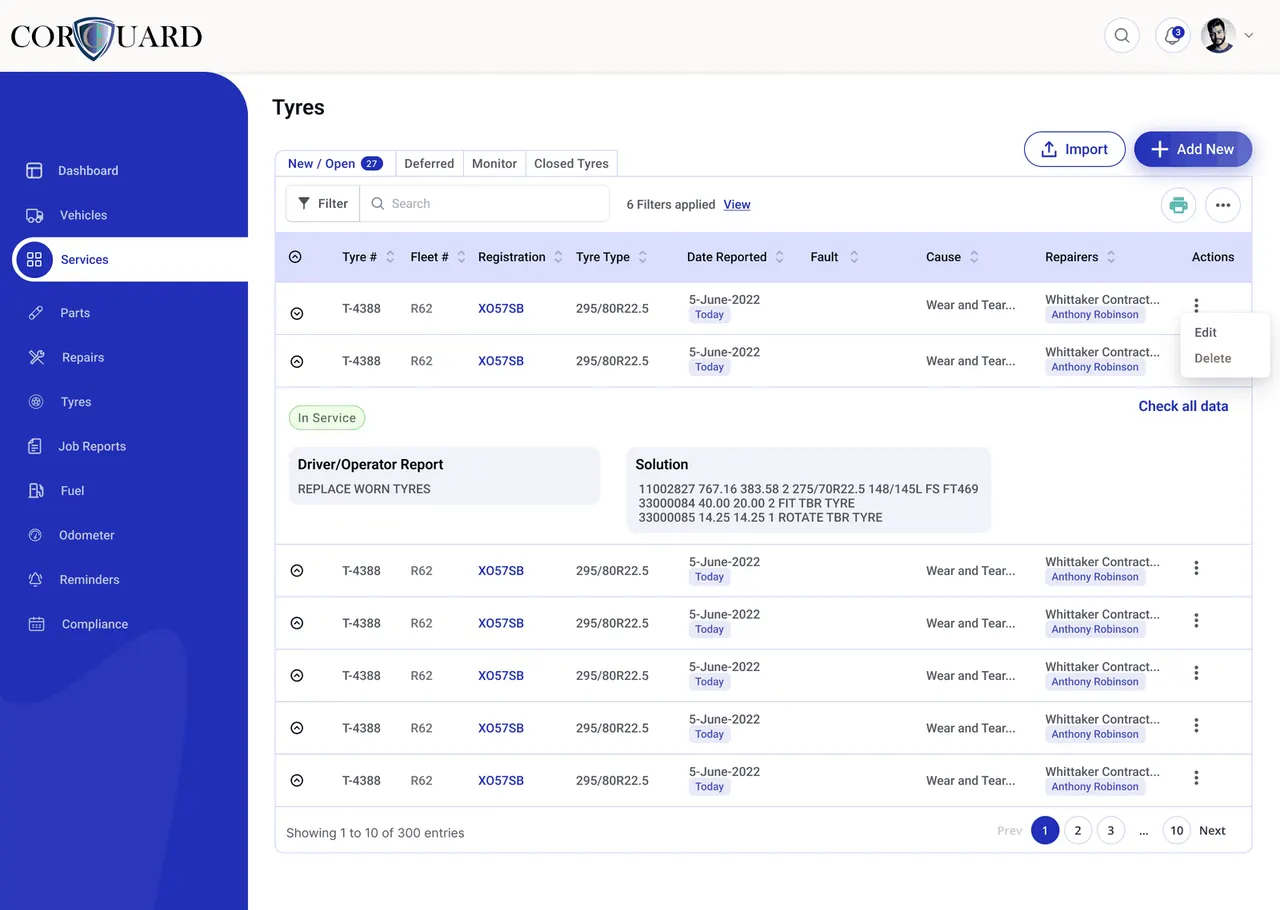
Advisory work should leave a practical implementation trail. These examples show how CoRGuard supports records, fatigue and driver diary checks, maintenance, audits, document control, inductions, corrective actions, and evidence review after MAEZ identifies the gaps.
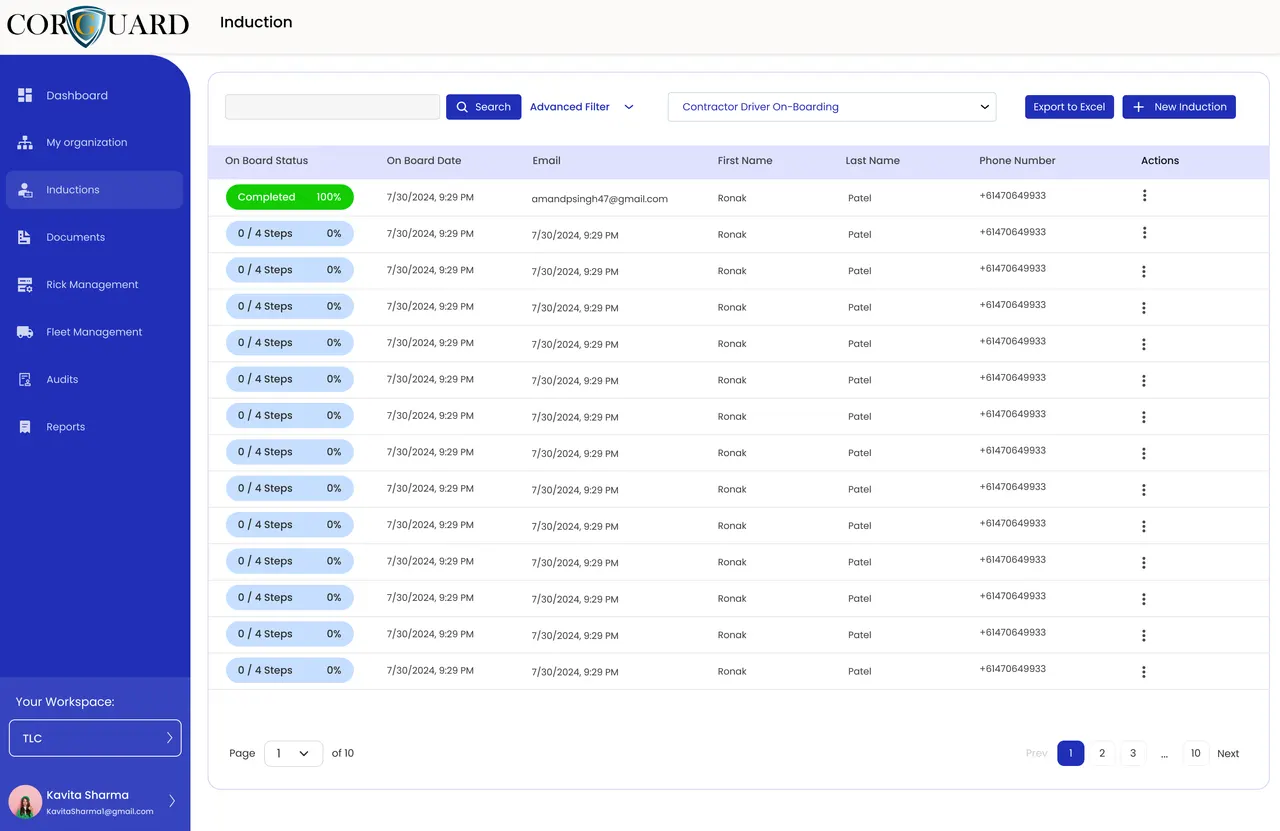
Training records
Connect training completion from cortraining.com.au to evidence and follow-up.
Driver diary checks
Connect fatigue and driver diary review back to manager visibility.
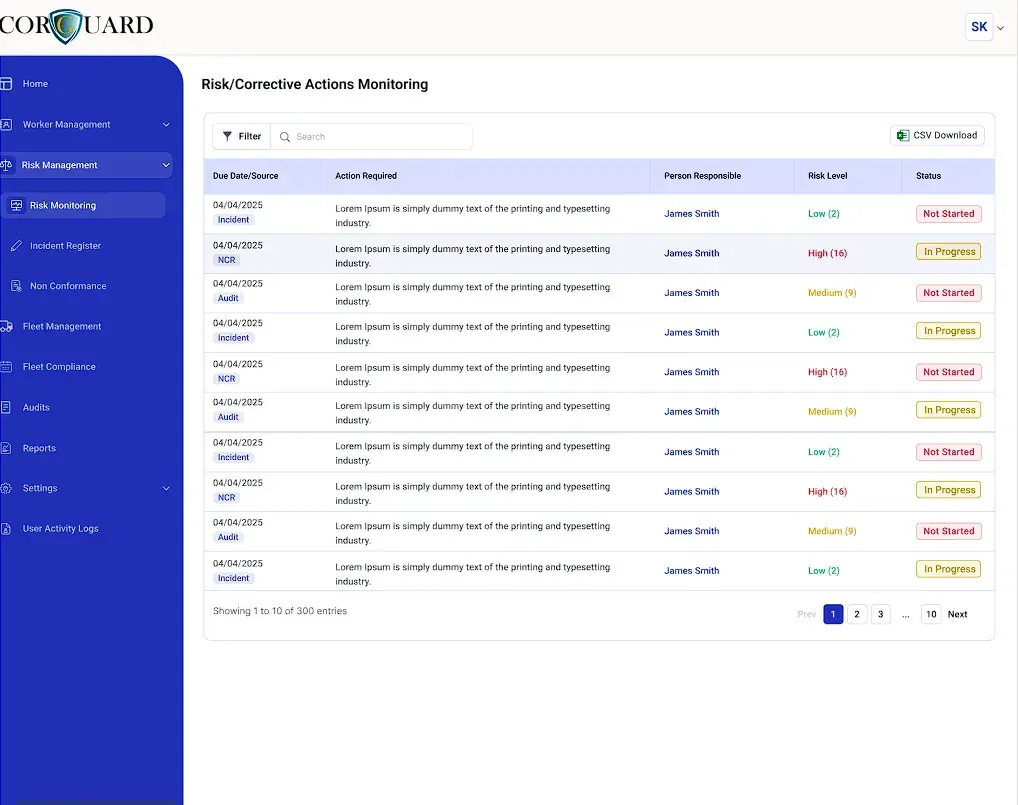
Corrective actions
Turn audit findings, hazards and incidents into tracked actions.
Keep exploring
Related Chain of Responsibility reading
MAEZ insight
Understanding Supply Chain Risk Management Software
Explore how Supply Chain Risk Management software enhances visibility, monitors threats, and ensures compliance to safeguard your supply network.
MAEZ insight
Understanding AMCAS and How MAEZ Uses the RCIP Master Code for Robust Transport Compliance
Introduction In the ever-evolving Australian transport sector, compliance with safety regulations is paramount.
MAEZ insight
Why an SMS Matters in the Heavy Vehicle Industry
The Heavy Vehicle National Law (HVNL) is pivotal for ensuring the safety and compliance of heavy vehicle operations in Australia. Central to this framework is the Chain of Responsibility (CoR), which distributes accountability across various parties in the transport supply chain.
MAEZ insight
Your Duty Of Care
A three-year-old boy, who was under the duty of care of Goodstart Early Learning, was found dead inside a minibus that was parked outside the Hambledon State School in the southern Cairns suburb of Edmonton on Tuesday 25th Feb 2020.
MAEZ insight
What Is Corporate Derivative Liability?
CASE STUDY: SAPOL vs The Trustee for FURLER FAMILY TRUST. Companies are being reminded to take speed restrictions seriously after a corporate derivative liability prosecution.
MAEZ insight
Chain of Responsibility Policy
Laws structure our everyday lives and tell us what we can or cannot do in certain circumstances; they are there to protect us from each other and to maintain a peaceful place to live, or at least as friendly as possible. Take the legislation that governs the speed we can use when travelling on our roads.
Frequently asked questions
Questions people ask about this topic
What is a Safety Management System (SMS)?
A Safety Management System is a structured framework designed to manage workplace safety risks, support continual improvement, and meet legal and regulatory requirements. It moves organisations beyond reactive incident response toward proactive hazard prevention using documented procedures, assigned responsibilities, and accountability structures.
What are the four pillars of a Safety Management System?
The four pillars are Safety Policy (setting direction and commitment), Safety Risk Management (identifying and controlling hazards), Safety Assurance (monitoring and measuring performance), and Safety Promotion (building culture through training and communication). Each pillar serves a distinct purpose while supporting the others.
How does a Safety Management System relate to the Chain of Responsibility in Australian transport?
The Chain of Responsibility framework shares the same core principle as an SMS: every party in the transport chain has a duty to ensure safety. An SMS provides the structured mechanism — documentation, risk controls, and evidence — that transport operators need to fulfil their CoR obligations.
What is the control hierarchy in Safety Risk Management?
The control hierarchy prioritises elimination and engineering controls over administrative controls and personal protective equipment. High-risk activities require senior leadership approval with documented justification and monitoring plans to ensure controls remain effective.
How does ISO 45001 differ from an aviation SMS?
ISO 45001 is an international standard for occupational health and safety management applicable across all industries, using Plan-Do-Check-Act methodology. Aviation SMS is a sector-specific framework developed through FAA and ICAO standards that addresses flight-specific risks like crew fatigue, airspace complexity, and high-consequence failures. Both share the same four-pillar structure.