
MAEZ insight
What Is Corporate Derivative Liability? | SAPOL vs Furler Family Trust Case Study
A practical case study on corporate derivative liability under the HVNL, showing how a $26,096 fine arose from a speeding minibus and what transport operators can do to reduce exposure.
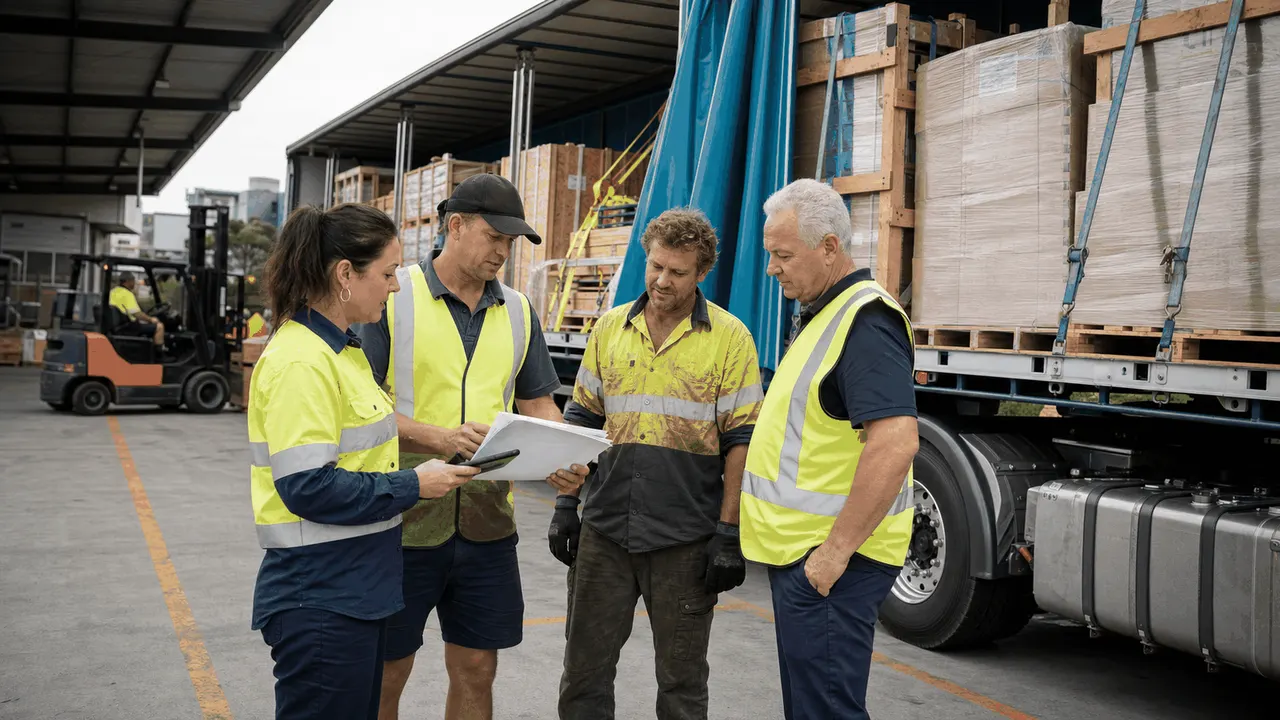
Receiving windows, site rules, and unloading delays can all shape the transport task.
Unloading decisions can affect safety, scheduling, and responsibility.
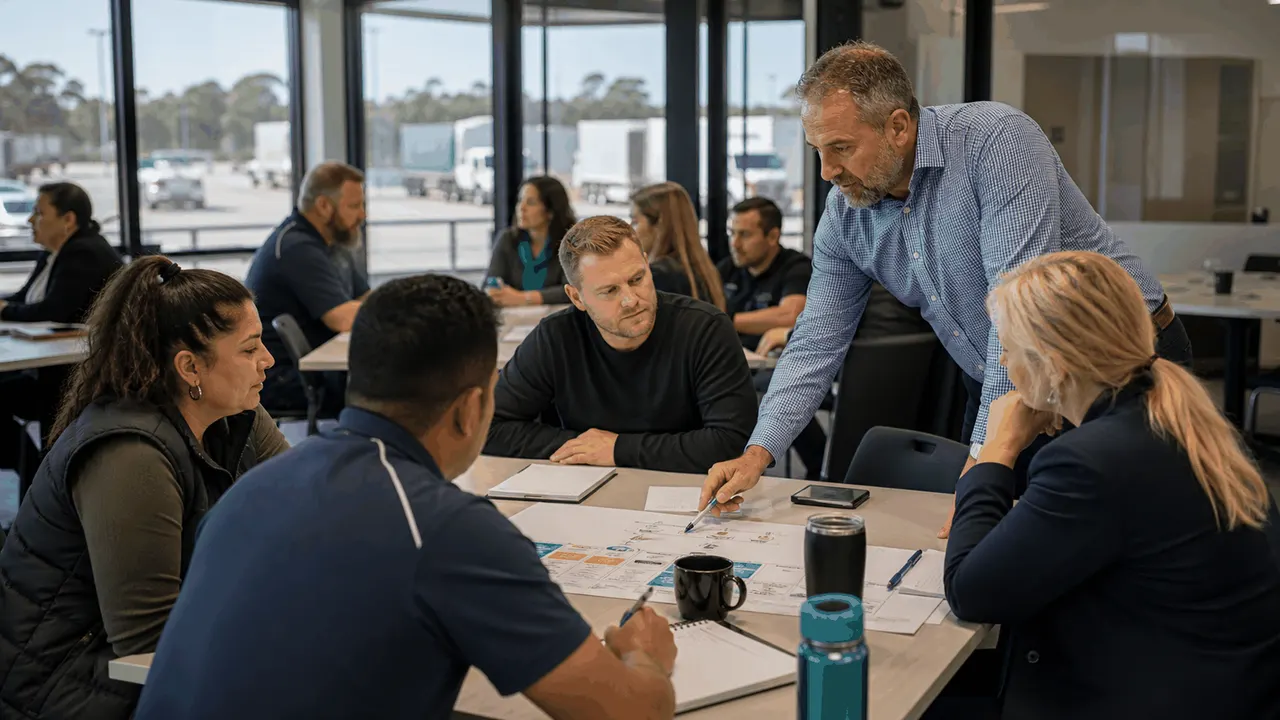
Managers need a clear view of gaps before audit or enforcement pressure arrives.

Contractor controls should be verified before the work starts.
Consignors
Freight terms, delivery windows, and KPIs must not push drivers into speed, fatigue, or mass breaches.
Consignees
Receiving rules, site access, and unloading delays are CoR controls that need to be set and evidenced.
Loaders
Mass, dimension, and load restraint decisions need documented checks, not assumptions.
Managers
Executives and managers need due-diligence evidence that the Safety Management System is actually working.
What is corporate derivative liability?
A direct answer for executives and transport managers
Corporate derivative liability arises where an executive or manager knew, or ought reasonably to have known, of the conduct constituting an offence — or that there was a substantial risk the offence would be committed. Under the Heavy Vehicle National Law, this means executives are personally responsible for ensuring their business understands its obligations and actively manages compliance, rather than simply reacting after an incident occurs. In practice, it places the onus on leaders to allocate suitable budget, resources, and training to prevent breaches before they happen.
The concept extends beyond the driver or the vehicle. It reaches up into the management chain, asking whether the people running the business had the systems and awareness in place to foresee and prevent the risk. If they did not — and a breach occurs — the business and its executives can face penalties substantially larger than those that would apply to an individual driver.
Case study: SAPOL vs The Trustee for Furler Family Trust
A $26,096 fine from a speeding minibus
The case involved a Fleurieu Peninsula tourist company that operated small minibuses for sightseeing tours. The company did not initially understand that its minibuses were classified as heavy vehicles under the relevant legislation.
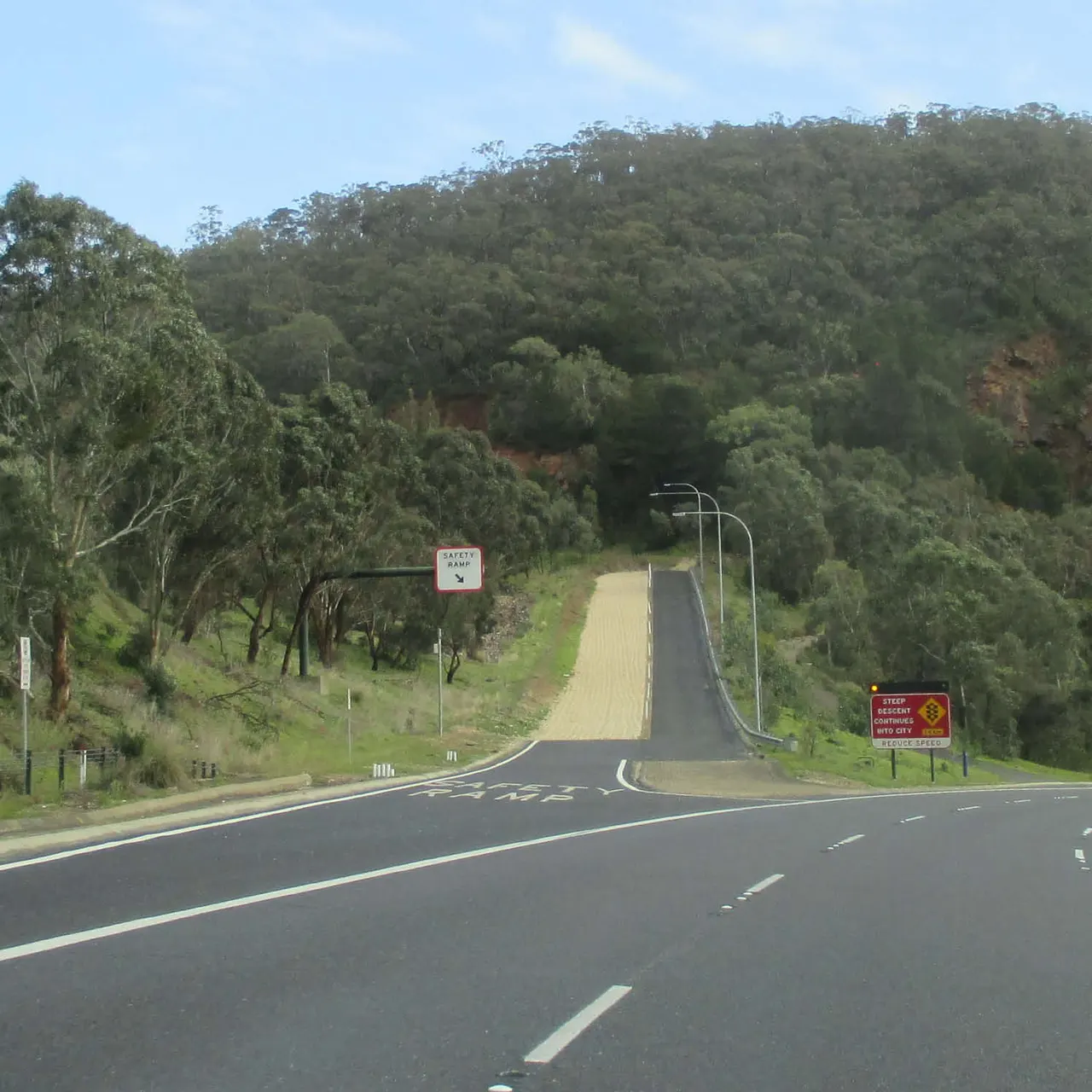
In May 2019, the South Australian State Government introduced increased penalties for heavy vehicles travelling on the South-Eastern Freeway. These penalties followed recommendations by the South Australian Coroner after horrific incidents in which out-of-control heavy vehicles had claimed innocent lives.
A company employee drove the minibus on the South-Eastern Freeway at 73 km/h, believing the vehicle fell under the 4.5-tonne threshold and could travel up to 90 km/h. The driver thought he was doing 17 km/h under the speed limit. In reality, the vehicle was classified as a heavy vehicle and was subject to a lower speed restriction.
After the offence was detected and an expiation notice was issued to the Furler Family Trust, the managing director confirmed the fine with the fines call centre. The fine was confirmed at $26,096 — substantially higher than it needed to be — simply because the business could not nominate the driver of the vehicle on the day of the offence.
Why the fine was so large
The cost of not nominating the driver
Had the driver been nominated, the fine for the driver would normally have been $1,036 plus six demerit points and an automatic six-month licence disqualification for a first offence. Instead, because the business could not identify who was driving, the penalty fell on the company at the corporate rate — more than twenty-five times the individual amount.
The managing director, Mr Coull, said:
"My employee thought he was doing 17km under the speed limit, and he normally drives a slightly smaller bus that isn't subject to this new law. Of course, as a small family business owner, we value our employees and also feel in part responsible for not making sure he knew the new legislation."
This statement captures the core of derivative liability: the business failed to ensure its driver understood the legal classification of the vehicle and the applicable speed limits. The gap was not in the driver's intent — it was in the company's systems for communicating and verifying compliance.
What derivative liability means for executives
Responsibility runs up the chain, not just down
In this case, the owners of the Fleurieu tourist company should have known about the risks within their organisation and allocated suitable budget and resources to prevent a driver speeding. The concept of corporate derivative liability places responsibility on executives and managers to ensure their business understands its obligations and actively manages compliance.
Key obligations for executives include:
- Knowing which vehicles in the fleet are classified as heavy vehicles under the HVNL
- Ensuring drivers are briefed on route-specific restrictions and changes to penalties
- Maintaining records that allow the business to identify who was driving a vehicle on a given day
- Allocating budget for training, systems, and compliance support proportional to the risk
- Not waiting for an incident or enforcement action to surface gaps
For a broader understanding of how these obligations fit within the wider Chain of Responsibility framework, the same principle applies across every party in the supply chain — not just drivers and operators.
Why training and gap analysis matter
A fraction of the fine, a fraction of the risk
A $26,096 fine is a serious amount for any business to absorb. In many cases, businesses that engage MAEZ are potentially facing court action as a result of a driver or operator within their supply chain. The cost of preventing these outcomes is far lower than the cost of the penalties themselves.
There are 341 Heavy Vehicle National Law penalties, which can exceed $100,000 for a business with a transport task or one that influences a transport task. MAEZ has helped dozens of businesses address risks found through gap analysis that would have exposed them to serious financial penalties — easily exceeding a fine of $26,000.
Training can be inexpensive and practical. MAEZ safety training has been rolled out to many businesses and hundreds of employees digitally, offering flexibility for staff to complete it in their own home or workplace. Chain of Responsibility training helps staff understand their obligations and reduce legal liability before an incident forces the issue.
How MAEZ helps reduce derivative liability risk
Find the gaps, fix the system, prove the controls
MAEZ helps Australian businesses turn Chain of Responsibility, HVNL, WHS, transport safety, and chartered risk obligations into practical training, advisory, audit, and implementation pathways. For businesses that need to build or verify their compliance position, MAEZ offers:
- Identification of what is exposed before an auditor or regulator finds it
- Gap analysis to surface risks that could lead to serious financial penalties
- Chain of Responsibility training to help staff understand their obligations and reduce legal liability
- CoR consulting to review controls, evidence, and SMS gaps that matter most
- Practical implementation support to build Safety Management System controls around how the business actually runs
Where software is the right next step, CoRGuard supports the evidence workflow — covering records, reminders, diaries, audits, document control, inductions, corrective actions, and evidence review.
To get a practical review of the controls, evidence, training, and SMS gaps in your operation, contact MAEZ.
Key takeaways for transport operators
Practical steps to reduce derivative liability exposure
The Furler Family Trust case highlights several lessons that apply to any business with a transport task:
Know your vehicle classifications
A minibus can be a heavy vehicle under the HVNL even if it does not look like a traditional truck. Businesses must verify the GVM of every vehicle in their fleet and understand which legislative thresholds apply.
Maintain driver identification records
The fine in this case ballooned because the business could not nominate the driver. Robust roster, logbook, and diary systems allow a business to identify who was driving on any given day — and reduce penalty exposure accordingly.
Brief staff on route-specific rules
Speed limits and penalty regimes can change by road and by jurisdiction. Drivers need to be told when new restrictions apply to routes they use regularly.
Invest in training before enforcement arrives
Chain of Responsibility training for executives and managers helps leaders understand their personal exposure and build the systems that prevent breaches. The cost of training is a fraction of even a single HVNL penalty.
How MAEZ works
Find the gaps. Fix the system. Prove the controls.
MAEZ helps transport operators deal with the compliance risk they already know is there. We help get the Safety Management System in order, protect NHVAS accreditation, reduce fine exposure, and connect training, evidence, and CoRGuard workflows where software is needed.
Find
Identify what is exposed before an auditor or regulator does.
Fix
Build the SMS controls around how the transport business actually runs.
Prove
Use CoRGuard where records, reminders, diaries, audits, and evidence need structure.
From advice to evidence
From MAEZ advice to a working Safety Management System
Advisory work should leave a practical implementation trail. These examples show how CoRGuard supports records, fatigue and driver diary checks, maintenance, audits, document control, inductions, corrective actions, and evidence review after MAEZ identifies the gaps.
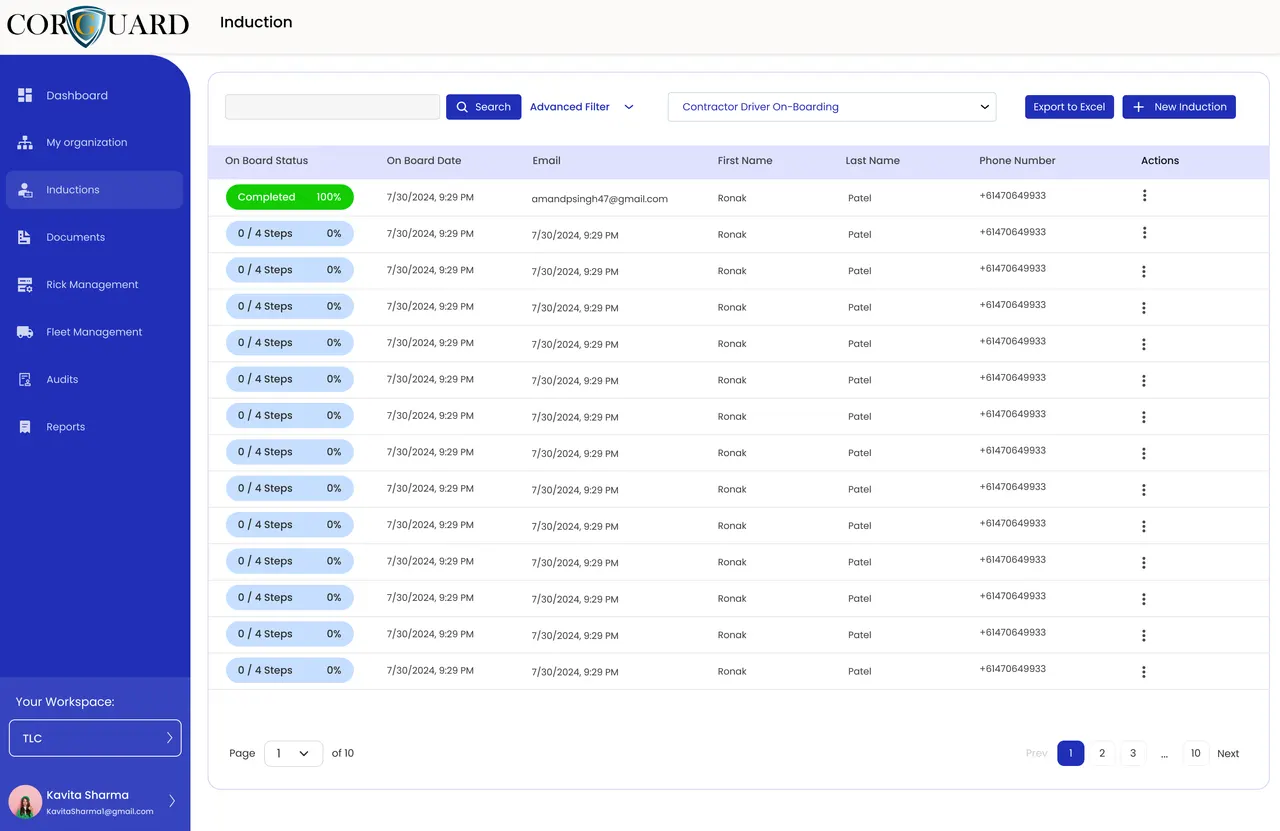
Training records
Connect training completion from cortraining.com.au to evidence and follow-up.
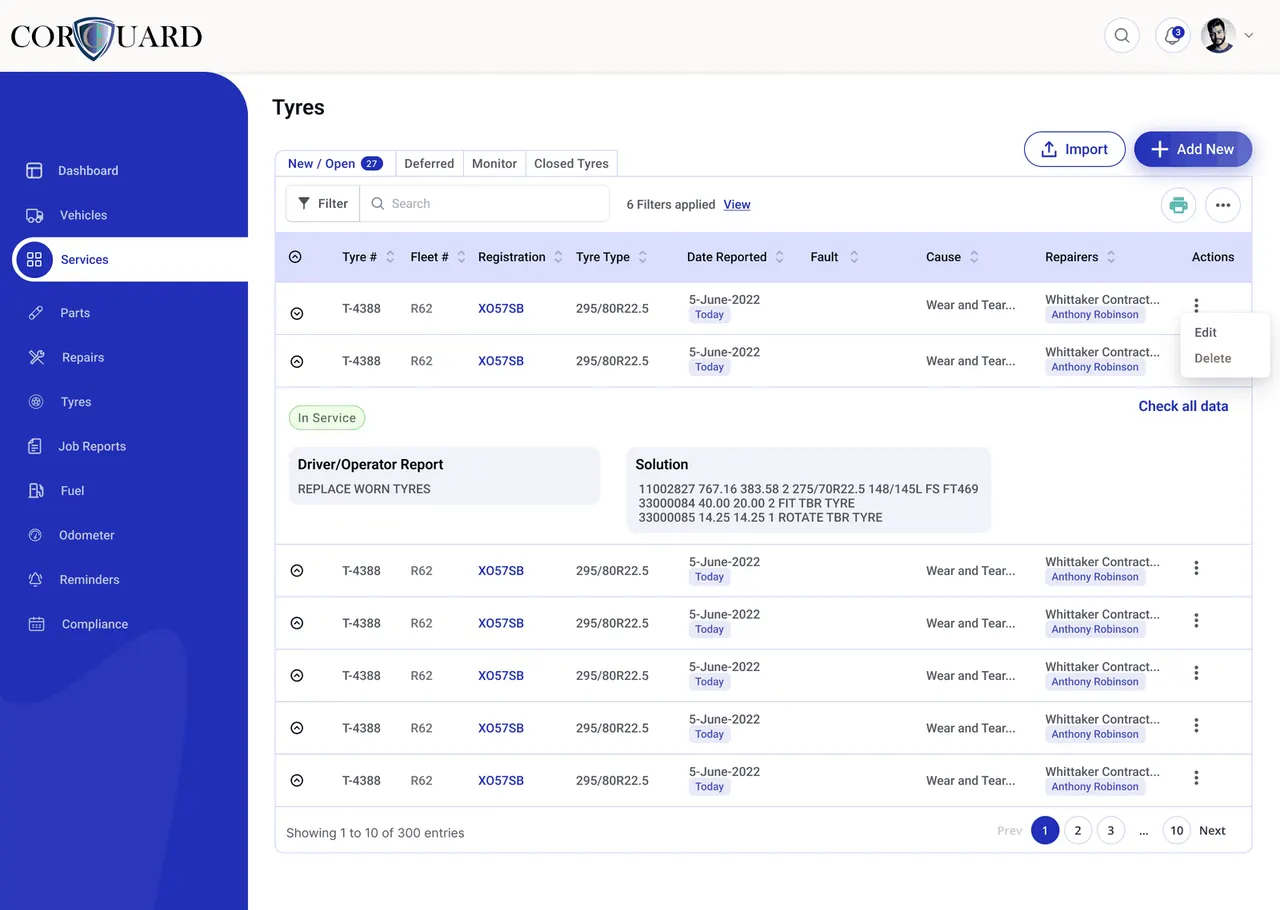
Driver diary checks
Connect fatigue and driver diary review back to manager visibility.
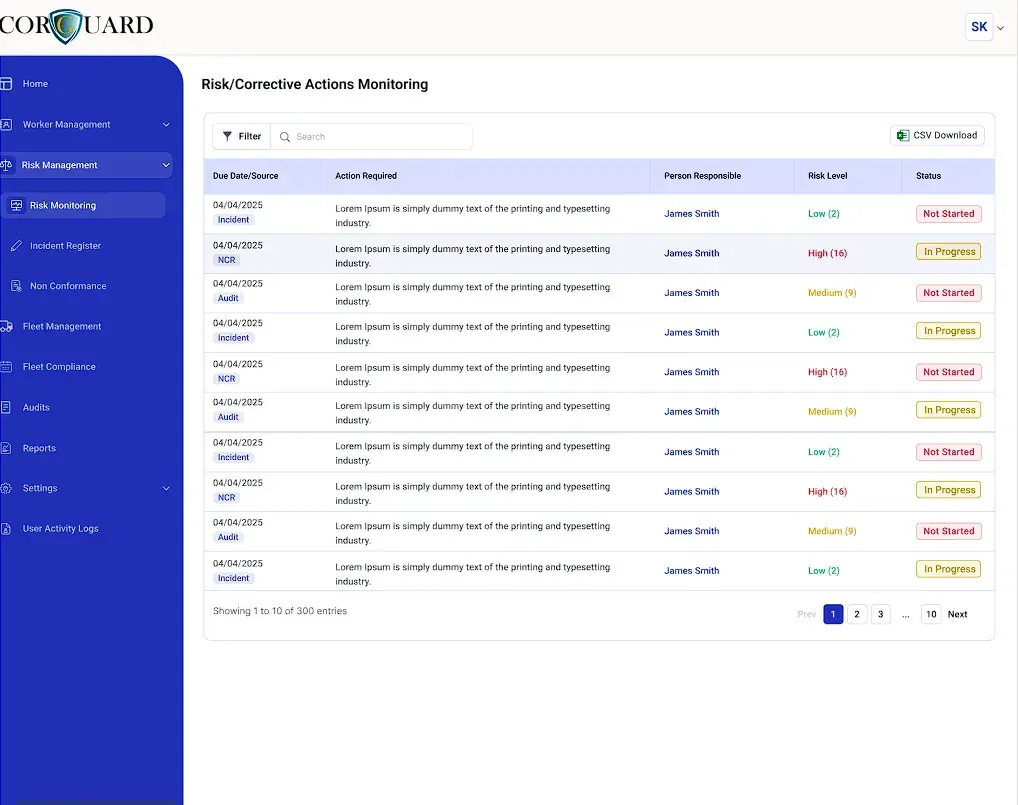
Corrective actions
Turn audit findings, hazards and incidents into tracked actions.
Keep exploring
Related Chain of Responsibility reading
MAEZ insight
Chain of Responsibility Policy
Laws structure our everyday lives and tell us what we can or cannot do in certain circumstances; they are there to protect us from each other and to maintain a peaceful place to live, or at least as friendly as possible. Take the legislation that governs the speed we can use when travelling on our roads.
MAEZ insight
Chain of Responsibility (or CoR) in Victoria
October 2018 saw the first major changes to the Heavy Vehicle National Law (HVNL) since its 2014 adoption, which affect changes to Chain of Responsibility (or CoR) in Victoria.
MAEZ insight
Why Chain of Responsibility Matters to Your Business
Understanding and implementing an effective Chain of Responsibility (CoR) strategy is not only a matter of legislative compliance under the Heavy Vehicle National Law (HVNL), it is also crucial to the running of a successful business in the supply chain sector.
MAEZ insight
How Do Heavy Vehicle Operators Get Accreditation For Their Safety & Compliance?
The National Heavy Vehicle Accreditation Scheme (NHVAS), that is controlled by state and territory road transport agencies, was first introduced in 1999 as an alternative compliance scheme. In 2014, the NHVR took over the state based systems and now administer all aspects of the NHVAS.
MAEZ insight
Investigations Continue with NSW Truck Accident
This story as sad as it is, happens to all too often. This gentleman had a mum and dad, may have had kids of his own potentially. We all need to take stock of what we do in transport. We all need to think about others in our work places and check in on them to ensure they are ok.
MAEZ insight
Electronic Work Diary
Heavy vehicle drivers must record their working hours, rest hours, and transportation data to synchronise and make work data trackable under Chain of Responsibility law.
Frequently asked questions
Questions people ask about this topic
What is corporate derivative liability under the HVNL?
Corporate derivative liability arises where an executive or manager knew, or ought reasonably to have known, of conduct constituting an offence or that there was a substantial risk the offence would be committed. It places responsibility on leaders to ensure their business understands its obligations and actively manages compliance before an incident occurs.
Why was the Furler Family Trust fine $26,096?
The fine was $26,096 because the business could not nominate the driver of the minibus on the day of the offence, so the penalty fell on the company at the corporate rate. Had the driver been nominated, the individual fine would have been $1,036 plus six demerit points and a six-month licence disqualification.
Was the minibus in the Furler case classified as a heavy vehicle?
Yes. The tourist company did not initially understand that its minibuses were classified as heavy vehicles under the relevant legislation. The driver believed the vehicle fell under the 4.5-tonne threshold and could travel up to 90 km/h, when it was actually subject to a lower heavy-vehicle speed limit.
How can transport operators reduce corporate derivative liability exposure?
Operators can reduce exposure by knowing vehicle classifications, maintaining records that allow driver identification, briefing staff on route-specific rules, investing in Chain of Responsibility training, and conducting gap analysis to surface compliance risks before an auditor or regulator finds them.
How many HVNL penalties exist and how large can they be?
There are 341 Heavy Vehicle National Law penalties, and they can exceed $100,000 for a business with a transport task or one that influences a transport task. The cost of gap analysis and training is a fraction of even a single penalty.