
MAEZ resource
Heavy Vehicle National Law (HVNL) Explained
Understand the Heavy Vehicle National Law (HVNL): its objectives, enforced standards, Chain of Responsibility duties, criminal offence treatment, and what a practical safety system looks like for Australian transport operators.

Due diligence means knowing whether the safety system is actually working.

Proof that freight promises do not create unsafe transport pressure.
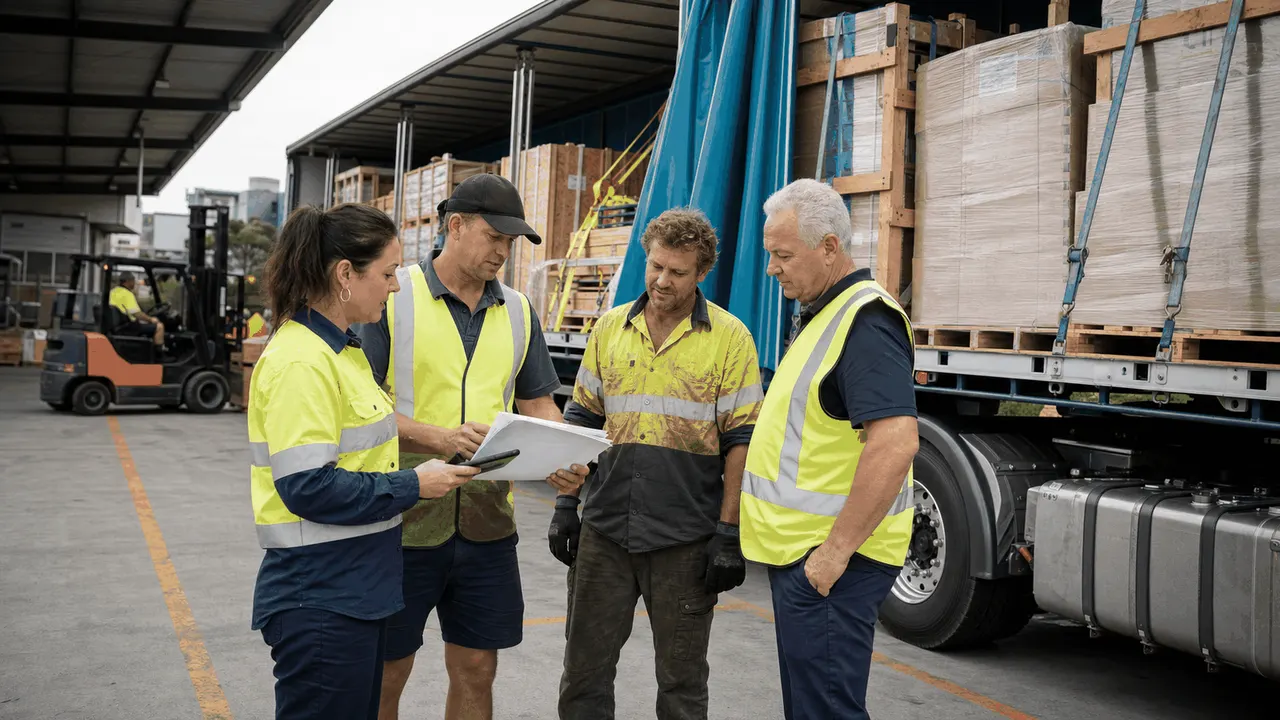
Loading controls need evidence, not assumptions.
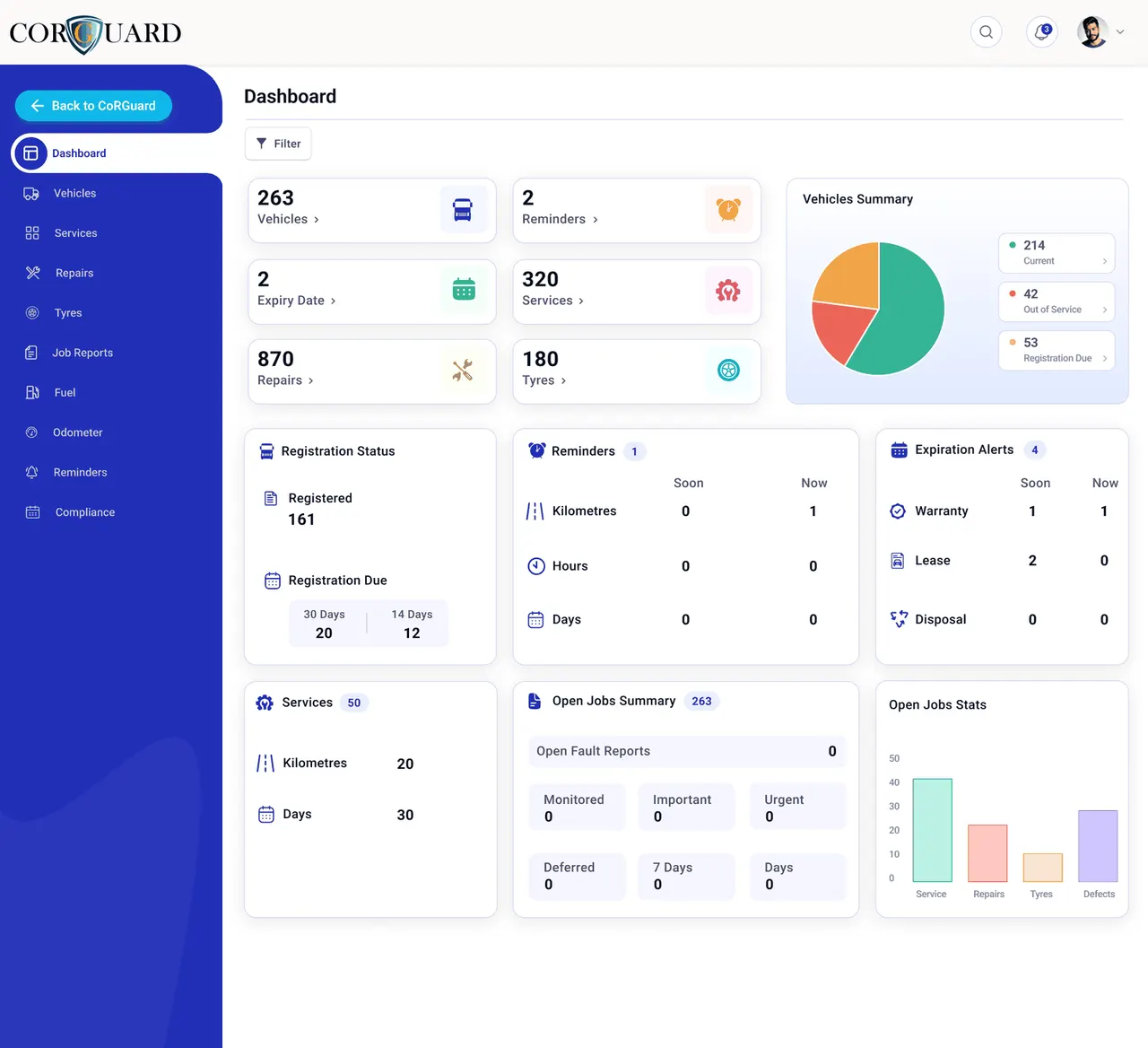
Daily fleet activity has to connect back to duties, controls, and review.
Consignors
Freight terms, delivery windows, and KPIs must not push drivers into speed, fatigue, or mass breaches.
Consignees
Receiving rules, site access, and unloading delays are CoR controls that need to be set and evidenced.
Loaders
Mass, dimension, and load restraint decisions need documented checks, not assumptions.
Managers
Executives and managers need due-diligence evidence that the Safety Management System is actually working.
What is the Heavy Vehicle National Law?
The national framework for regulating heavy vehicle use on Australian roads
The Heavy Vehicle National Law (HVNL) is the national legislative framework that regulates heavy vehicle use on Australian roads. It promotes public safety, manages environmental and infrastructure impacts, encourages productive and safe transport practices, and distributes responsibility for on-road safety across every party in the transport chain — not just drivers and operators.
The HVNL's core objectives are set out in the legislation and cover several interconnected goals:
- Promote public safety in the operation of heavy vehicles on roads
- Manage the impact of heavy vehicles on the environment, road infrastructure, and public amenity
- Promote industry productivity and efficiency in the road transport of goods and passengers
- Encourage and promote productive, efficient, innovative, and safe business practices
The legislation gives the regulator special powers to enforce HVNL obligations across all transport tasks. This enforcement applies regardless of who pays the drivers or owns the trucks. If your business sends or receives freight, you carry legal liability under Chain of Responsibility by virtue of the role you play in the transport task.
The HVNL recognises that there is no single approach that fits every operation. It has been written to enable leaders to develop their own approach to managing safety, while ensuring that the ultimate responsibility for on-road safety is shared across the chain.
What standards does the HVNL enforce?
Key regulatory areas the regulator is empowered to monitor

The HVNL outlines specific standards that the regulator enforces. These cover the full lifecycle of heavy vehicle operations on Australian roads:
- Registration of all heavy vehicles
- Standards for heavy vehicles when operating on roads
- Maximum permissible mass and dimensions for heavy vehicles
- Securing and restraining loads on heavy vehicles
- Preventing drivers from exceeding speed limits
- Preventing drivers from driving while fatigued
The legislation is explicit that duties and obligations are directed at ensuring heavy vehicles and drivers comply with these requirements. Crucially, these obligations extend to persons whose activities may influence whether vehicles or drivers comply — not just the driver or the operator.
For a deeper look at how these duties apply across roles, see About Chain of Responsibility.
Who is responsible under the HVNL?
Shared responsibility across the entire transport chain
The HVNL makes clear that any person who influences drivers of heavy vehicles, or how heavy vehicles are loaded and restrained, shares responsibility for ensuring public safety alongside the driver and the operator. This is the principle of shared responsibility — legal liability extends well beyond the person behind the wheel.
Executives, managers, consignors, consignees, loaders, packers, and schedulers can all be held accountable if their actions or decisions contribute to a breach. The legislation does not include drivers as "duty holders" under the Act in the same way it treats other parties in the chain. Instead, the primary duty sits with the parties whose business activities influence the transport task.
For operators who need a structured review of where their CoR exposure lies, CoR consulting can help identify the gaps that matter most.
Why are HVNL breaches treated as criminal offences?
The burden of proof and what it means for your business
One of the most important distinctions in the HVNL is that breaches are treated as criminal offences rather than civil matters. This changes the standard of proof required. Under criminal law, the burden of proof is "beyond reasonable doubt," which is a significantly higher threshold than the civil standard of "on the balance of probabilities."
This means regulators must meet a higher evidentiary bar, but it also means the consequences of a breach — including potential penalties — are more severe.
Because of this, it is imperative that directors, executives, and other deemed duty holders maintain awareness of on-road safety risks and raise concerns within their organisations. The legislation expects leaders to actively foster a culture where safety issues can be identified and addressed.
Directors and executives should understand their specific due diligence obligations. For a practical guide, see Chain of Responsibility Training for Executives and Managers.
What is a safety system under the HVNL?
It does not have to be a massive document — it has to be reasonably practicable
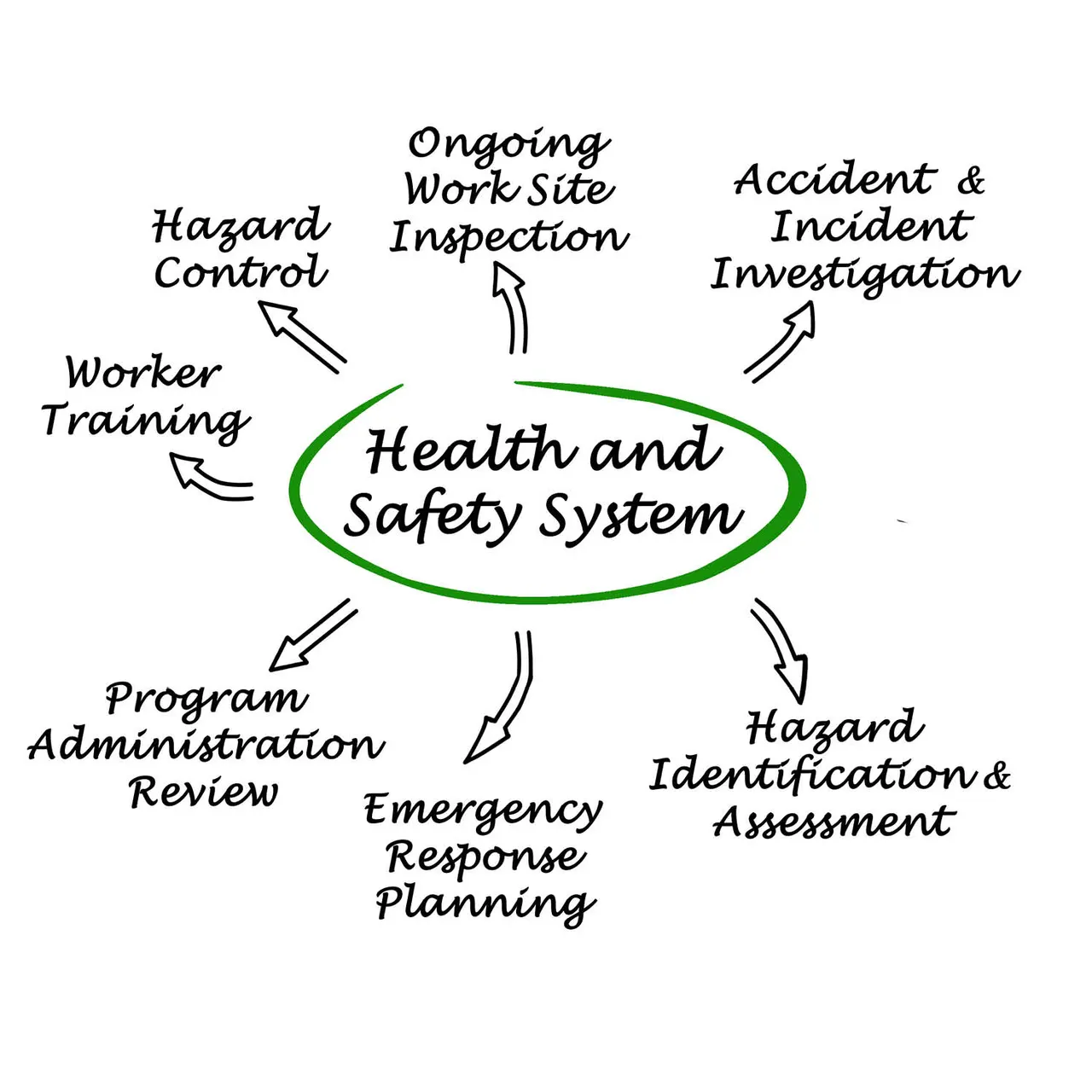
Many people assume a "safety system" is a large, ambitious document that requires constant maintenance and is out of reach for most businesses. In practice, it does not need to be. A safety system can be made up of many parts. At its core, it is what you deem necessary to mitigate or remove the risks within a transport task — so far as is reasonably practicable.
The system must address the specific risks in your organisation and transport activities. Key considerations for an effective safety system include:
- It must address the actual risks in your organisation and transport task
- It should help people understand risks where training and experience alone may not be sufficient
- Employees must be trained in any significant risks under the WHS Act
- A site induction alone may not be enough in some circumstances
- The system should connect daily fleet activity back to duties, controls, and review
The HVNL is designed to let leaders build an approach that fits their operation, rather than mandating a single format. What matters is that the system is proportional to the risk and supported by evidence.
For operators preparing for NHVAS accreditation or wanting to understand what a Chain of Responsibilities framework looks like in practice, the key is starting with the risks that are genuinely present in your business. See Chain of Responsibilities: What Australian HVNL Duty Holders Need to Understand for further guidance.
How MAEZ helps with HVNL compliance
Turning legal obligations into practical controls and evidence
MAEZ helps Australian transport and supply-chain businesses turn HVNL, Chain of Responsibility, WHS, and NHVAS obligations into practical training, advisory, audit, and implementation pathways. We help operators:
- Identify compliance gaps before an auditor or regulator does
- Build Safety Management System controls around how the transport business actually runs
- Connect training, evidence, and workflow where structured records are needed
Where software is the right next step, CoRGuard supports the evidence workflow — including records, reminders, diaries, audits, maintenance, document control, inductions, corrective actions, and evidence reporting.
To get a practical review of the controls, evidence, training, and SMS gaps that matter most in your operation, contact MAEZ. You can also explore our Chain of Responsibility training options for your team.
How MAEZ works
Find the gaps. Fix the system. Prove the controls.
MAEZ helps transport operators deal with the compliance risk they already know is there. We help get the Safety Management System in order, protect NHVAS accreditation, reduce fine exposure, and connect training, evidence, and CoRGuard workflows where software is needed.
Find
Identify what is exposed before an auditor or regulator does.
Fix
Build the SMS controls around how the transport business actually runs.
Prove
Use CoRGuard where records, reminders, diaries, audits, and evidence need structure.
From advice to evidence
From MAEZ advice to a working Safety Management System
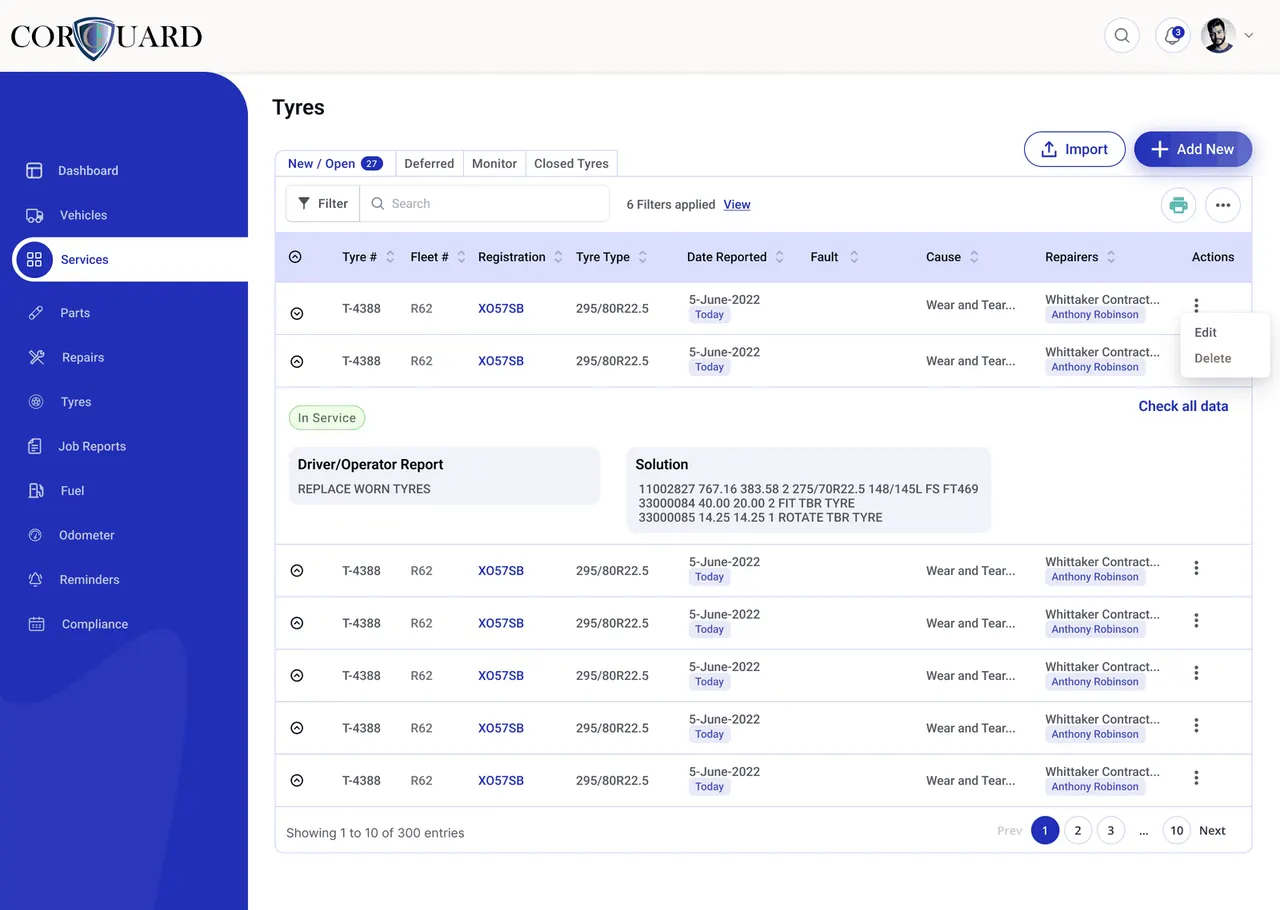
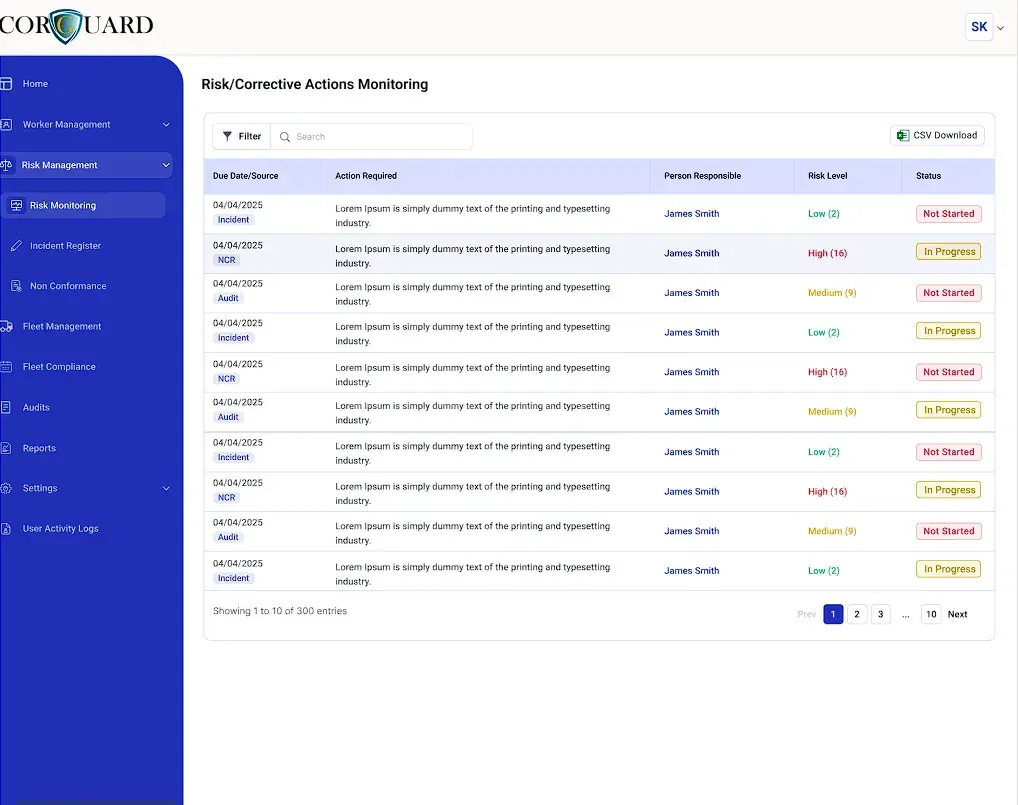
Advisory work should leave a practical implementation trail. These examples show how CoRGuard supports records, fatigue and driver diary checks, maintenance, audits, document control, inductions, corrective actions, and evidence review after MAEZ identifies the gaps.
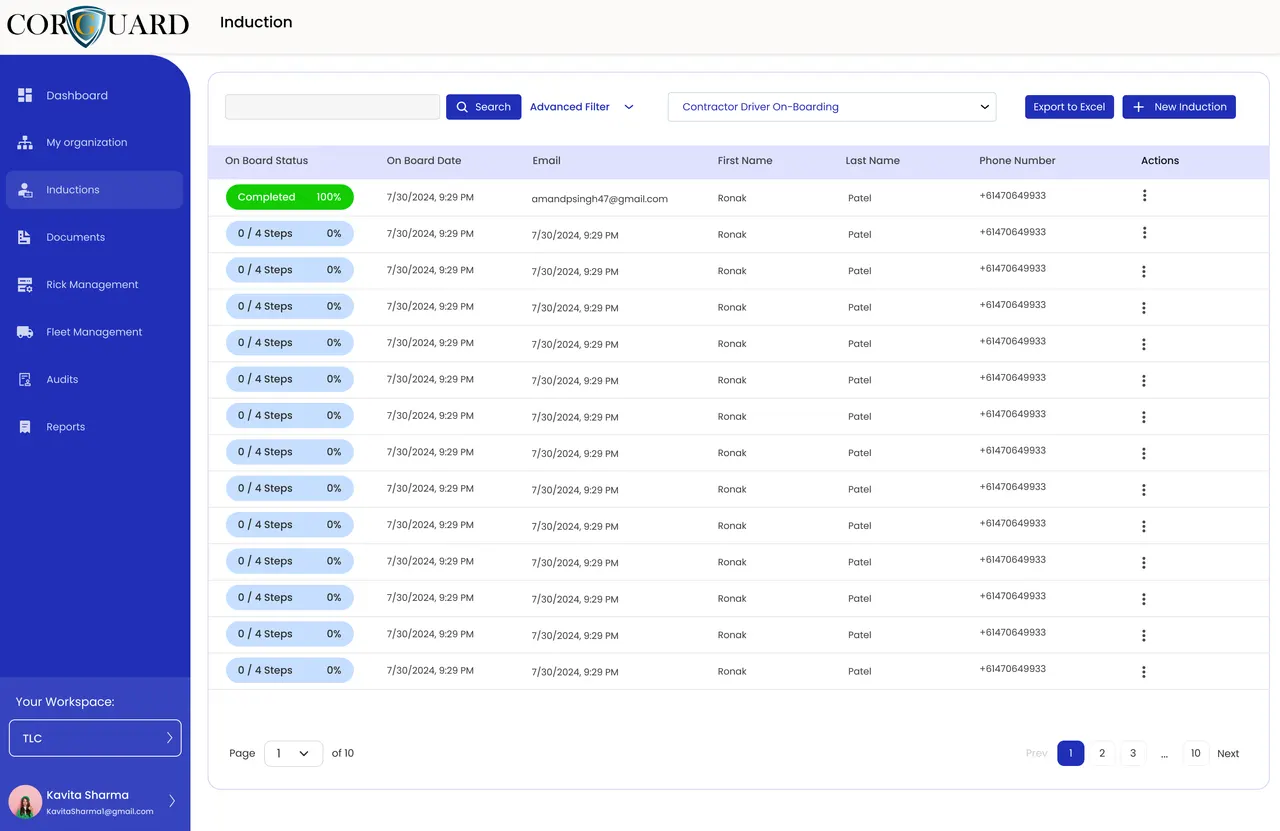
Training records
Connect training completion from cortraining.com.au to evidence and follow-up.
Driver diary checks
Connect fatigue and driver diary review back to manager visibility.
Corrective actions
Turn audit findings, hazards and incidents into tracked actions.
Keep exploring
Related Chain of Responsibility reading
MAEZ resource
Chain of Responsibility Audit
A Chain of Responsibility (or CoR) Audit, also known as a Chain of Responsibility Audit is a potent and essential tool to ensure transport related safety in your business. An audit is by definition an inspection of something against a set of standards, and we provide that as an outsourced provider.
MAEZ resource
NHVAS Accreditation
Since the 1990’s National Heavy Vehicle Accreditation Scheme (NHVAS) has been known as a alternative compliance scheme. It has since evolved as a formal process for recognising operators who have robust safety and other management systems in place.
MAEZ resource
Awareness Course
Chain of Responsibility Awareness Course our training Why MAEZ Awareness Courses? On Demand Wherever you are or whatever time it is, immerse yourself into MAEZ Chain of Responsibility awareness courses, whether for individuals or teams, MAEZ can help you today.
MAEZ resource
Chain of Responsibility Education
Chain of responsibility targeted training Scaleable Team Training How We Contribute to Your COMPLIANCE Why do you train people? When you train people you are giving them the tools to provide you with an outcome. when it comes to Chain of responsibility, you need your people to report issues when they see them.
MAEZ resource
Audit
[av_tab_container position=’top_tab’ boxed=’border_tabs’ initial=’1′ av_uid=’av-jqvv7w27′] [av_tab title=’Tab 2′ icon_select=’no’ icon=’ue800′ font=’entypo-fontello’ av_uid=’av-12eri’] [/av_tab] [av_tab title=’Tab 1′ icon_select=’no’ icon=’ue800′ font=’entypo-fontello’ av_uid=’av-2e8gum’] [/av_tab]
MAEZ insight
Mastering HVNL Compliance: Best Practices Explained
Unlock HVNL compliance best practices to enhance operational efficiency. Learn how to integrate legal responsibilities seamlessly into your supply chain.
Frequently asked questions
Questions people ask about this topic
What is the Heavy Vehicle National Law (HVNL)?
The HVNL is the national legislative framework that regulates heavy vehicle use on Australian roads. It promotes public safety, manages environmental and infrastructure impacts, encourages productive transport practices, and distributes safety responsibility across every party in the transport chain.
Who is responsible under the HVNL?
Any person who influences drivers, loading, or restraint of heavy vehicles shares responsibility under the HVNL. This includes executives, managers, consignors, consignees, loaders, packers, and schedulers — not just drivers and operators.
Are HVNL breaches treated as criminal or civil offences?
HVNL breaches are treated as criminal offences, which means the regulator must prove the breach "beyond reasonable doubt" — a higher standard than the civil "balance of probabilities" test. This also means penalties for breaches can be more severe.
Does a safety system under the HVNL need to be a large document?
No. A safety system under the HVNL needs to be reasonably practicable and proportional to the risks in your operation. It should address the actual risks in your transport task, connect daily activity to duties and controls, and be supported by evidence.
What standards does the HVNL enforce?
The HVNL enforces standards covering heavy vehicle registration, vehicle operating standards, mass and dimension limits, load securing and restraint, speed compliance, and fatigue management for drivers.