
MAEZ resource
NHVAS Accreditation Support for Australian Transport Operators
Practical NHVAS accreditation guidance for Australian heavy vehicle operators. Understand the modules, the audit process, and how accreditation connects to Chain of Responsibility and Safety Management System evidence.

Contractor controls should be verified before the work starts.
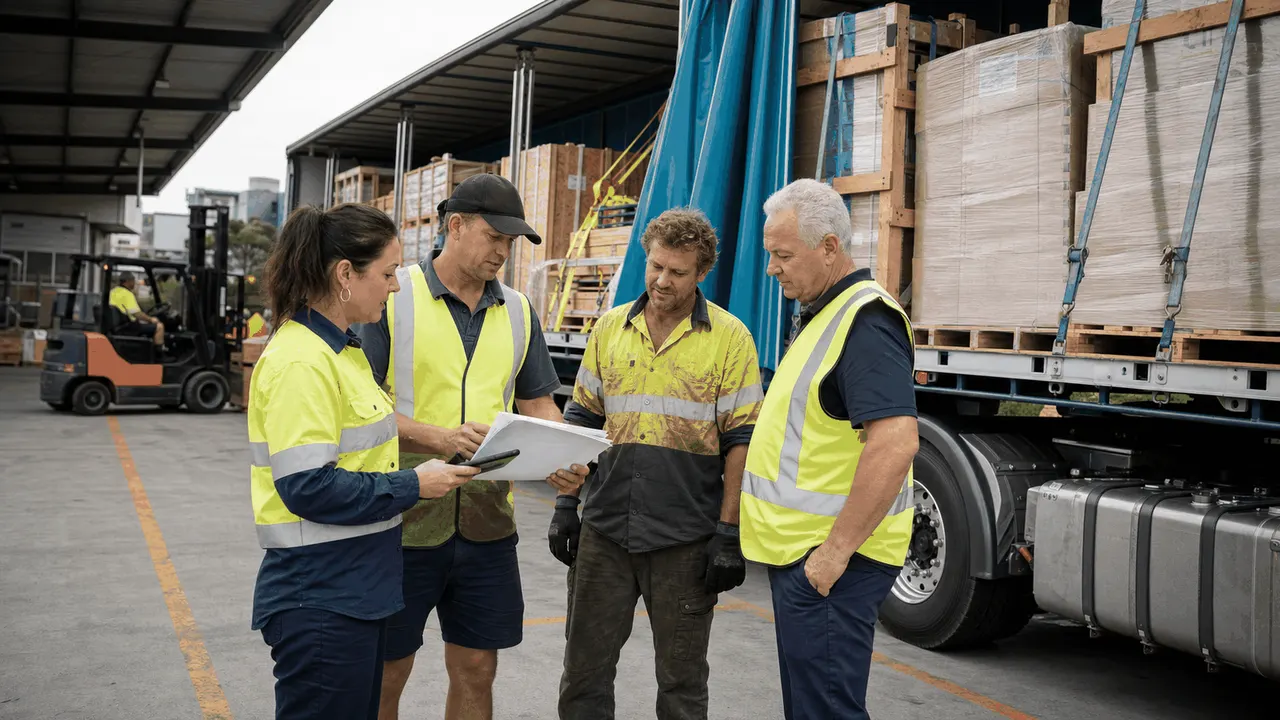
Receiving windows, site rules, and unloading delays can all shape the transport task.
Unloading decisions can affect safety, scheduling, and responsibility.

Managers need a clear view of gaps before audit or enforcement pressure arrives.
Consignors
Freight terms, delivery windows, and KPIs must not push drivers into speed, fatigue, or mass breaches.
Consignees
Receiving rules, site access, and unloading delays are CoR controls that need to be set and evidenced.
Loaders
Mass, dimension, and load restraint decisions need documented checks, not assumptions.
Managers
Executives and managers need due-diligence evidence that the Safety Management System is actually working.
What is NHVAS accreditation?
A formal recognition scheme for operators with robust management systems

NHVAS accreditation is a formal recognition scheme, administered by the National Heavy Vehicle Regulator, that certifies heavy vehicle operators have robust safety and management systems in place. Under Chapter 8 of the Heavy Vehicle National Law, it demonstrates compliance with recognised standards through documented processes, evidence, and third-party audits rather than assurances alone.
Since the 1990s, the National Heavy Vehicle Accreditation Scheme (NHVAS) has been known as an alternative compliance scheme. It has since evolved into a formal process for recognising operators who have robust safety and other management systems in place.
NHVAS accreditation is also increasingly being used to demonstrate compliance with general duty requirements under road transport law. For operators, it represents a structured way to show that the business meets recognised standards — not just on paper, but through documented processes and evidence.
Under the HVNL, Chapter 8 sets out the regulator's power to grant heavy vehicle accreditation, the requirements that apply to accredited operators, and the conditions under which accreditation can be amended, suspended, or cancelled.
Which NHVAS modules are available?
Four modules cover the core compliance areas for heavy vehicle operators
Heavy vehicle operators can apply to have their business and assets accredited under four NHVAS modules, each addressing a distinct compliance risk area:
- Mass Management — demonstrates systems for managing vehicle mass within legal limits.
- Maintenance Management — demonstrates systems for inspecting, maintaining, and recording the condition of vehicles.
- Fatigue Management: Basic Fatigue Management (BFM) — provides a framework for managing driver fatigue under standardised hours and conditions.
- Fatigue Management: Advanced Fatigue Management (AFM) — provides a more flexible framework for operators who can demonstrate robust fatigue management systems beyond BFM.
Each module has its own standards and business rules. Operators can seek accreditation in one or more modules depending on the nature of their transport task and the risks they need to manage.
Who administers the NHVAS?
The National Heavy Vehicle Regulator oversees accreditation nationally
The National Heavy Vehicle Regulator (NHVR) is responsible for administering the NHVAS nationally. This includes accrediting and managing the auditors who carry out NHVAS initial and renewal audits.
The NHVR's role covers the grant of accreditation, ongoing compliance monitoring, and any amendment, suspension, or cancellation of accreditation where requirements are not met.
Operators seeking accreditation must demonstrate that their management systems meet the relevant module standards and business rules. Because the NHVR manages the auditor pool, operators need to engage an NHVAS-accredited auditor to conduct the formal compliance audit required for initial accreditation or renewal.
NHVAS accreditation audits through MAEZ
Initial and renewal audits across all NHVAS modules
MAEZ has access to an NHVAS-accredited auditor and offers accreditation audits for both initial access and renewal accreditations across each of the NHVAS modules. This means MAEZ can support operators through the audit process — whether they are seeking accreditation for the first time or renewing an existing accreditation.
The audit examines whether the operator's management systems, records, and processes meet the standards required under the relevant module.
If you are preparing for an NHVAS audit, contact MAEZ to discuss your readiness and identify any gaps before the auditor arrives.
Why pursue NHVAS accreditation?
Compliance, revenue, and operational benefits for willing operators
There are clear benefits for operators who are willing and able to demonstrate compliance through NHVAS accreditation:
- Streamlined processes — accreditation encourages documented, repeatable systems that reduce ad-hoc decision-making.
- Improved capacity — some modules allow operators to access concessional mass or fatigue arrangements that improve productivity.
- Demonstrated compliance — accreditation provides third-party verification that systems meet recognised standards.
- Vendor assurance — if a vendor holds NHVAS accreditation in a module, they have demonstrated robust processes to at least the minimum standard the law requires.
With road transport law now requiring compliance as a baseline, the natural progression for many operators is to move toward NHVAS accreditation as a way of turning obligations into a structured, evidence-backed system.
How NHVAS connects to your broader compliance picture
Linking accreditation to Chain of Responsibility, training, and evidence
NHVAS accreditation does not sit in isolation. It connects directly to Chain of Responsibility (CoR) obligations, HVNL duty requirements, WHS responsibilities, and your broader Safety Management System (SMS).
MAEZ helps Australian businesses turn CoR, HVNL, WHS, transport safety, and chartered risk obligations into practical training, advisory, audit, and implementation pathways. Where structured records, reminders, audits, maintenance logs, driver diary checks, inductions, corrective actions, and evidence reporting are needed, CoRGuard supports the SMS evidence workflow.
Related resources
- Chain of Responsibility Consulting — a practical CoR risk review for your operation
- Chain of Responsibility Training — role-based training for Australian transport operators
- HVNL 2026 Changes and CoR Training Readiness — preparing for upcoming legislative change
- MAEZ Insights — ongoing guidance on transport compliance
How MAEZ works
Find the gaps. Fix the system. Prove the controls.
MAEZ helps transport operators deal with the compliance risk they already know is there. We help get the Safety Management System in order, protect NHVAS accreditation, reduce fine exposure, and connect training, evidence, and CoRGuard workflows where software is needed.
Find
Identify what is exposed before an auditor or regulator does.
Fix
Build the SMS controls around how the transport business actually runs.
Prove
Use CoRGuard where records, reminders, diaries, audits, and evidence need structure.
From advice to evidence
From MAEZ advice to a working Safety Management System
Advisory work should leave a practical implementation trail. These examples show how CoRGuard supports records, fatigue and driver diary checks, maintenance, audits, document control, inductions, corrective actions, and evidence review after MAEZ identifies the gaps.
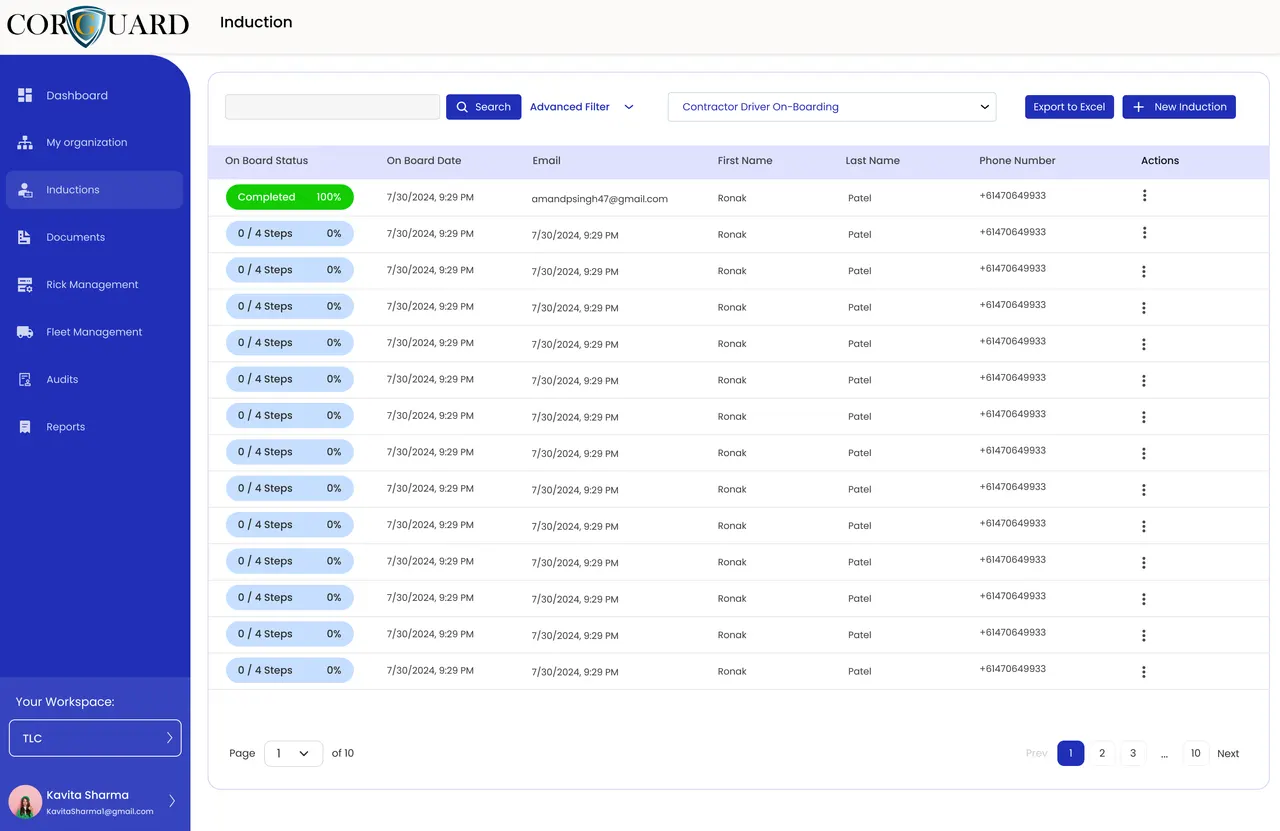
Training records
Connect training completion from cortraining.com.au to evidence and follow-up.
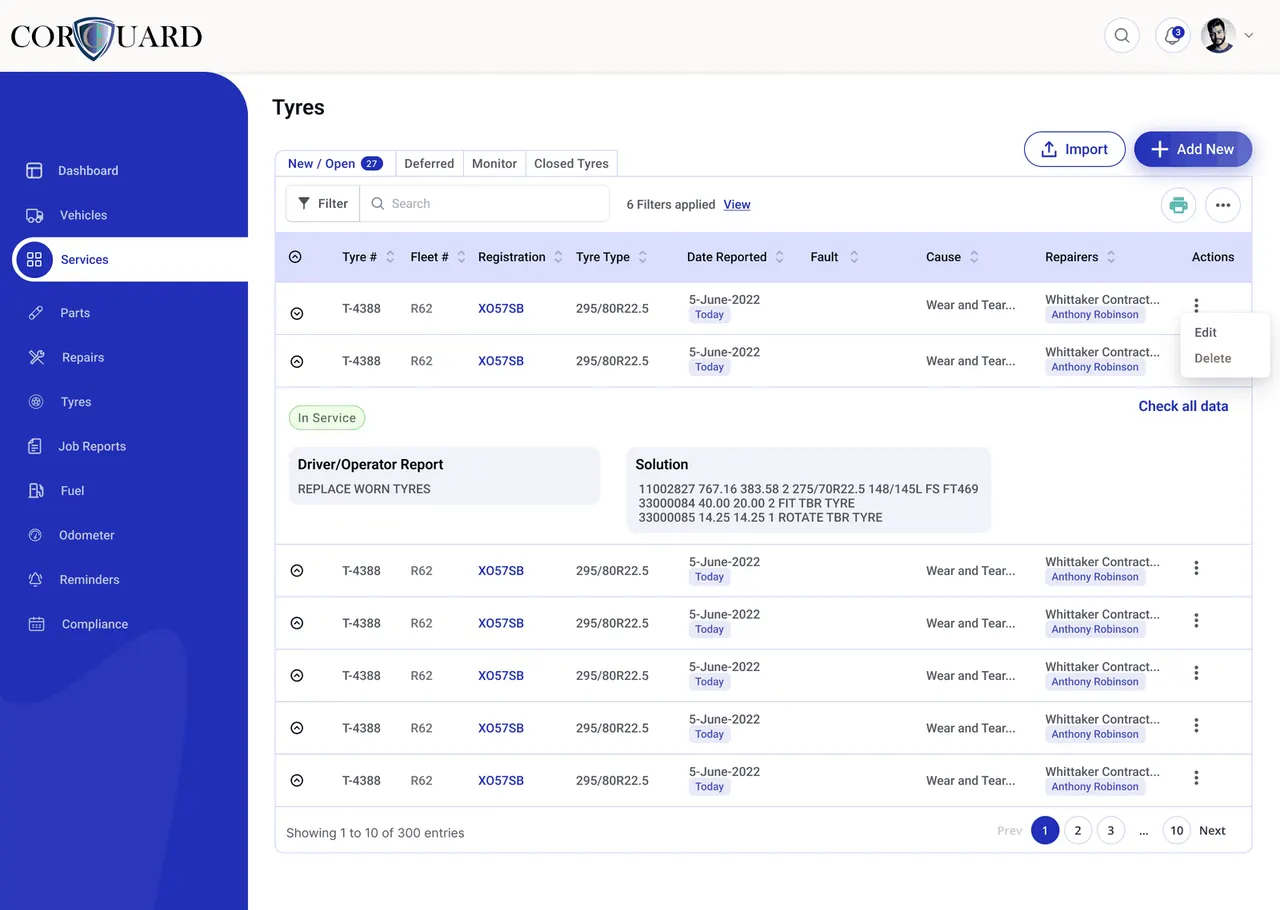
Driver diary checks
Connect fatigue and driver diary review back to manager visibility.
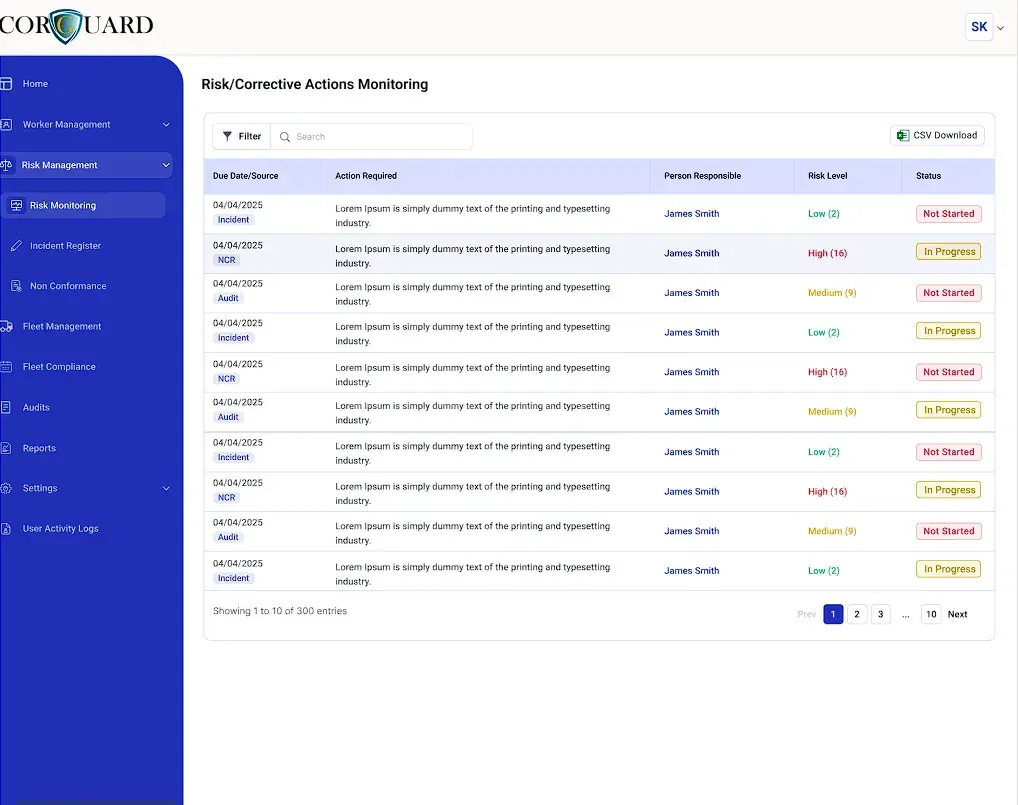
Corrective actions
Turn audit findings, hazards and incidents into tracked actions.
Keep exploring
Related Chain of Responsibility reading
MAEZ resource
Awareness Course
Chain of Responsibility Awareness Course our training Why MAEZ Awareness Courses? On Demand Wherever you are or whatever time it is, immerse yourself into MAEZ Chain of Responsibility awareness courses, whether for individuals or teams, MAEZ can help you today.
MAEZ resource
Chain of Responsibility Education
Chain of responsibility targeted training Scaleable Team Training How We Contribute to Your COMPLIANCE Why do you train people? When you train people you are giving them the tools to provide you with an outcome. when it comes to Chain of responsibility, you need your people to report issues when they see them.
MAEZ resource
Audit
[av_tab_container position=’top_tab’ boxed=’border_tabs’ initial=’1′ av_uid=’av-jqvv7w27′] [av_tab title=’Tab 2′ icon_select=’no’ icon=’ue800′ font=’entypo-fontello’ av_uid=’av-12eri’] [/av_tab] [av_tab title=’Tab 1′ icon_select=’no’ icon=’ue800′ font=’entypo-fontello’ av_uid=’av-2e8gum’] [/av_tab]
MAEZ insight
Mastering HVNL Compliance: Best Practices Explained
Unlock HVNL compliance best practices to enhance operational efficiency. Learn how to integrate legal responsibilities seamlessly into your supply chain.
MAEZ insight
Demystifying HVNL Regulations: A Comprehensive Guide
Unlock the intricacies of HVNL with our comprehensive guide. Perfect for those seeking a deeper understanding of HVNL regulations for road safety.
MAEZ insight
Understanding HVNL Compliance: A Step-by-Step Guide
Learn how to comply with HVNL effectively with our step-by-step guide. Ensure safety and legal adherence in your transport supply chain.
Frequently asked questions
Questions people ask about this topic
What NHVAS modules can an Australian heavy vehicle operator apply for?
Operators can apply for four NHVAS modules: Mass Management, Maintenance Management, Basic Fatigue Management (BFM), and Advanced Fatigue Management (AFM). Each module has its own standards and business rules, and operators can seek accreditation in one or more modules depending on their transport task and risk profile.
Who administers NHVAS accreditation in Australia?
The National Heavy Vehicle Regulator (NHVR) administers the NHVAS nationally, including granting accreditation, managing the pool of accredited auditors, monitoring ongoing compliance, and handling any amendment, suspension, or cancellation of accreditation where requirements are not met.
How does NHVAS accreditation connect to Chain of Responsibility obligations?
NHVAS accreditation provides structured, evidence-backed systems that help demonstrate compliance with general duty requirements under road transport law, including Chain of Responsibility obligations. Accreditation in modules like Mass Management, Maintenance Management, and Fatigue Management directly supports the controls and records a CoR-compliant operation needs.
What does an NHVAS audit involve?
An NHVAS audit examines whether the operator's management systems, records, and processes meet the standards and business rules required under the relevant module. Operators must engage an NHVAS-accredited auditor to conduct the formal compliance audit for both initial accreditation and renewals.
Can MAEZ help prepare for an NHVAS audit?
Yes. MAEZ has access to an NHVAS-accredited auditor and offers both initial and renewal accreditation audits across all NHVAS modules. Operators can contact MAEZ to discuss readiness and identify gaps before the auditor arrives.