
MAEZ insight
Mastering Chain of Responsibility: Top Best Practices
Discover the top best practices for mastering the Chain of Responsibility software design pattern. Learn how to build flexible, maintainable handler chains with practical implementation guidance.

Due diligence means knowing whether the safety system is actually working.

Proof that freight promises do not create unsafe transport pressure.

Loading controls need evidence, not assumptions.
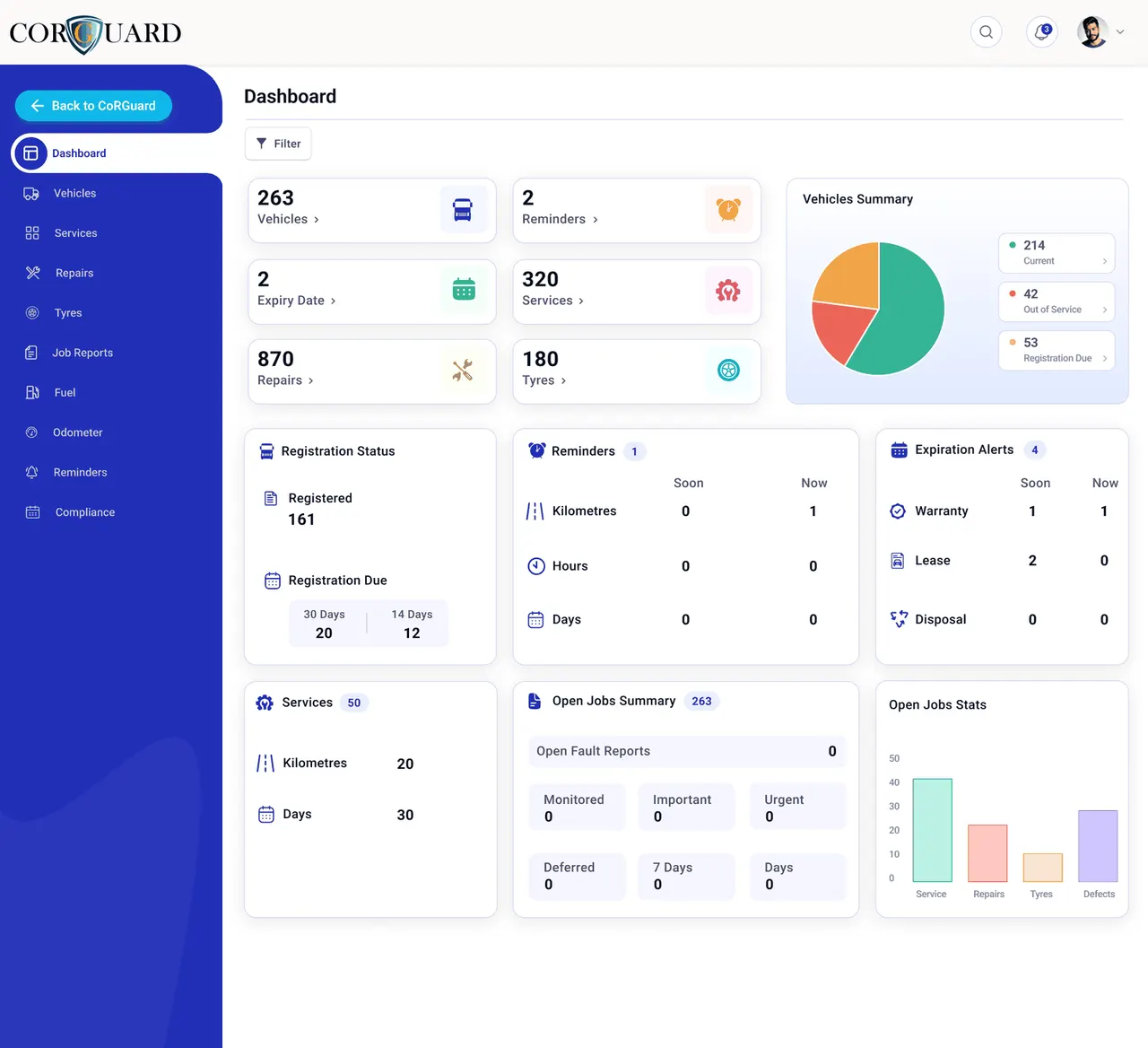
Daily fleet activity has to connect back to duties, controls, and review.
Consignors
Freight terms, delivery windows, and KPIs must not push drivers into speed, fatigue, or mass breaches.
Consignees
Receiving rules, site access, and unloading delays are CoR controls that need to be set and evidenced.
Loaders
Mass, dimension, and load restraint decisions need documented checks, not assumptions.
Managers
Executives and managers need due-diligence evidence that the Safety Management System is actually working.
What Is the Chain of Responsibility Pattern?
A behavioural design pattern that passes requests along a chain of handlers

The Chain of Responsibility is a behavioural design pattern that passes requests along a chain of handlers, where each handler decides whether to process the request or pass it to the next handler. When implemented properly, it transforms rigid conditional logic into flexible, maintainable code by decoupling the sender from the receiver.
The Gang of Four catalogue defines this pattern as a way of avoiding coupling between a sender and a receiver by giving multiple objects a chance to handle the request.
Think of it like an escalation system in customer support. A basic query hits first-line support. If they can't resolve it, they escalate to technical support. Still unresolved? It moves to engineering. The customer doesn't need to know who handles their request — they just submit it and trust the chain works.
This separation matters more than most developers realise. When you hardcode which object handles which request, you create tight coupling. Every time requirements change, you modify multiple classes. The Chain of Responsibility pattern breaks these dependencies.
For the Australian transport compliance context — where 'Chain of Responsibility' describes a very different set of legal duties under the Heavy Vehicle National Law — see About Chain of Responsibility.
Core Intent and Purpose
Decoupling request senders from receivers at runtime
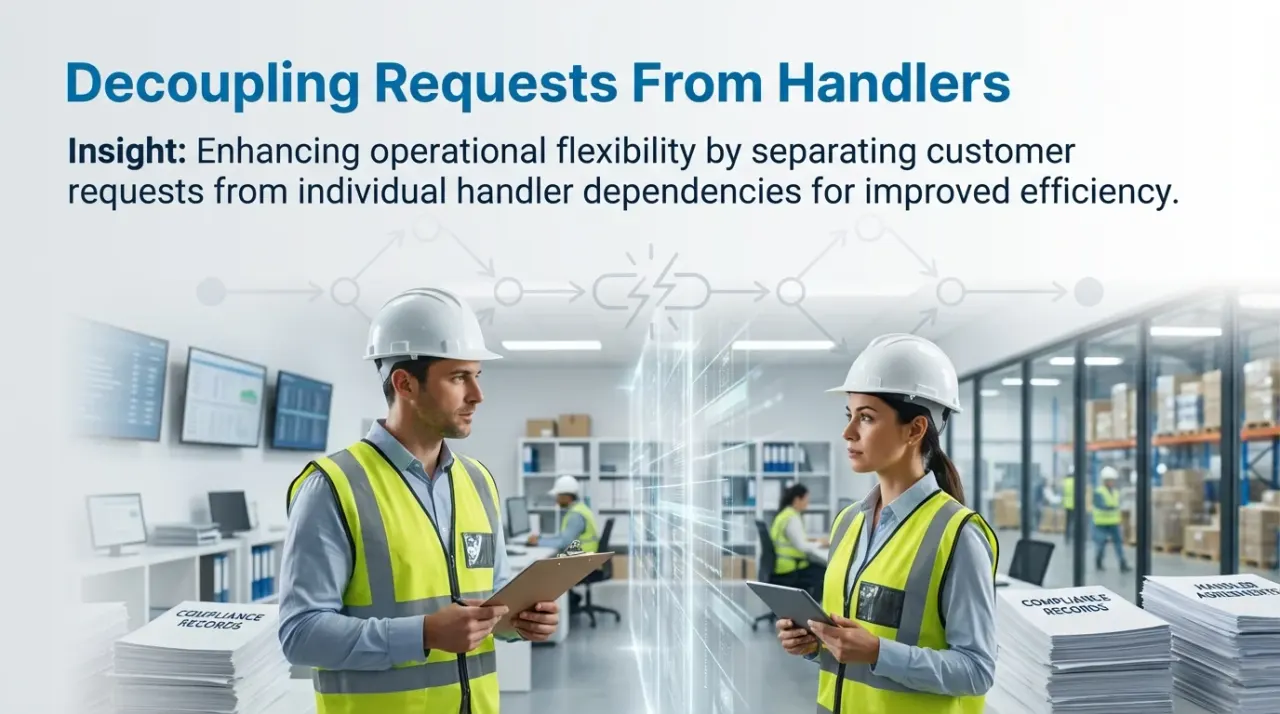
The pattern exists to decouple request senders from request receivers. Your client code submits a request without knowing which handler processes it. The chain determines the appropriate handler at runtime based on each handler's logic.
This supports the Single Responsibility Principle — each handler focuses on one type of request processing. It also enables the Open/Closed Principle because you add new handlers without modifying existing ones. The chain configuration handles the assembly.
You gain flexibility in how requests flow through your system. Dynamic chain configuration at runtime becomes possible: one request path during normal operations, another during peak load. The client code stays identical.
Behavioural pattern family
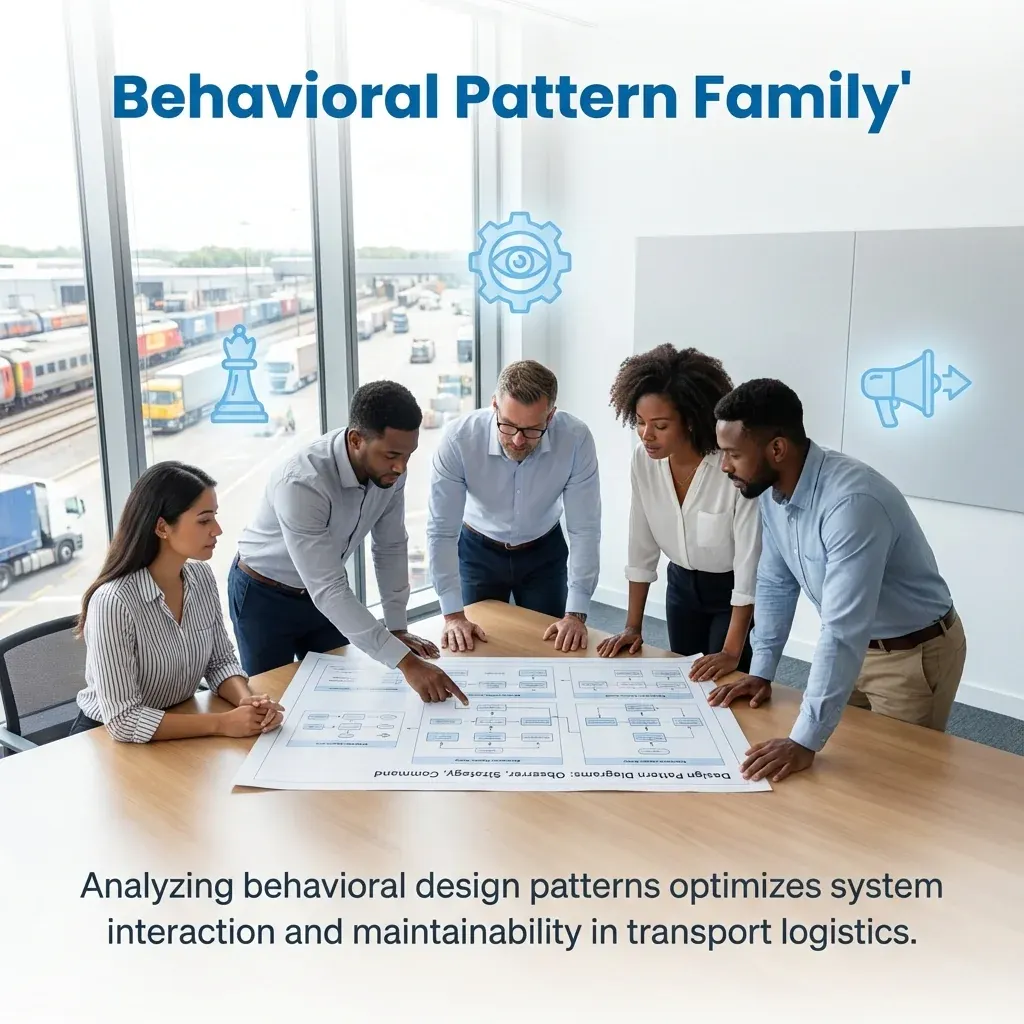
Chain of Responsibility belongs to the behavioural patterns catalogue alongside Strategy, Observer, and Command. All focus on how objects interact and distribute responsibility. Unlike structural patterns that organise class relationships, behavioural patterns define communication protocols.
Developers often confuse this pattern with Decorator. Both involve chains of objects, but Decorator adds functionality while maintaining the same interface. Chain of Responsibility routes requests to appropriate handlers. The intent differs fundamentally.
Key Components That Make It Work
Three core elements every implementation needs
Every Chain of Responsibility implementation needs three core elements. Miss one, and you lose the pattern's benefits. Get them right, and you build maintainable request-handling systems.
The handler interface
Your handler interface declares the method for processing requests. Most implementations call it handleRequest or simply handle. It accepts a request object and returns a result or void. The interface also needs a method to set the next handler in the chain, creating the link between handlers.
Some implementations use setNext; others prefer constructor injection. Choose based on whether you need runtime chain modification. Keep the interface minimal — each handler must implement these methods, so additional requirements propagate across all concrete handlers.
The base handler class
The base handler class stores the reference to the next handler. It implements the handler interface and provides default behaviour for passing requests along the chain, eliminating duplicate code across concrete handlers. Most base handlers implement setNext and return this to enable fluent chaining.
The default handleRequest implementation forwards to the next handler if one exists. Concrete handlers extend this class and override handleRequest with their specific logic — they can process the request entirely, partially process it and pass it along, or skip it entirely.
Concrete handler implementation
Concrete handlers contain the actual business logic. Each one checks if it can handle the incoming request. If yes, it processes it. If no, it calls the next handler in the chain. Each handler can process and pass along, allowing multiple handlers to work on the same request — authentication happens first, then validation, then whatever comes next.
When to Apply This Pattern
Recognising the right problems for handler chains
The Chain of Responsibility pattern solves specific problems. Using it inappropriately creates unnecessary complexity. Understanding when it fits separates experienced developers from those chasing patterns for pattern's sake.
You need this pattern when multiple objects might handle a request but you don't know which one until runtime, or when you want to issue requests to multiple objects without specifying the receiver explicitly.
Ideal use cases
- Request processing pipelines — web frameworks use it for middleware chains: logging, authentication, validation, caching, then the actual business logic
- Approval workflows — a purchase request under $1,000 gets approved by a supervisor; under $10,000 requires a manager; above that needs director approval
- Logging frameworks — multiple appenders process log messages based on severity level
- Event handling systems — events bubble through handler chains until processed
- Validation chains — sequential validation rules applied to data
- Exception handling — different handlers catch different exception types
- Support ticketing systems — basic questions get automated responses; more complex issues reach human agents; unresolved tickets escalate to specialists
The requester doesn't manage this routing — the chain handles it.
When to avoid this pattern
Don't use Chain of Responsibility when you know exactly which object should handle each request. The pattern adds indirection that helps with flexibility but hurts readability when unnecessary.
Avoid it for performance-critical paths where latency matters. Each handler in the chain adds overhead. If you're processing thousands of requests per second, that overhead accumulates. Profile first, then decide.
Skip the pattern when your handler logic interacts heavily with other handlers. The power comes from loose coupling. If handlers need to coordinate, you probably need a different approach like Mediator or Observer.
Building Your Handler Interface
Designing the foundation for clean chain construction

The handler interface forms the foundation. Get this right, and everything else falls into place. Design it poorly, and you'll fight the pattern throughout implementation.
Start with the method signature for processing requests. You need to decide what the handler receives and what it returns. This shapes the entire chain's behaviour.
Defining the processing method
Your handleRequest method needs a clear signature. Most implementations pass a request object and optionally return a result. The request object encapsulates all data the handlers need.
Some chains need handlers to explicitly signal whether they processed the request. Add a boolean return or use an Optional result type. This tells subsequent handlers whether to continue processing.
For async systems, return a Promise or Future. The chain becomes non-blocking, which suits I/O-heavy operations. Just remember that error handling becomes more complex in async chains.
Setting up chain links
Your interface must support linking handlers together. The standard approach uses a setNext method that accepts another handler and returns the handler for fluent chaining:
Handler chain = new AuthHandler()
    .setNext(new ValidationHandler())
    .setNext(new ProcessingHandler())
    .setNext(new LoggingHandler());
This enables readable chain construction — you can see the entire handler sequence in one expression. Some developers prefer constructor-based linking, where each handler receives the next handler in its constructor. This prevents runtime chain modification but guarantees chain immutability. Choose based on whether you need dynamic reconfiguration.
For more practical guidance on related topics, explore MAEZ Insights.
Creating the Base Handler Class
Eliminating code duplication across concrete handlers

The base handler class eliminates code duplication across concrete handlers. It implements the handler interface and provides default implementations that work for most handlers.
Extract the common functionality that every handler needs. Usually this means storing the next handler reference and forwarding requests when the current handler can't process them.
Implementing default behaviour
Your base handler stores a reference to the next handler in the chain. It implements setNext to establish this connection and returns this to support fluent chaining.
The default handleRequest implementation forwards to the next handler if one exists, or terminates the chain if there is no next handler.
Concrete handlers extend this base class and override handleRequest with their specific processing logic. They decide whether to handle the request, pass it along, or do both — giving you the flexibility that makes this pattern worth adopting.
For the Australian transport compliance context, where 'Chain of Responsibility' refers to legal duties under the HVNL rather than a software pattern, see About Chain of Responsibility or Chain of Responsibility Consulting.
How MAEZ works
Find the gaps. Fix the system. Prove the controls.
MAEZ helps transport operators deal with the compliance risk they already know is there. We help get the Safety Management System in order, protect NHVAS accreditation, reduce fine exposure, and connect training, evidence, and CoRGuard workflows where software is needed.
Find
Identify what is exposed before an auditor or regulator does.
Fix
Build the SMS controls around how the transport business actually runs.
Prove
Use CoRGuard where records, reminders, diaries, audits, and evidence need structure.
From advice to evidence
From MAEZ advice to a working Safety Management System
Advisory work should leave a practical implementation trail. These examples show how CoRGuard supports records, fatigue and driver diary checks, maintenance, audits, document control, inductions, corrective actions, and evidence review after MAEZ identifies the gaps.
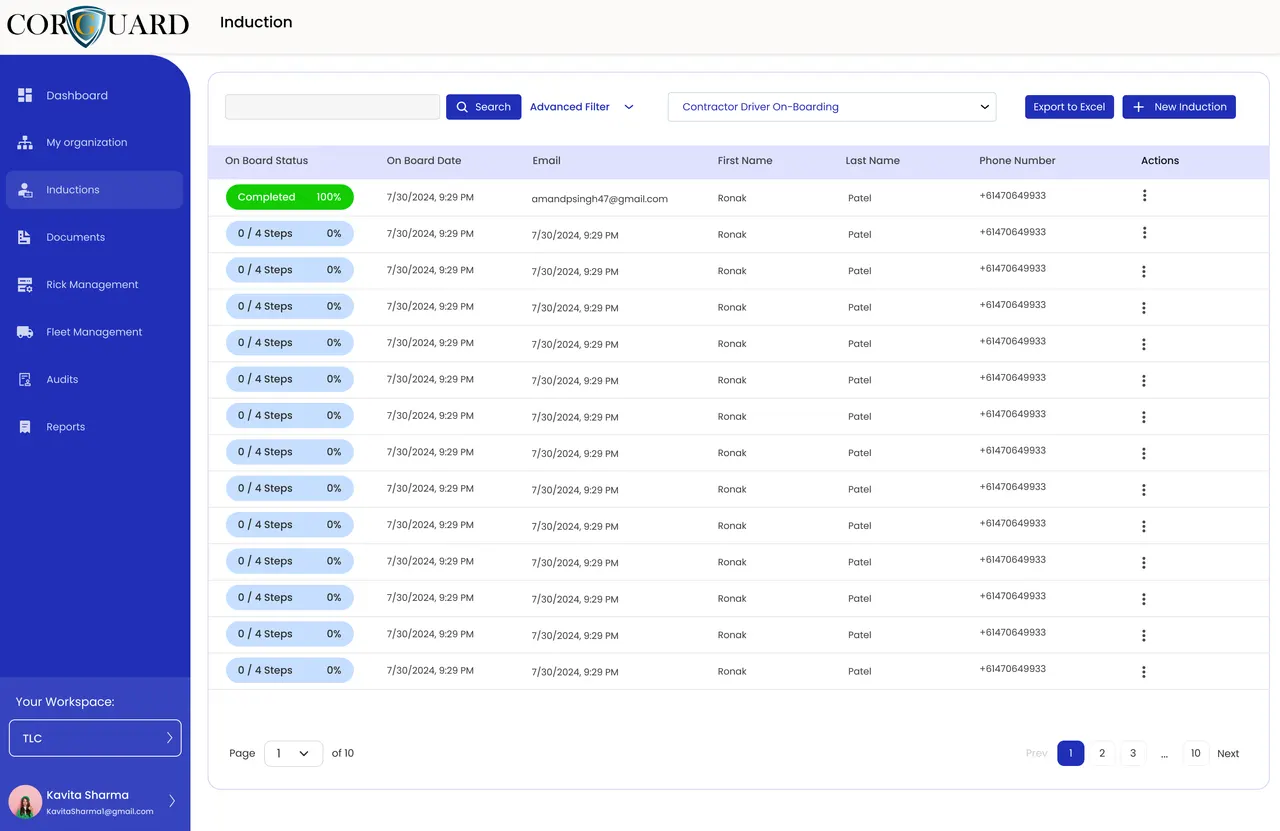
Training records
Connect training completion from cortraining.com.au to evidence and follow-up.
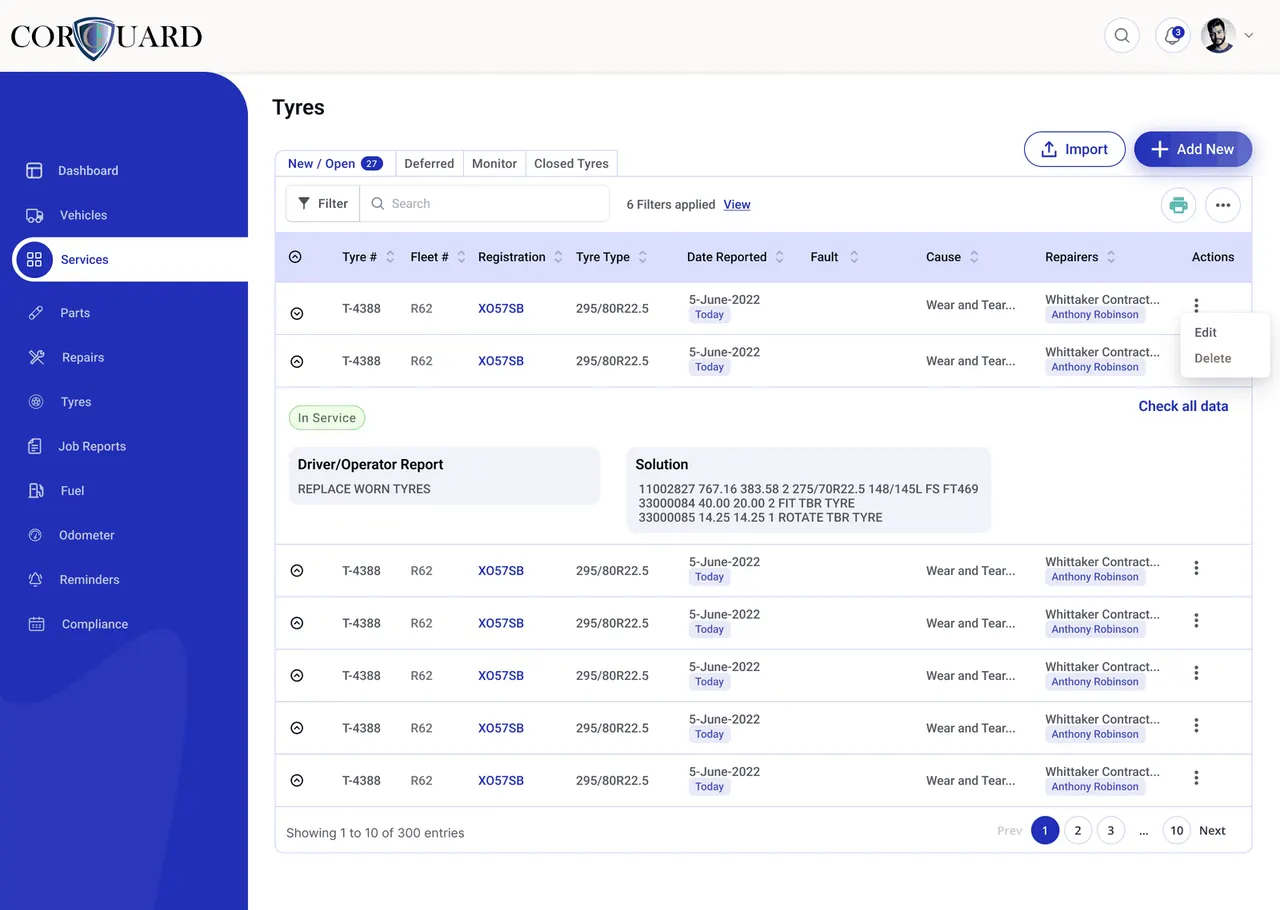
Driver diary checks
Connect fatigue and driver diary review back to manager visibility.
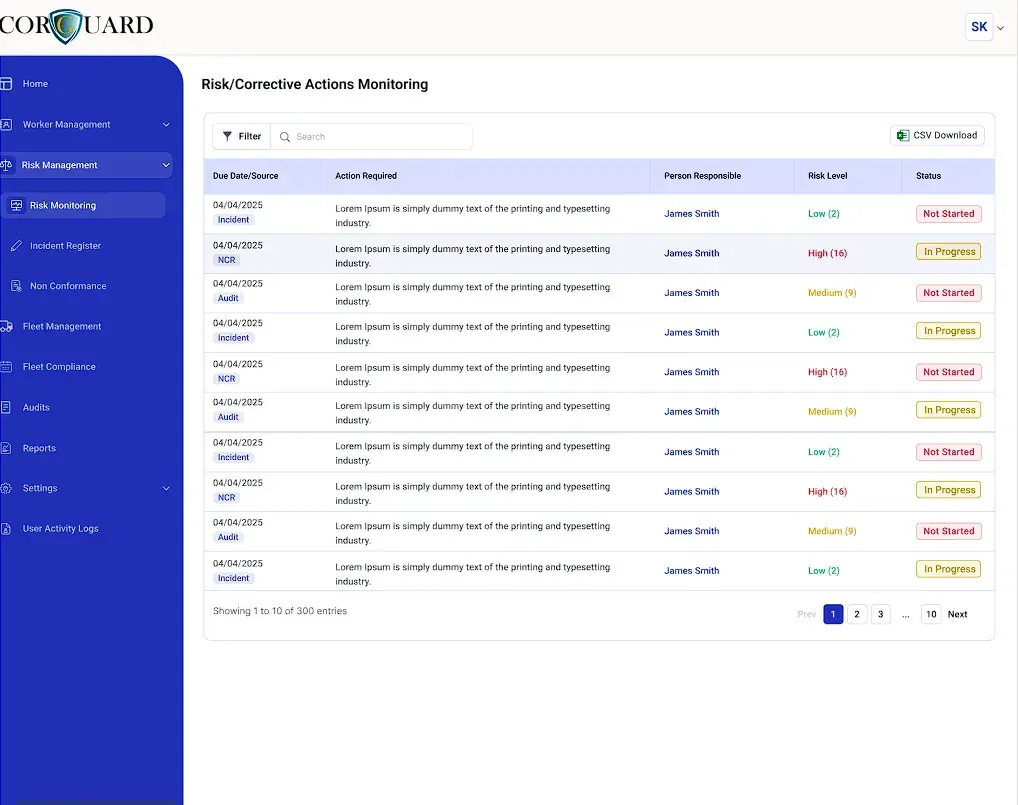
Corrective actions
Turn audit findings, hazards and incidents into tracked actions.
Keep exploring
Related Chain of Responsibility reading
MAEZ insight
Understanding Common Issues in the Chain of Responsibility Pattern
Explore common issues in the Chain of Responsibility pattern and learn how to address them effectively. Understand its pitfalls and strengths.
MAEZ insight
Latest Developments in Transport Safety Management
Stay updated on the latest transport safety management updates impacting commercial carriers and supply chains. Ensure compliance and strengthen safety systems.
MAEZ insight
Understanding Common Transport Safety Issues Explored
Discover the critical common transport safety issues impacting drivers and fleets. Learn about fatigue, distracted driving, and more in this insightful guide.
MAEZ insight
Crafting an Effective Transport Safety Policy: A Guide
Learn how to develop transport safety policy with our comprehensive guide. Balance compliance and reality for a safer transportation framework.
MAEZ insight
Understanding the Heavy Vehicle National Law Explained
Explore the comprehensive heavy vehicle national law overview, unified safety standards, and the NHVR’s role in regulation across Australia.
MAEZ insight
Common Challenges in Safety Management Systems Explored
Explore common safety management system issues, from leadership visibility to data overload, and learn how to avoid these pitfalls for safer workplaces.
Frequently asked questions
Questions people ask about this topic
What is the Chain of Responsibility software design pattern?
The Chain of Responsibility is a behavioural design pattern that passes requests along a chain of handlers, where each handler decides whether to process the request or pass it to the next handler. It decouples the sender from the receiver, transforming rigid conditional logic into flexible, maintainable code.
How does the Chain of Responsibility pattern differ from the Decorator pattern?
Both patterns involve chains of objects, but Decorator adds functionality while maintaining the same interface, whereas Chain of Responsibility routes requests to appropriate handlers. The intent differs fundamentally — Decorator enhances behaviour, while Chain of Responsibility distributes responsibility.
When should you avoid using the Chain of Responsibility pattern?
Avoid it when you know exactly which object should handle each request, when latency is critical and handler overhead accumulates, or when handlers need to coordinate heavily with each other. In those cases, patterns like Mediator or Observer may be more appropriate.
What are the three core components of a Chain of Responsibility implementation?
Every implementation needs a handler interface that declares the processing method, a base handler class that stores the next-handler reference and provides default forwarding behaviour, and concrete handlers that contain the actual business logic and decide whether to process or pass along each request.
How is 'Chain of Responsibility' used differently in Australian transport compliance?
In Australian transport compliance, 'Chain of Responsibility' refers to legal duties under the Heavy Vehicle National Law that make every party in the transport chain accountable for safety, rather than a software design pattern. See MAEZ's About Chain of Responsibility page for that context.