
MAEZ insight
Mastering HVNL Compliance: Best Practices Explained
Practical guide to HVNL compliance best practices for Australian transport operators—fatigue, vehicle standards, mass, speed, loading, and Chain of Responsibility due diligence.
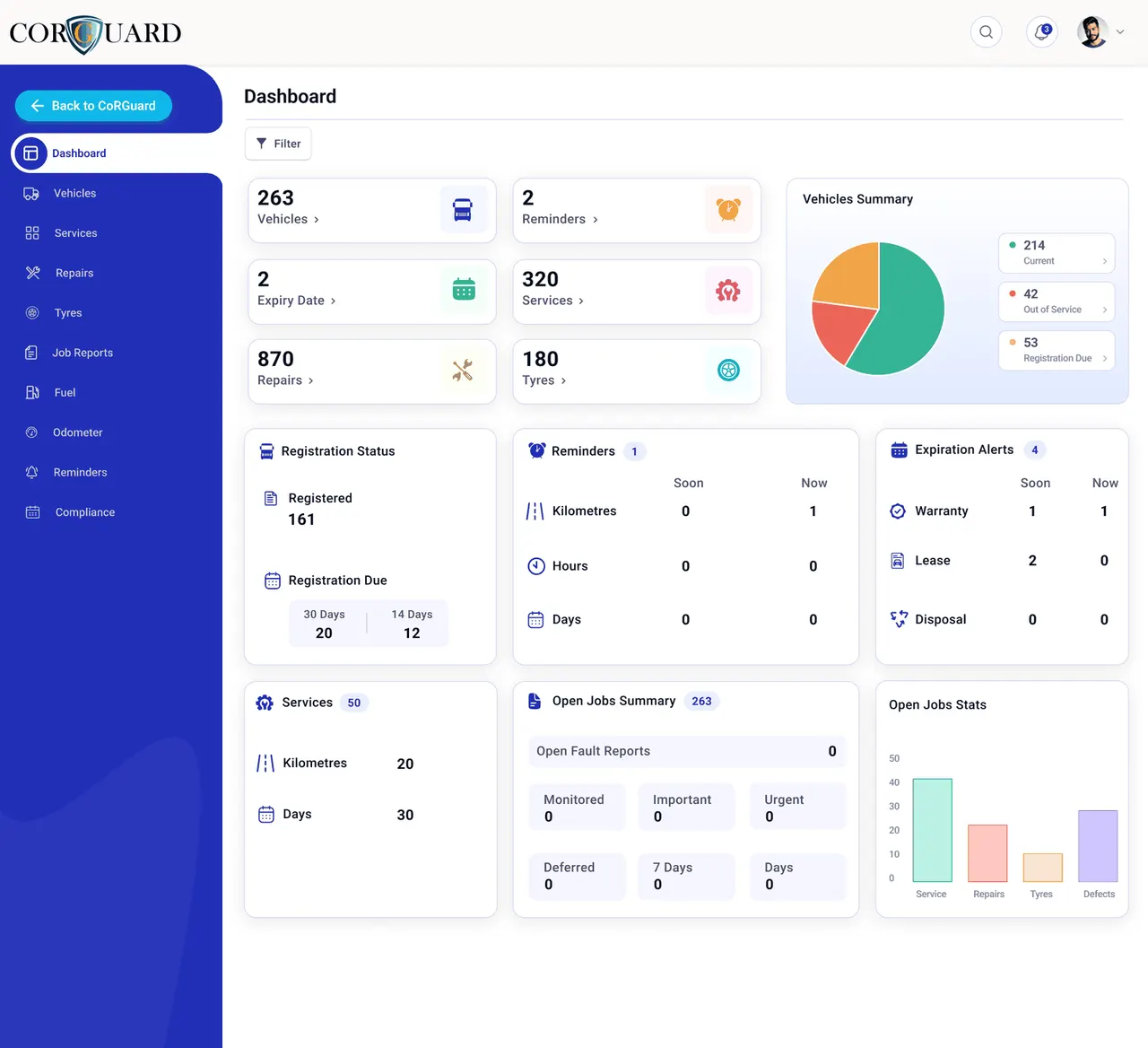
Daily fleet activity has to connect back to duties, controls, and review.

Due diligence means knowing whether the safety system is actually working.

Proof that freight promises do not create unsafe transport pressure.
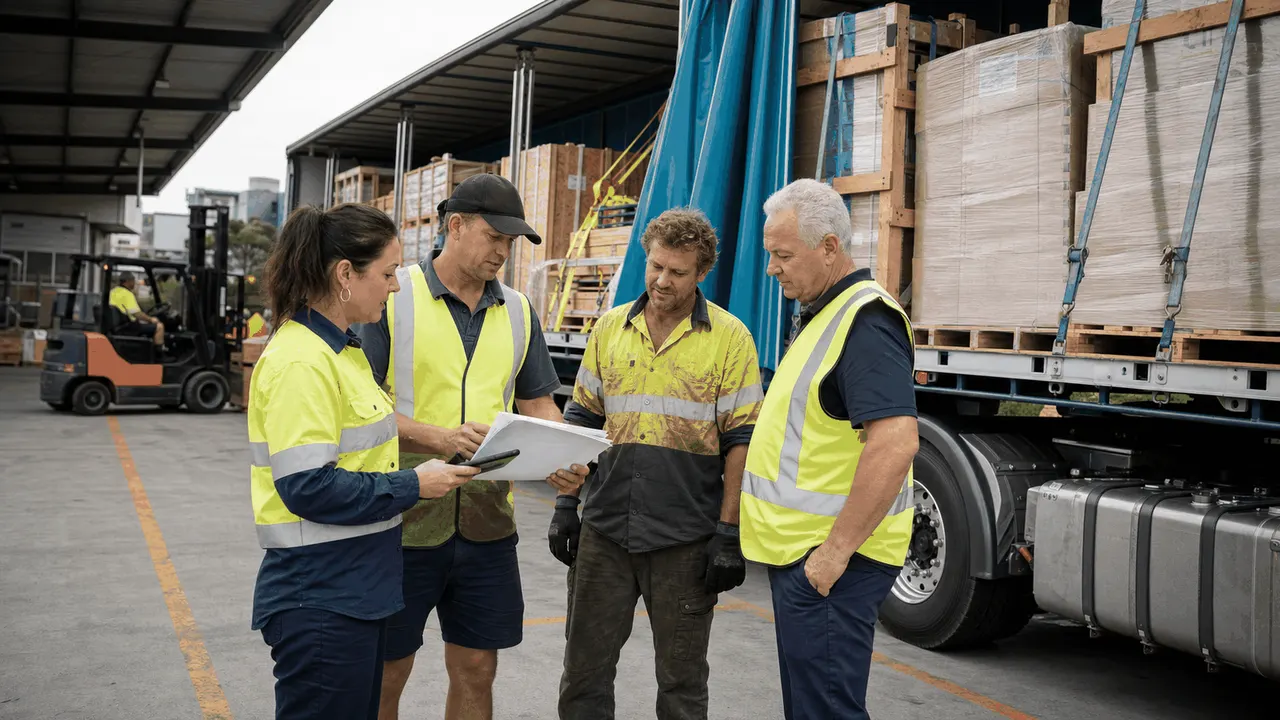
Loading controls need evidence, not assumptions.
Consignors
Freight terms, delivery windows, and KPIs must not push drivers into speed, fatigue, or mass breaches.
Consignees
Receiving rules, site access, and unloading delays are CoR controls that need to be set and evidenced.
Loaders
Mass, dimension, and load restraint decisions need documented checks, not assumptions.
Managers
Executives and managers need due-diligence evidence that the Safety Management System is actually working.
What is HVNL compliance?
Five compliance areas, one shared duty
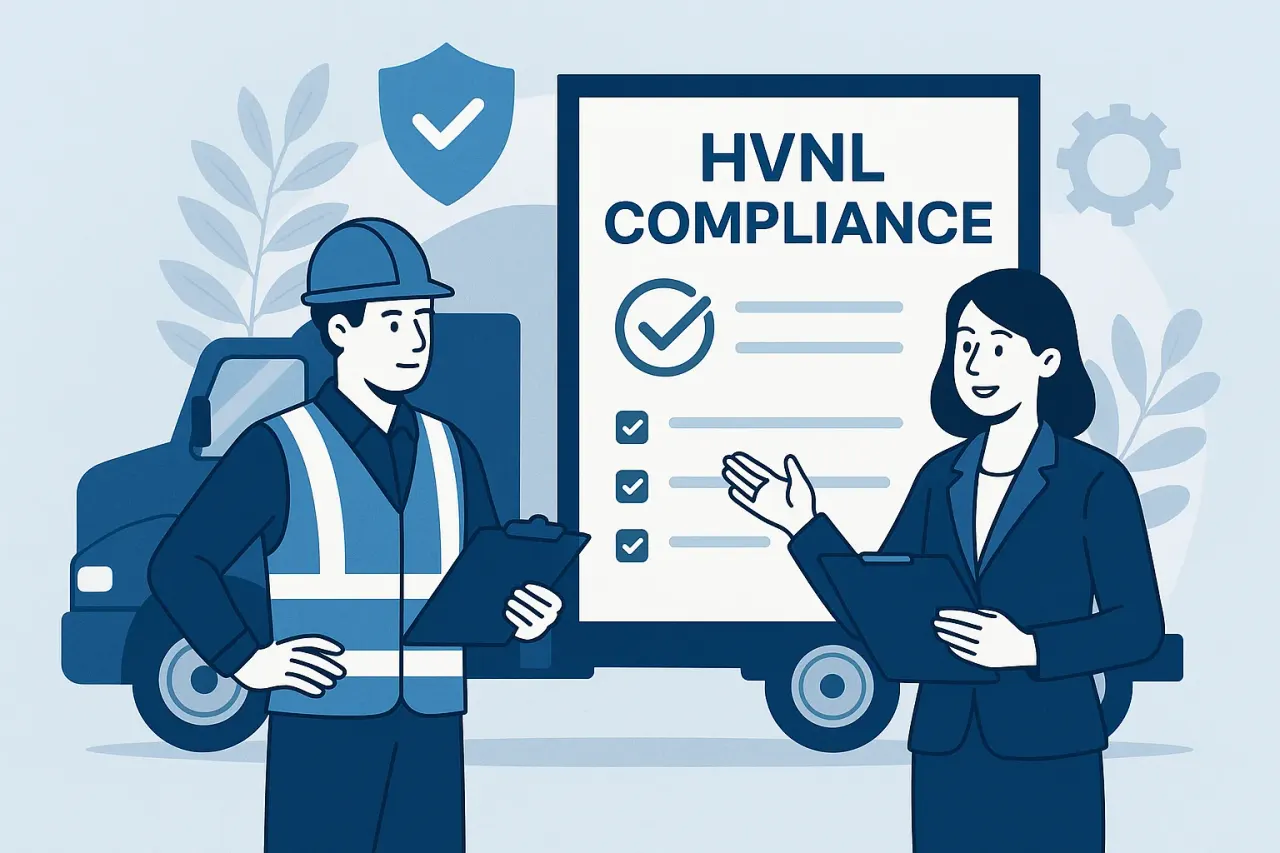
HVNL compliance means meeting your primary duty under the Heavy Vehicle National Law to ensure, so far as is reasonably practicable, the safety of your transport activities. It spans five areas—fatigue management, vehicle standards, mass and dimension, speed, and load restraint—and applies to every party in the Chain of Responsibility, not just drivers.
Building robust HVNL compliance is not about ticking boxes to avoid penalties. It is about creating operational systems that protect people while improving business efficiency. Compliance systems fail when they are built on paper rather than embedded in daily operations.
The businesses that succeed integrate regulatory requirements into their existing workflows rather than treating compliance as a separate administrative burden. Daily fleet activity has to connect back to duties, controls, and review. Executives need due diligence evidence, consignors need proof that freight promises do not create unsafe transport pressure, and loaders need evidence-based loading controls—not assumptions.
The most effective compliance approach combines documented safety management systems, proactive risk assessment, verified control implementation, and continuous monitoring processes that adapt to operational changes.
Understanding the Heavy Vehicle National Law framework
The national law governing heavy vehicle operations
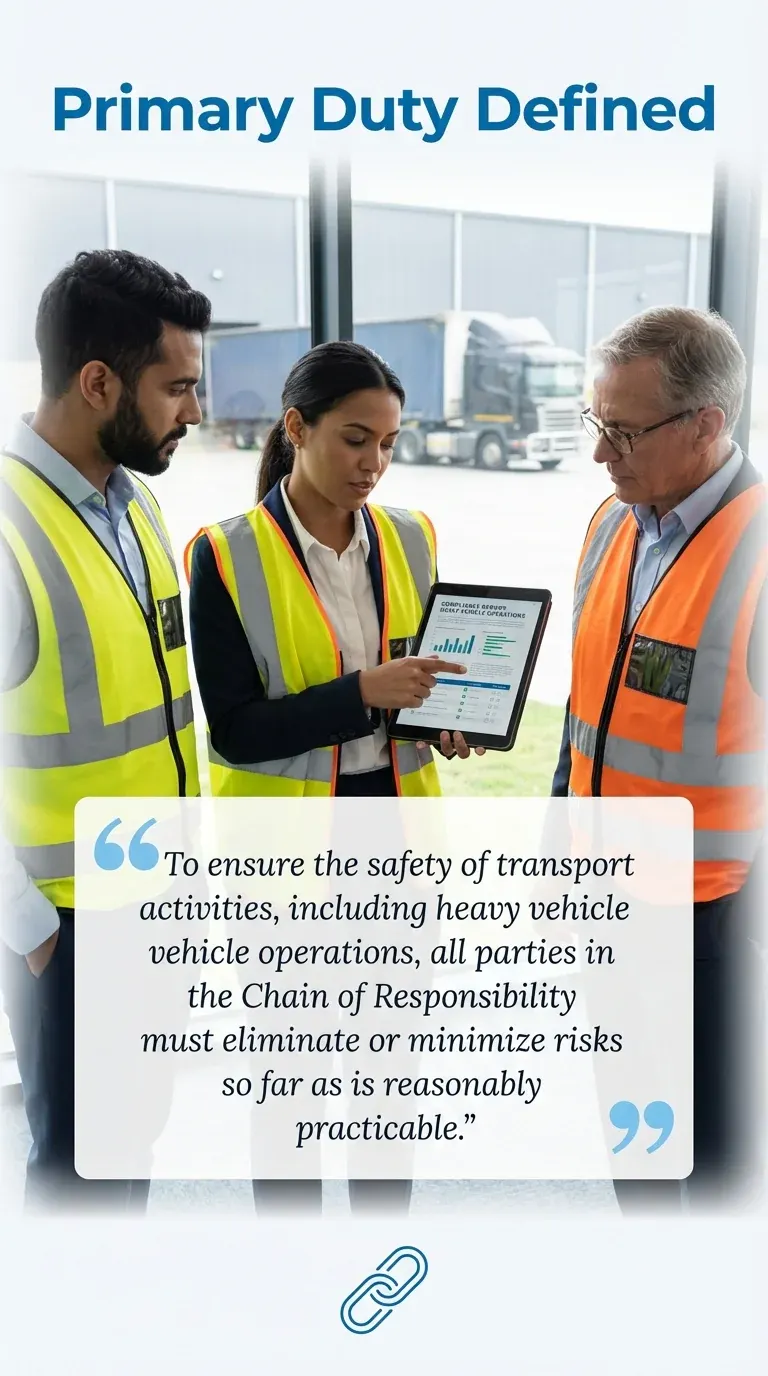
The Heavy Vehicle National Law is the primary legal framework governing the operation of heavy vehicles with a gross vehicle mass of more than 4.5 tonnes in participating Australian states and territories. It replaced previous state-based regulations to create national consistency in heavy vehicle operations.
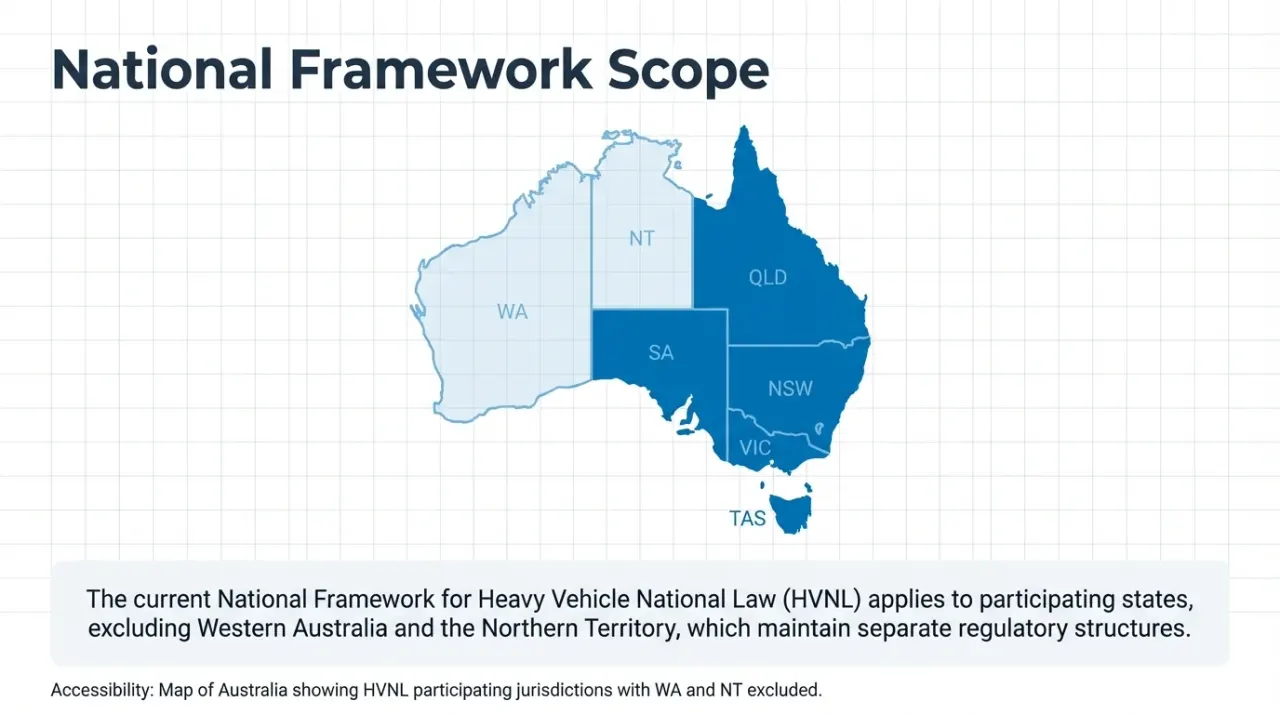
The National Heavy Vehicle Regulator administers the HVNL and its associated regulations. Their role includes issuing permits and notices, conducting compliance activities, and providing guidance to industry participants. The HVNL applies in all jurisdictions except Western Australia and the Northern Territory, where separate heavy vehicle laws continue to operate. Queensland serves as the host jurisdiction, with other states and territories adopting the law through their own legislation.
Recent reform and what it means
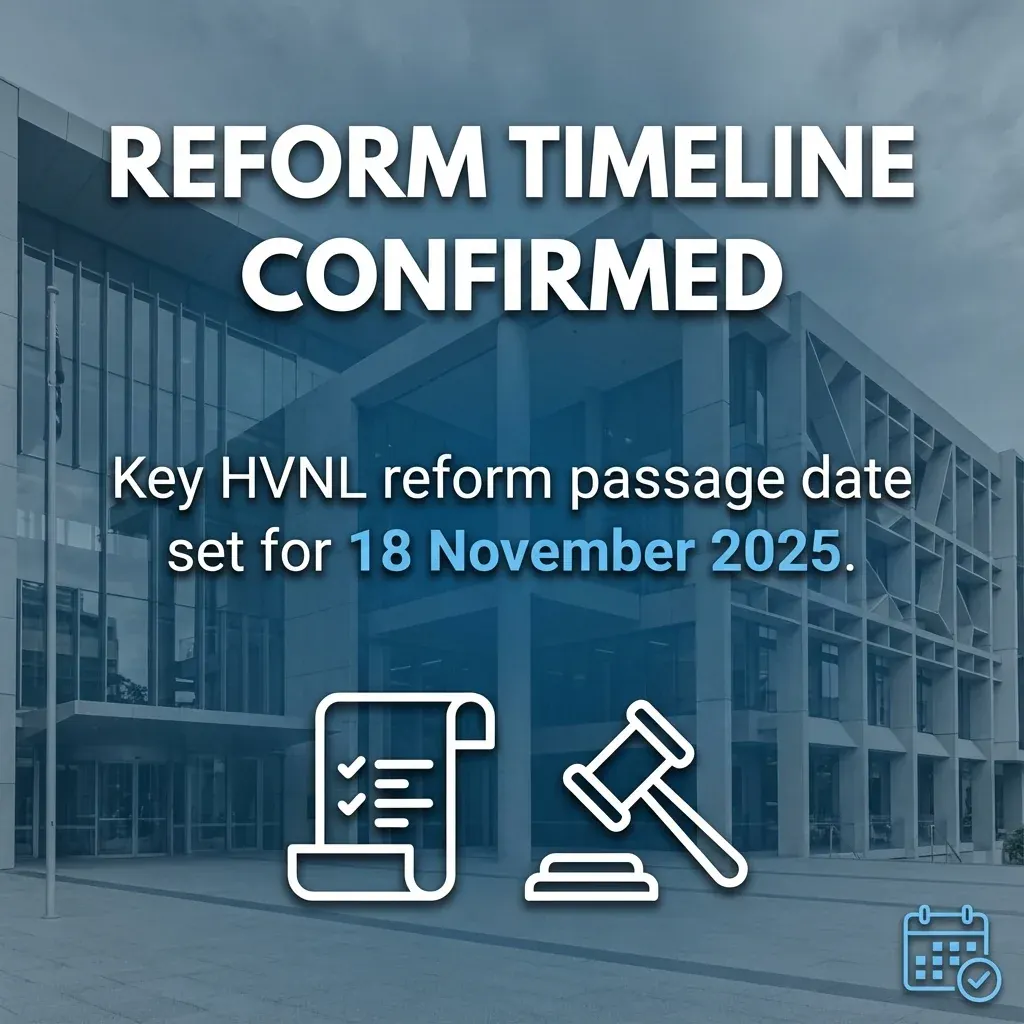
The HVNL underwent significant review starting in 2019 to modernise the regulatory framework. The 2025 Amendment Package was passed without amendment by the Queensland Parliament on 18 November 2025. These reforms aim to improve safety outcomes while reducing regulatory burden through clearer obligations and more flexible compliance pathways. The amended HVNL is expected to commence in mid-2026.
Transport operators should prepare by reviewing their current systems against the new requirements. For a practical readiness guide, see our resource on HVNL 2026 changes and CoR training readiness.
Core regulatory requirements under the HVNL
Five compliance areas every operator must manage
The HVNL establishes requirements across multiple compliance areas. Understanding these categories helps you structure your compliance approach systematically.
- Fatigue management — driver work and rest hours, work diaries, scheduling, and monitoring
- Vehicle standards — roadworthiness and maintenance, inspections, defect management, and records
- Mass and dimension — weight and size limits, load calculations, permits, and restraint
- Speed compliance — speed limit adherence, speed limiters, monitoring, and scheduling
- Load restraint — securing cargo safely, restraint methods, load stability, and verification
Unless otherwise exempted by a notice or permit, operators must ensure their vehicles comply with the Australian Design Rules, the HVNL, the Heavy Vehicle (Mass, Dimension and Loading) National Regulation, and the Heavy Vehicle (Vehicle Standards) National Regulation. This creates multiple layers of compliance that require coordinated management.
The HVNL defines categories of breaches for mass and loading requirements—minor risk, substantial risk, and severe risk—reflecting the escalating seriousness of non-compliance. Each category carries different consequences, making it essential to understand where your operations sit on that spectrum.
Chain of Responsibility: shared accountability explained
Liability extends well beyond the driver
Chain of Responsibility represents a fundamental shift from driver-only liability to shared accountability across everyone who influences transport operations. This approach recognises that many factors contributing to heavy vehicle incidents originate outside the vehicle cabin.
CoR parties include drivers, operators, schedulers, consignors, consignees, loading managers, and anyone else who exercises control or influence over transport activities. Each party holds responsibility for the elements they control. The HVNL's principle of shared responsibility (section 26A) underpins this framework.
The primary duty and the reasonably practicable standard
The primary duty (section 26C) requires each CoR party to ensure, so far as is reasonably practicable, the safety of their transport activities. This positive obligation extends beyond simply avoiding breaches to actively implementing safety measures.
"Reasonably practicable" considers what you knew or should have known about hazards, available control measures, and whether the cost of controls is proportionate to the risk. This standard means you cannot ignore known risks simply because controls require investment.
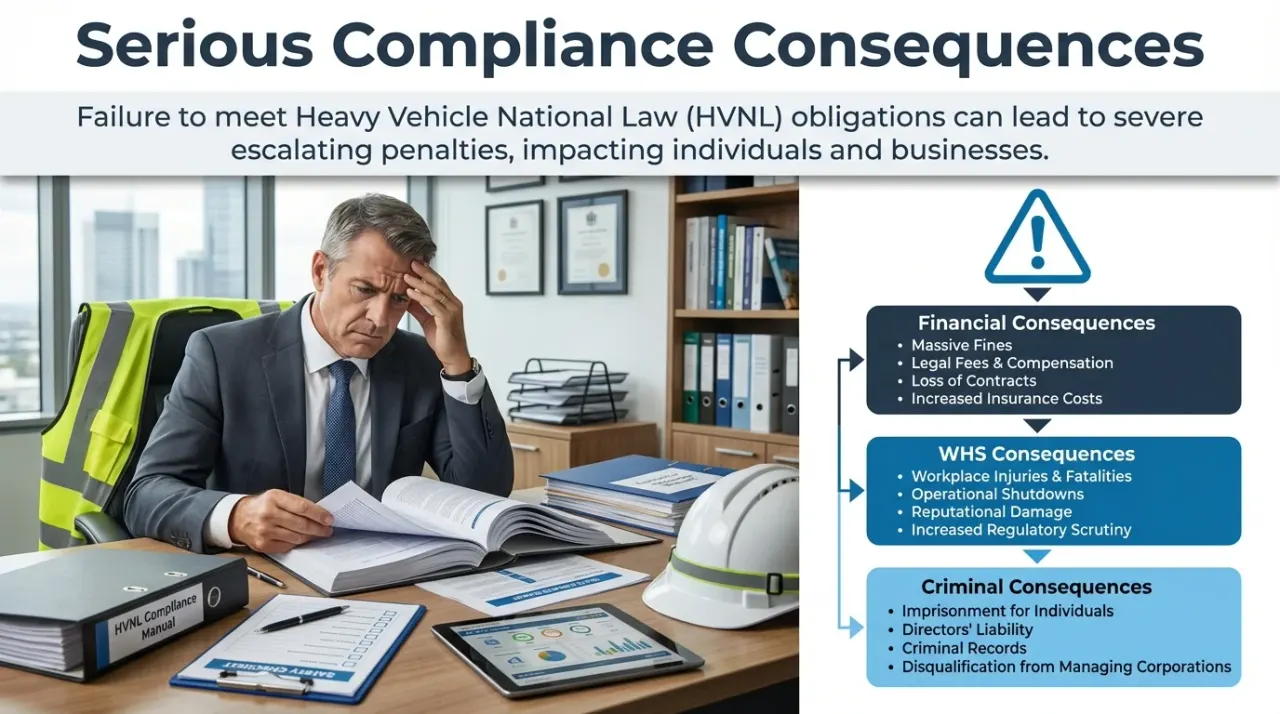
Non-compliance can lead to severe financial penalties, and breaches which contribute to serious safety incidents may also expose businesses and officers to work health and safety and criminal consequences. The stakes extend beyond administrative fines to potential personal liability for executive officers. Learn more in our About Chain of Responsibility guide.
How CoR obligations flow through business relationships
Consider a typical supply chain involving a manufacturer, freight forwarder, transport operator, and retailer. Each party's actions influence whether the driver can comply with HVNL requirements:
- The manufacturer controls loading practices and departure times
- The freight forwarder sets delivery schedules and selects carriers
- The transport operator maintains vehicles and manages driver rosters
- The retailer specifies delivery windows and unloading procedures
- The driver executes the transport task within these constraints
CoR obligations extend to speed compliance, where parties who set schedules or payment structures that can only be met by speeding may be liable for associated breaches even if they never drive a vehicle themselves. This principle applies across all HVNL compliance areas.
Identifying your Chain of Responsibility obligations
Map your real-world influence, not job titles
Start by mapping your actual influence over transport activities. Do not rely on contractual titles or job descriptions. Focus on what you actually control or direct.
Ask specific questions about your involvement:
- Do you specify delivery timeframes?
- Do you determine loading methods?
- Do you select or approve transport providers?
- Do you set freight rates that influence safety decisions?
Document your findings in a CoR responsibility matrix. List each transport activity in your supply chain, identify who influences it, and specify the nature of their control. This becomes your foundation for assigning compliance responsibilities.
For operators who want a structured external review, CoR consulting can help surface gaps your internal team may not see. For a deeper understanding of what duty holders need to know, see our resource on Chain of Responsibilities for Australian HVNL duty holders.
Implementing effective due diligence processes
Documented, verifiable action—not just good intentions

Due diligence under HVNL means taking reasonable steps to ensure your organisation and its officers meet their primary duty. This goes beyond good intentions to documented, verifiable actions.
Executive officers face specific due diligence obligations. They must acquire and maintain knowledge of HVNL requirements, understand the nature of operations, ensure appropriate resources and processes exist, verify information about compliance, and ensure the organisation has and uses systems to manage HVNL risks.
Building your due diligence evidence base
Create documented evidence that demonstrates your proactive approach to compliance. This protects your organisation and its officers while improving actual safety outcomes. Your evidence should show you have identified obligations, assessed risks, implemented controls, monitored effectiveness, and responded to issues.
- Knowledge acquisition — training records, competency assessments, industry participation (annual minimum)
- Risk understanding — risk assessments, incident analysis, operational reviews (ongoing and annual)
- Resource allocation — budget approvals, system implementation, staffing decisions (annual and as needed)
- Compliance verification — audit reports, monitoring data, breach investigations (monthly to quarterly)
- System effectiveness — performance metrics, corrective actions, continuous improvement (quarterly minimum)
Conducting regular compliance reviews
Schedule quarterly reviews of your HVNL compliance status. Examine recent incidents, audit findings, monitoring results, and changes to operations or regulations. Involve your executive team in these reviews—their direct participation demonstrates due diligence and ensures compliance issues receive appropriate attention and resources.
Document review outcomes, decisions made, and actions assigned. This record proves your systematic approach to maintaining compliance over time. For structured support, explore our Chain of Responsibility training options designed for executives and managers, or our resource on CoR training for executives and managers.
Essential HVNL compliance checklist for transport operations
A framework for verifying requirements before and during every journey
A structured compliance checklist helps verify that all HVNL requirements receive attention across your operations. Tailor this checklist to your specific role in the Chain of Responsibility—not every element applies to every party, but you must address the areas you influence or control.
Pre-trip verification requirements
Before any journey begins, verify that fundamental compliance requirements are met:
- Confirm the driver holds appropriate licensing for the vehicle class
- Verify the driver has adequate rest and has not exceeded work hour limits
- Check the vehicle's registration and any required permits are current
- Ensure the vehicle passed its pre-start inspection with no critical defects
- Confirm the load does not exceed mass limits and is properly restrained
- Verify the journey can be completed within work hour limits
- Check speed limiter settings match regulatory requirements
Operational monitoring points
During operations, maintain visibility of compliance status. Do not wait for audits or incidents to identify problems. Regular monitoring of driver hours, vehicle condition, and load status helps you catch issues early and demonstrates active compliance management.
For further reading on practical compliance approaches, browse our MAEZ Insights or contact us for a transport compliance advisory consultation.
How MAEZ works
Find the gaps. Fix the system. Prove the controls.
MAEZ helps transport operators deal with the compliance risk they already know is there. We help get the Safety Management System in order, protect NHVAS accreditation, reduce fine exposure, and connect training, evidence, and CoRGuard workflows where software is needed.
Find
Identify what is exposed before an auditor or regulator does.
Fix
Build the SMS controls around how the transport business actually runs.
Prove
Use CoRGuard where records, reminders, diaries, audits, and evidence need structure.
From advice to evidence
From MAEZ advice to a working Safety Management System
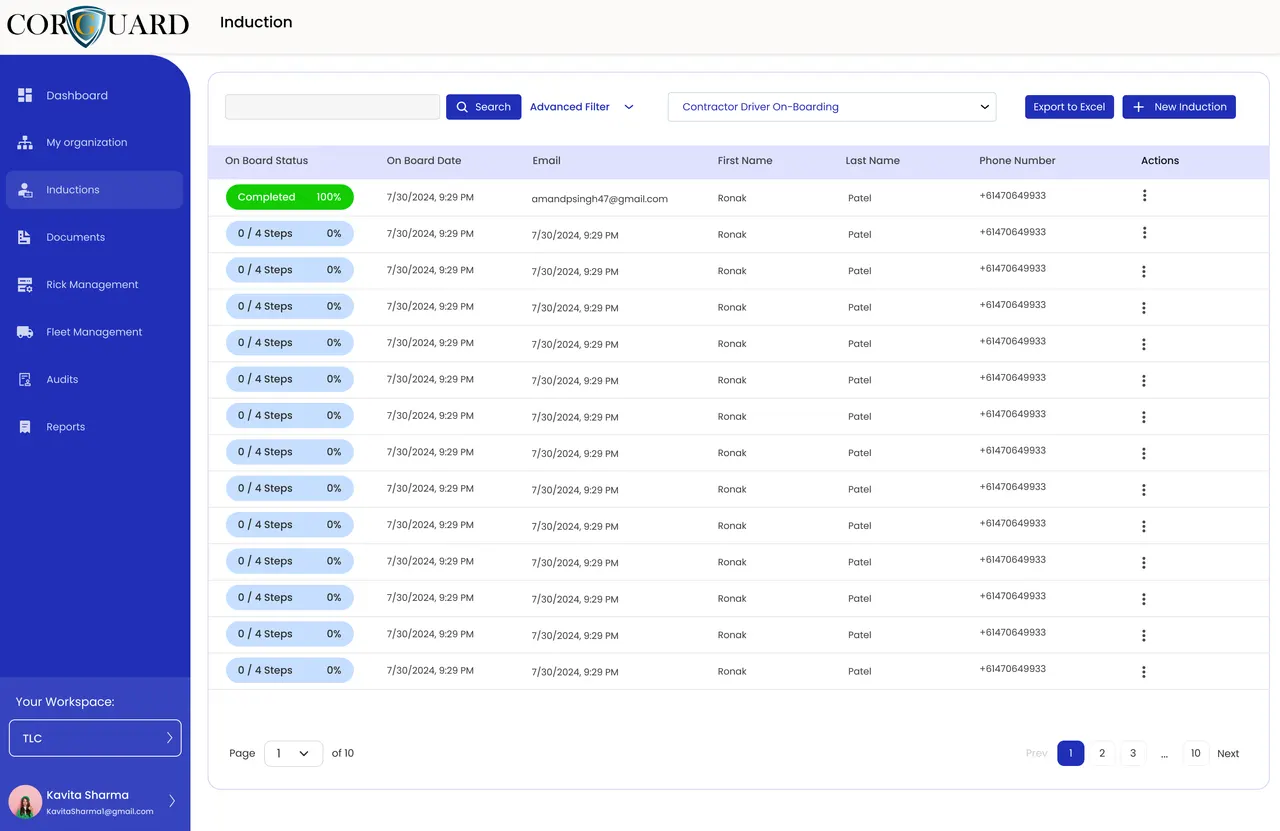
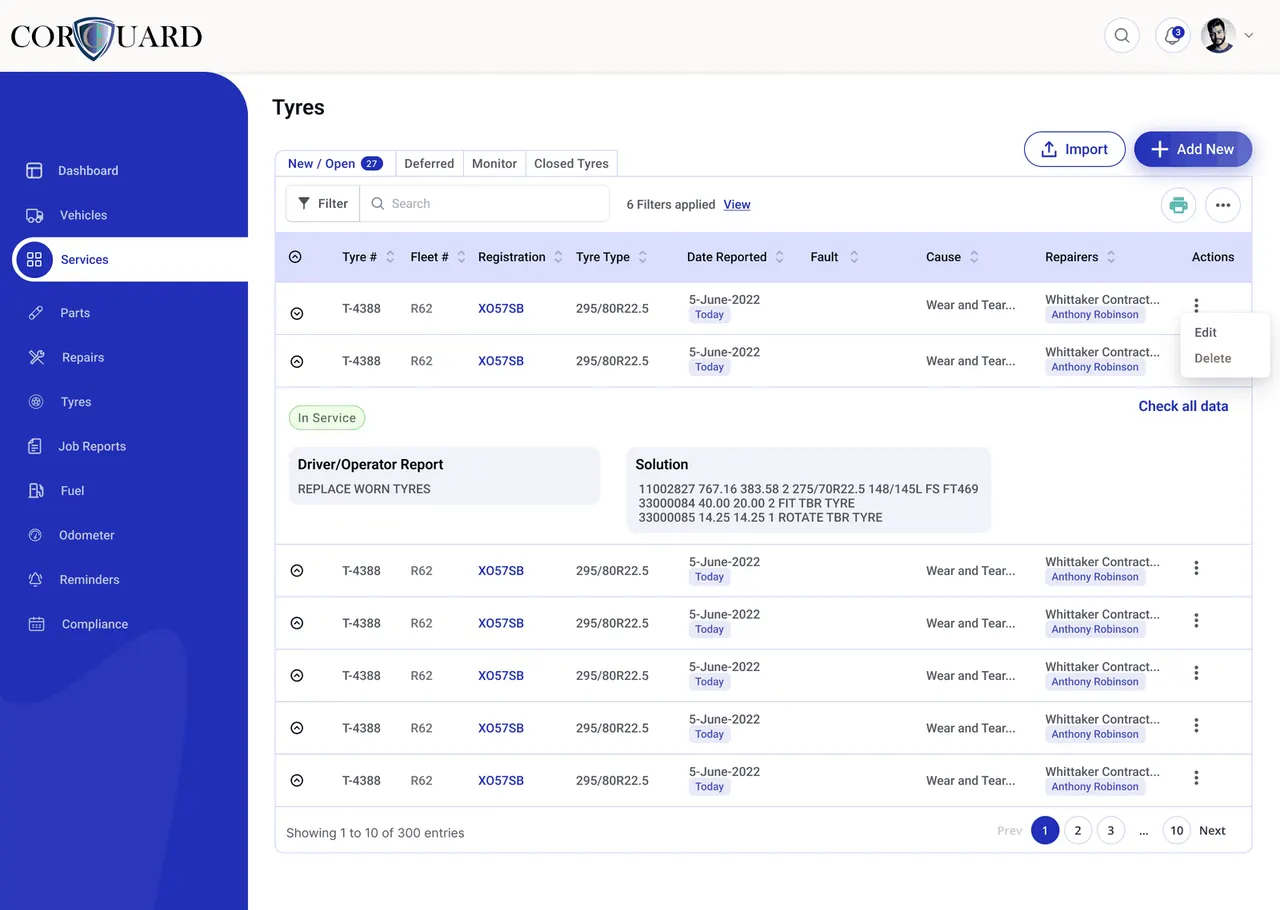
Advisory work should leave a practical implementation trail. These examples show how CoRGuard supports records, fatigue and driver diary checks, maintenance, audits, document control, inductions, corrective actions, and evidence review after MAEZ identifies the gaps.
Training records
Connect training completion from cortraining.com.au to evidence and follow-up.
Driver diary checks
Connect fatigue and driver diary review back to manager visibility.
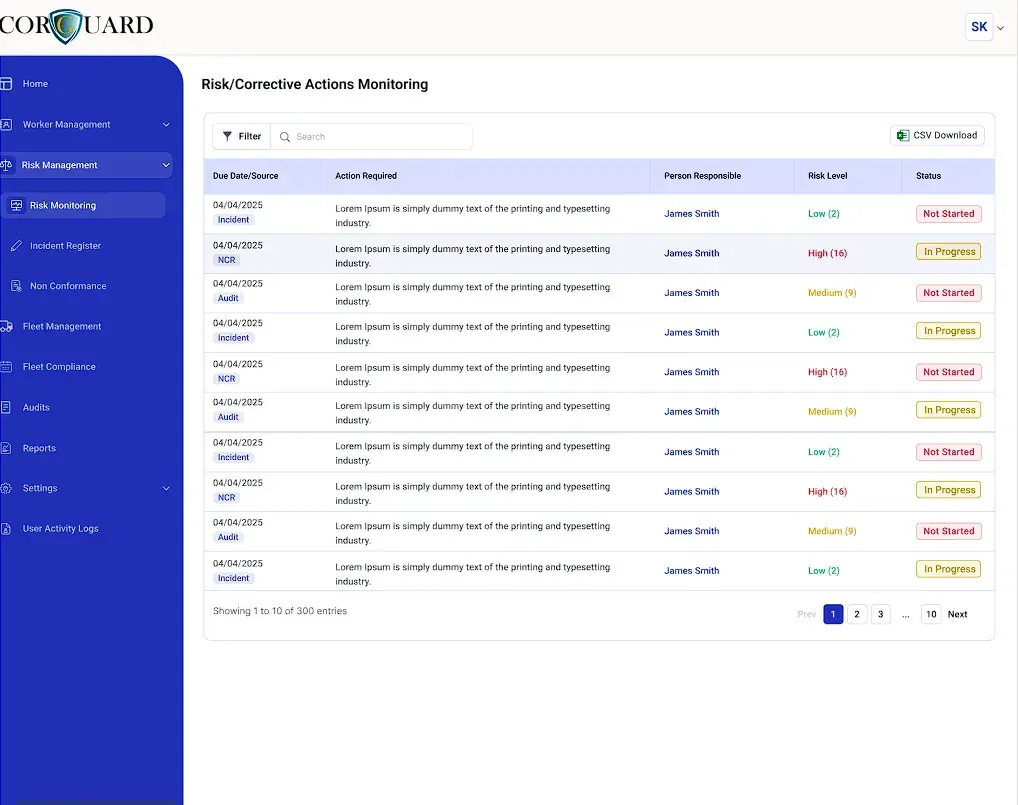
Corrective actions
Turn audit findings, hazards and incidents into tracked actions.
Keep exploring
Related Chain of Responsibility reading
MAEZ insight
Understanding Supply Chain Risk Management Software
Explore how Supply Chain Risk Management software transforms data into actionable insights, helping you mitigate risks and enhance supply network efficiency.
MAEZ insight
Understanding Common Issues in Chain of Responsibility
Discover common issues in the Chain of Responsibility pattern and learn how to avoid them. Perfect for developers seeking practical solutions.
MAEZ insight
Enhancing Transport Safety: Effective Strategies and Tips
Discover how to improve transport safety with effective strategies. Learn to integrate safety culture and technology for better performance.
MAEZ insight
Understanding Common Transport Safety Issues: A Guide
Explore common transport safety issues affecting global operations. Learn preventive measures to protect lives and improve safety standards.
MAEZ insight
Effective Strategies for Managing Global Supply Chain Risks
Discover effective global supply chain risk management strategies to mitigate operational challenges and enhance supply chain resilience.
MAEZ insight
Essential Chain of Responsibility Compliance Tips Explained
Discover essential chain of responsibility compliance tips to ensure safety and meet HVNL obligations. Stay informed and compliant with our expert advice.
Frequently asked questions
Questions people ask about this topic
What are the five core HVNL compliance areas every operator must manage?
The HVNL requires operators to manage fatigue (driver work and rest hours), vehicle standards (roadworthiness and maintenance), mass and dimension (weight and size limits), speed compliance (speed limiters and scheduling), and load restraint (securing cargo safely). Each area requires coordinated, documented controls across the supply chain.
Who holds Chain of Responsibility obligations under the HVNL?
Chain of Responsibility obligations extend to every party who influences transport activities—drivers, operators, schedulers, consignors, consignees, loading managers, and anyone else exercising control over a heavy vehicle operation. Each party is responsible for the elements they control, based on their actual influence rather than job title.
What does "reasonably practicable" mean under the HVNL primary duty?
"Reasonably practicable" considers what a party knew or should have known about hazards, what control measures were available, and whether the cost of those controls was proportionate to the risk. It means you cannot ignore known risks simply because implementing controls requires investment.
What due diligence evidence should executive officers maintain for HVNL compliance?
Executive officers should maintain documented evidence of knowledge acquisition (training records), risk understanding (risk assessments and incident analysis), resource allocation (budget approvals), compliance verification (audit reports and monitoring data), and system effectiveness (performance metrics and corrective actions), reviewed at least quarterly.
When do the HVNL 2025 amendments take effect?
The 2025 Amendment Package was passed by the Queensland Parliament on 18 November 2025, and the amended HVNL is expected to commence in mid-2026. Transport operators should review their current systems against the new requirements and prepare for updated obligations and compliance pathways.