
MAEZ insight
Understanding Supply Chain Risk Management Software
How supply chain risk management software works, what features matter, and how it helps Australian transport operators manage compliance and operational risks across complex supply networks.

Contractor controls should be verified before the work starts.

Receiving windows, site rules, and unloading delays can all shape the transport task.
Unloading decisions can affect safety, scheduling, and responsibility.

Managers need a clear view of gaps before audit or enforcement pressure arrives.
Consignors
Freight terms, delivery windows, and KPIs must not push drivers into speed, fatigue, or mass breaches.
Consignees
Receiving rules, site access, and unloading delays are CoR controls that need to be set and evidenced.
Loaders
Mass, dimension, and load restraint decisions need documented checks, not assumptions.
Managers
Executives and managers need due-diligence evidence that the Safety Management System is actually working.
What is supply chain risk management software?
From fragmented vendor data to proactive risk intelligence
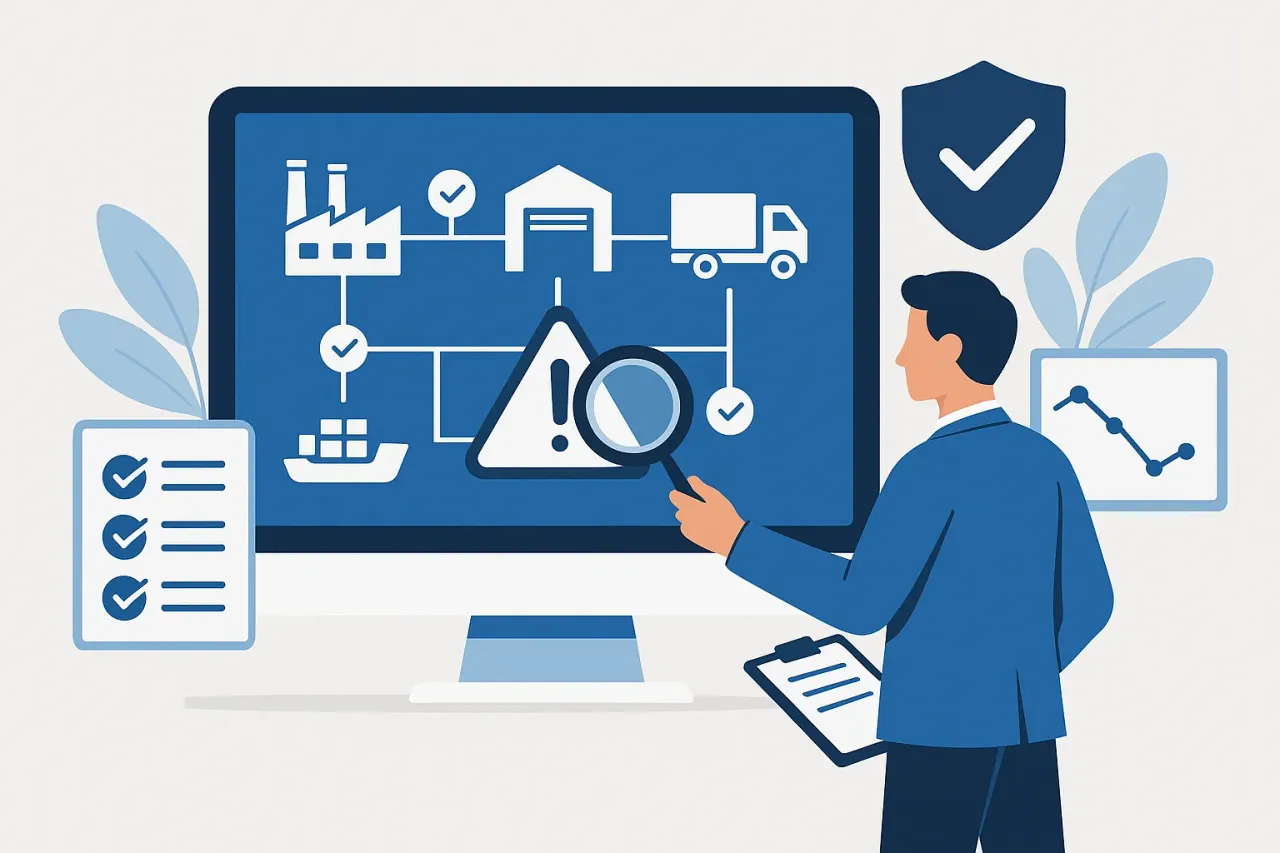
Supply chain risk management (SCRM) software gives organisations digital tools to identify, assess, monitor, and mitigate risks across their entire supply network. These platforms track supplier performance, map multi-tier relationships, flag compliance gaps, and alert teams to potential disruptions before they impact operations.
At their core, modern SCRM solutions transform fragmented supplier data into actionable intelligence. They help procurement and logistics professionals move from reactive problem-solving to proactive risk prevention across complex supply networks.
Over 25 years working in supply chain environments across Australia and the UK, I've watched supply networks evolve from relatively straightforward regional relationships to intricate global webs involving hundreds of suppliers, sub-suppliers, and third-party providers. Managing risks in these networks manually became impossible years ago. What changed everything was the shift from spreadsheets to purpose-built risk management platforms.
These systems don't just store vendor information — they actively monitor your entire supply ecosystem, identifying vulnerabilities you didn't know existed. This guide examines how SCRM software actually works, what distinguishes effective solutions from basic vendor databases, and how organisations can select and implement tools that genuinely protect their operations.
What does the 2025 supply chain risk landscape look like?
Concurrent threats across cyber, geopolitical, environmental, and regulatory domains
Supply chains face more concurrent threats today than at any point in recent history. Cyber attacks target supplier networks, geopolitical tensions disrupt logistics corridors, environmental events close manufacturing facilities, and regulatory requirements multiply across jurisdictions.
These risks don't exist in isolation. A single supplier failure can cascade through multiple tiers, affecting dozens of end products. A compliance breach at a sub-supplier you've never directly contracted with can still land your organisation in regulatory trouble.
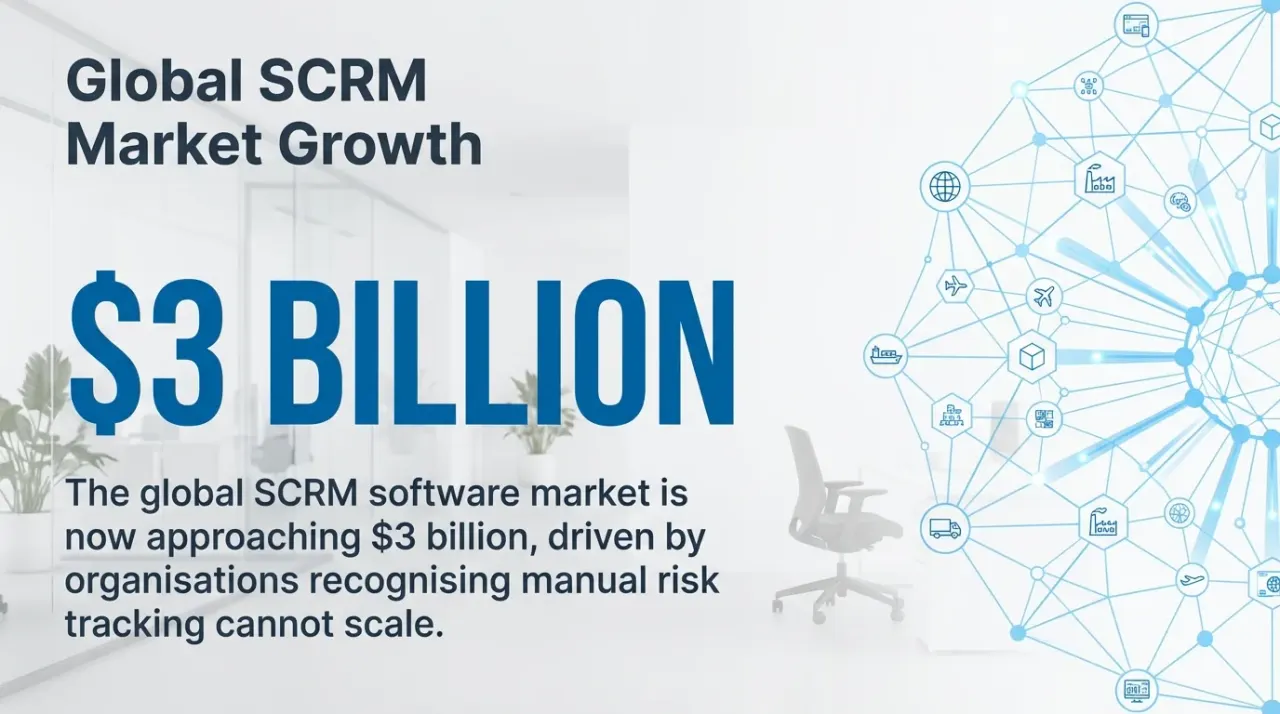
McKinsey's 2025 survey finds that tariffs are a top-of-mind issue for global supply chain leaders, reflecting how quickly new risk categories can emerge and dominate strategic planning. The global SCRM software market is now approaching $3 billion, driven by organisations recognising that manual risk tracking simply cannot scale to meet modern supply network complexity.
This growth signals a broader shift: businesses are investing in structured, technology-enabled risk management rather than relying on ad-hoc processes.
Why do traditional risk management methods fall short?
Spreadsheets and email chains can't keep pace with global networks
Spreadsheets and email chains cannot keep pace with supply networks that span continents and involve thousands of entities. By the time you manually gather information about a supplier issue, the problem has often already impacted production.
Traditional approaches also struggle with visibility beyond first-tier suppliers. You might know your direct vendors well, but what about the sub-contractors they rely on? What about the raw material suppliers three or four tiers removed from your purchase orders?
When I managed procurement budgets exceeding $20 million, the challenge wasn't just knowing who we contracted with directly. It was understanding the entire dependency chain and where single points of failure existed in networks we didn't fully control.
The core problem is latency. Manual methods detect issues after they've already caused disruption. Automated monitoring, by contrast, surfaces vulnerabilities early enough to act on them.
How does modern SCRM software address supply chain complexity?
Aggregated data, analytics, and AI-driven early warning
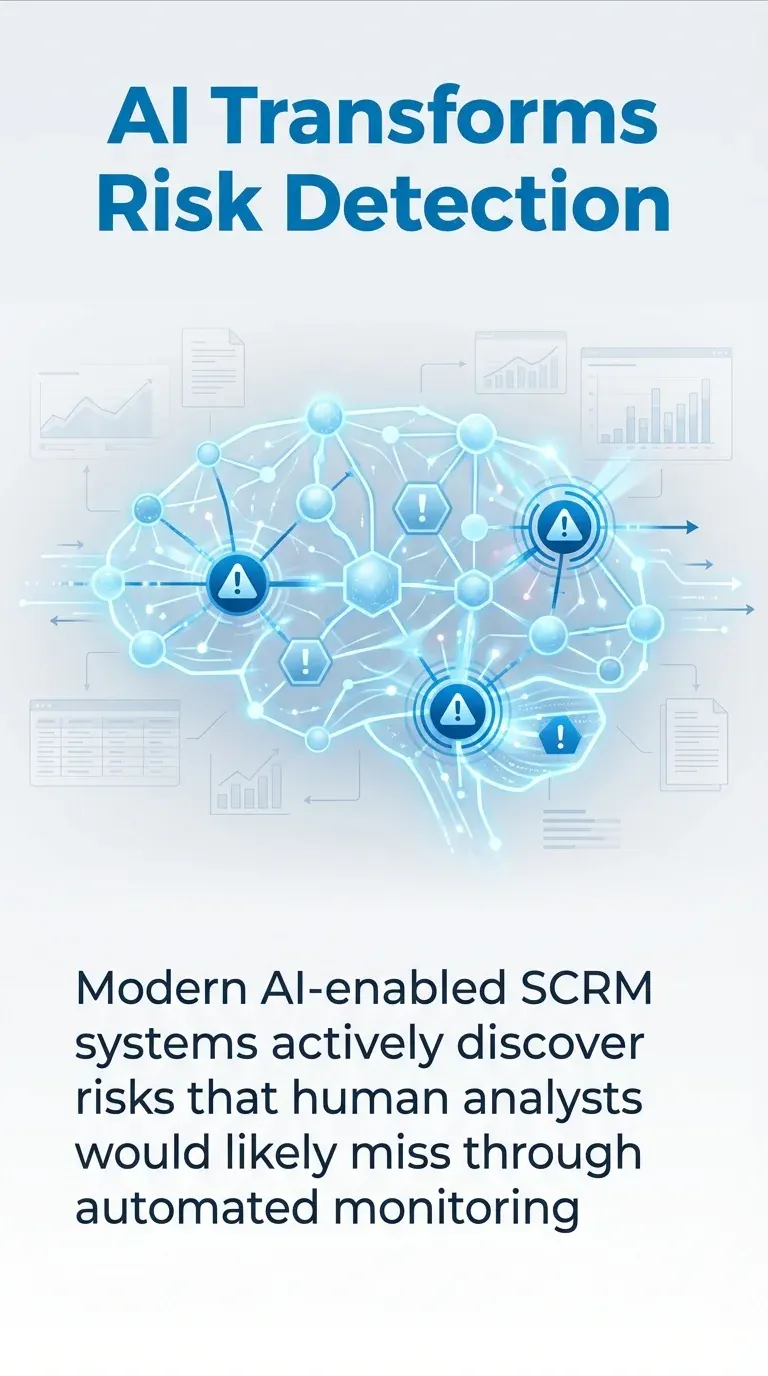
Modern SCRM software emerged specifically to address visibility and monitoring gaps. These platforms aggregate data from multiple sources, apply analytics to identify patterns and anomalies, and provide centralised dashboards that show risk exposure across your entire supply network.
The most capable systems now incorporate artificial intelligence to scan news sources, financial reports, weather data, and regulatory databases — automatically flagging potential threats before they materialise into actual disruptions.
This shift from manual tracking to automated monitoring represents a fundamental change in how organisations approach supply chain risk. Instead of reacting to problems, procurement and logistics teams can now anticipate issues and activate contingency plans proactively.
For Australian transport operators, this principle maps directly to Chain of Responsibility obligations, where duty holders must proactively identify and manage risks rather than waiting for incidents to occur. Practical CoR consulting helps operators translate these proactive obligations into documented, auditable systems.
What are the core categories of supply chain risk?
Each category requires different monitoring approaches and mitigation strategies
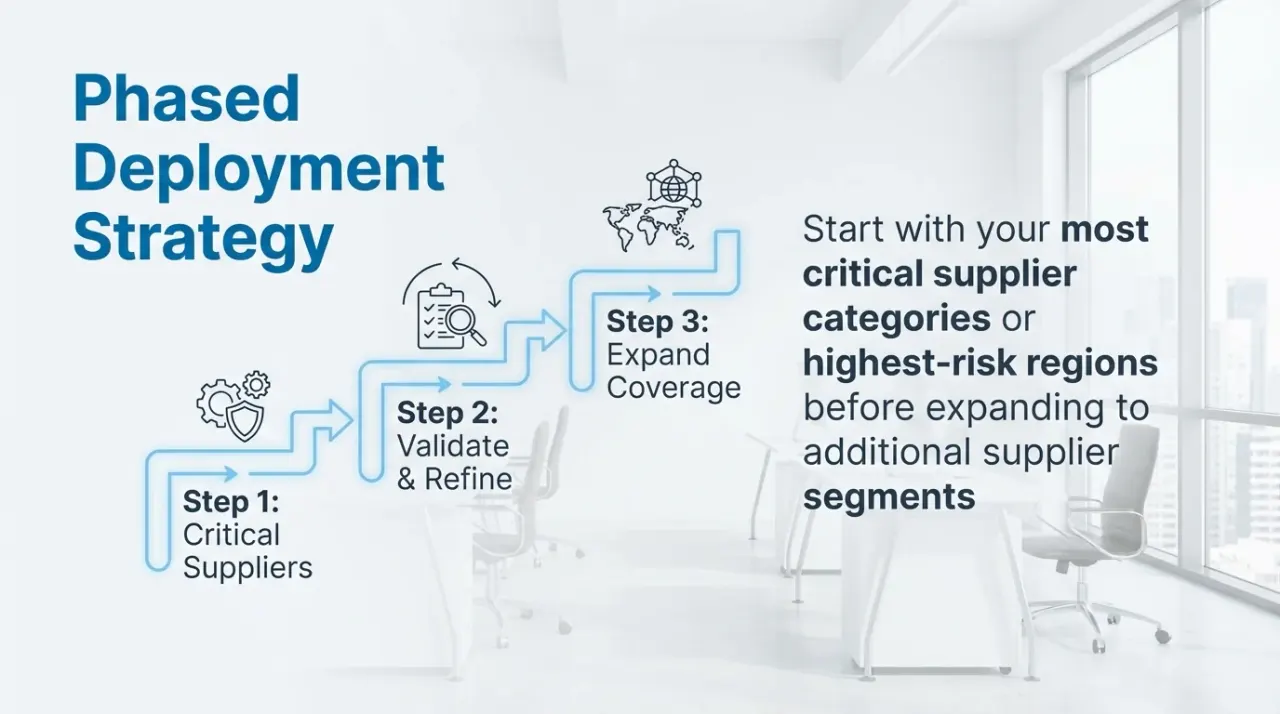
Understanding what you're managing is the first step to selecting appropriate software tools. Supply chain risks generally fall into several distinct but interconnected categories.
Operational and supplier performance risks
These risks relate directly to supplier capability and reliability. Can your vendors consistently deliver quality products on schedule? Do they have adequate capacity to meet demand fluctuations? Delivery delays, quality issues, and communication breakdowns typically precede more serious problems like financial instability or operational shutdowns. Effective SCRM software tracks these performance indicators automatically.
Cybersecurity and data risks
Your supply chain is only as secure as its weakest link. When suppliers access your systems, handle your data, or integrate with your IT infrastructure, their cybersecurity practices directly affect your risk exposure. A supplier's compromised systems can provide attackers with pathways into your network.
Financial and credit risks
Supplier financial instability can appear suddenly, especially during economic downturns. When a critical supplier encounters financial difficulties, your operations face immediate threats from supply interruptions, quality compromises as costs are cut, or complete business failure. Financial risk monitoring examines credit ratings, payment patterns, profitability trends, and debt levels.
Geopolitical and regulatory risks
Political instability, trade disputes, sanctions, and changing regulations create supply chain vulnerabilities that extend far beyond individual supplier performance. For organisations operating in Australia under the Heavy Vehicle National Law, managing regulatory compliance across transport providers represents a specific application of this category. The HVNL establishes categories of breaches for mass, dimension, and loading requirements — from minor to severe risk breaches — each carrying different sanctions. Practical CoR consulting helps operators map these obligations to their supply chain roles.
Environmental and climate risks
Weather events, natural disasters, and longer-term climate shifts increasingly disrupt supply networks. Facilities located in flood zones, hurricane paths, or regions experiencing water scarcity face elevated risks that can affect supply continuity. These risks often interact with other categories — climate events can trigger financial distress for affected suppliers, while environmental regulations create compliance requirements that some suppliers struggle to meet.
What features matter most in SCRM software?
Multi-tier visibility, real-time alerts, and systematic risk scoring
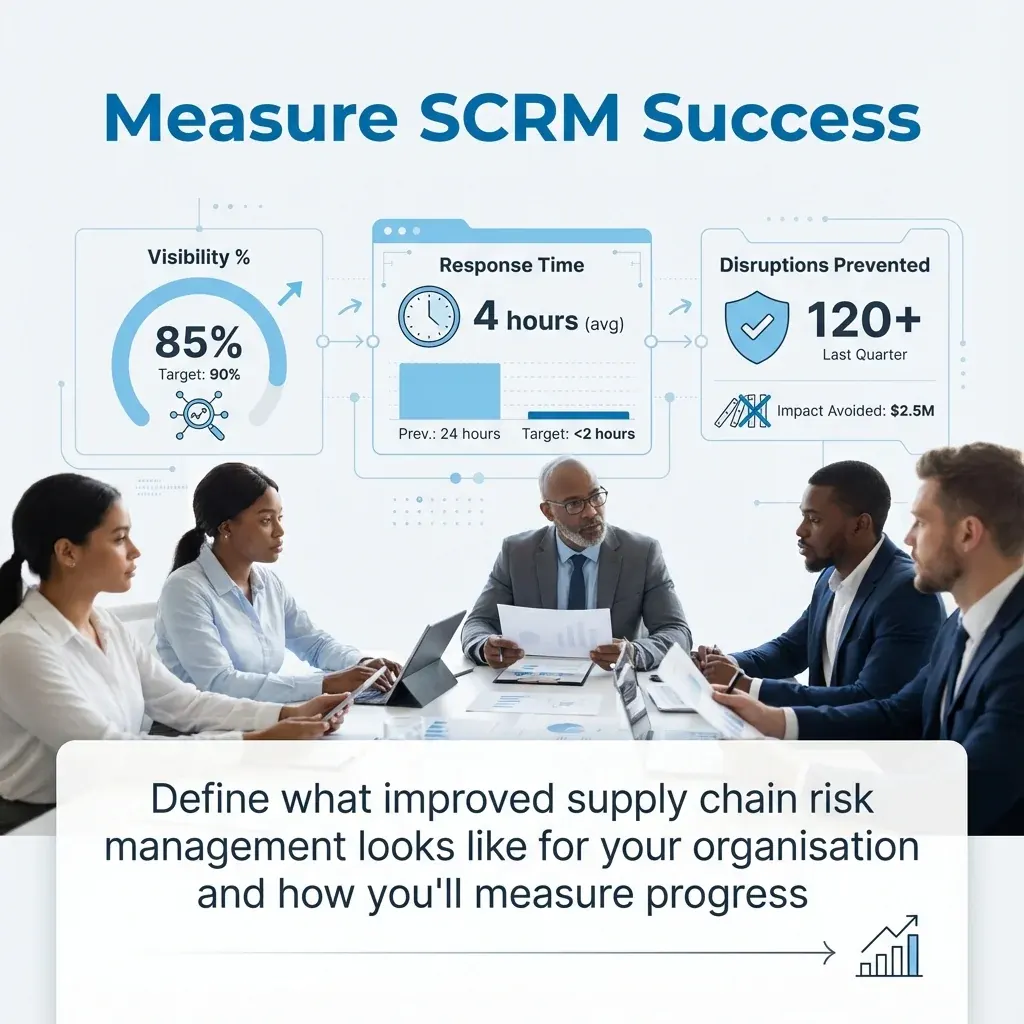
Not all supply chain risk management platforms offer the same capabilities. Understanding which features genuinely matter helps organisations evaluate solutions against their specific risk profiles and operational requirements.
Multi-tier supplier visibility and mapping
The ability to see beyond your direct suppliers into second, third, and fourth tiers represents perhaps the most critical SCRM capability. Most supply disruptions originate several tiers deep in the supply network, at sub-suppliers you don't contract with directly but depend on indirectly.
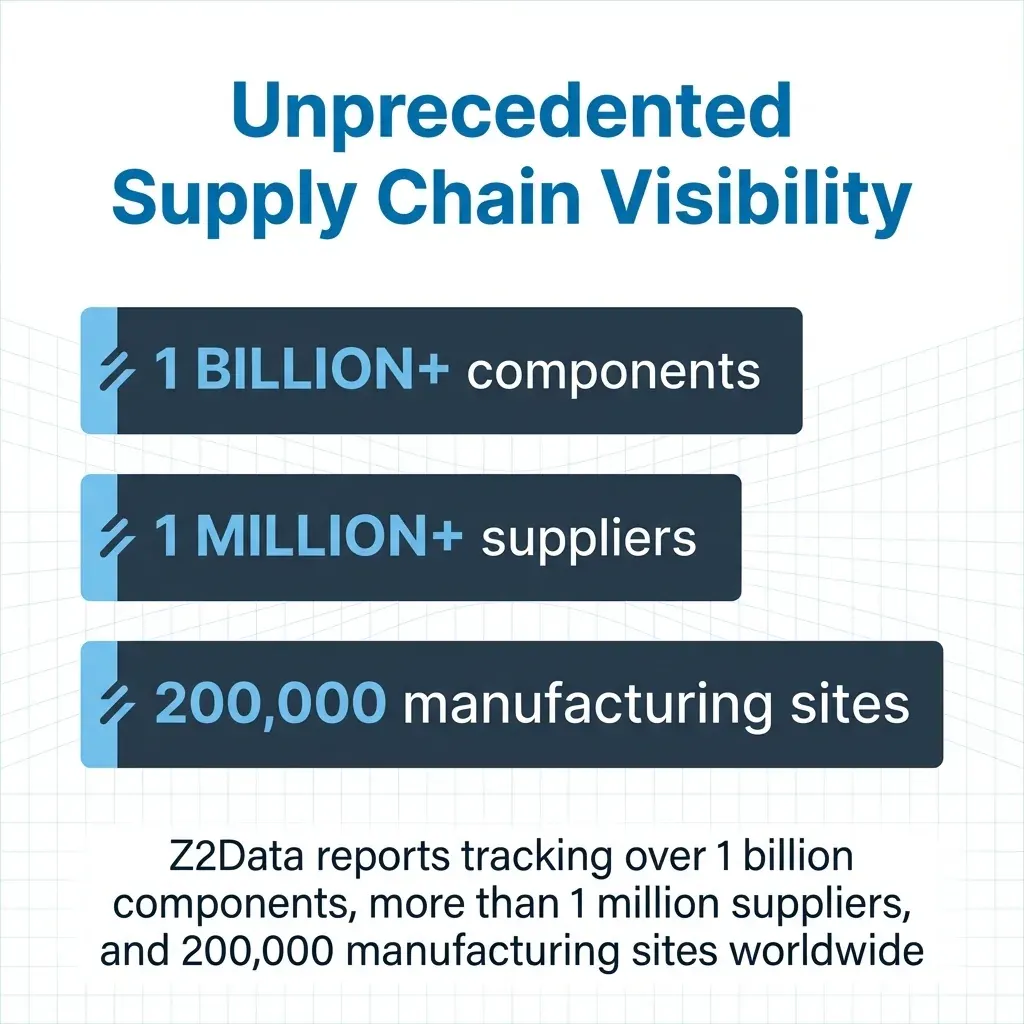
Effective platforms create visual maps showing supplier relationships and dependencies. You can see which first-tier suppliers rely on the same second-tier manufacturer, identifying single points of failure that wouldn't be obvious from procurement records alone. Z2Data reports tracking over 1 billion components, more than 1 million suppliers, and 200,000 manufacturing sites worldwide, illustrating the scale of visibility that modern platforms can provide.
This depth of visibility allows procurement teams to ask informed questions: What happens if this specific sub-supplier experiences problems? Which products would be affected? Do we have alternative supply paths?
Real-time monitoring and alert systems
Supply chain risks don't wait for quarterly supplier reviews. Events unfold rapidly, and effective response requires immediate awareness when problems emerge. Quality SCRM platforms monitor multiple data sources continuously — news feeds, financial databases, weather services, regulatory announcements, and logistics tracking systems.
When predefined risk triggers occur, the system generates alerts so responsible teams can begin response protocols immediately. Alert systems should be configurable to your organisation's risk tolerance and operational priorities.
Risk assessment and scoring frameworks
With hundreds or thousands of suppliers, organisations need systematic ways to prioritise risk management efforts. Risk scoring provides this prioritisation by evaluating each supplier against multiple risk factors and generating comparative ratings. Effective scoring frameworks consider supplier criticality alongside financial health, operational performance, and compliance posture.
For transport operators looking to strengthen their own Chain of Responsibility training and compliance evidence, the same principle applies — systematic scoring and documented evidence matter more than ad-hoc assessments when regulators come knocking.
How MAEZ works
Find the gaps. Fix the system. Prove the controls.
MAEZ helps transport operators deal with the compliance risk they already know is there. We help get the Safety Management System in order, protect NHVAS accreditation, reduce fine exposure, and connect training, evidence, and CoRGuard workflows where software is needed.
Find
Identify what is exposed before an auditor or regulator does.
Fix
Build the SMS controls around how the transport business actually runs.
Prove
Use CoRGuard where records, reminders, diaries, audits, and evidence need structure.
From advice to evidence
From MAEZ advice to a working Safety Management System
Advisory work should leave a practical implementation trail. These examples show how CoRGuard supports records, fatigue and driver diary checks, maintenance, audits, document control, inductions, corrective actions, and evidence review after MAEZ identifies the gaps.
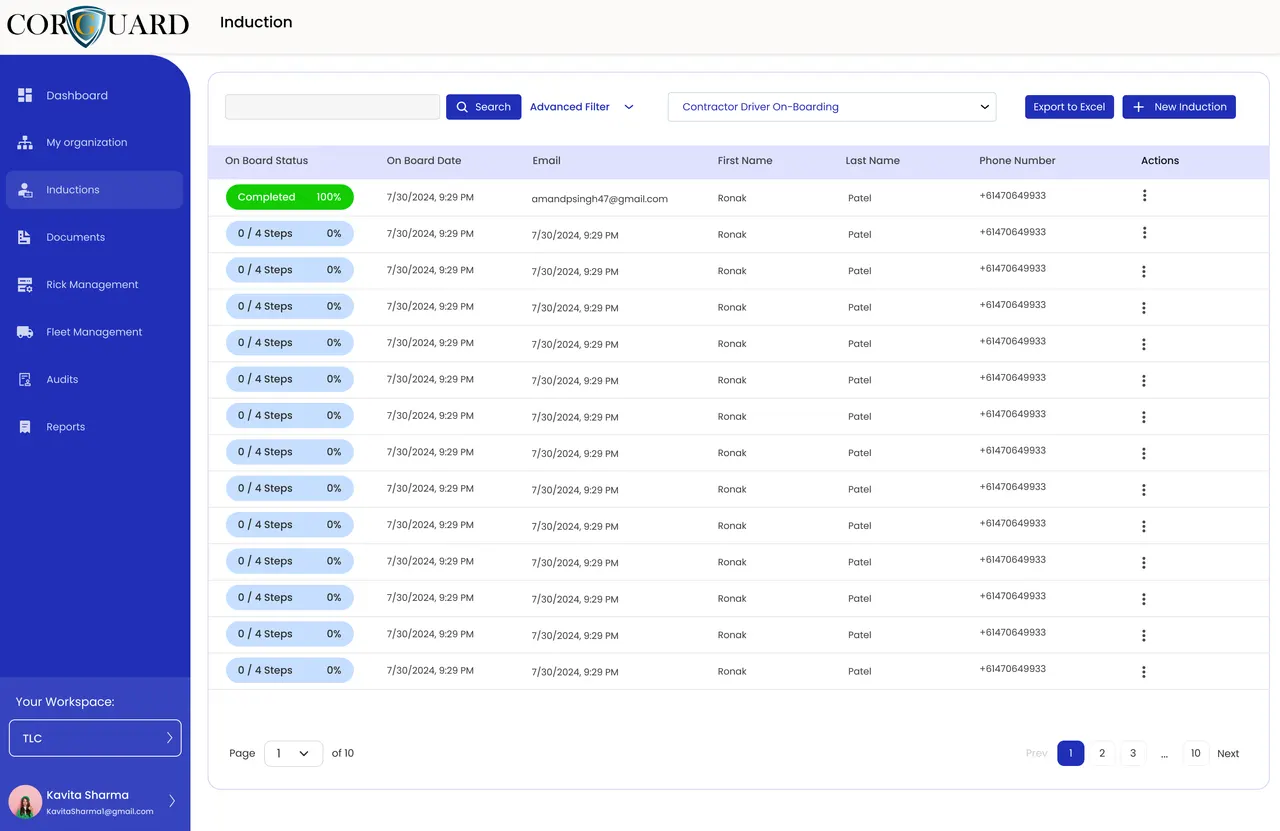
Training records
Connect training completion from cortraining.com.au to evidence and follow-up.
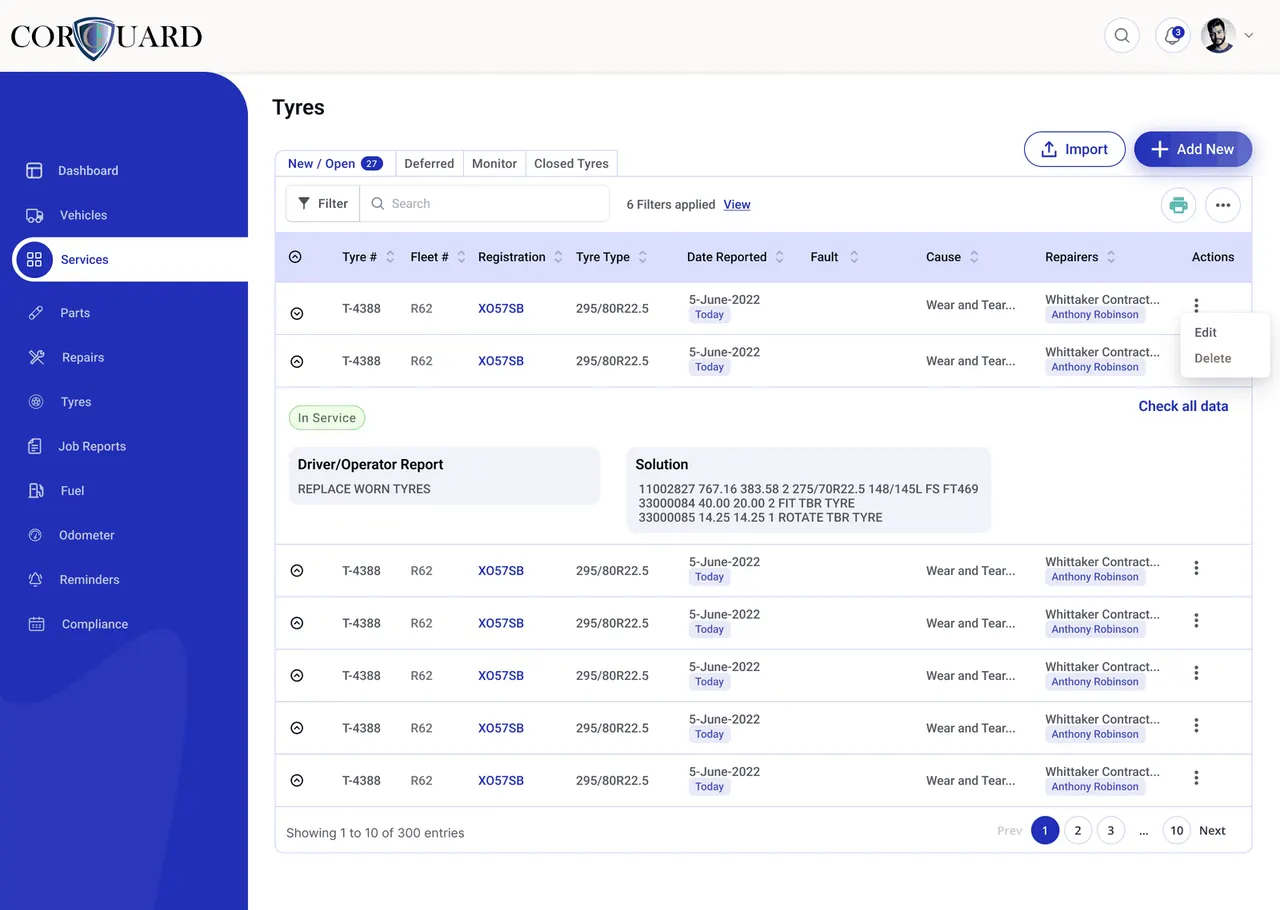
Driver diary checks
Connect fatigue and driver diary review back to manager visibility.
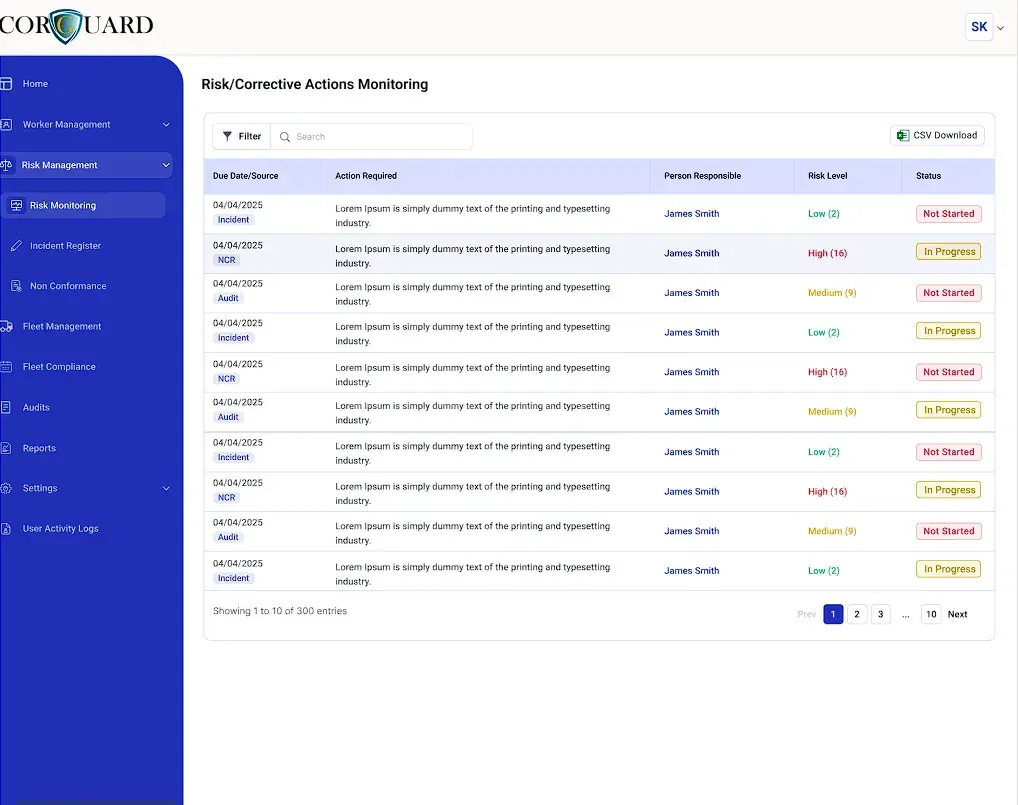
Corrective actions
Turn audit findings, hazards and incidents into tracked actions.
Keep exploring
Related Chain of Responsibility reading
MAEZ insight
Understanding Common Issues in Chain of Responsibility
Discover common issues in the Chain of Responsibility pattern and learn how to avoid them. Perfect for developers seeking practical solutions.
MAEZ insight
Enhancing Transport Safety: Effective Strategies and Tips
Discover how to improve transport safety with effective strategies. Learn to integrate safety culture and technology for better performance.
MAEZ insight
Understanding Common Transport Safety Issues: A Guide
Explore common transport safety issues affecting global operations. Learn preventive measures to protect lives and improve safety standards.
MAEZ insight
Effective Strategies for Managing Global Supply Chain Risks
Discover effective global supply chain risk management strategies to mitigate operational challenges and enhance supply chain resilience.
MAEZ insight
Essential Chain of Responsibility Compliance Tips Explained
Discover essential chain of responsibility compliance tips to ensure safety and meet HVNL obligations. Stay informed and compliant with our expert advice.
MAEZ insight
Exploring Effective Safety Management System Examples
Discover effective Safety Management System examples to enhance workplace safety through structured frameworks and core components.
Frequently asked questions
Questions people ask about this topic
What is supply chain risk management software and how does it work?
Supply chain risk management (SCRM) software provides digital tools to identify, assess, monitor, and mitigate risks across an organisation's entire supply network. These platforms aggregate data from multiple sources, track supplier performance, map multi-tier relationships, flag compliance gaps, and generate real-time alerts so teams can respond to disruptions before they impact operations.
Why can't spreadsheets and manual processes handle supply chain risk effectively?
Manual methods like spreadsheets and email chains suffer from latency — by the time information is gathered, the problem has already caused disruption. They also lack visibility beyond first-tier suppliers, making it impossible to identify single points of failure deep in multi-tier supply networks that span thousands of entities across continents.
What are the core categories of supply chain risk that SCRM software addresses?
Supply chain risks fall into five main categories: operational and supplier performance risks, cybersecurity and data risks, financial and credit risks, geopolitical and regulatory risks, and environmental and climate risks. Each category requires different monitoring approaches, and the most effective SCRM platforms track all of them concurrently rather than in isolation.
What features should I look for when evaluating SCRM software?
The most critical features are multi-tier supplier visibility and mapping, real-time monitoring with configurable alert systems, and systematic risk assessment and scoring frameworks. Multi-tier visibility lets you see dependencies beyond your direct suppliers, real-time alerts surface threats before they materialise, and risk scoring helps prioritise effort across hundreds or thousands of suppliers.
How does SCRM software relate to Chain of Responsibility obligations for Australian transport operators?
SCRM software's proactive monitoring approach mirrors Chain of Responsibility obligations under the HVNL, where duty holders must actively identify and manage risks across the supply chain rather than waiting for incidents. The same principle of automated, systematic risk identification applies whether you're monitoring global suppliers or verifying contractor controls and compliance evidence across transport operations.