
MAEZ insight
Understanding Common Transport Safety Issues: A Guide
A practical guide to common transport safety issues — driver fatigue, distracted driving, vehicle collisions, and equipment failure — with preventive measures for Australian transport operators.

Receiving windows, site rules, and unloading delays can all shape the transport task.
Unloading decisions can affect safety, scheduling, and responsibility.

Managers need a clear view of gaps before audit or enforcement pressure arrives.

Contractor controls should be verified before the work starts.
Consignors
Freight terms, delivery windows, and KPIs must not push drivers into speed, fatigue, or mass breaches.
Consignees
Receiving rules, site access, and unloading delays are CoR controls that need to be set and evidenced.
Loaders
Mass, dimension, and load restraint decisions need documented checks, not assumptions.
Managers
Executives and managers need due-diligence evidence that the Safety Management System is actually working.
Why transport safety issues matter
The scale of preventable harm on our roads
Transport safety issues encompass driver fatigue, distracted driving, vehicle collisions, and equipment failure. These hazards claim lives, disrupt operations, and strain supply chains across all transport modes. Addressing them systematically within a Safety Management System helps operators prevent incidents, protect people, and meet Chain of Responsibility obligations.
Transport safety hazards claim lives and disrupt operations across every mode of transport. The World Health Organization estimates approximately 1.19 million people die in road crashes globally each year. In Australia, 1,361 road deaths occurred in the 12 months ending October 2025, representing a 6.9% increase compared with the previous 12 months.
Each collision typically stems from a chain of contributing factors rather than a single cause. Understanding these hazards is not about ticking a regulatory box. It is about building resilient operations that protect people and deliver consistent service.
Whether you manage a single delivery van or a national fleet, these hazards demand attention in your Safety Management System. A systematic approach helps you find, fix, and prove your compliance with Chain of Responsibility obligations.
How does driver fatigue affect transport safety?
Fatigue degrades reaction times, judgment, and crash risk

Driver fatigue degrades reaction times, impairs judgment, and increases crash risk across all transport modes. It occurs when drivers operate vehicles without adequate rest. Extended hours, irregular shifts, and tight delivery schedules deteriorate cognitive performance, slow reaction times, impair decision-making, and create dangerous microsleeps.
The Australian Heavy Vehicle National Law (HVNL) establishes specific work and rest hour requirements. Standard hours allow 12 hours of work in 24 hours, with mandatory rest breaks. Basic and Advanced Fatigue Management provide flexibility for operators who implement robust systems.
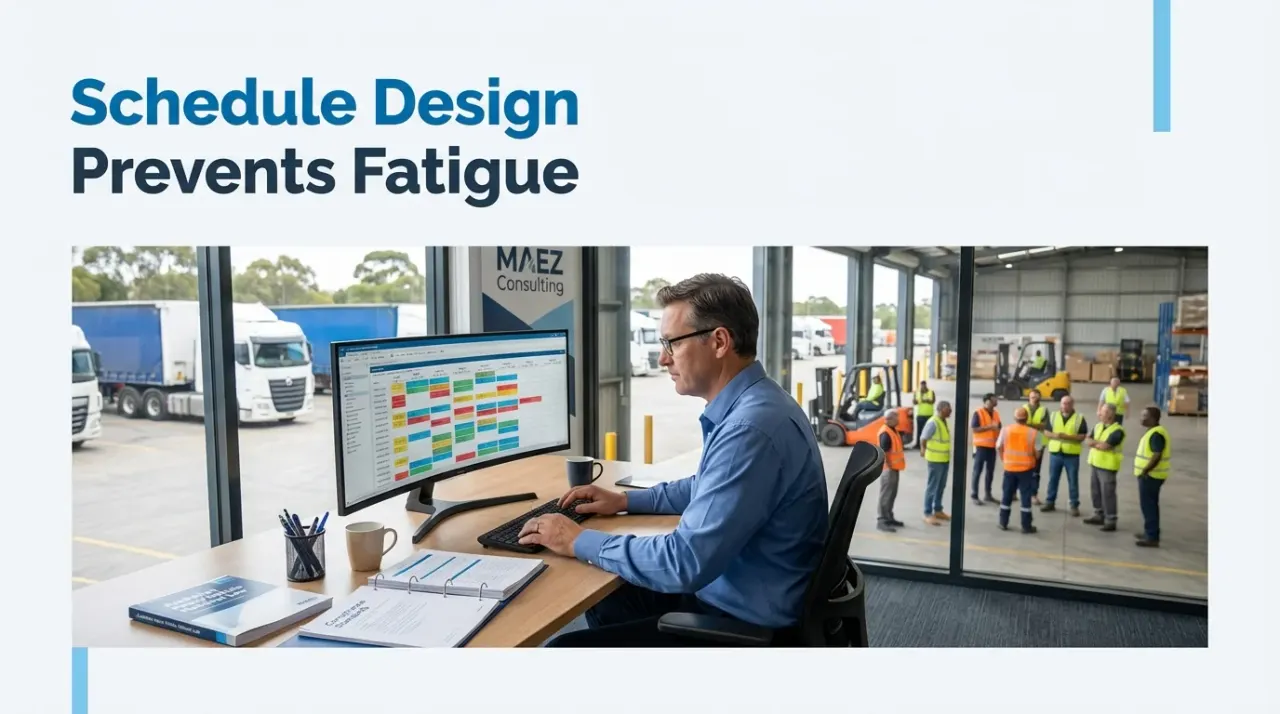
Operators must design schedules that prioritise adequate rest, account for realistic driving times, and include buffer time so drivers do not have to choose between compliance and job security.
Operational prevention strategies
- Build rosters that provide consistent sleep opportunities and avoid back-to-back shifts crossing day and night periods
- Plan routes with designated rest stop locations
- Implement monitoring systems that track actual hours worked — not just scheduled hours — including pre-trip inspections, loading, and administrative tasks
- Train drivers to recognise fatigue symptoms and empower them to stop driving when impaired
- Create a safety culture where reporting fatigue does not trigger punishment
Technology like in-cab monitoring systems can detect drowsiness, but technology supplements rather than replaces proper scheduling. For structured support, consider CoR consulting to review your fatigue management controls.
What makes distracted driving so dangerous?
Split-second distractions create metres of blind travel
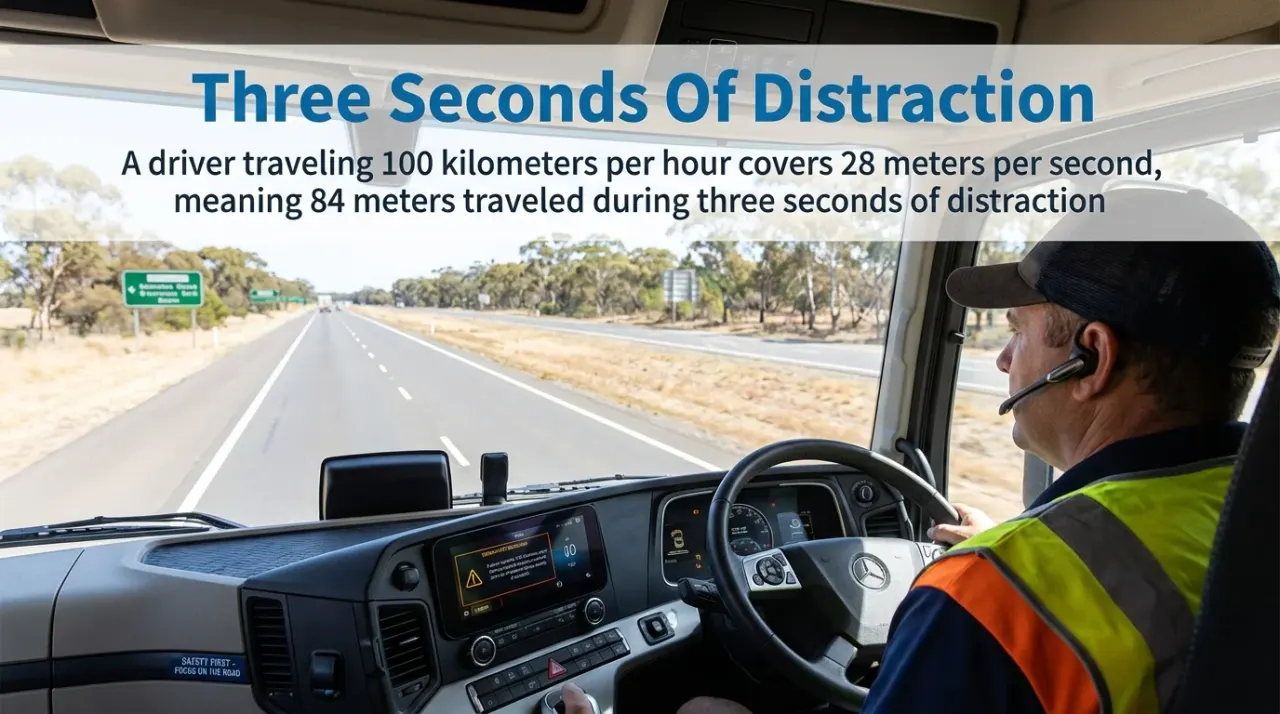
Distraction diverts cognitive resources from the primary task of vehicle operation. Mobile phone use is the most prevalent source, but the problem extends well beyond handheld devices. Drivers text, check emails, use navigation apps, and take calls while controlling multi-tonne vehicles.
Infotainment systems, dispatch communications, electronic logging devices, and fleet management tablets all compete for driver attention. Even hands-free technology creates cognitive load that degrades driving performance. A driver travelling 100 kilometres per hour covers 28 metres per second; three seconds of distraction means travelling 84 metres without visual attention to the road.
Control measures beyond policy statements
- Implement technology controls that limit non-essential app functionality while vehicles are in motion
- Use fleet management systems that automatically route incoming calls to voicemail when motion sensors detect driving
- Build schedule buffers so drivers do not feel pressured to take calls while driving
- Train drivers on all distraction sources — eating, adjusting climate controls, reaching for objects, and conversation all create cognitive load
- Teach drivers to complete adjustments before moving and to pull over when attention demands arise
Written policies prohibiting mobile phone use provide legal protection but have limited practical effect on their own. Enforcement requires observable evidence and consistent consequences. For practical support, explore Chain of Responsibility training options to embed these behaviours.
What are the most common vehicle collision types?
Understanding collision patterns to target prevention
Vehicle collisions represent the intersection of multiple risk factors, manifesting in property damage, injuries, and fatalities. Each collision type has distinct contributing factors that operators can target with specific controls.
Common collision categories
- Rear-end collisions: Frequently involve following distances insufficient for stopping. Drivers underestimate their vehicle's stopping distance, particularly when operating heavy vehicles with loaded cargo.
- Intersection crashes: Occur when drivers fail to yield right of way, misjudge gaps, or run red lights. Higher speeds reduce the time available for hazard recognition and increase impact severity.
- Single-vehicle crashes: Often involve lane departures caused by fatigue, distraction, impairment, or poor road conditions, leading to collisions with fixed objects, rollovers, and run-off-road incidents.
- Head-on collisions: While less frequent, these produce the highest fatality rates. Overtaking on undivided roads, wrong-way entry, and median crossovers create these devastating crashes.
Speed influences both crash likelihood and severity. Operators should implement fleet speed limiters below posted limits when risk assessment justifies restrictions. Telematics systems that monitor speed provide valuable data for coaching and identifying whether route scheduling creates pressure to speed.
Defensive driving programs should emphasise hazard anticipation over reaction skills. These practices need to be embedded into daily operations rather than treated as isolated training events. See our MAEZ Insights for more on building a practical safety culture.
Why does vehicle maintenance prevent crashes?
Mechanical failures result from deferred maintenance, not random chance

Inadequate maintenance creates predictable safety hazards. Mechanical failures do not occur randomly — they result from deferred maintenance, inadequate inspection, and failure to address known defects.
Brake system failures represent the most critical maintenance-related hazard. Heavy vehicles depend on properly functioning air brake systems. Worn brake pads, contaminated brake fluid, air leaks, and damaged components all degrade braking performance. Tire failures cause loss of control at highway speeds, while worn tread, under-inflation, and damaged sidewalls rupture under load.
Critical safety systems requiring regular inspection
- Steering systems: Worn tie rod ends, damaged power steering components, and loose steering linkages create dangerous play that drivers may not recognise until failure occurs.
- Lighting and visibility: Burned-out headlights, broken turn signals, obscured mirrors, and damaged windscreens compromise safety, especially when darkness or weather reduces visibility.
- Load securing equipment: Damaged tie-down points, worn straps, and broken chains create load securement failures.
Under the HVNL, loading requirements carry specific compliance obligations, and breaches are categorised by risk level — from minor to substantial to severe. Operators need documented inspection routines and evidence that defects are identified and rectified. For a structured review of your maintenance and loading controls, consider CoR consulting or reach out via our contact page.
How MAEZ works
Find the gaps. Fix the system. Prove the controls.
MAEZ helps transport operators deal with the compliance risk they already know is there. We help get the Safety Management System in order, protect NHVAS accreditation, reduce fine exposure, and connect training, evidence, and CoRGuard workflows where software is needed.
Find
Identify what is exposed before an auditor or regulator does.
Fix
Build the SMS controls around how the transport business actually runs.
Prove
Use CoRGuard where records, reminders, diaries, audits, and evidence need structure.
From advice to evidence
From MAEZ advice to a working Safety Management System
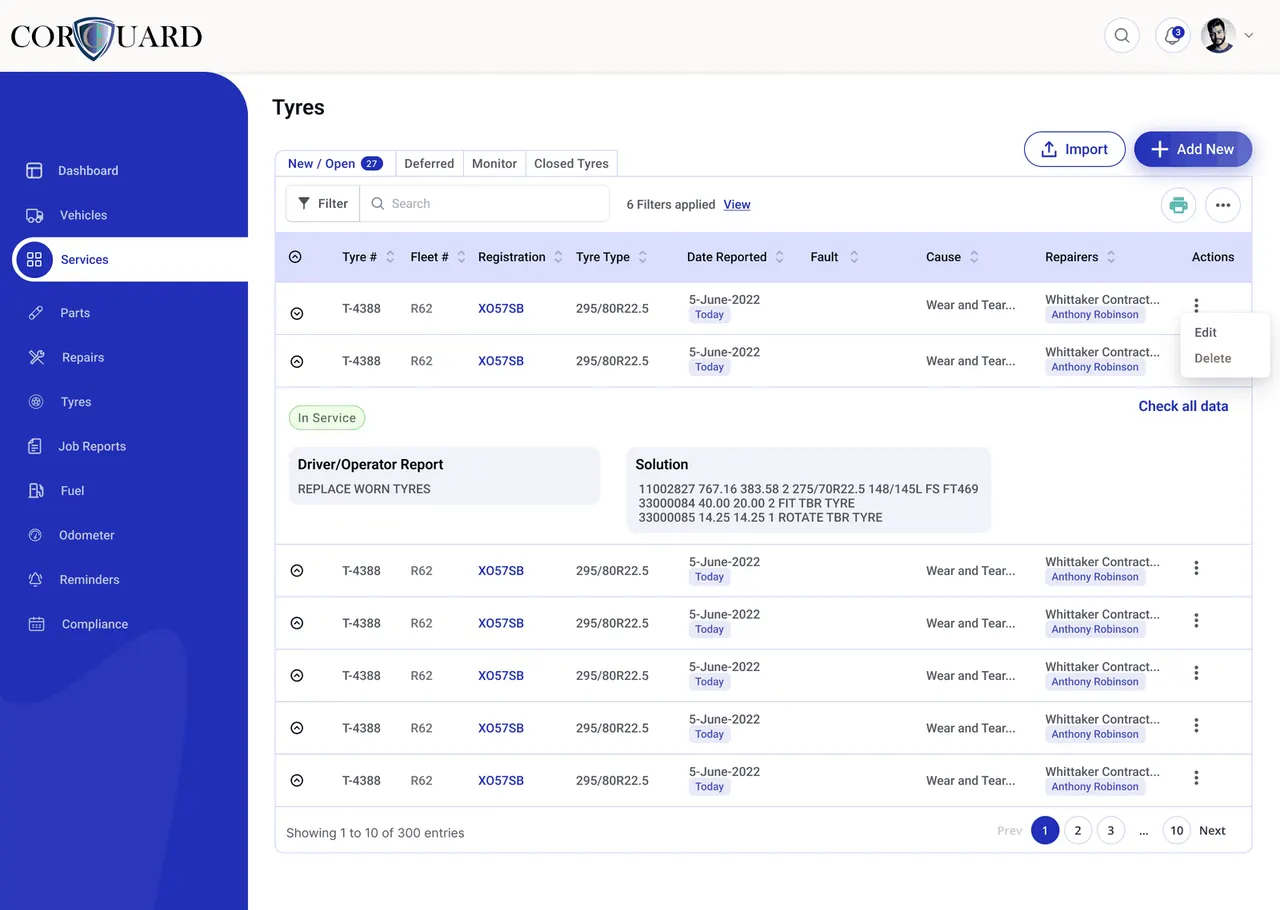
Advisory work should leave a practical implementation trail. These examples show how CoRGuard supports records, fatigue and driver diary checks, maintenance, audits, document control, inductions, corrective actions, and evidence review after MAEZ identifies the gaps.
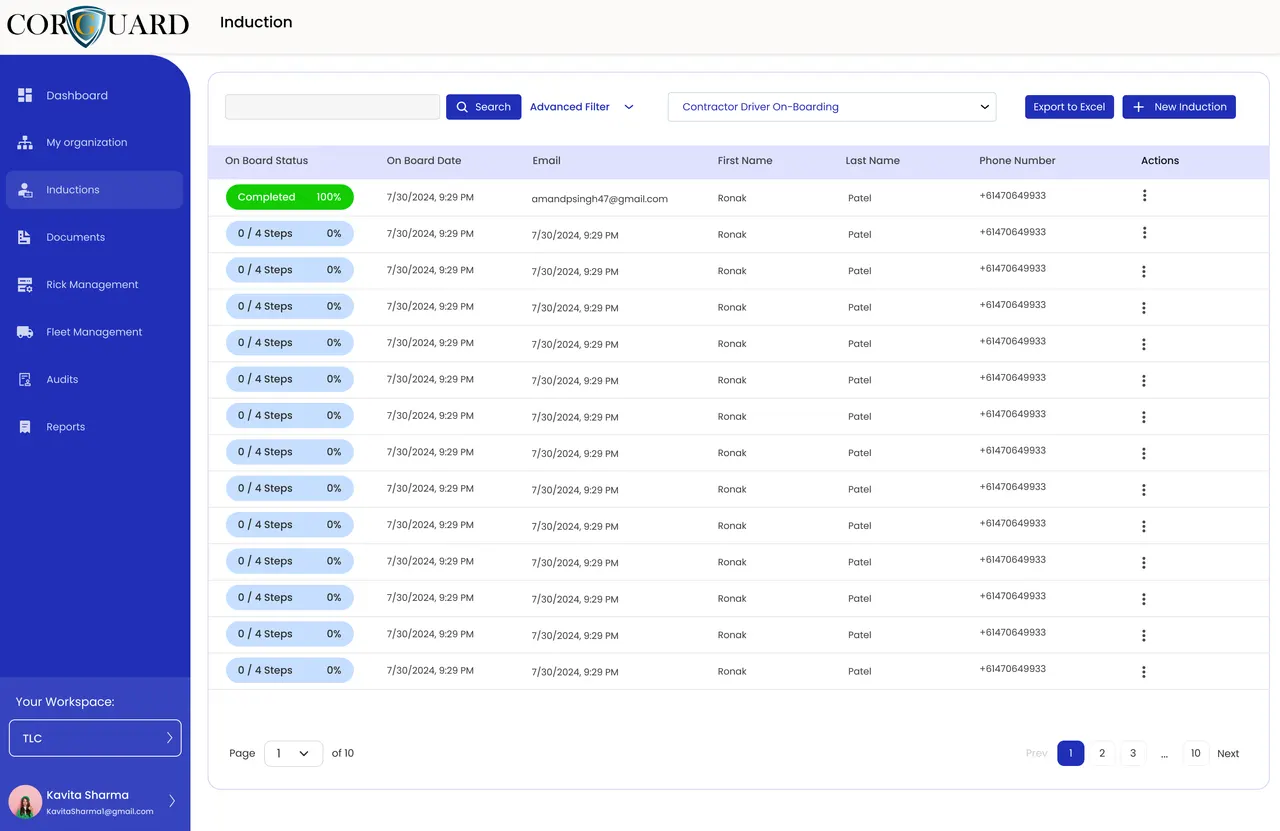
Training records
Connect training completion from cortraining.com.au to evidence and follow-up.
Driver diary checks
Connect fatigue and driver diary review back to manager visibility.
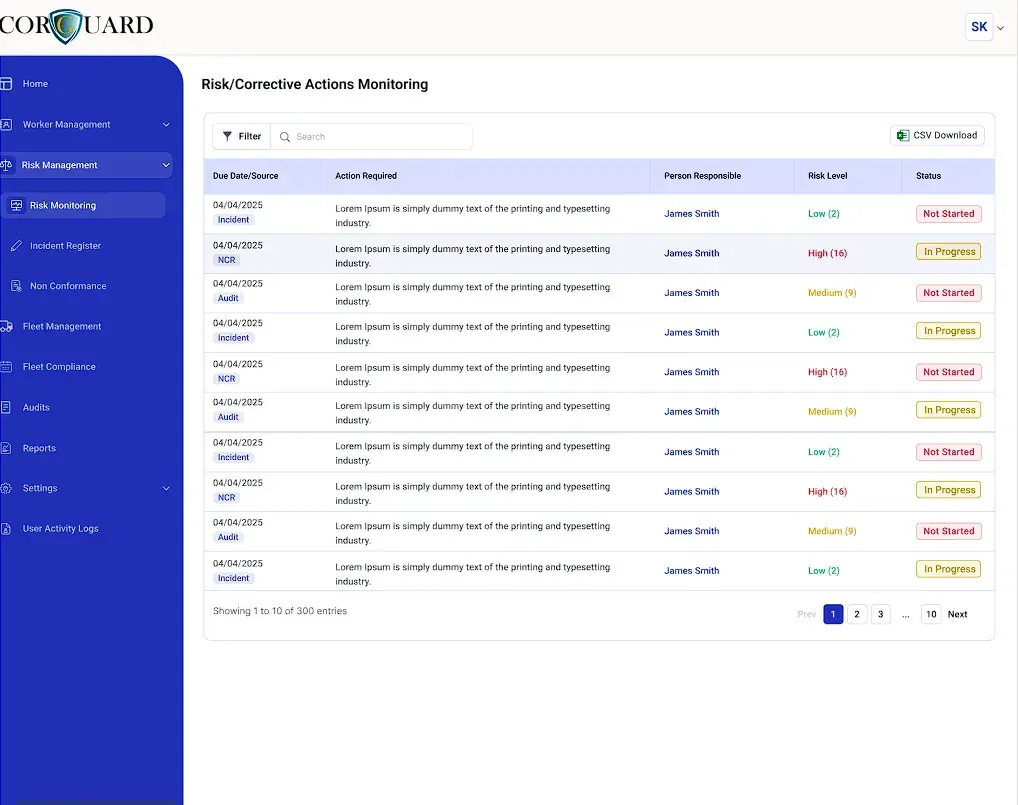
Corrective actions
Turn audit findings, hazards and incidents into tracked actions.
Keep exploring
Related Chain of Responsibility reading
MAEZ insight
Effective Strategies for Managing Global Supply Chain Risks
Discover effective global supply chain risk management strategies to mitigate operational challenges and enhance supply chain resilience.
MAEZ insight
Essential Chain of Responsibility Compliance Tips Explained
Discover essential chain of responsibility compliance tips to ensure safety and meet HVNL obligations. Stay informed and compliant with our expert advice.
MAEZ insight
Exploring Effective Safety Management System Examples
Discover effective Safety Management System examples to enhance workplace safety through structured frameworks and core components.
MAEZ insight
Understanding Key Components of a Safety Management System
Discover the crucial components of a safety management system, including Safety Policy and Risk Management, to enhance organizational safety outcomes.
MAEZ insight
Ensuring a Strong Chain of Responsibility: Key Steps
Learn how to ensure chain of responsibility with key steps for building reliable systems. Discover effective request distribution across handlers.
MAEZ insight
Ensuring CoR Compliance: A Comprehensive Guide
Discover how to ensure CoR compliance with our comprehensive guide, focusing on systematic safety management and regulatory adherence.
Frequently asked questions
Questions people ask about this topic
How does driver fatigue affect transport safety?
Driver fatigue degrades reaction times, impairs judgment, and increases crash risk across all transport modes. When drivers work extended hours or face tight schedules, cognitive performance deteriorates and microsleeps become dangerous.
What makes distracted driving so dangerous for heavy vehicle operators?
Distraction diverts cognitive resources from vehicle operation, and a driver travelling 100 km/h covers 28 metres per second. Three seconds of distraction means travelling 84 metres without visual attention to the road.
What are the most common vehicle collision types in transport operations?
Common collision types include rear-end collisions from insufficient following distances, intersection crashes, single-vehicle crashes from lane departures, and high-fatality head-on collisions during overtaking manoeuvres.
How does vehicle maintenance prevent transport crashes?
Inadequate maintenance creates predictable failures in brakes, tires, steering, and load securing equipment. Documented inspection routines and defect rectification prevent mechanical failures caused by deferred maintenance.
How does the HVNL categorise loading requirement breaches?
Under the Heavy Vehicle National Law, loading requirement breaches are categorised by risk level, ranging from minor and substantial to severe risk breaches, reflecting the safety impact of the contravention.