
MAEZ insight
Top Safety Management System Practices for Australian Transport Operators
The four pillars of an effective Safety Management System—policy, risk management, assurance, and promotion—and how they reduce risk and support NHVAS and Chain of Responsibility compliance in Australian transport.

Unloading decisions can affect safety, scheduling, and responsibility.

Managers need a clear view of gaps before audit or enforcement pressure arrives.

Contractor controls should be verified before the work starts.
Receiving windows, site rules, and unloading delays can all shape the transport task.
Consignors
Freight terms, delivery windows, and KPIs must not push drivers into speed, fatigue, or mass breaches.
Consignees
Receiving rules, site access, and unloading delays are CoR controls that need to be set and evidenced.
Loaders
Mass, dimension, and load restraint decisions need documented checks, not assumptions.
Managers
Executives and managers need due-diligence evidence that the Safety Management System is actually working.
What defines an effective Safety Management System?
A formal framework that embeds safety into every business process

A Safety Management System (SMS) is an organisation-wide framework that integrates safety policies, risk management processes, assurance mechanisms, and promotion activities into daily operations. An effective SMS proactively identifies and controls hazards before they cause harm, embedding safety into every business process rather than treating it as a separate, reactive function.
Modern SMS frameworks follow the Plan-Do-Check-Act cycle, driving continuous improvement: plan by setting objectives and identifying hazards, do by implementing controls and training, check by monitoring performance and conducting audits, and act by addressing deficiencies and improving processes.
ISO 45001 specifies requirements for establishing, implementing, maintaining, and continually improving an occupational health and safety management system. This international standard provides a globally recognised framework that organisations can adapt to their specific contexts while maintaining consistency with accepted best practices.
For Australian transport operators, an SMS also supports compliance with the Heavy Vehicle National Law, which places a primary duty on each party in the Chain of Responsibility and a separate due-diligence duty on executives of legal entities.
How SMS differs from traditional safety programs
Systems thinking addresses root causes rather than blaming individuals
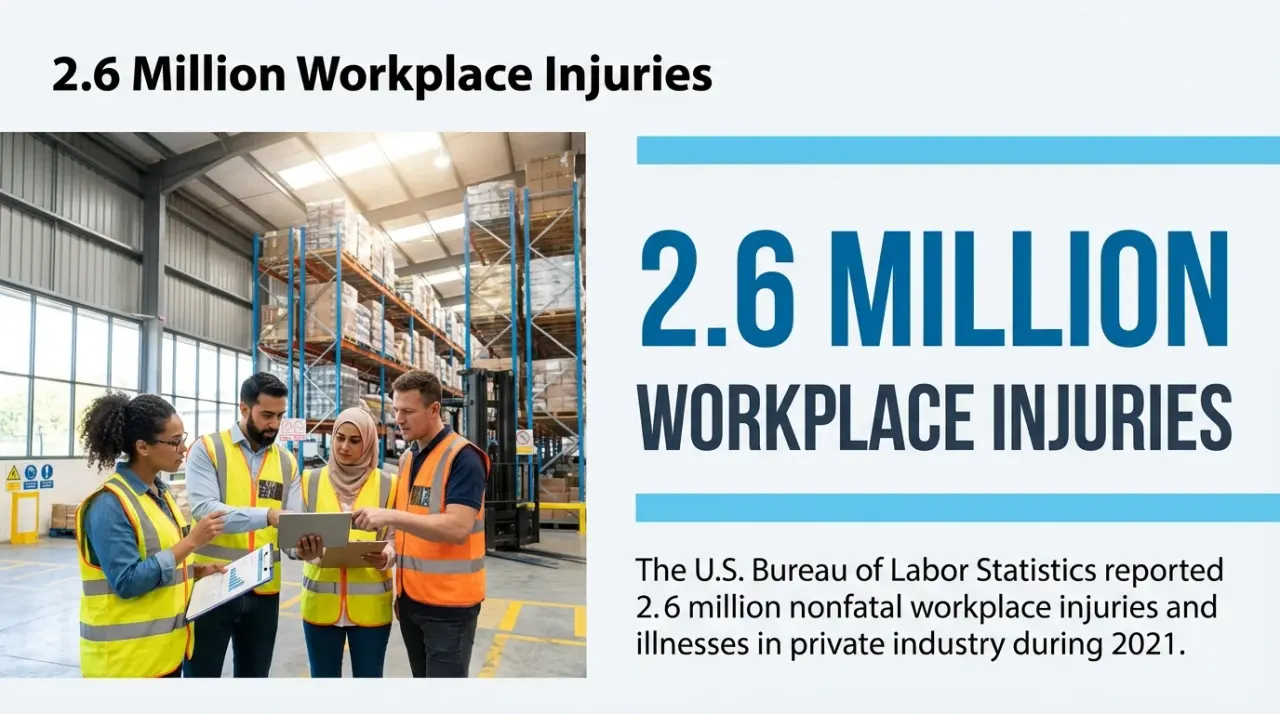
Traditional safety programs often focus narrowly on compliance and reactive measures. SMS takes a broader, more strategic approach. Where traditional programs may emphasise personal protective equipment and behaviour-based interventions, SMS addresses system-level factors that create hazards.
The SMS approach recognises that individual actions occur within organisational contexts. Rather than blaming workers for incidents, it examines how policies, procedures, equipment design, and workplace organisation contribute to safety outcomes.
Key differences
- Scope: SMS addresses root causes across the organisation, not just immediate incident factors.
- Proactivity: SMS prevents recurrence by fixing systemic issues, rather than only reacting after harm occurs.
- Integration: Safety is built into procurement, scheduling, and contract decisions—not bolted on after the fact.
For transport operators, this means looking beyond the driver to the scheduling pressures, loading practices, and contractual expectations that shape the transport task—an approach that aligns closely with Chain of Responsibility obligations.
Core characteristics of high-performing systems
Documentation, prevention, transparency, and data drive success
Successful safety management systems share several defining characteristics:
- Documented processes that provide consistency while allowing flexibility for different situations.
- Prevention focus rather than merely responding after incidents occur.
- Worker engagement at all levels, rather than treating safety as management's sole responsibility.
- Transparency, so workers understand how safety decisions are made, how to report concerns, and what actions management takes in response.
- Data-driven decisions, using meaningful metrics and trend analysis to guide improvements.
Leading indicators like near-miss reports and hazard observations complement lagging indicators like injury rates to provide comprehensive performance visibility. Together, these characteristics build trust, encourage participation, and ensure the system evolves as conditions change.
Safety Policy: establishing direction and commitment
The first pillar articulates leadership commitment and sets accountability
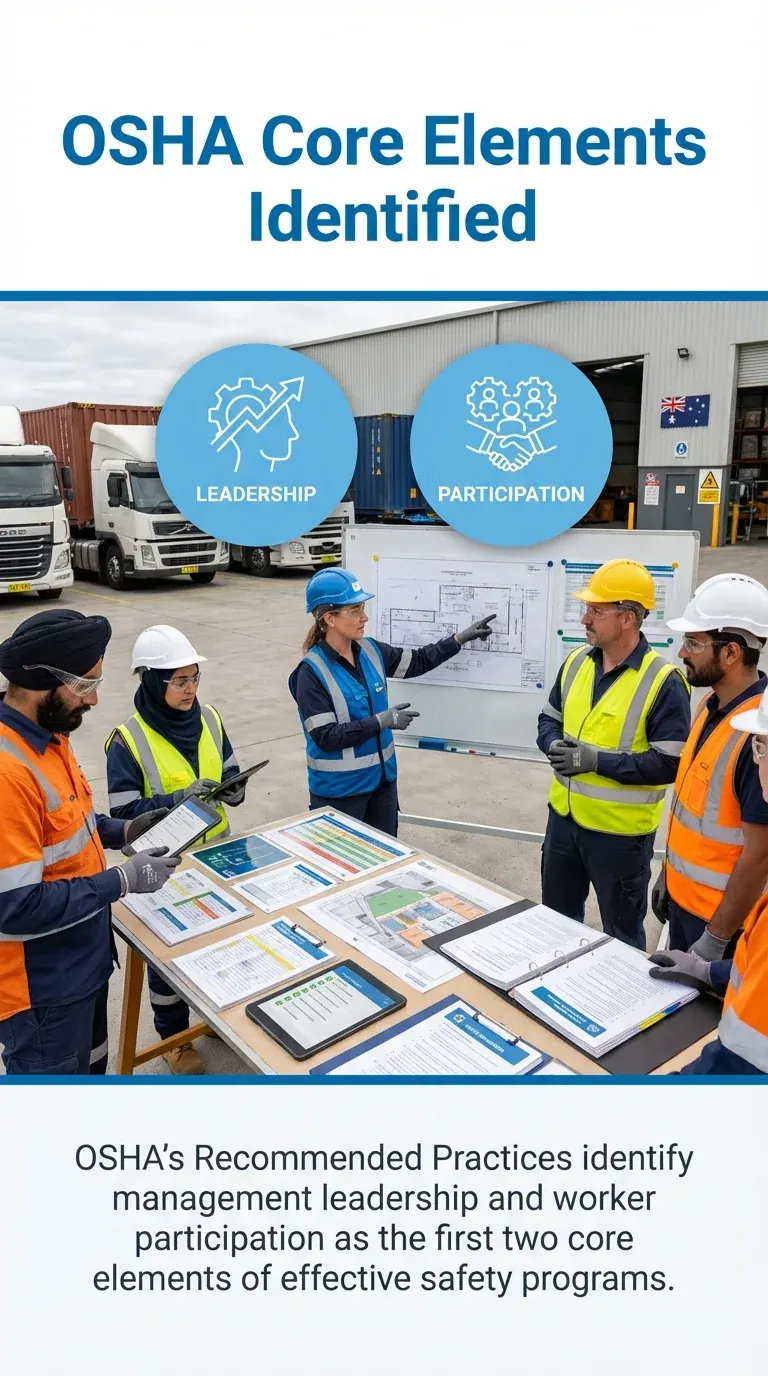
Safety policy sets organisational direction. It articulates management's commitment to protecting workers, defines safety objectives, and establishes accountability throughout the organisation. Effective policies communicate specific expectations rather than generic statements—they identify who holds responsibility for safety functions, what resources will be allocated, and how the organisation will measure success.
Leadership visibility matters tremendously. When executives actively participate in safety activities, attend safety meetings, and visibly prioritise safety in resource allocation decisions, it signals genuine commitment that cascades throughout the organisation.
Policy in practice for transport operators
- Define how safety integrates with other business objectives rather than competing with productivity or cost.
- Position safety as supporting overall business performance.
- Reflect the HVNL primary duty on each party in the chain and the executive due-diligence duty.
This pillar is especially relevant where executives face personal obligations under the HVNL—practical CoR training for executives and managers can help ensure policy commitments translate into verified action.
Safety Risk Management: identifying and controlling hazards
The operational core of any SMS
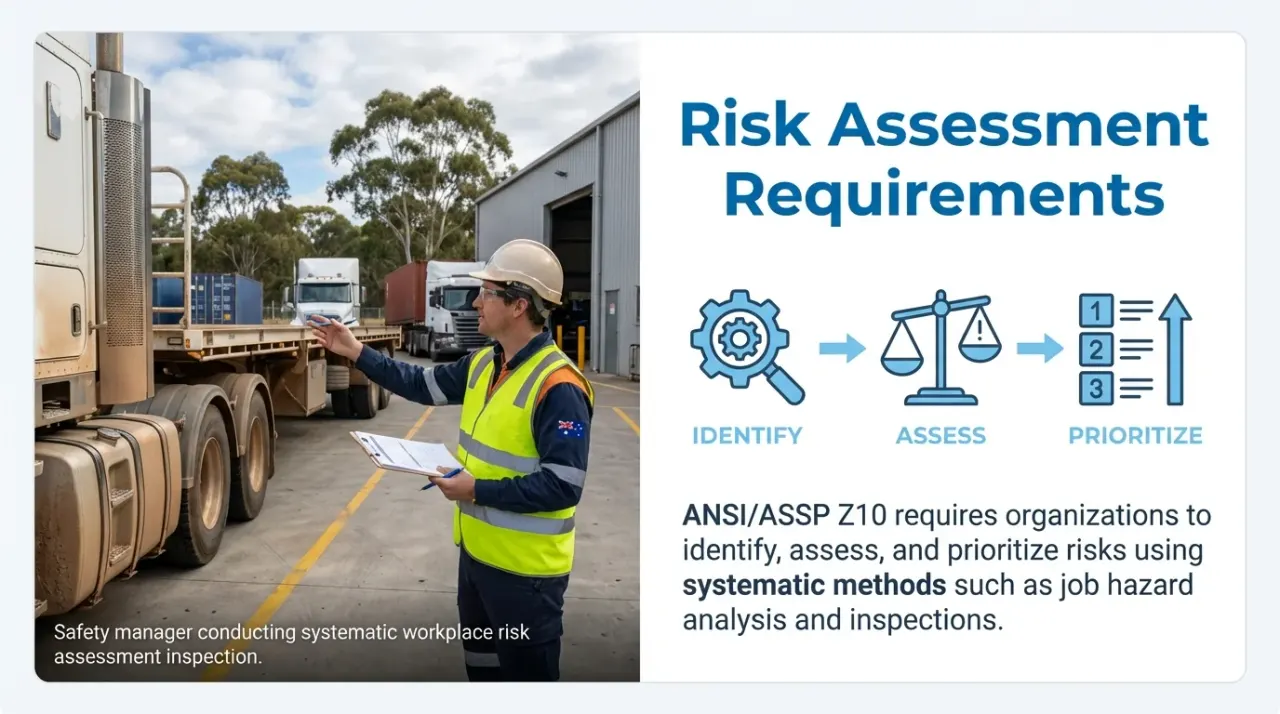
Risk management forms the operational core of SMS. Organisations systematically identify potential hazards, assess associated risks, implement controls, and verify effectiveness. Structured approaches ensure hazards don't get overlooked due to familiarity or assumptions.
Hazard identification methods
- Workplace inspections
- Job safety analyses
- Incident investigations
- Worker reports
- Review of industry information
No single method captures all hazards, so effective systems employ diverse identification strategies. Once identified, hazards receive risk assessment that considers both severity of potential consequences and likelihood of occurrence, helping organisations allocate resources by addressing highest-risk exposures first.
Hierarchy of controls
Control selection follows a clear hierarchy: organisations first attempt to eliminate hazards entirely; when elimination isn't feasible, they implement engineering controls that reduce exposure without relying on worker behaviour; administrative controls and personal protective equipment provide additional layers but are considered less effective as primary controls.
Safety Assurance: monitoring and verification
Confirming the SMS functions as intended through audits, inspections, and data analysis
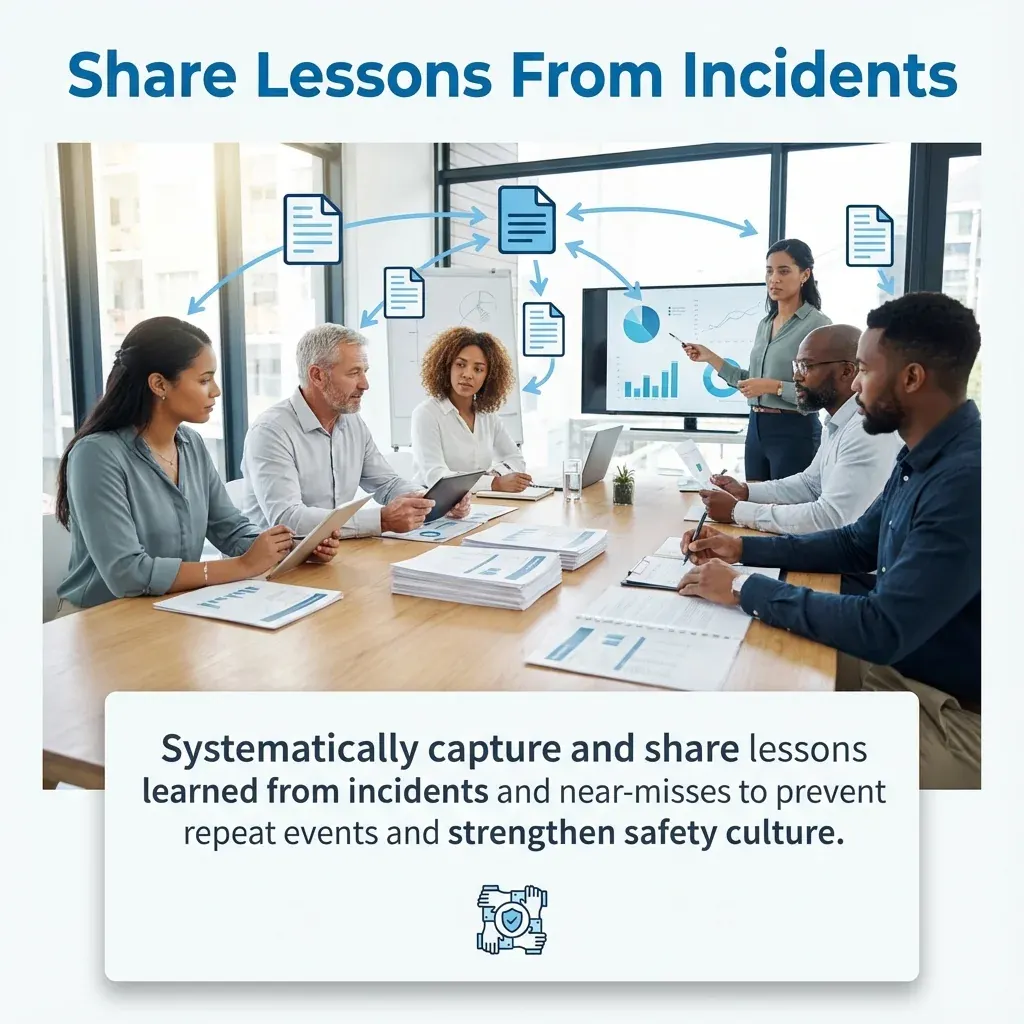
Safety assurance ensures the SMS functions as intended. Through audits, inspections, data analysis, and incident investigations, organisations verify that controls remain effective and identify improvement opportunities.
Regular workplace inspections provide frontline visibility into control effectiveness. These inspections check that engineering controls function properly, workers follow established procedures, and conditions haven't changed in ways that create new hazards.
Incident investigation forms another critical assurance element. Rather than simply documenting what happened, thorough investigations examine why incidents occurred and what system factors contributed. Organisations that systematically capture and share lessons learned help prevent repeat events and strengthen safety culture.
Performance monitoring indicators
- Lagging indicators like injury rates show historical performance.
- Leading indicators like training completion, hazard reports submitted, and corrective actions closed provide forward-looking insight into system health.
If you need help assessing gaps in your current assurance approach, CoR consulting can provide a practical risk review tailored to your operation.
Safety Promotion: building culture and capability
Training, communication, and workforce engagement give the other pillars their human foundation
Safety promotion develops the human capabilities and organisational culture necessary for SMS success. This pillar encompasses training, communication, and workforce engagement activities that build safety awareness and competence.
Training provides workers with knowledge and skills needed to work safely. Effective training goes beyond generic content to address specific hazards workers encounter, equipment they operate, and procedures they must follow. It also builds competence in hazard recognition so workers can identify unsafe conditions and take appropriate action.
Communication keeps safety visible throughout the organisation. Regular safety meetings, hazard alerts, performance updates, and leadership messages maintain awareness and demonstrate ongoing commitment. Two-way communication matters as much as top-down messaging—organisations need robust systems for workers to report hazards, suggest improvements, and raise concerns without fear of reprisal.
For Australian transport operators, practical CoR training can serve as a key component of this pillar, ensuring that everyone in the chain understands their role in managing fatigue, speed, loading, and vehicle standards risks.
Putting the four pillars into practice
How the pillars work together to prevent harm and build resilience
When implemented properly, the four pillars—safety policy, risk management, assurance, and promotion—work together to prevent workplace injuries, reduce compensation costs, ensure regulatory compliance, and create sustainable safety improvements that protect workers while enhancing operational efficiency.
Structured SMS practices provide the systematic tools needed to reduce incidents while building organisational resilience. The Plan-Do-Check-Act cycle ensures continuous improvement as conditions change, whether your operation is at the early stages of SMS development or looking to mature an existing system.
If you need help assessing gaps in your current safety management approach or preparing for NHVAS readiness, contact MAEZ or explore our CoR consulting services.
How MAEZ works
Find the gaps. Fix the system. Prove the controls.
MAEZ helps transport operators deal with the compliance risk they already know is there. We help get the Safety Management System in order, protect NHVAS accreditation, reduce fine exposure, and connect training, evidence, and CoRGuard workflows where software is needed.
Find
Identify what is exposed before an auditor or regulator does.
Fix
Build the SMS controls around how the transport business actually runs.
Prove
Use CoRGuard where records, reminders, diaries, audits, and evidence need structure.
From advice to evidence
From MAEZ advice to a working Safety Management System
Advisory work should leave a practical implementation trail. These examples show how CoRGuard supports records, fatigue and driver diary checks, maintenance, audits, document control, inductions, corrective actions, and evidence review after MAEZ identifies the gaps.
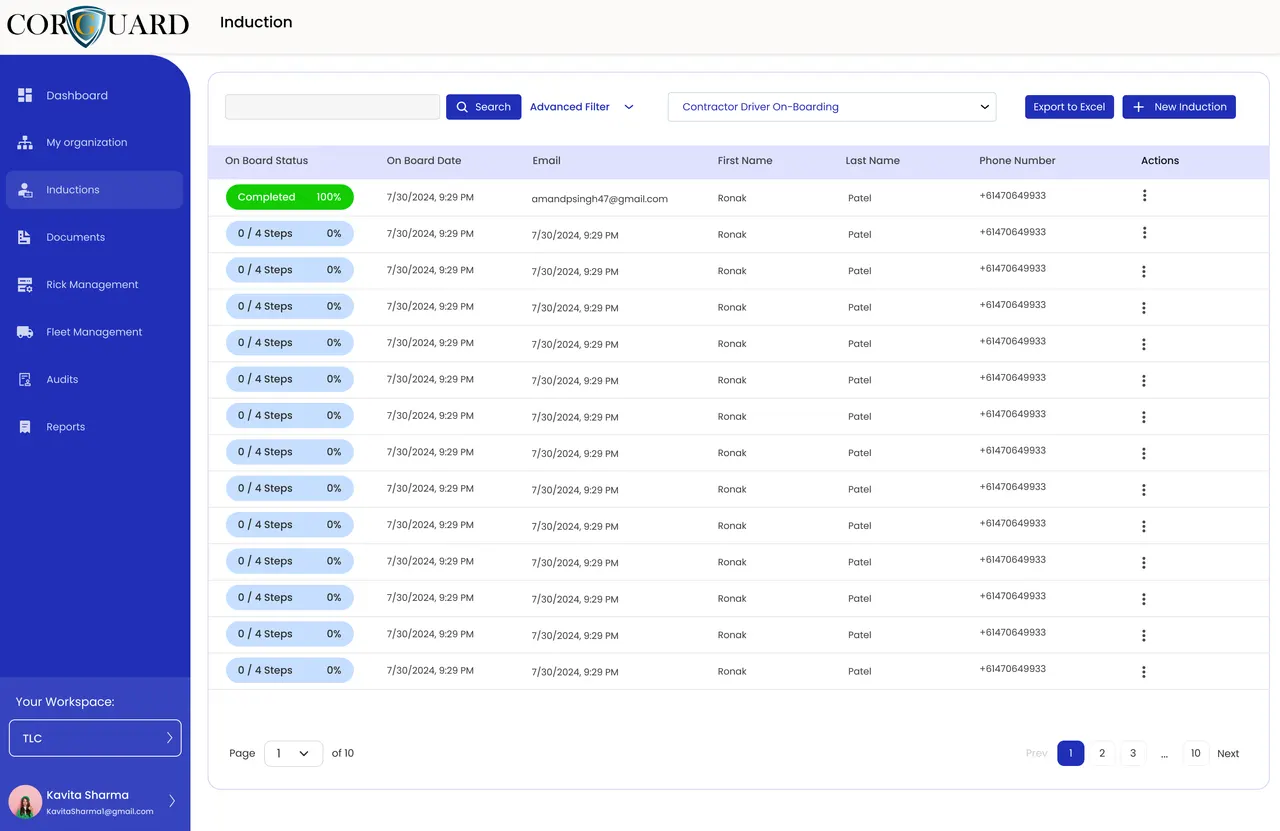
Training records
Connect training completion from cortraining.com.au to evidence and follow-up.
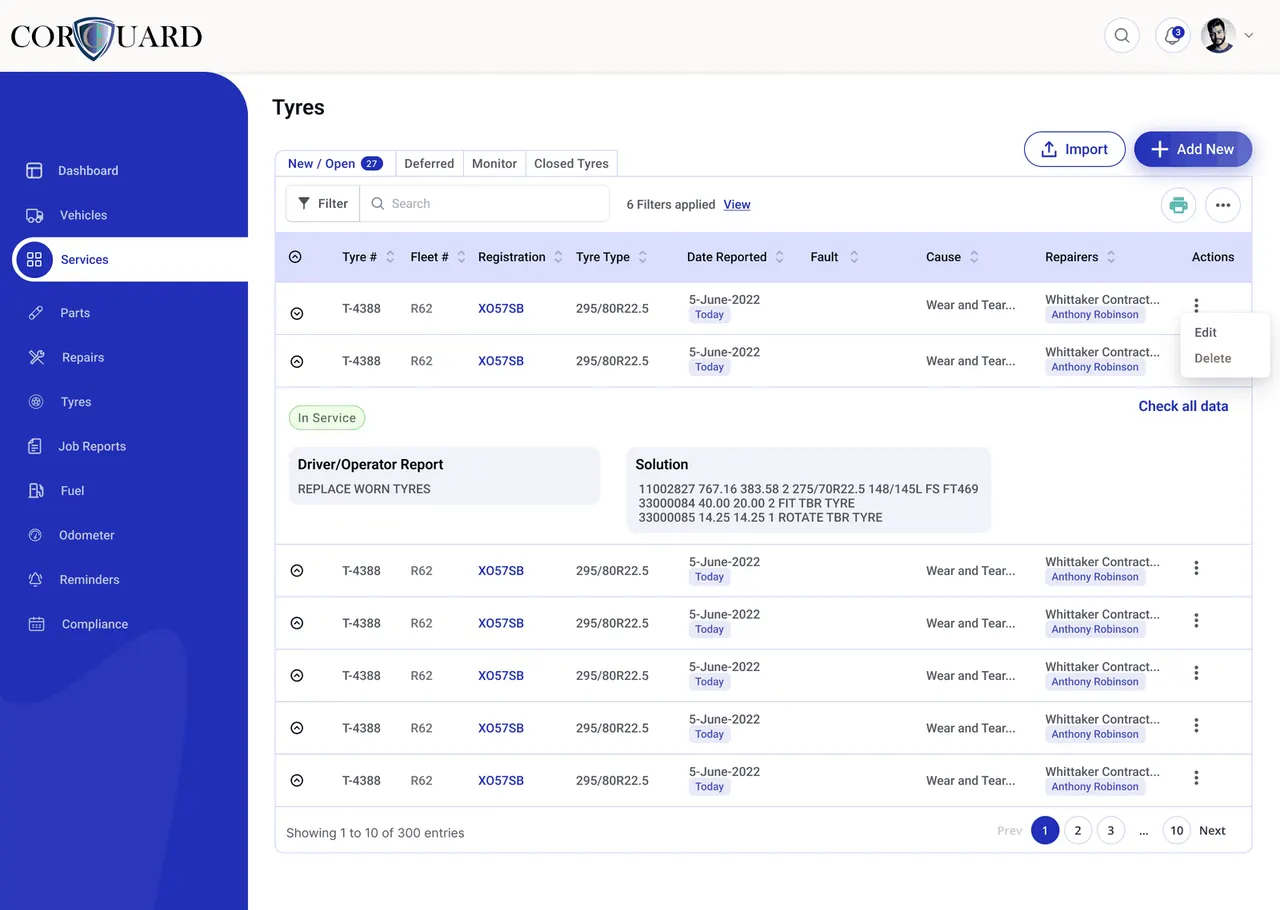
Driver diary checks
Connect fatigue and driver diary review back to manager visibility.
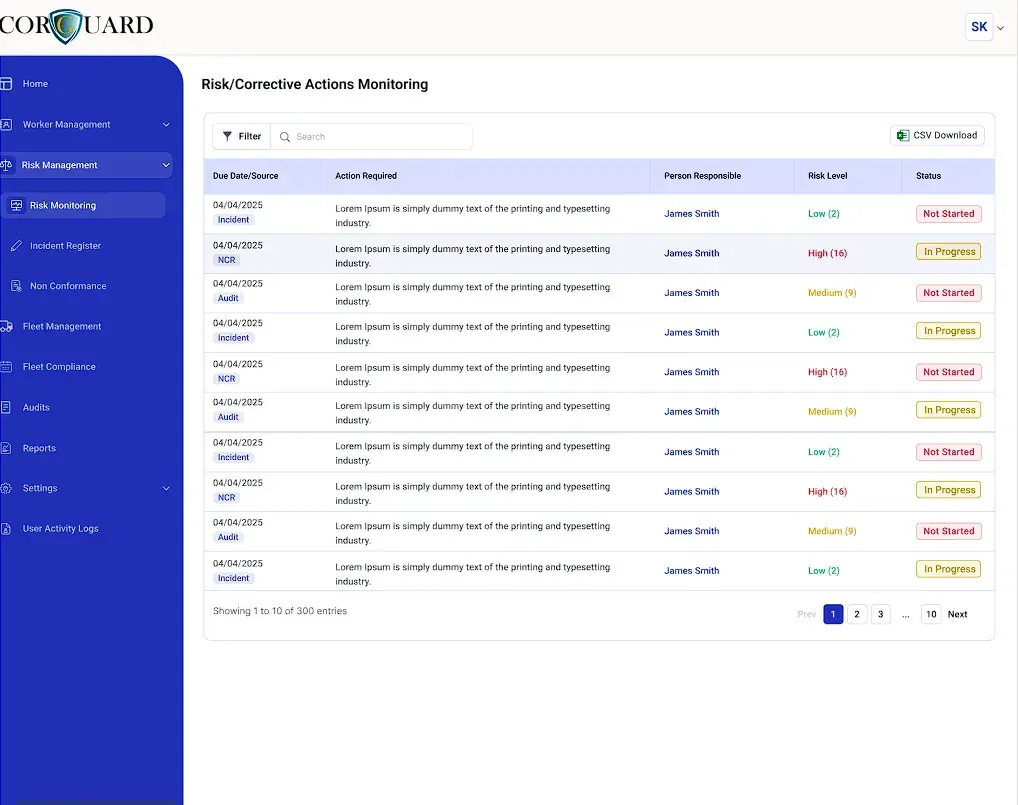
Corrective actions
Turn audit findings, hazards and incidents into tracked actions.
Keep exploring
Related Chain of Responsibility reading
MAEZ insight
Navigating Key Challenges in Supply Chain Risk Management
Explore key challenges in supply chain risk management issues and discover strategies to build resilience against economic, environmental, and cybersecurity threats.
MAEZ insight
Effective Training Strategies for CoR Compliance
Learn how to train for CoR compliance with effective strategies that turn regulatory knowledge into practical risk management in your supply chain.
MAEZ insight
Mastering HVNL Compliance: Best Practices Explained
Discover HVNL compliance best practices and learn how to manage fatigue, vehicle standards, and more under the Chain of Responsibility framework.
MAEZ insight
Understanding Supply Chain Risk Management Software
Explore how Supply Chain Risk Management software transforms data into actionable insights, helping you mitigate risks and enhance supply network efficiency.
MAEZ insight
Understanding Common Issues in Chain of Responsibility
Discover common issues in the Chain of Responsibility pattern and learn how to avoid them. Perfect for developers seeking practical solutions.
MAEZ insight
Enhancing Transport Safety: Effective Strategies and Tips
Discover how to improve transport safety with effective strategies. Learn to integrate safety culture and technology for better performance.
Frequently asked questions
Questions people ask about this topic
What are the four pillars of a Safety Management System for transport operators?
The four pillars are Safety Policy, Safety Risk Management, Safety Assurance, and Safety Promotion. Together they embed safety into every business process—from setting leadership direction and identifying hazards through to monitoring performance, verifying controls, and building workforce capability.
How does an SMS differ from traditional safety programs?
An SMS takes a systems-thinking approach that addresses root causes across the organisation—such as scheduling pressures and contractual expectations—rather than focusing narrowly on reactive compliance or individual behaviour. This aligns closely with Chain of Responsibility obligations under the Heavy Vehicle National Law.
What role does the hierarchy of controls play in SMS risk management?
The hierarchy of controls guides control selection by prioritising elimination of hazards first, then engineering controls that reduce exposure without relying on worker behaviour, and finally administrative controls and personal protective equipment as less effective supplementary layers.
How do leading and lagging indicators support safety assurance?
Lagging indicators such as injury rates show historical performance, while leading indicators such as training completion, hazard reports submitted, and corrective actions closed provide forward-looking insight into system health. Using both gives comprehensive visibility of SMS effectiveness.
Why is executive due diligence important under the HVNL for SMS?
The Heavy Vehicle National Law places a primary duty on each party in the Chain of Responsibility and a separate due-diligence duty on executives of legal entities. An effective SMS policy pillar helps executives demonstrate that commitment by articulating safety objectives, accountability, and resource allocation.