
MAEZ insight
Effective Training Strategies for CoR Compliance
Practical strategies for Chain of Responsibility training that turn HVNL regulatory knowledge into real risk management across your supply chain, from needs analysis to delivery.

Contractor controls should be verified before the work starts.

Receiving windows, site rules, and unloading delays can all shape the transport task.
Unloading decisions can affect safety, scheduling, and responsibility.

Managers need a clear view of gaps before audit or enforcement pressure arrives.
Consignors
Freight terms, delivery windows, and KPIs must not push drivers into speed, fatigue, or mass breaches.
Consignees
Receiving rules, site access, and unloading delays are CoR controls that need to be set and evidenced.
Loaders
Mass, dimension, and load restraint decisions need documented checks, not assumptions.
Managers
Executives and managers need due-diligence evidence that the Safety Management System is actually working.
Why Effective CoR Training Matters
Building capability, not ticking boxes

Effective Chain of Responsibility training strategies build genuine capability across every supply chain party by connecting HVNL legal duties to daily operational decisions. The most effective approaches combine role-specific needs analysis, scenario-based learning, and documented evidence of competence — turning regulatory knowledge into practical, defensible risk management rather than tick-box compliance.
Training for CoR compliance succeeds when every person in the chain understands their legal obligations under the Heavy Vehicle National Law (HVNL). From executives who control business operations to schedulers who influence driver decisions, each role carries specific duties. Effective training makes these duties clear, actionable, and measurable.
This requires structured learning pathways that address your organisation's specific heavy vehicle operations, documented training records that demonstrate ongoing competence, and evaluation methods that confirm people can actually apply CoR principles to real situations. Companies that invest in proper CoR training see fewer incidents, stronger vendor relationships, and reduced insurance costs.
For a broader overview of how CoR works, see our guide to About Chain of Responsibility.
What Are the CoR Training Requirements?
Mapping HVNL duties to the people who carry them
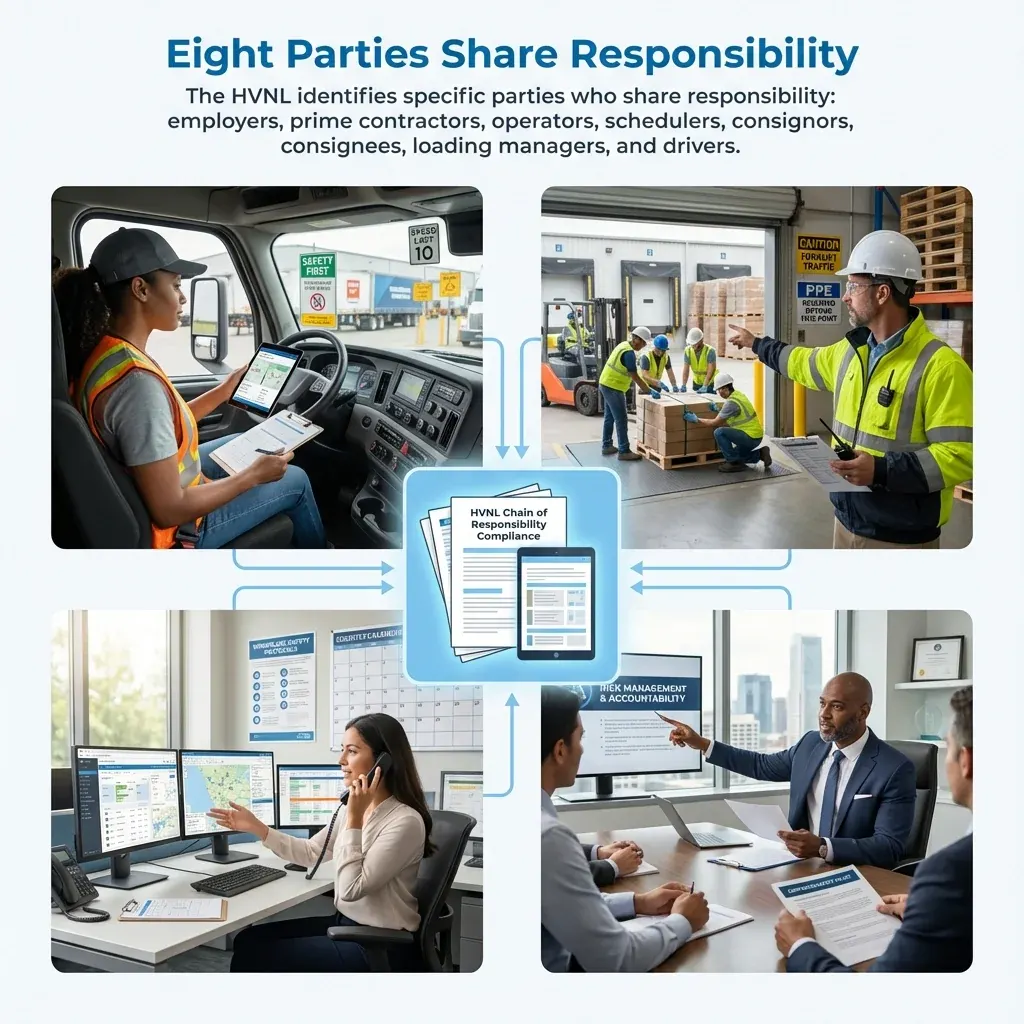
CoR training requirements stem from the HVNL, which establishes legal duties for all parties in the supply chain. Understanding these requirements provides the foundation for designing effective training programs.
The HVNL identifies specific parties who share responsibility for breaches of road transport laws. These parties include employers, prime contractors, operators, schedulers, consignors, consignees, loading managers, and drivers. Each party has duties related to speed, fatigue, vehicle mass, dimension, loading, and vehicle standards.
Training must address the specific duties relevant to each party's role. A scheduler needs different competencies than a loading supervisor. Both require an understanding of how their decisions affect driver safety and compliance, but the focus differs.
For a detailed breakdown of what each duty holder needs to understand, see our resource on Chain of Responsibilities for Australian HVNL duty holders.
What Are the Legal Obligations Under the HVNL?
Primary duties, secondary duties, and the reality of penalties

The primary duty under the HVNL requires parties to ensure their conduct does not cause or contribute to breaches. This positive duty demands active management, not passive compliance. Training programs must equip participants to identify risks, implement controls, and monitor effectiveness.
Secondary duties include providing information, responding to complaints, and maintaining records. These operational requirements form the daily practice of CoR compliance. Training should make these duties concrete and manageable.
The HVNL also imposes a specific duty on executives of legal entities, reflecting the principle of shared responsibility across the chain. Penalties for breaches range from substantial fines to imprisonment for severe violations. This reality underscores why training must go beyond awareness to build genuine competence.
For operators preparing for upcoming regulatory changes, our guide to HVNL 2026 changes and CoR training readiness provides practical direction.
How Effective Training Functions as Risk Management
Turning knowledge into documented, defensible practice
Effective CoR training functions as a risk management tool. It identifies where your organisation's activities intersect with HVNL requirements, then builds capability to manage those intersections safely.
Training should address both knowledge and application. Participants need to understand CoR principles and demonstrate how to apply them in their specific roles. This requires scenario-based learning that reflects your actual operations.
Documentation of training provides evidence of due diligence. Maintaining records of who received what training, when, and with what assessment results demonstrates your organisation's commitment to compliance. These records become critical if your organisation faces audit or enforcement action.
For a structured approach to identifying and closing gaps, see our resource on using a chartered risk lens for CoR gap review.
Step 1: How to Conduct a Training Needs Analysis
Mapping roles, competencies, and gaps before you design anything

A training needs analysis maps your organisation's CoR responsibilities to the competencies required to meet them. Start by documenting all roles that interact with heavy vehicle operations — including obvious positions like transport coordinators and warehouse supervisors, but also less obvious roles such as procurement staff who negotiate delivery schedules or sales teams who promise delivery times.
Identify Parties in Your Chain
Create a matrix showing which HVNL party categories apply to each role in your organisation. A single employee may fit multiple categories. For example, a logistics manager might act as both an employer and a scheduler.
- Transport Manager — Employer, Operator: vehicle maintenance, driver fatigue management, safe systems
- Warehouse Supervisor — Loading Manager: load restraint, vehicle mass compliance, safe loading procedures
- Procurement Manager — Consignor: delivery scheduling, vendor selection, transport arrangements
- Site Receiver — Consignee: unloading timeframes, driver amenities, reporting issues
Assess Current Competency Levels
Evaluate existing knowledge through interviews, observations, and if appropriate, brief assessments. This baseline shows where gaps exist and helps prioritise training efforts. Look for patterns — do schedulers understand how tight timeframes contribute to speeding and fatigue? Do loading staff know mass limits and load restraint requirements? Do executives recognise their accountability for systems that create compliance risks?
Define Learning Objectives
For each role, write clear learning objectives that describe what participants will be able to do after training. Use action verbs: identify, explain, demonstrate, implement, evaluate. Objectives should reflect workplace application. Instead of "understand fatigue management," write "identify scheduling practices that contribute to driver fatigue and implement alternatives that maintain compliance."
Share these objectives with participants before training. Clear expectations improve engagement and outcomes. If you need structured support for this process, consider CoR consulting to help map your obligations.
Step 2: How to Design Role-Specific Training Programs
Content, delivery, materials, and assessment that build real competence

With your needs analysis complete, you can design training programs tailored to each role. The goal is building practical competence in managing CoR responsibilities. Training design involves selecting content, choosing delivery methods, creating materials, and planning assessments — all aligned with the learning objectives you defined.
Structure Training Content
Organise content into modules that build logically. Start with foundational concepts before moving to role-specific application:
- Introduction to HVNL and CoR principles (context and legal framework)
- Duties of parties in the chain (general understanding)
- Role-specific responsibilities (focused on participant's actual duties)
- Practical application and case studies (workplace scenarios)
- Systems and documentation requirements (operational tools)
Choose Appropriate Delivery Methods
Match delivery methods to content and audience. Complex concepts benefit from face-to-face instruction with opportunities for questions. Procedural content may work well in online modules with demonstration videos. Consider blended approaches — online modules can deliver foundational content efficiently, freeing face-to-face sessions for scenario work and discussion.
Interactive elements increase retention. Include activities like risk identification exercises, policy review workshops, and incident analysis discussions. Participants should actively work with CoR concepts, not passively receive information.
Develop Training Materials and Plan Assessments
Create materials that participants can reference after training — participant workbooks, quick reference guides for common decisions, checklists for routine compliance activities, examples from your actual operations, and contact information for questions and support. Use plain language and define technical terms when first used.
Design assessments that measure both knowledge and application. Knowledge assessments might include multiple-choice questions or short-answer responses. Application assessments use scenarios requiring participants to identify risks, select controls, or develop action plans. Record assessment results as part of your training documentation.
For ready-to-use training options, explore our Chain of Responsibility course and broader CoR training programs.
Step 3: How to Deliver Engaging and Practical Training
Making sessions relevant, interactive, and directly applicable
Training design matters little if delivery fails to engage participants or connect to their work. Effective delivery brings CoR compliance to life through relevant examples and active participation. Whether you deliver training internally or engage external providers, focus on making sessions interactive, practical, and directly applicable to participants' roles.
Establish Relevance from the Start
Open sessions by connecting CoR compliance to participants' daily work. Explain how their decisions affect driver safety, organisational risk, and business outcomes. Make the "why" clear before diving into the "what" and "how."
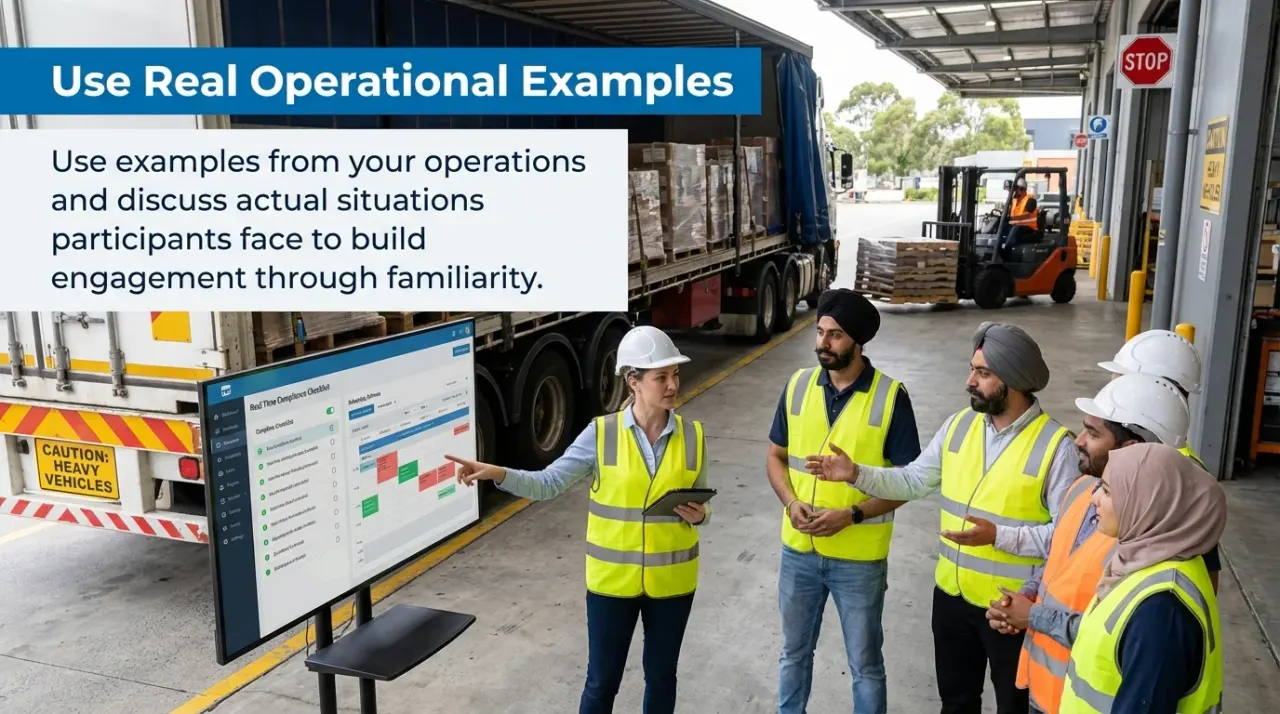
Use examples from your operations. Discuss actual situations participants face: scheduling challenges, loading pressures, vendor negotiations, or delivery commitments. Familiarity builds engagement.
Facilitate Active Learning
Limit lecture time. Present core concepts efficiently, then move to activities where participants work with the material. Small group discussions, case study analysis, and problem-solving exercises create active learning opportunities.
Scenario-based learning works particularly well for CoR training. Present realistic situations requiring participants to identify parties in the chain and recognise potential breaches.
For guidance on training executives and managers specifically, see our resource on CoR training for executives and managers.
How MAEZ works
Find the gaps. Fix the system. Prove the controls.
MAEZ helps transport operators deal with the compliance risk they already know is there. We help get the Safety Management System in order, protect NHVAS accreditation, reduce fine exposure, and connect training, evidence, and CoRGuard workflows where software is needed.
Find
Identify what is exposed before an auditor or regulator does.
Fix
Build the SMS controls around how the transport business actually runs.
Prove
Use CoRGuard where records, reminders, diaries, audits, and evidence need structure.
From advice to evidence
From MAEZ advice to a working Safety Management System
Advisory work should leave a practical implementation trail. These examples show how CoRGuard supports records, fatigue and driver diary checks, maintenance, audits, document control, inductions, corrective actions, and evidence review after MAEZ identifies the gaps.
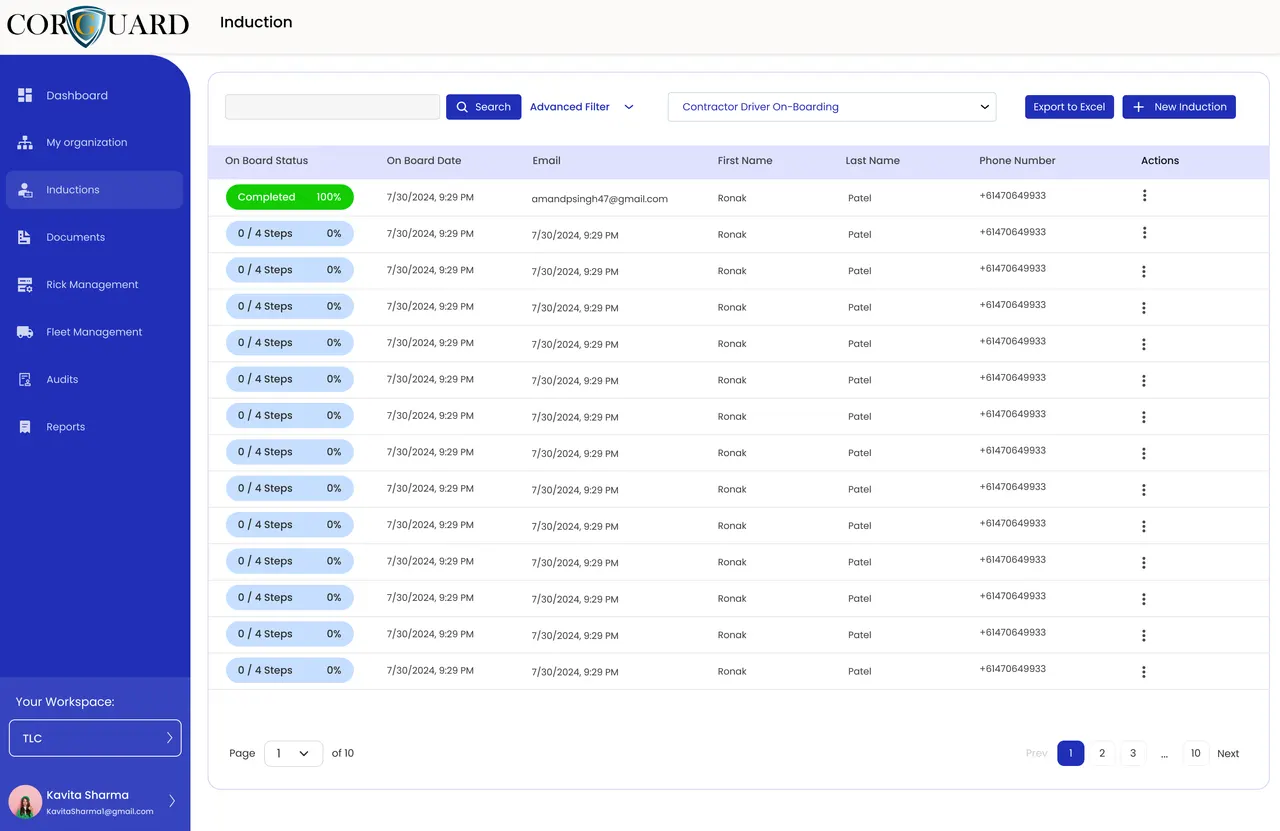
Training records
Connect training completion from cortraining.com.au to evidence and follow-up.
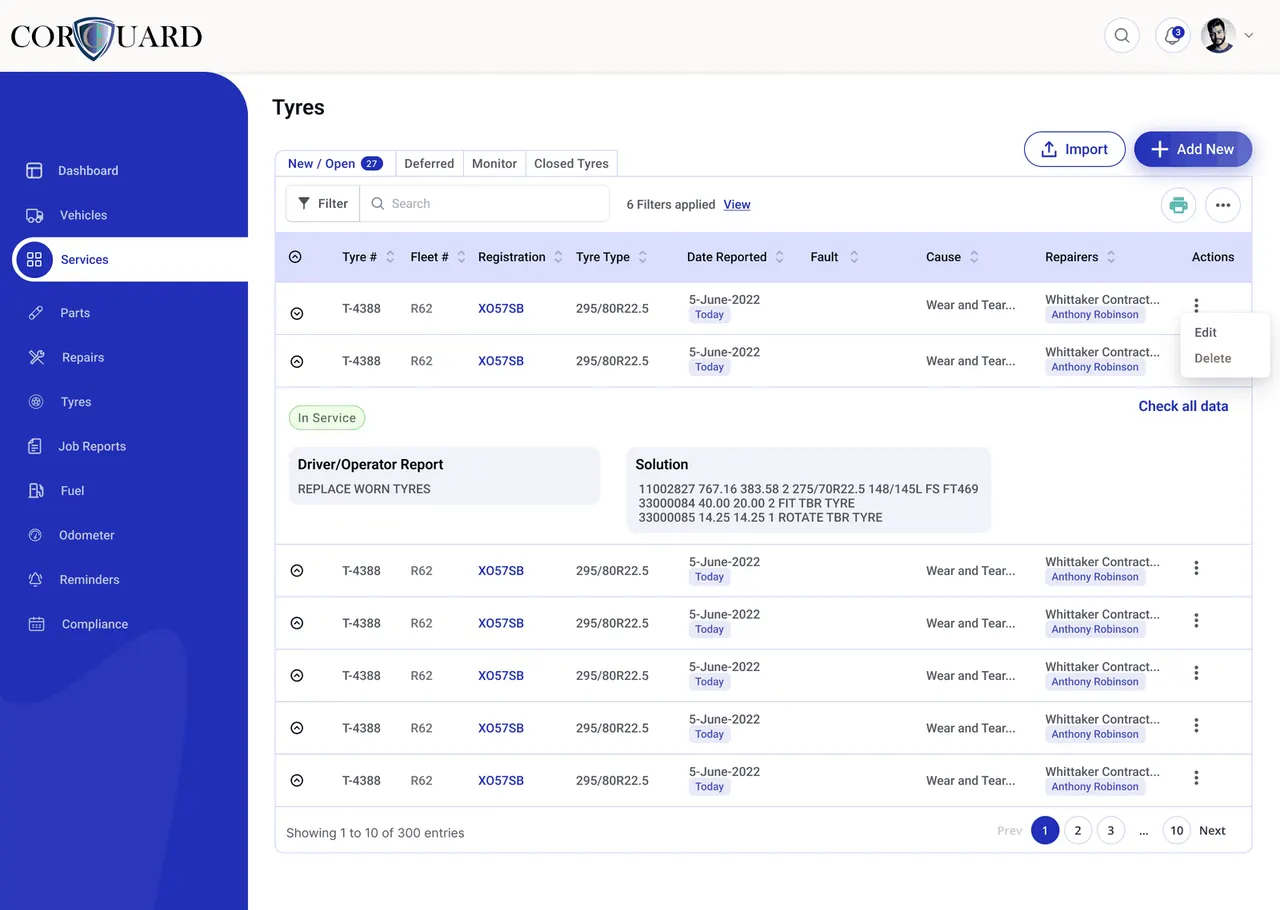
Driver diary checks
Connect fatigue and driver diary review back to manager visibility.
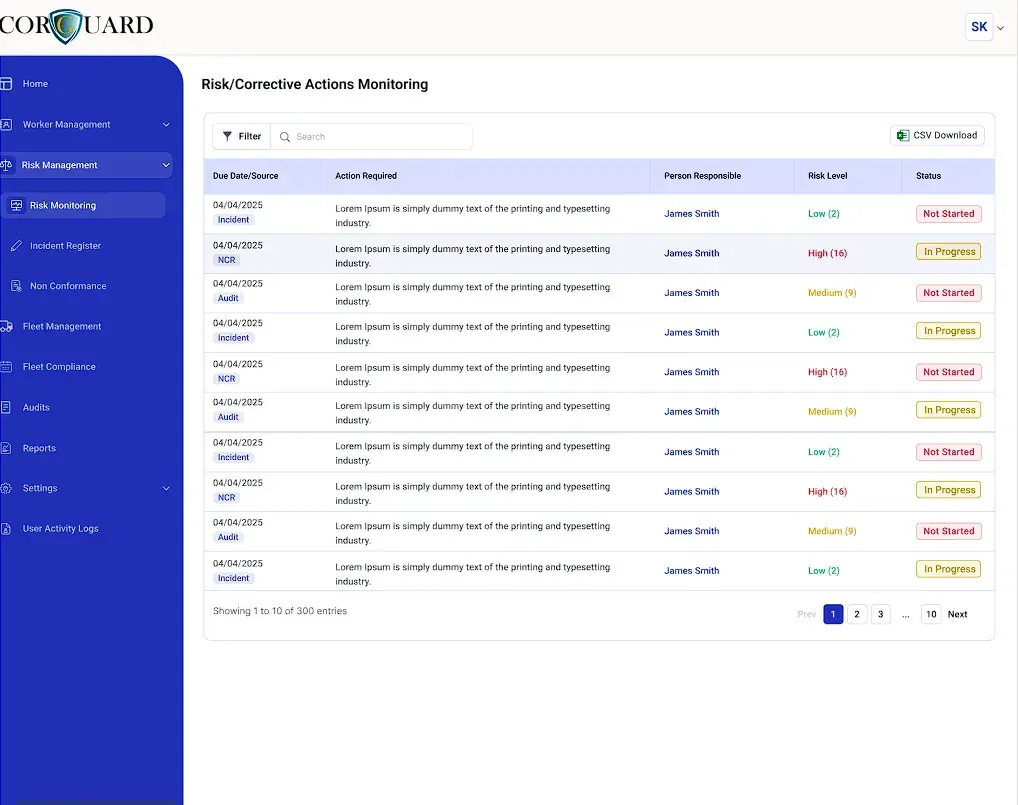
Corrective actions
Turn audit findings, hazards and incidents into tracked actions.
Keep exploring
Related Chain of Responsibility reading
MAEZ insight
Mastering HVNL Compliance: Best Practices Explained
Discover HVNL compliance best practices and learn how to manage fatigue, vehicle standards, and more under the Chain of Responsibility framework.
MAEZ insight
Understanding Supply Chain Risk Management Software
Explore how Supply Chain Risk Management software transforms data into actionable insights, helping you mitigate risks and enhance supply network efficiency.
MAEZ insight
Understanding Common Issues in Chain of Responsibility
Discover common issues in the Chain of Responsibility pattern and learn how to avoid them. Perfect for developers seeking practical solutions.
MAEZ insight
Enhancing Transport Safety: Effective Strategies and Tips
Discover how to improve transport safety with effective strategies. Learn to integrate safety culture and technology for better performance.
MAEZ insight
Understanding Common Transport Safety Issues: A Guide
Explore common transport safety issues affecting global operations. Learn preventive measures to protect lives and improve safety standards.
MAEZ insight
Effective Strategies for Managing Global Supply Chain Risks
Discover effective global supply chain risk management strategies to mitigate operational challenges and enhance supply chain resilience.
Frequently asked questions
Questions people ask about this topic
What makes CoR training effective under the HVNL?
Effective CoR training connects HVNL legal duties to the daily operational decisions each supply chain party makes, using role-specific needs analysis, scenario-based learning, and documented assessment records. This approach builds genuine capability rather than tick-box compliance, producing fewer incidents and stronger audit defensibility.
Who needs Chain of Responsibility training in a transport business?
Under the HVNL, all parties in the supply chain need training — including employers, prime contractors, operators, schedulers, consignors, consignees, loading managers, and drivers. Each role has specific duties related to speed, fatigue, mass, dimension, loading, and vehicle standards that training must address.
What is a CoR training needs analysis and why does it matter?
A CoR training needs analysis maps your organisation's HVNL party categories to the competencies each role requires, identifies knowledge gaps through assessment, and defines learning objectives with action verbs. It ensures training is targeted, role-specific, and grounded in the actual decisions your people make every day.
How should CoR training assessments be documented?
Record who received what training, when it was delivered, and what assessment results were achieved — for both knowledge and application components. These records provide evidence of due diligence and become critical if your organisation faces audit or enforcement action under the HVNL.
What delivery methods work best for CoR training?
Blended approaches work well: online modules can deliver foundational HVNL content efficiently, freeing face-to-face sessions for scenario work, discussion, and active learning. Complex concepts benefit from in-person instruction, while procedural content suits online formats with demonstration videos.