
MAEZ insight
Top Strategies for Effective Supply Chain Risk Management
Practical supply chain risk management strategies for Australian transport operators — supplier visibility, dependency mapping, CoR-aligned controls, and cyber risk reduction.

Contractor controls should be verified before the work starts.

Receiving windows, site rules, and unloading delays can all shape the transport task.
Unloading decisions can affect safety, scheduling, and responsibility.

Managers need a clear view of gaps before audit or enforcement pressure arrives.
Consignors
Freight terms, delivery windows, and KPIs must not push drivers into speed, fatigue, or mass breaches.
Consignees
Receiving rules, site access, and unloading delays are CoR controls that need to be set and evidenced.
Loaders
Mass, dimension, and load restraint decisions need documented checks, not assumptions.
Managers
Executives and managers need due-diligence evidence that the Safety Management System is actually working.
What is supply chain risk management?
A systematic approach to identifying, assessing, and mitigating disruption across your supplier network

Effective supply chain risk management (SCRM) systematically identifies, evaluates, and addresses potential disruptions across your supplier ecosystem. For Australian transport operators, the top strategies include building complete supplier visibility, mapping dependencies and single points of failure, categorising risks across operational, financial, compliance, and cyber domains, and embedding continuous evidence-based review rather than annual checkbox audits.
Under the Heavy Vehicle National Law, Chain of Responsibility obligations mean accountability extends up and down the supply chain — not just to the party behind the wheel. Supplier visibility and documented controls are part of meeting that duty.
SCRM extends beyond simple vendor selection to encompass ongoing assessment of financial stability, operational capacity, compliance adherence, and security posture. The scope covers both internal operations and external dependencies.
Effective SCRM requires clear accountability structures. Risk managers coordinate with procurement, operations, legal, and information security teams to maintain visibility across the entire supply network. This cross-functional approach ensures that risk identification happens at multiple touchpoints throughout supplier relationships.
The four primary risk categories
Structuring your assessment framework around operational, financial, compliance, and cyber risks
Supply chain risks typically fall into four broad categories that help organisations structure their assessment frameworks. Each category requires distinct assessment methodologies and mitigation strategies.
Operational Risk
Production delays, quality issues, and capacity constraints. Assessment focuses on manufacturing capabilities, logistics networks, and inventory management.
Financial Risk
Supplier bankruptcy, payment defaults, and currency fluctuations. Assessment focuses on financial health metrics, credit ratings, and payment terms.
Compliance Risk
Regulatory violations, contractual breaches, and certification lapses. Assessment focuses on regulatory adherence, audit results, and certification status. For transport operators, this includes HVNL mass, dimension, and loading requirements — the law defines minor, substantial, and severe risk breach categories that carry escalating penalties.
Cybersecurity Risk
Data breaches, malware infections, and system compromises. Assessment focuses on security controls, incident history, and access management.
Organisations often discover that a single supplier presents risks across multiple categories, requiring coordinated response efforts.
Why traditional risk approaches fall short
Point-in-time audits, siloed teams, and manual tracking create dangerous blind spots
Point-in-time assessments create dangerous blind spots. Annual audits capture supplier status at a single moment, missing the continuous evolution of risk factors throughout the year.
Siloed risk management compounds the problem. When procurement evaluates suppliers separately from information security teams, critical cybersecurity vulnerabilities remain undetected until incidents occur.
Manual tracking methods cannot scale with supplier network complexity. Spreadsheets and email-based processes break down as organisations manage hundreds or thousands of third-party relationships.
A more effective approach uses chartered risk principles applied to Chain of Responsibility gaps to build continuous, evidence-based review into your supplier oversight — not just annual checkbox exercises.
Why supply chain risk management demands immediate attention
Disruption frequency, cyber threats, and regulatory pressure have all intensified
The frequency and severity of supply chain disruptions have accelerated dramatically. Organisations face mounting pressure from multiple threat vectors simultaneously.
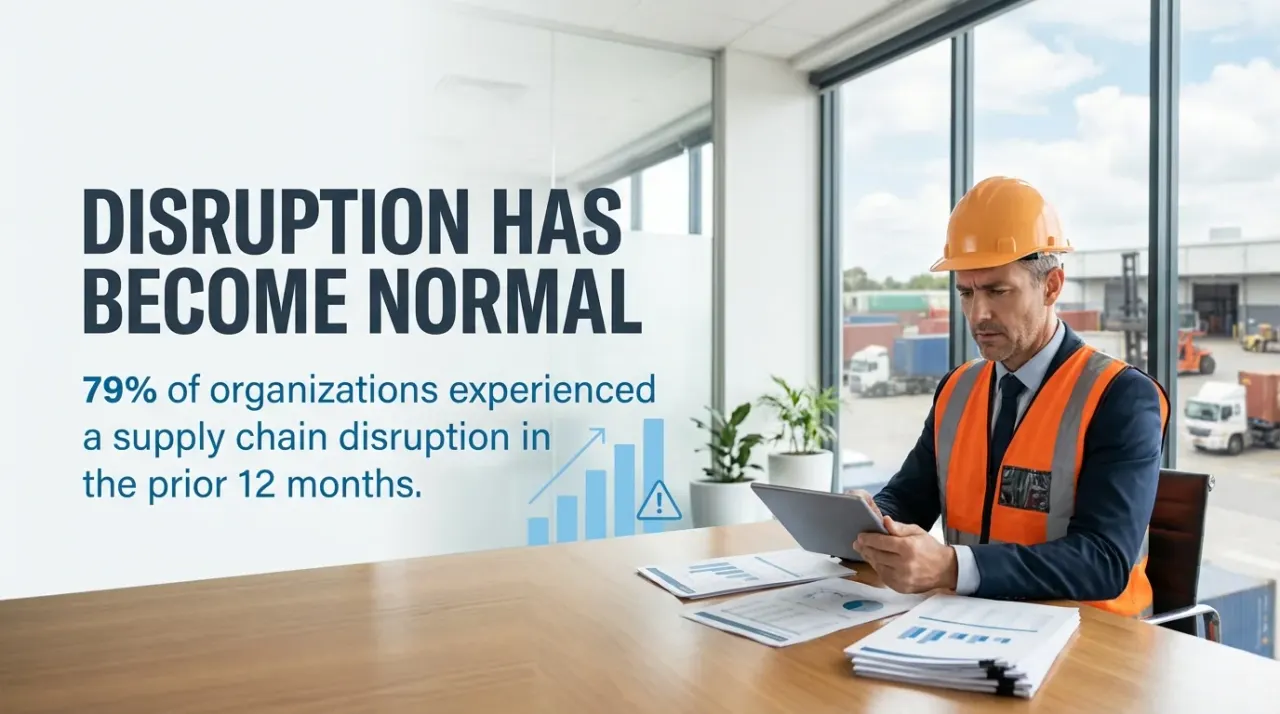
- About 79% of organisations experienced a supply chain disruption in the prior 12 months, demonstrating the widespread nature of these challenges.
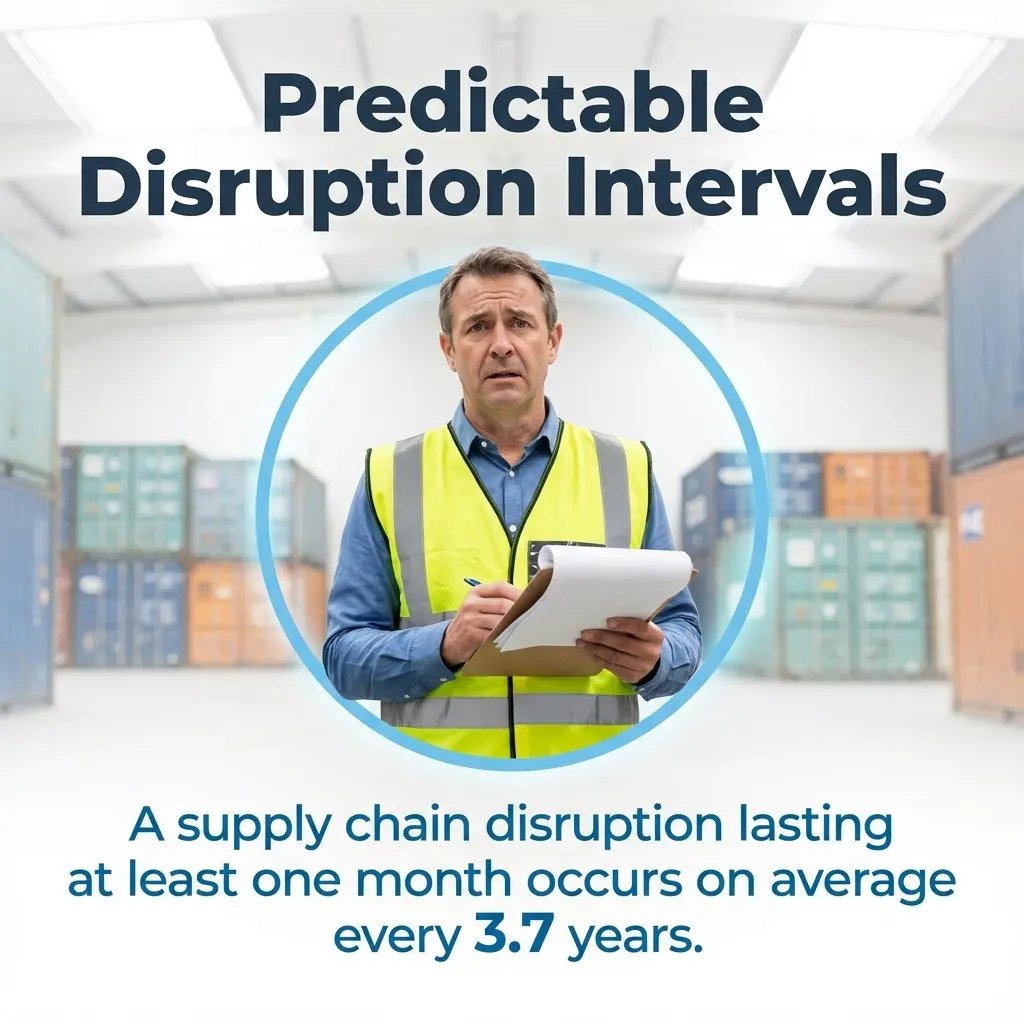
- A supply chain disruption lasting at least one month occurs on average every 3.7 years, creating predictable intervals where businesses face significant operational strain.
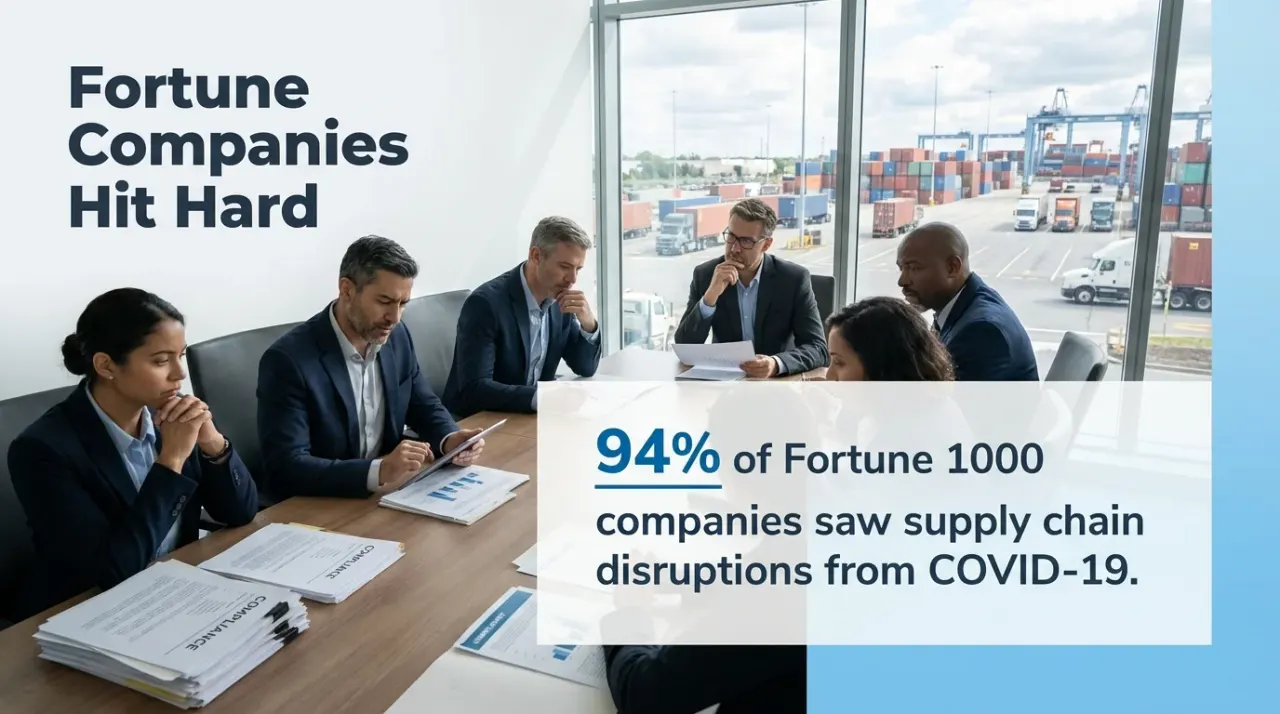
- About 94% of Fortune 1000 companies saw supply chain disruptions from COVID-19, exposing critical dependencies that many organisations hadn't fully mapped.
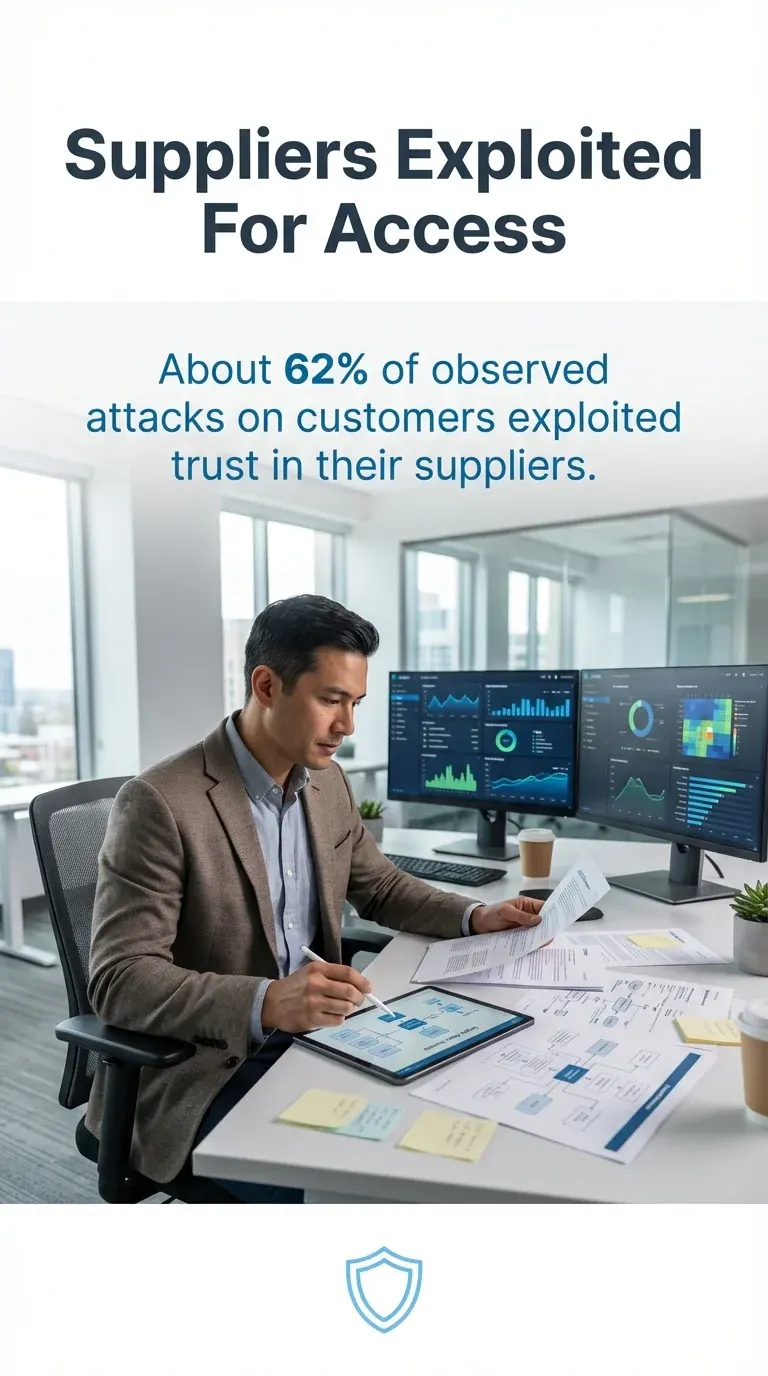
- About 62% of observed attacks on customers exploited trust in their suppliers, making vendor relationships a primary attack vector for malicious actors.
The evolving threat environment
Cyber supply chain attacks have become more sophisticated. Adversaries compromise trusted software suppliers to distribute malware through legitimate update mechanisms, reaching thousands of downstream customers simultaneously. Geopolitical instability creates unpredictable disruptions, requiring agile response capabilities rather than static risk assessments.
The cost of inadequate risk management
Financial impacts extend beyond immediate disruption costs — revenue loss from production stoppages, emergency procurement at premium pricing, and contractual penalties for delivery failures. Reputational damage compounds the financial losses, and regulatory penalties add further burden when compliance violations occur within the supply chain.
Understanding cyber supply chain risk management
Managing threats that exploit digital dependencies within supplier relationships
Cyber supply chain risk management (C-SCRM) addresses threats that exploit digital dependencies within supplier relationships. This specialised discipline focuses on information and communications technology components, software supply chains, and data exchange mechanisms.
The attack surface extends beyond your direct control. When suppliers access your systems, integrate their software into your operations, or handle your sensitive data, they become potential entry points for cyber adversaries.
Key differences from traditional SCRM
- Propagation: A single compromised software component can simultaneously affect thousands of organisations that rely on that supplier.
- Detection timelines: While physical disruptions become immediately apparent, cyber compromises often remain undetected for months, allowing adversaries to establish persistent access.
- Remediation complexity: Addressing a cybersecurity incident requires coordinated response across multiple organisations, technical forensics, and potential system rebuilds.
C-SCRM frameworks like NIST SP 800-161 provide structured approaches for managing these digital risks. These frameworks emphasise continuous assessment rather than periodic audits, recognising that cyber threats evolve constantly.
Establish supplier visibility and dependency mapping
Knowing exactly which suppliers support your operations is the foundation of effective risk management
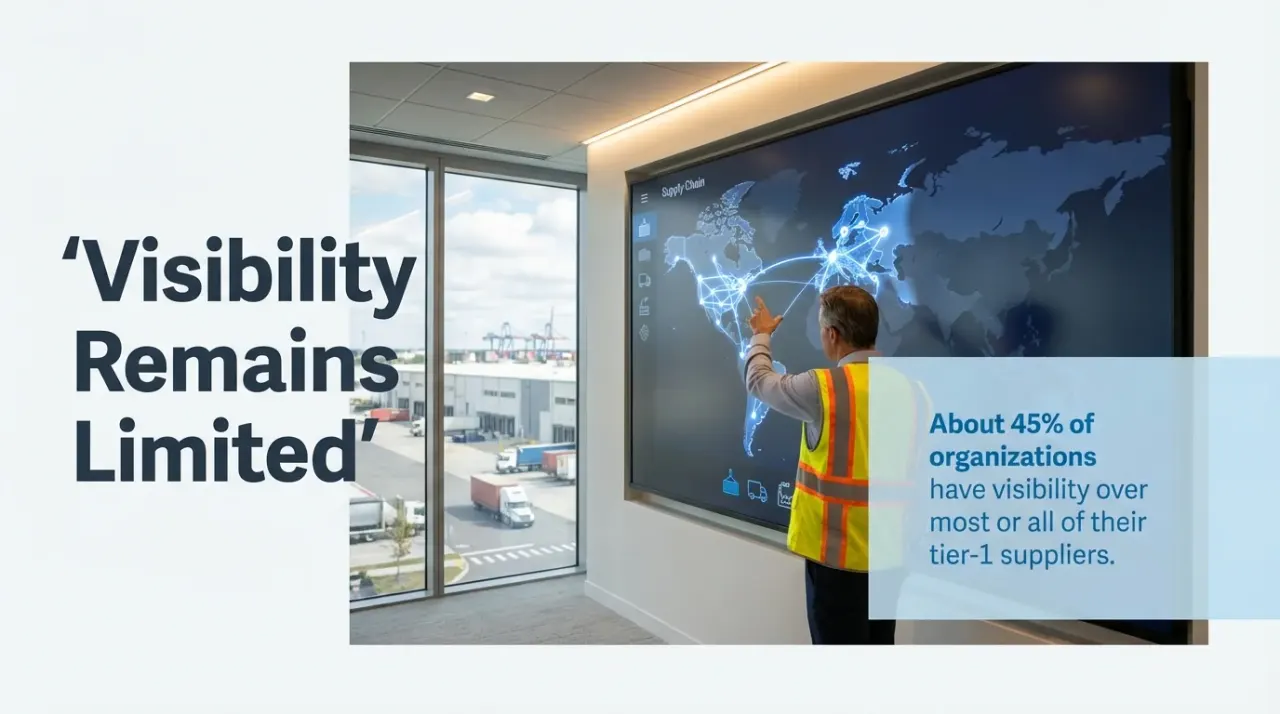
Effective risk management starts with knowing exactly which suppliers support your operations. This foundational step reveals dependencies that might otherwise remain hidden until disruptions occur. Supplier visibility remains surprisingly limited — about 45% of organisations have visibility over most or all of their tier-1 suppliers, leaving significant blind spots in their supply networks.
Comprehensive mapping extends beyond direct suppliers to include sub-tier relationships. Your direct supplier might depend on critical sub-suppliers whose failure would cascade through the supply chain to affect your operations.
For transport operators, this visibility directly supports Chain of Responsibility consulting and SMS readiness — you need to know who is in your chain and what controls they maintain.
How to build your supplier inventory and map dependencies
Consolidate data, categorise suppliers, and trace single points of failure
Build your supplier inventory
Start by consolidating supplier data from multiple systems. Procurement databases, accounts payable records, and contract management systems often contain different subsets of your complete supplier network. Categorise suppliers by their role — critical components, commodity items, or service providers. Document the scope of each relationship: what they provide, which business units depend on them, and whether alternative sources exist.
Map dependencies and single points of failure
- Identify suppliers for whom no immediate alternative exists. These single-source dependencies represent your highest risk concentration.
- Trace sub-tier relationships for critical suppliers. Request supplier lists from your direct suppliers to understand dependencies beyond your immediate contracts.
- Map geographic concentration. If multiple critical suppliers operate in the same region, a single event could disrupt multiple supply streams simultaneously.
Maintain current supplier data
Establish processes for updating supplier information regularly. Supplier ownership changes, facility relocations, and capability expansions all affect your risk profile. Create feedback mechanisms from operations teams — the people managing day-to-day supplier relationships often notice changes before they appear in formal systems. Integrate supplier mapping with your procurement workflows so new suppliers immediately enter your risk management process.
Ready to strengthen your supply chain risk controls? Contact MAEZ for practical compliance advisory tailored to Australian transport operators, or explore our CoR training options to build capability across your team.
How MAEZ works
Find the gaps. Fix the system. Prove the controls.
MAEZ helps transport operators deal with the compliance risk they already know is there. We help get the Safety Management System in order, protect NHVAS accreditation, reduce fine exposure, and connect training, evidence, and CoRGuard workflows where software is needed.
Find
Identify what is exposed before an auditor or regulator does.
Fix
Build the SMS controls around how the transport business actually runs.
Prove
Use CoRGuard where records, reminders, diaries, audits, and evidence need structure.
From advice to evidence
From MAEZ advice to a working Safety Management System
Advisory work should leave a practical implementation trail. These examples show how CoRGuard supports records, fatigue and driver diary checks, maintenance, audits, document control, inductions, corrective actions, and evidence review after MAEZ identifies the gaps.
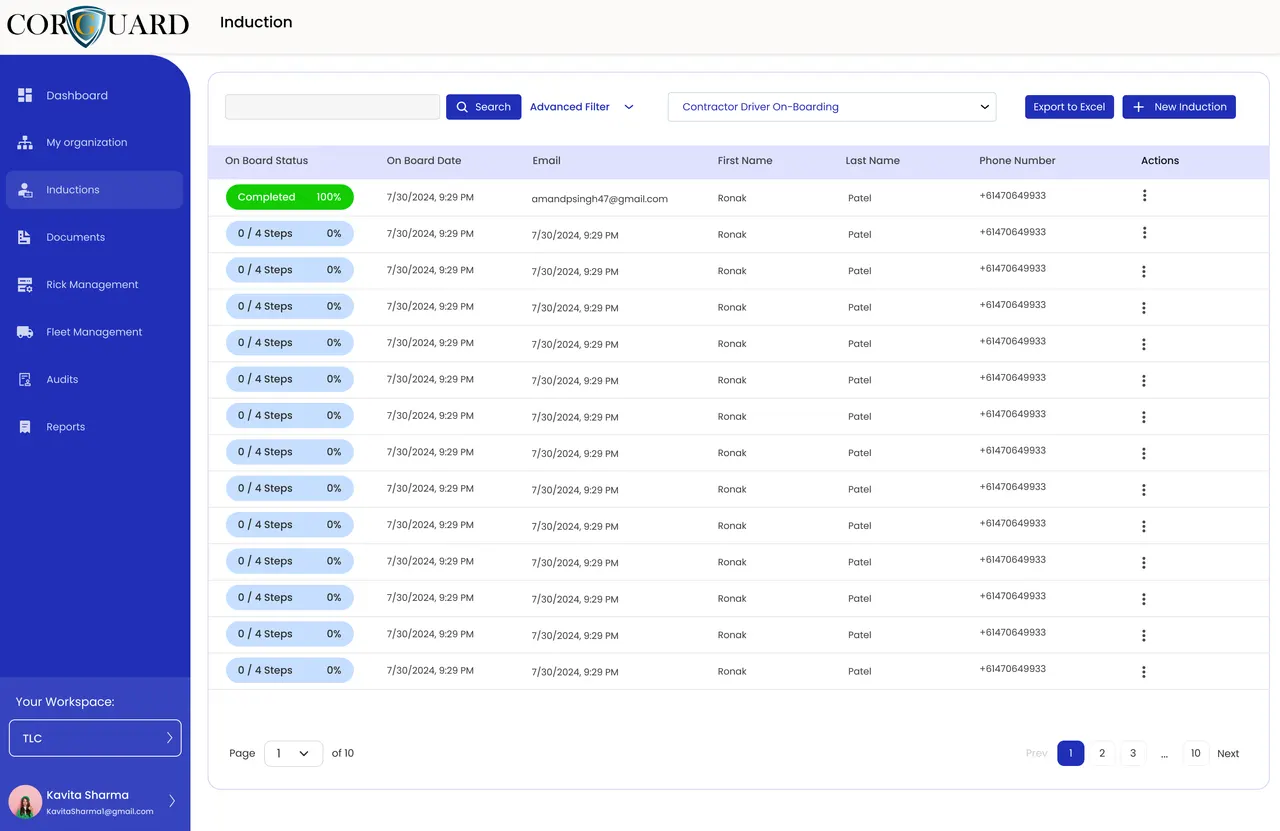
Training records
Connect training completion from cortraining.com.au to evidence and follow-up.
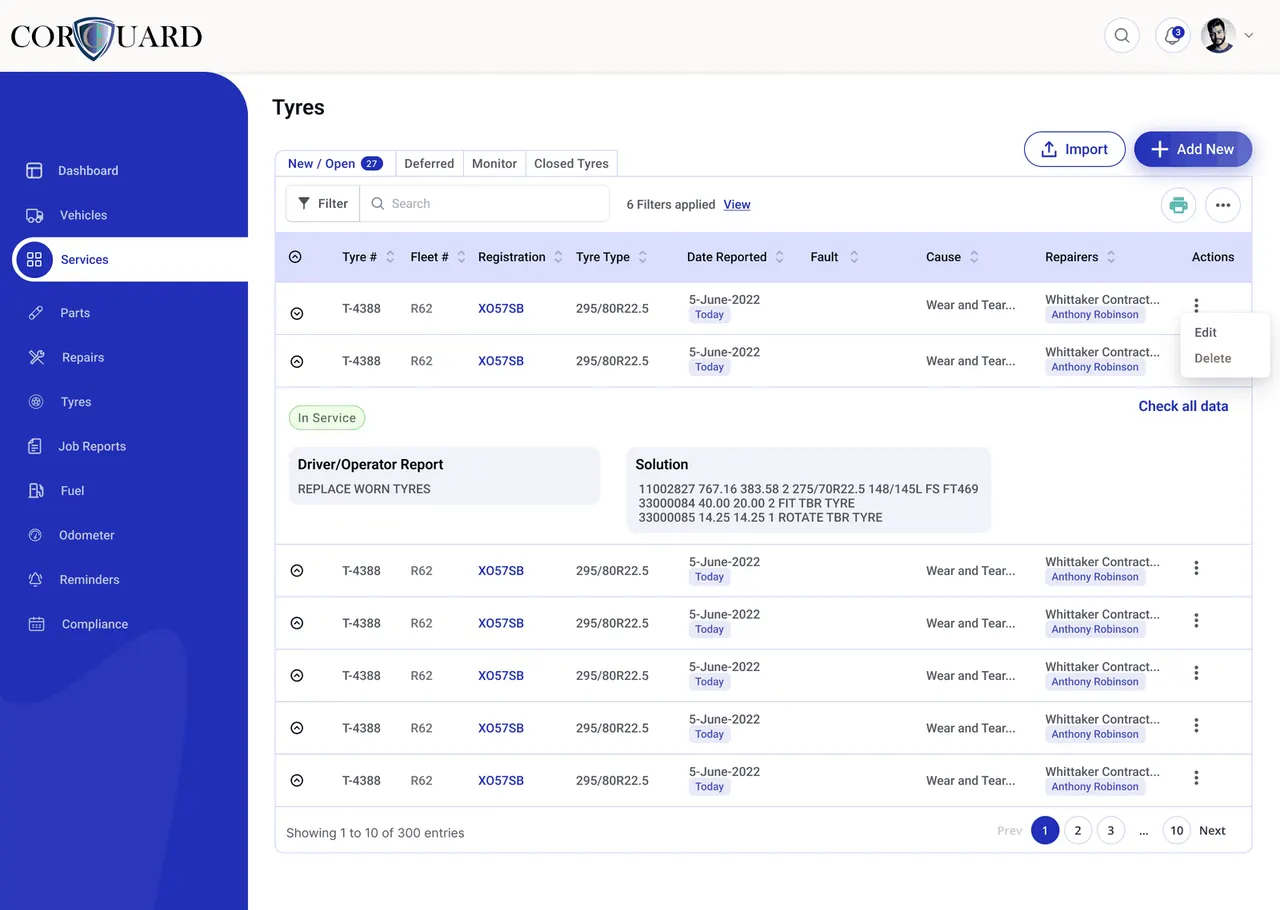
Driver diary checks
Connect fatigue and driver diary review back to manager visibility.
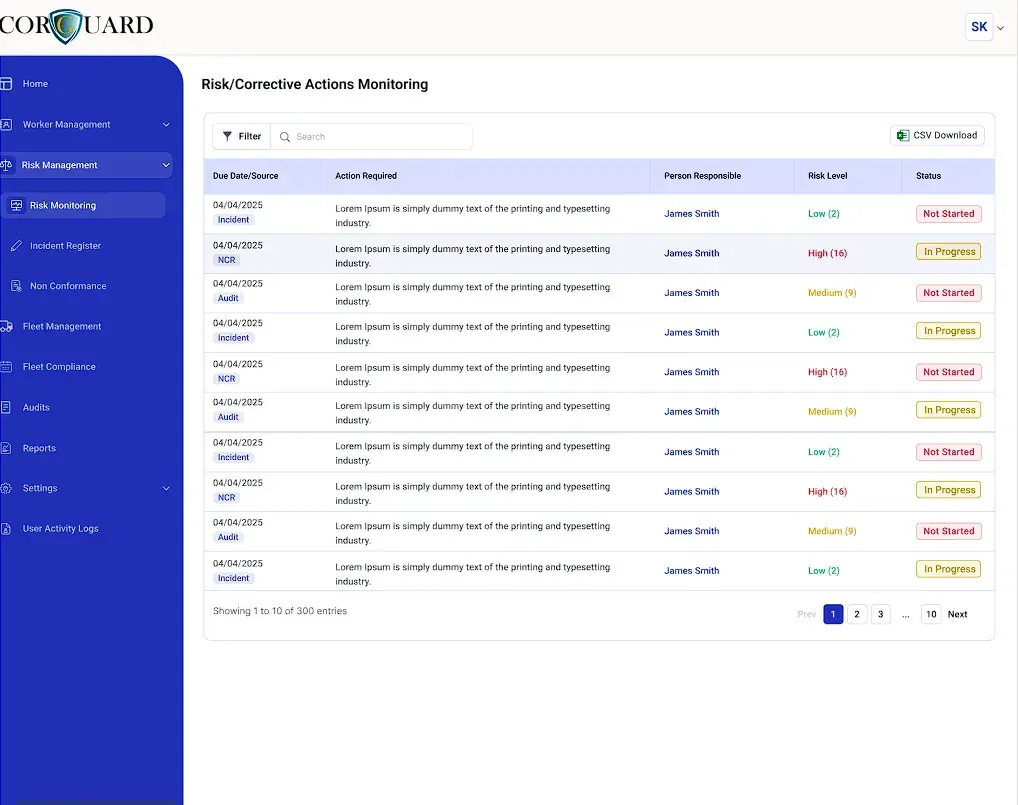
Corrective actions
Turn audit findings, hazards and incidents into tracked actions.
Keep exploring
Related Chain of Responsibility reading
MAEZ insight
Mastering Chain of Responsibility: Top Best Practices
Discover the top best practices for mastering the chain of responsibility. Enhance your coding with flexible, maintainable solutions today!
MAEZ insight
Understanding Common Issues in the Chain of Responsibility Pattern
Explore common issues in the Chain of Responsibility pattern and learn how to address them effectively. Understand its pitfalls and strengths.
MAEZ insight
Latest Developments in Transport Safety Management
Stay updated on the latest transport safety management updates impacting commercial carriers and supply chains. Ensure compliance and strengthen safety systems.
MAEZ insight
Understanding Common Transport Safety Issues Explored
Discover the critical common transport safety issues impacting drivers and fleets. Learn about fatigue, distracted driving, and more in this insightful guide.
MAEZ insight
Crafting an Effective Transport Safety Policy: A Guide
Learn how to develop transport safety policy with our comprehensive guide. Balance compliance and reality for a safer transportation framework.
MAEZ insight
Understanding the Heavy Vehicle National Law Explained
Explore the comprehensive heavy vehicle national law overview, unified safety standards, and the NHVR’s role in regulation across Australia.
Frequently asked questions
Questions people ask about this topic
What is supply chain risk management in the context of Australian transport?
Supply chain risk management systematically identifies, evaluates, and addresses disruptions across your supplier ecosystem. For Australian transport operators, it includes supplier visibility, dependency mapping, and documented Chain of Responsibility controls — because HVNL accountability extends up and down the chain, not just to the driver.
Why do point-in-time audits fail for supply chain risk management?
Annual audits capture supplier status at a single moment, missing the continuous evolution of risk factors throughout the year. When procurement and security teams work in silos, critical vulnerabilities remain undetected, and manual spreadsheets cannot scale as supplier networks grow.
How does Chain of Responsibility relate to supplier visibility?
Under the HVNL, Chain of Responsibility obligations mean every party in the supply chain shares accountability for safety. Operators need to know who is in their chain, what controls each party maintains, and have documented evidence of those controls to demonstrate compliance during audit or enforcement.
What are the four primary supply chain risk categories?
The four primary categories are operational risk (production delays, capacity constraints), financial risk (supplier bankruptcy, payment defaults), compliance risk (regulatory violations, certification lapses), and cybersecurity risk (data breaches, system compromises). A single supplier often presents risks across multiple categories.
What is the difference between traditional SCRM and cyber supply chain risk management?
Cyber SCRM focuses on digital dependencies within supplier relationships — compromised software components can propagate to thousands of organisations simultaneously, and cyber compromises often remain undetected for months. Traditional SCRM primarily addresses physical and operational disruptions that become apparent immediately.