
MAEZ insight
Ensuring Chain of Responsibility: A Comprehensive Guide
Learn how the Chain of Responsibility pattern works, its core mechanics, real-world transport analogies, and how decoupled handler chains improve compliance workflows.

Proof that freight promises do not create unsafe transport pressure.

Loading controls need evidence, not assumptions.
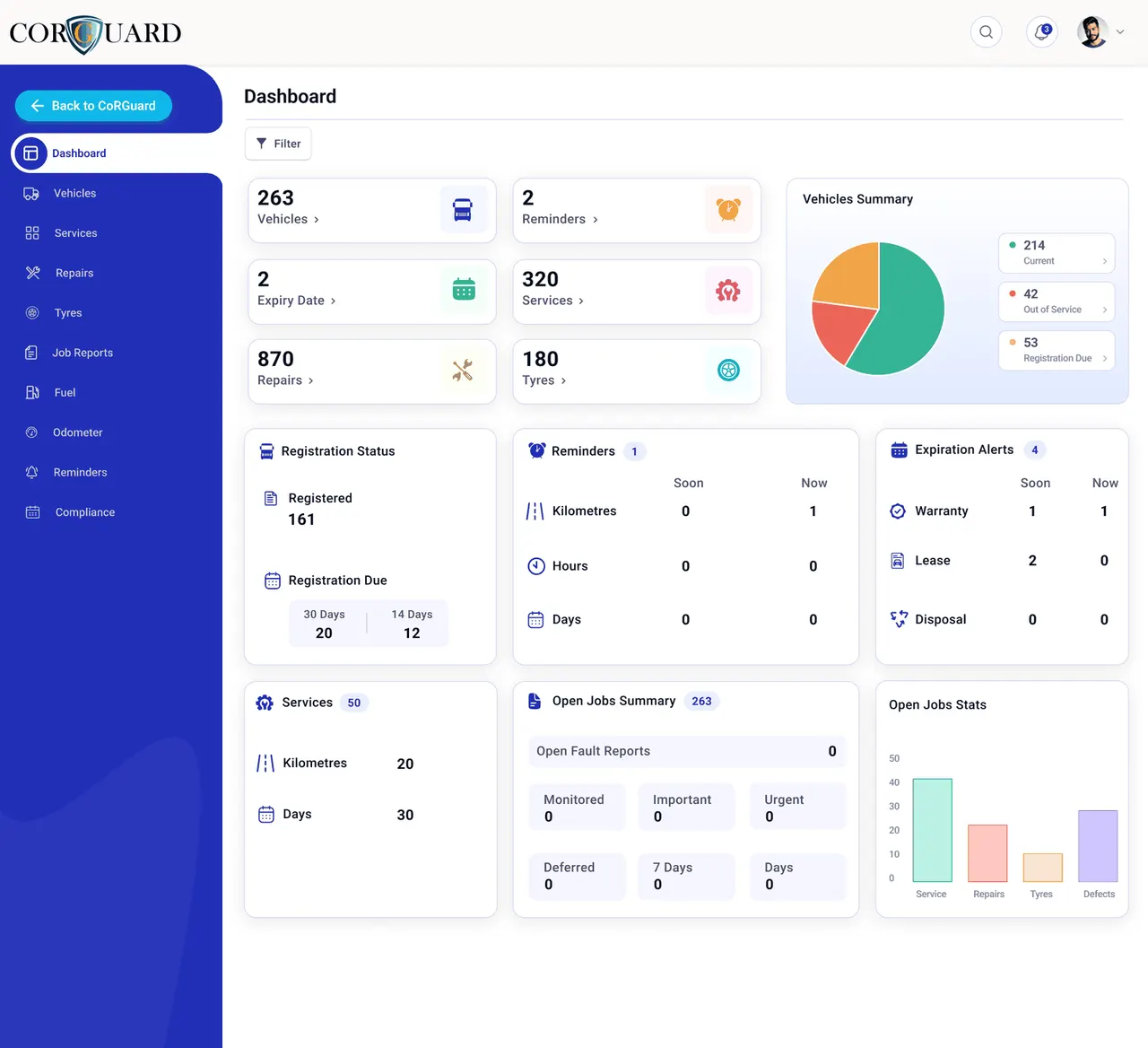
Daily fleet activity has to connect back to duties, controls, and review.

Due diligence means knowing whether the safety system is actually working.
Consignors
Freight terms, delivery windows, and KPIs must not push drivers into speed, fatigue, or mass breaches.
Consignees
Receiving rules, site access, and unloading delays are CoR controls that need to be set and evidenced.
Loaders
Mass, dimension, and load restraint decisions need documented checks, not assumptions.
Managers
Executives and managers need due-diligence evidence that the Safety Management System is actually working.
What is the Chain of Responsibility pattern?
A behavioural design pattern with direct transport compliance parallels

The Chain of Responsibility pattern passes a request along a sequence of handlers, where each handler decides whether to process the request or forward it to the next handler. It decouples the sender from the receiver, letting multiple objects handle a request without rigid routing logic. Transport compliance follows the same principle: each party in the supply chain reviews their scope of responsibility before escalating decisions, mirroring the shared responsibility principle embedded in the Heavy Vehicle National Law.
The pattern was formalised in the 1994 publication Design Patterns: Elements of Reusable Object-Oriented Software by the Gang of Four. Its intent is to avoid coupling the sender of a request to a specific receiver by giving more than one object a chance to handle it. The result is a modular, flexible chain that can be restructured without rewriting client code.
For supply chain professionals, the parallel is immediate. A consignor, loader, operator, and driver each hold distinct duties under the HVNL—each is a handler in the chain, responsible for their own scope before the request (freight, vehicle, journey) moves forward.
Core characteristics of the pattern
Sequential processing, handler independence, and flexible chaining
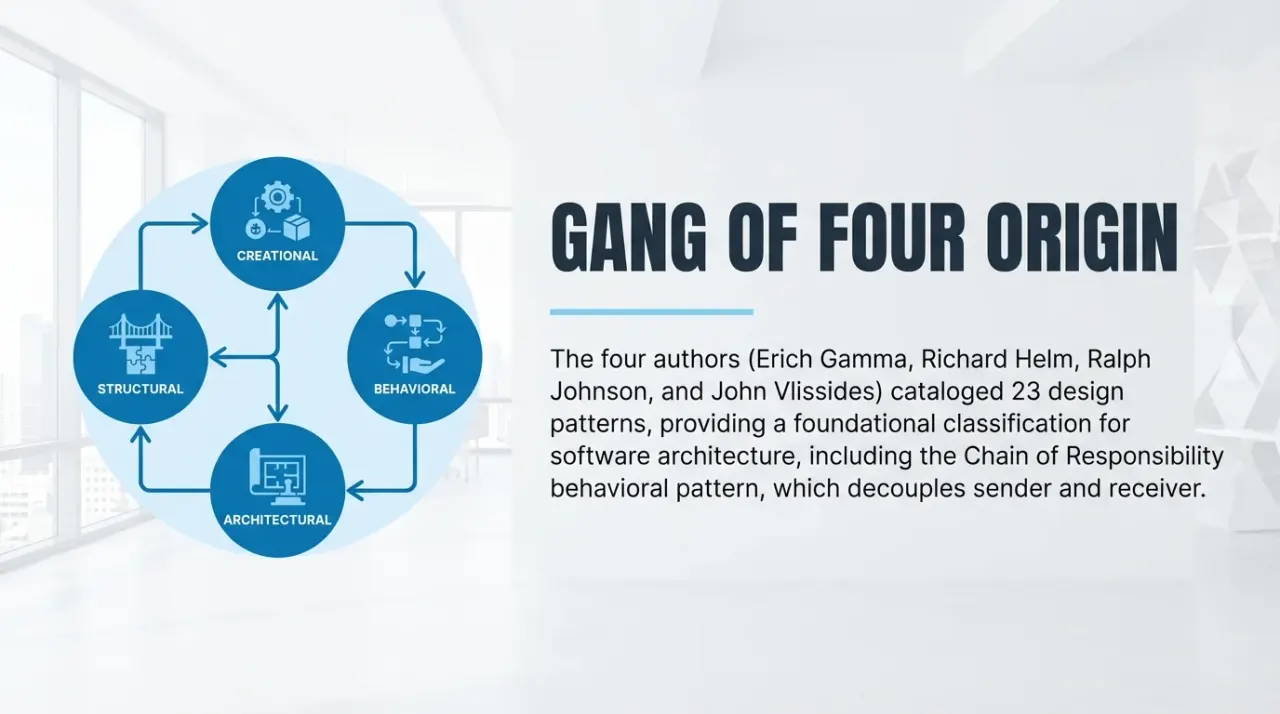
The pattern operates through linked handlers. Each handler maintains a reference to the next handler in the sequence. When a request arrives, the current handler makes one of three decisions:
- Process the request completely and stop propagation.
- Process it partially, augment the request, and forward it.
- Pass it along untouched to the next handler.
The client sends the request to the first handler only—it does not need to know about subsequent handlers. The chain itself determines which handler ultimately processes the request. This separation provides significant flexibility: adding or removing handlers requires only chain restructuring, not changes to existing client code.
Handlers work independently, focusing on their specific responsibility without knowledge of other handlers' implementations. This encapsulation means each handler can be tested in isolation, and changes to one handler do not ripple through the system.
Why rigid conditional logic falls short
The maintenance cost of hardcoded if-else chains
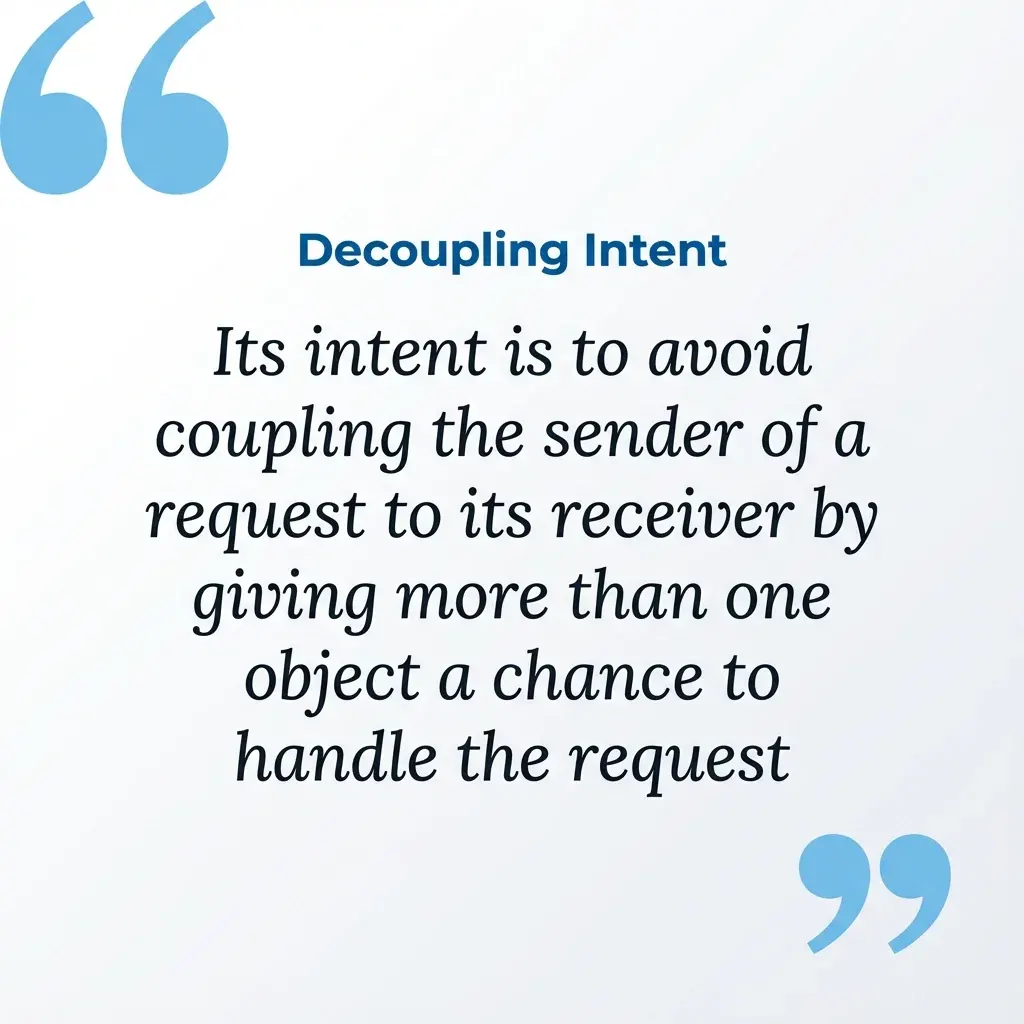
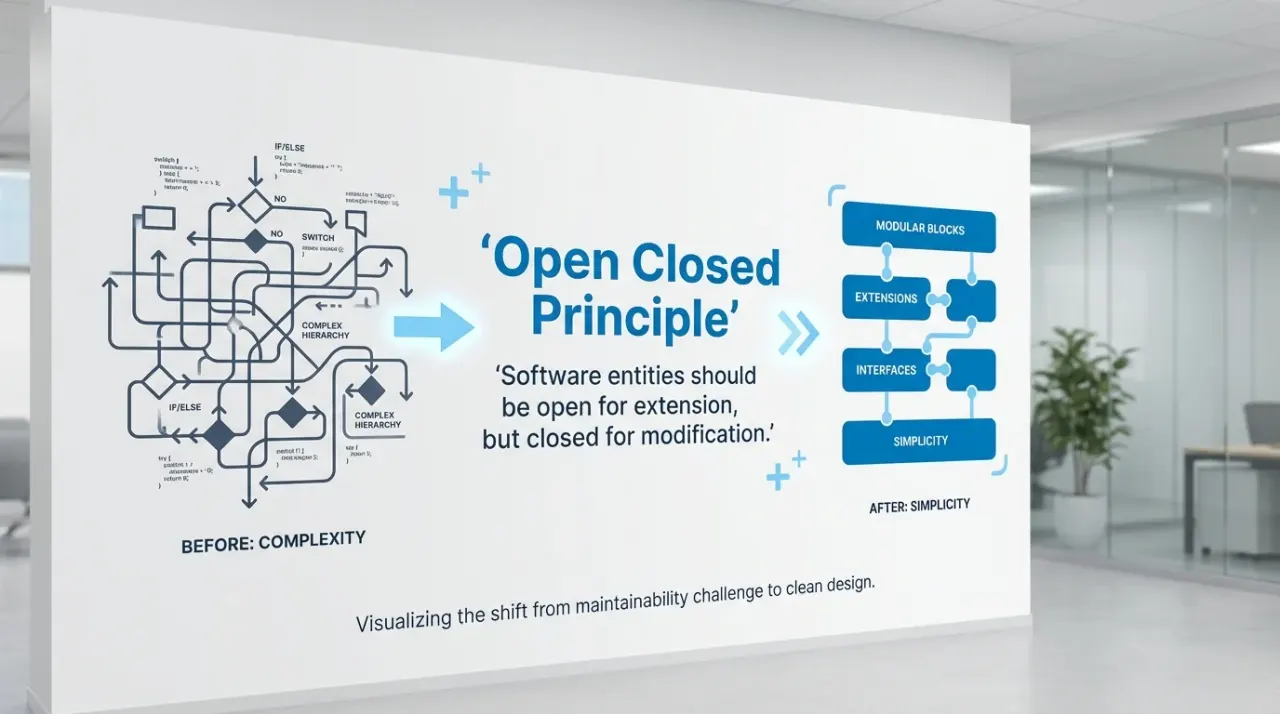
Traditional approaches tightly couple senders to receivers. The client code explicitly specifies which object handles each request type using if-else chains or switch statements. Each new handler type requires modifying the routing logic, which violates the Open/Closed Principle—you end up changing existing code rather than extending it.
As conditional logic grows, code becomes harder to maintain and extend. Testing becomes complex as branches multiply, and error handling gets convoluted. Switch statements face the same issue: adding cases means touching core routing code every time.
The Chain of Responsibility pattern replaces conditional routing with object composition. Each handler knows only about its immediate successor, and request processing becomes linear. This provides reusable forwarding logic so each concrete handler can focus on its specific responsibility without complex routing logic of its own.
For transport operators, the analogy is clear: practical CoR risk reviews help replace ad-hoc, person-dependent compliance checks with structured, repeatable controls.
When to consider this pattern
Decoupling senders from receivers in dynamic systems
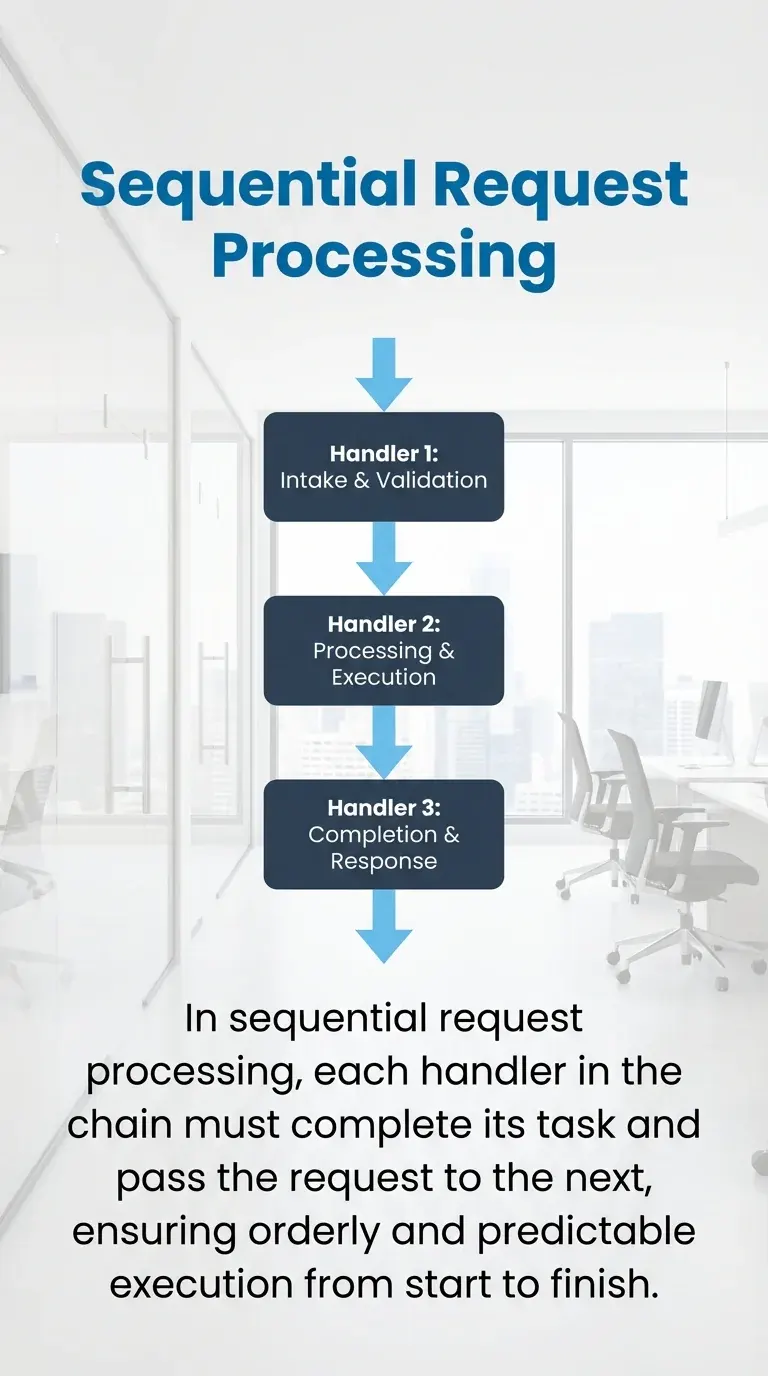
Chain of Responsibility is recommended when you want to decouple senders from receivers in scenarios where multiple objects may potentially handle a request. Several situations make this pattern particularly valuable:
- Use it when processing order is important but handlers might vary.
- Apply it when handlers need dynamic runtime configuration, such as reordering handlers based on user permissions or system state.
- Choose it when request handling involves progressive refinement, where each handler adds information or transforms the request slightly.
- Implement a catch-all handler at the end of the chain to provide default behaviour or error responses when no handler matches.
Middleware systems in web frameworks exemplify this perfectly. Authentication, logging, rate limiting, and business logic all process requests in a specific order. Hardcoding these combinations for each route becomes unmanageable, but a dynamic chain handles it gracefully.
Conditional chain construction also lets you optimise processing—skipping irrelevant handlers entirely rather than leaving them in the chain. Priority processing might move certain handlers forward based on runtime conditions.
Real-world analogies in transport and business
How the pattern plays out in everyday operational workflows
Several familiar workflows mirror the Chain of Responsibility pattern, making the concept tangible for transport and business professionals.
Support escalation systems
A customer contacts first-level support. The initial handler checks knowledge bases and applies standard solutions. If they resolve the problem, the chain stops. When the issue exceeds their expertise, they forward it—along with all accumulated context—to second-level support.
Medical referral systems
Patients see a general practitioner first. The GP treats common conditions and refers complex cases to specialists, who might refer further to sub-specialists. The patient does not choose specialists directly; the chain determines the appropriate care level. Context accumulates along the chain, with each practitioner adding notes and test results.
Approval workflows in organisations
Purchase requests follow approval chains based on value. Small purchases need only supervisor approval; larger amounts escalate to managers; major expenditures reach executive level. The requester submits once, and the system routes appropriately. Handlers can be added or removed as organisational structure changes.
Similar structured escalation paths apply to Chain of Responsibility training for transport operators, where each role understands its duty boundary before the task moves forward.
How the pattern works as a compliance solution
Request propagation, decoupling benefits, and modular testing
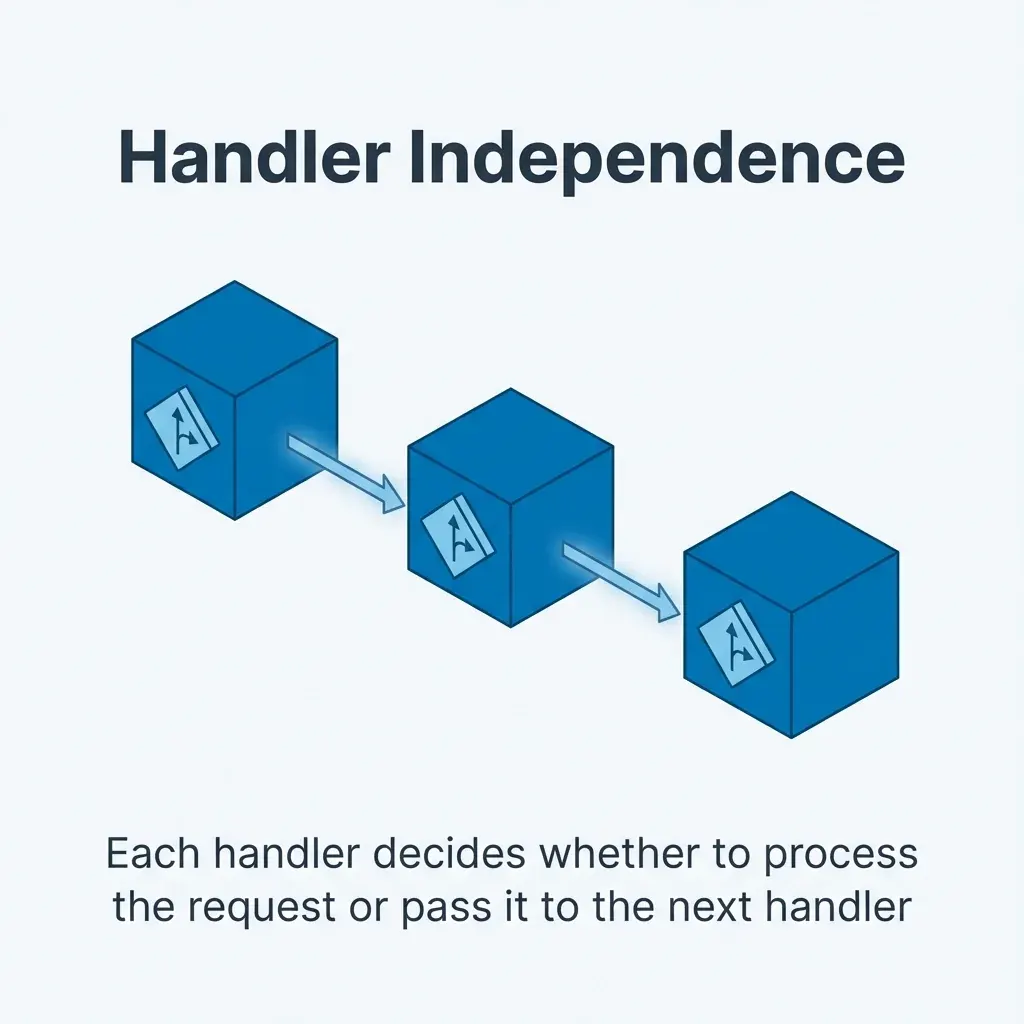
The pattern establishes a linked sequence of handler objects, each storing a reference to the next. Request processing follows a clear flow: the client sends the request to the first handler, which attempts processing based on a decision protocol—check if the request matches its capabilities, then process completely, partially, or forward immediately.
The sender knows only the first handler and needs no information about subsequent handlers. This creates powerful flexibility:
- New handlers insert into the chain without client changes.
- Handler removal requires only chain restructuring.
- Each handler can be tested independently.
- Integration tests can use partial chains.
- Changes to one handler do not ripple through the system.
Chains can also be constructed dynamically based on user roles or system state. Priority processing might move certain handlers forward, and conditional construction lets you skip irrelevant handlers entirely. This mirrors how a well-structured Safety Management System should work in transport—each control point handles its responsibility, escalates what it cannot resolve, and maintains an auditable trail without depending on any single person's discretion.
For operators preparing for NHVAS readiness or HVNL 2026 changes, training that connects these structural principles to daily fleet operations is where the pattern becomes practical compliance evidence.
How MAEZ works
Find the gaps. Fix the system. Prove the controls.
MAEZ helps transport operators deal with the compliance risk they already know is there. We help get the Safety Management System in order, protect NHVAS accreditation, reduce fine exposure, and connect training, evidence, and CoRGuard workflows where software is needed.
Find
Identify what is exposed before an auditor or regulator does.
Fix
Build the SMS controls around how the transport business actually runs.
Prove
Use CoRGuard where records, reminders, diaries, audits, and evidence need structure.
From advice to evidence
From MAEZ advice to a working Safety Management System
Advisory work should leave a practical implementation trail. These examples show how CoRGuard supports records, fatigue and driver diary checks, maintenance, audits, document control, inductions, corrective actions, and evidence review after MAEZ identifies the gaps.
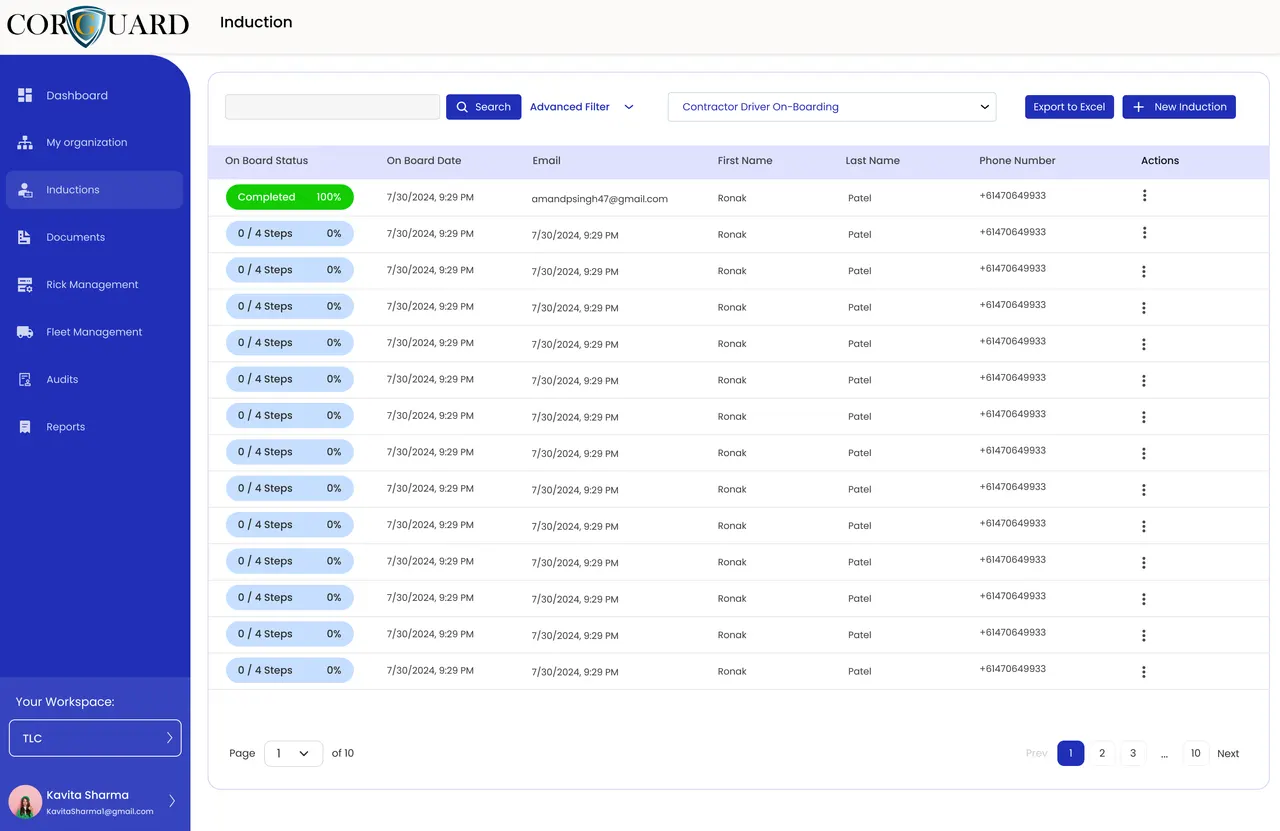
Training records
Connect training completion from cortraining.com.au to evidence and follow-up.
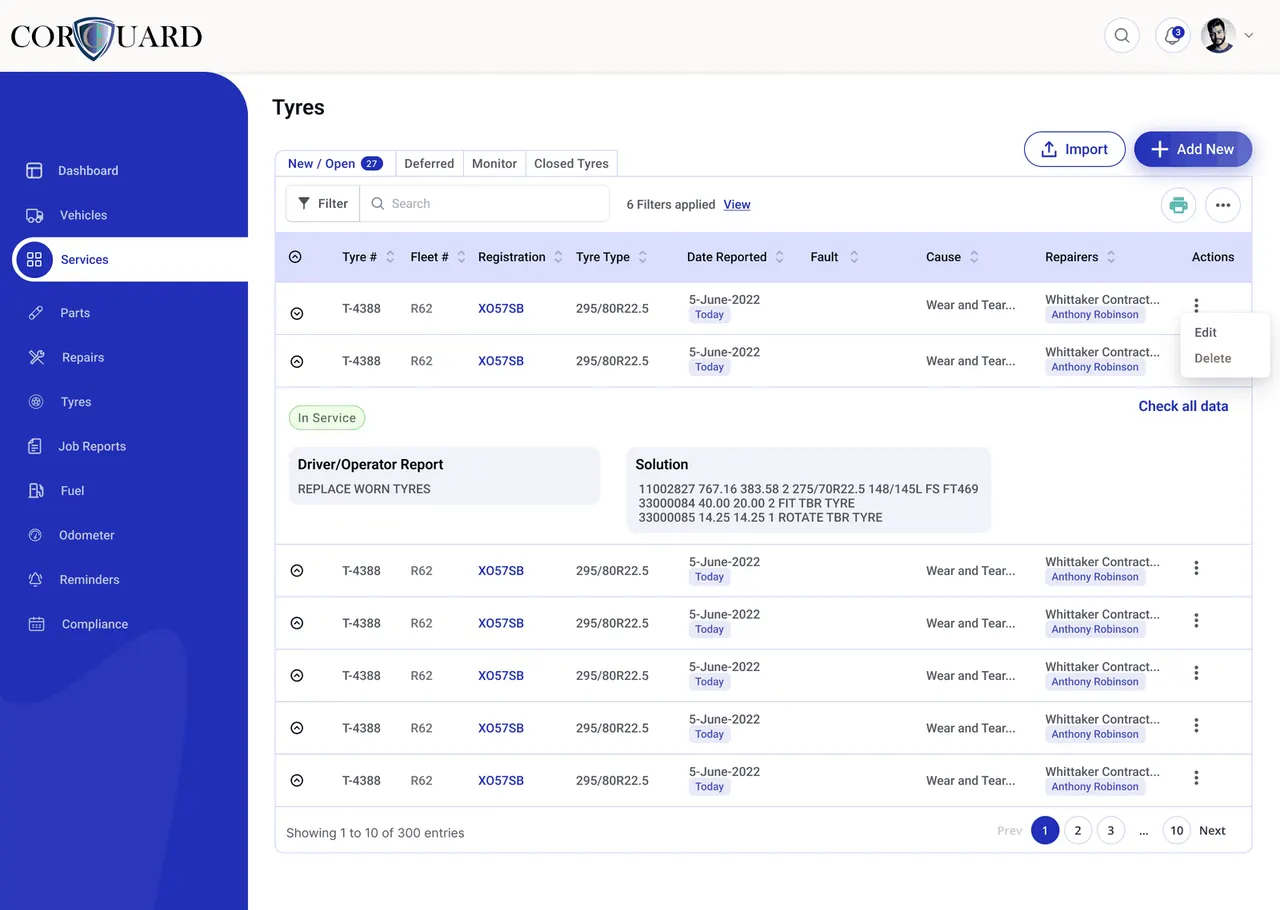
Driver diary checks
Connect fatigue and driver diary review back to manager visibility.
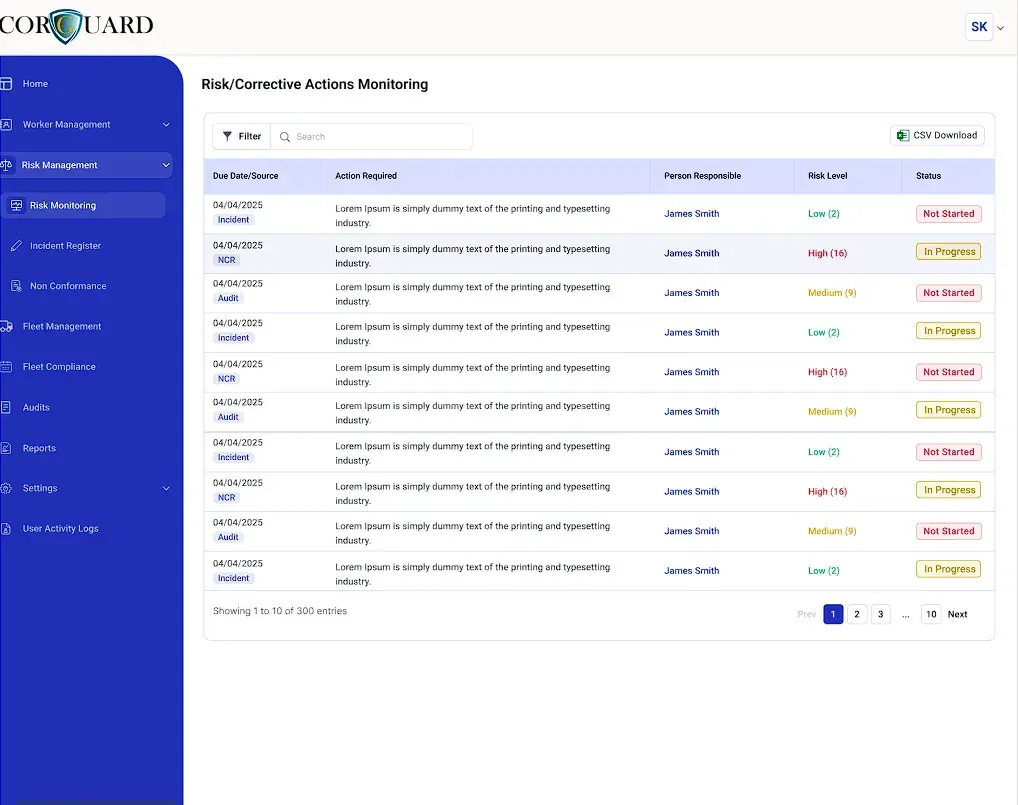
Corrective actions
Turn audit findings, hazards and incidents into tracked actions.
Keep exploring
Related Chain of Responsibility reading
MAEZ insight
Understanding Key Challenges in Supply Chain Risk Management
Explore key supply chain risk management issues threatening continuity. Learn strategies to mitigate financial, geopolitical, and environmental risks.
MAEZ insight
Top Transport Safety Tips: Best Practices Explained
Discover essential best practices in transport safety, from driver training to vehicle maintenance, and enhance safety outcomes in your operations.
MAEZ insight
What Is Chain of Responsibility 2.0
Understand the Chain of Responsibility within HVNL. Learn CoR obligations, penalties, and how to ensure safety and compliance in transport operations.
MAEZ insight
Effective Supply Chain Risk Management: Real-World Examples
Discover effective Supply Chain Risk Management examples to protect your business from disruptions. Learn strategies for resilience and risk mitigation.
MAEZ insight
Top Safety Management System Practices for 2023
Explore top safety management system best practices for 2023 to enhance safety performance, reduce risks, and ensure compliance in your organization.
MAEZ insight
Navigating Key Challenges in Supply Chain Risk Management
Explore key challenges in supply chain risk management issues and discover strategies to build resilience against economic, environmental, and cybersecurity threats.
Frequently asked questions
Questions people ask about this topic
What is the Chain of Responsibility pattern?
The Chain of Responsibility pattern passes a request along a sequence of handlers, where each handler decides whether to process the request or forward it to the next handler. It decouples the sender from the receiver so multiple objects can handle a request without rigid routing logic.
How does the Chain of Responsibility pattern relate to transport compliance?
Transport compliance follows structured escalation paths where each party—consignor, loader, operator, driver—reviews their scope of responsibility before forwarding decisions. This mirrors the pattern's linked handlers, each responsible for a specific duty before the request moves to the next handler.
When should you use the Chain of Responsibility pattern?
Use it when processing order matters but handlers might vary, when handlers need dynamic runtime configuration, or when request handling involves progressive refinement where each handler adds information. It is also useful when you want to decouple senders from receivers in systems with multiple potential handlers.
What are the main advantages of the pattern over conditional logic?
The pattern replaces rigid if-else chains with object composition, so adding or removing handlers requires only chain restructuring rather than modifying core routing code. Each handler can be tested independently, changes do not ripple through the system, and chains can be constructed dynamically based on runtime conditions.
What happens if no handler in the chain can process a request?
If a chain exhausts all handlers without finding a match, a catch-all handler at the end can provide default behaviour or an error response, ensuring the request is always dealt with rather than silently dropped.