
MAEZ resource
Chain of Responsibility & HVNL FAQs for Australian Transport Operators
Practical answers to common Chain of Responsibility and HVNL questions for Australian transport operators, covering training, fatigue, loading, executive duty, and compliance evidence.
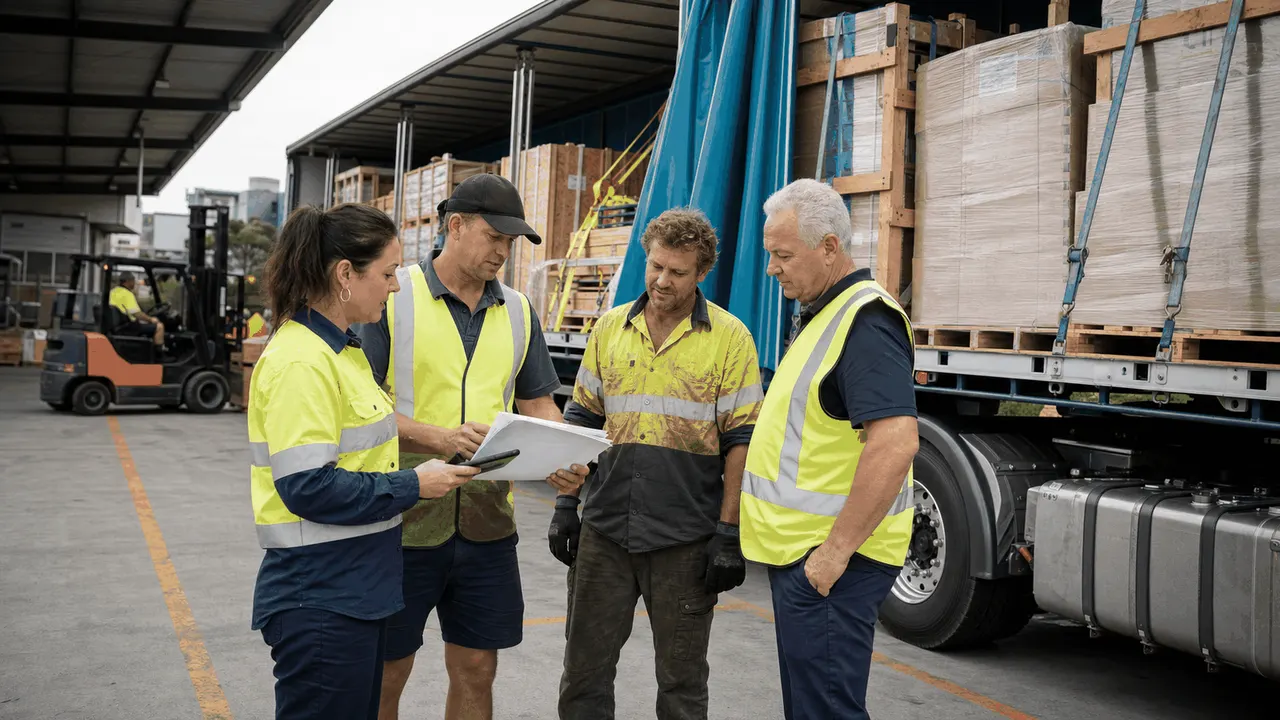
Unloading decisions can affect safety, scheduling, and responsibility.

Managers need a clear view of gaps before audit or enforcement pressure arrives.

Contractor controls should be verified before the work starts.
Receiving windows, site rules, and unloading delays can all shape the transport task.
Consignors
Freight terms, delivery windows, and KPIs must not push drivers into speed, fatigue, or mass breaches.
Consignees
Receiving rules, site access, and unloading delays are CoR controls that need to be set and evidenced.
Loaders
Mass, dimension, and load restraint decisions need documented checks, not assumptions.
Managers
Executives and managers need due-diligence evidence that the Safety Management System is actually working.
Understanding Chain of Responsibility and the HVNL
The Chain of Responsibility (CoR) is a statutory principle under Australia's Heavy Vehicle National Law (HVNL) that distributes legal accountability for road safety across every party who influences a transport task—not just drivers. It extends to packers, loaders, consignors, consignees, dispatchers, fleet managers, and executives, making safe practices a shared supply-chain obligation.
How does the HVNL affect my business?
The HVNL applies to your business if you are part of the heavy vehicle transport supply chain. Its reach spans beyond vehicle operation to include maintenance, loading, and scheduling—any aspect affecting heavy vehicle safety.
What changes are being made to the HVNL?
Changes to the HVNL often focus on increasing road safety and aligning responsibilities accurately among supply chain participants. Proposed amendments may address fatigue management, vehicle standards, and loading regulations. Businesses should monitor communications from the National Heavy Vehicle Regulator (NHVR) to implement updated compliance measures proactively.
For more detail, see our HVNL 2026 readiness guide or our broader About Chain of Responsibility overview.
Executive Duty, CoR Training, and Workplace Culture
Do executives have responsibility for CoR breaches?
Yes. As a CEO or director, you have a non-delegatable duty to ensure CoR compliance. Regardless of your level of direct involvement, senior executives can be held responsible for breaches, making oversight and governance pivotal to legal adherence and safety.
Is CoR training necessary within the supply chain?
Training in CoR laws is essential for workers to comprehend and fulfil their legal obligations under the HVNL. It ensures personnel are aware of the impact of their actions on road safety and contributes to a culture of safety, reducing the risk of accidents.
Explore our Chain of Responsibility Training options or our CoR course for practical, role-based learning.
How do we foster a CoR-compliant culture?
Creating a CoR-compliant culture involves regular training, clear communication on policies, and engagement at all levels of the organisation to prioritise safety. Specialised training for executives and managers can support this process.
Fatigue, Health, and Driver Fitness Requirements
What are the operating time restrictions for trucks?
The HVNL includes regulations on the number of hours trucks can operate to manage driver fatigue, a critical factor in vehicle safety. These rules must be carefully followed to avoid heavy fines and ensure the well-being of drivers and other road users.
What role does driver health play in CoR?
Driver health is a pivotal aspect of CoR, as it directly impacts safety. Under the HVNL, businesses must ensure that drivers' health does not compromise their ability to operate heavy vehicles safely.
Is signing a Fitness to Drive declaration enough?
While signing a fitness to drive document is fundamental, it is only one component of verifying a driver's condition. Ongoing assessments, health checks, and fatigue management support a more comprehensive approach to ensuring driver fitness for work.
Do we need to document on-site driver time?
The HVNL may require businesses to record the time a driver spends on site to emphasise the management of fatigue. This documentation assists in aligning duty periods with safety thresholds and legal requirements.
Vehicle Maintenance, Loading, and Pre-Start Checks
What are the heavy vehicle load limits?
Heavy vehicles are subject to weight limits to prevent overloading, which can affect vehicle handling and road conditions. Compliance with these limits is vital for safety, and the NHVR provides guidelines to assist with load compliance and mass management.
How do loading practices affect CoR compliance?
Loading practices have a significant impact on CoR compliance. Incorrect loading can result in accidents and infractions, for which parties involved in the loading process might be held responsible.
Are there CoR implications for vehicle maintenance records?
Absolutely. Meticulous maintenance records are a CoR requirement. Through these records, businesses must demonstrate their commitment to vehicle safety and roadworthiness. The HVNL also outlines equipment standards that ensure safety and efficiency in operation.
Must trucks be checked before operating on each shift?
While there is no prerequisite to ensure a truck or heavy vehicle is checked before each shift, the HVNL states that no truck should be used if it is deemed unsafe. A truck check might be one solution to ensure a vehicle is safe to use. Most manufacturers stipulate a pre-start check for the heavy vehicles they manufacture.
Subcontractors, Telematics, and Compliance Technology
How do we ensure CoR compliance by transportation partners?
You are responsible for ensuring that any third-party carriers transporting your goods are CoR compliant. This due diligence protects your business from vicarious liability and contributes to safety in the larger transport ecosystem.
Can subcontractors be held liable for HVNL breaches?
Subcontractors bear their share of responsibility under the HVNL and can be held liable for breaches. This necessitates thorough vetting and contractual terms reinforcing CoR compliance.
Can GPS telematics shield us from prosecution?
While GPS telematics can provide crucial data for compliance and safety management, they don't guarantee immunity from prosecution. They should be part of a comprehensive CoR compliance strategy that includes training, systems, and procedures.
Can technology help manage fatigue regulations?
Yes, software applications can help track and manage compliance with fatigue regulations, aiding in the scheduling and monitoring of driver hours to comply with HVNL mandates.
How MAEZ works
Find the gaps. Fix the system. Prove the controls.
MAEZ helps transport operators deal with the compliance risk they already know is there. We help get the Safety Management System in order, protect NHVAS accreditation, reduce fine exposure, and connect training, evidence, and CoRGuard workflows where software is needed.
Find
Identify what is exposed before an auditor or regulator does.
Fix
Build the SMS controls around how the transport business actually runs.
Prove
Use CoRGuard where records, reminders, diaries, audits, and evidence need structure.
From advice to evidence
From MAEZ advice to a working Safety Management System
Advisory work should leave a practical implementation trail. These examples show how CoRGuard supports records, fatigue and driver diary checks, maintenance, audits, document control, inductions, corrective actions, and evidence review after MAEZ identifies the gaps.
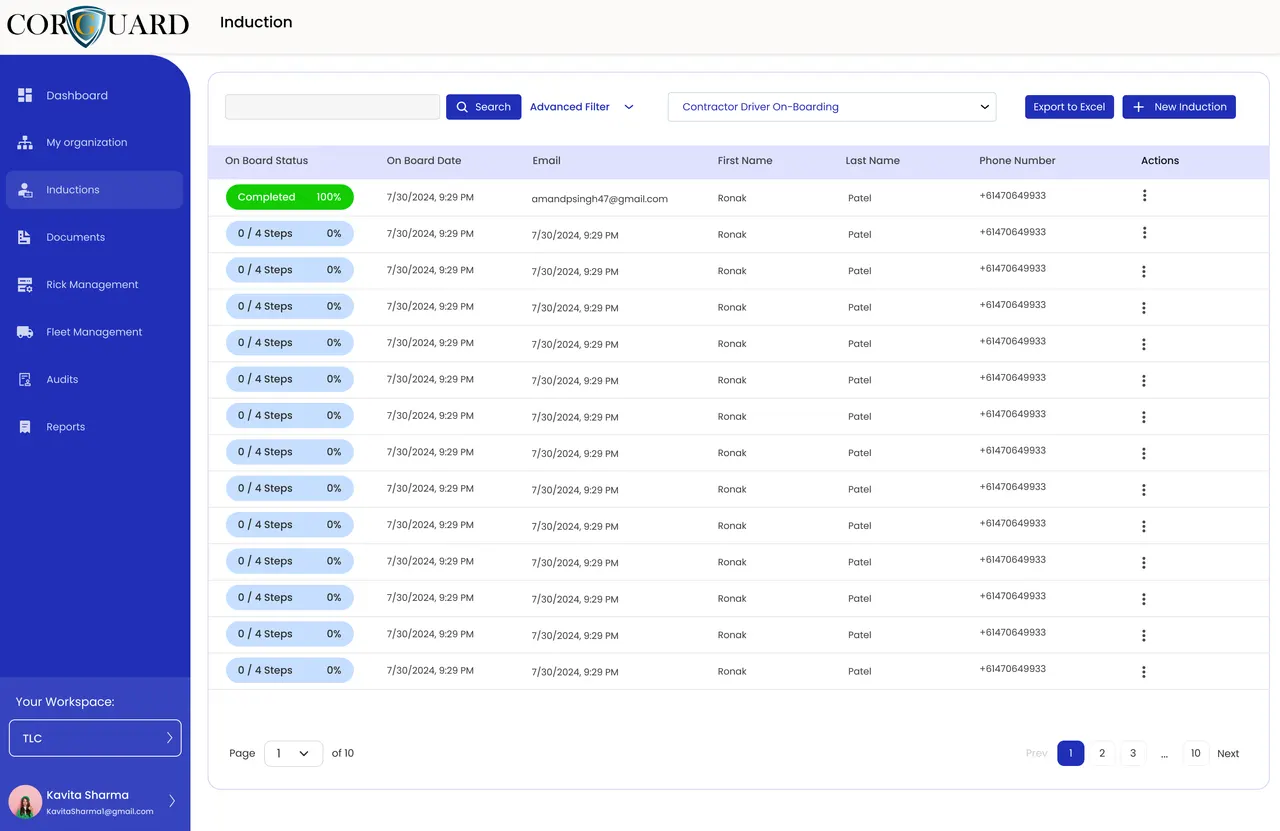
Training records
Connect training completion from cortraining.com.au to evidence and follow-up.
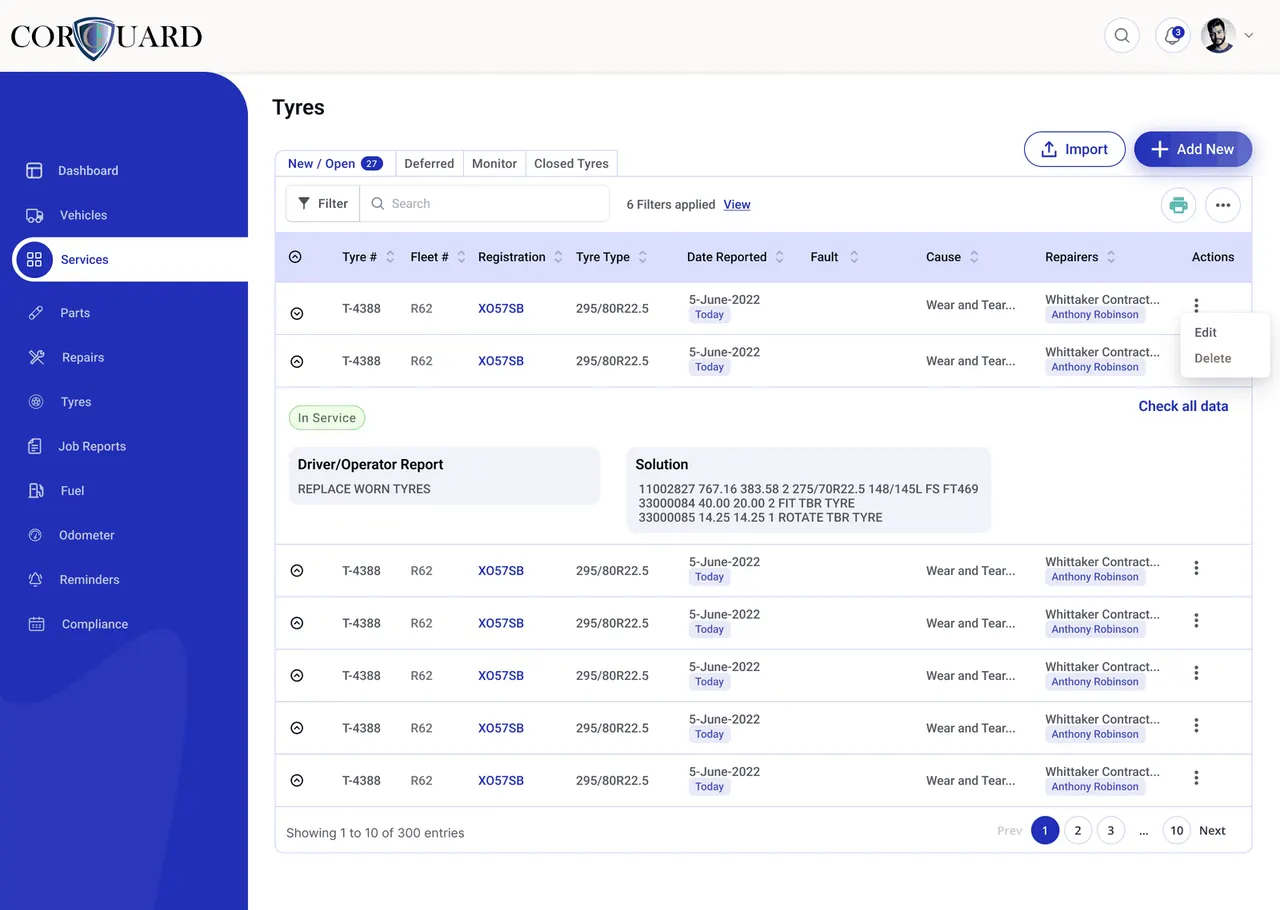
Driver diary checks
Connect fatigue and driver diary review back to manager visibility.
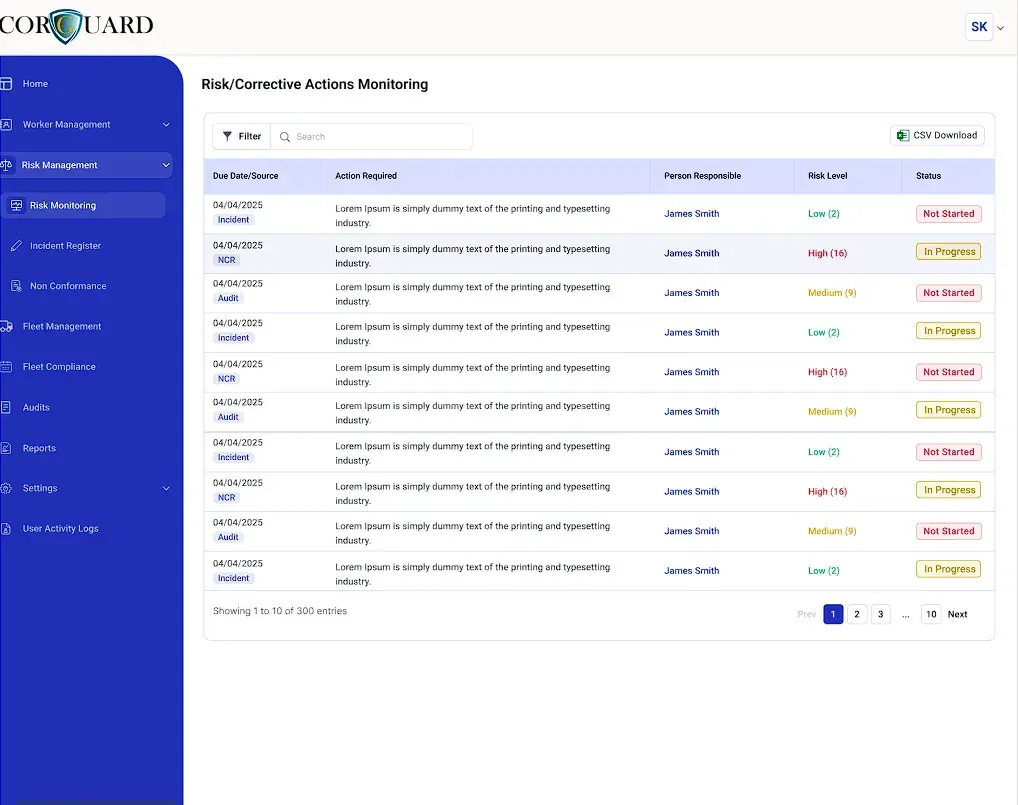
Corrective actions
Turn audit findings, hazards and incidents into tracked actions.
Keep exploring
Related Chain of Responsibility reading
MAEZ resource
Chain of Responsibility Compliance Training
Chain of Responsibility Compliance Course An industry leader, Helping companies, leaders, and safety departments fix on-road risks by offering software, training, audits, policies and programs that add value to a lean business.
MAEZ resource
What Does HVNL Mean?
HVNL is an acronym term, used to refer to the Heavy Vehicle National Law which defines the minimum standards surrounding a logistics network, and the penalties for those responsible for safety on the road.
MAEZ resource
Your Consultant
Your consultant brings over 20 years of Supply Chain senior management experience, including national Chain of Responsibility safety system management as a former National Logistics Manager.
MAEZ resource
GPS Telematics
An industry leader, Helping companies, leaders, and safety departments fix on-road risks by offering software, training, audits, policies and programs that add value to a lean business. Chain of Responsibility isn’t just a good idea – It’s the LAW!
MAEZ resource
Chain of Responsibility Audit
An industry leader, Helping companies, leaders, and safety departments fix on-road risks by offering software, training, audits, policies and programs that add value to a lean business.
MAEZ resource
About our Chain of Responsibility Program
Chain of Responsibility Software An industry leader, Helping companies, leaders, and safety departments fix on-road risks by offering software, training, audits, policies and programs that add value to a lean business.
Frequently asked questions
Questions people ask about this topic
What is the Chain of Responsibility under the HVNL?
The Chain of Responsibility is a statutory principle under Australia's Heavy Vehicle National Law that distributes legal accountability for road safety to every party with influence over transport activities—including packers, loaders, consignors, consignees, dispatchers, fleet managers, and executives—not just drivers.
Do executives have a personal duty for CoR compliance?
Yes. Under the HVNL, executives such as CEOs and directors hold a non-delegatable duty to ensure CoR compliance. They can be held responsible for breaches regardless of their level of direct involvement in day-to-day operations.
Is a signed Fitness to Drive declaration sufficient for CoR compliance?
No. A signed Fitness to Drive declaration is only one component of verifying a driver's condition. Ongoing assessments, health checks, and fatigue management are needed for a comprehensive approach to driver fitness under the HVNL.
Can GPS telematics protect a business from CoR prosecution?
GPS telematics can provide crucial data for compliance and safety management, but they do not guarantee immunity from prosecution. They should form part of a broader CoR compliance strategy that includes training, documented systems, and procedures.
How often should a transport operator audit CoR compliance internally?
The frequency of internal CoR audits should match the operational pace and risk profile of the business. Regular checks help ensure ongoing adherence to CoR regulations and surface gaps before an external audit or enforcement action.