
MAEZ resource
What Does HVNL Mean? Heavy Vehicle National Law Explained
Understand the Heavy Vehicle National Law (HVNL): what it covers, maximum penalties, executive due diligence duties, Chain of Responsibility obligations, and state jurisdiction coverage for Australian transport operators.

Contractor controls should be verified before the work starts.
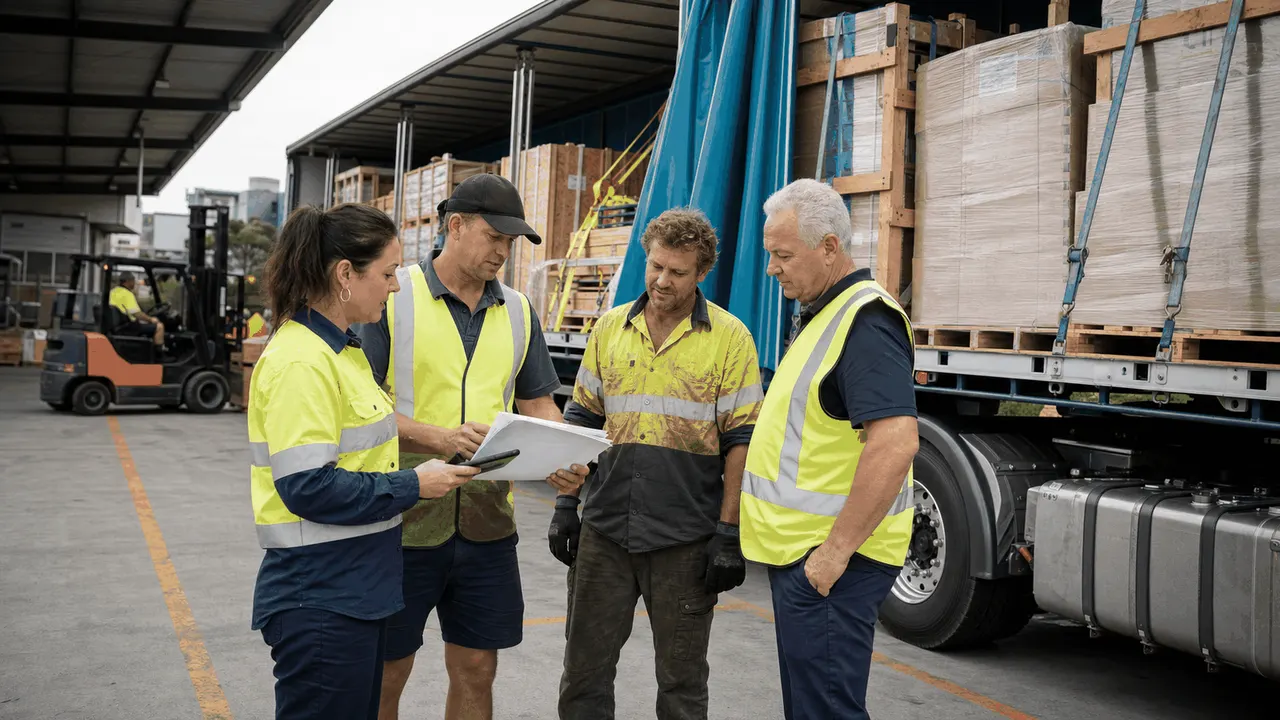
Receiving windows, site rules, and unloading delays can all shape the transport task.
Unloading decisions can affect safety, scheduling, and responsibility.
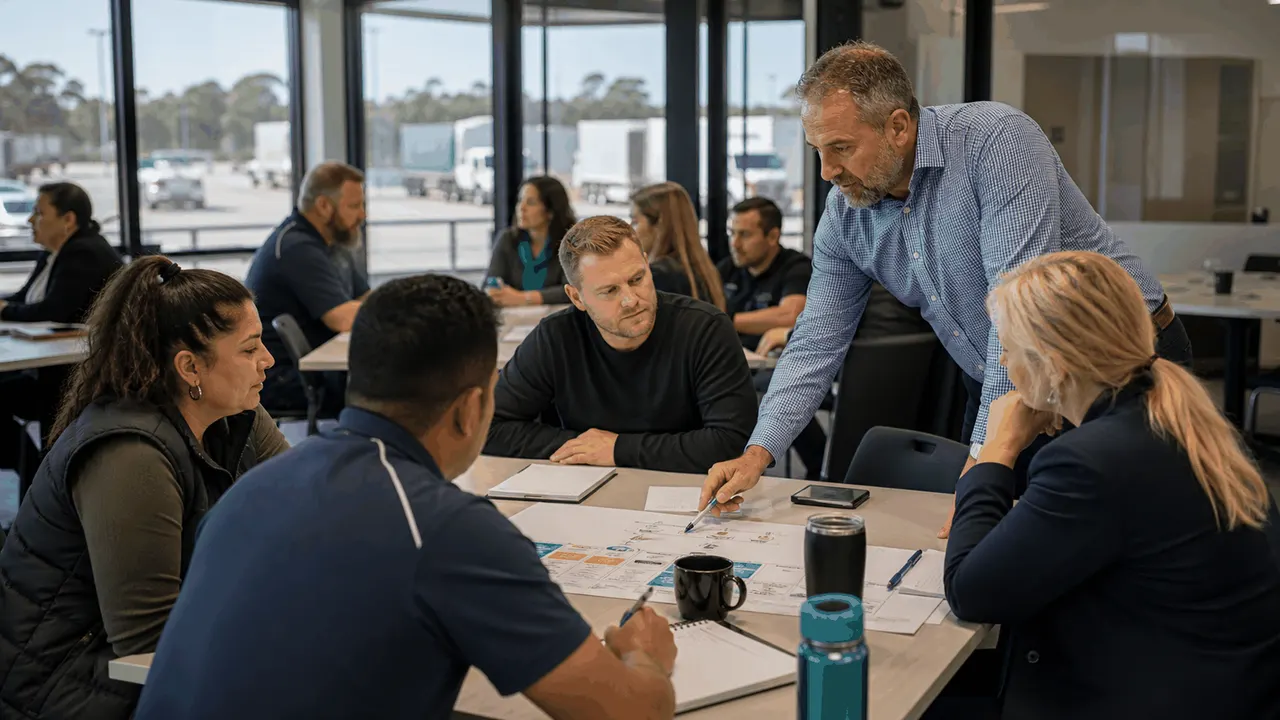
Managers need a clear view of gaps before audit or enforcement pressure arrives.
Consignors
Freight terms, delivery windows, and KPIs must not push drivers into speed, fatigue, or mass breaches.
Consignees
Receiving rules, site access, and unloading delays are CoR controls that need to be set and evidenced.
Loaders
Mass, dimension, and load restraint decisions need documented checks, not assumptions.
Managers
Executives and managers need due-diligence evidence that the Safety Management System is actually working.
What does HVNL mean?
The national law governing heavy vehicle safety in Australia
HVNL stands for the Heavy Vehicle National Law. It is the national law that defines minimum safety standards for heavy vehicle operations across participating Australian jurisdictions and sets penalties for every party responsible for safety on the road. The HVNL applies to all vehicles over 4.5 tonnes and aims to drive a culture shift toward safer, more efficient freight transport.
Chain of Responsibility isn't just a good idea — it's the law. The HVNL embeds CoR obligations directly into legislation, meaning every party in the supply chain shares legal responsibility for heavy vehicle safety.
To understand how CoR obligations flow through the supply chain, see About Chain of Responsibility.
What does the HVNL cover?
Scope of the legislation for Australian operators

The HVNL covers a broad range of regulatory areas including PBS vehicles, IAP, road access permits, accreditation, paperwork, vehicle operations, compliance, fines, penalties, and general administration matters.
The legislation provides detailed requirements surrounding:
- Fatigue management
- Mass and dimension
- Safe loading
- Registration and vehicle standards
- Performance-Based Standards (PBS) vehicles
These elements work together to establish the minimum safety framework that all parties in the transport chain must meet when operating heavy vehicles on Australian roads.
What are the maximum penalties under the HVNL?
Category 1, 2 and 3 offences carry significant financial and criminal consequences
As of January 2021, the Heavy Vehicle Regulator has taken multiple enforceable actions, with court cases pressing for convictions under Category 1, 2, and 3 offences.
Penalties for companies:
- Category 3 — $500,000
- Category 2 — $1,500,000
- Category 1 — $3,000,000
Penalties for individuals:
- Category 3 — $50,000
- Category 2 — $150,000
- Category 1 — $300,000 plus up to 5 years' jail
How penalties compound
Each offence carries a penalty, which means two offences can carry twice the penalty. The code is a criminal code, meaning any prosecuted entity must be proved guilty beyond reasonable doubt and will also carry a criminal conviction.
Courts have shown they will seek to prosecute directors first, then the company and those further down the chain. In one fatigue case, a director who was not actively involved in the company was successfully prosecuted because they knew of the ongoing issue — their duty was to know, understand, and ensure safety across the business.
Additional penalty provisions
The legislation also holds a further 334 penalties under which fines exceed $1,680 and cap at $22,430 for each offence. In one notable case, a waste company was fined for 73 offences relating to 50 over-mass breaches, with total penalties reaching $732,206.
Companies that have faced CoR prosecutions include Fred's Interstate Transport, Scott's of Mt Gambier, Graincorp, Remondis, and Himix (South Australia).
Who counts as an executive under the HVNL?
Budgetary control means executive liability — even if you outsource the transport task

An executive means:
- A director of the corporation; or
- Any person, by whatever name called and whether or not the person is a director, who is concerned in or takes part in the corporation's management.
In practical terms, if a person has budgetary control within the company and can allocate funds or make an argument to do so, that person is highly likely to be considered an executive. For example, they could argue to change where the company spends its resources to promote safety.
Executive due diligence duty
The HVNL requires an executive of any entity that has a transport task and a safety duty to exercise due diligence, ensuring the relevant entity complies with its safety duties. Importantly, these duties apply whether you employ the transport task directly or outsource it — either way, you remain liable under the Act.
Outsourcing the transport task does not outsource the liability.
For a deeper look at how duty holders are identified, see Chain of Responsibilities: What Australian HVNL Duty Holders Need to Understand.
What due diligence actions should executives take?
Practical steps to comply with section 26D of the HVNL
Due diligence involves, among other things:
- Knowing what the entity is doing to ensure its transport operations are secure within its safety framework
- Understanding the dangers and hazards the organisation is exposed to within the transport role, and ensuring sufficient resources are available to remove or mitigate those risks
- Checking that the entity is actually supplying, using, and enforcing the tools and processes implemented to manage safety — and that they are working
Actions executives can take under section 26D
- Know their company's HVNL obligations and understand what they mean
- Ensure the company has a framework that defines, assesses, and handles risks in relation to safety and transport activities
- Implement a monitoring system to alert workers and other CoR parties of HVNL breaches
- Keep up to date regarding emerging HVNL violations and remedial measures
- Ensure the company has sufficient facilities and procedures, including load restraint procedures and effective load measuring controls
- Provide workers and vendors with training and advice on their HVNL responsibilities — tailored to each role. For example, schedulers and managers may need additional training to avoid influencing drivers to disregard fatigue requirements
- Regularly review risk management, preparation, and monitoring processes to ensure they function efficiently and as designed
For role-specific training options, see Chain of Responsibility Training for Australian Transport Operators.
Does the HVNL apply in my state?
Jurisdiction coverage across Australia
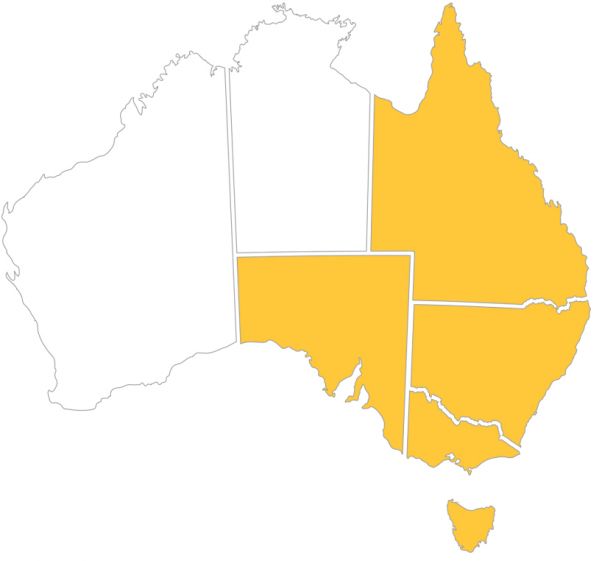
The HVNL currently has jurisdiction in NSW, Victoria, Queensland, South Australia, Tasmania, and the ACT. Western Australia and the Northern Territory fall under their own set of rules and have differing legislation about how the laws govern safe roads.
While the HVNL has not begun in Western Australia or the Northern Territory at this time, when a vehicle from those jurisdictions enters a state or territory where the HVNL operates, the HVNL applies. In certain situations, drivers may even need to comply with some HVNL elements — such as work diary requirements — before reaching the border.
For operators preparing for upcoming legislative changes, see HVNL 2026 Changes and Chain of Responsibility Training Readiness.
How does Chain of Responsibility affect your business?
The concept of 'transport activities' extends liability far beyond the truck driver
Chain of Responsibility (CoR) is the concept that drives the HVNL. It places legal obligations on all parties in the transport and logistics supply chain, shifting responsibility from the traditional owner/operator paradigm to a shared responsibility for all parties who control or influence the work of heavy vehicle transport.
The HVNL amendments introduced the concept of 'transport activities' liability. This means that any activity — including business practices and decision-making — associated with the use of a heavy vehicle on the road carries a primary safety duty. This includes anyone who asks for heavy vehicles to deliver goods or services on their behalf.
Who is affected
This impacts any company, organisation, executive, or manager in any industry that employs a transport task with vehicles exceeding 4.5 tonnes.
As Matthew Wragg, director of MAEZ, notes: "Your prospective customers don't ask about the cost in their first line of questioning anymore. They ask about YOUR safety system."
For a practical review of your CoR risks, see Chain of Responsibility Consulting.
How MAEZ helps with HVNL and CoR compliance
Turning legal obligations into practical training, advisory, and evidence pathways
MAEZ helps Australian businesses turn Chain of Responsibility, HVNL, WHS, transport safety, and chartered risk obligations into practical training, advisory, audit, and implementation pathways.
Whether you need executive-level briefings or hands-on support building a Safety Management System, MAEZ works with how your transport business actually runs — identifying gaps before an auditor or regulator does.
To get started, contact MAEZ for a practical review of the controls, evidence, training, and SMS gaps that matter most to your operation.
How MAEZ works
Find the gaps. Fix the system. Prove the controls.
MAEZ helps transport operators deal with the compliance risk they already know is there. We help get the Safety Management System in order, protect NHVAS accreditation, reduce fine exposure, and connect training, evidence, and CoRGuard workflows where software is needed.
Find
Identify what is exposed before an auditor or regulator does.
Fix
Build the SMS controls around how the transport business actually runs.
Prove
Use CoRGuard where records, reminders, diaries, audits, and evidence need structure.
From advice to evidence
From MAEZ advice to a working Safety Management System
Advisory work should leave a practical implementation trail. These examples show how CoRGuard supports records, fatigue and driver diary checks, maintenance, audits, document control, inductions, corrective actions, and evidence review after MAEZ identifies the gaps.
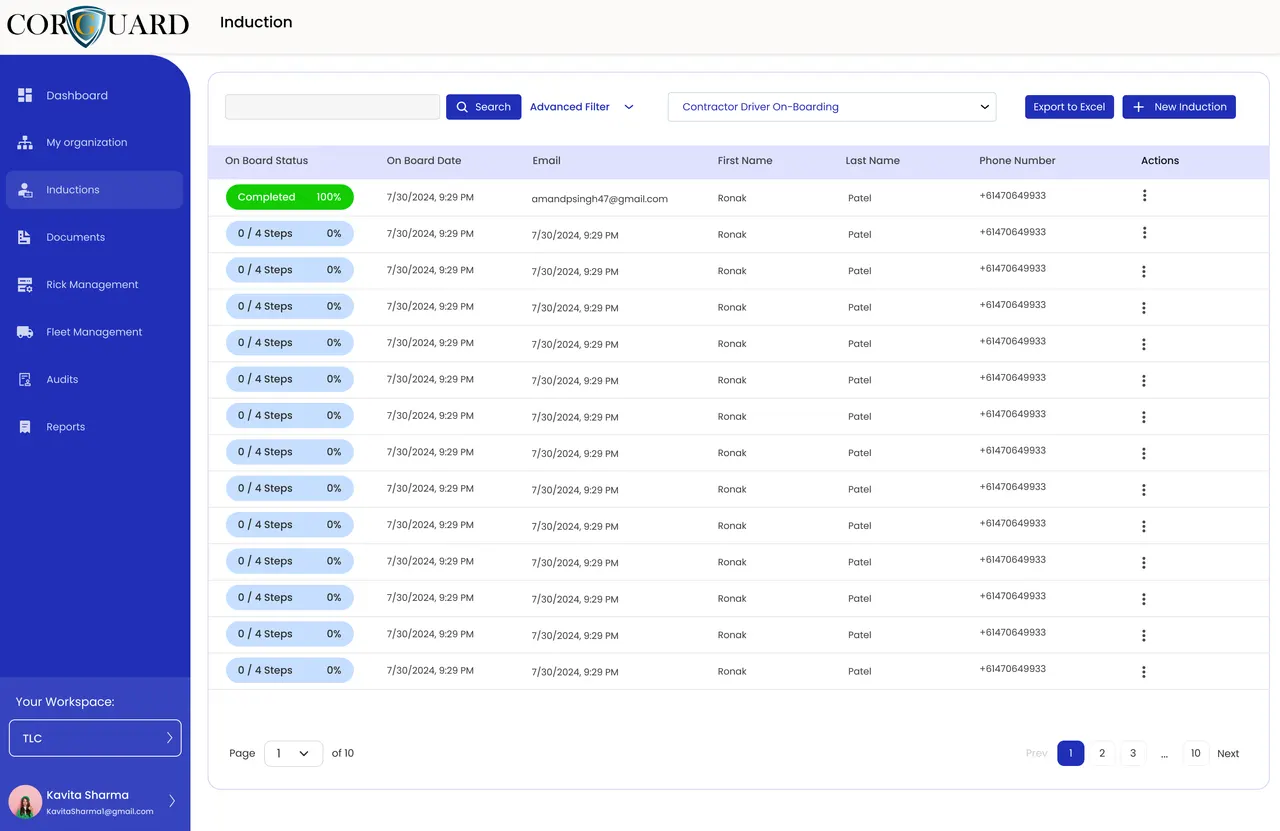
Training records
Connect training completion from cortraining.com.au to evidence and follow-up.
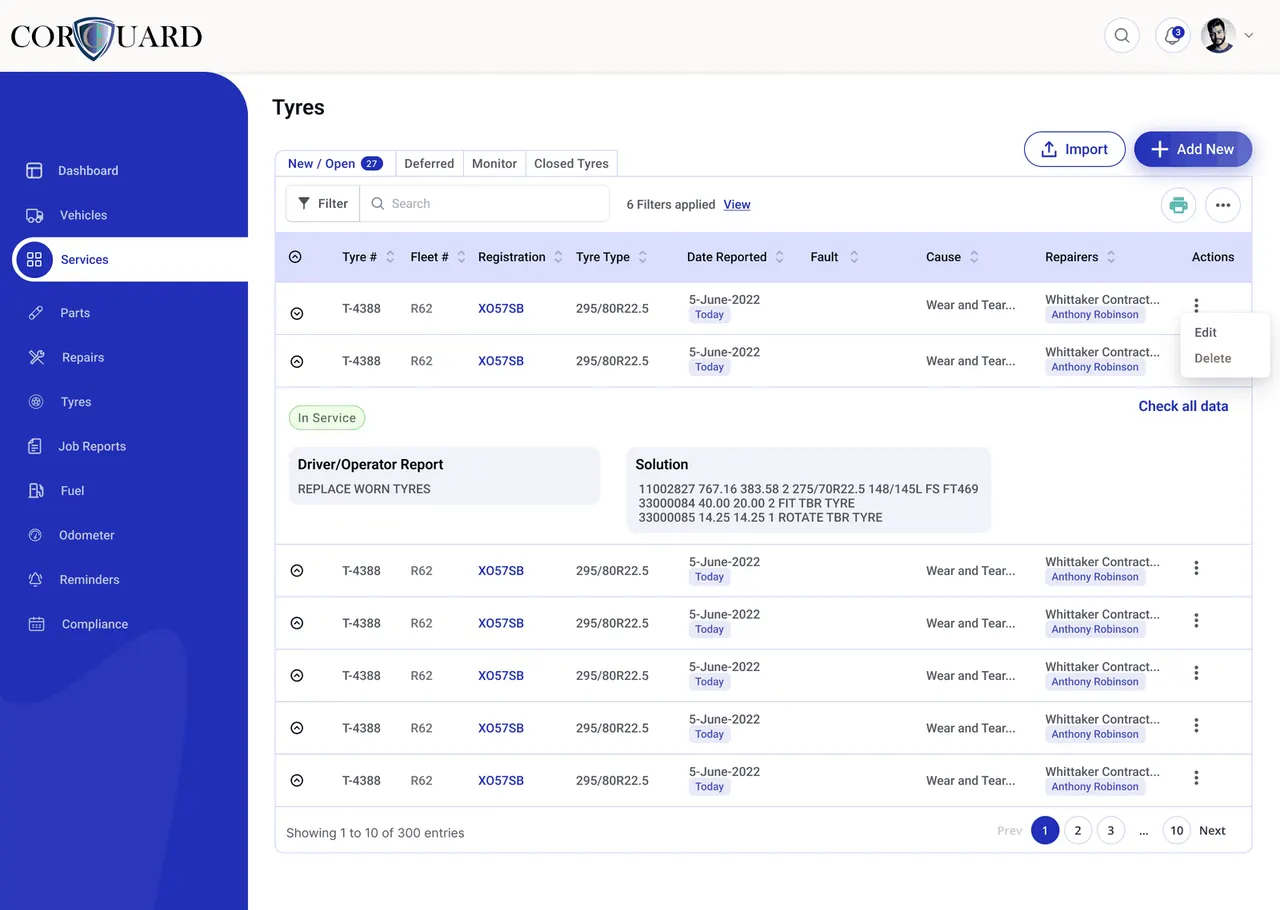
Driver diary checks
Connect fatigue and driver diary review back to manager visibility.
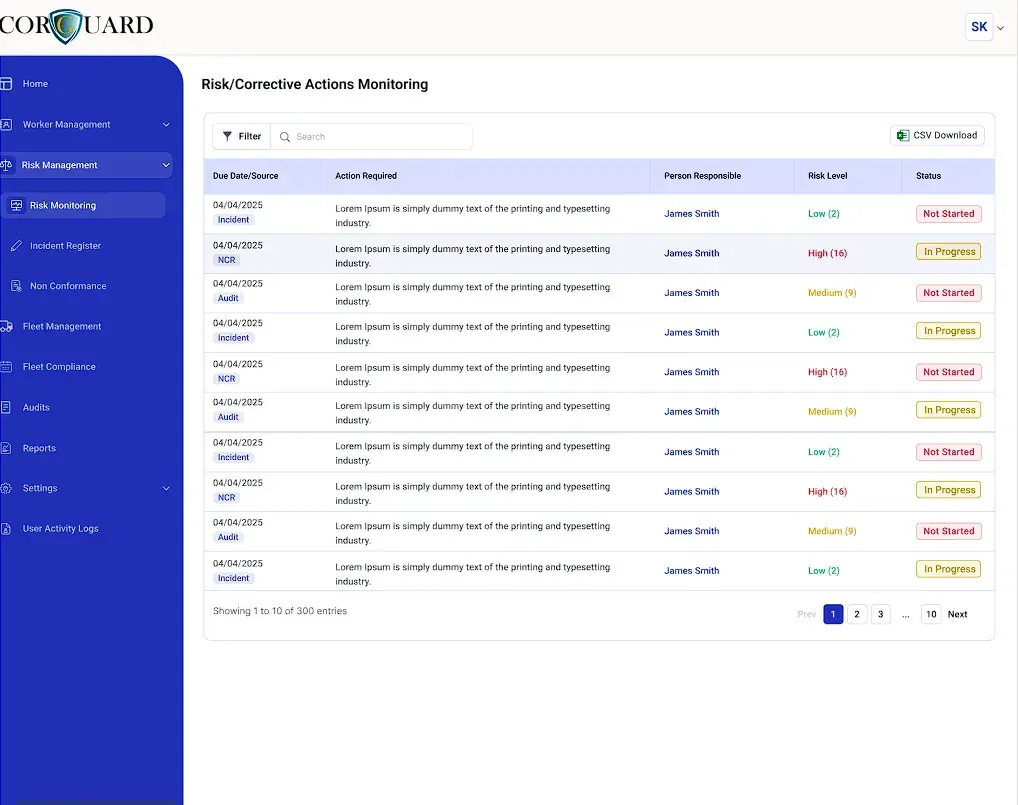
Corrective actions
Turn audit findings, hazards and incidents into tracked actions.
Keep exploring
Related Chain of Responsibility reading
MAEZ resource
Your Consultant
Your consultant brings over 20 years of Supply Chain senior management experience, including national Chain of Responsibility safety system management as a former National Logistics Manager.
MAEZ resource
GPS Telematics
An industry leader, Helping companies, leaders, and safety departments fix on-road risks by offering software, training, audits, policies and programs that add value to a lean business. Chain of Responsibility isn’t just a good idea – It’s the LAW!
MAEZ resource
Chain of Responsibility Audit
An industry leader, Helping companies, leaders, and safety departments fix on-road risks by offering software, training, audits, policies and programs that add value to a lean business.
MAEZ resource
About our Chain of Responsibility Program
Chain of Responsibility Software An industry leader, Helping companies, leaders, and safety departments fix on-road risks by offering software, training, audits, policies and programs that add value to a lean business.
MAEZ resource
CoR Audit
Industry Compliant Benchmark Analysis Executive Feedback Why MAEZ AUDIT? Practical Advice As industry professionals with years of operational experience in logistics. We are not Lawyers, Ex-Police or Ex-Inspectors. We are unlike every one of our competitors.
MAEZ resource
Your Auditor
Your auditor brings over 20 years of Supply Chain senior management experience, including national Chain of Responsibility safety system management as a former National Logistics Manager.
Frequently asked questions
Questions people ask about this topic
What does HVNL stand for?
HVNL stands for the Heavy Vehicle National Law, the national legislation that defines minimum safety standards for heavy vehicle operations across participating Australian jurisdictions and sets penalties for all parties responsible for road safety.
What are the maximum penalties under the HVNL?
Companies face up to $3 million for Category 1 offences, $1.5 million for Category 2, and $500,000 for Category 3. Individuals face up to $300,000 plus 5 years' jail for Category 1, $150,000 for Category 2, and $50,000 for Category 3. The legislation also includes 334 additional penalties ranging from $1,680 to $22,430 per offence.
Who is considered an executive under the HVNL?
An executive includes any director of a corporation or any person who is concerned in or takes part in the corporation's management. In practice, anyone with budgetary control who can allocate funds or influence how resources are directed is likely to be considered an executive under the HVNL.
Does outsourcing transport remove my HVNL liability?
No. The HVNL requires executives to exercise due diligence to ensure their entity complies with its safety duties whether the transport task is performed directly or outsourced. Outsourcing the transport task does not outsource the liability.
Does the HVNL apply in Western Australia and the Northern Territory?
The HVNL applies in NSW, Victoria, Queensland, South Australia, Tasmania, and the ACT. Western Australia and the Northern Territory operate under their own legislation, but when a vehicle from those jurisdictions enters an HVNL state or territory, the HVNL applies — and some elements, such as work diary requirements, may need to be met before reaching the border.