
MAEZ insight
Understanding Common Transport Safety Challenges
Explore the most significant transport safety challenges facing Australian operators — driver fatigue, distracted driving, collisions, and slips, trips, and falls — with practical mitigation strategies and evidence-based controls.
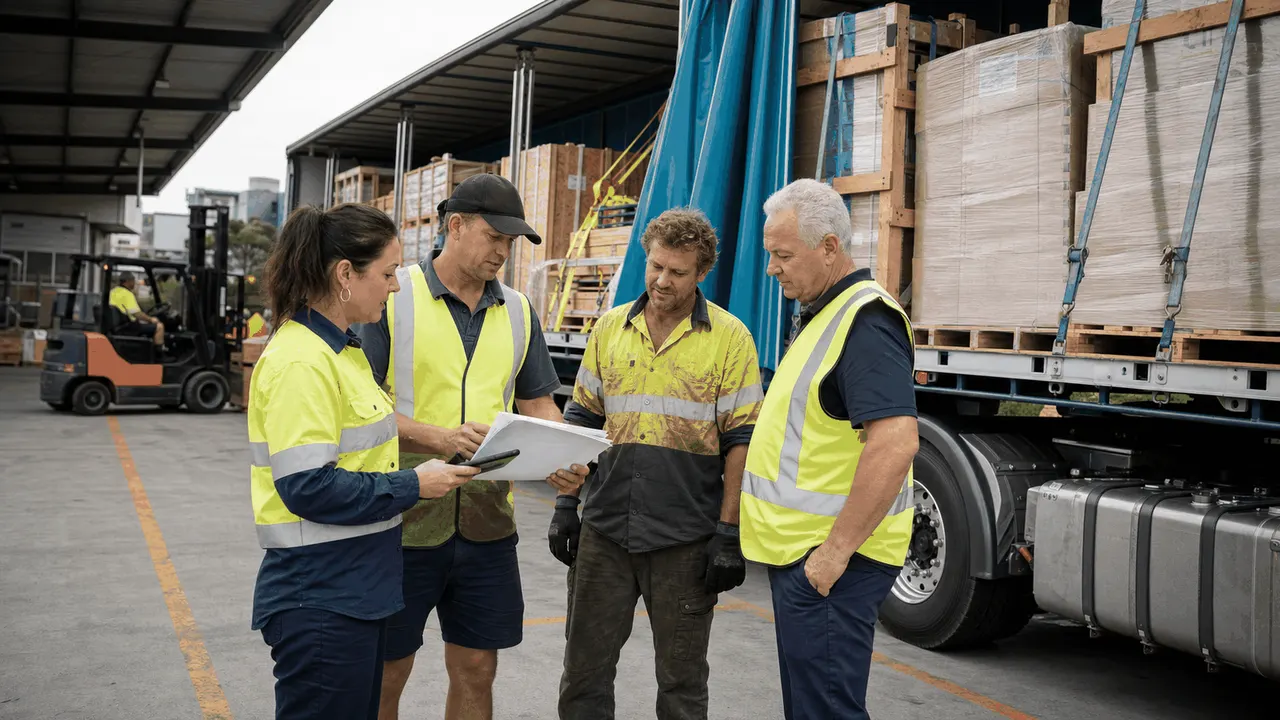
Loading controls need evidence, not assumptions.
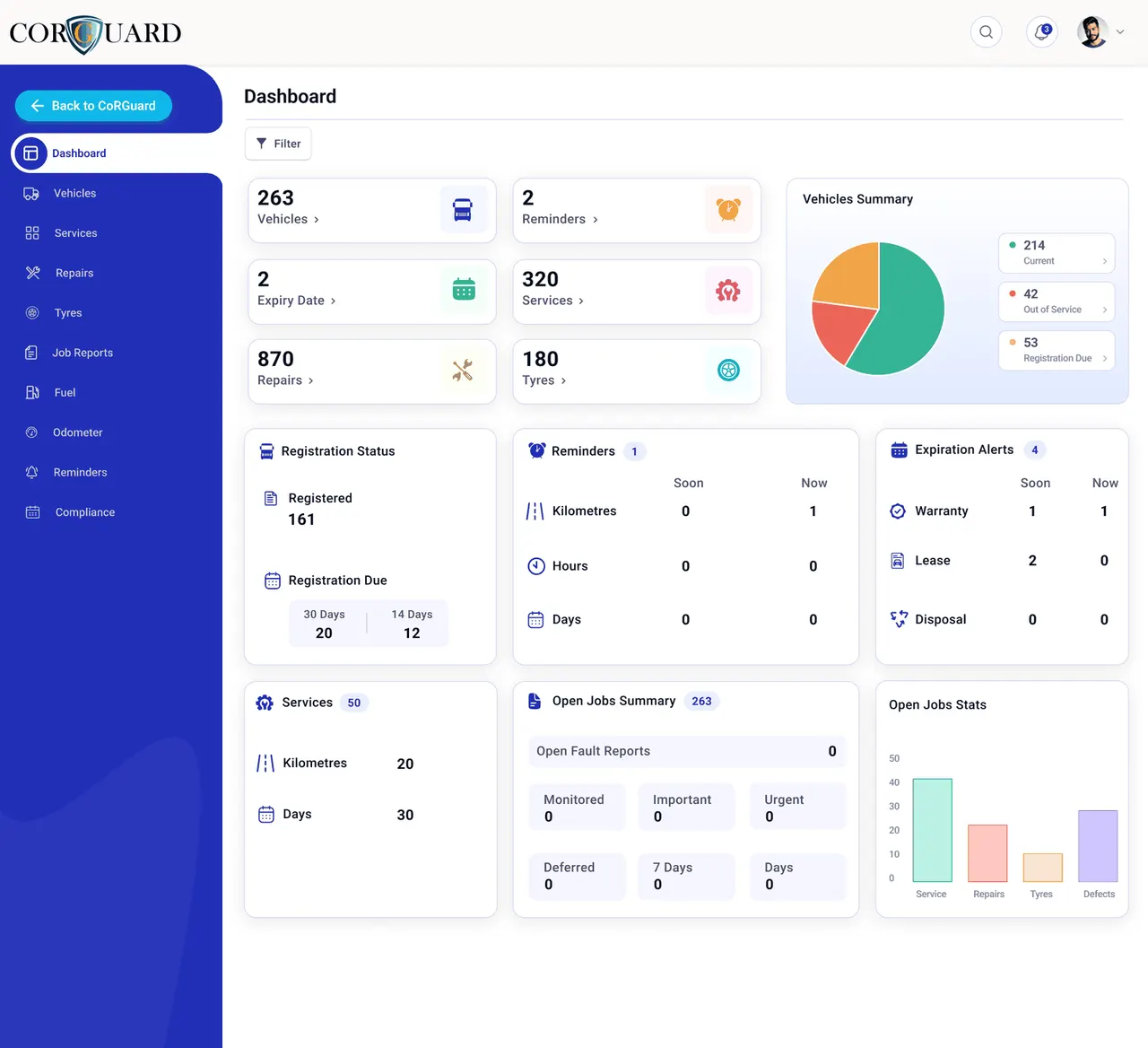
Daily fleet activity has to connect back to duties, controls, and review.

Due diligence means knowing whether the safety system is actually working.

Proof that freight promises do not create unsafe transport pressure.
Consignors
Freight terms, delivery windows, and KPIs must not push drivers into speed, fatigue, or mass breaches.
Consignees
Receiving rules, site access, and unloading delays are CoR controls that need to be set and evidenced.
Loaders
Mass, dimension, and load restraint decisions need documented checks, not assumptions.
Managers
Executives and managers need due-diligence evidence that the Safety Management System is actually working.
What are the most common transport safety challenges?
An overview of the key risks every Australian transport operator must manage
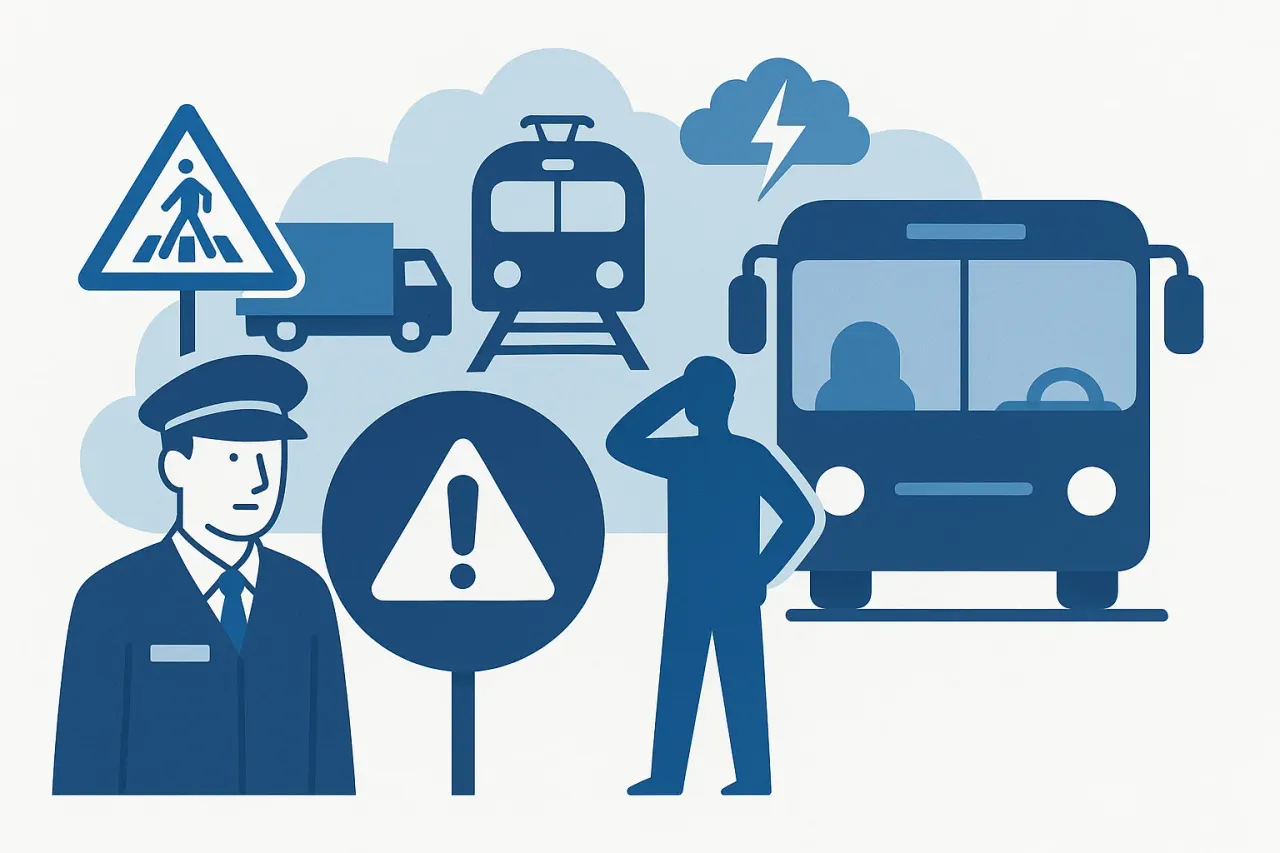
The most common transport safety challenges facing Australian operators are driver fatigue, distracted driving, vehicle collisions, and slips, trips, and falls. These risks are interconnected rather than isolated, requiring systematic control measures across the entire supply chain. Under the HVNL, every party shares responsibility for managing them.
Transportation safety challenges cost the industry billions annually and put lives at risk across every operational area. From driver behaviour to vehicle condition, cargo security to environmental hazards, safety incidents occur when multiple risk factors align without adequate control measures.
These challenges are not isolated problems but interconnected vulnerabilities that demand systematic attention across your entire supply chain. Understanding them means recognising that transportation safety is about building resilient systems that protect drivers, cargo, infrastructure, and the broader community.
Each safety challenge presents operational risks that extend beyond immediate physical harm. Poor safety performance affects insurance premiums, regulatory compliance status, customer relationships, and workforce morale. To understand how shared duties apply across roles, see About Chain of Responsibility.
Driver fatigue and hours of service management
One of the most persistent safety risks in transport
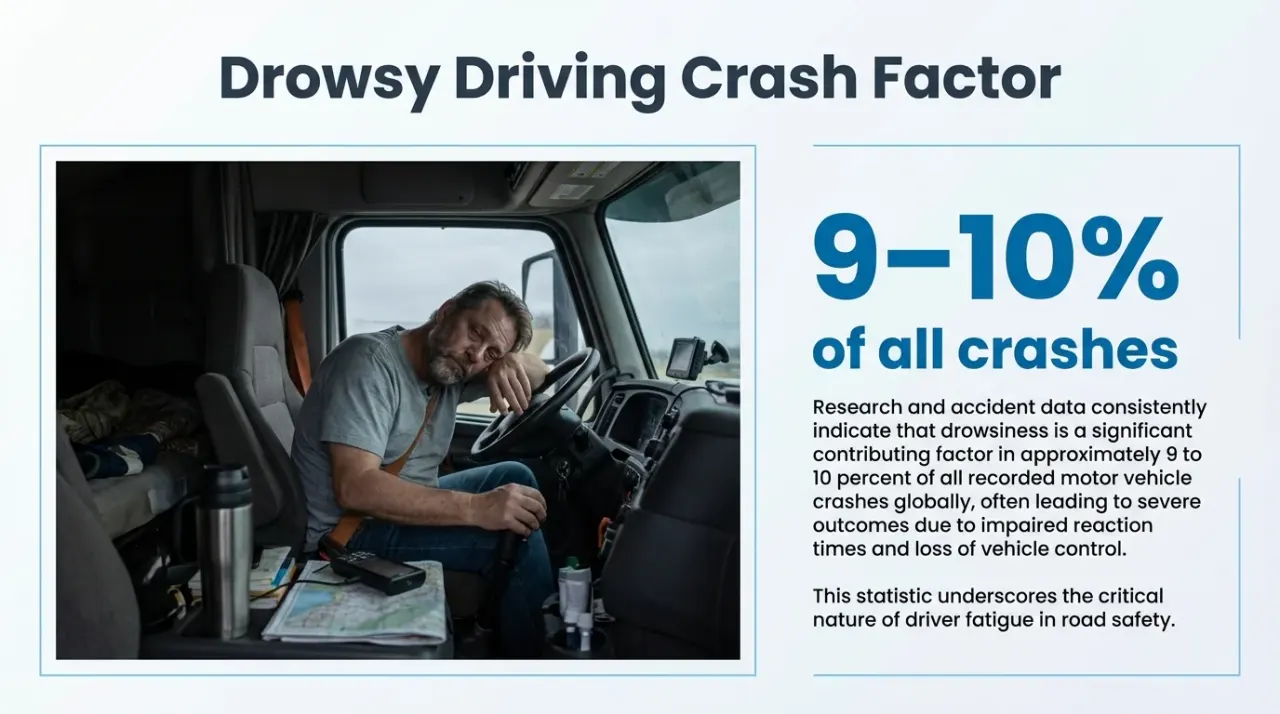
Driver fatigue represents one of the most significant and persistent safety challenges in transportation. A naturalistic driving study estimated that drowsiness is a factor in up to 9–10% of all crashes, demonstrating the widespread impact of fatigue-related incidents.
Fatigue impairs reaction time, decision-making ability, and situational awareness. Drivers experiencing fatigue exhibit similar impairment levels to drivers under the influence of alcohol, yet fatigue remains harder to detect and measure objectively. Extended driving periods without adequate rest disrupt circadian rhythms and reduce cognitive function.
Hours of service compliance challenges
Regulatory frameworks establish maximum driving hours and minimum rest requirements, but compliance presents ongoing challenges. Pressure to meet delivery schedules, inadequate trip planning, and insufficient understanding of fatigue management all contribute to violations. Electronic logging devices improve monitoring capability but cannot prevent fatigue itself — technology tracks compliance with hour limits without addressing the underlying factors that contribute to driver exhaustion.
Practical fatigue risk mitigation
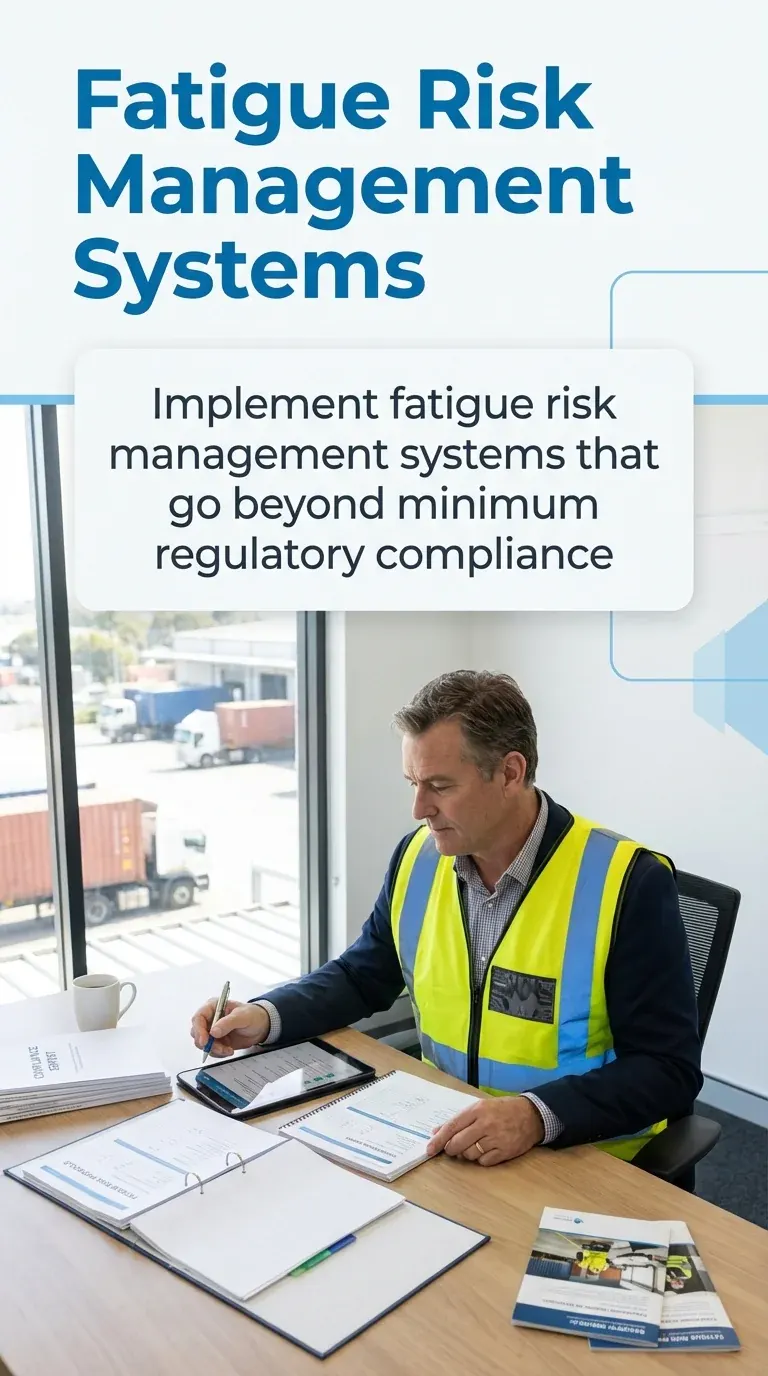
- Implement fatigue risk management systems that go beyond minimum regulatory compliance
- Schedule routes with realistic timeframes that account for traffic conditions, loading delays, and mandatory rest breaks
- Train schedulers and planners to recognise fatigue risk factors — unrealistic schedules create pressure that drivers may respond to by sacrificing rest
- Establish clear communication channels where drivers can report fatigue concerns without fear of negative consequences
- Monitor for patterns indicating systemic fatigue risks — multiple drivers struggling to complete routes on time suggests scheduling issues rather than individual performance problems
A robust fatigue risk management system aligns scheduling, policies, technology, and culture. For practical support building these systems, explore Chain of Responsibility consulting.
Distracted driving and attention management
Three forms of distraction compete for driver focus
Distracted driving encompasses any activity that diverts attention from the primary task of vehicle operation. Mobile phones, in-cab technology, eating, adjusting controls, and external events all compete for driver attention. Commercial drivers operate larger vehicles requiring greater stopping distances, manage complex route information, and often face pressure to remain accessible through communication devices.
Distraction occurs in three forms:
- Visual distraction — takes eyes off the road
- Manual distraction — hands leave controls
- Cognitive distraction — diverts mental attention
The most dangerous activities combine all three types simultaneously.
Technology-related distractions
Mobile phone use presents the most documented distraction risk. Texting combines visual, manual, and cognitive distraction in a single activity that significantly increases collision risk. However, in-cab technology designed to improve safety can paradoxically create distraction if poorly integrated. Complex navigation systems, electronic logging devices, and fleet management technology require driver interaction that may divert attention at critical moments.
Distraction prevention strategies
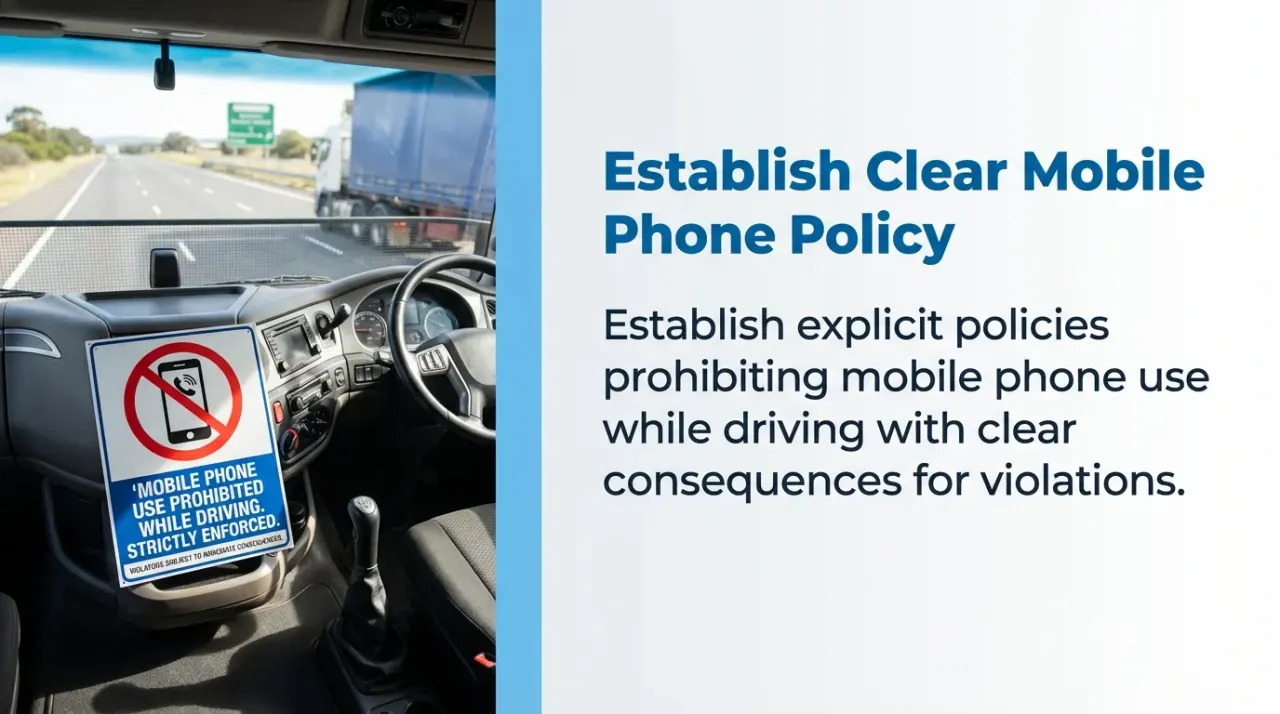
- Establish explicit policies prohibiting mobile phone use while driving — make compliance a non-negotiable safety requirement with clear consequences
- Design communication protocols that minimise driver contact during trips — use messaging systems that alert drivers to pull over safely before responding
- Ensure all in-cab technology is properly mounted and positioned so drivers access controls without significantly redirecting visual attention
- Conduct regular training on attention management techniques to help drivers recognise distraction risks and develop habits that maintain focus on the road environment
- Consider implementing driver monitoring technology that can detect attention lapses and provide real-time feedback
For operator and manager training on managing distraction risks, see Chain of Responsibility training.
Vehicle collisions and road incidents
Most crashes involve multiple contributing factors
Vehicle collisions represent the most visible transportation safety challenge, resulting in property damage, injuries, operational disruption, and regulatory scrutiny. Collisions rarely result from single causes — most incidents involve multiple contributing factors including driver behaviour, vehicle condition, road environment, and operational pressures that combine to create critical situations.
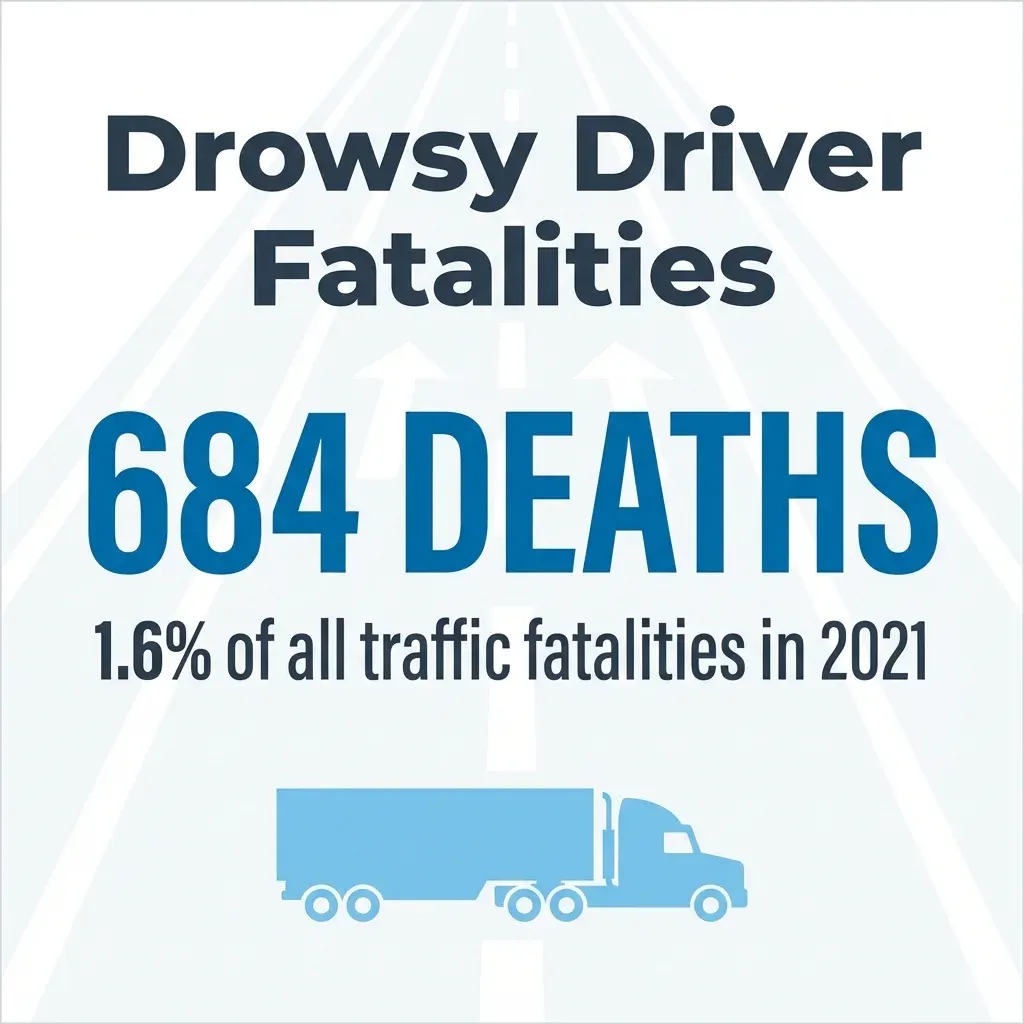
In 2021, NHTSA found that 684 people died in crashes involving a drowsy driver — about 1.6% of all motor-vehicle traffic crash fatalities — highlighting how human factors contribute significantly to collision risk.
Common collision scenarios
- Rear-end impacts — often result from inadequate following distance, particularly when drivers fail to adjust spacing for vehicle size, load weight, and road conditions
- Intersection incidents — occur when drivers misjudge gaps, fail to yield appropriately, or proceed through controlled intersections without ensuring clearance
- Lane departures — stem from momentary inattention, fatigue, or misjudgment of vehicle position; may involve other vehicles, roadside infrastructure, or result in rollover incidents
Collision prevention approaches
- Develop detailed collision prevention strategies that address both immediate causation and underlying systemic factors
- Implement defensive driving training focused on hazard recognition, space management, and decision-making under operational pressure
- Conduct thorough collision investigations that identify root causes rather than simply assigning blame — use findings to improve systems, procedures, and training programs
- Analyse collision data for patterns indicating systemic issues — multiple incidents involving similar circumstances suggest organisational factors requiring attention beyond individual driver coaching
Slips, trips, and falls in transport operations
Often underestimated compared to vehicle operation hazards
Slips, trips, and falls cause significant workplace injuries in transportation operations. These incidents occur during vehicle entry and exit, cargo handling, vehicle inspections, and movement around operational areas. Many transportation workers underestimate slip and fall risks compared to vehicle operation hazards, which leads to inadequate attention to housekeeping, proper footwear, and safe movement practices.
The transportation environment presents numerous hazards. Wet or contaminated surfaces, uneven ground, inadequate lighting, cluttered walkways, and weather conditions all contribute to slip and fall risks.
High-risk activities and locations
Vehicle entry and exit present elevated fall risks, particularly with commercial trucks and trailers. Cab access often requires climbing while carrying items or wearing bulky clothing that restricts movement. Trailer access for load inspection or cargo securing requires careful movement on surfaces that may be wet, icy, or unstable. Load restraint activities combine height, awkward postures, and environmental exposure that increase fall risk.
Key prevention measures
- Maintain three points of contact when entering or exiting cabs and trailers
- Keep walkways, loading areas, and cab steps clear of clutter and contamination
- Provide and enforce the use of appropriate footwear with slip-resistant soles
- Ensure adequate lighting in all operational areas, particularly during early morning and night operations
- Train workers to recognise environmental hazards and adjust movement practices accordingly
For broader guidance on managing workplace risks under WHS legislation, including psychosocial risks that may compound fatigue and distraction hazards, refer to the MAEZ Insights blog.
Building resilient safety systems
From compliance obligation to operational advantage
The most effective transport safety programs address multiple challenges simultaneously through integrated systems rather than reactive fixes. After 25 years working across FMCG supply chains in Australia and the UK, the pattern is clear: organisations that transform compliance from a legal obligation into operational advantage typically focus on sustainable tools, clear accountabilities, and practical implementation that works in daily operations.
Under the Heavy Vehicle National Law (HVNL), the principle of shared responsibility means consignors, loaders, operators, and executives all have a duty to ensure transport activities are safe. Understanding these duties is the foundation for building systems that actually reduce risk rather than simply document it.
What integrated safety systems look like
- Sustainable tools — technology and processes designed for long-term use, not just audit preparation
- Clear accountabilities — every role in the chain knows what they are responsible for and can demonstrate it
- Practical implementation — controls that work in real operating conditions, not just on paper
Effective safety programs do not treat fatigue, distraction, collisions, and slips as separate problems. They recognise the interconnections and build controls that address multiple risk factors together. This integrated approach is what turns a compliance obligation into genuine operational advantage.
How MAEZ works
Find the gaps. Fix the system. Prove the controls.
MAEZ helps transport operators deal with the compliance risk they already know is there. We help get the Safety Management System in order, protect NHVAS accreditation, reduce fine exposure, and connect training, evidence, and CoRGuard workflows where software is needed.
Find
Identify what is exposed before an auditor or regulator does.
Fix
Build the SMS controls around how the transport business actually runs.
Prove
Use CoRGuard where records, reminders, diaries, audits, and evidence need structure.
From advice to evidence
From MAEZ advice to a working Safety Management System
Advisory work should leave a practical implementation trail. These examples show how CoRGuard supports records, fatigue and driver diary checks, maintenance, audits, document control, inductions, corrective actions, and evidence review after MAEZ identifies the gaps.
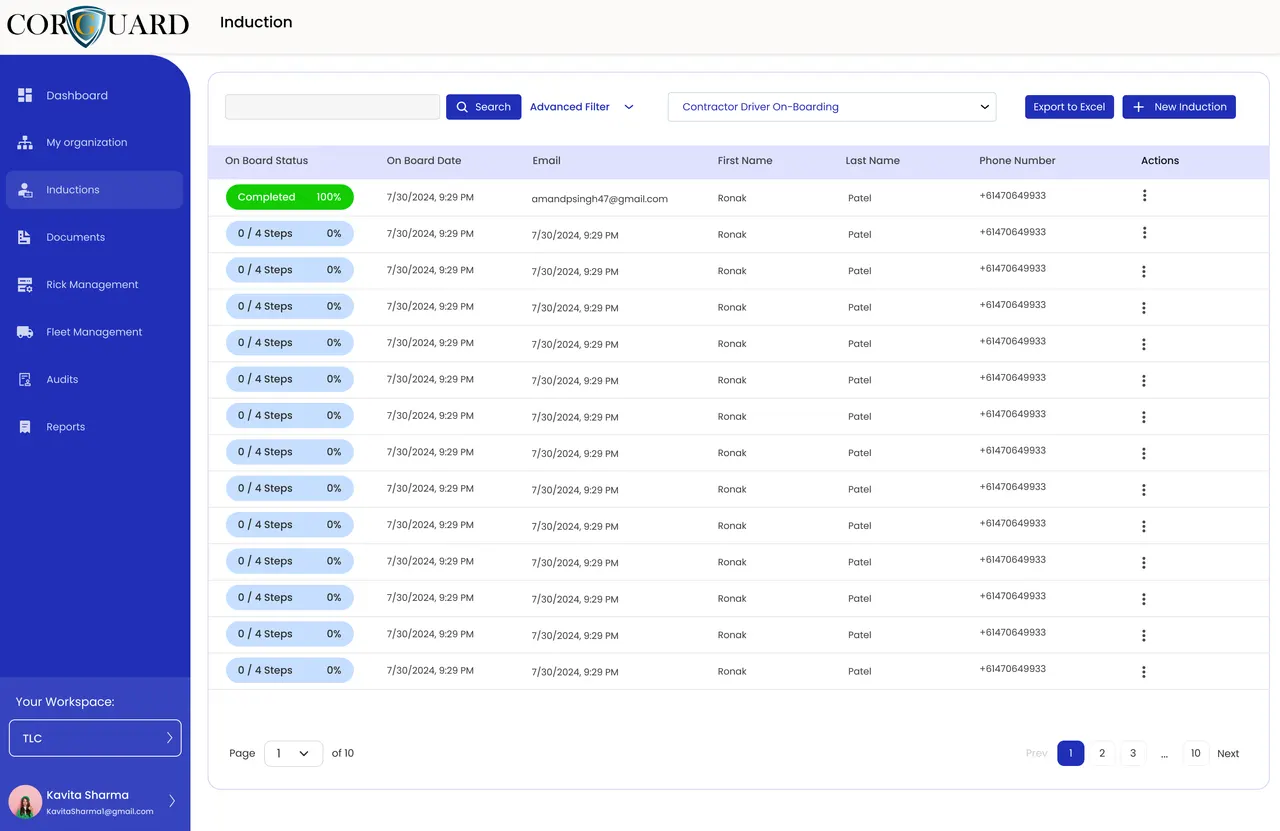
Training records
Connect training completion from cortraining.com.au to evidence and follow-up.
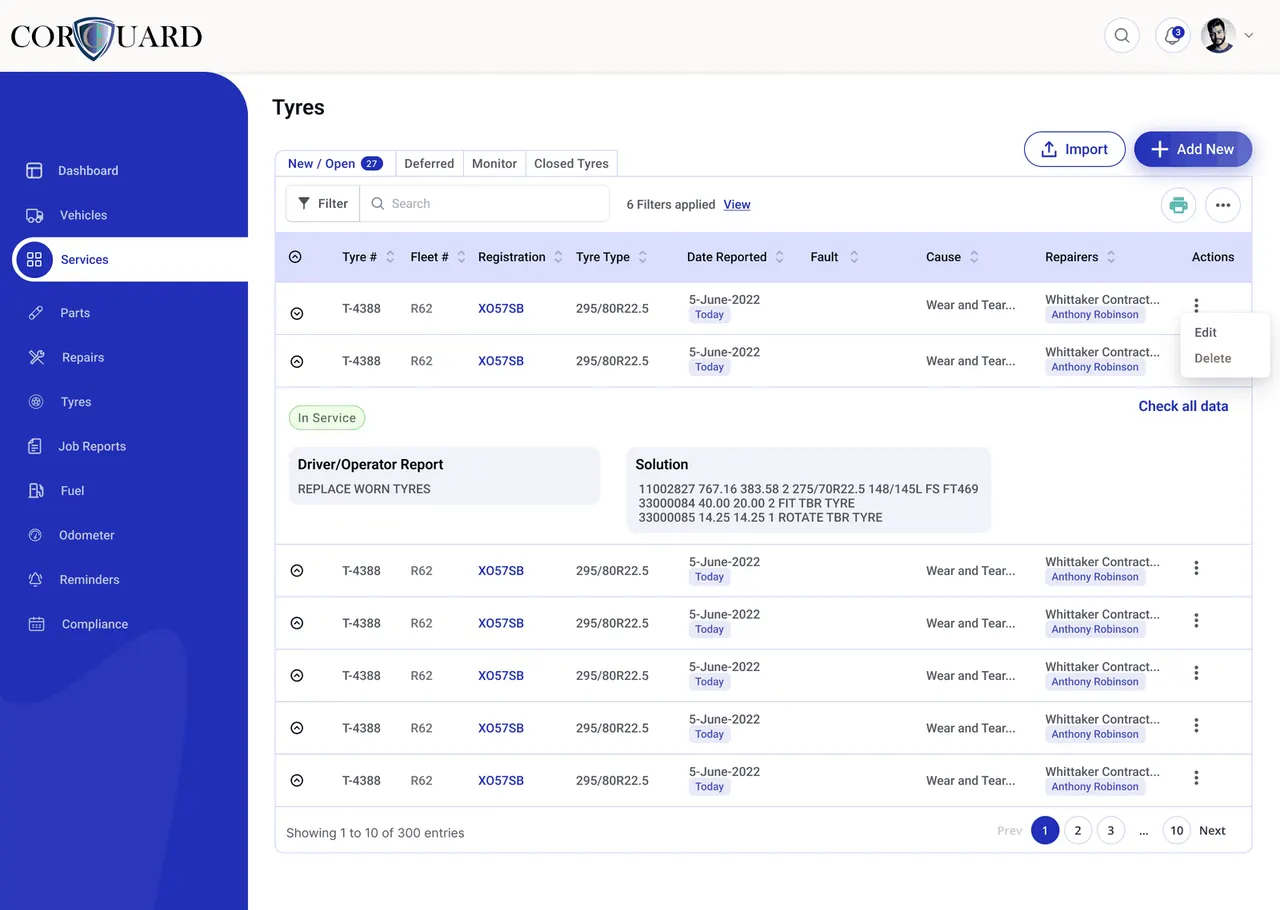
Driver diary checks
Connect fatigue and driver diary review back to manager visibility.
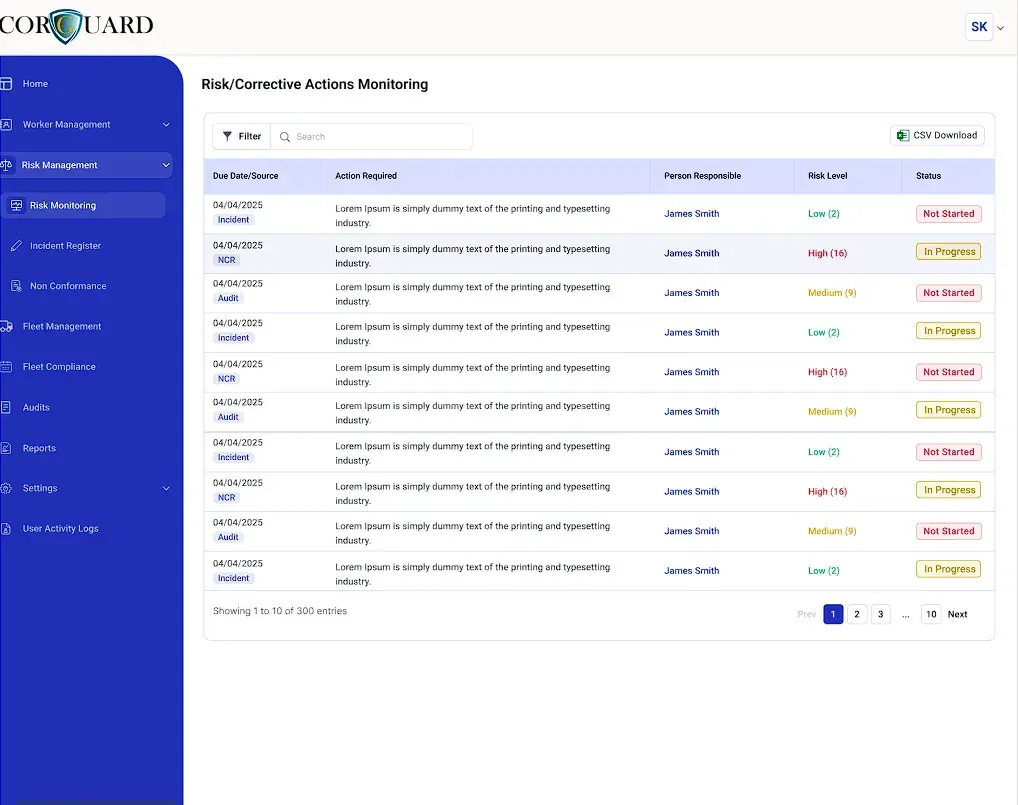
Corrective actions
Turn audit findings, hazards and incidents into tracked actions.
Keep exploring
Related Chain of Responsibility reading
MAEZ insight
Essential Checklist for Managing Supply Chain Risks
Discover a comprehensive supply chain risk management checklist to safeguard your network from financial, regulatory, and cybersecurity threats.
MAEZ insight
Effective Strategies for Supply Chain Risk Management
Discover best practices in supply chain risk management to minimize disruptions and financial losses. Learn to leverage technology and supplier networks effectively.
MAEZ insight
Overcoming Common CoR Training Challenges with Ease
Discover effective solutions for overcoming common CoR training challenges and ensure lasting change in your organization. Learn how to engage participants effectively.
MAEZ insight
Understanding the Heavy Vehicle National Law: A Comprehensive Guide
Explore the Heavy Vehicle National Law overview, a key regulatory framework for commercial transport in Australia, ensuring safety and compliance.
MAEZ insight
Decoding HVNL Requirements: A Comprehensive Guide
Explore our guide on understanding HVNL requirements, ensuring compliance and safety in the heavy vehicle sector. Essential for all industry stakeholders.
MAEZ insight
Understanding HVNL Compliance: A Complete Guide
Learn how to comply with HVNL and meet Chain of Responsibility obligations. This guide details safety risk management for all supply chain parties.
Frequently asked questions
Questions people ask about this topic
What are the most common transport safety challenges for Australian operators?
The most common transport safety challenges are driver fatigue, distracted driving, vehicle collisions, and slips, trips, and falls. These risks are interconnected rather than isolated, meaning they require systematic control measures across the entire supply chain rather than individual fixes.
How does the HVNL principle of shared responsibility affect transport safety management?
Under the Heavy Vehicle National Law, consignors, loaders, operators, and executives all share a duty to ensure transport activities are safe. This means every party in the supply chain must actively manage safety risks and be able to demonstrate that their controls are effective.
Why is driver fatigue so difficult to manage in transport operations?
Fatigue impairs reaction time, decision-making, and situational awareness at levels comparable to alcohol impairment, yet it is harder to detect and measure. Electronic logging devices track hours-of-service compliance but cannot prevent the underlying physiological factors that contribute to exhaustion.
What are the three types of distraction that affect commercial drivers?
The three forms of distraction are visual (taking eyes off the road), manual (hands leaving controls), and cognitive (mental attention diverted). The most dangerous activities, such as texting, combine all three simultaneously and significantly increase collision risk.
How can transport operators reduce slips, trips, and falls in their operations?
Key prevention measures include maintaining three points of contact when entering or exiting cabs and trailers, keeping walkways and loading areas clear of clutter, enforcing slip-resistant footwear, ensuring adequate lighting, and training workers to recognise environmental hazards in transport settings.