
HVNL compliance best practices boil down to understanding your primary duty, implementing systems that make compliance measurable, and ensuring every party in your supply chain accepts their legal responsibility. The Heavy Vehicle National Law, administered by the National Heavy Vehicle Regulator, sets clear obligations for businesses using heavy vehicles. The framework isn’t optional, and it affects far more people than just drivers.
After 25 years working across supply chains in Australia and the UK, I’ve seen businesses struggle with HVNL compliance because they treat it as a legal checkbox. That approach fails. The businesses that thrive understand CoR compliance as operational improvement, not regulatory burden.
This guide explains how to build systems that work. You’ll understand your legal duties, identify who needs to comply, and implement safety management systems that reduce risk. We’ll cover fatigue management, executive responsibilities, and practical compliance frameworks used by national businesses.
The difference between meeting your obligations and facing prosecution often comes down to documentation, systems thinking, and shared accountability across your transport activities.
Understanding the Heavy Vehicle National Law Framework
The HVNL governs vehicles over 4.5 tonnes gross vehicle mass across most Australian jurisdictions. It replaced multiple state-based systems with a single national framework designed to improve road safety and operational consistency.
The law covers more than just driving rules. It addresses fatigue management, mass and loading requirements, vehicle standards, accreditation schemes, and most critically, the Chain of Responsibility provisions. These CoR obligations extend legal duties far beyond the driver to every party who can influence transport safety.
For businesses using heavy vehicles, this means compliance obligations touch procurement, scheduling, warehousing, customer service, and executive leadership. The HVNL creates a shared responsibility model where ignorance isn’t a defense.
Why National Consistency Matters
Before the HVNL, operators crossing state borders faced different rules, permits, and enforcement approaches. This created compliance complexity and increased costs. The national law simplified this by establishing consistent standards across participating jurisdictions.
The NHVR administers the law and provides guidance, compliance support, and enforcement oversight. They develop policies, approve accreditation schemes, and work with industry to improve safety outcomes. Understanding their role helps you access resources and clarify compliance questions.
Core Components of the HVNL Framework
The HVNL addresses five main areas:
- Fatigue management rules, including work and rest hours
- Mass, dimension, and loading requirements
- Vehicle standards and roadworthiness
- Speed compliance and enforcement
- Chain of Responsibility duties for all parties
Each component connects to your primary duty under the CoR provisions. Your compliance approach must address all five areas systematically, not selectively.
With this framework in mind, let’s examine what Chain of Responsibility actually means for your business.
What is Chain of Responsibility and Why It Matters
CoR provisions extend legal duties beyond drivers to other parties in the road transport supply chain. This means schedulers, consignors, consignees, loaders, and operators can all face prosecution for breaches they influence or fail to prevent.
The concept recognizes that drivers often face pressure from business practices beyond their control. Unrealistic delivery schedules, poor loading practices, or inadequate vehicle maintenance create risks that drivers alone can’t mitigate. CoR holds the entire supply chain accountable.
The Philosophy Behind Shared Responsibility
Traditional enforcement focused on the driver at the roadside. But if your scheduler creates impossible timeframes, the driver faces a choice: break the law or lose their job. CoR acknowledges this reality and distributes legal responsibility to parties who control the conditions.
This isn’t about shifting blame. It’s about recognizing that safety requires coordination across the entire operation. When everyone accepts their role, compliance becomes sustainable rather than dependent on individual driver choices under pressure.
How CoR Changes Business Operations
CoR compliance requires businesses to examine their contracts, systems, and communications. You need documented processes showing how you eliminate or minimize safety risks within your control. This affects procurement negotiations, customer agreements, warehouse operations, and scheduling practices.
For many businesses, this means cultural change. Tight deadlines might have always been normal, but under CoR, you must ensure those deadlines don’t create fatigue breaches or speeding incentives. Your compliance framework must address these systemic pressures.
Understanding CoR obligations starts with identifying your primary duty under the HVNL.
The Primary Duty: Your Core Obligation Under HVNL
Your primary duty is to ensure the safety of your transport activities, so far as is reasonably practicable. This applies if you’re an operator, scheduler, consignor, consignee, loader, packer, or any other party in the Chain of Responsibility. The duty is absolute, meaning it exists regardless of contracts or commercial arrangements.
The primary duty requires you to eliminate or minimize public risks arising from your transport activities. This includes risks to other road users, pedestrians, and anyone affected by your heavy vehicle operations. You can’t contract out of this duty or claim someone else is responsible.
What “Transport Activities” Includes
Transport activities cover far more than driving. They include vehicle maintenance, loading and unloading, route planning, scheduling, driver training, fatigue management, and mass compliance. If your business decisions influence any of these areas, you have compliance obligations.
This broad definition catches many businesses by surprise. A retailer who never owns or operates vehicles still has CoR duties as a consignee. Their receiving practices, booking systems, and delivery requirements all influence transport safety.
Demonstrating Your Primary Duty
Meeting your primary duty requires documented systems, not good intentions. You need evidence showing:
- Risk identification processes for your transport activities
- Controls implemented to eliminate or minimize identified risks
- Monitoring systems to verify control effectiveness
- Review processes to improve your compliance approach
Your documentation should connect business practices to safety outcomes. If a prosecutor questions your compliance, you need evidence showing what you did, when you did it, and how you verified effectiveness.
But how much effort is enough? That depends on what’s reasonably practicable for your circumstances.
Understanding Reasonably Practicable in HVNL Compliance
Reasonably practicable means what you can feasibly do considering available knowledge, risks, and resources. It’s not perfection, but it’s not minimal effort either. The standard recognizes that businesses face constraints while maintaining high safety expectations.
Courts assess reasonably practicable by examining:
- The likelihood of risk occurring
- The potential harm if it does occur
- What you knew or should have known about the risk
- Available control measures and their effectiveness
- The cost of implementing controls relative to risk reduction
Applying the Reasonably Practicable Test
Start by identifying your specific risks. A business running overnight interstate routes faces different fatigue risks than one doing local metro deliveries. Your controls should match your actual operations, not generic templates.
For each identified risk, document available control options. If multiple controls exist, implement the most effective option you can reasonably resource. Cost alone doesn’t exempt you, especially if the risk is severe and the control is well-established industry practice.
When “Too Expensive” Isn’t a Defense
If a control costs $10,000 but prevents a risk likely to cause death or serious injury, that’s probably reasonably practicable regardless of business size. The standard weighs cost against consequence. Minor risks might justify less expensive controls, but serious risks require serious responses.
| Risk Level | Reasonably Practicable Response | Documentation Required |
|---|---|---|
| High likelihood, severe harm | Implement best-practice controls immediately | Risk assessment, control implementation records, verification evidence |
| Moderate likelihood, moderate harm | Implement effective controls within reasonable timeframe | Risk assessment, implementation plan, progress monitoring |
| Low likelihood, minor harm | Implement proportionate controls when feasible | Risk assessment, basic control records |
Your compliance approach must show you understood the risk, considered options, and implemented controls that match the risk level. This documented decision-making process demonstrates your commitment to meeting your primary duty.
Understanding what’s reasonably practicable helps you prioritize actions. Now let’s identify exactly who in your organization needs to comply.
Identifying Who Needs to Comply: Parties in the Chain of Responsibility
CoR obligations apply to any party whose actions or inactions affect heavy vehicle safety. The HVNL defines specific roles, but the key principle is simple: if you influence transport safety, you have duties.
Operators
The Draft Master Code recognises owner-drivers as operators, along with businesses that operate heavy vehicles under their direction. Operators have the most extensive obligations, including vehicle maintenance, driver management, and compliance system implementation.
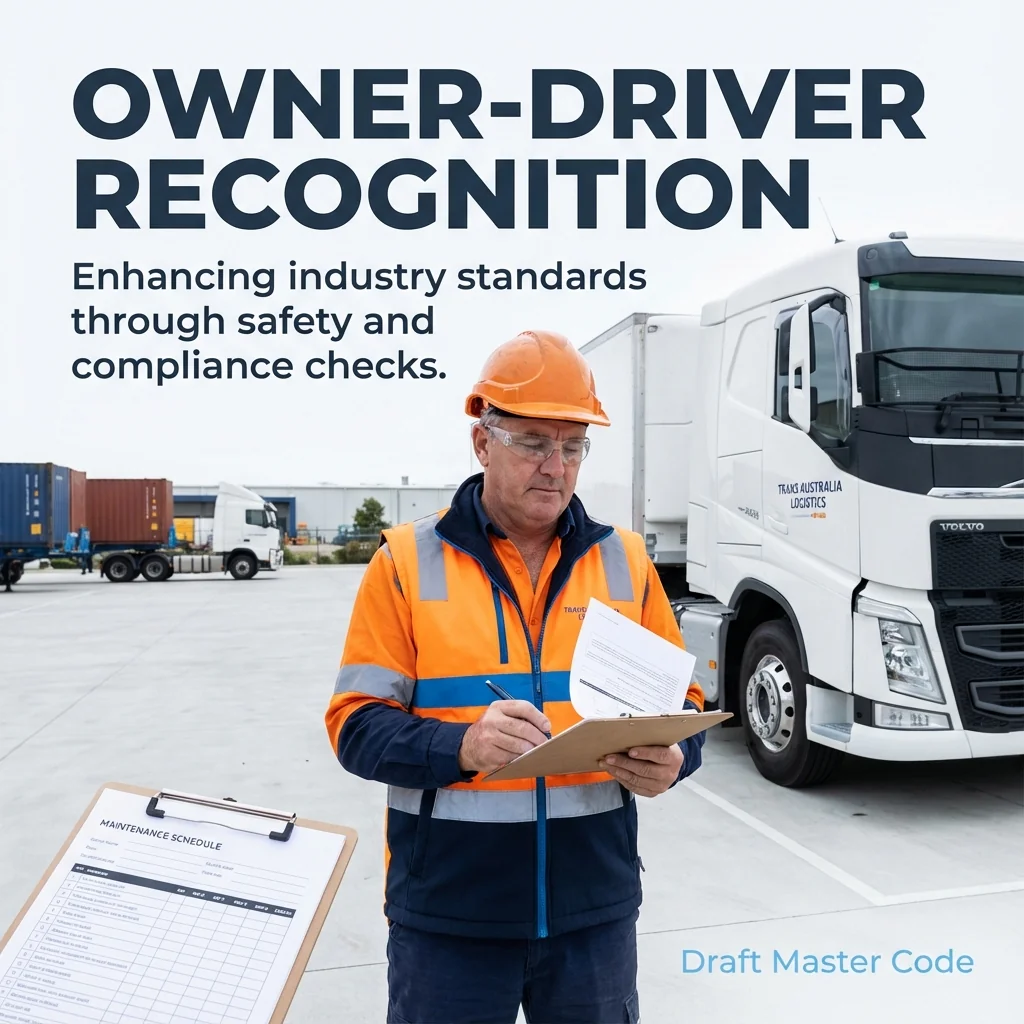
If you control when, where, and how a heavy vehicle is used, you’re likely an operator. This includes fleet managers, transport companies, and businesses operating their own logistics.
Schedulers
Anyone who determines delivery timeframes or influences driver schedules is a scheduler. This includes freight coordinators, dispatch managers, and customer service teams who commit to delivery times. Your scheduling practices must allow compliance with fatigue rules and speed limits.
If your systems create unrealistic timeframes, you share responsibility for resulting breaches. Schedulers need access to compliance tools showing travel times, rest requirements, and route constraints.
Consignors and Consignees
Consignors send goods. Consignees receive them. Both parties influence loading practices, booking systems, and delivery requirements. Your receiving dock procedures, booking windows, and appointment systems all affect compliance.
Retailers, manufacturers, and warehouses commonly hold consignor or consignee responsibilities. If drivers wait hours for loading, that affects their fatigue management. If your booking system creates time pressure, that influences speed compliance.
Loaders and Packers
Anyone who loads, packs, or supervises loading has duties regarding mass, load restraint, and vehicle suitability. This includes warehouse staff, freight forwarders, and customers who load their own goods. Improper loading creates serious safety risks.
Loaders must understand mass limits, load distribution, and restraint requirements. They need documented procedures, equipment, and training. If you sign a load declaration, you’re accepting legal responsibility for its accuracy.
Prime Contractors
Prime contractors engage other parties to provide transport services. They have duties to ensure subcontractors can comply. This affects procurement contracts, tender processes, and ongoing monitoring of transport providers.
If you hire transport services, your contractor management processes must address HVNL compliance. Price-focused procurement that ignores compliance creates shared liability when breaches occur.
Once you’ve identified your role, implement systems that demonstrate your compliance commitment.
Building Your Safety Management System
A Safety Management System provides the framework for meeting your primary duty. It’s how you systematically identify risks, implement controls, and demonstrate continuous improvement. Without a documented SMS, proving compliance becomes difficult.
Professional and regulatory guidance highlights five elements as the backbone of effective compliance: visible leadership commitment, clear policies, regular training, ongoing monitoring, and robust reporting processes. Together, they help prevent, detect, and correct breaches.
Leadership Commitment and Culture
Compliance starts at the top. Executive officers must demonstrate visible commitment through resource allocation, policy endorsement, and accountability frameworks. If leadership treats compliance as someone else’s job, the system will fail.
This means executives should understand HVNL obligations, receive compliance reports, and take corrective action when issues arise. Their engagement signals that safety matters more than short-term commercial pressure.
Policy and Procedure Development
Effective policies must be clear, current, and aligned to your actual operations. Start by documenting how you manage each relevant HVNL requirement: fatigue, mass, loading, vehicle standards, and speed compliance. Each policy should specify responsibilities, processes, and decision-making authorities.
Your procedures translate policies into action. They tell workers exactly what to do, when to do it, and what records to keep. Good procedures are specific enough to guide action but flexible enough to adapt to different situations.
Training and Competency
Everyone with CoR responsibilities needs training. This includes executives, schedulers, warehouse staff, drivers, and customer service teams. Training must cover legal obligations, company procedures, and their specific role in the compliance framework.
Document who receives training, what topics you covered, and when refresher training occurs. Competency isn’t a one-time event. As regulations change and operations evolve, your training program must adapt.
Monitoring and Measurement
You can’t manage what you don’t measure. Implement monitoring systems that verify compliance in real-time, not after breaches occur. This includes Electronic Work Diaries for fatigue management, weighbridge processes for mass compliance, and pre-start vehicle checks for roadworthiness.
Regular audits assess system effectiveness. Look for gaps between documented procedures and actual practices. Review incident reports, near misses, and compliance data to identify improvement opportunities.
Reporting and Continuous Improvement
Authoritative guidance on compliance management emphasizes data-driven metrics and continuous improvement processes to sustain compliance and demonstrate due diligence. Your SMS should include clear reporting lines for compliance issues, non-conformances, and improvement suggestions.
When breaches occur, investigate root causes and implement corrective actions. Document what happened, why it happened, and what you changed to prevent recurrence. This demonstrates your commitment to continuous improvement.
| SMS Component | Implementation Actions | Evidence Required |
|---|---|---|
| Leadership | Executive training, compliance reporting to board, resource allocation | Training records, board minutes, budget approvals |
| Policies | Document management processes for all HVNL requirements | Policy documents, version control, distribution records |
| Training | Develop role-specific programs, deliver regularly, assess competency | Training materials, attendance records, competency assessments |
| Monitoring | Implement real-time controls, conduct regular audits, track metrics | Monitoring data, audit reports, compliance dashboards |
| Improvement | Investigate incidents, implement corrections, review effectiveness | Incident reports, corrective action logs, review records |
Your SMS provides the structure. Now let’s examine specific executive responsibilities under the HVNL.
Executive Duty and Due Diligence Requirements
Executive officers have personal liability under the HVNL. If your organization breaches CoR provisions, executives can face prosecution unless they demonstrate due diligence. This means company directors, board members, and senior managers carry individual responsibility for compliance outcomes.
The executive duty exists separately from corporate liability. Even if the company implements controls, individual executives must show they took reasonable steps to ensure compliance. This creates powerful incentives for leadership engagement.
What Due Diligence Requires
Demonstrating due diligence means showing you:
- Acquired and maintained knowledge about HVNL obligations
- Understood the nature of operations and associated risks
- Ensured appropriate resources for compliance
- Implemented systems to monitor compliance
- Took action when you became aware of issues
This isn’t delegation. Executives can’t simply appoint a compliance manager and assume they’ve met their duty. You must actively engage with compliance, ask questions, review reports, and verify effectiveness.
Building Your Due Diligence Evidence
Start by undertaking HVNL training appropriate to your role. You don’t need operational detail, but you must understand your organization’s legal obligations and risk profile. Document this training.
Establish reporting systems that bring compliance information to executive level. This might include monthly compliance reports, quarterly audits, or immediate notification of serious breaches. Review these reports and document your responses.
When compliance issues arise, take visible action. This might mean additional resources, policy changes, or operational adjustments. Record what you decided, why you decided it, and how you verified implementation.
Common Due Diligence Failures
Executives often fail due diligence by treating compliance as purely operational. They assume their compliance manager handles everything, never request reports, and remain unaware of systemic issues. When prosecutions occur, they can’t demonstrate personal engagement.
Another common failure involves awareness without action. An executive receives reports showing compliance problems but takes no corrective action. This actually worsens their position, as it demonstrates knowledge of risks without response.
Your due diligence framework must show continuous engagement, not periodic attention. Now let’s examine one of the most complex compliance areas: fatigue management.
Fatigue Management Compliance Requirements
Fatigue management rules control when drivers can work and when they must rest. These requirements aim to prevent fatigue-related incidents by ensuring drivers have adequate recovery time. The rules are detailed, mandatory, and apply across all CoR parties who influence driver hours.
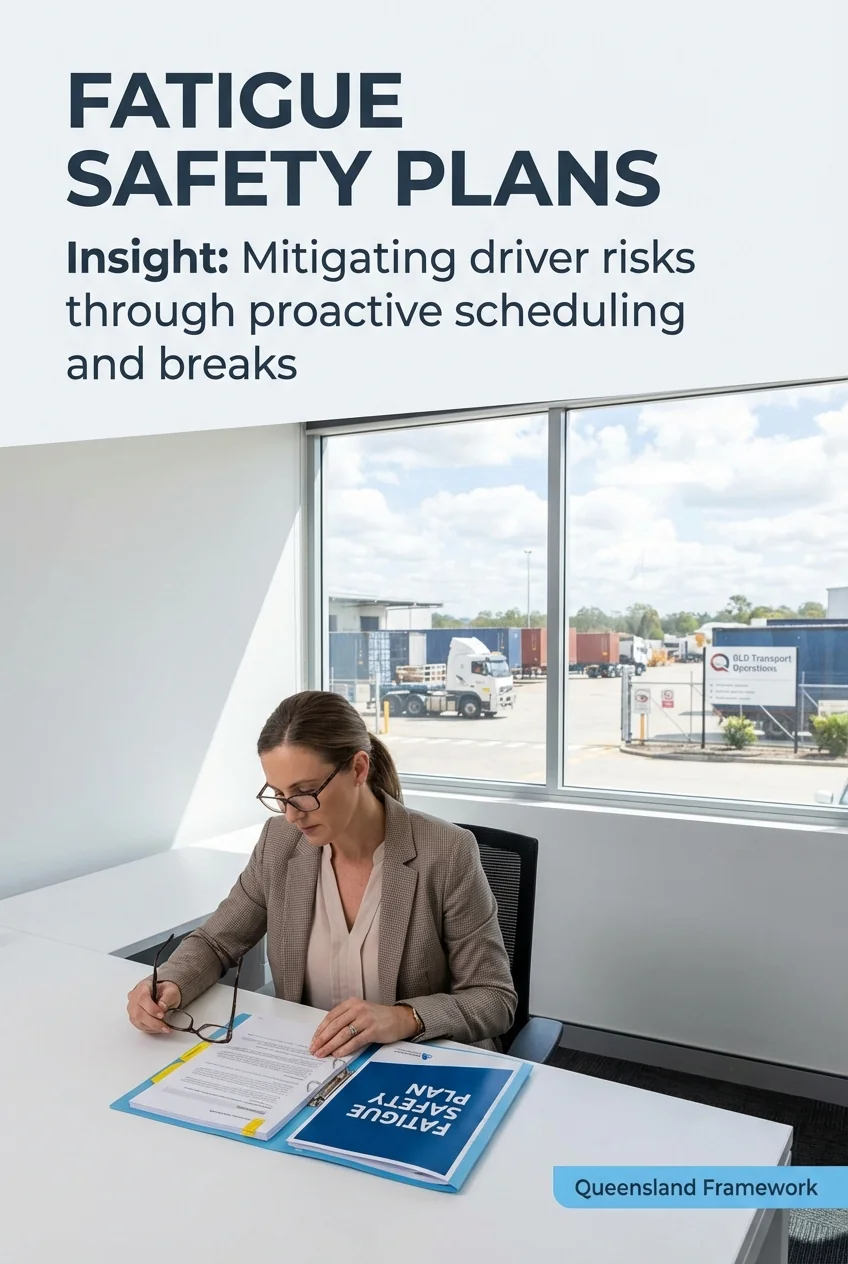
Queensland’s safety management framework requires mandatory safety plans addressing fatigue risks. Other jurisdictions have similar requirements under the national law.
Standard Hours and Rest Requirements
Standard hours set maximum work limits and minimum rest periods. Drivers must not exceed these limits, and schedulers, consignors, and consignees must not create conditions that make breaches likely.
The standard hours include daily work limits, rest break requirements, and weekly rest periods. Drivers must also comply with maximum driving times between rest breaks. These rules are non-negotiable under standard hours operation.
Electronic Work Diaries
Electronic Work Diaries provide real-time fatigue monitoring. They record work and rest hours automatically, preventing manual logbook manipulation. EWDs improve compliance accuracy and provide operators with immediate visibility of driver status.
For businesses operating under standard hours, EWDs offer compliance certainty. They eliminate disputes about recorded hours and provide defensible evidence if questions arise. Many operators adopt EWDs even when not mandatory.
Fatigue Management Accreditation
The Basic Fatigue Management and Advanced Fatigue Management modules allow operators to work outside standard hours when they demonstrate robust fatigue risk management. These schemes suit operations where standard hours create operational constraints.
BFM and AFM require documented systems, risk assessments, and ongoing monitoring. They’re not about working drivers harder. They provide flexibility when operations justify it and systems support safe outcomes.
CoR Parties and Fatigue Compliance
Every CoR party influences fatigue management. Schedulers create timeframes. Consignors and consignees control loading times. Loaders determine how long drivers wait. Prime contractors set commercial expectations. Each party must ensure their actions don’t cause or encourage breaches.
This means examining your contracts, booking systems, and operational practices. If drivers regularly report late because your loading takes longer than scheduled, you’re creating fatigue pressure. If your delivery windows require drivers to speed or skip rest breaks, you’re contributing to breaches.
Addressing fatigue compliance requires coordination across the supply chain, not isolated operator action. Let’s examine how mass and loading requirements create similar shared responsibilities.
Mass, Dimension and Loading Compliance Requirements
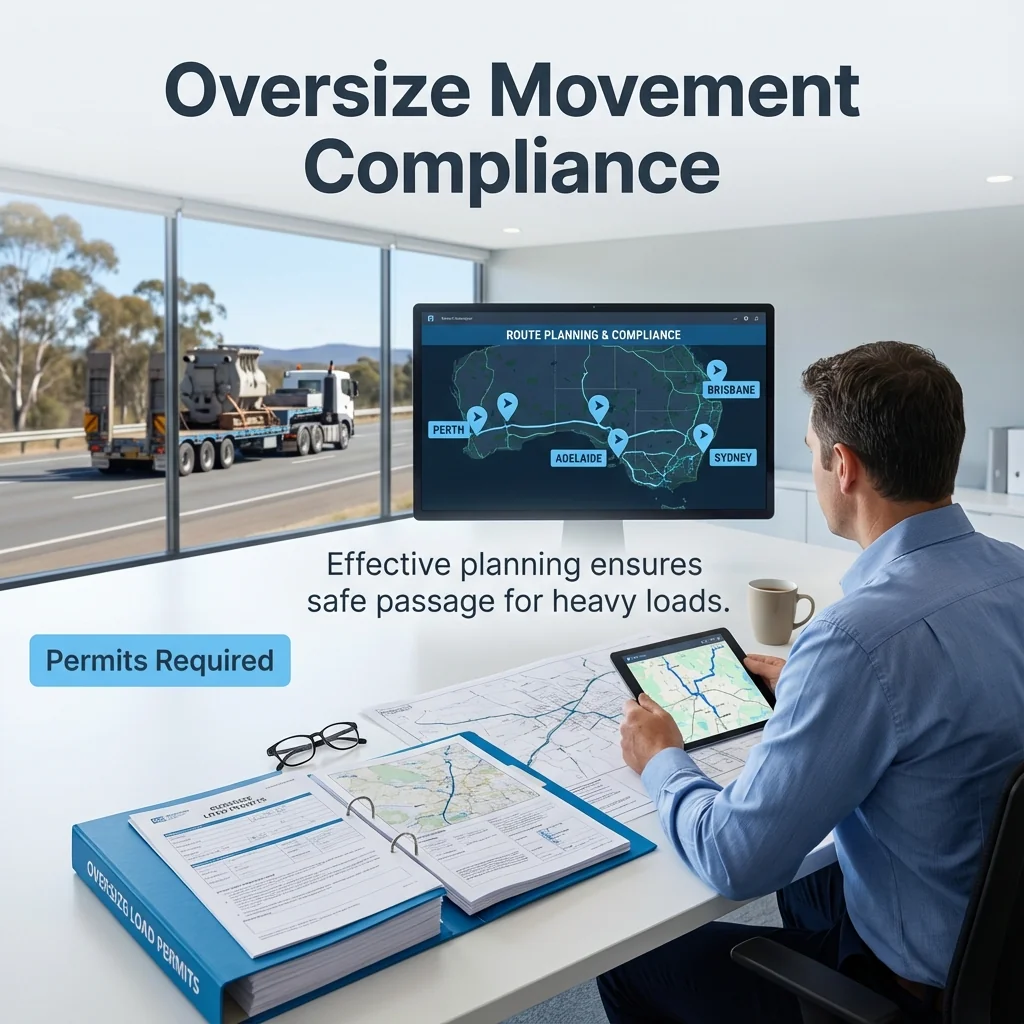
Oversize and overmass movements require permits and compliance with route restrictions. Even within legal limits, improper loading creates significant safety risks. Mass and loading compliance affects multiple CoR parties.
Understanding Mass Limits
Heavy vehicles must comply with axle mass limits, group mass limits, and gross vehicle mass limits. These limits protect road infrastructure and ensure vehicle stability. Exceeding them creates prosecution risk and serious safety concerns.
Mass compliance starts with knowing your vehicle’s legal limits and ensuring loads don’t exceed them. This requires accurate weighing systems, understanding of vehicle configurations, and documented processes for load planning.
Load Restraint Requirements
Vehicle defects involving brakes, steering, suspension, wheels, and tyres increase loss of control likelihood. Poor load restraint compounds these risks by affecting vehicle stability and creating projectile hazards.
Load restraint must prevent movement in all directions: forward, rearward, lateral, and vertical. This requires appropriate restraint equipment, correct technique, and regular checks during transport. The Load Restraint Guide provides technical standards.
Shared Loading Responsibilities
Loaders must ensure loads comply with mass limits and restraint requirements. But consignors influence loading through product packaging, load size, and documentation. Consignees affect compliance through their booking systems and unloading facilities. Operators must verify loading before departure.
This shared responsibility means effective loading compliance requires collaboration. Consignors need to communicate accurate weights. Loaders need proper equipment and training. Operators need verification processes. Consignees need efficient unloading that doesn’t encourage unsafe practices.
| Loading Compliance Area | Key Responsibilities | Common Risk Points |
|---|---|---|
| Mass compliance | Accurate weighing, load planning, weight distribution | Estimated weights, overloading, poor distribution |
| Load restraint | Proper equipment, correct technique, ongoing monitoring | Inadequate restraints, improper methods, no checks |
| Dimension compliance | Understanding limits, permit requirements, route planning | Overheight loads, width exceedances, missing permits |
Loading compliance requires technical knowledge and systematic processes. Let’s examine how vehicle standards and roadworthiness fit into your compliance framework.
Vehicle Standards and Roadworthiness Requirements
Heavy vehicles must meet construction standards and remain roadworthy throughout their service life. This affects manufacturers, importers, operators, and anyone who modifies vehicles. Vehicle defects create serious safety risks and compliance breaches.
Construction and Modification Standards
New vehicles must comply with Australian Design Rules. Modified vehicles need engineering certification for changes affecting safety or mass. This includes alterations to chassis, suspension, body, or load-carrying capacity.
Operators modifying vehicles must ensure changes comply with standards and obtain required certifications. Unauthorized modifications create prosecution risk and insurance complications. Document all modifications and retain engineering certificates.
Roadworthiness and Maintenance
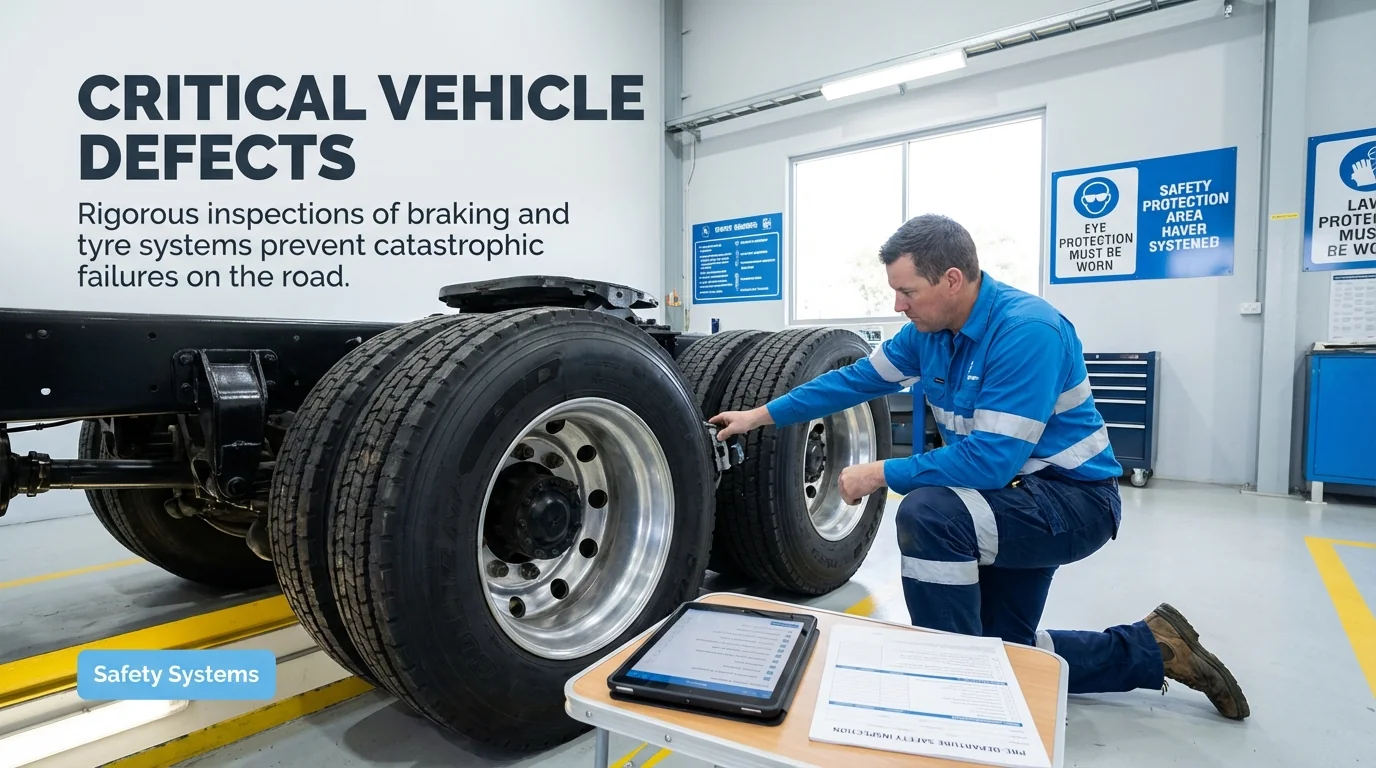
Operators must maintain vehicles in roadworthy condition. This means systematic maintenance programs, defect reporting systems, and repairs completed before vehicles return to service. Defects involving safety-critical systems require immediate attention.
Pre-start inspections identify defects before departure. Drivers should check brakes, steering, lights, tyres, and load security. Document these checks and establish clear processes for reporting and rectifying defects.
Impact of Defects on Compliance
Vehicle defects don’t excuse other breaches. If faulty brakes caused speeding because the driver couldn’t maintain safe following distances, both the defect and the speeding create liability. Operators must ensure vehicles are capable of legal operation.
Regular servicing schedules, documented maintenance records, and systematic inspection programs demonstrate your commitment to roadworthiness. These records become critical if incidents occur or prosecution proceedings commence.
With vehicle standards understood, let’s examine how to implement systematic risk assessment processes.
Risk Assessment and Control Implementation Processes
Effective compliance requires systematic risk assessment. You must identify hazards, evaluate risks, implement controls, and monitor effectiveness. This risk-based approach ensures your efforts focus on areas with greatest safety impact.
Identifying Transport Safety Risks
Start by examining your entire operation. Consider fatigue risks from scheduling, loading risks from warehouse practices, mass risks from product characteristics, vehicle risks from maintenance practices, and route risks from infrastructure or traffic.
Involve workers in risk identification. Drivers, warehouse staff, and schedulers understand operational realities better than management often does. Their input improves risk assessment accuracy and implementation effectiveness.
Evaluating and Prioritizing Risks
Not all risks require identical responses. Evaluate each risk by considering likelihood and consequence. High-likelihood, high-consequence risks demand immediate attention. Lower-priority risks still require controls, but timing and resources can reflect their risk level.
Use consistent criteria for evaluation. This creates defensible prioritization if questioned. Document your assessment process, including who participated, what you considered, and how you determined priorities.
Implementing Controls
The hierarchy of controls provides a framework for selecting effective measures. Elimination removes the hazard entirely. Substitution replaces it with something safer. Engineering controls reduce risk through design. Administrative controls manage risk through procedures. Personal protective equipment provides final defense.
Apply the hierarchy systematically. If you can eliminate the risk, do so. If elimination isn’t reasonably practicable, move down the hierarchy. Your control selection should reflect this decision-making process.
Monitoring Control Effectiveness
Controls only work if implemented correctly and maintained over time. Monitor through inspections, audits, data analysis, and worker feedback. When controls fail or prove ineffective, investigate why and implement improvements.
Documentation proves you’re managing risks actively. Record what controls you implemented, when you reviewed them, and what changes you made based on monitoring results. This evidence demonstrates continuous improvement.
Risk management frameworks support all other compliance requirements. Let’s examine how record-keeping and documentation fit into your overall approach.
Documentation and Record-Keeping Best Practices
Documentation proves compliance. Without records, demonstrating you met your primary duty becomes difficult. Your record-keeping system must capture evidence of risk assessment, control implementation, monitoring, and improvement.
What Records You Need
Maintain records covering:
- Risk assessments and control implementation decisions
- Training delivery, attendance, and competency assessments
- Vehicle maintenance, inspections, and defect rectification
- Work and rest hours through logbooks or EWDs
- Mass verification and load restraint checks
- Incident reports and corrective actions
- Audit results and management reviews
Each record type serves a compliance purpose. Together, they demonstrate systematic management of your HVNL obligations.
Record Retention Requirements
The HVNL specifies minimum retention periods for different record types. Generally, maintain records for at least five years. Some records, like vehicle modification certificates, should be kept for the vehicle’s life.
Longer retention periods provide better protection. If incidents lead to prosecution, records from several years prior might become relevant. Establish clear retention schedules and ensure records remain accessible throughout their retention period.
Electronic vs Paper Records
Electronic systems offer advantages: searchability, backup capability, version control, and integration with monitoring tools. But paper records remain acceptable if properly managed and stored.
Whatever system you use, ensure records are legible, complete, protected from loss, and accessible when needed. If you use electronic systems, maintain backup procedures and ensure data security.
Using Records to Demonstrate Compliance
Records serve two purposes. They guide daily operations by documenting processes and responsibilities. They also provide evidence if compliance questions arise. Good records should tell a clear story about your compliance approach.
When prosecutors or regulators review your records, they’re assessing whether you took reasonable steps to meet your primary duty. Complete, organized records that show systematic risk management support your defense.
Your documentation framework underpins everything else. Now let’s address some common questions about HVNL compliance.
Key Questions About HVNL Compliance
What are the 5 elements of compliance?
The five core elements of an effective compliance program are visible leadership commitment, clear policies, regular training, ongoing monitoring, and robust reporting and remediation processes. Together, they help organizations prevent, detect, and correct breaches across operations.
What are the best practices for compliance?
Best practices include starting from structured risk assessment, aligning policies and controls to material risks, and ensuring leadership oversight and accountability. Regular training, audits, data-driven metrics, and continuous improvement processes help sustain compliance and demonstrate due diligence to regulators.
Who needs HVNL compliance training?
Anyone whose actions influence heavy vehicle safety needs training. This includes executive officers, operators, schedulers, consignors, consignees, loaders, drivers, and customer service teams. Training content should match each person’s role and responsibilities within the Chain of Responsibility.
Building Sustainable HVNL Compliance
HVNL compliance works when you treat it as operational improvement, not regulatory burden. The businesses that succeed understand their primary duty, implement systematic risk management, and engage their entire supply chain in shared responsibility.
Start by identifying your role in the Chain of Responsibility. Document your risks systematically. Implement controls that match your risk profile. Monitor effectiveness continuously. Involve your executive team in oversight and due diligence.
Your compliance framework should evolve as your operations change. Regular reviews, incident investigations, and audit findings drive continuous improvement. This ongoing refinement demonstrates your commitment to meeting your primary duty.
The HVNR provides guidance, tools, and support for businesses implementing HVNL compliance. Their resources help clarify obligations and access best-practice approaches. Use them.
Effective compliance protects your business from prosecution, reduces incidents, improves efficiency, and strengthens relationships with customers and transport providers. It’s not overhead. It’s operational advantage.