
MAEZ insight
CoR Compliance: What Australian Transport Operators Need to Know
Practical guidance on Chain of Responsibility compliance under the HVNL — your legal duties, executive obligations, staff training, compliance audits, policies, and telematics for managing on-road risks.

Managers need a clear view of gaps before audit or enforcement pressure arrives.

Contractor controls should be verified before the work starts.
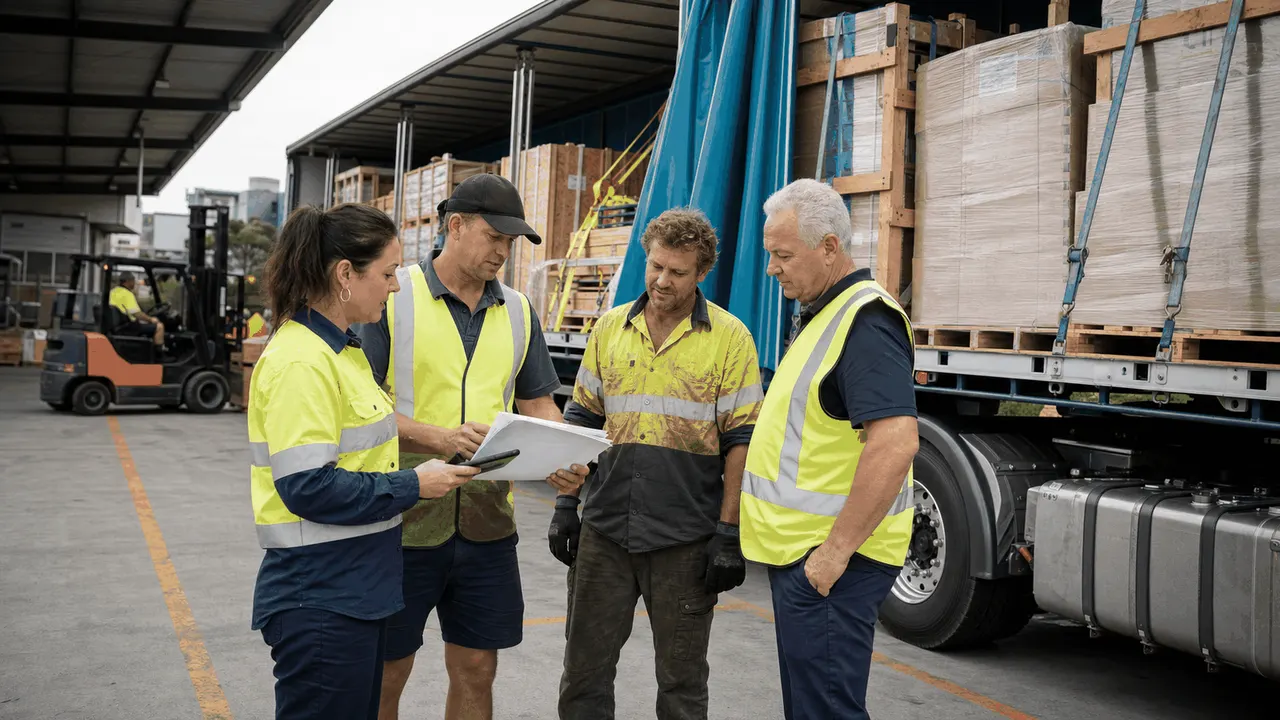
Receiving windows, site rules, and unloading delays can all shape the transport task.
Unloading decisions can affect safety, scheduling, and responsibility.
Consignors
Freight terms, delivery windows, and KPIs must not push drivers into speed, fatigue, or mass breaches.
Consignees
Receiving rules, site access, and unloading delays are CoR controls that need to be set and evidenced.
Loaders
Mass, dimension, and load restraint decisions need documented checks, not assumptions.
Managers
Executives and managers need due-diligence evidence that the Safety Management System is actually working.
What does it mean to comply with Chain of Responsibility?
Chain of Responsibility (CoR) compliance means every party in a heavy vehicle supply chain takes reasonable steps to prevent breaches of mass, dimension, loading, speed, and fatigue laws under the Heavy Vehicle National Law (HVNL). If your business engages transport involving heavy vehicles, you have a legal responsibility to understand and manage those risks — regardless of whether you outsource the physical move to a transport provider.
Within the Australian transport industry there are many opinions about what compliance means. The legislation, however, allows for just one standard. To understand whether you have legal liability, you must first understand that CoR applies to anyone who has a transport task within their own supply chain.
There is only one legislative standard — opinions do not change your obligations. For a broader overview of how CoR works across the supply chain, see About Chain of Responsibility.
Do you employ transport in your supply chain?
Outsourcing the move does not outsource the responsibility
A supply chain is the network between a company and the suppliers that help produce and distribute its products to the final customer. Supply chains come in all shapes and sizes — airlines procure food for passengers, banks move customer money, and most businesses move goods in some form. If your supply chain includes the use of heavy vehicles, CoR obligations apply to you.
Many businesses assume the responsibility sits entirely with their transport provider. That is a dangerous misconception. The two most common statements MAEZ hears when reviewing transport risk are:
- "Let me get back to you when we work out what our transport supplier is doing."
- "We leave all the safety up to our transport supplier."
Unfortunately, the people who say this are often at significant risk of prosecution by the National Heavy Vehicle Regulator (NHVR) or Police — simply because they do not understand their own legal liability. The responsibility cannot be delegated. If you engage a transport company within your supply chain, you are expected to actively understand and manage the risks associated with that engagement.
Your legal duty as an executive or director
HVNL section 26D sets out what officeholders must do
Under the HVNL, the organisation and its executives and directors who participate in running the business must:
- Acquire and keep up to date knowledge about the safe conduct of transport activities.
- Gain an understanding of the nature of the entity's transport activities and the hazards and risks — including public risk — associated with those activities.
- Ensure the entity has and uses appropriate resources to eliminate or minimise those hazards and risks.
- Ensure the entity implements processes to eliminate or minimise hazards and risks, including receiving and responding to information about incidents.
- Verify that those resources and processes are being provided, used, and implemented.
This is drawn directly from the executive duty provisions in the HVNL, which sit alongside the principle of shared responsibility (Part 1A.1) and the primary duty provisions (Part 1A.2). The duty cannot be delegated; it rests solely with those who actively participate in running the business.
In practical terms, this means you need documented evidence that you understand your transport risks, have allocated resources to manage them, and have processes in place to respond when issues arise. For a structured risk review, see Chain of Responsibility Consulting.
Why you should train your staff
A dozen trained eyes are better than relying on guesswork
Some business owners worry that training staff is a waste of time because employees may leave. The opposite is closer to the truth — a lack of training creates direct risk. WorkSafe authorities across Australia have published numerous prosecution examples where businesses were fined — sometimes into the millions — because employees were not trained on tasks that posed foreseeable risks.
In several cases, significant injuries were attributed to executives or business owners not ensuring simple preventive measures. Chain of Responsibility is an onerous obligation, but it is the law. Training your staff on CoR principles means you have more people watching for potential issues and risks — before they become incidents, fines, or criminal charges.
Beyond compliance, good safety records can reduce insurance premiums, improve staff retention, and demonstrate due diligence if you are ever audited or investigated. MAEZ offers targeted Chain of Responsibility training and a practical CoR training course designed for specific roles within your business.
Why complete a CoR compliance audit?
You would not drive somewhere new without a map
A compliance audit gives you a clear picture of where your gaps are before an enforcement agency or accreditation body finds them for you. When choosing an auditor, make sure the following elements are in place:
- The audit is based on industry-approved codes of practice.
- The auditor can show professional indemnity insurance.
- The auditor can benchmark your results so your team understands the impact.
- The auditor provides a full and comprehensive proposal outlining expectations.
- The auditor has genuine industry experience and offers practical, not purely theoretical, advice.
Taking the time to select the right auditor prevents the costly outcome of acting on poor or incomplete advice. If you would like to discuss your audit options, contact MAEZ for a no-obligation conversation.
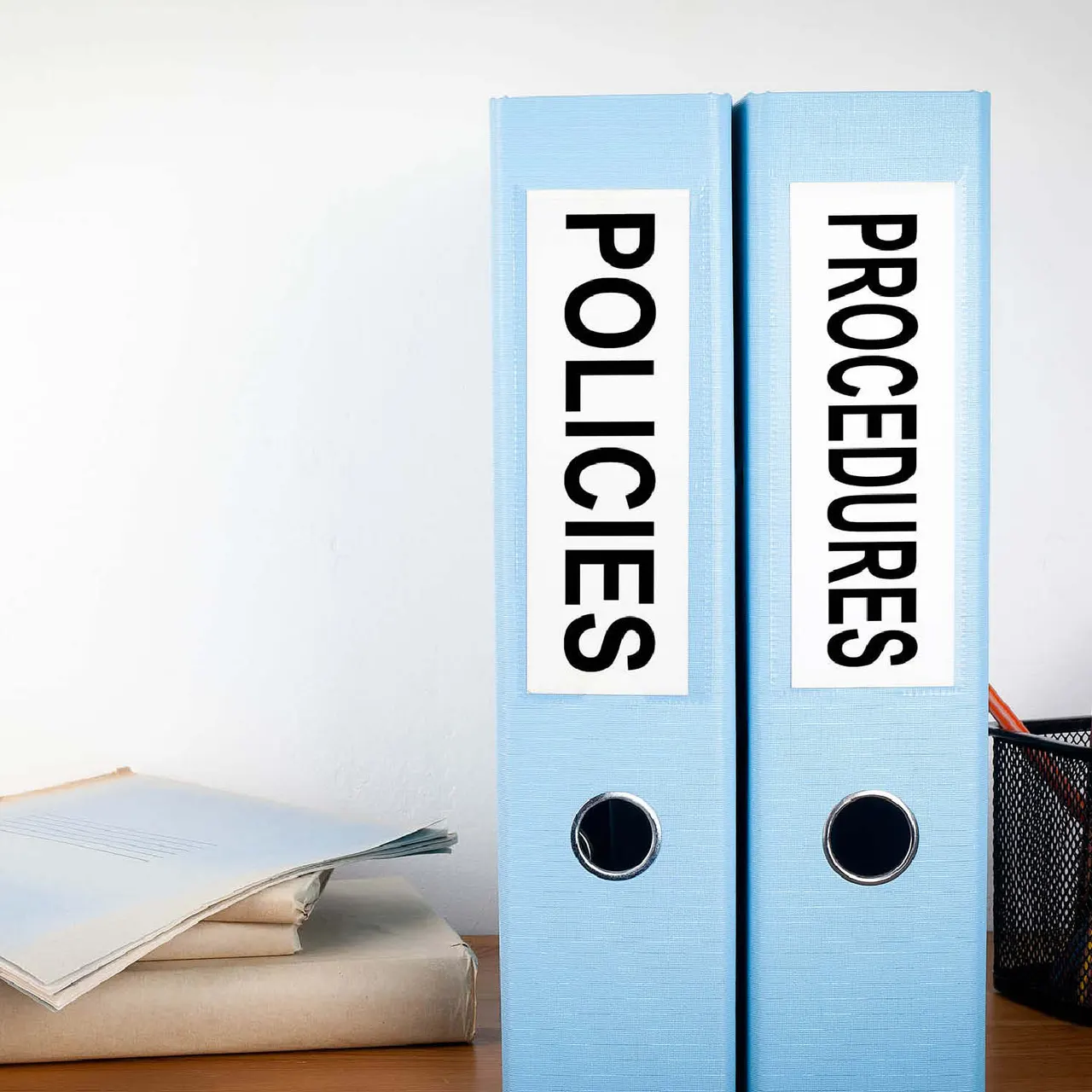
Why standards and policies matter
Policies only protect you when they are written, understood, and actually used
Policies or business rules allow your employees to understand what must occur when training and experience are not enough. It is up to the business to decide which policies to implement, based on foreseeable risks and real operational experience. The NHVR is clear that every transport task must have a safety system.
Once implemented, a safety system helps a business identify where the biggest risks lie and put processes in place to reduce the potential for injury or death. However, simply having policies on paper does not make commercial or legal sense unless they are actively delivered to the people who need them.
Key principles for effective policies
- A policy must be written, reviewed, and signed off by those who work where the risk is present.
- Hidden policies on a computer are as useless in court as having no policy at all.
- Standards must be delivered to employees in a specific, digestible manner.
- Delivery is critical — a policy that no one reads or follows will not protect you.
When standards are properly applied, they not only document your risks but also help you run a more efficient operation.
Managing on-road risks with telematics data
Reliable GPS data is one of the most efficient ways to manage speed and demonstrate compliance
A safety system must reduce on-road risks so that heavy vehicles do not damage infrastructure or endanger the public. To do that effectively, an organisation must actively manage the on-road risks a transport task presents.
Speed is a clear example. A driver is unlikely to return to the yard and report when, where, and why they were speeding. No one starts the day intending to cause harm, but speed can kill — and if it occurs in your supply chain, your organisation is at risk of contravening the legislation and incurring significant fines.
The most efficient way to manage speed is through GPS telematics and the data such systems produce. The law requires you to ensure, so far as reasonably practicable, that risks to infrastructure and the public are removed or minimised.
What to look for in telematics
- The system does not need to record video — it needs to produce reliable, actionable data.
- Not all GPS units will let you demonstrate CoR compliance.
- Good telematics can confirm your fleet is operating within speed limits and doing what you need it to do, when you need it done.
- Data quality matters — unreliable data will not hold up under scrutiny.
Reliable data is not just a technical convenience — it is part of the evidence trail that shows you are actively managing your transport risks.
How MAEZ can help you comply with CoR
Practical pathways, not just theory
MAEZ has helped hundreds of Australian businesses with their Chain of Responsibility obligations. Whether you are starting from scratch or tightening an existing system, the approach can be practical rather than costly. MAEZ helps Australian businesses turn CoR, HVNL, WHS, transport safety, and chartered risk obligations into practical training, advisory, audit, and implementation pathways.
Ways MAEZ can support you
- Chain of Responsibility training targeted at specific roles in your business.
- CoR consulting for a structured risk review.
- Practical guidance on telematics, policies, and evidence.
If you need help with any of the elements above, MAEZ is here as your Chain of Responsibility partner. Contact us to discuss where to start.
How MAEZ works
Find the gaps. Fix the system. Prove the controls.
MAEZ helps transport operators deal with the compliance risk they already know is there. We help get the Safety Management System in order, protect NHVAS accreditation, reduce fine exposure, and connect training, evidence, and CoRGuard workflows where software is needed.
Find
Identify what is exposed before an auditor or regulator does.
Fix
Build the SMS controls around how the transport business actually runs.
Prove
Use CoRGuard where records, reminders, diaries, audits, and evidence need structure.
From advice to evidence
From MAEZ advice to a working Safety Management System
Advisory work should leave a practical implementation trail. These examples show how CoRGuard supports records, fatigue and driver diary checks, maintenance, audits, document control, inductions, corrective actions, and evidence review after MAEZ identifies the gaps.
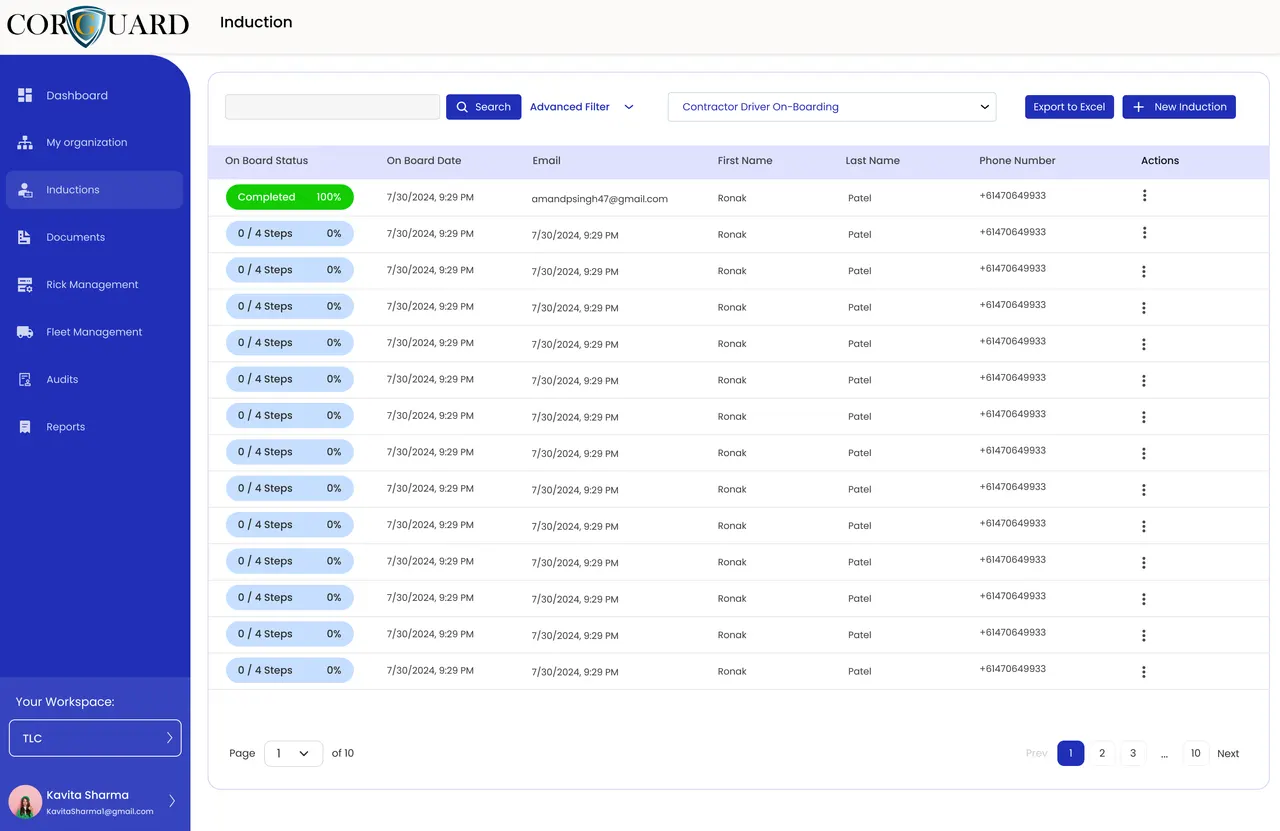
Training records
Connect training completion from cortraining.com.au to evidence and follow-up.
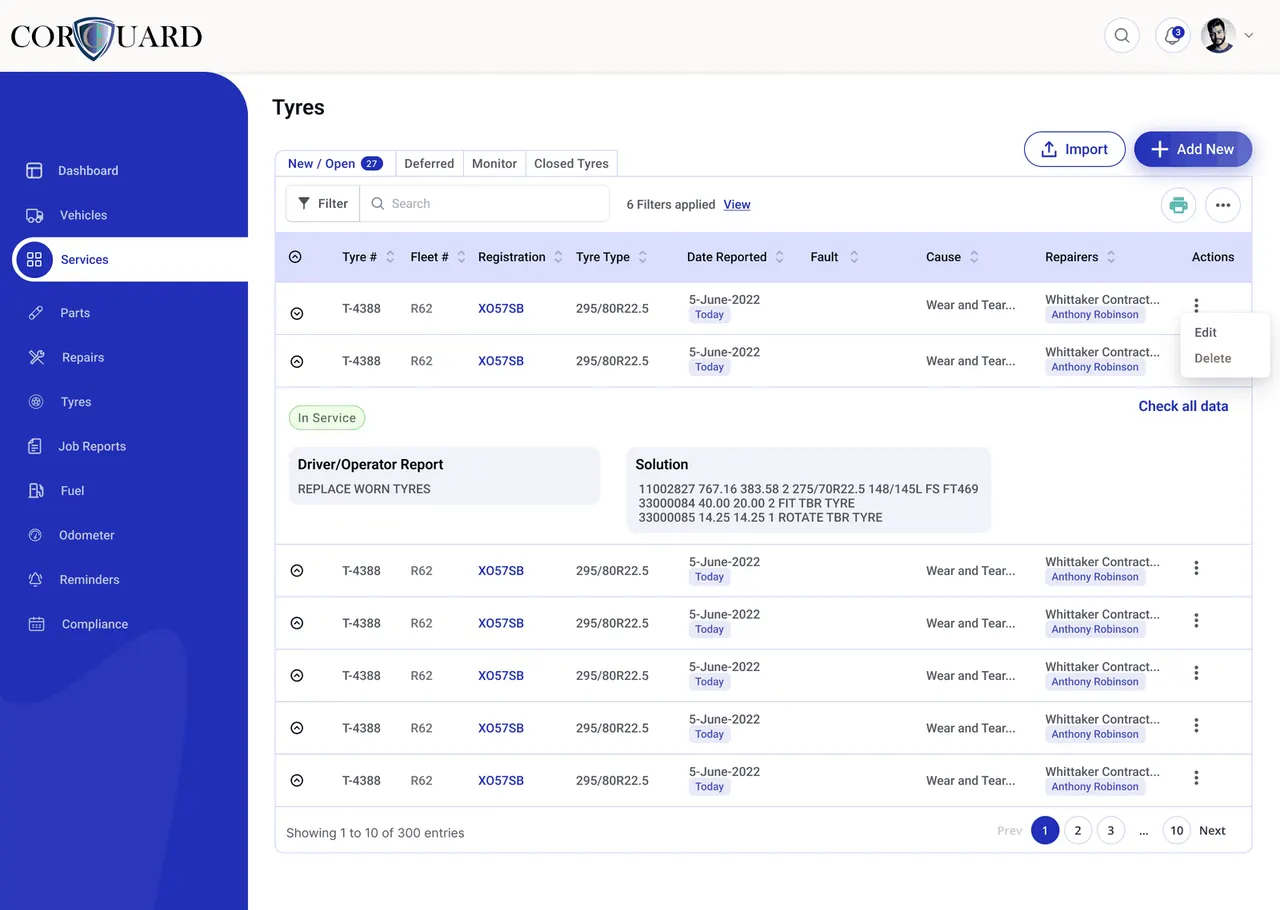
Driver diary checks
Connect fatigue and driver diary review back to manager visibility.
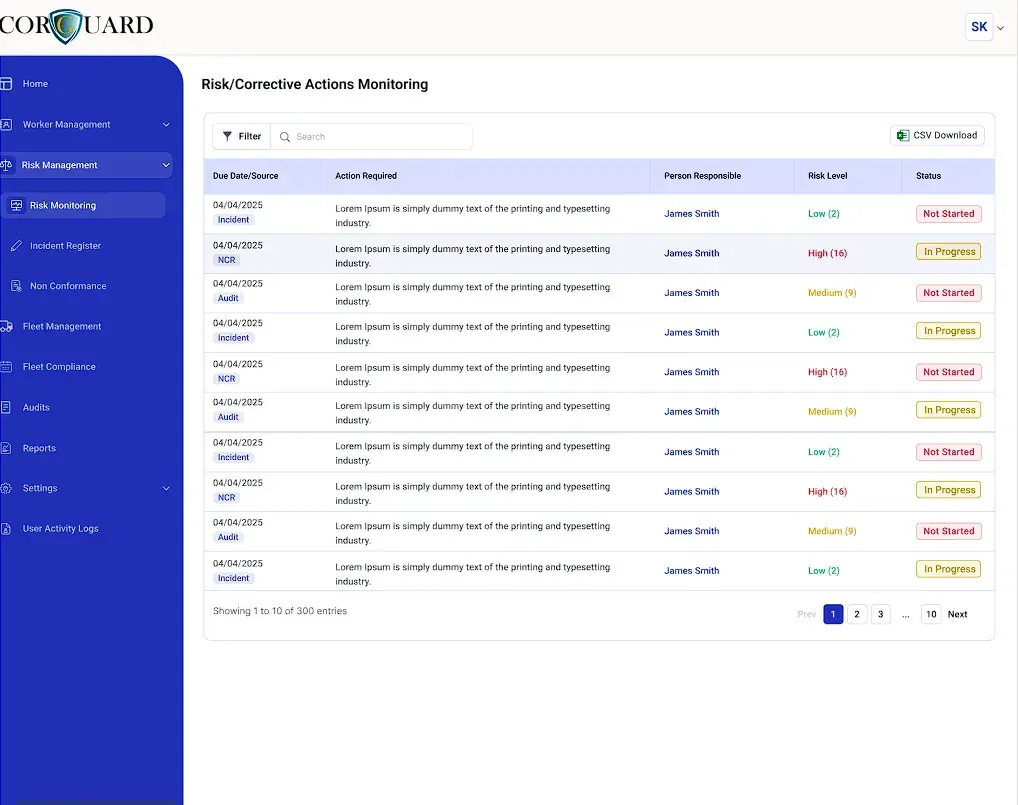
Corrective actions
Turn audit findings, hazards and incidents into tracked actions.
Keep exploring
Related Chain of Responsibility reading
MAEZ insight
$60,000 Fatigue Breach
DEPARTMENT OF TRANSPORT AND MAIN ROADS(Complainant) v Anonymous Transport Co. If the person in control of a heavy vehicle commits an extended liability offence, each influencing person is also taken to have committed the offence.
MAEZ insight
How to Implement Chain of Responsibility
A visiting truck sales person injured, resulted in Holcim (Australia) Pty Ltd agreeing to an enforceable undertaking, having a total expenditure of $1,294,100.
MAEZ insight
Fleet Management
How Chain of Responsibility Affects Your Fleet Management Freight transport powers the Australian economy. It not only provides goods for thousands of people daily but also provides job opportunities to many others.
MAEZ insight
The Definitive Guide To Chain Of Responsibility (COR)
The changes in the chain of responsibility laws under Heavy Vehicle National Law (HVNL) were incorporated on 1st October 2018. These laws were aligned with workplace health and safety laws.
MAEZ insight
Penalties for Breaches of Heavy Vehicle National Law
HVNL refers to the Heavy Vehicle National Law, which defines minimum safety standards across the logistics network and significant penalties for the parties responsible for breaches.
MAEZ insight
Eifers Pty Ltd | NHVR Issues Enforceable Undertaking
Over the many years of operation at MAEZ we are continually staggered to find a lack of Mass control at varying types of business. What is interesting is that businesses that drive revenue from Mass related products, for example, Iron Ore, tend to be very specific with its Mass control, where others are not.
Frequently asked questions
Questions people ask about this topic
Does outsourcing transport to a third-party carrier remove my Chain of Responsibility obligations?
No. Outsourcing the physical move does not outsource the legal responsibility. If your supply chain includes the use of heavy vehicles, you are expected to actively understand and manage the risks associated with that engagement, regardless of whether a transport provider carries out the move.
What are the executive duties under the HVNL?
Under HVNL section 26D, executives and directors who participate in running the business must acquire and keep up to date knowledge of transport safety, understand the hazards and risks involved, ensure resources and processes are in place to eliminate or minimise those risks, and verify those resources and processes are being used. This duty cannot be delegated.
Why should I train my staff on Chain of Responsibility?
Training your staff on CoR principles means more people are watching for potential issues and risks before they become incidents, fines, or criminal charges. A lack of training creates direct risk — WorkSafe authorities have prosecuted businesses for millions where employees were not trained on foreseeable risks.
What should I look for when choosing a CoR compliance auditor?
Choose an auditor who bases the audit on industry-approved codes of practice, holds professional indemnity insurance, can benchmark your results, provides a comprehensive proposal, and has genuine industry experience offering practical rather than purely theoretical advice.
Can telematics data help demonstrate Chain of Responsibility compliance?
Yes. Reliable GPS telematics data is one of the most efficient ways to manage speed and demonstrate compliance. The system does not need to record video — it needs to produce reliable, actionable data that confirms your fleet is operating within speed limits and that holds up under scrutiny.