
Transport safety management is undergoing its most significant transformation in decades. Authorities are prioritizing standardized systems, data-driven oversight, and stronger enforcement frameworks.
This shift reflects growing expectations from regulators, investors, and the public. Organizations that fail to adapt face mounting operational and compliance risks.
The developments examined here affect commercial carriers, government agencies, and supply chain operators. Understanding these changes allows you to proactively strengthen safety systems.
I’ve spent 25 years in supply chain operations across FMCG, infrastructure, and logistics. These regulatory shifts represent a fundamental change in how transport safety is managed and measured.
This article examines current federal transportation safety regulations, AASHTO programs, DOT and FMCSA compliance requirements, Safety Management Systems implementation, and the resources available to support compliance efforts.
Federal Transportation Safety Regulations and Recent Updates
Federal transportation safety priorities have shifted toward systems-based oversight. The U.S. Department of Transportation Office of Inspector General identifies improving transportation safety as a top management challenge for fiscal year 2026.

This designation signals intensified scrutiny across all transport modes. Regulators are demanding more sophisticated safety frameworks from operators.
The focus on safety management reflects lessons learned from major incidents. Reactive compliance models are being replaced with proactive risk identification systems.
Motor Vehicle Safety Performance Trends
U.S. motor vehicle traffic fatalities declined from 43,230 in 2021 to an estimated 39,345 in 2024, a decrease of about 9 percent. This improvement validates current safety strategies but highlights ongoing challenges.
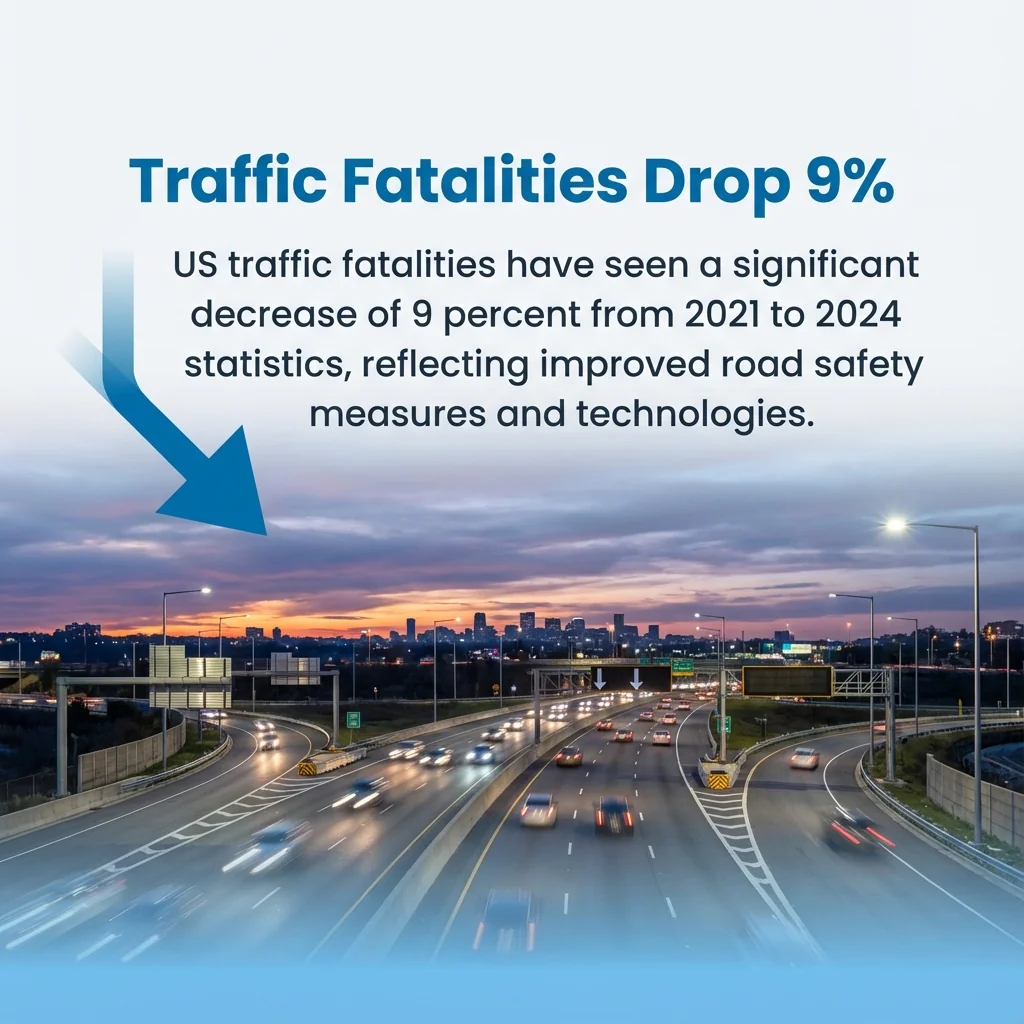
The decline demonstrates that coordinated federal and state efforts produce measurable results. However, absolute numbers remain unacceptably high for most stakeholders.
Regulators are responding by tightening standards. Enforcement resources are being redirected toward high-risk operators and systemic compliance failures.
Commercial Driver Licensing Standardization
Federal authorities are intensifying oversight of state commercial driver licensing programs. There are tightening federal efforts to standardize state enforcement of commercial driver licensing for non-domiciled CDL holders.
This standardization addresses inconsistencies that have undermined safety outcomes. States with weaker oversight have historically created compliance gaps exploited by unsafe operators.
The harmonization effort requires updated training for licensing authorities. Motor carriers must verify that all drivers hold properly issued credentials from compliant jurisdictions.
FMCSA Registration Modernization
FMCSA’s MOTUS is described as the biggest change to FMCSA registration in decades. This system overhaul transforms how motor carriers interact with federal regulators.
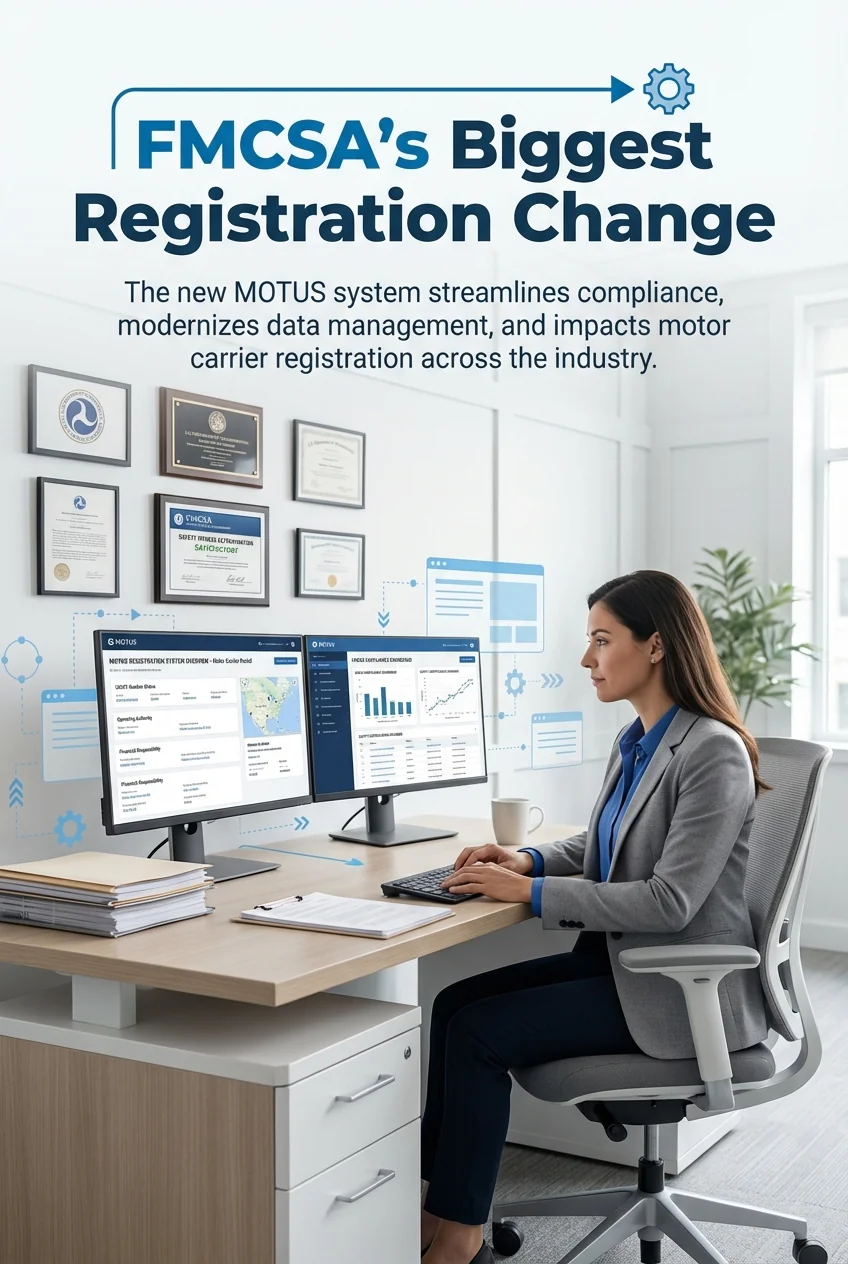
MOTUS consolidates multiple legacy systems into a unified platform. The change requires carriers to update their registration processes and internal procedures.
Organizations should review their FMCSA filing protocols now. Early adoption prevents disruption when the system becomes mandatory for all carriers.
DOT and FMCSA Compliance Requirements for 2026
Federal regulations continue expanding the scope of transport safety compliance. The Department of Transportation and FMCSA have introduced requirements affecting commercial motor carriers, fleet operators, and supply chain managers.
These updates reflect technology advancements and evolving safety data. Compliance now extends beyond vehicle maintenance and driver qualifications.
Safety Management Systems Expansion
The FAA’s 14 CFR Part 5 Safety Management System requirements now apply to additional business aviation operators. This expansion represents a broader regulatory trend toward SMS frameworks.
Safety Management Systems require organizations to identify hazards systematically. The approach shifts responsibility from reactive incident response to proactive risk management.
SMS implementation demands structured processes for hazard identification, risk assessment, and corrective action tracking. Organizations must document safety policies, define accountability structures, and establish performance metrics.
For motor carriers, SMS principles align with FMCSA safety fitness determinations. Demonstrating robust safety management supports favorable compliance outcomes.
Drug and Alcohol Clearinghouse Enhancements
FMCSA is working on improvements to the Drug and Alcohol Clearinghouse system. These enhancements will strengthen the database’s ability to prevent drivers with substance abuse violations from operating commercial vehicles.
Motor carriers must conduct pre-employment queries before allowing any driver to operate. Annual queries for current employees are also mandatory.
The system has already identified thousands of drivers with outstanding violations. Enhanced functionality will close existing reporting gaps and improve data accuracy.
Autonomous Vehicle Regulatory Framework
FMCSA is expected to propose rules on autonomous trucks in the near future. These regulations will establish safety standards for automated driving systems in commercial operations.
The framework will address liability, insurance requirements, and operational protocols. Motor carriers exploring autonomous technology should monitor these developments closely.
Early guidance suggests that SMS principles will apply to autonomous operations. Organizations must demonstrate robust safety management regardless of automation level.
Safety Programs and Industry Initiatives
AASHTO and similar organizations provide safety programs that support transportation agencies and private operators. These initiatives offer training resources, policy guidance, and technical standards.
Participation in industry programs demonstrates commitment to safety excellence. It also provides access to best practices developed across multiple jurisdictions.
Vision Zero and Local Safety Strategy Support
The 2026 federal policy priorities include support for local safety strategies that align with Vision Zero–style efforts. This approach targets complete elimination of transport-related fatalities.
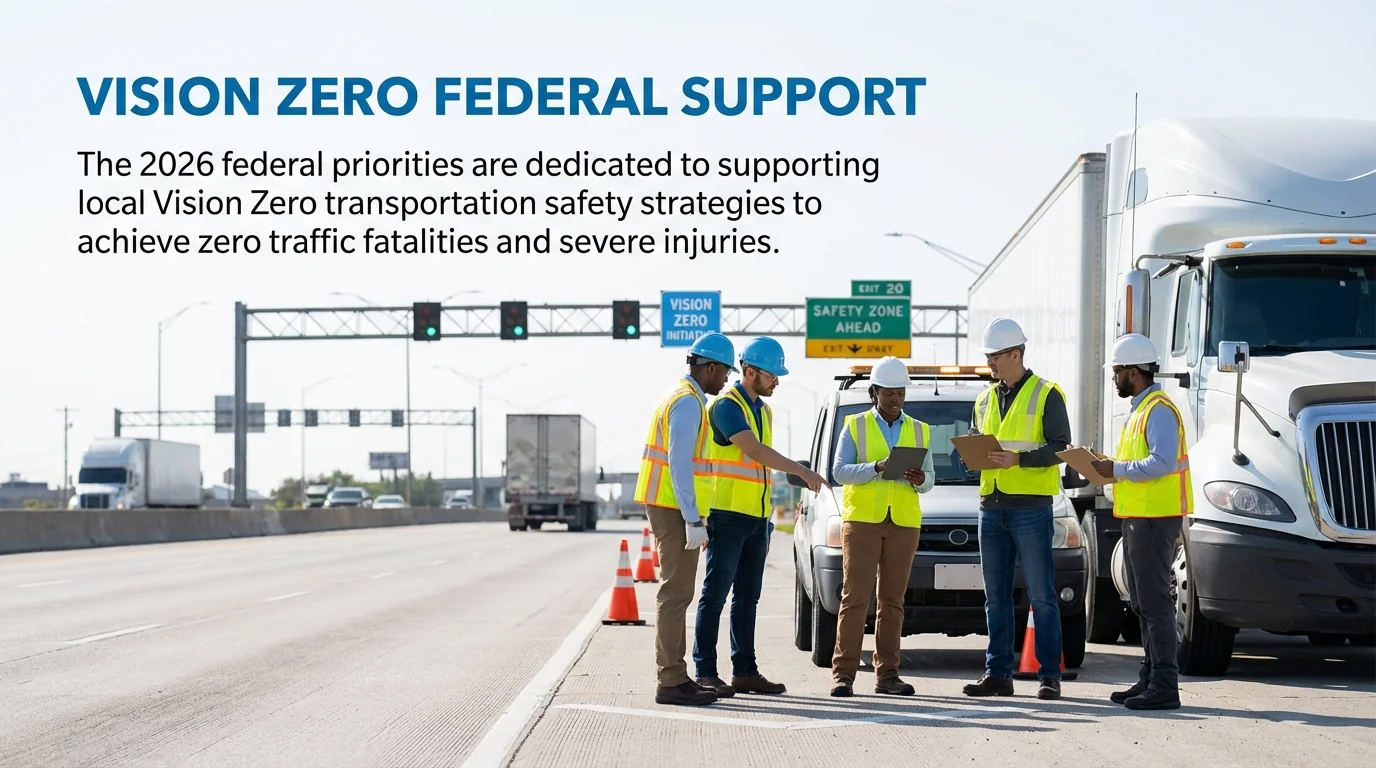
Vision Zero strategies require coordinated action across engineering, enforcement, education, and emergency response. Federal support includes funding for infrastructure improvements and program development.
Organizations should evaluate how their operations align with local Vision Zero plans. Demonstrating support for community safety initiatives strengthens stakeholder relationships.
Safe Streets and Roads for All Program
DOT’s Safe Streets and Roads for All (SS4A) program provides $5 billion over 5 years (2022–2026) in competitive grants. This funding supports infrastructure enhancements, safety planning, and implementation projects.
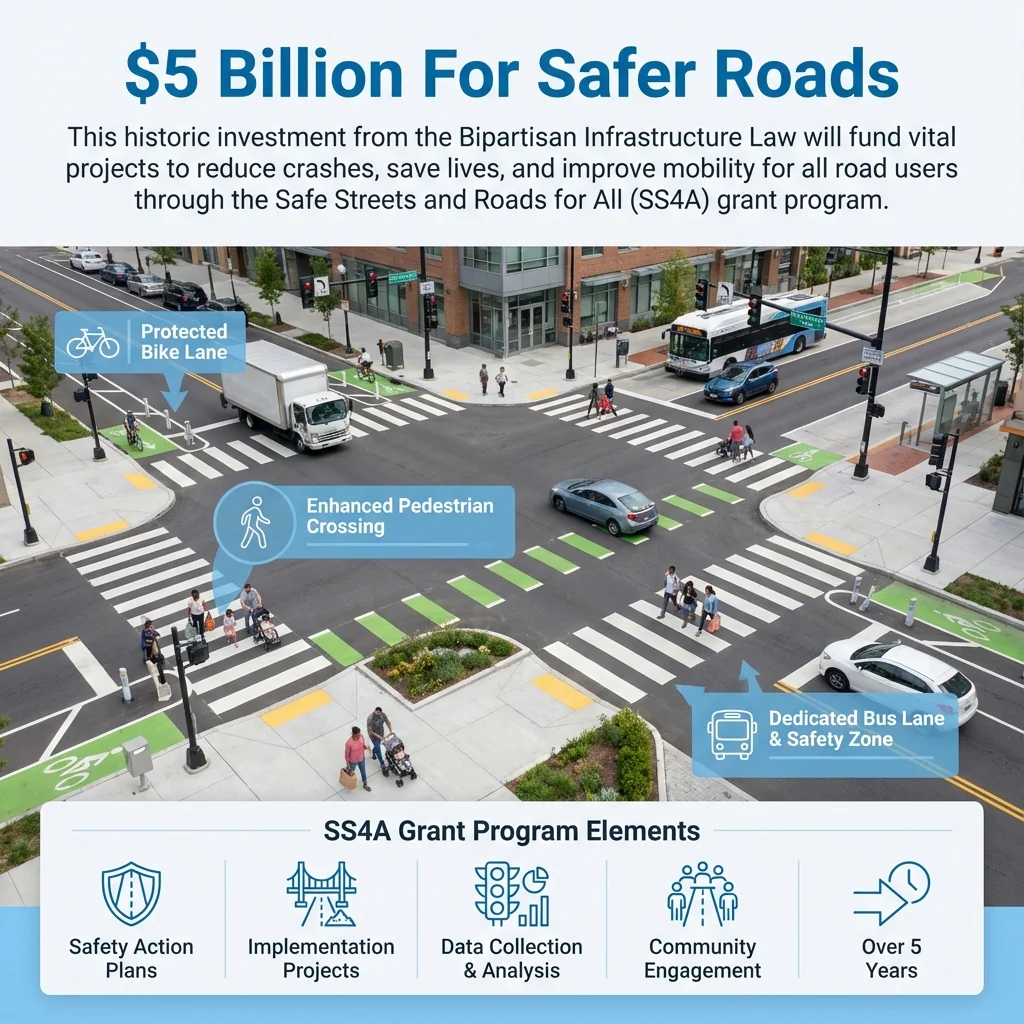
Eligible applicants include metropolitan planning organizations, local governments, and tribal governments. The program prioritizes underserved communities and high-risk corridors.
Private operators should coordinate with local agencies pursuing SS4A funding. Infrastructure improvements benefit all road users and can reduce fleet operating risks.
Highway Safety Manual Implementation
The Highway Safety Manual provides evidence-based guidance for safety performance management. Transportation agencies use the manual to evaluate project alternatives and predict crash outcomes.
The manual’s analytical methods support data-driven decision making. Predictive models help prioritize safety investments based on expected benefits.
Fleet operators should understand how agencies apply these tools. Route planning decisions can account for roadway safety ratings derived from Highway Safety Manual methodologies.
Safety Management Systems Implementation Guidance
Safety Management Systems represent the most significant evolution in transport safety practice. SMS frameworks shift focus from compliance checklists to systematic risk management.
Implementing SMS requires cultural change alongside procedural updates. Organizations must move beyond minimum regulatory requirements toward continuous safety improvement.
Core SMS Components
Effective Safety Management Systems include four foundational elements. Each component supports the others in creating a resilient safety framework.
| SMS Component | Primary Function | Key Activities |
|---|---|---|
| Safety Policy | Establish organizational commitment | Define safety objectives, assign accountability, allocate resources |
| Safety Risk Management | Identify and control hazards | Conduct risk assessments, implement controls, monitor effectiveness |
| Safety Assurance | Verify system performance | Audit processes, analyze data, validate controls |
| Safety Promotion | Build safety culture | Provide training, communicate performance, recognize excellence |
Organizations should develop each component systematically. Rushing implementation produces documentation without operational substance.
Hazard Identification Processes
Proactive hazard identification distinguishes mature SMS implementations from basic compliance programs. Organizations must establish multiple channels for identifying potential safety risks.
Effective approaches include routine operational audits, employee reporting systems, and safety data analysis. Each method reveals different types of hazards.
Employee reporting systems require psychological safety. Workers must trust that reporting hazards will not result in blame or retaliation.
Data analysis identifies systemic patterns that individual reports might miss. Tracking incident precursors allows intervention before failures occur.
Risk Assessment and Mitigation
Once hazards are identified, organizations must assess their severity and likelihood. This prioritization ensures resources address the most significant risks first.
Risk matrices provide a standardized evaluation framework. They classify hazards based on potential consequence and probability of occurrence.
Mitigation strategies should follow the hierarchy of controls. Elimination and engineering controls are more reliable than administrative measures or personal protective equipment.
Document all risk assessments and control decisions. This record demonstrates due diligence and supports continuous improvement efforts.
Training and Certification Requirements
Safety training standards are evolving to reflect updated regulatory expectations. Organizations must ensure their training programs meet current federal requirements and industry best practices.
Effective training goes beyond minimum hour requirements. It must change behavior and build competence in safety-critical tasks.
Commercial Driver Training Standards
Entry-level driver training requirements have been strengthened in recent years. The standards mandate specific behind-the-wheel instruction hours and curriculum elements.
Motor carriers must verify that new drivers completed training from registered providers. Documentation of training completion is required before first dispatch.
Ongoing training remains essential for experienced drivers. Regular refreshers address emerging technologies, regulatory changes, and identified performance gaps.
Safety Management Training Programs
Personnel responsible for SMS implementation require specialized training. Understanding SMS principles is different from traditional safety compliance knowledge.
Available programs include certification courses from aviation, maritime, and motor carrier safety organizations. Cross-industry learning enriches SMS implementation approaches.
Training should address both technical SMS components and organizational change management. Implementation failures often stem from poor change leadership rather than technical misunderstanding.
Workplace Safety and OSHA Requirements
OSHA standards apply to transportation workplaces including terminals, maintenance facilities, and administrative offices. Compliance extends beyond vehicle operations to all employment settings.
Common OSHA violations in transportation include inadequate hazard communication, insufficient fall protection, and improper lockout/tagout procedures. Regular facility audits identify these risks.
Integrate OSHA and DOT safety requirements rather than treating them as separate programs. A unified safety management approach is more efficient and effective.
State DOT Coordination and Partnership Opportunities
State Departments of Transportation play critical roles in implementing federal safety programs. They adapt national strategies to local conditions and priorities.
Private operators benefit from strong relationships with state DOT safety offices. These partnerships provide early insight into regulatory changes and access to technical resources.
State Highway Safety Plans
Each state develops an annual Highway Safety Plan outlining priorities and performance targets. These plans guide enforcement campaigns, education initiatives, and infrastructure investments.
Review your state’s Highway Safety Plan to understand enforcement priorities. Plans identify focus areas such as commercial vehicle safety, impaired driving, or distracted driving.
Align your internal safety programs with state priorities where appropriate. Demonstrating support for state objectives strengthens your organization’s reputation.
Data Sharing and Performance Monitoring
State DOTs maintain extensive crash and safety data. Many offer online tools allowing operators to analyze safety trends affecting their routes or facilities.
Access these resources to identify high-risk locations and times. Data-driven route planning reduces exposure to known hazards.
Some states offer voluntary data-sharing programs. Participants receive benchmarking information and early warning of emerging safety concerns.
Technology and Infrastructure Improvements
State DOTs are investing in infrastructure technologies that support safety management. These include connected vehicle systems, enhanced road weather information, and improved roadway design.
Monitor state infrastructure plans to anticipate changes affecting fleet operations. New technologies may require vehicle modifications or driver training.
Participate in state DOT stakeholder engagement processes. Your operational expertise helps agencies design more effective safety interventions.
Advanced Air Mobility and Emerging Technologies
Transportation safety management is expanding to include emerging modes. Advanced Air Mobility presents unique regulatory and operational challenges.
USDOT’s Advanced Air Mobility National Strategy calls for standardized information-exchange protocols. This framework will enable safe integration of new aircraft types into existing airspace.
The strategy emphasizes data sharing and interoperability. Organizations exploring advanced air mobility must plan for connectivity requirements from the design phase.
Regulatory Pathways for New Technologies
Federal agencies are developing streamlined certification processes for novel transport technologies. These pathways balance safety with allowing responsible experimentation.
Early engagement with regulators is essential for organizations developing new systems. Informal guidance prevents costly design changes later in development.
Safety cases are becoming the standard for new technology approval. Applicants must demonstrate how their systems achieve equivalent or better safety than traditional approaches.
Safety Management for Automated Systems
Automation introduces new hazard types requiring updated risk management approaches. Human-automation interaction failures represent a significant concern.
Safety Management Systems for automated operations must address mode confusion, automation dependency, and degraded-mode operation. Traditional SMS frameworks require adaptation for these scenarios.
Maintain human oversight even for highly automated systems. The most resilient safety management includes multiple layers of defense.
Implementing a Continuous Improvement Framework
Transport safety management requires ongoing refinement. Static programs quickly become outdated as operations, technologies, and regulations evolve.
Establish processes that identify improvement opportunities systematically. Reactive adjustments after incidents are necessary but insufficient.
Safety Performance Metrics
Measure both leading and lagging safety indicators. Lagging indicators such as crash rates reveal past performance but offer limited predictive value.
Leading indicators track safety process effectiveness before incidents occur. Examples include audit findings, hazard reports submitted, and corrective actions completed on schedule.
Develop metrics aligned with your specific operational risks. Generic metrics may miss the factors that most influence your safety outcomes.
| Indicator Type | Examples | Primary Value |
|---|---|---|
| Lagging | Crash rates, citations, out-of-service orders | Historical performance measurement |
| Leading | Hazards reported, training completion, audit scores | Predictive risk assessment |
| Exposure | Miles traveled, hours operated, load volume | Context for rate calculations |
Review metrics quarterly at minimum. More frequent analysis allows faster identification of emerging problems.
Management Review and Accountability
Senior leadership must actively engage with safety management. Delegating safety entirely to specialists undermines organizational commitment.
Conduct formal management safety reviews quarterly. These sessions should evaluate performance trends, resource adequacy, and program effectiveness.
Define clear accountability for safety outcomes. Ambiguous responsibility leads to gaps where critical tasks go unaddressed.
Link compensation and performance evaluations to safety metrics for all leadership roles. This alignment ensures safety receives appropriate priority.
External Benchmarking
Compare your safety performance against industry peers. Benchmarking reveals whether your programs deliver competitive results.
Participate in industry safety councils and information-sharing groups. These forums provide valuable insights into emerging best practices.
Consider third-party safety audits or certifications. External validation demonstrates commitment to stakeholders and identifies blind spots.
Learn from other industries facing similar safety challenges. Aviation, maritime, and rail sectors offer proven approaches adaptable to highway transport.
The transport safety environment will continue evolving. Organizations that embed continuous improvement into their culture will adapt most successfully to future requirements.
Start by assessing your current safety management maturity. Identify gaps between your existing programs and SMS principles outlined in this article.
Prioritize actions based on risk reduction potential and implementation feasibility. Attempting simultaneous change across all areas often produces superficial results.
Engage your workforce in safety management improvements. Frontline employees possess valuable knowledge about operational realities that office-based managers may miss.
Track your progress using the performance metrics you establish. Demonstrate that safety investments produce measurable benefits worth continuing.
For organizations requiring structured guidance on safety management system components, specialized compliance support accelerates implementation while avoiding common pitfalls.
Transport safety management is shifting from reactive compliance toward proactive risk management. Organizations that embrace this evolution position themselves for operational success alongside regulatory adherence.