
Complying with Australia’s Heavy Vehicle National Law requires businesses to actively manage safety across the entire transport supply chain, not just check boxes. Under the HVNL framework, parties with control or influence over heavy vehicle operations carry a positive duty to eliminate or minimise risks so far as is reasonably practicable. This means implementing documented safety systems, training all supply chain participants on their specific obligations, conducting regular risk assessments, maintaining comprehensive records, and ensuring executive oversight through due diligence processes.
Most businesses fail not because they ignore safety, but because they treat HVNL compliance as a driver-only concern. The reality is different.
The Chain of Responsibility framework applies statutory duties across your supply chain. Schedulers, consignors, loaders, consignees, and operators all share legal responsibility for preventing fatigue breaches, mass limit violations, load restraint failures, and vehicle standard defects. You cannot contract out of these obligations through commercial agreements or outsourcing arrangements.
This guide walks you through the precise steps required to build and maintain genuine HVNL compliance. We cover who must comply, what the primary duty entails, how to implement practical controls, and why a Safety Management System forms the foundation of sustainable adherence.
Understanding Heavy Vehicle National Law and Chain of Responsibility
The Heavy Vehicle National Law establishes uniform regulations for vehicles over 4.5 tonnes gross vehicle mass operating across Australia. Under HVNL, a heavy vehicle includes a motor vehicle or combination with a gross vehicle mass or aggregate trailer mass of more than 4.5 tonnes.

This threshold captures a wide range of commercial transport activities. Prime movers, rigid trucks, semi-trailers, B-doubles, and road trains all fall under HVNL jurisdiction when they exceed the mass threshold.
The National Heavy Vehicle Regulator administers the HVNL across participating jurisdictions. This creates consistency for operators working across state boundaries, replacing previous fragmented state-based systems with national standards for compliance, enforcement, and accreditation.
What Chain of Responsibility Means for Your Business
Chain of Responsibility represents the core safety philosophy within HVNL. Rather than placing sole responsibility on drivers, CoR recognises that multiple parties influence transport safety outcomes.
Each party in the supply chain who has control or influence over transport activities must ensure their actions do not cause or contribute to breaches. This applies whether you employ drivers directly or engage transport providers through contracts.
CoR duties are non-transferable; parties cannot contract out of their statutory responsibilities through outsourcing, subcontracting or commercial terms. Your contractual arrangements do not remove your legal obligations under HVNL.
Key Principles Driving HVNL Compliance
Three principles underpin the HVNL framework. First, safety obligations extend beyond the driver to all parties with influence. Second, duties require positive action to prevent breaches, not merely avoiding direct involvement. Third, the standard is “reasonably practicable,” which considers risk severity, likelihood, available controls, and implementation costs.
These principles shift compliance from reactive to proactive. You must identify risks before they cause incidents, implement controls proportionate to the risk level, and continuously monitor effectiveness.
The HVNL approach aligns with contemporary workplace health and safety legislation. Both frameworks emphasise systematic risk management, documented procedures, worker consultation, and executive accountability through due diligence obligations.
Who Must Comply: Identifying Your Role in the Chain of Responsibility
HVNL compliance responsibilities extend to specific parties based on their role and influence in transport activities. Understanding which category applies to your business determines your precise obligations.
Operators and Their Primary Responsibilities
Operators include businesses or individuals who own or lease heavy vehicles for transport purposes. This encompasses fleet owners, prime contractors managing vehicles, and businesses that hire vehicles for commercial use.
Operators carry direct responsibility for vehicle standards, maintenance systems, and driver compliance. You must ensure vehicles meet roadworthiness requirements, maintain service records, implement inspection procedures, and verify drivers hold appropriate licences and medical certification.
Your operator duties extend to fatigue management systems, mass compliance procedures, and load restraint verification. These cannot be delegated away through contracts, even when engaging third-party drivers or maintenance providers.
Schedulers, Consignors, and Loaders
Schedulers control or influence driver work and rest times through delivery deadlines, pickup schedules, or route requirements. If your business sets timeframes that affect when drivers work, you hold scheduler obligations.
Consignors dispatch goods for transport and often determine loading requirements, weight specifications, and delivery timing. Your scheduling decisions, loading instructions, and contract terms must not create pressure that encourages speeding, fatigue breaches, or overloading.
Loaders physically place goods in or on vehicles and secure loads. You must ensure loads comply with mass limits, do not exceed dimension restrictions, and are properly restrained to prevent movement or loss during transport.
Consignees, Drivers, and Other Parties
Consignees receive goods at destination and may influence unloading timing, waiting periods, or return schedules. Your receiving processes and facility operations must not create conditions that encourage drivers to breach HVNL requirements.
Drivers operate heavy vehicles and carry personal responsibility for their compliance with work diary requirements, fatigue rules, mass limits, and vehicle standards. Driver obligations do not reduce other parties’ CoR duties.
Additional parties include loading managers, packing contractors, freight forwarders, and any other person who exercises control or influence over transport activities. If your decisions affect safety outcomes, HVNL obligations likely apply.
Executive Officers and Due Diligence
Executive officers of companies involved in heavy vehicle operations carry specific due diligence obligations. You must acquire and maintain knowledge of HVNL requirements, understand business operations, ensure appropriate resources for compliance, implement information systems to monitor adherence, and verify control measures operate effectively.
These duties cannot be delegated to managers or consultants. While you can engage specialists to develop systems and provide advice, executive accountability for due diligence remains with company officers.
With your role now clear, the next critical step involves understanding what the law actually requires you to do.
The Primary Duty: Your Core Safety Obligations Under HVNL
The primary duty establishes the fundamental obligation for all CoR parties. You must ensure, so far as is reasonably practicable, that your conduct does not cause or contribute to breaches of HVNL safety provisions.
Understanding “Reasonably Practicable”
Reasonably practicable sets the compliance standard. This legal concept requires you to implement controls unless the cost is grossly disproportionate to the risk reduction achieved.
The assessment considers several factors. First, the likelihood of hazards occurring in your operations. Second, the degree of harm that could result from identified risks. Third, what you know or should reasonably know about hazards and control methods. Fourth, the availability and suitability of controls. Fifth, the cost of implementing available controls relative to the risk.
This creates a sliding scale. High-risk scenarios with severe potential consequences require more extensive controls, even if costly. Lower risks may justify simpler, less expensive measures.
What the Primary Duty Covers
Your primary duty applies across four critical safety areas. Each carries specific compliance requirements that your systems must address.
Fatigue is treated as a safety risk within CoR, and parties with control or influence over transport activities have a positive duty to ensure, so far as is reasonably practicable, that their conduct does not cause or encourage breaches. Your scheduling, delivery timing, and contract terms must not create pressure for drivers to work beyond legal hours or manipulate work diaries.

Mass and dimension compliance requires your loading practices, payload specifications, and vehicle selection to prevent overloading. You must ensure loads do not exceed axle group limits, gross vehicle mass ratings, or height, width, and length restrictions.
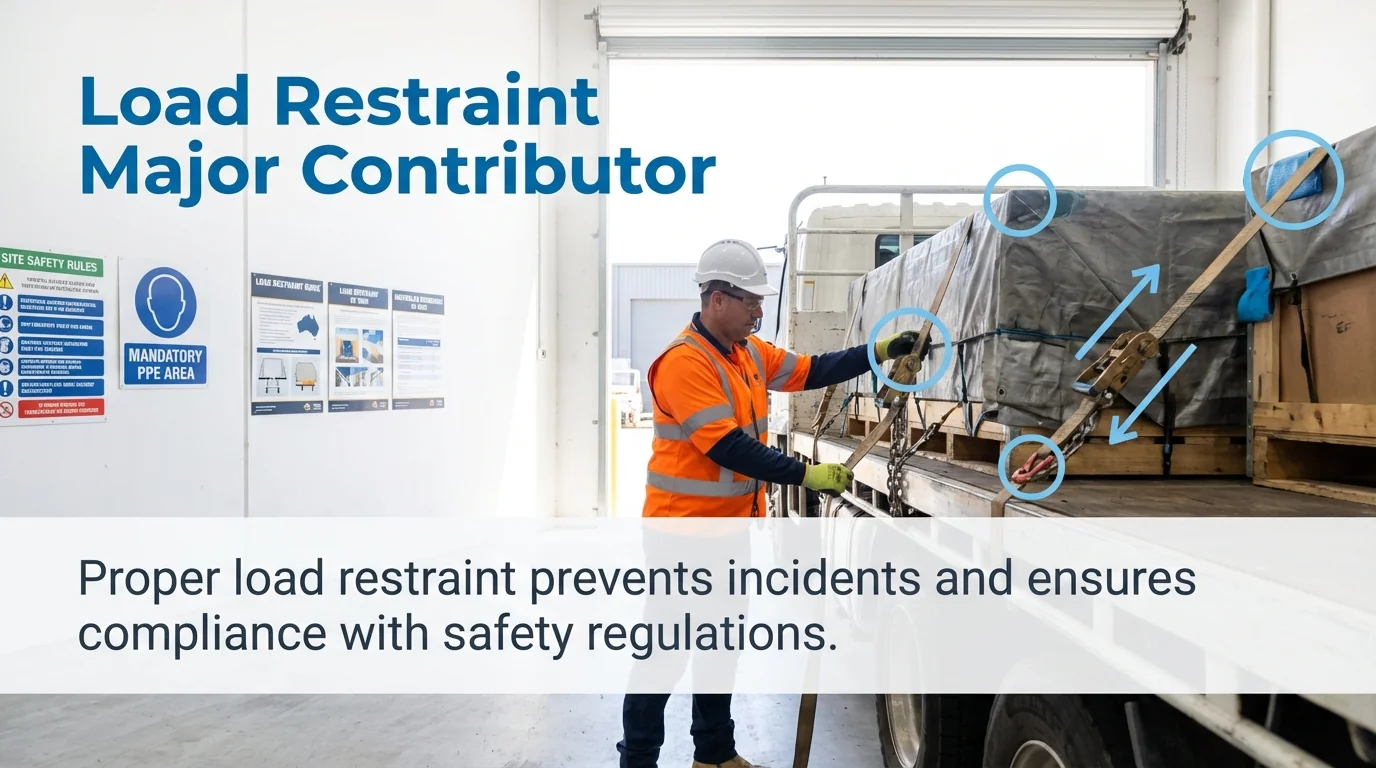
Load restraint obligations extend to proper securing methods, appropriate restraint equipment, and verification that loads will not shift or fall during normal transport conditions. Regulators and industry commentary highlight load restraint and load security as major contributors to heavy vehicle incidents.
Vehicle standards responsibilities encompass roadworthiness, maintenance systems, and defect reporting. Your vehicles must meet safety, emissions, and anti-theft requirements, with documented inspection and repair procedures.
Positive Obligations and Proactive Management
The primary duty creates positive obligations. Simply avoiding direct violations is insufficient. You must take active steps to prevent breaches across your sphere of influence.
This includes implementing systems to identify risks, establishing controls to manage identified hazards, training workers on safety procedures, monitoring compliance effectiveness, and adjusting controls when deficiencies emerge.
Your obligations apply regardless of contract structures. Using subcontractors, labour hire arrangements, or owner-drivers does not transfer your primary duty to those parties. Each retains their own CoR obligations while you maintain yours.
Understanding these core obligations sets the foundation for implementing practical compliance processes.
Step-by-Step Process to Achieve HVNL Compliance
Building HVNL compliance requires systematic implementation across five connected stages. Each builds on the previous step to create sustainable adherence.
Step 1: Identify Your CoR Parties and Roles
Start by mapping all parties in your transport supply chain. Document who controls or influences each aspect of your operations, from scheduling through to final delivery.
List internal personnel involved in transport activities. Include operations managers, schedulers, warehouse supervisors, loading staff, and procurement officers. Identify their specific touchpoints with heavy vehicle operations.
Map external parties including transport providers, freight forwarders, loading contractors, and customers who influence delivery timing. Clarify how each party affects driver hours, vehicle loading, or safety compliance.
Step 2: Conduct Comprehensive Risk Assessment
Assess risks across each area of HVNL obligation. Examine your operations to identify where fatigue breaches, overloading, load restraint failures, or vehicle standard defects could occur.
For fatigue risks, review delivery schedules, contract terms requiring specific timing, and practices that may encourage drivers to rush or skip breaks. Consider geographic factors, traffic conditions, and seasonal variations affecting travel time.
Evaluate mass compliance risks by examining typical payloads, weighing practices, vehicle capacity utilisation, and customer requirements that may pressure staff to exceed limits. Assess whether loading procedures verify compliance before dispatch.
Analyse load restraint risks based on cargo types, vehicle configurations, restraint equipment availability, and staff competency in securing methods. Review incident history for patterns indicating systemic weaknesses.
Examine vehicle standard risks including maintenance schedules, inspection frequency, defect reporting processes, and systems ensuring vehicles meet roadworthy requirements before use.
Step 3: Develop and Document Control Measures
Implement controls addressing identified risks using the hierarchy of control. Eliminate risks where possible, substitute safer alternatives, engineer solutions, establish administrative procedures, and provide protective equipment as a final layer.
For fatigue management, develop realistic scheduling that factors in traffic, weather, and mandatory rest breaks. Implement contract terms prohibiting practices that encourage speeding or skipping rest. Establish communication channels allowing drivers to report unrealistic demands.
Create mass compliance procedures including weighbridge verification, load calculation methods, vehicle selection guides, and authorisation processes for borderline loads. Specify who can approve exceptions and under what conditions.
Document load restraint requirements specifying approved methods for different cargo types, minimum restraint ratings, inspection points, and sign-off procedures. Provide clear visual guides and checklists.
Establish vehicle maintenance systems covering scheduled services, pre-trip inspections, defect reporting, repair authorisation, and documentation requirements. Define what constitutes vehicle withdrawal from service.
Step 4: Implement Training and Communication
Train all CoR parties on HVNL obligations, your specific procedures, and their individual responsibilities. Tailor content to each role’s actual involvement in transport activities.
Deliver scheduler training covering how timeframes affect driver fatigue, requirements for realistic scheduling, and process for adjusting deadlines when circumstances change. Include real scenarios from your operations.
Provide loader training on mass limit verification, load distribution principles, restraint methods for your cargo types, and defect identification. Ensure competency through practical assessment, not just awareness.
Conduct executive briefings for company officers covering due diligence obligations, business compliance systems, monitoring mechanisms, and their personal accountability under HVNL.
Communicate procedures through multiple channels including formal training sessions, written procedures accessible at relevant work locations, toolbox talks, and regular refreshers addressing observed deficiencies.
Step 5: Monitor, Review, and Continuously Improve
Establish monitoring systems tracking compliance across your operations. Collect data on fatigue-related incidents, mass compliance checks, load restraint inspections, and vehicle defects.
Conduct regular audits examining whether documented procedures are followed, controls remain effective, and gaps exist in your compliance approach. Use both internal reviews and external assessments.
Review incidents and near-misses to identify systemic causes. Analyse whether your controls failed, circumstances changed, or new risks emerged requiring additional measures.
Adjust your systems based on monitoring findings, audit results, regulatory updates, and operational changes. Compliance is not static but requires ongoing adaptation.
These implementation steps provide the framework, but specific compliance areas require detailed attention.
Key Compliance Areas: Fatigue, Mass, Load Restraint, and Vehicle Standards
Four domains of HVNL compliance demand specialised knowledge and targeted controls. Each presents distinct challenges requiring specific management approaches.
Fatigue Management Compliance Requirements
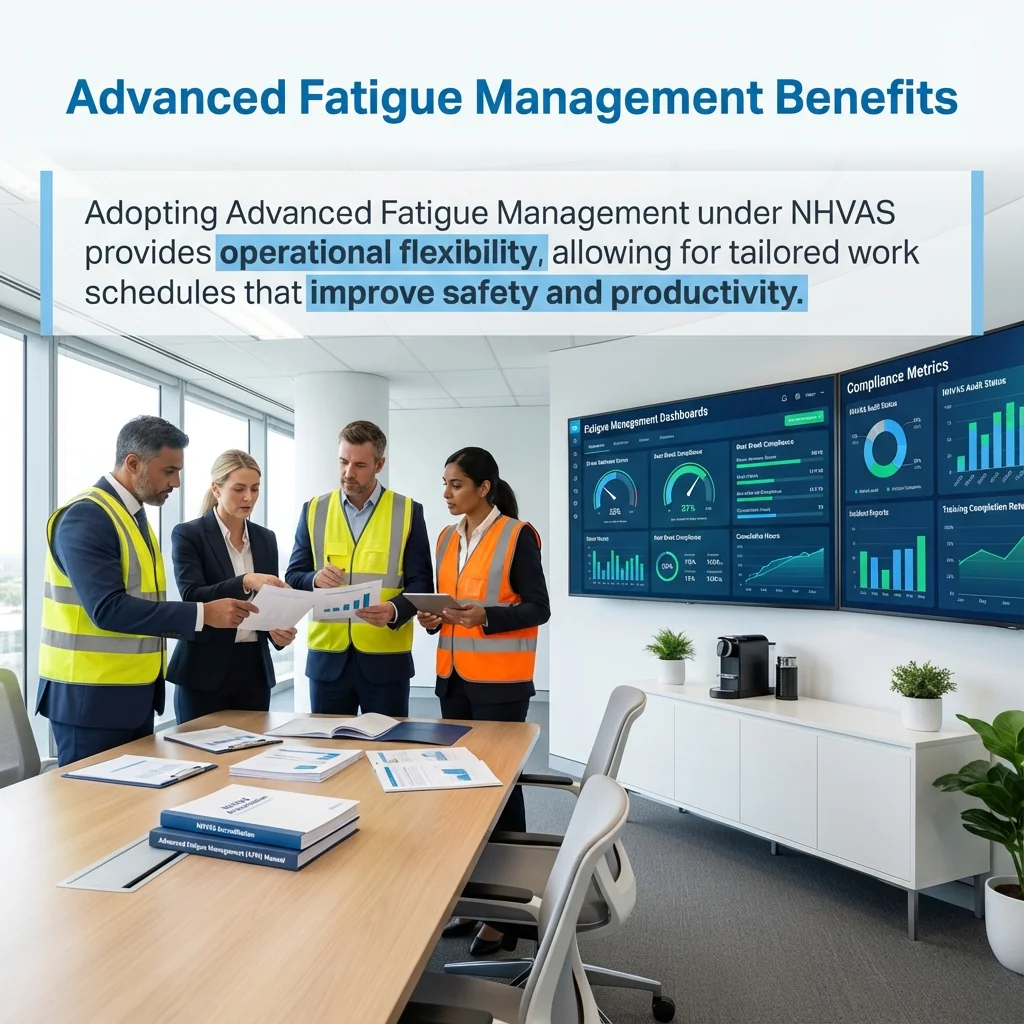
Fatigue management under HVNL involves work and rest hour requirements that vary based on whether drivers operate under standard hours, Basic Fatigue Management, or Advanced Fatigue Management.
Standard hours set maximum work times, minimum rest breaks, and record-keeping requirements applicable by default. Drivers must maintain work diaries documenting work, rest, and other activities for the required period.
Your compliance obligations as a CoR party focus on ensuring your actions do not cause or encourage fatigue breaches. Schedule delivery times allowing adequate travel time without speeding or skipping breaks. Review contract terms for clauses creating implicit pressure for fast turnaround. Monitor loading and unloading times to identify delays consuming drivers’ available hours.
Mass and Dimension Compliance
Mass limits under HVNL specify maximum weights for axle groups, combinations, and vehicle configurations. These protect road infrastructure and ensure vehicle stability and braking effectiveness.
Your business must implement systems preventing overloading. This includes load calculation procedures, weighbridge verification before departure, vehicle selection matching payload requirements, and clear authorisation processes when loads approach limits.
Some vehicles such as Restricted Access Vehicles or Oversize/Overmass vehicles must only travel on approved roads or under specific access conditions. Your dispatch procedures must verify route compliance for loads exceeding standard limits.
Dimension limits covering height, width, and length prevent bridge strikes, power line contact, and traffic obstruction. Your loading procedures must account for cargo dimensions, load shift potential, and any protrusions affecting vehicle measurements.
Load Restraint Requirements and Safety
Load restraint prevents cargo movement, shift, or loss during transport. Proper restraint protects drivers, other road users, and the cargo itself.
The Load Restraint Guide published by the National Transport Commission provides detailed requirements for different cargo types. Your systems should reference these specifications when developing procedures for your specific goods.
Effective load restraint considers cargo characteristics including weight, shape, stability, and centre of gravity. It specifies restraint methods such as direct restraint using tie-downs, indirect restraint through blocking and bracing, or containment within vehicle structure.
Your loading procedures must verify restraint adequacy before vehicles depart. This includes checking restraint equipment condition, confirming proper application, calculating restraint capacity against load forces, and documenting compliance.
Vehicle Standards and Maintenance Requirements
Vehicle standards under HVNL ensure heavy vehicles meet safety, emissions, and anti-theft requirements. Standards cover lighting, braking systems, steering, tyres, coupling devices, and numerous other components.
The NHVR’s Programmed Vehicle Inspections illustrate practical expectations: vehicles presented must be roadworthy. Your maintenance systems must ensure this standard at all times, not just during scheduled inspections.
Implement preventive maintenance schedules based on manufacturer recommendations, operating conditions, and regulatory requirements. Document all services, repairs, and component replacements.
Establish pre-trip inspection procedures requiring drivers to check critical safety systems before each journey. Provide clear defect reporting mechanisms and prohibit vehicle use when safety-critical defects exist.
Maintain service history records, inspection reports, repair documentation, and modification approvals. These records demonstrate your due diligence and support investigation if incidents occur.
Implementing a Safety Management System for HVNL Compliance
A Safety Management System provides the organisational structure supporting ongoing HVNL compliance. Rather than isolated procedures, an SMS integrates policies, processes, and practices into a cohesive framework.
Core Components of an Effective SMS
Your SMS must include documented policies stating your commitment to HVNL compliance and safety objectives. These policies should be endorsed by executive management, communicated to all personnel, and referenced in contracts with transport providers.
Procedures detail how you implement HVNL obligations in daily operations. These cover risk assessment methods, control implementation, training delivery, incident investigation, document management, and continuous improvement processes.
Work instructions provide step-by-step guidance for specific tasks. These include loading checklists, vehicle inspection forms, work diary verification processes, and defect reporting templates.
Training and competency systems ensure personnel understand their obligations and can perform required tasks. This encompasses induction for new workers, role-specific training, refresher programs, and verification of competency through assessment.
Integration with Business Operations
Effective SMS implementation requires integration with existing business systems. Compliance cannot operate separately from procurement, operations, and commercial functions.
Link your SMS to procurement processes ensuring transport provider contracts include HVNL obligations, require subcontractor compliance evidence, and establish audit rights. Procurement decisions should consider safety capability alongside cost and service factors.
Connect SMS requirements to operational systems including scheduling software, warehouse management, and dispatch processes. Build compliance checks into workflow rather than treating them as separate steps.
Integrate compliance reporting with management information systems. Executives should receive regular updates on compliance indicators, audit findings, incident trends, and improvement initiatives.
Documentation and Record Management
Comprehensive documentation demonstrates your systems operate as designed. Records provide evidence of compliance when regulators inspect operations or investigate incidents.
Maintain current versions of policies, procedures, and work instructions with clear version control. Document when changes occur and who approved them.
Retain training records showing who received what training, when they completed it, and how competency was assessed. Keep these for the period specified in retention schedules.
Store operational records including work diaries, weighbridge tickets, loading documentation, vehicle inspection reports, service records, and defect notifications. Ensure retrieval systems allow quick access during compliance checks.
Implement document security protecting records from loss, unauthorised access, or tampering. Consider both physical security for paper records and cybersecurity for electronic systems.
Executive Due Diligence and Business Responsibilities
Executive officers of companies involved in heavy vehicle operations carry personal obligations under HVNL. These due diligence requirements ensure safety receives appropriate leadership attention.
Understanding Executive Officer Obligations
Executive officers include directors, company secretaries, chief executives, and others who make or participate in making decisions affecting substantial parts of the business.
Your due diligence obligations require acquiring and maintaining knowledge of HVNL requirements relevant to your business operations. This includes understanding CoR concepts, compliance obligations for your industry sector, and how your business activities influence safety outcomes.
You must understand the business structure, operations involving heavy vehicles, and key processes affecting transport activities. This knowledge should cover which departments influence safety, how commercial decisions affect compliance, and where risks typically emerge.
Resource Allocation and System Implementation
Due diligence requires ensuring your business has appropriate resources for HVNL compliance. This encompasses adequate personnel with relevant competencies, suitable information systems for monitoring compliance, and sufficient budget for controls, training, and auditing.
You must verify that processes exist for identifying and managing HVNL risks. This includes confirming risk assessments occur regularly, controls address identified hazards, and monitoring systems detect emerging problems.
Implement reporting mechanisms providing regular compliance information. Review these reports actively, asking questions about trends, investigating anomalies, and ensuring corrective actions occur when deficiencies appear.
Verification and Active Oversight
Executive due diligence extends beyond implementing systems to verifying they operate effectively. Conduct periodic reviews examining whether documented procedures are followed, controls achieve intended outcomes, and staff understand their obligations.
Engage with operational personnel to understand practical challenges. Site visits, talking with drivers and warehouse staff, and observing actual practices provide insights that reports may not reveal.
When incidents occur, ensure proper investigation, root cause analysis, and corrective action implementation. Review findings personally rather than delegating entirely to subordinates.
Consider engaging external specialists for periodic audits providing independent assessment of your compliance systems. External reviews often identify gaps internal teams may overlook.
Maintaining Ongoing Compliance: Monitoring, Documentation, and Review
HVNL compliance is not a one-time achievement but requires sustained effort. Effective monitoring, documentation practices, and regular review maintain adherence as operations evolve.
Establishing Effective Monitoring Systems
Develop key performance indicators tracking compliance across critical areas. These might include fatigue-related incidents per thousand trips, percentage of loads verified at weighbridges, load restraint defects identified during inspections, and vehicle defects detected before roadside enforcement finds them.
Implement real-time monitoring where practical. Electronic logging devices track driver hours automatically. Weighbridge systems integrated with dispatch software verify mass compliance before vehicle departure. Vehicle telematics detect harsh braking or other indicators of potential issues.
Conduct regular workplace inspections observing actual practices. Check whether loading procedures are followed, restraint equipment is properly used, vehicle inspections occur as scheduled, and documentation is completed accurately.
Review operational data for patterns indicating systemic problems. Repeated incidents involving specific routes, vehicles, drivers, or cargo types may reveal underlying control failures requiring attention.
Documentation Practices Supporting Compliance
Maintain comprehensive records demonstrating your systems operate effectively. This includes completed risk assessments with dates and participants, training records showing who attended what sessions, audit reports with findings and corrective actions, and incident investigations with root causes and implemented improvements.
Document operational activities proving compliance with specific HVNL requirements. Retain work diaries, weighbridge certificates, loading documentation with restraint verification, vehicle inspection reports, and service records for the required periods.
Store contracts with transport providers showing HVNL obligations, subcontractor compliance requirements, and audit provisions. Keep evidence that you verified provider compliance before engagement.
Implement secure systems protecting records from unauthorised alteration. Use version control for documents, access controls for electronic systems, and secure storage for paper records.
Regular Review and Continuous Improvement
Schedule periodic reviews of your HVNL compliance systems. Annual reviews provide opportunities to assess whether procedures remain current, controls remain effective, and your approach aligns with regulatory expectations.
The heavy vehicle industry has been moving from reliance on the earlier Registered Industry Code of Practice, endorsed in 2018, to a broader Draft Master Code of Practice released in August 2025. Stay informed about regulatory updates affecting your obligations.
Incorporate lessons from incidents and near-misses into system improvements. Analyse whether existing controls failed, new risks emerged, or external factors changed requiring updated approaches.
Benchmark your practices against industry standards, codes of practice, and regulatory guidance. Participate in industry forums sharing knowledge about effective compliance approaches.
Adapt your systems as business operations change. New cargo types, different vehicle configurations, expanded geographic operations, or altered service offerings may require updated risk assessments and controls.
Key Questions About HVNL Compliance
What vehicles does HVNL cover?
HVNL applies to motor vehicles and combinations with gross vehicle mass or aggregate trailer mass exceeding 4.5 tonnes. This captures most commercial trucks, trailers, and heavy vehicle combinations used for transport activities across Australia.
Can I contract out of CoR obligations?
No. CoR duties under HVNL are statutory obligations that cannot be transferred through contracts. Outsourcing transport, using subcontractors, or including indemnity clauses does not remove your legal responsibilities for safety within your sphere of control or influence.
What does “reasonably practicable” mean?
Reasonably practicable requires implementing controls unless their cost is grossly disproportionate to the risk reduction achieved. The assessment considers risk likelihood and severity, available controls, and implementation costs. Higher risks require more extensive controls regardless of expense.
Do I need NHVAS accreditation?
NHVAS accreditation is not mandatory but offers operational benefits including alternative fatigue management options, mass management exemptions, and maintenance management flexibility. Accreditation demonstrates systematic compliance and can reduce enforcement attention from regulators.
Building Sustainable HVNL Compliance
HVNL compliance succeeds when integrated into business operations rather than treated as separate regulatory burden. The framework recognises that effective safety management supports operational efficiency, reduces incident costs, and strengthens business relationships.
Start with thorough understanding of your CoR parties and their specific touchpoints with transport activities. Implement systematic risk assessment identifying where fatigue, mass, restraint, or vehicle standard issues could emerge from your business practices.
Develop practical controls addressing identified risks proportionate to their severity. Document procedures clearly, train personnel on their obligations, and monitor whether systems operate as designed.
Establish executive oversight ensuring safety receives appropriate leadership attention and resources. Maintain comprehensive documentation demonstrating your compliance approach and proving due diligence when required.
Treat compliance as ongoing rather than complete. Regular review, continuous improvement, and adaptation to changing circumstances maintain adherence as your business evolves.
For businesses seeking specialised support implementing HVNL compliance systems, our complete guide to HVNL compliance provides additional detail on developing systematic approaches. A practical checklist for transport operators offers actionable verification points for daily operations.
The journey toward genuine HVNL compliance begins with recognising that safety obligations extend across the supply chain. Each party’s actions influence outcomes, and systematic management transforms regulatory requirements into operational advantage.