
Implementing Contracting Officer’s Representative training requires systematic workforce development. It demands three essential components: structured certification pathways through FAC-COR levels, documented experience requirements, and mandated training hours aligned with Federal Acquisition Institute standards. The Contracting Officer’s Representative (COR) is a critical position in federal contract management, functioning as the technical liaison between your agency and contractors throughout the acquisition lifecycle.
This role carries substantial responsibility.
Understanding implementation strategies transforms compliance obligations into operational capability. The FAC-COR program establishes clear progression pathways for acquisition workforce members, combining formal education, practical experience, and continuous learning requirements. Each certification level builds systematically on previous qualifications, creating a structured approach to contract administration competency.
What separates effective implementation from procedural completion is strategic alignment. Your training approach must connect regulatory requirements with operational realities, ensuring COR personnel can navigate contract complexities while maintaining appropriate boundaries of authority.
This guide walks through the complete implementation process. You will understand certification structures, training requirements by level, application procedures, and maintenance obligations. These strategies apply whether you’re establishing new COR capabilities or strengthening existing programs within your acquisition organization.
Understanding the FAC-COR Program Framework
The Federal Acquisition Certification for Contracting Officer’s Representatives program establishes the qualification standard for federal employees performing contract oversight responsibilities. This certification framework ensures personnel possess appropriate knowledge and skills before assuming COR duties.
The program operates under federal acquisition regulations requiring formal designation.
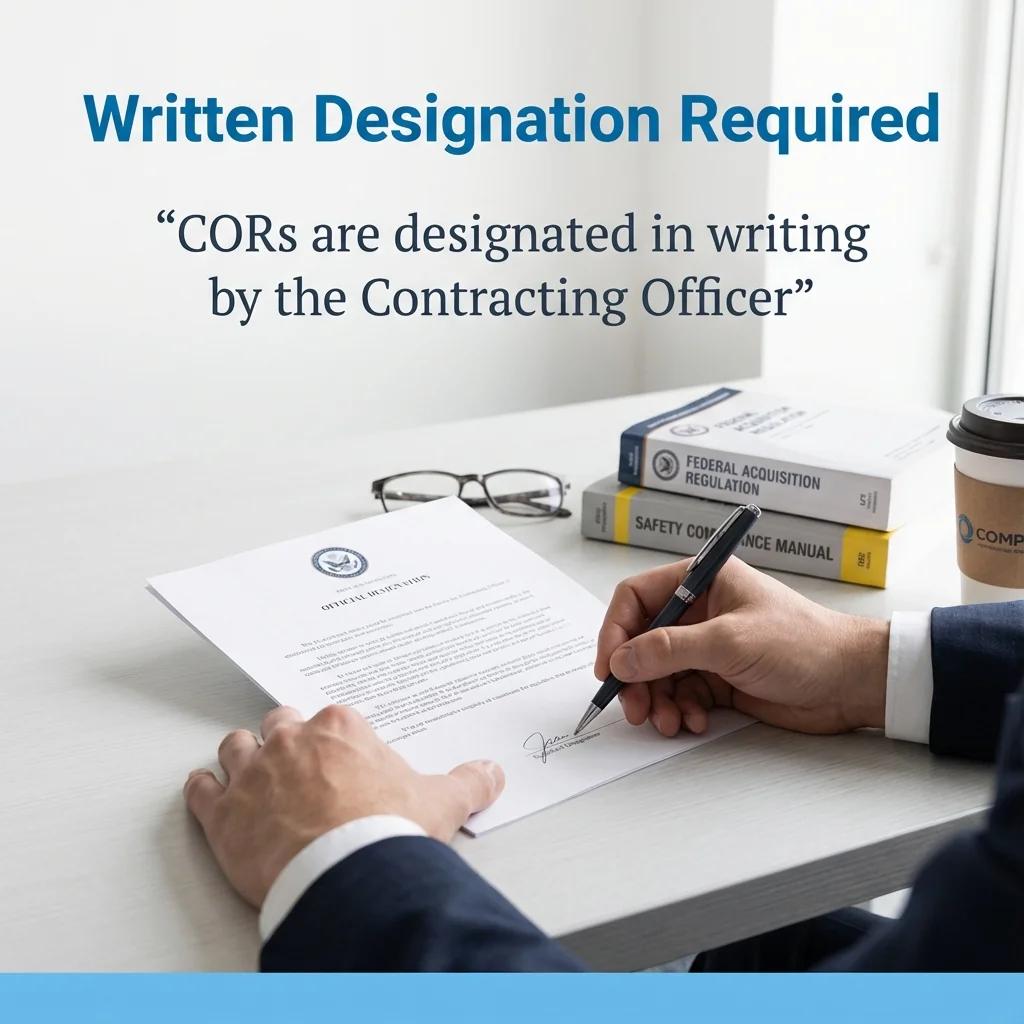
CORs are designated in writing by the Contracting Officer, establishing specific authority boundaries and performance monitoring responsibilities. This written designation specifies the scope of authority, clarifies limitations, and documents accountability requirements.
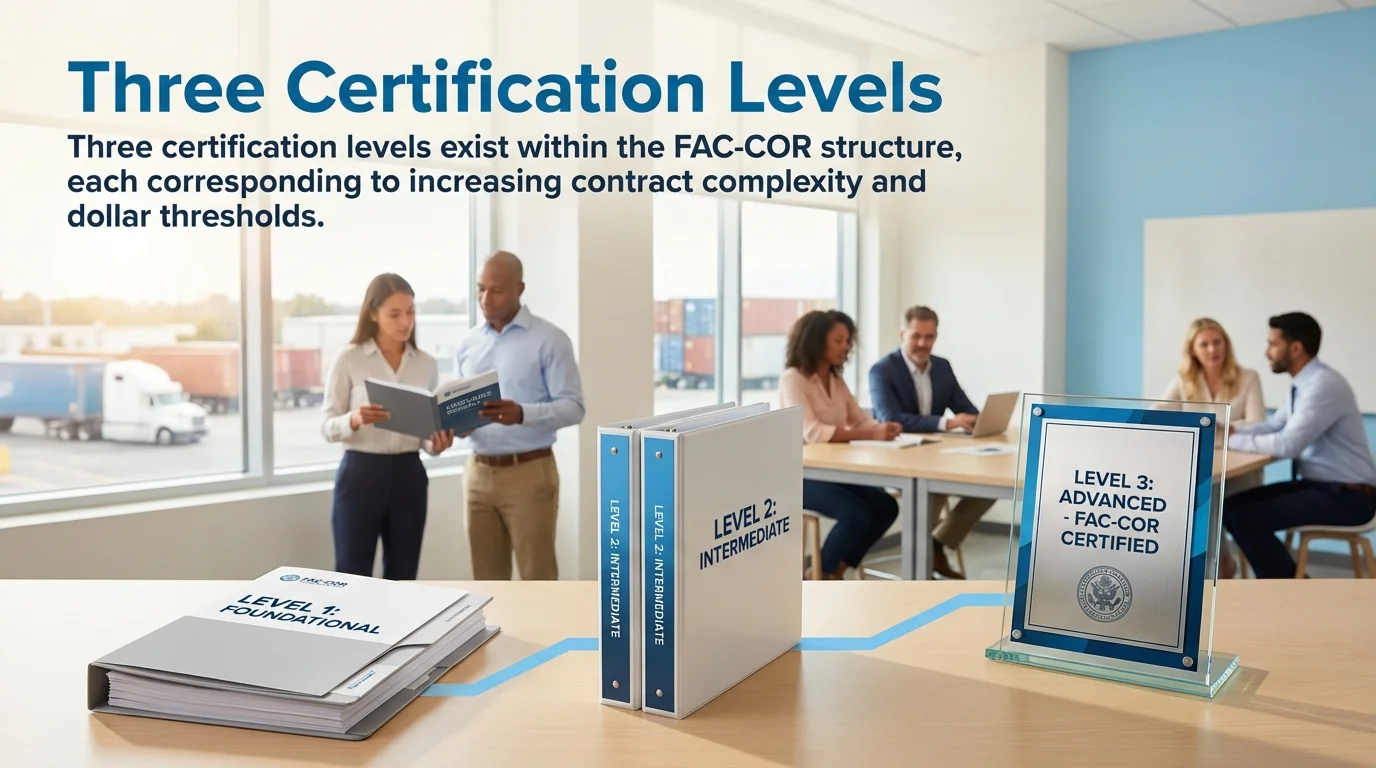
Three certification levels exist within the FAC-COR structure. Each level corresponds to increasing contract complexity, dollar thresholds, and required expertise. Level I addresses simplified acquisitions, Level II covers more complex procurement actions, and Level III encompasses the most sophisticated contract administration requirements.
The certification framework integrates several components systematically. Training requirements provide foundational knowledge through structured coursework. Experience requirements ensure practical application before certification. Continuous learning points maintain currency throughout a COR’s career. This multi-dimensional approach builds competency through education, application, and ongoing development.
Federal agencies implement FAC-COR requirements through designated Agency Acquisition Career Managers. These officials oversee certification applications, verify compliance with training and experience requirements, and maintain records within the Federal Acquisition Institute Career Source of Data (CSOD) system.
Understanding this framework clarifies your implementation approach. The structured pathway from initial training through certification maintenance provides the roadmap for developing capable contract oversight personnel within your acquisition workforce.
FAC-COR Certification Levels and Their Requirements
Each certification level establishes specific thresholds for training hours and experience duration. These requirements scale systematically, reflecting increasing responsibility and contract complexity at each tier.
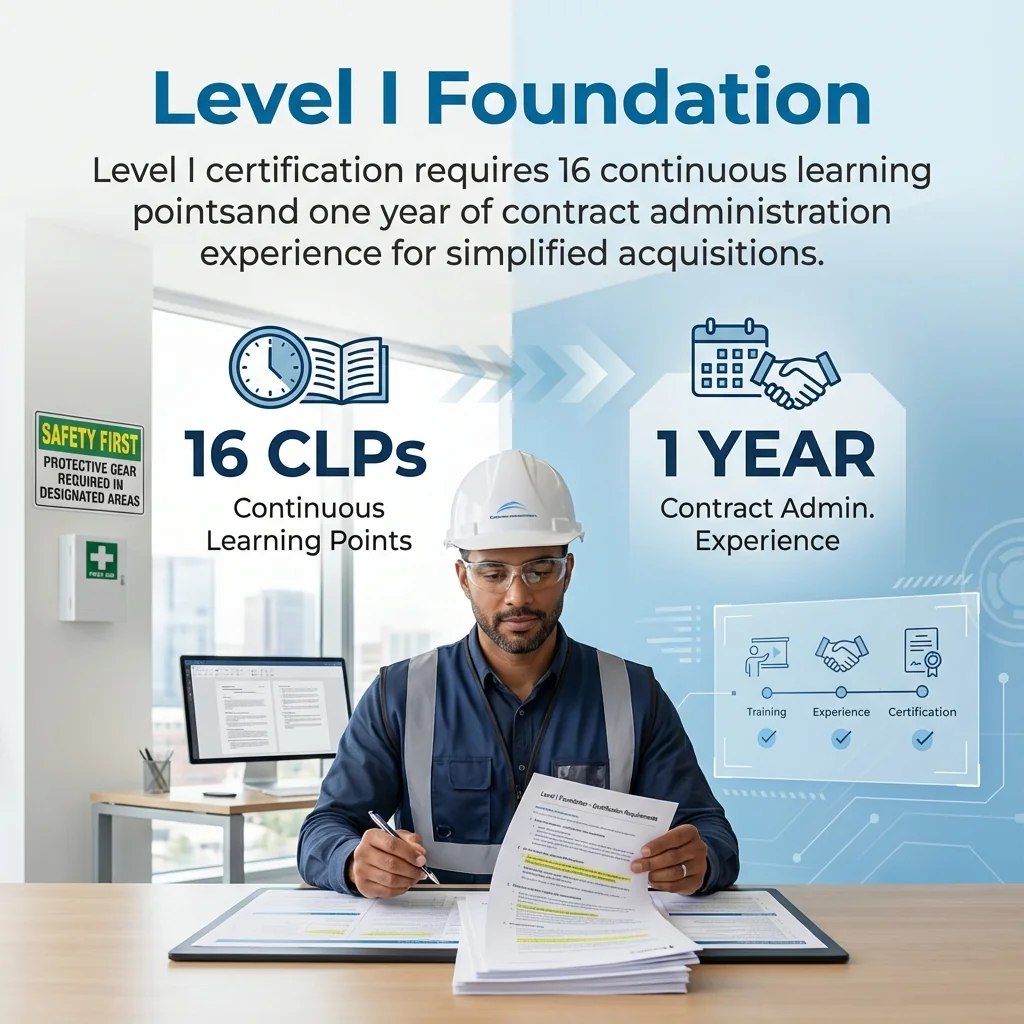
Level I certification supports personnel managing simplified acquisition contracts. The training requirement totals 16 continuous learning points (CLPs), equivalent to 16 hours of acquisition-focused education. Experience requirements demand one year of contract administration or procurement-related work. This entry level prepares personnel for straightforward contract oversight responsibilities.
Level II certification enables management of more complex procurement actions. Training requirements increase to 40 CLPs, combining foundational and intermediate coursework. Experience requirements expand to two years of relevant acquisition experience. This level accommodates contracts with greater technical complexity or higher dollar values.
Level III certification qualifies personnel for the most sophisticated contract administration responsibilities. Training requirements reach 60 CLPs, incorporating advanced acquisition topics and specialized contract management knowledge. Experience requirements demand four years of documented acquisition or procurement experience. This certification level supports major systems acquisitions and high-value contract portfolios.

| Certification Level | Training Hours (CLPs) | Experience Required | Contract Complexity |
|---|---|---|---|
| Level I | 16 CLPs | 1 year | Simplified acquisitions |
| Level II | 40 CLPs | 2 years | Moderate complexity |
| Level III | 60 CLPs | 4 years | Major systems and high-value |
Additional eligibility requirements apply across all levels. CORs must be government employees, not contractor personnel, ensuring appropriate oversight independence. Permanent employees receive preference for COR designations, though term and temporary employees may qualify under specific circumstances.
Understanding these progressive requirements helps you identify appropriate certification targets for personnel based on their current experience and anticipated contract administration responsibilities. The structured pathway enables workforce planning that aligns certification levels with organizational acquisition needs.
Training Course Requirements by Level
Specific coursework fulfills CLP requirements at each certification level. The Federal Acquisition Institute maintains the official catalog of approved courses through its training platform.
Level I personnel must complete COR1000, the foundational COR course. This 16-hour program covers basic contract administration responsibilities, performance monitoring techniques, and documentation requirements. Additional acquisition fundamentals coursework may supplement this core requirement.
Level II certification builds on Level I with intermediate coursework. Required courses include COR2000 and supplementary acquisition training addressing contract types, modification procedures, and invoice processing. The 40 CLP requirement incorporates both mandatory courses and elective training relevant to specific acquisition functions.
Level III demands advanced acquisition education. Required courses include COR3000 and specialized training in areas such as cost analysis, contract closeout procedures, and complex acquisition strategies. The 60 CLP requirement ensures breadth across acquisition disciplines.
Experience Documentation Standards
Experience requirements demand documented evidence of acquisition-related responsibilities. Acceptable documentation includes position descriptions, performance evaluations, training certificates, and supervisor attestations.
Relevant experience encompasses various procurement-related functions. Direct contract administration experience provides the strongest foundation. Related experience might include procurement planning, requirements development, market research, or acquisition support roles.
Your Agency Acquisition Career Manager evaluates experience documentation during certification applications. Detailed descriptions of responsibilities, duration of experience, and specific acquisition functions performed strengthen applications. Generic claims without supporting evidence typically require additional documentation.
Prerequisites Before Implementing COR Training
Successful implementation requires establishing foundational elements before launching training initiatives. These prerequisites create the infrastructure supporting effective COR development within your acquisition workforce.
First, identify your senior management champion. Executive sponsorship ensures adequate resources, policy support, and organizational commitment. This champion should understand acquisition workforce development importance and possess authority to establish COR program requirements within your agency.
Second, designate your internal program administrator. This individual coordinates certification applications, tracks training completion, maintains records, and liaises with your Agency Acquisition Career Manager. The administrator should possess detailed knowledge of FAC-COR requirements and your agency’s specific implementation policies.
Third, establish your personnel eligibility criteria. Determine which positions require COR certification, identify appropriate certification levels for different contract types, and document selection criteria for COR candidates. This framework guides workforce development decisions.
Fourth, verify system access requirements. Personnel need accounts within the CSOD system for training registration and transcript management. Your agency’s learning management system should integrate with federal acquisition training platforms to streamline course enrollment and completion tracking.
Fifth, develop internal policies supplementing federal requirements. Many agencies establish additional standards beyond minimum FAC-COR criteria, addressing topics such as workload limits, certification maintenance procedures, and quality assurance protocols. Document these requirements clearly before program launch.
Sixth, allocate training resources appropriately. Budget considerations include course fees, travel costs for in-person training, and time allocation for training participation. Resource constraints often influence implementation timelines and certification priorities.
These prerequisites form the foundation supporting systematic COR development. Addressing these elements before training deployment prevents implementation delays and ensures personnel can progress efficiently through certification requirements.
Step-by-Step Process to Implement COR Training
The implementation process follows a logical sequence from candidate identification through certification achievement. Each step builds systematically toward qualified personnel capable of performing contract oversight responsibilities.
Step 1: Assess Current Workforce Capabilities
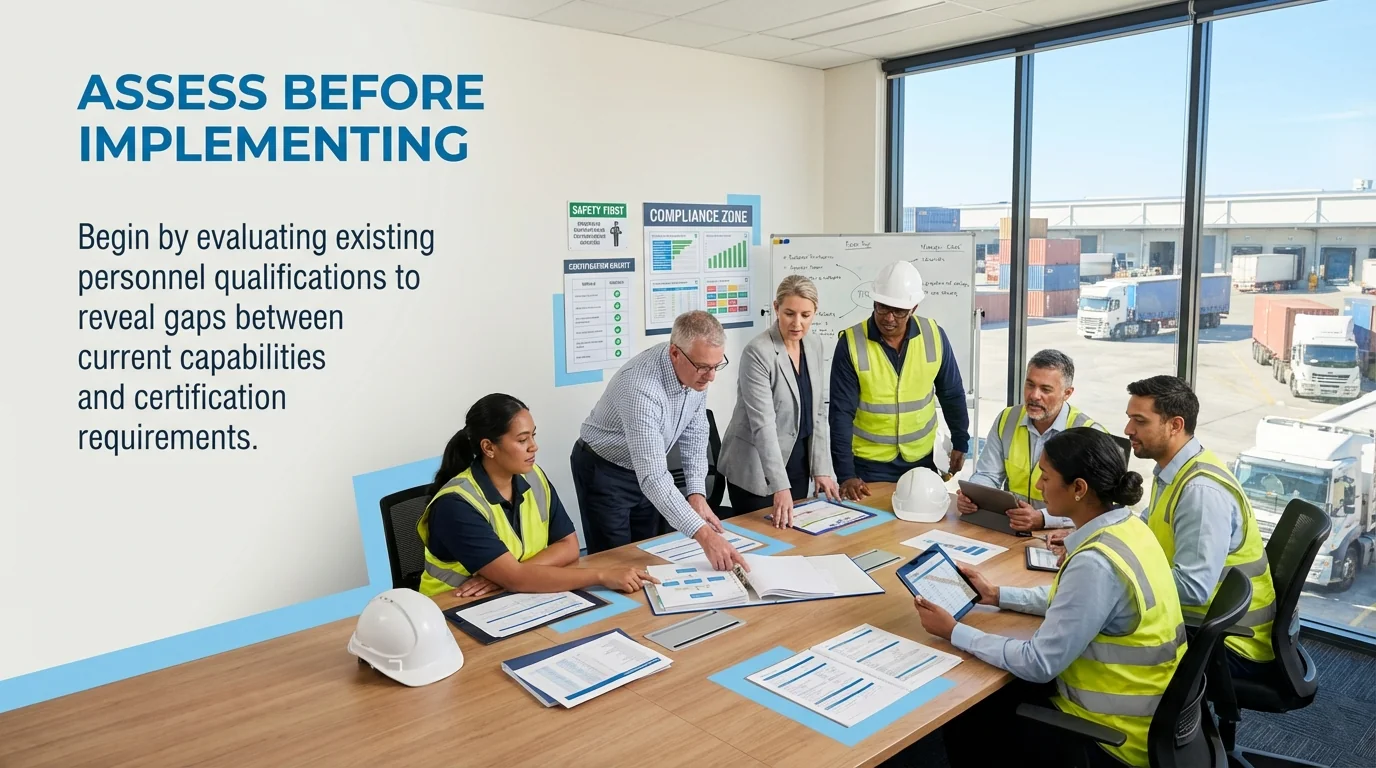
Begin by evaluating existing personnel qualifications. Review position descriptions, identify staff currently performing COR functions, and document their training and experience levels. This assessment reveals gaps between current capabilities and certification requirements.
Create an inventory of contract administration responsibilities across your organization. Categorize these responsibilities by complexity level, matching them to appropriate FAC-COR certification tiers. This analysis clarifies how many personnel you need at each certification level.
Document findings in a workforce capability matrix. This tool identifies individuals positioned for certification, highlights training needs, and establishes priorities for development investments. The matrix should indicate current qualifications, target certification levels, and estimated timelines for certification achievement.
Step 2: Select and Prepare Certification Candidates
Identify personnel meeting basic eligibility requirements for COR designation. Consider their current responsibilities, experience duration, and career development interests. Not every acquisition workforce member requires COR certification, focus development resources on personnel who will actively perform contract oversight functions.
Communicate certification expectations clearly to selected candidates. Explain training requirements, experience documentation needs, and application procedures. Establish realistic timelines that accommodate training availability and workload considerations.
Prepare candidates for the documentation requirements. Have them compile evidence of relevant experience, including position descriptions, performance evaluations, and acquisition-related accomplishment records. Thorough preparation streamlines the application process.
Step 3: Enroll Personnel in Required Training
Register candidates in mandatory courses through the Federal Acquisition Institute training portal. Create CSOD accounts if personnel don’t already have system access. Schedule training to accommodate operational requirements while maintaining reasonable certification timelines.
Monitor training progress systematically. Track course completion, verify CLP credits post to personnel transcripts, and identify any training barriers requiring intervention. Regular progress reviews keep certification efforts on schedule.
Supplement federal training with agency-specific instruction. Many organizations provide internal training addressing unique acquisition processes, systems, or policy requirements. This supplementary education enhances practical preparedness beyond certification requirements.
Step 4: Document and Verify Experience Requirements
Compile experience documentation meeting certification standards. Prepare detailed narratives describing acquisition-related responsibilities, duration of experience in each role, and specific contract administration functions performed. Supporting documentation should corroborate narrative claims.
Have supervisors review and validate experience documentation. Supervisor attestations strengthen applications by providing independent verification of claimed experience. These attestations should specify observation period, responsibilities witnessed, and performance assessment.
Organize documentation systematically for application submission. Create a package including training transcripts, experience narratives, supervisor attestations, and supporting evidence. Clear organization facilitates Agency Acquisition Career Manager review.
Step 5: Submit Certification Applications
Route completed application packages to your Agency Acquisition Career Manager following internal procedures. Include all required documentation, verification of training completion, and experience evidence. Incomplete applications delay certification processing.
The Agency Acquisition Career Manager reviews applications for compliance with FAC-COR requirements. This review verifies training completion, evaluates experience documentation adequacy, and confirms eligibility criteria. The manager may request additional documentation if application materials don’t clearly demonstrate requirement satisfaction.
Upon approval, certification records post to the CSOD system. Personnel receive official certification recognition, enabling Contracting Officer designation for appropriate contract administration responsibilities. Certification dates establish the baseline for continuous learning requirements and recertification timelines.
Step 6: Facilitate COR Designation by Contracting Officers
Certification alone doesn’t authorize contract oversight responsibilities. Contracting Officers must issue written designations specifying authority granted, performance monitoring duties, and reporting requirements. Work with your contracting organization to establish efficient designation processes.
COR designations should clearly define authority boundaries. The designation letter specifies what the COR can and cannot do, which contract line items fall under their oversight, and what actions require Contracting Officer approval. Clarity prevents authority misunderstandings that could compromise contract administration.
Maintain designation records systematically. Track which personnel hold active COR designations, for which contracts, and what authority levels apply. This tracking supports workload management and ensures appropriate oversight coverage across your contract portfolio.
The COR Audit and Certification Process
Federal agencies must audit their FAC-COR programs to ensure compliance with certification standards. These audits verify training completion, experience documentation, and certification maintenance procedures align with federal requirements.
Two audit types exist within the FAC-COR framework. Internal audits conducted by agency personnel assess program compliance and identify improvement opportunities. External audits performed by certifying partners provide independent verification of program integrity.
Internal audits should occur annually at minimum. Review certification records for completeness, verify training transcripts match claimed CLPs, and confirm experience documentation meets standards. This regular review identifies compliance gaps before external audits.
The internal audit process examines several elements systematically. First, verify all certified personnel met training requirements before certification. Second, confirm experience documentation adequately supported certification levels granted. Third, ensure continuous learning requirements are being satisfied for certification maintenance. Fourth, validate that only eligible personnel (government employees) received certifications.
Document audit findings thoroughly. Create detailed reports identifying compliant practices, noting deficiencies discovered, and recommending corrective actions. Track remediation efforts to ensure identified issues receive appropriate resolution.
External audits provide independent assessment of program quality. Federal agencies may utilize certifying partners authorized by the Office of Federal Procurement Policy for these external reviews. Certifying partner audits evaluate program compliance against federal standards, examining policies, procedures, and personnel records.
Prepare for external audits by maintaining organized records. Ensure certification files contain complete documentation, training transcripts are current, and internal audit reports demonstrate ongoing compliance monitoring. Well-maintained records streamline external audit processes.
Audit results inform program improvements. Use findings to refine policies, strengthen documentation standards, and enhance training approaches. Regular audits transform compliance verification into continuous program development.
Maintaining and Renewing Your COR Certification
Certification maintenance requires continuous learning throughout a COR’s career. These ongoing requirements ensure personnel maintain current knowledge as acquisition regulations, procedures, and best practices evolve.
Continuous learning requirements vary by certification level. Level I personnel must complete 20 CLPs every two years. Level II requires 40 CLPs within each two-year period. Level III demands 80 CLPs every two years. These requirements represent substantial ongoing education commitments.
Acceptable continuous learning activities include formal training courses, conference attendance, acquisition-related webinars, and certain professional development activities. The Federal Acquisition Institute maintains the official list of approved activities qualifying for CLP credit.
Track continuous learning completion systematically. Monitor CLP accumulation against certification maintenance deadlines, schedule training to spread requirements across the two-year period, and document all qualifying activities. Procrastination creates unnecessary deadline pressure.
Certification expires if continuous learning requirements aren’t satisfied within established timeframes. Expired certifications require renewal processes that may include retaking foundational courses, demonstrating current experience, and completing make-up continuous learning credits. Prevention costs less than remediation.
Establish internal tracking systems supporting certification maintenance. Create calendars showing when personnel need continuous learning credits, send reminders as deadlines approach, and maintain training records demonstrating ongoing compliance. Systematic tracking prevents inadvertent certification lapses.
Many agencies incorporate certification maintenance into performance planning. Include continuous learning expectations in performance standards, allocate time for training participation, and recognize certification maintenance achievements. This integration emphasizes ongoing development importance.
Recertification processes apply when certifications lapse or when personnel seek higher certification levels. Moving from Level I to Level II, for example, requires completing additional training, demonstrating increased experience, and submitting a new certification application. Plan these progressions strategically to align with career development goals and operational needs.
Agency-Specific Requirements and Resources
Individual federal agencies often establish requirements beyond minimum FAC-COR standards. Understanding your agency’s specific policies ensures complete compliance with both federal and organizational requirements.
Many agencies require supplemental training addressing internal procedures, systems, or policies. The Department of Interior, for example, requires additional courses covering department-specific acquisition processes. Department of Defense components often mandate specialized training related to defense acquisition regulations. Identify your agency’s supplemental requirements early in implementation planning.
Agency acquisition career management offices provide critical implementation support. These offices interpret federal requirements within agency context, process certification applications, maintain personnel records, and coordinate with the Federal Acquisition Institute. Establish strong working relationships with these offices to facilitate smooth certification processes.
Internal resources often supplement federal training offerings. Many agencies develop courses addressing organization-specific acquisition topics, procedures unique to their mission requirements, or systems training supporting contract administration functions. Leverage these resources to enhance practical preparedness.
Policy memoranda provide authoritative guidance on agency implementation approaches. Review your agency’s acquisition policy library for directives addressing COR program requirements, certification procedures, and performance standards. These documents establish the official framework governing your implementation efforts.
Professional communities within federal acquisition provide valuable networking and knowledge-sharing opportunities. The Defense Acquisition University consortium, Federal Acquisition Institute working groups, and agency-specific acquisition communities offer forums for sharing best practices and resolving implementation challenges.
Technology tools support program administration. The CSOD system serves as the official record repository for federal acquisition certifications. Specialized compliance tracking systems can supplement federal platforms, providing agency-specific functionality for managing COR programs alongside other acquisition workforce development initiatives.
Budget considerations influence implementation approaches. Training costs, system access fees, and administrative resource requirements vary across agencies. Develop realistic budget projections early, securing necessary funding commitments before launching comprehensive COR development programs.
Building Sustainable COR Capability
Effective COR training implementation extends beyond initial certification achievement. Sustainable programs build organizational capacity systematically, maintaining qualified personnel over time while adapting to evolving acquisition requirements.
Develop succession planning approaches that ensure continuity of contract oversight capabilities. Identify personnel positioned for COR development before immediate needs arise, create development pipelines that prepare candidates progressively, and maintain adequate depth to accommodate personnel transitions without capability gaps.
Integration with broader acquisition workforce development initiatives strengthens COR programs. Connect COR certification with career progression pathways, align training investments with organizational acquisition strategies, and coordinate COR development with related competency building in areas such as contracting, project management, and requirements development.
Performance management processes should reinforce COR program expectations. Include certification requirements in position descriptions for roles requiring contract oversight, incorporate training completion and certification maintenance into performance standards, and recognize achievement of certification milestones through awards or other acknowledgment mechanisms.
Regular program evaluation drives continuous improvement. Review certification timelines to identify bottlenecks, analyze training effectiveness through performance assessments, and gather feedback from certified personnel about program strengths and improvement opportunities. Use evaluation findings to refine implementation approaches systematically.
Quality assurance measures ensure COR performance meets organizational standards. Establish review processes evaluating contract administration documentation, provide mentoring support for newly certified personnel, and create feedback mechanisms that help CORs strengthen performance over time. Certification represents minimum qualification, ongoing development builds excellence.
Understanding regulatory frameworks supports effective contract oversight. COR personnel need more than procedural knowledge, they require comprehension of the regulatory rationale underlying acquisition requirements. This deeper understanding enables sound judgment in addressing unique situations not explicitly covered by procedures.
Technology adoption enhances program efficiency. Leverage automation for tracking training completion, implement digital systems for managing certification records, and utilize analytics to identify trends requiring program adjustments. Strategic technology use frees administrative resources for higher-value development activities.
Your approach to COR training implementation shapes acquisition workforce capability for years ahead. The investment in systematic development, thorough documentation, and continuous improvement creates organizational capacity that strengthens contract outcomes while ensuring regulatory compliance. Personnel prepared through structured certification pathways bring confidence and competence to contract oversight responsibilities that benefit mission achievement across your acquisition portfolio.