
Transport safety succeeds when businesses treat it as an operational advantage, not a compliance burden. After 25 years in supply chain management, working across FMCG, construction, and logistics, I’ve seen this pattern repeat: organisations that embed safety into their daily systems outperform those that bolt it on as an afterthought. The right approach combines systematic risk assessment, technology integration, and genuine safety culture.
This isn’t about collecting more paperwork. It’s about reducing fatalities, preventing accidents, and building resilience into operations.
You’ll learn how to apply evidence-based practices that improve transportation safety across road, rail, and multimodal transport. We’ll cover safety culture development, risk assessment methods, AI-powered monitoring, and data-driven compliance systems. By the end, you’ll have actionable strategies for reducing incidents and enhancing your transport safety performance.
1. Build a Strong Safety Culture Across Your Organisation
Safety culture isn’t a poster campaign. It’s the set of beliefs, perceptions, and values your people share about safety protocols.
Start with leadership commitment that’s visible and measurable. Executives should participate in safety audits, review incident reports personally, and allocate resources to safety training without question. When leadership treats safety as operational priority, the organisation follows.
Create Accountability Throughout the Chain
Under Chain of Responsibility legislation, everyone in the supply chain carries obligations. Your drivers, schedulers, warehouse managers, and executives all play roles in transport safety compliance.
Establish clear responsibilities at each level. Document who reviews maintenance schedules, who approves load plans, who monitors driver hours. When accountability is specific, safety performance improves.
Integrate safety discussions into regular operations meetings. Make incident reporting a standard agenda item. Celebrate near-miss reports as learning opportunities, not failures.
Reward Safety Performance
Recognition systems work when they focus on leading indicators. Track proactive behaviours: pre-trip inspections completed, safety observations reported, training sessions attended.
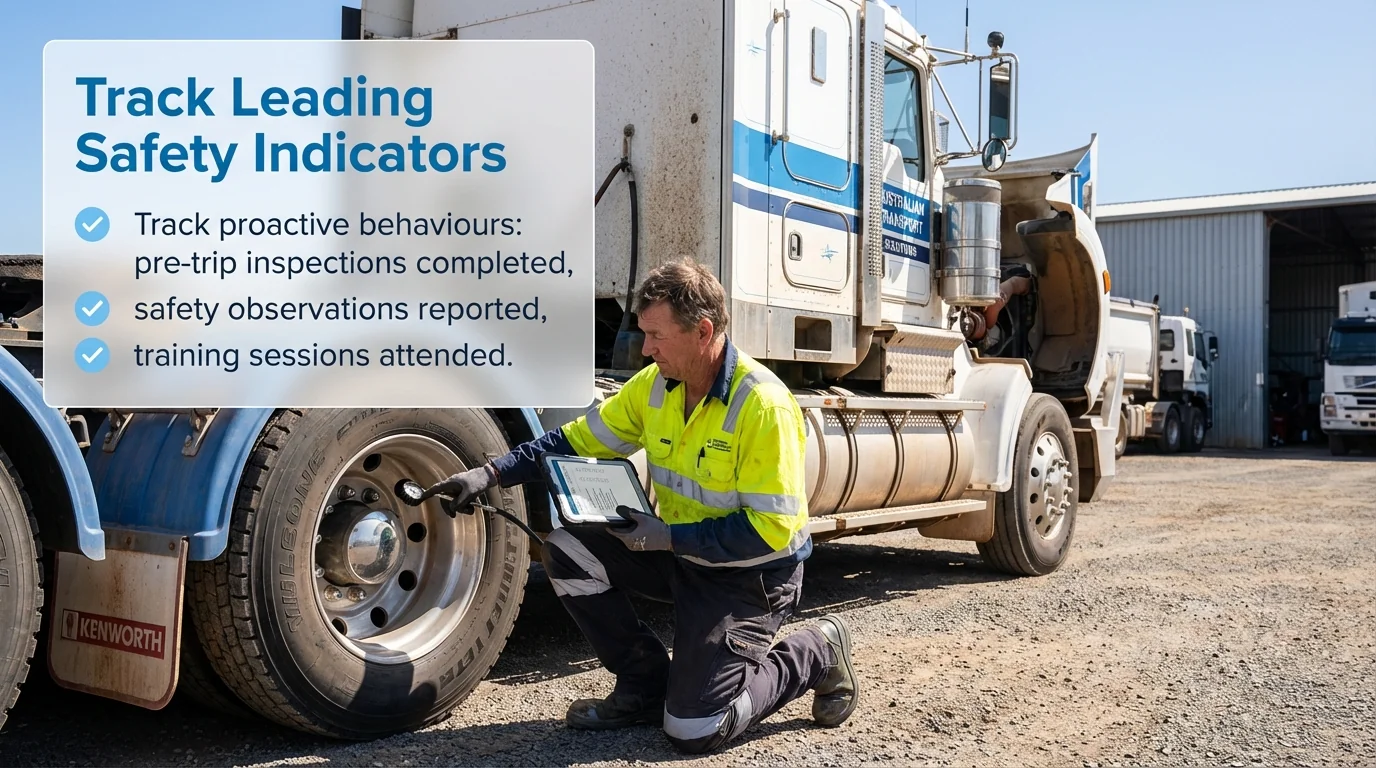
Lagging indicators like lost-time injury rates matter. But leading indicators predict safety performance before accidents occur.
Build safety metrics into performance reviews across all roles that touch transport operations. When safety affects career progression, it becomes cultural.
2. Conduct Systematic Risk Assessments and Hazard Identification
Risk assessment identifies hazards before they cause accidents. Effective risk management requires structured processes, not ad-hoc reactions.
Begin with comprehensive job safety analyses for each transport activity. Break tasks into steps, identify hazards at each step, and implement controls.
Apply the Hierarchy of Controls
Prioritise controls in this order: elimination, substitution, engineering controls, administrative controls, personal protective equipment.
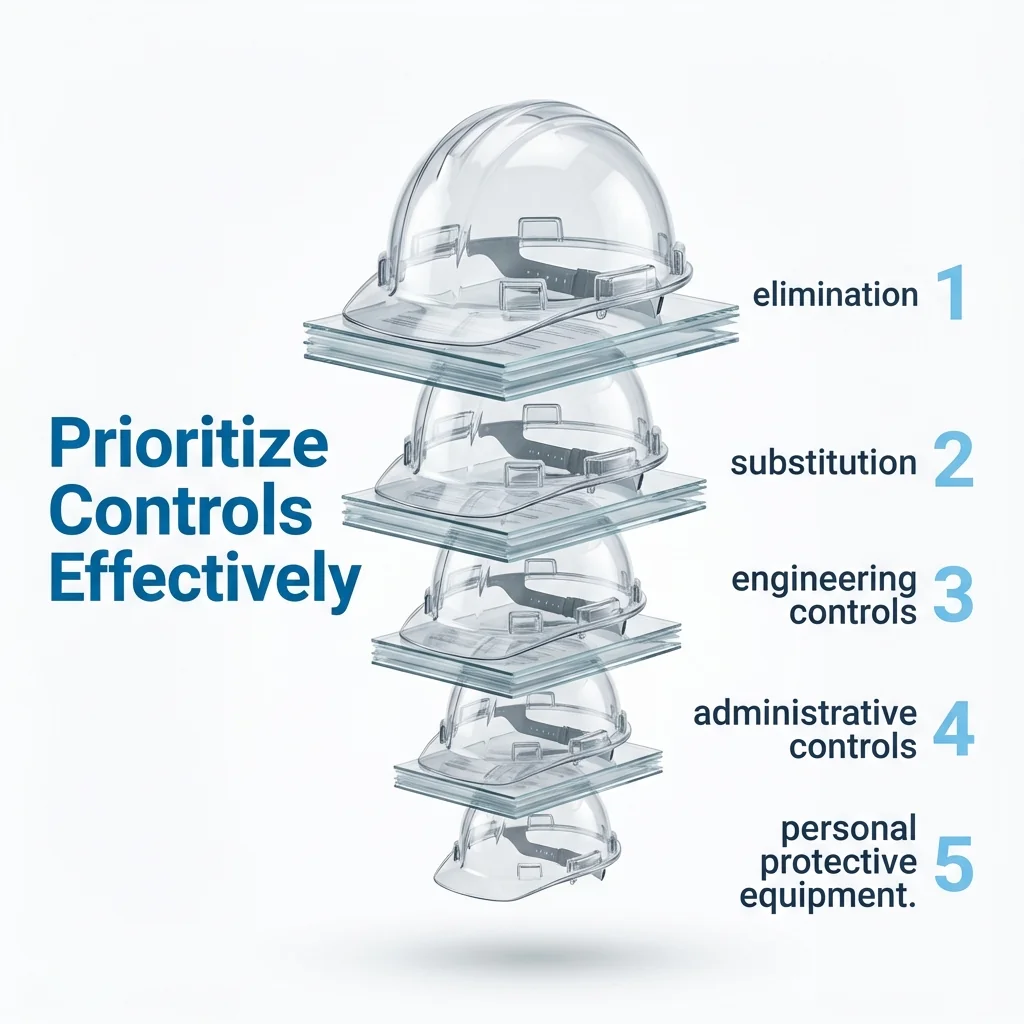
Elimination removes the hazard entirely. Can you redesign the route to avoid hazardous materials transport through residential areas? Can you schedule deliveries outside peak traffic periods?
Engineering controls reduce exposure through physical changes. Install reversing cameras, fit lane departure warning systems, upgrade braking technology.
Administrative controls include safety training, work procedures, and scheduling policies that manage fatigue. These work when consistently applied and monitored.
Focus on High-Risk Areas
Not all routes carry equal risk. Sacramento’s Transportation Safety Initiative completed more than 100 safety improvements citywide in 2024, targeting locations with the highest incident rates.
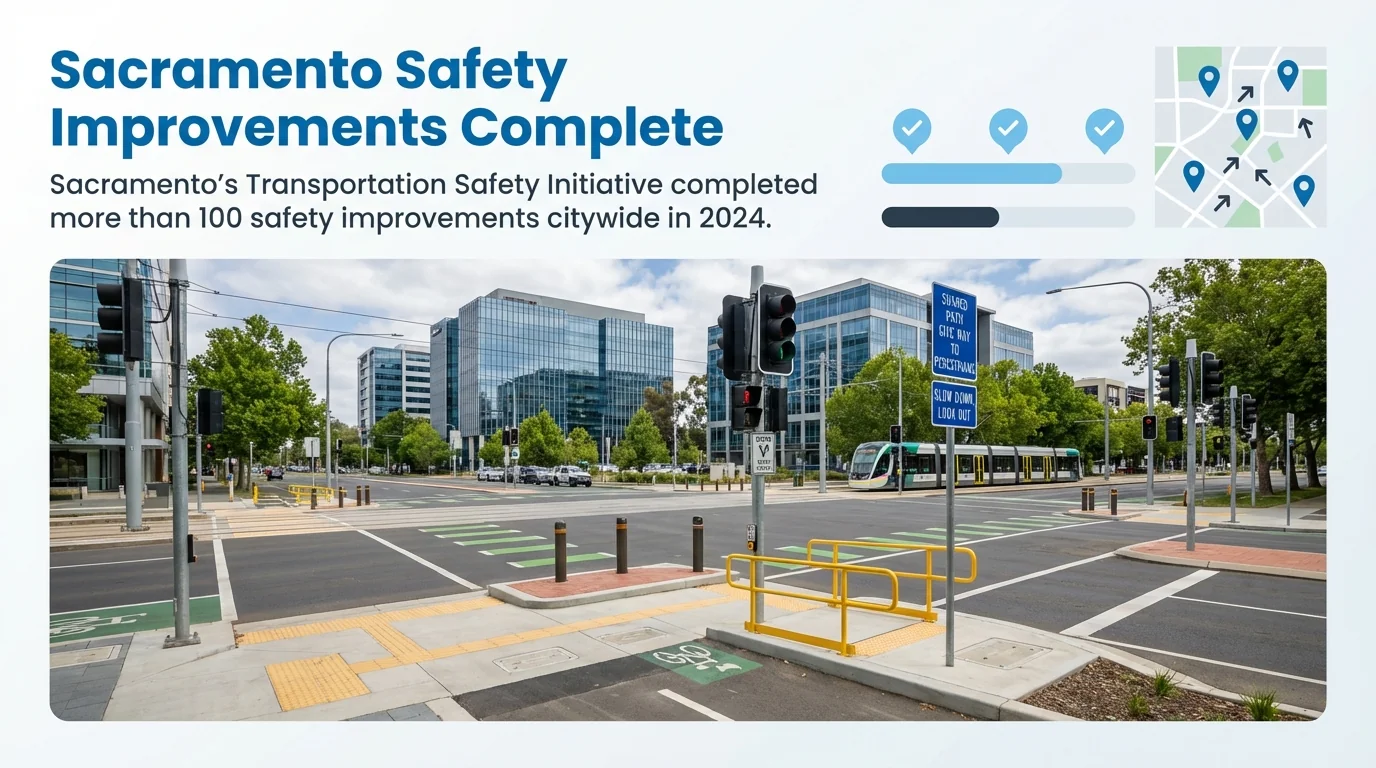
Map your High Injury Network. Identify intersections, road segments, and operational scenarios where incidents cluster. Direct resources there first.
Review incident data quarterly. Update risk assessments when operations change, new hazards emerge, or regulations shift.
3. Implement AI-Powered Predictive Analytics and Real-Time Monitoring
Generative AI transforms transportation safety from reactive to predictive. Technology now identifies risks before they materialise into accidents.
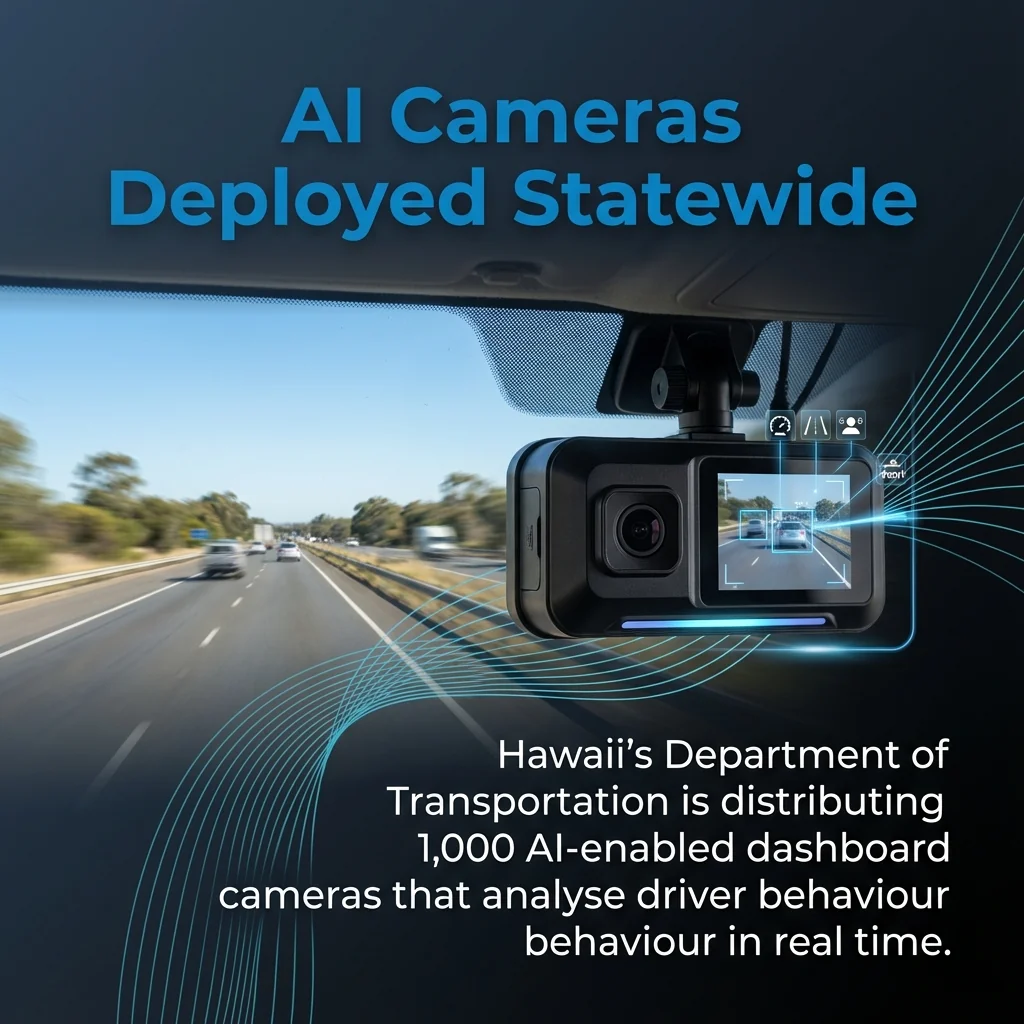
Hawaii’s Department of Transportation is distributing 1,000 AI-enabled dashboard cameras that analyse driver behaviour in real time, providing immediate feedback on unsafe practices.
Deploy Computer Vision for Hazard Detection
AI systems analyse video feeds to detect fatigue indicators, distraction patterns, and risky behaviours. These systems alert drivers immediately, preventing incidents rather than documenting them.
Computer vision also monitors vehicle conditions. Automated inspections identify maintenance issues, worn components, and safety defects during regular operations.
The technology works continuously. Human observers fatigue. AI maintains consistent monitoring across all vehicles, all shifts.
Use Predictive Maintenance to Prevent Failures
Predictive maintenance applies machine learning to vehicle telematics data. Algorithms identify patterns that precede component failures.
Track brake wear, tyre pressure, engine performance, and fluid conditions. Schedule maintenance based on condition, not arbitrary intervals.
This approach reduces roadside breakdowns, which create safety risks for drivers and other road users. It also optimises fleet management by preventing unplanned downtime.
Integrate IoT Sensors Across Your Fleet
Internet of Things sensors collect data on vehicle speed, harsh braking, acceleration patterns, and cornering forces. This creates objective records of driving behaviour.
Real-time monitoring enables immediate intervention. When sensors detect unsafe driving, systems can alert drivers, dispatch supervisors, or trigger automated responses.
Data collection supports safety training. Identify patterns across your fleet, target coaching to specific behaviours, and measure improvement over time.
4. Invest in Regular, Engaging Safety Training Programs
Safety training fails when it’s generic, infrequent, or disconnected from operational reality. Effective programs are specific, regular, and interactive.
Design training around actual incidents from your operations. Use your data to identify high-risk scenarios, then build training modules that address those specific situations.
Tailor Training to Different Roles
Drivers need different training than schedulers. Warehouse staff have different safety obligations than transport managers.
Develop role-specific content that addresses the actual decisions each role makes. How does a scheduler’s route choice affect driver fatigue? How does a loading supervisor’s sign-off impact vehicle stability?
Under Chain of Responsibility, everyone in the supply chain needs to understand their specific safety obligations. Generic awareness isn’t sufficient for safety compliance.
Make Training Interactive and Practical
Scenario-based learning works better than slide presentations. Present real situations, ask participants to identify hazards, discuss control measures, and explain the reasoning.
Use simulations when possible. Virtual reality training lets drivers experience hazardous scenarios without real risk.
Follow up training with workplace observation. Verify that learned behaviours transfer to actual operations.
Schedule Training Regularly
Safety knowledge decays. Annual training isn’t adequate for maintaining skills and awareness.
Implement quarterly safety refreshers. Focus each session on a specific topic: fatigue management, load restraint, adverse weather driving, incident reporting.
Supplement formal training with toolbox talks. Short, frequent safety discussions maintain awareness between structured training sessions.
5. Establish Robust Vehicle and Equipment Maintenance Protocols
Vehicle maintenance directly affects transportation safety. Brake failures, tyre blowouts, and mechanical defects cause preventable accidents.
Develop maintenance schedules based on manufacturer recommendations, regulatory requirements, and your operational intensity. Heavy-use vehicles need more frequent inspection than occasional-use equipment.
Implement Pre-Trip and Post-Trip Inspections
Driver inspections catch defects before vehicles enter service. Standardise inspection checklists that cover brakes, tyres, lights, steering, and load security.
Make inspections mandatory, not optional. Non-negotiable procedures create consistent safety standards.
Use digital inspection systems that record results, flag defects, and prevent vehicle dispatch until issues are resolved. Paper checklists disappear. Digital systems create auditable records.
Track Maintenance History Systematically
Maintenance management systems record every service, repair, and inspection. This history identifies recurring problems, tracks warranty claims, and demonstrates compliance during audits.
When incidents occur, maintenance records prove your organisation took reasonable steps to ensure vehicle safety. This matters for Chain of Responsibility defences.
Use the data to inform fleet replacement decisions. Vehicles with escalating maintenance costs and declining reliability should be retired before they cause safety incidents.
Partner with Qualified Service Providers
Heavy vehicle maintenance requires specific expertise. Use licensed workshops with qualified technicians who understand commercial vehicle systems.
Verify your service providers maintain proper certifications and insurance. Their work affects your safety compliance and liability exposure.
Establish service level agreements that specify turnaround times, quality standards, and emergency response procedures.
6. Leverage Data Collection and Performance Analysis
Data-driven safety management identifies trends, measures improvement, and justifies resource allocation. Without measurement, safety programs operate on assumptions.
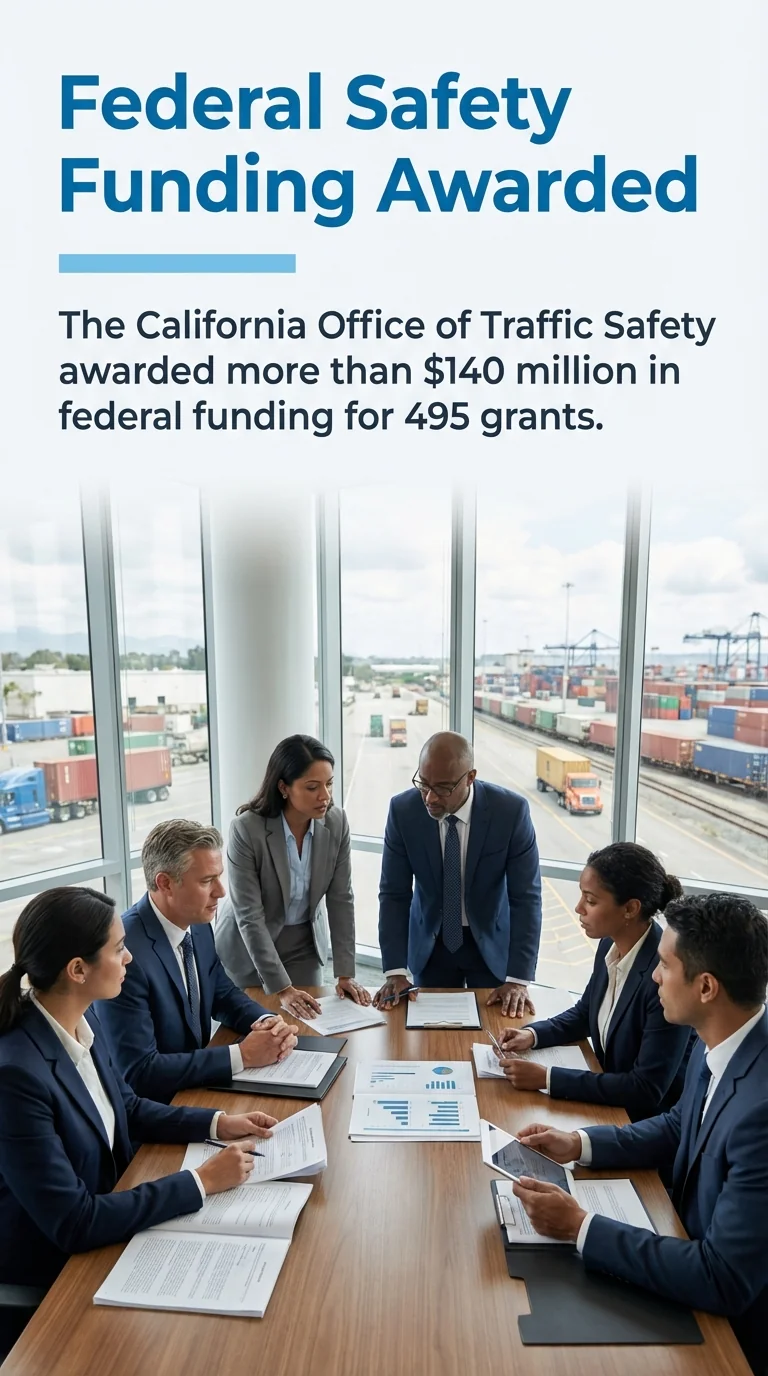
The California Office of Traffic Safety awarded more than $140 million in federal funding for 495 grants, prioritising data-informed safety initiatives.
Collect the Right Safety Metrics
Track both leading and lagging indicators. Lagging indicators measure outcomes: crash rates, injury frequency, lost work days, insurance claims.
Leading indicators predict future performance: inspection completion rates, training attendance, near-miss reports, maintenance schedule compliance.
Balance tells the complete story. Lagging indicators show results. Leading indicators reveal whether your processes are working.
Analyse Patterns to Target Interventions
Look for patterns in your safety data. Do incidents cluster at specific times, locations, or operational conditions?
Segment analysis by driver, vehicle, route, cargo type, and weather conditions. This reveals where focused interventions deliver the greatest safety improvement.
Compare your performance against industry benchmarks. Are your incident rates higher than comparable operators? If so, investigate why and implement corrective actions.
Report Performance Transparently
Share safety data across your organisation. When everyone sees the metrics, safety becomes a shared responsibility.
Present data visually. Dashboards with clear graphics communicate trends better than spreadsheets.
Discuss data in operations meetings. What do the numbers tell us? Where are we improving? Where do we need additional focus?
7. Create Effective Incident Reporting and Near-Miss Programs
Near-miss reporting provides early warning of serious hazards. For every major incident, multiple near-misses occurred first.
Build a culture where people report safety concerns without fear. Blame-focused cultures suppress reporting. Learning-focused cultures encourage it.
Make Reporting Easy and Accessible
Complicated reporting systems reduce participation. Simplify the process.
Provide multiple reporting channels: mobile apps, web forms, phone hotlines, supervisor notifications. Remove barriers to participation.
Allow anonymous reporting when appropriate. Some people share concerns more freely when anonymity is protected.
Respond to Every Report
When someone reports a safety concern, acknowledge it quickly. Investigate thoroughly. Implement corrective actions. Then close the loop by informing the reporter what changed.
This demonstrates that reports matter and create improvement. When people see their input driving change, they report more.
Track your reporting metrics. Low reporting rates often indicate cultural problems, not safe operations.
Analyse Trends in Near-Miss Data
Near-miss data reveals hazards before they cause accidents. Analyse reports to identify systemic issues.
Are drivers repeatedly reporting the same hazardous intersection? Fix the underlying problem, don’t just warn drivers to be careful.
Use near-miss analysis to update risk assessments, improve training content, and modify operational procedures.
8. Ensure Regulatory Compliance and Stay Current
Compliance with transport regulations is non-negotiable. Penalties for breaches include significant fines, operational restrictions, and reputational damage.
Understanding your obligations under Heavy Vehicle National Law, Work Health and Safety legislation, and Chain of Responsibility is fundamental. Ignorance isn’t a defence.
Assign Compliance Responsibility
Designate someone to monitor regulatory changes, interpret requirements, and ensure implementation. Safety compliance can’t be everybody’s job and therefore nobody’s job.
For larger organisations, establish a compliance team. For smaller operators, at least one person needs dedicated responsibility.
Subscribe to regulatory updates from transport authorities. Regulations change. Your compliance systems must adapt.
Conduct Regular Compliance Audits
Internal audits identify gaps before regulators do. Schedule quarterly audits covering driver records, vehicle maintenance, load management, and fatigue compliance.
Use standardised audit checklists aligned with regulatory requirements. Document findings, assign corrective actions, and track completion.
Consider engaging external auditors periodically. Fresh perspectives catch issues internal audits might miss.
Document Everything
Under Chain of Responsibility, you must demonstrate that you took reasonable steps to ensure safety. Documentation proves this.
Maintain records of risk assessments, training delivery, maintenance schedules, inspection results, and incident investigations. These records defend your organisation during investigations.
Use compliance management systems that centralise documentation. Systems like CoRGuard track vendor compliance, manage operational data, and provide proactive monitoring tools.
9. Apply the Safe System Approach to Transport Design
The Safe System Approach recognises that humans make mistakes. Rather than blaming individuals, it designs systems that prevent death and serious injury when errors occur.
King County’s Office of Law Enforcement Oversight recommends revising policy guidance so officers focus on safety violations, prioritising enforcement that genuinely reduces crashes.
Design Safer Roads and Infrastructure
Infrastructure design significantly affects crash outcomes. Median barriers prevent head-on collisions. Roundabouts reduce intersection crashes. Protected bike lanes separate vulnerable road users from heavy vehicles.
When planning routes, consider infrastructure quality. Avoid high-risk segments when alternatives exist.
Advocate for infrastructure improvements in areas where your operations concentrate. Partner with road authorities and community groups to improve dangerous locations.
Reduce Speed Where Conflicts Occur
Speed dramatically affects crash severity. The Safe System Approach recommends speed limits based on road design and user mix.
Where pedestrians, cyclists, and vehicles share space, lower speeds are essential. A person hit at 50 km/h faces substantially higher fatality risk than at 30 km/h.
Coach drivers on speed management. Faster isn’t always more productive when crashes, penalties, and insurance costs are considered.
Match Vehicles to Tasks
Vehicle selection affects safety outcomes. Modern trucks with electronic stability control, automated emergency braking, and lane keeping assist prevent crashes.
When replacing fleet vehicles, prioritise safety technology. The incremental cost is modest compared to crash consequences.
Consider the Safe System principle in load allocation. Match vehicle capabilities to task demands, considering weight, road conditions, and driver experience.
10. Manage Fatigue Systematically
Driver fatigue causes crashes. It impairs reaction time, decision-making, and hazard perception comparable to alcohol impairment.
Fatigue management requires more than counting hours. Effective systems consider work patterns, shift timing, workload intensity, and individual factors.
Apply Fatigue Management Regulations
Heavy Vehicle National Law specifies work and rest requirements. Standard hours, basic fatigue management, and advanced fatigue management options exist.
Choose the option that suits your operations and implement it rigorously. Half-compliant systems fail audits and create liability.
Track driver hours using electronic work diaries. These provide accurate, auditable records and prevent manipulation that paper logbooks allow.
Design Schedules That Manage Fatigue
Legal compliance doesn’t guarantee safety. Schedules that maximise legal driving hours often maximise fatigue.
Build recovery time into rosters. Sufficient sleep between shifts is essential for alertness.
Avoid overnight and early morning scheduling when circadian rhythms create peak fatigue risk. If unavoidable, implement additional controls like reduced speeds and increased rest breaks.
Train Drivers to Recognise Fatigue Symptoms
Drivers should recognise fatigue signs: excessive yawning, difficulty concentrating, missing exits, drifting between lanes.
Empower drivers to stop when fatigued. Create a culture where requesting rest is supported, not punished.
Provide facilities that support quality rest. Partnerships with rest area operators, access to secure parking, and provision of amenities help drivers rest effectively.
11. Secure Loads Properly to Prevent Incidents
Unsecured or poorly secured loads cause crashes, damage infrastructure, and result in Chain of Responsibility prosecutions.
Load restraint standards specify requirements for different cargo types and vehicle configurations. Know and apply the relevant standards.
Calculate Load Restraint Requirements
Load restraint isn’t guesswork. Performance standards specify the forces restraints must withstand.
Calculate restraint requirements based on cargo weight and characteristics. Use appropriate restraint methods: tie-downs, blocking, friction, containment.
Document restraint calculations and methods. This demonstrates due diligence during investigations.
Verify Load Security Before Departure
Pre-departure inspections must include load security checks. Has the load shifted during loading? Are restraints correctly tensioned? Is the load within weight limits?
Drivers should check load security again after the first few kilometres of travel. Initial movement can loosen restraints.
Provide drivers with proper load restraint equipment and training in its use. Inadequate equipment creates unsafe situations and compliance breaches.
Match Loading Practices to Transport Requirements
Loading dock procedures affect transport safety. Uneven loading creates vehicle instability. Overloading stresses brakes and suspension. Inadequate restraint creates projectile hazards.
Train loading staff in transport safety requirements. Their decisions directly affect driver safety and legal compliance.
Audit loading practices regularly. Observe procedures, check documentation, and verify that training translates to actual practice.
12. Coordinate Safety Across Multimodal Transport
Many supply chains involve road, rail, and sea transport. Safety requires coordination across modes, not isolated management.
Hazardous materials require particular attention during modal transfers. Ensure proper classification, packaging, documentation, and emergency response procedures apply consistently.
Standardise Safety Requirements
Establish minimum safety standards that apply regardless of transport mode. All carriers should meet baseline requirements for insurance, certification, safety management systems, and incident reporting.
Use consistent safety assessment methods when evaluating transport providers. Rate potential carriers against standard criteria before engaging them.
Include safety performance requirements in transport contracts. Make safety expectations explicit, measurable, and enforceable.
Share Safety Information Across Partners
Supply chain partners should share incident data, emerging hazards, and effective safety practices.
When an incident occurs, investigate collaboratively. Root causes often span multiple organisations in the supply chain.
Establish regular safety meetings with key transport partners. Discuss performance trends, address concerns, and coordinate improvement initiatives.
Verify Contractor Safety Performance
When engaging transport contractors, verify their safety management systems, compliance history, and performance records.
Request evidence of training programs, maintenance systems, and insurance coverage. Contractors extend your Chain of Responsibility obligations.
Monitor contractor performance continuously. Periodic audits ensure standards are maintained throughout the relationship.
13. Prepare for Adverse Conditions and Emergencies
Transport operates in variable conditions. Rain, fog, heat, and night conditions increase risk.
The new traffic safety paradigm treats total vehicle travel as a key risk factor, recognising that exposure to hazardous conditions directly correlates with incident probability.
Develop Weather-Specific Operating Procedures
Different weather conditions require different precautions. Heavy rain reduces visibility and traction. High temperatures accelerate fatigue. Ice creates complete loss of control.
Establish trigger points where operations modify or cease. What wind speed grounds high-sided vehicles? What temperature triggers additional rest breaks?
Provide drivers with weather information and authority to delay travel when conditions are unsafe. Schedules should accommodate weather flexibility.
Train for Emergency Response
Drivers need training in emergency procedures: vehicle fires, hazardous material spills, medical emergencies, crash response.
Equip vehicles with appropriate emergency equipment: fire extinguishers, spill kits, first aid supplies, communication devices.
Conduct emergency drills periodically. Theoretical knowledge doesn’t guarantee effective response under stress.
Establish Incident Management Protocols
When incidents occur, coordinated response minimises consequences. Who notifies emergency services? Who contacts management? Who secures the scene? Who manages media inquiries?
Document these procedures clearly. Ensure all drivers and supervisors know them.
After every incident, conduct thorough investigations. Identify root causes, implement corrective actions, and prevent recurrence.
Key Questions About Transport Safety
What are five safe driving practices?
Posted speed compliance, seat belt use, avoiding impairment, eliminating distraction, and obeying traffic controls are evidence-based practices. These address the leading contributors to severe crashes and fatalities.
How to make public transport safe?
Transit safety combines regular vehicle and infrastructure inspections with operator training and fatigue management. Emergency planning, federal oversight, and continuous data-driven improvement create systematic safety for passengers and workers.
Moving Forward with Transport Safety
Transport safety improvement isn’t a project with an end date. It’s continuous, systematic work.
Start with the fundamentals: build safety culture, conduct risk assessments, ensure regulatory compliance. Then layer technology, data analysis, and advanced management systems.
Measure your progress consistently. What gets measured gets managed. Track your safety metrics, compare against benchmarks, and adjust your approach based on results.
The organisations that treat transport safety as operational advantage outperform those that see it as regulatory burden. Better safety delivers better business outcomes.
Your next step? Review your current transport safety best practices against the strategies outlined here. Identify gaps. Prioritise actions. Then implement systematically.
Transport safety is achievable. It requires commitment, resources, and expertise. But the alternative, accepting preventable incidents as normal, is unacceptable.