
Chain of responsibility compliance isn’t about ticking boxes. It’s about building systems that protect people, safeguard your business, and create operational resilience. Under the Heavy Vehicle National Law (HVNL), all parties who influence a transport task are responsible for safety, not just drivers. This means consignors, loaders, schedulers, operators, and executives all share legal duties.
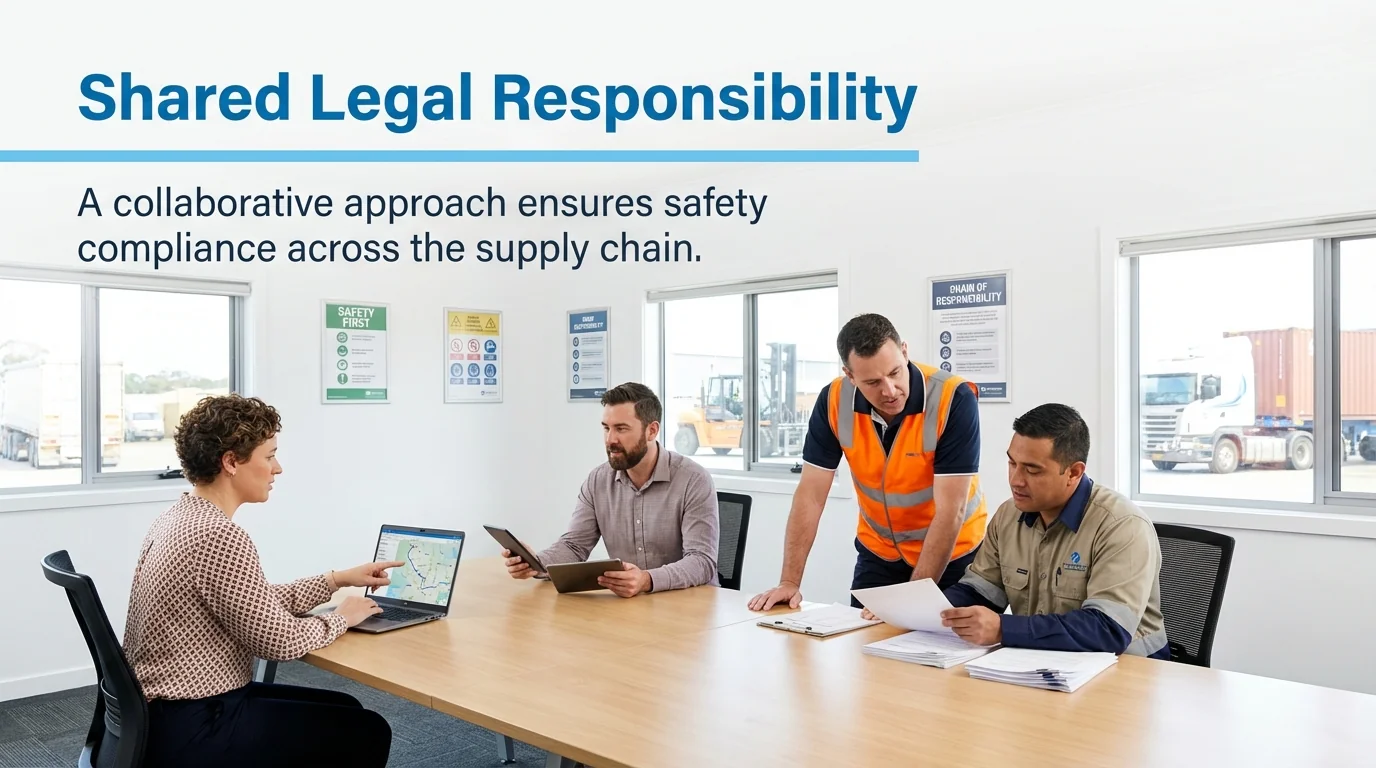
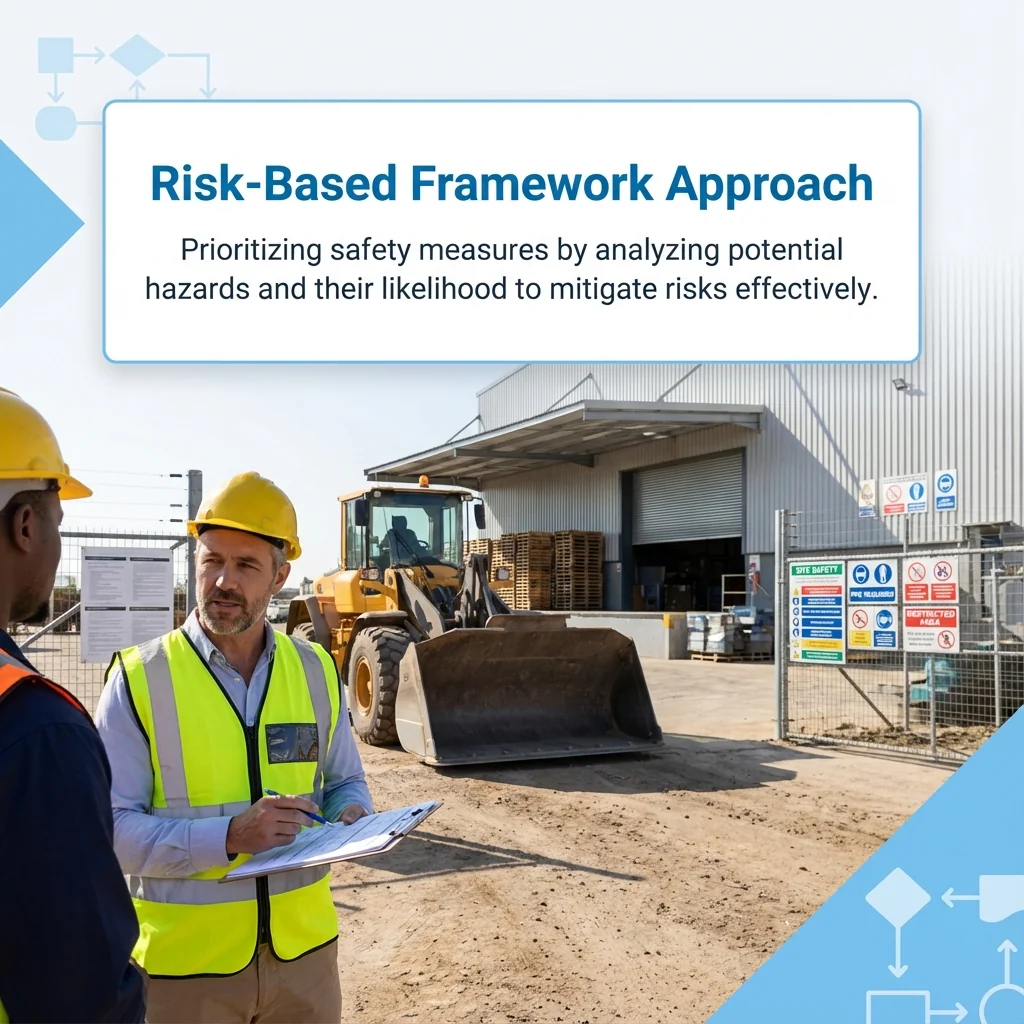
The key insight? Chain of responsibility is a risk-based framework. Your job is to identify risks and put reasonably practicable controls in place. When you understand this, compliance transforms from a burden into a strategic advantage.
This guide walks you through the critical compliance areas. We’ll cover who holds responsibility, the risk zones that matter most, and practical steps to build sustainable compliance systems. You’ll learn how to manage driver fatigue, vehicle maintenance, loading, and scheduling obligations. Technology solutions will support your efforts, but the foundation is systematic risk management.
Get this right and you’ll reduce incidents, lower insurance costs, and strengthen relationships across your supply chain. The businesses that thrive under chain of responsibility are the ones that see it as operational excellence, not just legal obligation.
Understanding Chain of Responsibility: What It Means for Your Business
Chain of responsibility (CoR) changes everything about how we approach transport safety. Rather than placing all liability on the driver, the framework requires duty holders to assess risks and implement reasonably practicable controls. This means if you influence a transport task, you carry legal responsibility for safety outcomes.
The legislation recognizes a simple truth. Drivers often don’t control the factors that create risk. Tight delivery schedules, poorly maintained vehicles, and overloaded cargo all stem from decisions made elsewhere in the supply chain.
Your business sits within a chain. Consignors who dispatch goods, loaders who secure cargo, schedulers who set timeframes, operators who manage fleets, and drivers who execute the task all contribute to safety outcomes. Each party must take reasonably practicable steps to eliminate or minimize risks.
This isn’t about perfection. It’s about demonstrable effort. You need to show you’ve identified risks, assessed their severity, and put controls in place that are proportionate and practical. Documentation matters, but genuine risk reduction matters more.
The Risk-Based Approach
Think of CoR as a continuous improvement cycle. You identify hazards in your operations, assess their potential harm, implement controls, and monitor effectiveness. When controls fail or new risks emerge, you adjust your approach.
Common hazards include driver fatigue from unrealistic schedules, vehicle defects from poor maintenance, load issues from inadequate restraint, and speed pressure from tight timeframes. Your responsibility is to address these systematically, not reactively.
The “reasonably practicable” test balances risk severity against the effort required to control it. High consequence risks demand stronger controls. Low probability risks with severe outcomes still require attention. Document your reasoning and show you’ve considered available options.
Legal Consequences of Non-Compliance
Businesses that fail to manage CoR risks adequately face civil penalties, loss of operating authority, and vehicle impoundment. Penalties escalate for repeat offenders. Directors can face personal liability for systemic failures.
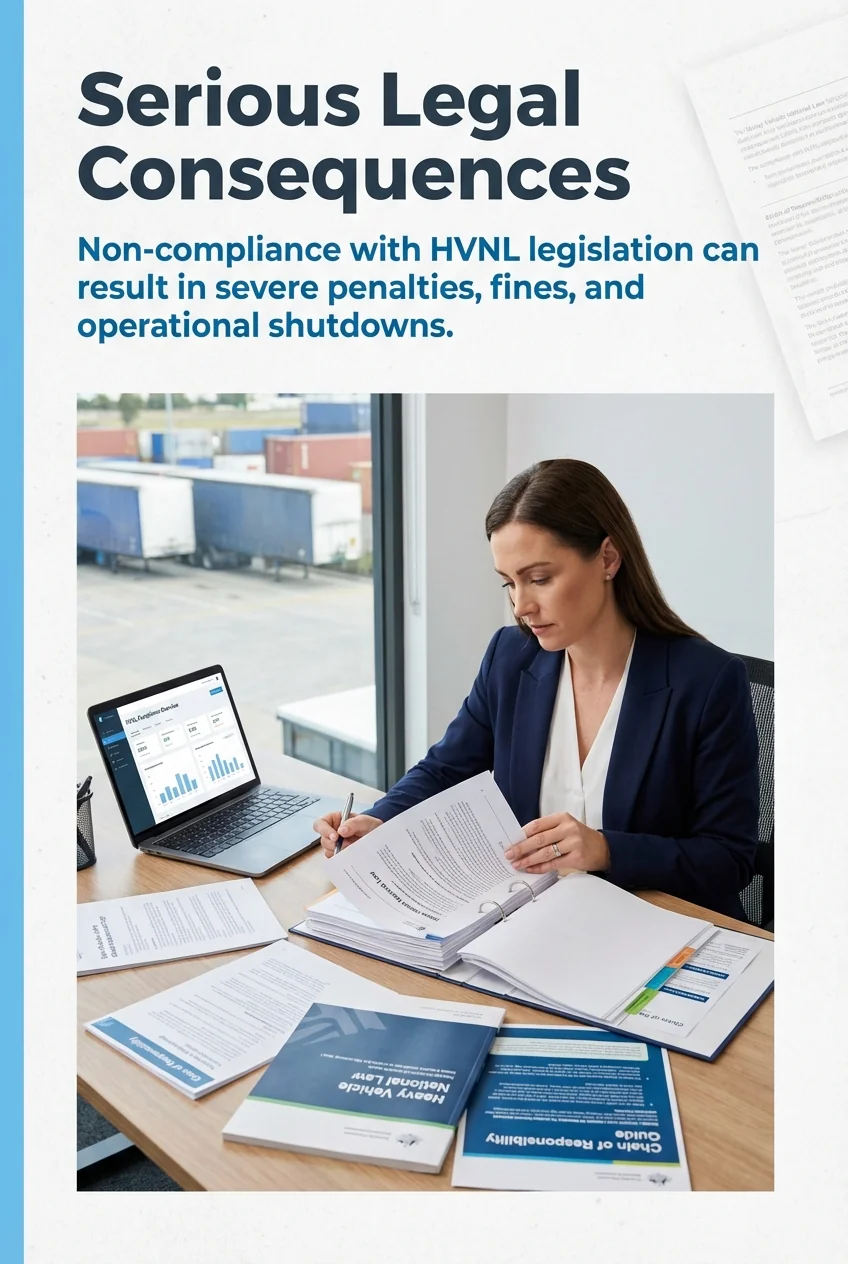
More importantly, poor compliance creates operational chaos. Incidents damage relationships with customers and carriers. Insurance premiums increase. Staff morale suffers when safety culture is weak.
Smart businesses recognize that effective CoR compliance delivers competitive advantages. You become the preferred customer for quality carriers. Your operations run smoother. Risk management becomes second nature across your organization.
Who Is Responsible? Key Parties in the CoR Framework
Understanding who carries responsibility under chain of responsibility is fundamental. The framework casts a wide net deliberately. Anyone whose actions or inactions influence transport safety holds duties under the HVNL.
Let’s break down the key parties and their typical responsibilities.
| Party | Typical Role | Key Responsibilities |
|---|---|---|
| Consignor | Sends goods | Accurate documentation, realistic timeframes, communicate special handling requirements |
| Loader | Loads cargo | Proper load restraint, mass compliance, distribution of weight |
| Scheduler | Sets delivery times | Realistic schedules that allow for fatigue management and compliance |
| Operator | Manages vehicles | Vehicle maintenance, driver training, safety systems |
| Driver | Operates vehicle | Pre-start checks, work diary compliance, reporting defects |
| Executive | Governs business | Due diligence, adequate resources, safety culture |
Consignor Responsibilities
If you dispatch goods, you’re a consignor. Your obligations start with accurate paperwork. Mass declarations must reflect actual weight, not estimates. Dimensions matter when cargo affects vehicle stability or clearances.
Delivery timeframes are critical. When you demand impossible schedules, you pressure drivers to speed or skip rest breaks. Build realistic timeframes that account for distance, road conditions, and mandatory rest periods.
Special handling requirements need clear communication. Hazardous goods, temperature-sensitive cargo, or fragile items require specific documentation and handling instructions. Don’t assume carriers will guess your requirements.
Loader and Packer Obligations
Load restraint is non-negotiable. Cargo must be secured to prevent movement during normal driving conditions and emergency braking. Follow the Load Restraint Guide and use appropriate restraint equipment for your cargo type.
Mass limits apply to axle groups, not just gross vehicle mass. Distribute weight to stay within legal limits for each axle configuration. Overloading creates vehicle control issues and accelerates component wear.
Container packing requires attention to weight distribution. Heavy items belong low and centered. Uneven loading creates rollover risk and handling difficulties.
Scheduler and Customer Influence
Anyone who sets delivery timeframes influences driver behavior. Schedulers must account for distance, speed limits, traffic conditions, and mandatory rest breaks. Use planning tools that build realistic timeframes automatically.
Customer pressure for faster delivery doesn’t override safety obligations. When customers demand unrealistic timeframes, push back with documented reasoning. Explain the safety and compliance implications clearly.
Monitor on-time performance without creating speed pressure. Reward safe, compliant performance rather than fastest delivery times. Your metrics drive driver behavior.
Operator and Fleet Manager Duties
Vehicle maintenance sits squarely with operators. Implement systematic maintenance programs based on manufacturer recommendations and operating conditions. Record all maintenance activities and defect repairs.
Driver training must cover more than vehicle operation. Include fatigue management, load security, pre-start inspection procedures, and CoR obligations. Training needs regular refreshers, not just induction sessions.
Safety management systems provide the structure for ongoing compliance. Document your policies, procedures, and responsibilities. Make these accessible to everyone who needs them.
Executive and Officer Responsibilities
Executive officers carry duties to exercise due diligence. This means ensuring your organization has appropriate resources, systems, and processes to manage CoR risks. Ignorance isn’t a defense.
Due diligence requires active engagement. Attend safety meetings, review incident reports, question compliance metrics, and ensure adequate budget for safety systems. Your attention signals priorities to the organization.
Board-level oversight of CoR compliance demonstrates governance maturity. Include safety performance in board reporting alongside financial metrics.
The Critical CoR Compliance Areas You Must Address
Chain of responsibility encompasses six critical risk areas. Each demands specific attention and controls. Master these areas and you’ve built a solid compliance foundation.
The areas are interconnected. Poor scheduling creates fatigue risk. Inadequate maintenance leads to roadworthiness failures. Rushed loading produces restraint issues. Address all areas systematically rather than treating them in isolation.
Six Core Risk Areas
Driver fatigue emerges from work hour violations, inadequate rest breaks, and demanding schedules. Fatigue impairs judgment, slows reaction times, and increases incident risk significantly.
Vehicle maintenance failures cause mechanical defects that create safety hazards. Brake problems, tire issues, suspension defects, and steering problems all stem from poor maintenance practices.
Load management covers mass limits, dimension compliance, and load restraint. Overloading and poor restraint are persistent issues across the industry.
Speed and journey management involve realistic timeframes, route planning, and avoiding pressure for unsafe speeds. Time pressure drives most other compliance failures.
Vehicle standards relate to roadworthiness requirements and modification approvals. Vehicles must meet applicable standards for their configuration and intended use.
Substance use policies address fitness for duty. Alcohol, drugs, and certain medications impair driving ability and create serious safety risks.
Building Your Compliance Framework
Start with risk assessment. Map your transport activities and identify where CoR risks exist. Consider your role in the chain and the influence you exert over transport operations.
Develop policies and procedures that address each risk area. Keep these practical and accessible. Complex policies sit unread in filing cabinets. Effective policies guide daily decisions.
Implement controls that are proportionate to risks. High-risk activities need stronger controls. Document your risk assessments and the reasoning behind your control selection.
Train everyone who influences transport safety. This includes office staff who schedule deliveries, warehouse teams who load vehicles, and managers who approve customer commitments. Training needs to be role-specific and practical.
Contract terms should address data sharing, information obligations, and reporting requirements between parties in the chain. Clear contracts prevent gaps in responsibility.
Driver Fatigue Management: Your Legal Obligations
Fatigue kills. It’s not dramatic, it’s factual. Driver fatigue impairs performance as severely as alcohol intoxication. Managing fatigue is a shared responsibility across everyone who influences driver work patterns.
The HVNL sets work and rest hour requirements. Standard hours allow up to 12 hours work in 24 hours, with minimum rest breaks. Basic fatigue management requires 7 hours continuous rest in 24 hours. Advanced fatigue management offers more flexibility but demands stronger controls.
Scheduling Practices That Prevent Fatigue
Build schedules that comply with work and rest hour limits. Factor in loading times, unloading delays, traffic conditions, and rest break requirements. Don’t schedule based on ideal conditions that rarely occur.
Allow buffer time for unexpected delays. Traffic incidents, weather events, and customer delays happen regularly. Schedules without buffers force drivers to speed or skip breaks to make up time.
Monitor actual journey times compared to scheduled times. Consistent delays signal unrealistic scheduling. Adjust schedules based on real-world performance data rather than assumptions.
Communicate clearly with drivers about priorities. When safety and delivery times conflict, safety must win. Make this explicit in your policies and back it up in daily decisions.
Work Diary and Record-Keeping Requirements
Drivers must maintain work diaries unless exempted. Work diaries record work time, rest breaks, and activities. Electronic work diaries offer advantages over written diaries for accuracy and compliance monitoring.
Digital solutions like electronic logging reduce missing records and enable rapid retrieval during inspections. They also simplify compliance monitoring and identify patterns that indicate scheduling problems.
Retain work diary records for the required period. Records demonstrate compliance history and support defense against allegations of systemic non-compliance.
Audit work diaries regularly. Look for patterns like consistent maximum work hours, minimal rest periods, or frequent amendments. These signal compliance issues that need investigation.
Fatigue Management Systems
Basic fatigue management suits operations with regular schedules and predictable conditions. Standard hours and minimum rest requirements provide clear boundaries.
Advanced fatigue management allows more flexibility but requires comprehensive safety management systems. You need fatigue education, fitness for duty assessments, scheduling controls, and incident monitoring.
Whichever approach you use, monitor effectiveness. Track fatigue-related incidents, near misses, and driver feedback. Adjust your systems when evidence shows they’re not working.
Vehicle Maintenance and Roadworthiness Requirements
Vehicle maintenance sits at the heart of transport safety. Mechanical failures cause incidents directly through component failure and indirectly through driver distraction and stress.
Maintenance isn’t optional. Operators must keep vehicles roadworthy through systematic maintenance programs. This means scheduled services, component replacements, and defect repairs.
Systematic Maintenance Programs
Base maintenance intervals on manufacturer recommendations, operating conditions, and vehicle age. Severe operating conditions demand shorter service intervals. Don’t stretch service schedules to save money.
Record all maintenance activities. Document services, repairs, component replacements, and inspection findings. Maintenance records prove you’ve met your duties and help diagnose recurring problems.
Fleet technology guidance recommends standardised digital storage of inspection records to ensure audit readiness. Digital systems beat paper logbooks for searchability, backup, and compliance demonstration.
Track maintenance costs by vehicle. High maintenance costs signal vehicles reaching end of economic life. Replace vehicles before reliability becomes problematic.
Pre-Start Inspection Procedures
Drivers must complete pre-start inspections before each journey. These checks identify defects that emerged since the last inspection. Critical items include brakes, tires, lights, steering, and load security.
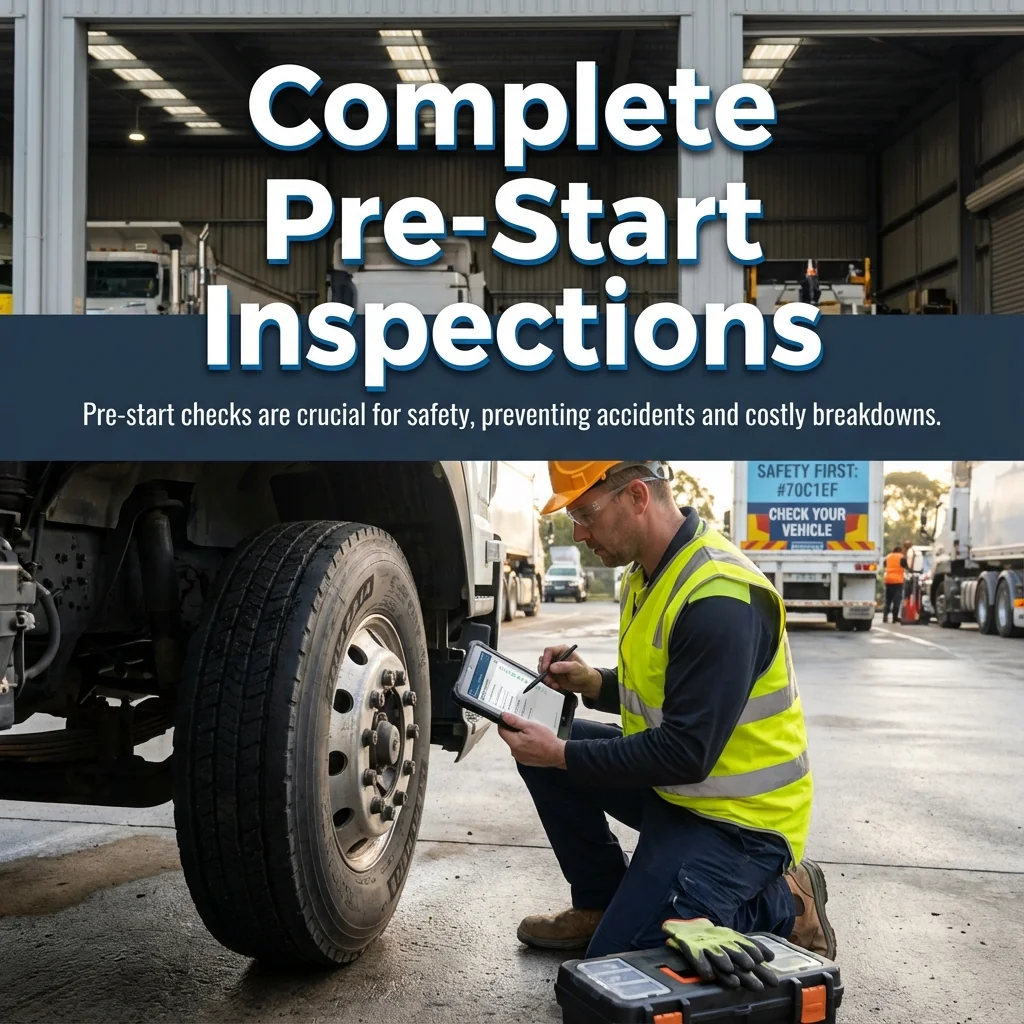
Provide clear checklists that guide inspections. Generic checklists miss vehicle-specific items. Tailor checklists to each vehicle configuration and typical operating conditions.
Drivers need training in what constitutes a defect. “Worn tires” is subjective without specific criteria. Train drivers to recognize defects using clear standards and examples.
Establish clear defect reporting procedures. Drivers must know how to report defects, who receives reports, and what happens next. Defect reports that disappear into black holes destroy safety culture.
Defect Management and Repairs
Minor defects need repair scheduling. Major defects require immediate removal from service. Define clear criteria for what constitutes a major defect for your operations.
Track defect reports from identification to repair completion. Monitor how long defects remain outstanding. Long repair times indicate resource problems or maintenance capacity issues.
Analyze defect patterns. Recurring defects on specific vehicles or components signal deeper problems. Component failures might indicate maintenance interval problems or operating condition issues.
Effective defect management prevents minor issues escalating into major failures. Fix small problems before they become big problems.
Load Management: Mass, Dimension, and Restraint Compliance
Load management combines three elements: mass compliance, dimension requirements, and load restraint. All three matter for safety and legal compliance.
Overloading remains one of the most common CoR breaches. The consequences include vehicle damage, control problems, and increased stopping distances. Dimension violations create clearance issues and stability problems.
Mass Compliance Requirements
Know your mass limits. These include gross vehicle mass, axle group limits, and bridge formula requirements. Different limits apply depending on vehicle configuration and operating conditions.
Accurate weighing is essential. Estimating cargo weight creates compliance risk. Install weighing systems at loading points or use certified weighbridges for verification.
Consignors must provide accurate mass declarations. Base these on actual weighing, not estimates or nominal weights. Errors in mass declarations create liability for consignors.
Operators must verify mass compliance. Don’t rely solely on consignor declarations when you have reason to doubt accuracy. Ultimate responsibility for mass compliance sits with multiple parties, but operators carry significant duties.
Load Restraint Standards
Load restraint must prevent cargo movement during normal driving conditions and emergency maneuvers. This includes acceleration, braking, cornering, and rough road conditions.
Follow the Load Restraint Guide for your cargo type. Different cargo requires different restraint methods. What works for palletized goods differs from bulk materials or machinery.
Restraint equipment must be rated for the loads applied. Chains, straps, and tensioners all have working load limits. Use equipment appropriately rated for your cargo mass and restraint geometry.
Inspect restraint equipment regularly. Worn straps, damaged chains, and faulty tensioners compromise restraint effectiveness. Replace equipment before failure occurs.
Dimension and Clearance Management
Dimension limits cover vehicle width, height, and length. Standard dimensions allow most vehicles to operate without special permits. Oversize loads require permits and often escorts.
Know your vehicle and load dimensions. Height variations from tire pressure, suspension settings, and load configuration can create clearance problems. Measure actual dimensions rather than assuming compliance.
Plan routes considering clearances. Low bridges, narrow roads, and overhead wires create hazards for oversized loads. Route planning tools help identify clearance restrictions.
Heavy vehicle structural assessment permits ensure infrastructure can handle vehicle loads safely. Follow permit conditions precisely.
Scheduling Practices That Keep You Compliant
Scheduling drives everything in transport operations. Unrealistic schedules create pressure that cascades through the entire supply chain. Drivers speed, skip breaks, and take risks to meet impossible timeframes.
Smart scheduling balances customer expectations with safety and compliance requirements. This isn’t easy, but it’s essential.
Building Realistic Schedules
Start with actual distance and realistic average speeds. Don’t schedule based on speed limits or ideal conditions. Use historical journey data to establish realistic travel times.
Add time for loading and unloading. Customer sites vary enormously in efficiency. Some turn trucks in 15 minutes, others take three hours. Build site-specific timing based on experience.
Factor in mandatory rest breaks. Drivers can’t skip breaks to make up time lost to delays. Include break times in schedules from the start.
Build buffer time for unexpected delays. Traffic incidents, weather problems, and customer delays happen regularly. Schedules without buffers guarantee non-compliance when delays occur.
Managing Customer Expectations
Customers want fast delivery. Your job is to deliver safely and compliantly within realistic timeframes. Education helps customers understand CoR obligations and the risks they share.
When customers demand unrealistic timeframes, document your concerns. Explain the compliance implications clearly. Offer realistic alternatives with supporting data.
Track on-time performance with context. A schedule that achieves 60% on-time might be realistic. One that achieves 99% might indicate excessive buffer or unsustainable driver pressure.
Reward safe, compliant performance rather than fastest delivery. Your incentive structure signals priorities. When speed trumps safety in rewards, drivers get the message.
Technology Solutions for Scheduling
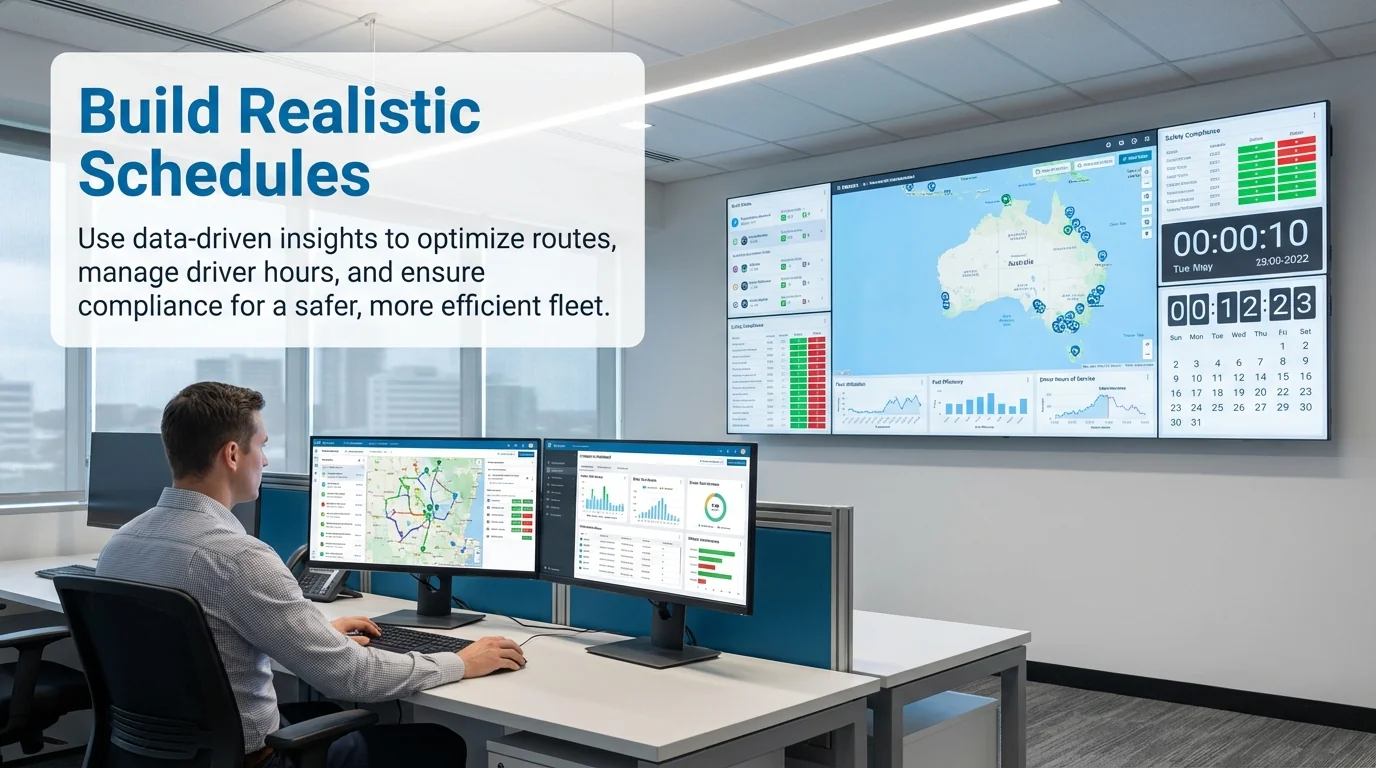
Modern scheduling tools incorporate distance, speed limits, rest break requirements, and historical performance data. These tools build compliant schedules automatically while optimizing efficiency.
GPS tracking provides real-time visibility of vehicle locations and journey progress. This data helps identify scheduling problems and adjust future schedules based on actual performance.
Integration between scheduling systems and electronic work diaries ensures schedules align with driver hours of service. Automated alerts warn when schedules risk fatigue violations.
Complete compliance systems connect scheduling, maintenance, training, and incident management into unified platforms.
Managing Subcontractors Under CoR
Subcontractors extend your supply chain and your compliance obligations. When you engage carriers, you don’t transfer your CoR responsibilities. You share them.
Supply-chain-related disclosure and due-diligence requirements continue to intensify, making supply-chain governance central to corporate sustainability strategies. This applies directly to transport subcontracting.
Contractor Selection and Vetting
Due diligence starts before engagement. Assess potential contractors’ safety management systems, compliance history, and operational capabilities. Request evidence of maintenance programs, driver training, and safety policies.
Check national heavy vehicle accreditation status. Accredited operators demonstrate systematic compliance with HVNL requirements. Accreditation provides assurance but doesn’t eliminate your due diligence duties.
Review insurance coverage. Adequate public liability and goods in transit insurance protects all parties. Under-insured contractors create risk exposure for everyone in the chain.
Verify driver licensing and qualifications. Contractors must employ appropriately licensed drivers with required endorsements for vehicle types and cargo.
Contractual Requirements
Contracts must clearly define responsibilities for each CoR risk area. Who handles maintenance? Who controls scheduling? Who ensures load security? Ambiguity creates gaps.
Include specific compliance requirements in contracts. Reference HVNL obligations, mass limits, work hour requirements, and maintenance standards. Make expectations explicit.
Establish reporting requirements for incidents, defects, and compliance breaches. Contractors must notify you of safety-relevant events promptly. Define what triggers reporting obligations.
Build audit rights into contracts. You need ability to verify contractor compliance through inspections, document reviews, and interviews. Regular audits demonstrate your due diligence.
Ongoing Monitoring and Performance Management
Monitor contractor performance continuously. Track incident rates, compliance breaches, customer complaints, and on-time performance. Poor performance in any area signals potential problems.
Conduct regular compliance audits. Review maintenance records, driver files, work diaries, and safety documentation. Regulators increasingly use standardised inspection approaches and digital data to assess compliance. Apply similar rigor to contractor oversight.
Address non-compliance promptly. When audits or incidents reveal problems, require corrective action with timeframes. Document the issues, required actions, and contractor responses.
Maintain contractor performance records. Historical performance data informs re-engagement decisions and helps identify systematic problems requiring intervention.
Technology Tools for Contractor Management
Behavioral compliance guidance emphasizes regular refresher training, educating staff to spot red flags, and reinforcing ethical speak-up culture. Extend this approach to contractor management.
Digital contractor management systems centralize documentation, track compliance requirements, schedule audits, and monitor performance metrics. These platforms make contractor oversight systematic rather than ad hoc.
Integration with telematics and electronic work diary systems provides real-time visibility of contractor operations. You can monitor work hours, vehicle locations, and journey progress.
Automated compliance alerts notify you when contractor documentation expires, audit schedules approach, or performance metrics deteriorate. Proactive monitoring beats reactive problem management.
Building Sustainable CoR Compliance Systems
Compliance isn’t a project with an end date. It’s an ongoing operational requirement that needs systematic management. The businesses that succeed with CoR build it into daily operations rather than treating it as a separate compliance exercise.
Think of compliance as operational excellence. The systems that ensure compliance also improve efficiency, reduce costs, and strengthen competitive position. This perspective transforms compliance from burden to advantage.
Safety Management Systems
A safety management system provides structure for managing CoR obligations. It documents your policies, defines responsibilities, establishes procedures, and creates improvement processes.
Start with policy statements that commit your organization to safety and compliance. These should be clear, concise, and reflect genuine commitment rather than legal boilerplate.
Define organizational structure and responsibilities. Everyone who influences transport safety needs defined duties. Document these clearly and ensure understanding across the organization.
Develop procedures for each CoR risk area. Cover scheduling practices, maintenance programs, load management, fatigue monitoring, and contractor oversight. Make procedures practical and accessible.
Implement monitoring and reporting systems. Track compliance metrics, incident rates, audit findings, and improvement actions. Regular reporting to senior management demonstrates governance.
Training and Competency Development
Everyone who influences transport safety needs appropriate training. This includes drivers, operations staff, schedulers, executives, and contractors.
Training must be role-specific. Drivers need different content than schedulers or executives. Tailor training to address specific duties and decision-making authority for each role.
Include practical scenarios in training. Theoretical knowledge matters less than ability to apply CoR principles in daily decisions. Use case studies and examples relevant to your operations.
Provide regular refresher training. Initial training establishes foundation knowledge, but regular reinforcement maintains competency and updates understanding as requirements evolve.
Complete compliance checklists support training by providing quick reference guides for daily decisions.
Audit and Review Processes
Regular audits identify compliance gaps before they become serious problems. Internal audits provide early warning. External audits verify effectiveness and bring fresh perspective.
Audit all CoR risk areas systematically. Review scheduling practices, maintenance records, load documentation, fatigue management, and contractor oversight. Use standardized checklists to ensure consistency.
Document audit findings clearly. Identify specific non-conformances, assess risk severity, and recommend corrective actions. Track corrective actions through to completion.
Analyze trends in audit findings. Recurring issues signal systematic problems requiring deeper intervention than simple corrective actions. Look for root causes.
Technology Integration
Digital tools make compliance management more efficient and effective. Electronic systems replace manual processes that are error-prone and time-consuming.
Electronic work diaries automate fatigue management record-keeping. These systems calculate work hours, enforce rest requirements, and alert to violations automatically.
Fleet management systems track vehicle locations, monitor driving behavior, and schedule maintenance. Integration with other systems creates unified compliance oversight.
Digital document management centralizes policies, procedures, training records, and audit findings. Everyone accesses current versions easily, and changes are tracked systematically.
Specialized platforms like CoRGuard provide complete CoR management functionality across all risk areas in unified systems.
Continuous Improvement Culture
The most effective compliance programs embrace continuous improvement. Monitor performance, identify opportunities, implement changes, and measure results.
Encourage reporting of near misses and safety concerns. These provide early warnings of emerging problems. Respond constructively to reports rather than punitively.
Review incidents thoroughly. Understand root causes rather than stopping at immediate factors. Implement preventive actions that address systemic issues.
Benchmark performance against industry standards and best practices. Learn from others’ experiences and innovations. Adapt successful approaches to your context.
Recognize and reward compliance excellence. When individuals and teams demonstrate commitment to safety and compliance, acknowledge their contributions. Positive reinforcement strengthens culture.
Chain of responsibility compliance works when it becomes part of how you operate, not something you do separately. Build systems that make compliance natural, invest in capability development, use technology effectively, and commit to continuous improvement. The businesses that thrive under CoR are the ones that see it as operational maturity, not regulatory burden.
Your path forward involves assessing your current compliance status honestly, identifying gaps that matter most, and systematically addressing them. Start with the highest risk areas, build sustainable systems rather than quick fixes, and engage everyone who influences transport safety in your operations. Practical CoR tips can help you take immediate action while building long-term capability.