
The Chain of Responsibility pattern breaks when the chain stops serving its purpose. Most implementations focus on passing requests between handlers, but fail to address what happens when those handlers can’t complete their work.
The Chain of Responsibility pattern is a behavioral design pattern where a request is passed along a chain of handlers, each deciding to process or pass the request. This elegant solution often creates more problems than it solves when applied without understanding its natural weaknesses.
The pattern’s strength lies in how CoR lets you decouple the sender of a request from its receiver by giving more than one object a chance to handle the request. But this same decoupling becomes a liability when chains grow too long, handlers fail silently, or requests disappear into the system without trace.
This guide examines the practical challenges that emerge in real-world Chain of Responsibility implementations. You’ll see why requests go unhandled, how debugging becomes impossible, and when the pattern adds unnecessary complexity to otherwise straightforward systems.
Each issue connects to a specific failure mode in the pattern’s design. Understanding these weaknesses helps you decide whether the Chain of Responsibility suits your requirements, or whether a simpler approach would serve better.
What Makes the Chain of Responsibility Pattern Vulnerable
The Chain of Responsibility operates through a sequence of handlers linked together. Each handler in CoR typically exposes a common interface, deciding whether to process a request or forward it to the next handler.
This structure works well when every handler knows its responsibility clearly. Problems emerge when the chain’s assumptions break down.
The Pattern’s Core Mechanics
Each concrete handler receives a request and makes two decisions. First, can I handle this request based on my specific criteria? Second, should I pass this request to the next handler in the chain?
The sender doesn’t know which handler will process the request. It just sends the request to the first handler in the chain. That handler evaluates the request and either processes it or passes it along.
This loose coupling between sender and receiver creates flexibility. The client doesn’t need to know about every handler in the chain. The chain can change at runtime without affecting the client code.
Where the Structure Creates Risk
The pattern assumes handlers will either process requests or pass them forward. But what happens when no handler accepts a request? The request reaches the end of the chain and disappears.
Sequential processing means each handler adds latency. AWS guidance on multi-agent and orchestration architectures warns that linear chains can become performance bottlenecks. Ten handlers in a chain means ten evaluation cycles for every request.
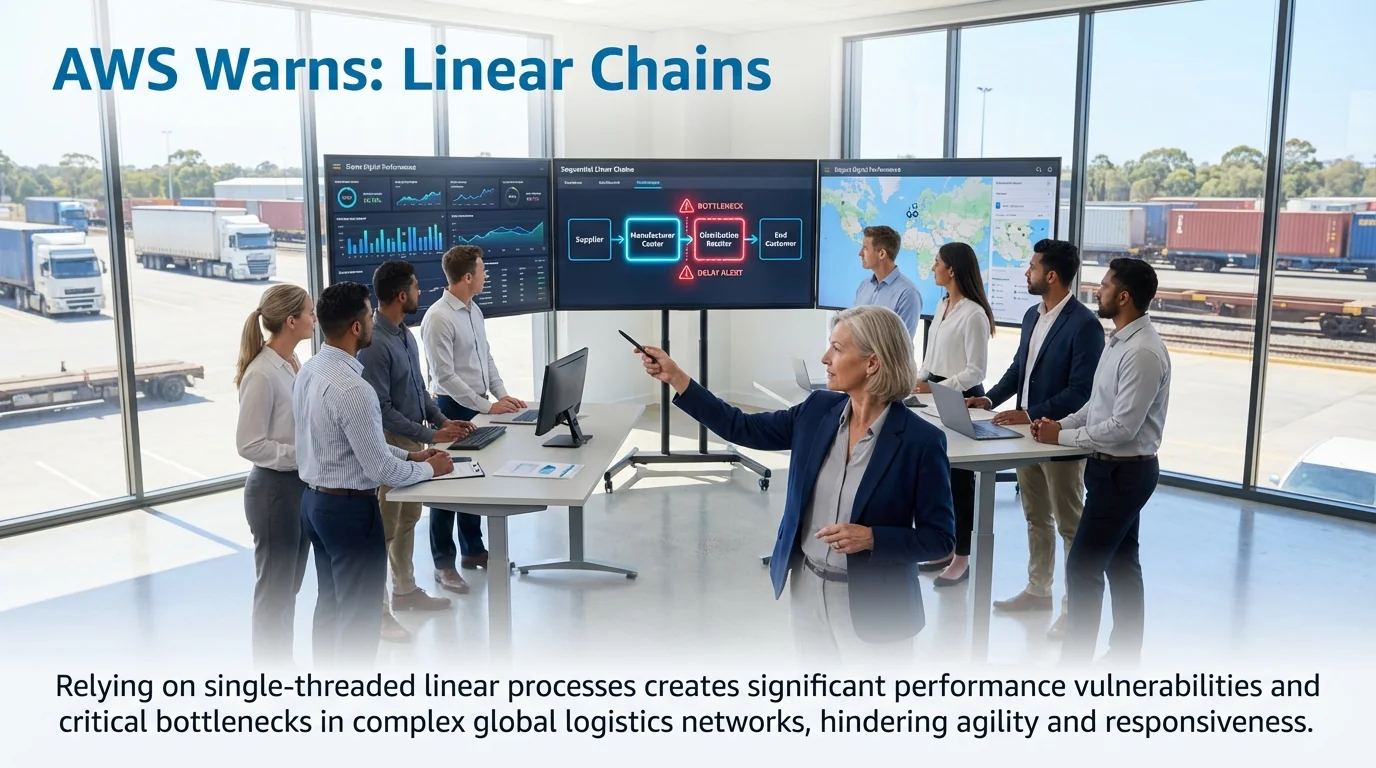
Handler order matters critically. Place a generic handler before a specific one, and the specific handler never sees requests. Reorder the chain at runtime, and behavior changes unpredictably.
Requests That Vanish Into the Chain
The most common Chain of Responsibility issue occurs when requests go unhandled. A request enters the chain, passes through every handler, and exits without processing.
No handler claims the request. No error gets raised. The client sends a request and receives nothing back.
Why Handlers Reject Valid Requests
Handlers use conditional logic to determine whether they can process a request. That logic depends on the request’s properties, the handler’s current state, and the system’s broader context.
A handler might reject a request because the request type doesn’t match its criteria. Another handler might reject the same request because its dependencies aren’t available. A third handler might reject it because system load exceeds thresholds.
Each handler makes its decision independently. No handler knows what other handlers in the chain can process. The chain operates without coordination between handlers.
Building Fallback Mechanisms
Add a default handler at the end of the chain. This handler accepts any request that previous handlers rejected. It provides baseline processing for unhandled cases.

The default handler might log the unhandled request for analysis. It might return a standard error response. Or it might implement minimal processing to prevent silent failures.
Track which requests reach the default handler. High volumes of unhandled requests indicate problems in your chain design. Either handlers use overly strict criteria, or the chain lacks necessary handler types.
| Failure Point | Impact | Detection Method |
|---|---|---|
| Missing handler type | Specific request patterns never get processed | Monitor default handler for repeated patterns |
| Handler criteria too strict | Valid requests get rejected inappropriately | Review handler logic against actual requests |
| State dependencies unmet | Handlers reject requests due to external conditions | Add state logging to handler evaluation |
| Request format mismatch | Handlers can’t parse or evaluate requests properly | Validate request structure before chain entry |
Consider making the default handler raise exceptions for truly unhandled requests. This forces explicit handling of edge cases during development. It prevents silent failures from reaching production.
The Debugging Nightmare of Sequential Processing
Chain of Responsibility makes debugging difficult because request flow spans multiple handlers. You can’t see the full processing path without instrumenting every handler.
A request enters the chain at one point and might emerge from any handler. Tracing that path requires understanding each handler’s conditional logic and execution sequence.
Lost Context Across Handler Boundaries
Each handler receives a request, makes decisions, and either processes or forwards. But the reasons for those decisions stay hidden inside the handler’s implementation.
When a request fails somewhere in the chain, you need to know which handler last saw it. You need to understand why that handler rejected it. You need to see what state existed when the decision occurred.
Standard debugging tools show execution within a single handler. They don’t show the request’s journey across the entire chain. Stack traces reveal the call path but not the business logic that drove handler decisions.
Implementing Chain Visibility
Add logging to each handler’s evaluation method. Log when a handler receives a request, whether it accepts or rejects it, and why it made that choice.
Include a unique request identifier that persists throughout the chain. Every log entry for that request uses the same identifier. This lets you reconstruct the full processing path from log analysis.
Create a chain execution context object that travels with each request. This context accumulates metadata as the request moves through handlers. Handler names, evaluation times, rejection reasons all get recorded.
class ChainContext {
  requestId: string;
  visitedHandlers: string[];
  evaluationResults: Map<string, boolean>;
  rejectionReasons: Map<string, string>;

  recordEvaluation(handlerName: string, accepted: boolean, reason?: string) {
    this.visitedHandlers.push(handlerName);
    this.evaluationResults.set(handlerName, accepted);
    if (reason) this.rejectionReasons.set(handlerName, reason);
  }
}
Expose chain context to monitoring systems. Alert when requests traverse unusually long paths through the chain. Flag requests that every handler rejects. Track average processing time per handler to identify bottlenecks.
Performance Costs of Long Handler Chains
Each handler in the chain adds processing overhead. The request must be evaluated, even if the handler immediately rejects it. Multiple handlers mean multiple evaluation cycles.
A chain with ten handlers performs ten evaluations for every request. If each evaluation takes 5 milliseconds, every request accumulates 50 milliseconds of latency before any actual processing occurs.
How Sequential Processing Accumulates Latency
Handlers can’t evaluate requests in parallel. The Chain of Responsibility requires sequential processing because each handler’s decision affects whether subsequent handlers see the request.
The first handler evaluates the request. If it accepts, processing begins and the chain terminates. If it rejects, the second handler evaluates. This continues until a handler accepts or the chain ends.
This sequential nature prevents optimization through parallel processing. You can’t send the request to all handlers simultaneously and use the first successful response. The pattern’s structure requires ordered evaluation.
Optimizing Chain Performance
Place the most likely handlers early in the chain. If 80% of requests get handled by three specific handlers, put those handlers first. This reduces average traversal depth.

Consider implementing a comprehensive Chain of Responsibility framework that includes handler prioritization based on runtime statistics. Track which handlers successfully process requests most frequently. Reorder the chain dynamically to optimize for actual usage patterns.
Keep handler evaluation logic lightweight. Each handler should determine acceptance criteria quickly. Move complex processing logic into the handling phase after acceptance.
| Optimization Strategy | Benefit | Implementation Complexity |
|---|---|---|
| Handler reordering based on success rates | Reduces average chain traversal depth | Medium – requires runtime statistics tracking |
| Early rejection criteria | Fast handler evaluation without deep analysis | Low – improve individual handler logic |
| Chain segmentation by request type | Smaller specialized chains for different contexts | High – requires request classification system |
| Handler caching for repeated patterns | Skip evaluation for known request patterns | Medium – add caching layer before chain |
Set maximum chain length limits during design. If your chain exceeds ten handlers, question whether the pattern suits your needs. Long chains suggest the problem might benefit from a different architectural approach.

When Complexity Exceeds Value
The Chain of Responsibility adds structural complexity to your codebase. Multiple handler classes, interface definitions, chain configuration, and request routing logic all require maintenance.
This complexity pays off when you need runtime flexibility in request handling. It becomes a burden when simpler alternatives would work.
Recognizing Unnecessary Chain Applications
Some systems use Chain of Responsibility when a simple conditional statement would suffice. Three handlers in a chain that never changes at runtime doesn’t need the pattern’s flexibility.
A Substack essay on ERP implementations highlights that failures often arise from upstream workflow design choices. Applying patterns without clear benefit creates the same risk.

If your chain configuration stays static throughout the application’s lifetime, you’re paying complexity costs without gaining flexibility benefits. A switch statement or strategy pattern might serve better.
Evaluating Pattern Fit
Ask whether you need runtime chain modification. Can new handler types be added without changing client code? Do handler sequences change based on system state or configuration?
Consider whether handlers truly operate independently. If handlers need to coordinate or share state, the Chain of Responsibility’s loose coupling becomes a limitation rather than a benefit.
Examine whether unhandled requests represent legitimate scenarios. If most requests should be handled by exactly one known handler type, the pattern’s sequential search mechanism adds unnecessary overhead.
- Handler sequence changes at runtime based on context
- New handler types get added without modifying existing code
- Multiple handlers might need to process the same request
- Request routing logic is complex and benefits from separation
- The handling strategy needs to vary independently from the client
When these conditions don’t apply, simpler alternatives likely serve better. Direct handler selection, factory patterns, or simple conditional routing might provide equivalent functionality with less structural overhead.
Managing Dynamic Chains at Runtime
Runtime chain modification offers flexibility but introduces new failure modes. Handlers can be added, removed, or reordered while the system processes requests.
This dynamic behavior requires careful coordination. Thread safety, handler lifecycle management, and chain consistency all become concerns that static chains don’t face.
Concurrency Issues in Mutable Chains
Multiple threads might traverse the same chain simultaneously. If one thread modifies the chain while another traverses it, the traversing thread might see an inconsistent chain state.
A handler might be removed from the chain while a request is in transit. The request reaches the point where that handler existed, but the handler is gone. The next handler pointer is now invalid.
New handlers added to the chain need proper initialization. If a partially initialized handler joins the chain, it might fail when it receives requests. Synchronization between handler initialization and chain integration becomes critical.
Safe Chain Modification Patterns
Implement copy-on-write semantics for chain structure. When modifying the chain, create a new chain configuration. Existing requests continue using the old chain. New requests use the new chain.
This approach prevents in-flight requests from seeing chain modifications. It adds memory overhead for maintaining multiple chain versions simultaneously. But it eliminates complex synchronization logic.
class ChainManager {
  private currentChain: Handler;

  modifyChain(modifier: (chain: Handler) => Handler) {
    const newChain = modifier(this.cloneChain(this.currentChain));
    this.currentChain = newChain;
  }

  processRequest(request: Request) {
    const chainSnapshot = this.currentChain;
    return chainSnapshot.handle(request);
  }
}
Use atomic reference updates when swapping chain configurations. This ensures all threads see either the old chain or the new chain, never a partially updated state.
Consider implementing proper Chain of Responsibility implementation patterns that account for concurrent modification from the start. Retrofitting thread safety into existing chain implementations often introduces subtle bugs.
Interface Rigidity and Evolution Problems
The Chain of Responsibility requires all handlers to implement a common interface. This interface defines how handlers receive requests and signal their handling decisions.
That common interface becomes a constraint when requirements evolve. Adding new capabilities to the interface affects every handler implementation throughout the system.
When Handlers Need Different Capabilities
Some handlers might need additional context beyond the base request. Authentication handlers need access to credential stores. Logging handlers need access to logging infrastructure. Validation handlers need access to rule engines.
The common interface can’t specify all these dependencies without coupling every handler to every possible dependency type. But without interface support, handlers can’t declare their requirements formally.
Handlers might need to return different result types. Some handlers produce transformed requests. Others produce status codes. Still others produce detailed error information. The interface must accommodate these variations.
Flexible Handler Contracts
Use generic interfaces that accept context objects alongside requests. The context object carries additional information that specific handlers might need. Handlers that don’t need context simply ignore it.
Implement marker interfaces for handlers with special capabilities. A ValidationHandler interface extends the base Handler interface with validation-specific methods. Clients can check whether a handler implements the marker interface before using extended capabilities.
Consider using the classic GoF intent of CoR can be achieved in functional languages using simple combinators such as Option.orElse. This functional approach provides more flexibility in handler composition.
Allow handlers to modify requests as they pass through the chain. Instead of just accepting or rejecting, handlers can transform the request and forward the modified version. This enables request enrichment patterns.
Testing Challenges in Handler Chains
Testing Chain of Responsibility implementations requires verifying behavior across multiple handlers and various request scenarios. Unit testing individual handlers proves straightforward. Integration testing the full chain introduces complexity.
You need to verify that handlers accept appropriate requests and reject inappropriate ones. You need to confirm that rejected requests reach subsequent handlers. You need to ensure unhandled requests trigger proper fallback behavior.
Isolating Handler Behavior
Test each handler independently before testing the full chain. Provide mock requests that should be accepted. Verify the handler processes them correctly. Provide mock requests that should be rejected. Confirm the handler forwards them properly.
Use test doubles for the next handler in the chain. This lets you verify that rejected requests get forwarded without building the entire chain. It isolates the handler under test from dependencies on other handlers.
Mock any external dependencies the handler requires. Database connections, external services, or system state should be simulated during unit tests. This ensures tests remain fast and deterministic.
Integration Testing Full Chains
Build complete test chains with known handler sequences. Send requests that should be handled by specific handlers. Verify those handlers process the requests while others don’t.
Test edge cases where no handler accepts a request. Confirm your fallback mechanism activates. Verify it produces the expected result or error.
Test chain modification scenarios if your implementation supports runtime changes. Add a handler to the chain. Send a request that should be handled by the new handler. Confirm proper processing.
| Test Scenario | Verification Points | Common Failures |
|---|---|---|
| Single handler acceptance | Correct handler accepts, others reject | Multiple handlers accept same request |
| Complete chain traversal | Request reaches default handler | Chain terminates early without handling |
| Handler order sensitivity | Reordered chain produces different results | Generic handlers shadow specific ones |
| Concurrent request processing | Multiple threads traverse chain safely | Race conditions in chain modification |
Record chain execution traces during integration tests. Compare actual handler sequences against expected sequences. This catches handler ordering issues and unexpected rejection patterns.
Maintenance Burden of Distributed Logic
Chain of Responsibility distributes request handling logic across multiple handler classes. Each handler contains part of the overall processing rules. No single location defines the complete handling strategy.
This distribution complicates maintenance. Understanding the full system behavior requires examining every handler. Modifying handling rules might require changes across multiple handler classes.
Understanding Cross-Handler Dependencies
Handlers might make implicit assumptions about other handlers in the chain. A handler might reject certain requests assuming a downstream handler will accept them. That downstream handler might have similar assumptions.
These implicit dependencies create fragility. Removing a handler from the chain might break assumptions made by other handlers. Adding a handler might intercept requests that previous handlers expected to see.
Request transformation by early handlers affects later handler behavior. If a handler modifies the request before forwarding, downstream handlers see the modified version. Understanding this flow requires tracing through the entire chain.
Documenting Chain Behavior
Maintain documentation that describes the complete chain configuration and each handler’s role. This documentation should explain why handlers appear in a specific order and what requests each handler processes.
Use sequence diagrams to visualize request flow through common scenarios. Show which handler processes requests in typical cases. Illustrate fallback paths when primary handlers reject requests.
Consider implementing Chain of Responsibility best practices that emphasize clear handler responsibilities and minimal cross-handler dependencies.
Create integration tests that serve as executable documentation. Each test demonstrates a specific request scenario and the expected chain behavior. Tests verify correctness while documenting intended functionality.
When Alternative Patterns Serve Better
The Chain of Responsibility isn’t always the right choice for sequential processing needs. Other patterns might provide similar benefits with fewer drawbacks for specific scenarios.
Strategy pattern allows runtime selection of handling behavior without sequential evaluation. Template method provides structured processing steps with variation points. Decorator adds capabilities incrementally without complex chains.
Strategy Pattern for Direct Handler Selection
When you know which handler should process a request based on request properties, Strategy pattern provides direct routing. The client selects the appropriate strategy based on request characteristics.
This eliminates sequential evaluation overhead. The correct handler gets invoked immediately without traversing a chain. It requires the client to understand handler selection logic, but this might be acceptable.
Strategy works well when handler selection follows simple rules. Request type directly maps to handler type. No complex conditional logic determines which handler should process which request.
Pipeline Pattern for Sequential Transformation
Pipeline pattern works better when every stage must process the request. Instead of handlers that might accept or reject, pipeline stages always transform their input.
Each stage receives input, performs processing, and produces output for the next stage. The request flows through all stages sequentially. No stage can reject the request or halt processing.
This provides predictable processing flow. You know exactly which stages will execute and in what order. It lacks the flexibility of Chain of Responsibility but provides simplicity instead.
- Use Strategy when handler selection follows deterministic rules
- Use Pipeline when all stages must process every request
- Use Decorator when adding capabilities incrementally to objects
- Use Observer when multiple handlers all process the same request
- Use Chain of Responsibility when acceptance criteria are complex and dynamic
Understanding common Chain of Responsibility training challenges helps teams recognize when the pattern fits their needs and when alternatives would work better.
Building Resilient Chain Implementations
Despite its challenges, Chain of Responsibility remains valuable for scenarios requiring flexible request routing. Building resilient implementations requires anticipating common failure modes and designing defenses.
Start with clear handler responsibilities. Each handler should have well-defined acceptance criteria. Document what requests each handler processes and why other handlers should reject them.
Implementing Comprehensive Error Handling
Add exception handling to every handler. Catch errors during request evaluation or processing. Decide whether errors should halt the chain or allow the request to continue to the next handler.
Log all errors with sufficient context for diagnosis. Include the handler name, request details, and error information. This creates an audit trail for debugging when chains misbehave.
Consider adding circuit breakers to handlers that depend on external services. If a handler repeatedly fails due to service unavailability, temporarily remove it from evaluation. This prevents cascading failures through the chain.
Monitoring Chain Health
Track key metrics for chain performance. Measure average requests per handler, processing time per handler, and unhandled request rates. Set alerts for abnormal patterns.
Monitor chain traversal depth. If requests consistently traverse the entire chain without handling, your handler coverage has gaps. Either add missing handler types or adjust existing handler criteria.
Log handler modification events when chains change at runtime. Track what changed, when it changed, and why. This creates accountability and enables correlation with performance changes or errors.
| Metric | Healthy Range | Action Required |
|---|---|---|
| Average traversal depth | 2-4 handlers | Reorder chain or add specialized handlers |
| Unhandled request rate | Less than 1% | Add fallback handlers or review criteria |
| Handler processing time | Under 10ms per handler | Optimize handler evaluation logic |
| Chain modification frequency | Depends on requirements | Review if modifications correlate with errors |
Build diagnostic tools that visualize chain state and request flow. Enable operations teams to see active chains, handler sequences, and recent request patterns. This visibility accelerates incident response.
Making Informed Pattern Decisions
Chain of Responsibility solves specific problems elegantly. It provides runtime flexibility for request routing without coupling senders to receivers. It enables handler reuse across different chains. It supports dynamic system reconfiguration.
These benefits come with costs. Implementation complexity, debugging difficulty, performance overhead, and maintenance burden all increase compared to simpler alternatives.
The pattern works best when you need genuine runtime flexibility in request handling. When handler sequences must change based on configuration or system state. When new handler types get added without modifying existing code.
It works poorly when applied to static handler sequences that never change. When handler selection follows simple deterministic rules. When sequential evaluation overhead impacts performance significantly.
Evaluate your requirements honestly. Do you need the flexibility Chain of Responsibility provides? Or would simpler patterns achieve your goals with less complexity?
Consider starting with simpler approaches. Implement direct handler selection or switch statements initially. Add Chain of Responsibility later if requirements demand it. This prevents premature complexity while keeping options open.
Understanding why Chain of Responsibility matters to your organization helps teams make informed architectural decisions rather than following patterns blindly.
The best patterns solve real problems without creating new ones. Choose patterns that match your actual needs, not patterns that seem sophisticated or elegant. Your system’s maintainers will appreciate the pragmatism.