
HVNL compliance requires every party in the supply chain to meet their Chain of Responsibility obligations under Heavy Vehicle National Law, which applies to vehicles over 4.5 tonnes. This means operators, schedulers, consignors, consignees, loaders, and prime contractors must each identify and control safety risks they create or influence. Transport operators need current vehicle standards, fatigue management systems, mass and dimension controls, and load restraint practices. Supply chain businesses need documented safety systems, regular risk assessments, and evidence of active monitoring.
After 25 years working across supply chain operations in Australia and the UK, I’ve seen the transport sector shift dramatically. The old approach treated compliance as someone else’s problem.
That thinking creates risk.
The National Heavy Vehicle Regulator administers HVNL with a focus on shared accountability. Everyone who touches a transport activity carries responsibility. The Heavy Vehicle National Law Amendment Bill 2025 passed Queensland Parliament on 18 November 2025, introducing Safety Management Systems requirements that strengthen this approach.

Effective compliance delivers operational benefits beyond legal protection. Businesses with robust systems reduce incidents, lower insurance costs, improve efficiency, and build stronger relationships with transport partners. This guide walks through each element you need to establish and maintain HVNL compliance across your operations.
Understanding the Heavy Vehicle National Law Framework
The Heavy Vehicle National Law creates a unified regulatory system for heavy vehicles across participating Australian jurisdictions. The NHVR administers this national framework, replacing the previous state-based approach that created inconsistency.
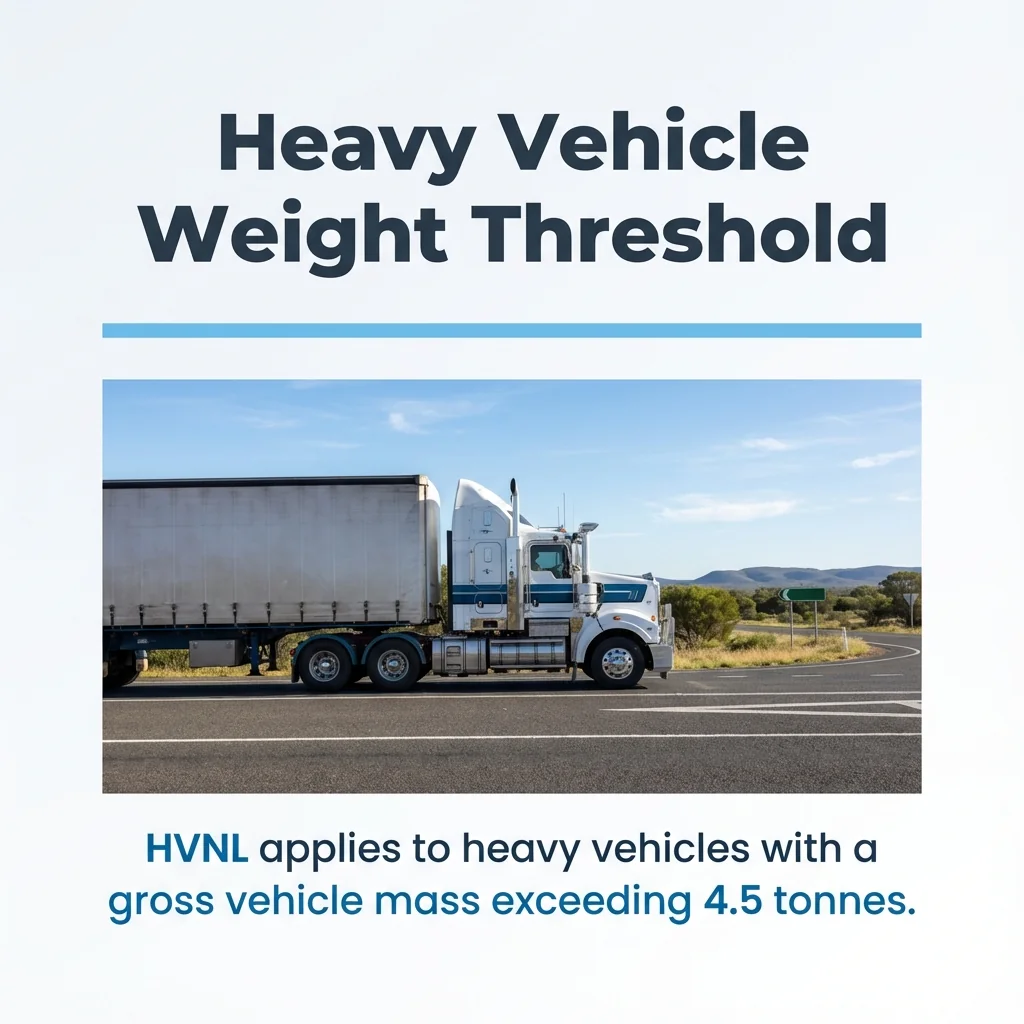
HVNL applies to heavy vehicles with a gross vehicle mass exceeding 4.5 tonnes. This includes rigid trucks, articulated vehicles, B-doubles, road trains, and buses above this threshold. The law covers vehicle standards, driver fatigue, mass and dimension limits, loading practices, and speed compliance.
The regulatory framework operates through several interconnected components. Chain of Responsibility forms the foundation, establishing legal duties for all parties involved in transport activities. Vehicle standards requirements ensure roadworthiness and compliance with Australian Design Rules. Fatigue management provisions protect driver safety through work and rest hour controls. Mass, dimension, and loading regulations prevent overloading and unsafe configurations.
The NHVR provides multiple tools to support compliance. The Portal allows businesses to manage registrations, permits, and notifications online. Heavy vehicle accreditation schemes offer flexible compliance pathways for operators who implement safety systems that meet performance standards. These schemes include National Heavy Vehicle Accreditation Scheme modules for maintenance, mass, and fatigue management.
| HVNL Component | Primary Focus | Key Stakeholders |
|---|---|---|
| Chain of Responsibility | Shared safety obligations | All supply chain parties |
| Fatigue Management | Driver work and rest hours | Operators, schedulers, consignors |
| Vehicle Standards | Roadworthiness and modifications | Operators, maintenance providers |
| Mass and Dimension | Weight and size limits | Loaders, operators, consignors |
| Load Restraint | Cargo securement | Loaders, packers, operators |
Understanding this framework helps you identify where your business intersects with HVNL requirements. Most businesses participate in heavy vehicle transport activities without operating vehicles themselves. Your compliance obligations flow from the influence you have over transport safety, not from vehicle ownership.
Who Needs to Comply with HVNL Requirements
The HVNL applies to specific parties who participate in the supply chain. Each party type has defined responsibilities based on their role and influence over transport safety.
Operators and Drivers
Operators control or direct how heavy vehicles are used. This includes transport companies, fleet managers, and individuals who operate heavy vehicles for business purposes. Operators must ensure vehicles meet standards, drivers follow fatigue rules, and loads comply with mass and dimension limits.
Drivers must comply with work and rest hour requirements, conduct pre-trip inspections, and ensure loads remain secure. They share responsibility for compliance even when other parties create pressure to breach rules.
Schedulers and Consignors
Schedulers control or direct driver work and rest times. This includes logistics coordinators, transport planners, and customer service teams who assign delivery timeframes. They must ensure schedules allow drivers to comply with fatigue management requirements.
Consignors send goods for transport. They influence safety through delivery timeframes, load specifications, and service level agreements. Consignors must avoid creating impossible delivery windows that force speeding or fatigue breaches.
Loaders, Packers, and Consignees
Loaders physically load goods onto heavy vehicles. Packers prepare goods for transport. Both parties must understand mass limits and load restraint requirements. They need systems to weigh loads, calculate mass distribution, and apply appropriate restraint.
Consignees receive goods from transport. They influence safety through unloading requirements and scheduling. Unreasonable unloading delays can contribute to driver fatigue as drivers wait to complete deliveries.
Prime Contractors and Supply Chain Managers
Prime contractors engage other parties to transport goods. Supply chain managers oversee transport arrangements. Both roles carry responsibility for the requirements they impose on transport providers. Contract terms must not incentivize or require safety breaches.
Determine your party type by examining your actual influence over transport activities. Multiple party roles often apply to single businesses. A manufacturer might be a consignor when sending finished goods and a consignee when receiving raw materials.
| Party Type | Core Responsibility | Common Business Examples |
|---|---|---|
| Operator | Vehicle and driver management | Transport companies, fleet owners |
| Scheduler | Work and rest time controls | Logistics coordinators, planners |
| Consignor | Sending goods safely | Manufacturers, wholesalers |
| Loader | Safe loading practices | Warehouse teams, packing facilities |
| Consignee | Receiving without creating risk | Retailers, distribution centers |
Chain of Responsibility Under HVNL
Chain of Responsibility represents the fundamental principle underpinning HVNL compliance. CoR creates legal accountability for all parties who influence transport safety, regardless of their position in the supply chain.
The CoR framework operates on a simple concept. Anyone who has control or influence over any transport task must ensure they don’t cause or contribute to breaches. This shared responsibility model prevents parties from shifting blame down the supply chain.
CoR liability extends beyond traditional employer-employee relationships. You can be liable for breaches you didn’t directly commit if your actions or demands contributed to those breaches. A consignor who demands impossible delivery timeframes shares responsibility if the driver speeds to meet those demands.
The Primary Duty Under CoR
The primary duty requires each party to ensure the safety of their transport activities, so far as is reasonably practicable. This obligation focuses on eliminating or minimizing risks you create through your business activities.
“Reasonably practicable” means what you can reasonably do given your knowledge, resources, and the nature of your business. Small businesses aren’t held to the same standard as large corporations with dedicated safety resources. The law recognizes proportionate responsibility.
The primary duty applies proactively. You must identify potential risks before incidents occur and implement controls to manage those risks. Reactive compliance after an incident provides no legal protection.
Due Diligence Requirements for Officers
Officers of corporations, partnerships, and unincorporated bodies carry personal due diligence obligations. Officers include directors, company secretaries, partners, and individuals who make strategic decisions or have substantial influence.
Due diligence requires officers to take reasonable steps to ensure their organization complies with HVNL requirements. This includes acquiring knowledge of HVNL obligations, understanding the nature of operations, ensuring appropriate resources and processes exist, and verifying implementation and effectiveness of safety systems.
Officers demonstrate due diligence through active engagement. Board papers should include transport safety reporting. Officers should ask questions about compliance systems and incident trends. Understanding risks requires more than reading summary reports.
For more background on Chain of Responsibility principles and evolution, see the definitive guide to Chain of Responsibility.
Establishing Your Primary Duty Compliance System
Your primary duty compliance system translates legal obligations into operational practice. This system documents how you identify, assess, and control transport safety risks your business creates.
Start by mapping your transport activities. List every interaction your business has with heavy vehicle transport. Include sending goods, receiving deliveries, scheduling transport, loading vehicles, and any contractual arrangements with transport providers.
For each activity, identify the specific risks you create or influence. A consignor who specifies delivery windows creates scheduling risk. A loader who consolidates multiple orders creates mass management risk. A consignee with limited unloading capacity creates driver waiting time risk.
Risk Assessment Process
Conduct formal risk assessments for each identified transport activity. Examine what could go wrong, how likely problems are to occur, and what consequences might result. Consider vehicle standards, driver fatigue, mass and loading, speed limits, and road conditions.
Assess current controls already in place. These might include contracts with accredited operators, delivery booking systems, weighing procedures, or staff training programs. Determine whether existing controls adequately manage the risks.
Identify additional controls needed where gaps exist. Controls should eliminate risks where possible, then minimize remaining risks through systematic procedures. Document each control measure and assign responsibility for implementation.
Control Implementation
Implement controls systematically across your operations. This requires clear procedures, staff training, and monitoring mechanisms. Each control should specify what needs to happen, who is responsible, and how compliance will be verified.
Typical controls include:
- Contractor prequalification systems that verify operator credentials and safety systems
- Delivery scheduling tools that allow adequate time for compliant transport
- Weighing procedures that confirm loads don’t exceed legal limits
- Load restraint standards that specify securement methods for different goods
- Unloading protocols that minimize driver waiting times
Document your system in a format that works for your business. Large organizations might develop formal Safety Management Systems with detailed procedures. Smaller businesses might use simpler risk registers and checklists.
Monitoring and Review
Monitor control effectiveness through regular verification activities. This includes auditing contractor compliance, checking delivery schedules against timeframes, weighing sample loads, and investigating incidents.
Review your system at least annually and whenever significant changes occur. Changes might include new customers, different transport routes, new product lines, or modifications to facilities. Each change creates potential new risks requiring assessment.
To understand which legal duties apply to your specific role, review what is a HVNL duty holder.
Fatigue Management Compliance Requirements
Fatigue management rules protect driver safety by controlling work and rest hours. These requirements apply to drivers, operators, and other parties who influence driver scheduling and work patterns.
The HVNL provides three fatigue management options: Standard Hours, Basic Fatigue Management accreditation, and Advanced Fatigue Management accreditation. Each option has different rules and record-keeping requirements.
Standard Hours Requirements
Standard Hours apply to drivers and operators without accreditation. These prescriptive rules set maximum work hours and minimum rest breaks. Drivers must record work and rest times in approved work diaries or electronic work diary systems.
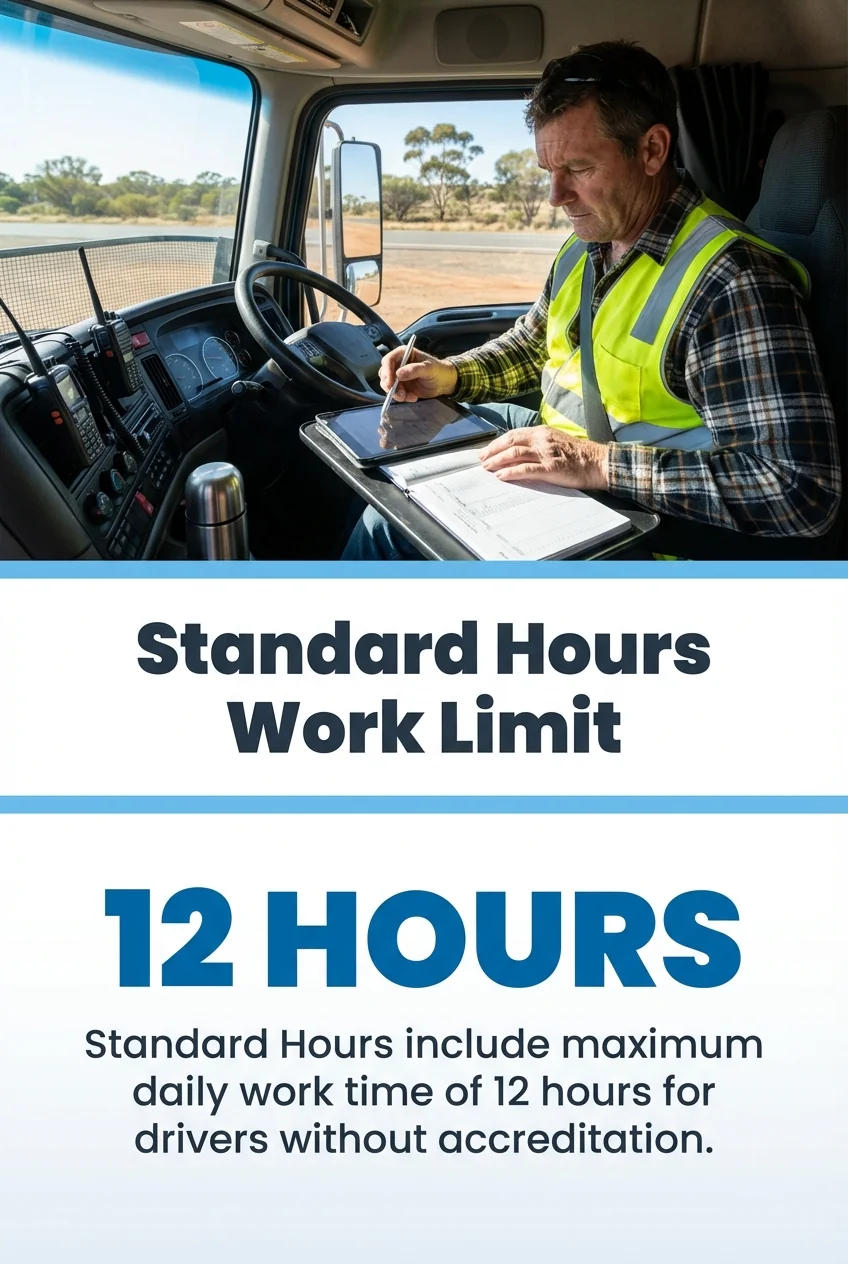
Key Standard Hours limits include maximum daily work time of 12 hours, maximum work time before a night rest break, and minimum rest break durations. Night rest breaks must provide at least 7 continuous hours of stationary rest.
Solo drivers face more restrictive limits than two-up operations where drivers alternate. Long-distance operations have different requirements than local operations. Understanding which rules apply requires examining the specific work patterns.
Work Diary Requirements
Drivers under Standard Hours must maintain work diaries that record all work and rest times. Work diaries must be updated before starting work each day and whenever changing activities. Operators must retain work diaries for three years.
Electronic Work Diary systems automate record-keeping through GPS tracking and tamper-proof recording. These systems reduce administrative burden but require approved devices that meet technical specifications. The NHVR maintains a register of approved EWD systems.
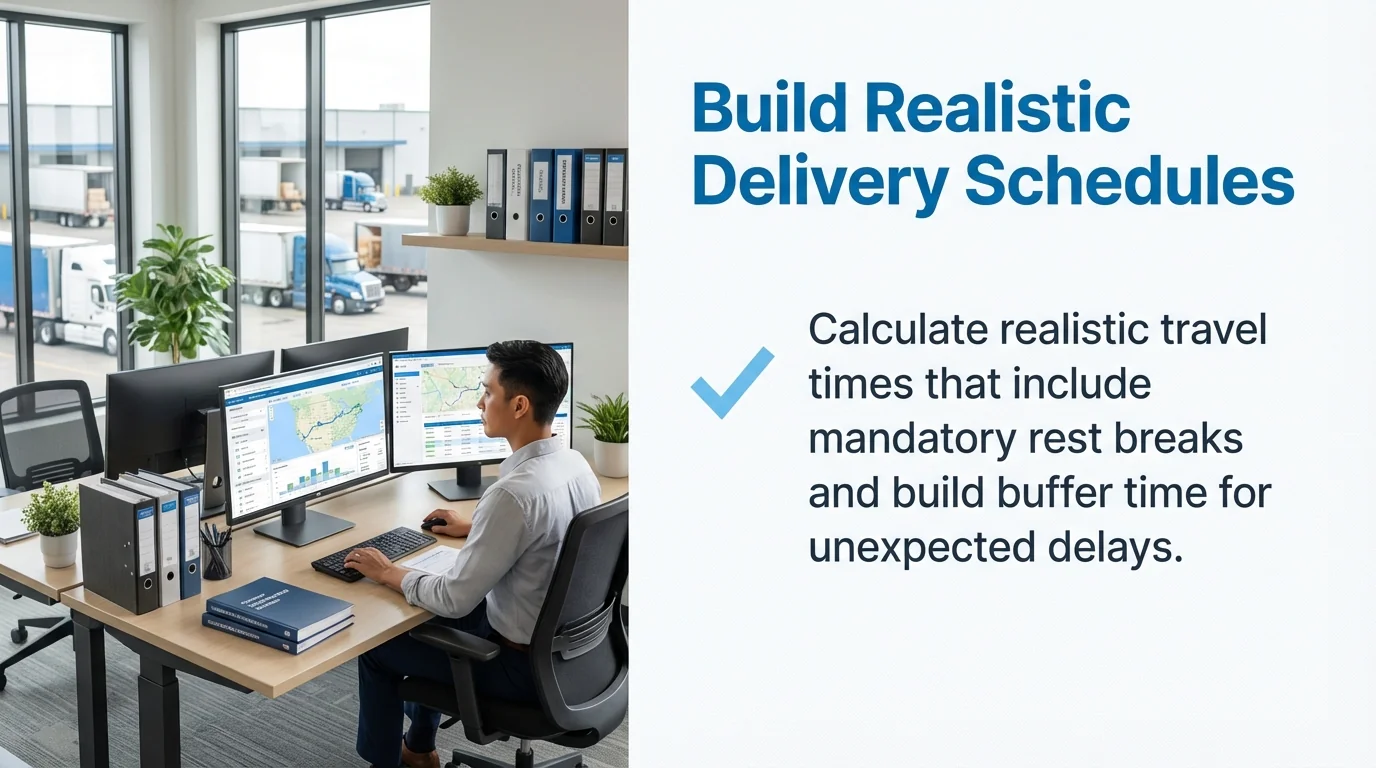
Schedulers and consignors must ensure delivery timeframes allow drivers to comply with applicable work and rest requirements. Calculate realistic travel times that include mandatory rest breaks. Build buffer time for unexpected delays.
Accredited Fatigue Management Options
Basic Fatigue Management accreditation provides flexibility for operators who implement approved safety systems. BFM allows extended work hours when operators can demonstrate effective fatigue risk management through their accredited systems.
Advanced Fatigue Management offers the greatest flexibility for sophisticated operators with comprehensive fatigue management systems. AFM focuses on outcomes rather than prescriptive hour limits. Learn more about Basic Fatigue Management accreditation requirements.
| Fatigue Option | Primary Benefit | Record Requirements |
|---|---|---|
| Standard Hours | No accreditation needed | Work diaries mandatory |
| BFM | Extended work hours available | Simplified records plus systems |
| AFM | Maximum flexibility | Detailed systems documentation |
Vehicle Standards and Maintenance Compliance
Vehicle standards requirements ensure heavy vehicles remain roadworthy and safe. Operators must maintain vehicles in compliance with applicable standards and conduct regular inspections to identify defects.
Heavy vehicles must comply with Australian Design Rules applicable when the vehicle was manufactured. Modifications require engineering certification to verify continued compliance. Unauthorised modifications can result in vehicle defects and registration cancellation.
Maintenance Systems
Operators need documented maintenance systems that specify inspection frequencies, maintenance tasks, and defect management procedures. These systems should address brake performance, steering components, suspension systems, tyres and wheels, lighting and signaling equipment, and load securing points.
Pre-trip inspections by drivers identify obvious defects before vehicles operate. These daily checks supplement periodic maintenance by qualified technicians. Drivers must report defects immediately and operators must ensure repairs occur before vehicles continue operating.
Maintenance records demonstrate compliance with vehicle standards obligations. Keep service records, inspection reports, and repair documentation for at least three years. Records should show maintenance occurred at appropriate intervals and defects received timely attention.
Heavy Vehicle Accreditation
The National Heavy Vehicle Accreditation Scheme includes a Maintenance Management module. Maintenance accreditation demonstrates systematic vehicle standards compliance and provides regulatory benefits including reduced roadside inspection frequency.
Accreditation requires documented maintenance systems, qualified maintenance personnel, and regular internal audits. The NHVR audits accredited operators periodically to verify continued compliance with accreditation standards. For details on accreditation benefits, see heavy vehicle operators and accreditation for safety compliance.
Modification Approval Process
Vehicle modifications that affect mass, dimensions, or safety systems require engineering approval. Approved Vehicle Examiners assess modifications against applicable standards and issue certificates when modifications comply.
Common modifications requiring approval include tray and body installations, suspension modifications, towing equipment installation, and axle conversions. Operating modified vehicles without proper certification breaches vehicle standards requirements.
Mass, Dimension, and Loading Compliance
Mass and dimension requirements prevent overloading and ensure vehicles don’t exceed size limits. These rules protect road infrastructure and prevent vehicle instability from excessive loads or improper weight distribution.
Under the HVNL, loads must not adversely affect vehicle stability or weight distribution. This requirement applies to loaders, consignors, and operators who influence loading practices.
Mass Limits and Calculations
Heavy vehicles must comply with axle mass limits, axle group mass limits, and gross vehicle mass limits. These limits vary based on vehicle configuration, axle spacing, and road access level.
General access vehicles operate under standard mass limits on all roads. Higher mass limits apply to vehicles operating under Performance Based Standards approval or on roads gazetted for higher mass limits. Operators must verify which limits apply to specific vehicles and routes.
Calculate mass by weighing loaded vehicles on certified weighbridges. Public weighbridges provide verification of actual mass. On-board mass monitoring systems offer real-time mass information but require calibration and verification against certified weighbridges.
Load Restraint Requirements
Loads must be properly restrained to prevent movement during transport. The Load Restraint Guide published by the National Transport Commission provides detailed restraint requirements for different load types.
Restraint methods include tie-downs, chains, load binders, friction mats, and containment structures. The required restraint depends on load mass, load geometry, vehicle dynamics, and restraint equipment ratings. Loaders must understand these principles to apply appropriate restraint.
Common load restraint failures include insufficient tie-down capacity, incorrect anchor points, and inadequate friction surface. Training for loading personnel should cover load restraint principles and demonstrate proper application techniques.
Dimension Compliance
Vehicle and load dimensions must not exceed length, width, and height limits. General access limits are 2.5 meters wide, 4.3 meters high, and varying length depending on configuration. Loads projecting beyond vehicle dimensions require specific marking and sometimes pilot vehicles.
Dimension permits allow operation of oversize vehicles or loads on specific routes. These permits specify approved routes, travel times, and conditions. Operating outside permit conditions breaches dimension requirements.
| Compliance Element | Verification Method | Responsible Parties |
|---|---|---|
| Axle Mass | Weighbridge certificates | Operators, loaders |
| Load Restraint | Visual inspection, documentation | Loaders, operators, drivers |
| Dimensions | Measurement, permits | Operators, loaders |
Documentation and Record Keeping Systems
Effective documentation demonstrates compliance and provides evidence of your safety systems. Records serve multiple purposes including operational management, incident investigation, and regulatory verification during audits.
Essential compliance records include risk assessments documenting identified hazards and controls, maintenance records showing vehicle servicing and repairs, work diaries or electronic records of driver hours, weighbridge certificates for mass verification, and load restraint documentation specifying methods used.
Record Retention Requirements
The HVNL specifies minimum retention periods for different record types. Work diaries must be kept for three years. Maintenance records require three-year retention. Mass and load records should be kept for at least two years.
Retain records in accessible formats that allow verification during audits. Electronic systems offer efficient storage and retrieval. Paper records need organized filing systems with backup copies to prevent loss.
Digital Management Systems
Technology solutions streamline compliance documentation. Electronic Work Diary systems automate driver hour recording. Maintenance management software schedules services and tracks repair history. Digital weighbridge integration captures mass data automatically.
Integrated compliance platforms consolidate multiple record types in centralized systems. These platforms provide dashboard reporting, automated alerts for upcoming requirements, and audit trail documentation. The investment in digital systems scales with operation size and complexity.
Audit Preparation
Organize records to facilitate efficient review during NHVR audits or investigations. Create summary documents that cross-reference detailed records. Prepare explanations of your systems and how they address HVNL requirements.
Regular internal audits identify documentation gaps before external review. Internal audits also verify that documented procedures match actual practice. Compliance systems work only when implementation follows documented processes.
Penalties and Enforcement for Non-Compliance
The NHVR enforces HVNL requirements through roadside inspections, compliance audits, and investigations. Enforcement outcomes range from warnings and infringement notices to court prosecutions for serious breaches.
Penalties vary based on breach severity and party involvement. Individual penalties apply to drivers, officers, and employees. Corporate penalties apply to businesses. Multiple parties can face penalties for the same incident when shared responsibility exists.
Understanding Penalty Framework
The HVNL categorizes offenses by severity. Minor breaches typically result in infringement notices with fixed penalties. Substantial breaches may proceed to court prosecution with higher penalties. Court penalties include significant fines and, in serious cases, imprisonment for individuals.
CoR prosecutions can result in substantial penalties when parties contribute to breaches through their demands or actions. Courts consider factors including the level of control the party exercised, whether systems existed to prevent breaches, and the consequences of the breach.
For detailed information on penalty ranges and recent prosecutions, see penalties for breaches of Heavy Vehicle National Law.
Enforcement Approach
The NHVR applies risk-based enforcement focusing resources on high-risk operators and serious safety breaches. Roadside inspections target fatigue compliance, vehicle standards, and mass and dimension violations. Operators with poor compliance history receive increased scrutiny.
Accredited operators generally experience reduced intervention frequency due to demonstrated safety system implementation. Accreditation doesn’t provide immunity from enforcement but indicates systematic compliance management.
Responding to Breaches
When breaches occur, immediate response minimizes consequences. Stop the breach activity immediately. Conduct internal investigation to determine root causes. Implement corrective actions to prevent recurrence. Document the response comprehensively.
Proactive response demonstrates reasonable steps to ensure compliance, which courts consider when determining penalties. Organizations that ignore breaches or allow patterns of non-compliance face the most serious enforcement outcomes.
Implementing Safety Management Systems
Safety Management Systems provide structured frameworks for managing HVNL compliance across your operations. SMS integrate risk management, operational procedures, training, monitoring, and continuous improvement into cohesive systems.
Recent HVNL amendments strengthen SMS requirements. These changes emphasize systematic safety management rather than reactive compliance. Organizations need to demonstrate active safety management through documented systems and measurable performance indicators.
SMS Core Components
Effective SMS include several interconnected elements. Safety policy establishes leadership commitment and organizational objectives. Risk management processes identify, assess, and control hazards. Operational procedures translate risk controls into daily practice. Training ensures personnel understand their responsibilities. Monitoring verifies system effectiveness. Management review drives continuous improvement.
Develop SMS proportionate to your organization’s size, complexity, and risk profile. Small businesses might implement simplified systems using templates and checklists. Large organizations require more detailed systems with specialized resources and formal governance structures.
Implementation Steps
Begin SMS implementation with leadership commitment. Officers and senior management must actively support safety system development. Allocate appropriate resources for system implementation and ongoing maintenance.
Conduct baseline assessment of current compliance status. Identify gaps between existing practices and HVNL requirements. Prioritize gap closure based on risk severity and resource availability.
Develop documented procedures addressing each HVNL compliance area relevant to your operations. Procedures should specify responsibilities, required actions, verification methods, and record requirements. Use clear language accessible to personnel who will implement the procedures.
Train all personnel on relevant procedures and their specific responsibilities. Training should be role-specific, covering the procedures each person must follow. Verify training effectiveness through assessment and observation.
Monitoring and Continuous Improvement
Establish monitoring mechanisms that verify procedure implementation and identify improvement opportunities. Monitoring activities include compliance checks, internal audits, incident investigation, and performance metric tracking.
Schedule regular management reviews of SMS performance. Reviews should examine compliance data, incident trends, monitoring results, and stakeholder feedback. Identify system improvements needed to address identified issues.
Document improvement actions and track implementation. Continuous improvement transforms static compliance systems into dynamic frameworks that adapt to changing risks and regulatory requirements. For practical implementation guidance, see the essential HVNL compliance checklist for transport operators.
Moving Forward With Your Compliance Program
HVNL compliance represents ongoing commitment rather than one-time achievement. Regulations evolve, operations change, and new risks emerge. Successful compliance requires systems that adapt to these changes while maintaining effective risk controls.
Start with the fundamentals if you’re beginning compliance implementation. Identify your party roles under CoR. Understand which HVNL requirements apply to your business. Conduct initial risk assessments for your transport activities. Document basic procedures addressing identified risks.
Build complexity gradually as your systems mature. Initial procedures might be simple checklists. Over time, you’ll develop more sophisticated processes based on operational experience and monitoring results. This incremental approach prevents overwhelming your organization while establishing functional compliance foundations.
Seek specialist support when needed. Transport compliance consultants provide expertise in HVNL interpretation, risk assessment methodologies, and system design. Training providers deliver education on specific compliance areas. Technology vendors offer solutions for documentation and monitoring. External resources accelerate compliance program development and help avoid common implementation pitfalls.
Leadership engagement remains critical throughout implementation and ongoing operation. Officers must demonstrate active oversight through regular reporting, questioning performance data, and allocating resources to address identified gaps. Organizations with engaged leadership consistently achieve better compliance outcomes than those treating compliance as administrative burden.
Your next step depends on your current position. If you haven’t started compliance work, begin with party role identification and initial risk assessment. If you have basic systems, focus on documentation improvement and monitoring implementation. If you operate mature systems, consider accreditation to gain regulatory benefits and demonstrate systematic compliance.
Transport safety requires collective effort across the supply chain. Your compliance work contributes to industry-wide safety improvement. The businesses that embrace this responsibility build competitive advantages through operational efficiency, reduced incidents, and strengthened stakeholder relationships.