
Chain of Responsibility (CoR) training is not about ticking boxes. It is about building genuine capability across your supply chain. The most effective training strategies for CoR compliance connect workplace safety requirements directly to operational decisions, turning regulatory knowledge into practical risk management. This requires structured learning pathways that address your organisation’s specific heavy vehicle operations, documented training records that demonstrate ongoing competence, and evaluation methods that confirm people can actually apply CoR principles to real situations.
Training for CoR compliance succeeds when every person in the chain understands their legal obligations under the Heavy Vehicle National Law (HVNL). From executives who control business operations to schedulers who influence driver decisions, each role carries specific duties. Effective training makes these duties clear, actionable, and measurable.
After 25 years working in supply chain operations, I have seen organisations transform their safety culture through well-designed training programs. The pattern is consistent: companies that invest in proper CoR training see fewer incidents, stronger vendor relationships, and reduced insurance costs. These benefits flow from training that connects legal requirements to daily operations.
This guide provides a structured approach to building CoR training capability. You will learn how to assess training needs, design programs that reflect your operations, deliver engaging content, and maintain competence over time. The strategies outlined here apply whether you are establishing your first CoR training program or improving an existing one.
Understanding CoR Training Requirements and Context
CoR training requirements stem from the HVNL, which establishes legal duties for all parties in the supply chain. Understanding these requirements provides the foundation for designing effective training programs.
The HVNL identifies specific parties in the chain who share responsibility for breaches of road transport laws. These parties include employers, prime contractors, operators, schedulers, consignors, consignees, loading managers, and drivers. Each party has duties related to speed, fatigue, vehicle mass, dimension, loading, and vehicle standards.
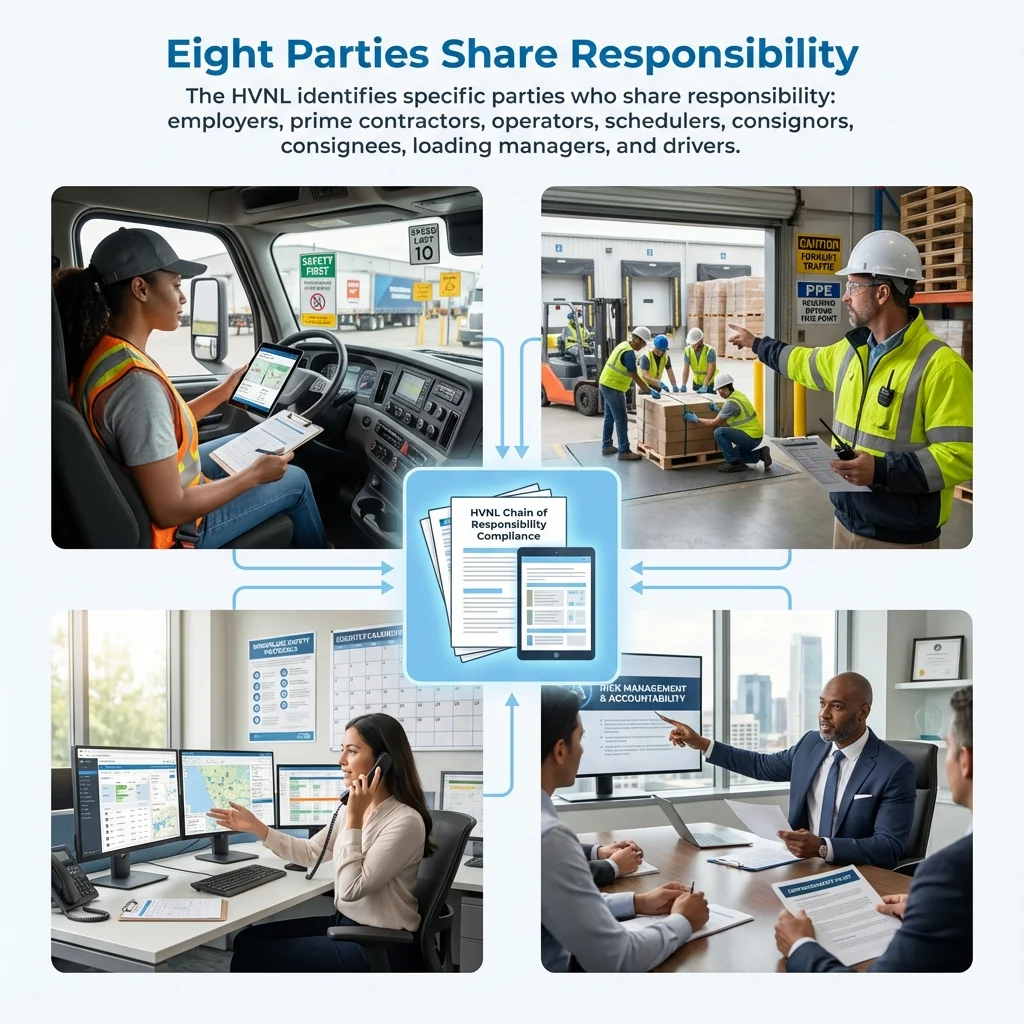
Training must address the specific duties relevant to each party’s role. A scheduler needs different competencies than a loading supervisor. Both require understanding of how their decisions affect driver safety and compliance, but the focus differs.
Legal Obligations Under the HVNL
The primary duty under the HVNL requires parties to ensure their conduct does not cause or contribute to breaches. This positive duty demands active management, not passive compliance. Training programs must equip participants to identify risks, implement controls, and monitor effectiveness.
Secondary duties include providing information, responding to complaints, and maintaining records. These operational requirements form the daily practice of CoR compliance. Training should make these duties concrete and manageable.
Penalties for breaches range from substantial fines to imprisonment for severe violations. This reality underscores why training must go beyond awareness to build genuine competence.
Training as Risk Management
Effective CoR training functions as a risk management tool. It identifies where your organisation’s activities intersect with HVNL requirements, then builds capability to manage those intersections safely.
Training should address both knowledge and application. Participants need to understand CoR principles and demonstrate how to apply them in their specific roles. This requires scenario-based learning that reflects your actual operations.
Documentation of training provides evidence of due diligence. Maintaining records of who received what training, when, and with what assessment results demonstrates your organisation’s commitment to compliance.
Step 1: Conduct a Training Needs Analysis
Now that you understand the legal context, the next step involves identifying your specific training requirements. A training needs analysis maps your organisation’s CoR responsibilities to the competencies required to meet them.
Start by documenting all roles that interact with heavy vehicle operations. Include obvious positions like transport coordinators and warehouse supervisors, but also less obvious roles such as procurement staff who negotiate delivery schedules or sales teams who promise delivery times.
Identify Parties in Your Chain
Create a matrix showing which HVNL party categories apply to each role in your organisation. A single employee may fit multiple categories. For example, a logistics manager might act as both an employer and a scheduler.
| Role | HVNL Party Category | Key CoR Duties |
|---|---|---|
| Transport Manager | Employer, Operator | Vehicle maintenance, driver fatigue management, safe systems |
| Warehouse Supervisor | Loading Manager | Load restraint, vehicle mass compliance, safe loading procedures |
| Procurement Manager | Consignor | Delivery scheduling, vendor selection, transport arrangements |
| Site Receiver | Consignee | Unloading timeframes, driver amenities, reporting issues |
Assess Current Competency Levels
Evaluate existing knowledge through interviews, observations, and if appropriate, brief assessments. This baseline shows where gaps exist and helps prioritize training efforts.
Look for patterns. Do schedulers understand how tight timeframes contribute to speeding and fatigue? Do loading staff know mass limits and load restraint requirements? Do executives recognize their accountability for systems that create compliance risks?
Document findings in a format that links roles to specific competency gaps. This becomes your training specification.
Define Learning Objectives
For each role, write clear learning objectives that describe what participants will be able to do after training. Use action verbs: identify, explain, demonstrate, implement, evaluate.

Objectives should reflect workplace application. Instead of “understand fatigue management,” write “identify scheduling practices that contribute to driver fatigue and implement alternatives that maintain compliance.”
Share these objectives with participants before training. Clear expectations improve engagement and outcomes.
Step 2: Design Role-Specific Training Programs
With your needs analysis complete, you can now design training programs tailored to each role. The goal is building practical competence in managing CoR responsibilities.
Training design involves selecting content, choosing delivery methods, creating materials, and planning assessments. All elements should align with the learning objectives you defined.
Structure Training Content
Organize content into modules that build logically. Start with foundational concepts before moving to role-specific application. A typical structure includes:
- Introduction to HVNL and CoR principles (context and legal framework)
- Duties of parties in the chain (general understanding)
- Role-specific responsibilities (focused on participant’s actual duties)
- Practical application and case studies (workplace scenarios)
- Systems and documentation requirements (operational tools)
Choose Appropriate Delivery Methods
Match delivery methods to content and audience. Complex concepts benefit from face-to-face instruction with opportunities for questions. Procedural content may work well in online modules with demonstration videos.
Consider blended approaches. Online modules can deliver foundational content efficiently, freeing face-to-face sessions for scenario work and discussion. This respects busy schedules while maintaining engagement.
Interactive elements increase retention. Include activities like risk identification exercises, policy review workshops, and incident analysis discussions. Participants should actively work with CoR concepts, not passively receive information.
Develop Training Materials
Create materials that participants can reference after training. These become tools for ongoing compliance, not just learning aids.
Materials should include:
- Participant workbooks with key concepts and space for notes
- Quick reference guides for common decisions
- Checklists for routine compliance activities
- Examples from your actual operations
- Contact information for questions and support
Use plain language. CoR compliance involves legal concepts, but training materials should be accessible to all participants regardless of background. Define technical terms when first used.
Plan Assessment Methods
Assessment confirms learning and identifies areas needing reinforcement. Design assessments that measure both knowledge and application.
Knowledge assessments might include multiple-choice questions or short-answer responses. Application assessments use scenarios requiring participants to identify risks, select controls, or develop action plans.
Set clear pass standards. Participants must demonstrate competence to perform their CoR duties safely. Record assessment results as part of your training documentation.
Step 3: Deliver Engaging and Practical Training
Training design matters little if delivery fails to engage participants or connect to their work. Effective delivery brings CoR compliance to life through relevant examples and active participation.
Whether you deliver training internally or engage external providers, focus on making sessions interactive, practical, and directly applicable to participants’ roles.
Establish Relevance from the Start
Open sessions by connecting CoR compliance to participants’ daily work. Explain how their decisions affect driver safety, organisational risk, and business outcomes. Make the “why” clear before diving into the “what” and “how.”
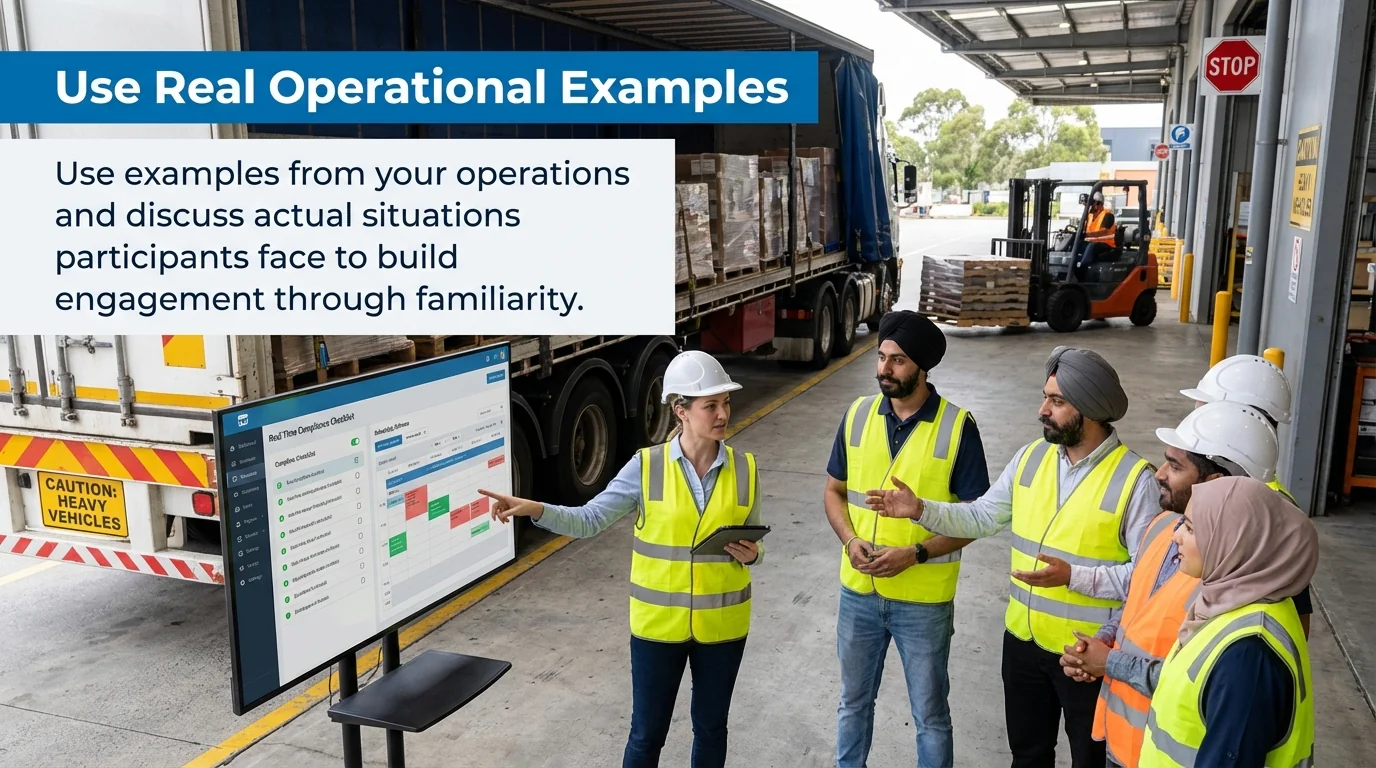
Use examples from your operations. Discuss actual situations participants face: scheduling challenges, loading pressures, vendor negotiations, or delivery commitments. Familiarity builds engagement.
Facilitate Active Learning
Limit lecture time. Present core concepts efficiently, then move to activities where participants work with the material. Small group discussions, case study analysis, and problem-solving exercises create active learning opportunities.

Scenario-based learning works particularly well for CoR training. Present realistic situations requiring participants to identify parties in the chain, recognize potential breaches, and develop compliant solutions. Debrief scenarios to reinforce learning points.
Encourage questions throughout. CoR compliance involves judgment and context. Discussion helps participants understand how principles apply to varied situations.
Demonstrate Practical Tools and Systems
Show participants the tools and systems they will use for CoR compliance. If you use software for tracking vendor compliance, demonstrate it during training. If checklists guide loading operations, practice using them with realistic examples.
Walk through documentation requirements. Show completed records and explain what they demonstrate. Participants should understand not just what to document but why it matters for demonstrating due diligence.
Practice makes competence. Allow time for participants to work through procedures with guidance. This builds confidence for independent application.
Address Common Concerns and Questions
A common concern is managing CoR compliance within operational pressures. Many wonder how to balance customer demands, business objectives, and safety requirements when they seem to conflict.
Government and standards bodies publish authoritative compliance guidance that provides step-by-step resources for meeting safety and health requirements. These tools help organisations align operational decisions with regulatory responsibilities.
Another question involves responsibility for vendor actions. Training should clarify that while you cannot control vendor behavior, you have duties around vendor selection, contracts, and monitoring. Practical guidance on managing these duties reduces anxiety about matters outside direct control.
Step 4: Implement Systems to Support Trained Competence
Training builds competence, but systems sustain it. After participants complete training, workplace systems must enable and reinforce compliant practices.
Implementing supporting systems involves reviewing policies, updating procedures, providing tools, and establishing oversight mechanisms that help people apply their training.
Align Policies with Training Content
Review organisational policies to ensure they reflect the CoR principles covered in training. Policies should clearly state expectations for compliance and provide guidance for common decisions.
Policy gaps create confusion. If training teaches that schedulers must consider driver hours when planning routes, scheduling policies should specify how to do this. Connect policies directly to training content.
Make policies accessible. Store them where employees can easily reference them when needed. Consider creating simplified policy summaries for quick reference.
Update Operational Procedures
Procedures translate policies into step-by-step actions. They provide the “how” of CoR compliance at the task level. Update procedures to incorporate CoR requirements taught in training.
For example, a goods receiving procedure might include steps to verify delivery timing, check driver amenity access, and document any compliance concerns. These steps operationalize the CoR duties of a consignee.
Involve trained staff in procedure updates. They understand practical application and can identify what will work in daily operations. This involvement also reinforces their learning.
Provide Decision Support Tools
Decision support tools help staff apply CoR principles to specific situations. These might include:
| Tool Type | Purpose | Example Application |
|---|---|---|
| Risk Assessment Templates | Identify CoR risks in operations | Evaluate new delivery routes for fatigue risks |
| Compliance Checklists | Verify controls are in place | Pre-dispatch check covering mass, load restraint, driver hours |
| Vendor Assessment Forms | Evaluate supplier CoR capability | Review transport provider safety management before engagement |
Tools work best when they fit naturally into existing workflows. Design them to support decisions people already make, not create additional bureaucracy.
Establish Monitoring and Feedback Mechanisms
Monitor how trained staff apply CoR principles in practice. This might involve spot checks, record reviews, or periodic observation of key activities. Monitoring identifies both good practice to reinforce and issues requiring correction.
Provide feedback regularly. When you observe compliant practice, acknowledge it. When gaps appear, address them promptly with coaching or additional training. Consistent feedback shapes behavior over time.
Create channels for staff to raise CoR concerns or ask questions. Easy escalation paths encourage proactive risk management and continuous improvement.
Step 5: Document Training and Maintain Records
Documentation serves two purposes: it demonstrates due diligence and it provides data for managing your training program. Maintaining accurate records is essential for both compliance and continuous improvement.
Your documentation system should capture who received training, when it occurred, what content was covered, how competence was assessed, and what results were achieved.
Establish a Training Register
Create a central register tracking all CoR training activities. This register should include:
- Participant name and role
- Training date and duration
- Topics covered
- Assessment method and results
- Trainer or provider details
- Next training due date
Digital systems make this easier to manage and report. Software like CoRGuard can track training compliance alongside other CoR management activities, providing a complete view of organisational capability.
Retain Evidence of Competence
Keep records that demonstrate not just attendance but competence. This includes completed assessments, certificates of completion, and any supplementary evidence of skill application.
Store records securely and ensure backup systems protect against loss. These records may be required to demonstrate due diligence if incidents occur or during audits.
Set retention periods appropriate to your context. Many organisations retain training records for the duration of employment plus seven years, aligning with general business record retention practices.
Track Training Currency
CoR training requires refreshing to maintain currency. Changes to legislation, operations, or role responsibilities all trigger training needs. Your system should flag when training currency expires.
Set refresh intervals based on risk and regulatory requirements. Annual refreshers work well for most roles, with additional training when significant changes occur.
Proactive reminders ensure training remains current. Do not wait for expiry. Schedule refresher training in advance to avoid gaps in competence.
Step 6: Evaluate Training Effectiveness and Continuously Improve
Training programs require ongoing evaluation to ensure they achieve intended outcomes. Evaluation identifies what works, what needs improvement, and how training impacts compliance performance.
Build evaluation into your training process from the start. This allows you to gather data systematically and use it to enhance program quality.
Measure Multiple Levels of Effectiveness
Evaluate training at several levels. Reaction measures immediate participant response. Did they find training relevant and engaging? Learning measures knowledge and skill acquisition. Can participants demonstrate required competencies?
Behavior measures workplace application. Do trained staff apply CoR principles in their daily work? Results measure organisational impact. Has training contributed to reduced incidents, improved audit outcomes, or stronger safety culture?
Each level provides different insights. Collect data from participant feedback forms, assessment results, supervisor observations, incident reports, and audit findings.
Review Training Against Operational Performance
Link training data to operational outcomes. If loading-related incidents persist despite training, investigate why. Is training content adequate? Are assessment standards appropriate? Do workplace systems support compliant loading practices?
Look for patterns. Consistent issues in specific areas may indicate training gaps or system problems requiring attention. Use this analysis to target improvements.
Update Training Based on Findings
Treat training as a living program requiring regular updates. Incorporate lessons from incidents, audit findings, regulatory changes, and operational developments.
Review training content annually at minimum. More frequent reviews may be appropriate for organisations with rapidly changing operations or emerging compliance issues.

Document changes and the reasons for them. This demonstrates continuous improvement and provides context for future reviews.
Maintain Trainer Competence
If you deliver training internally, ensure trainers maintain current knowledge and skills. This might involve professional development, attending external CoR courses, or participating in industry networks.
Multi-day instructor-led programs provide structured approaches to developing training capability. These courses focus on the full lifecycle of contract oversight and include techniques applicable to CoR training delivery.
For organisations using external training providers, review provider performance regularly. Assess whether their content remains current and whether participants gain practical competence.
Maintaining CoR Training Compliance Over Time
Establishing effective CoR training represents a significant achievement. Maintaining that effectiveness over time requires ongoing attention, resources, and leadership commitment.
Sustainability comes from integrating CoR training into broader organisational systems. Make training part of induction for new staff, professional development for existing employees, and change management for operational improvements.
Embed Training in Organisational Processes
Link CoR training to human resources processes. Include CoR competency requirements in position descriptions. Make training completion a condition of role appointment. Track training currency alongside other HR compliance requirements.
Connect training to safety management systems. CoR training should integrate with broader workplace health and safety initiatives, not operate in isolation. This reinforces the connection between CoR compliance and overall safety culture.
Include CoR training in contractor management. External parties working within your operations need appropriate CoR awareness. Specify training expectations in contracts and verify compliance through pre-qualification processes.
Maintain Leadership Engagement
Executive commitment sustains training programs. Leaders should participate in training, reinforce its importance, and allocate resources for ongoing delivery. Their visible support signals that CoR compliance matters.
Report training metrics to leadership regularly. Share completion rates, assessment results, and links to operational performance. This maintains awareness and enables informed decision-making about training investment.
Include CoR training in strategic planning. As business operations evolve, training programs must adapt. Forward planning ensures resources are available when needed.
Build Internal Capability
Developing internal training capability reduces reliance on external providers and allows for more responsive, tailored programs. Consider training selected staff as CoR trainers for your organisation.
Advanced courses are available only to those with at least one year of prior certified experience, ensuring trainers have practical foundation before advancing their skills. This progressive approach to capability building produces effective internal trainers.
Internal trainers bring advantages: they understand your operations intimately, they are available for just-in-time coaching, and they can adapt content quickly as needs change. Balance this with external expertise for specialist topics or fresh perspectives.
Stay Current with Regulatory Developments
The HVNL and its interpretation continue to evolve. Court decisions, regulator guidance, and legislative amendments all affect CoR compliance requirements. Monitor these developments and update training content accordingly.
Subscribe to regulator updates from the National Heavy Vehicle Regulator. Join industry associations that provide regulatory intelligence. Engage with professional networks focused on CoR compliance.
When changes occur, assess their impact on your operations and training needs. Communicate changes to trained staff promptly. Consider whether immediate training updates are required or whether changes can be incorporated in scheduled refreshers.
Quick Answers to Common CoR Training Questions
How can I learn about CoR compliance requirements?
Start with official NHVR resources, which provide authoritative guidance on HVNL obligations. Government and standards bodies publish authoritative compliance guidance with step-by-step resources for meeting safety and health requirements. For structured learning, accredited training programs offer courses covering ethics, laws, and regulatory responsibilities specific to your role in the chain.
What qualifications do CoR trainers need?
Effective CoR trainers combine regulatory knowledge, practical experience, and training skills. Many hold qualifications in logistics, occupational health and safety, or related fields, along with specific CoR certifications. Trainers should understand the HVNL, have experience in transport or supply chain operations, and ideally hold training qualifications such as TAE40110.
How often should CoR training be refreshed?
Most organisations refresh CoR training annually for operational roles. Executive training may occur less frequently, while high-risk roles might require more frequent updates. Beyond scheduled refreshers, trigger additional training when significant changes occur to legislation, operations, systems, or individual responsibilities.
Can online training meet CoR requirements?
Online training can effectively deliver foundational CoR content, provided it includes appropriate assessment and verification of understanding. However, practical application often benefits from face-to-face interaction, scenario discussion, and role-specific guidance. Blended approaches combining online modules with interactive workshops typically produce the best outcomes.
Training for CoR compliance is an investment in operational capability, not just a regulatory obligation. When done well, it builds genuine understanding of how supply chain decisions affect safety outcomes. The strategies outlined here provide a structured path to developing training programs that meet legal requirements while delivering practical value.
Start by understanding your specific training needs through proper analysis. Design programs that address those needs with relevant, engaging content. Deliver training that connects to participants’ work and builds real competence. Support trained staff with systems that enable compliant practice. Document everything to demonstrate due diligence and enable continuous improvement.
Most importantly, recognize that training is ongoing. CoR compliance evolves with your operations, regulatory landscape, and organisational capability. Commit to maintaining training quality over time. Review results regularly. Update content as needed. Sustain leadership support.
For organisations seeking support in developing CoR training programs, understanding the essential requirements provides a strong foundation. When you are ready to implement training across your organisation, practical implementation strategies help navigate common challenges. If your training program faces obstacles, targeted approaches to overcoming training challenges can restore momentum.
Building CoR training capability takes effort, but the results justify the investment. Organisations with well-trained staff manage compliance risks more effectively, operate more safely, and demonstrate genuine commitment to their legal responsibilities under the HVNL.