
A CoR compliance checklist for transport is your operational framework for managing Chain of Responsibility obligations under the Heavy Vehicle National Law. This checklist verifies that every party in your supply chain fulfills their primary duty, from executives and schedulers to drivers and loaders. It covers six critical risk areas: fatigue management, load restraint, mass and dimension limits, speed compliance, vehicle maintenance, and driver qualification. The checklist integrates regulatory requirements with daily operations, providing verification points for work diaries, pre-start inspections, load security, weighbridge documentation, and journey planning.
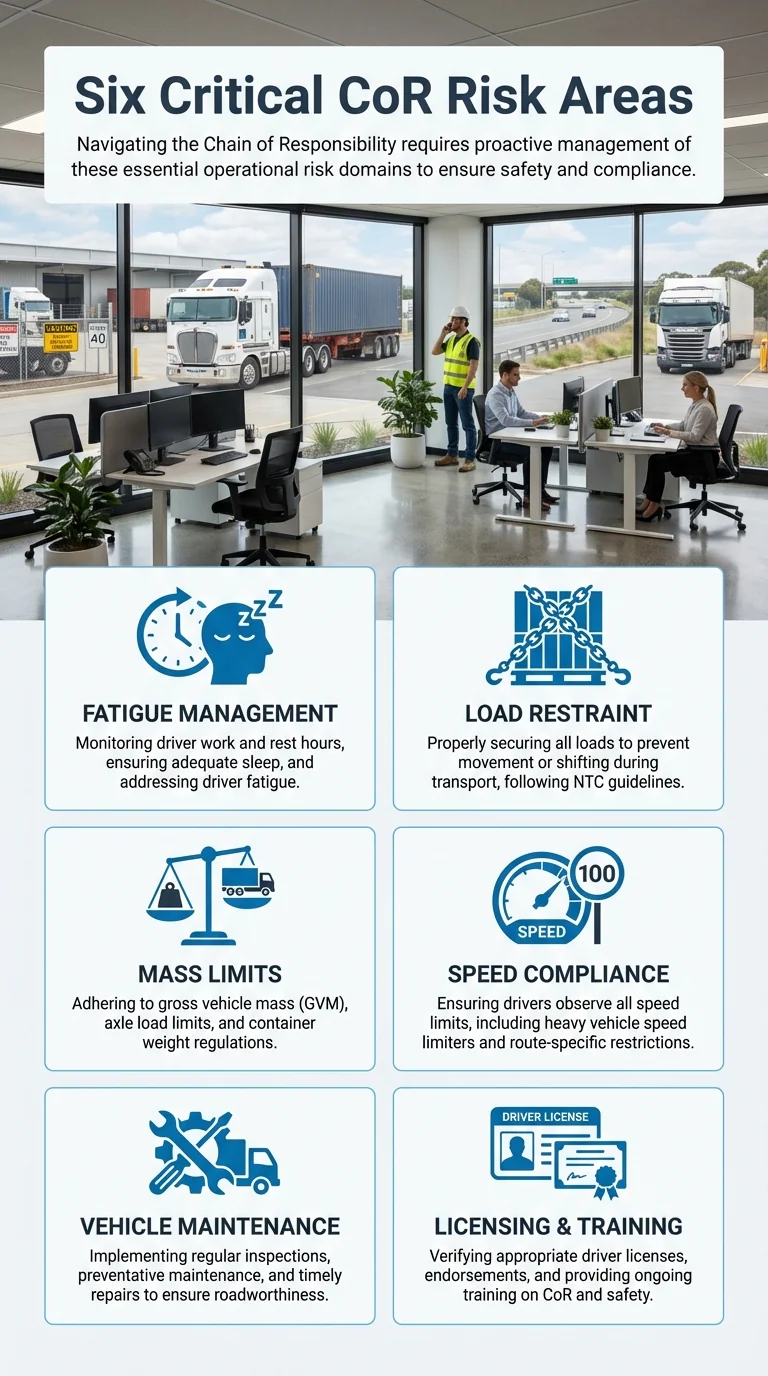
Your checklist transforms legal obligations into actionable steps. It reduces risk across your operation while supporting efficient service delivery.
The Chain of Responsibility establishes shared accountability across the transport supply chain, requiring all parties involved in transport operations to ensure compliance with safety and regulatory standards. This shared accountability means compliance isn’t just about ticking boxes. It’s about building systems that protect people and businesses.

Throughout 25 years working across supply chains in Australia and the UK, I’ve seen the difference between operations that manage CoR proactively and those that scramble when issues arise. The businesses that succeed treat compliance as operational strength, not administrative burden.
This guide provides the practical checklist structure you need for CoR compliance. You’ll understand which parties carry what responsibilities, what to verify in each risk area, and how to document your compliance efforts effectively.
What is a CoR Compliance Checklist for Transport
A CoR compliance checklist is your systematic tool for verifying that each party in the transport chain meets their obligations under the HVNL. It documents verification steps, assigns responsibilities, and creates evidence of your compliance approach.
The checklist covers every party involved in transport operations. This includes operators, schedulers, loaders, packers, consignors, consignees, and executives. Each party has specific duties based on their influence over transport safety.
The 2026 HVNL amendments mandate that all parties in the Chain of Responsibility implement systematic approaches to identifying, assessing, and controlling transport safety risks with documented processes. Your checklist provides this systematic approach. It creates clear accountability and demonstrates your commitment to reasonably practicable measures.
Key Components of Your Transport Compliance Checklist
Your checklist must address all six primary CoR risk areas identified in the Heavy Vehicle National Law. These areas represent the most significant safety risks in heavy vehicle operations.
The checklist integrates with your existing operational procedures. It shouldn’t create separate compliance activities divorced from daily work. Instead, it embeds verification steps into normal workflows.
Each checklist item requires a clear verification method. This might involve visual inspection, document review, system checks, or sign-off procedures. The verification creates your compliance evidence.
How Checklists Support Your Primary Duty
The primary duty under Chain of Responsibility requires you to eliminate or minimize public risks from your transport activities. You must take reasonably practicable measures to ensure safety.
Your checklist demonstrates what measures you’ve implemented. It shows the steps taken to identify risks, the controls put in place, and the ongoing verification of those controls.
This documentation becomes critical if compliance questions arise. It provides objective evidence of your systematic approach to managing transport safety risks across your operation.
Key Parties in the Transport Chain of Responsibility
Now that you understand what a CoR compliance checklist covers, you need to identify who holds responsibility in your supply chain. The HVNL defines parties based on their influence over transport safety, not just their contractual relationships.
Each party must exercise their primary duty within their area of control. A scheduler can’t control load restraint directly, but they control journey planning that affects driver fatigue. A loader can’t set speed limits, but they control how cargo is secured.
Executive Officers and Directors
Executive officers carry specific obligations under Chain of Responsibility. They must ensure their organization has appropriate systems and resources to comply with HVNL requirements.
Your executive checklist items include:
- Annual review of transport safety policies and procedures
- Budget allocation for compliance resources and training
- Board reporting on CoR performance and incidents
- Due diligence verification of compliance systems
Executives can face personal liability for systemic compliance failures. The checklist helps directors demonstrate they’ve exercised due diligence in their oversight role.
Operators and Fleet Managers
Operators hold responsibility for vehicle maintenance, driver qualification, and operational systems. They typically have the most direct control over day-to-day compliance activities.
Operator responsibilities span across all six CoR risk areas. They must ensure vehicles are roadworthy, drivers are properly licensed and fit for duty, and operational procedures support safe transport practices.
Your operator checklist should verify vehicle service schedules, driver file documentation, and the implementation of fatigue management and load restraint procedures.
Schedulers and Journey Planners
Fatigue management is a critical CoR compliance component, with regulations requiring responsibility for driver fatigue, potentially involving route planners, schedule setters, or staff setting working hours. Schedulers directly influence whether drivers can complete journeys safely within legal driving hours.
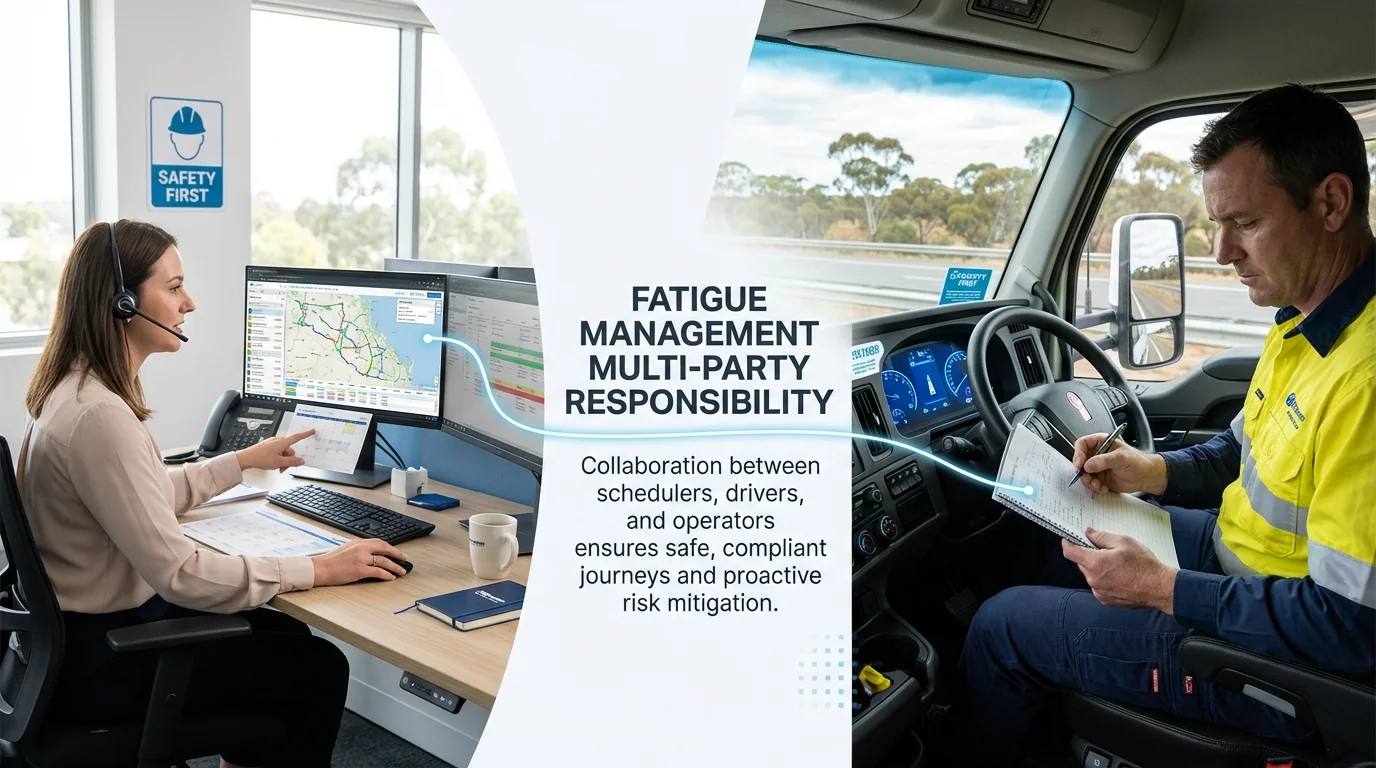
Scheduler checklist items focus on realistic timeframes. This includes travel time calculations that account for speed limits, mandatory rest breaks, and potential delays.
Your checklist should verify that schedules allow drivers to comply with work and rest requirements. It should confirm that delivery windows don’t create pressure to exceed speed limits or skip required breaks.
Loaders, Packers, and Consignors
Loaders and packers control how cargo is secured and distributed within vehicles. Their decisions directly affect load restraint compliance and mass distribution.
Consignors also carry Chain of Responsibility obligations. When they arrange transport or specify loading requirements, they influence transport safety outcomes.
Loader checklist verification includes proper use of restraint equipment, correct load distribution across axles, and accurate documentation of cargo weight and securing methods.
Essential CoR Compliance Areas to Check
Your understanding of parties in the Chain of Responsibility now leads to the specific areas you must verify. The HVNL identifies six primary risk areas that require systematic management.
Each risk area demands different verification approaches. Fatigue management requires reviewing work diaries and schedules. Load restraint needs physical inspection. Mass compliance involves weighbridge documentation.
Your checklist should organize verification tasks by risk area. This structure helps assign responsibilities correctly and ensures nothing gets overlooked.
The Six Primary CoR Risk Areas
The Heavy Vehicle National Law structures Chain of Responsibility around these compliance areas:
| Risk Area | Primary Concern | Key Verification Points |
|---|---|---|
| Fatigue Management | Driver alertness and work hours | Work diaries, rest breaks, driving hours, fitness declarations |
| Load Restraint | Cargo security during transport | Restraint equipment, securing methods, load documentation |
| Mass and Dimension | Vehicle weight and size limits | Weighbridge records, axle loads, permit compliance |
| Speed Compliance | Safe and legal speeds | GPS data, journey times, speed limiter function |
| Vehicle Maintenance | Roadworthiness and safety | Service records, pre-start inspections, defect management |
| Driver Qualification | Licensing and competency | License verification, training records, medical certificates |
Your checklist must address each area with specific verification items. The frequency of checks depends on your risk assessment and operational patterns.
Integrating Risk Areas Into Daily Operations
Effective CoR compliance integrates verification into existing workflows. Pre-start vehicle inspections happen before departure, not as separate administrative tasks. Load restraint checks occur during loading operations, with immediate corrections if issues are identified.
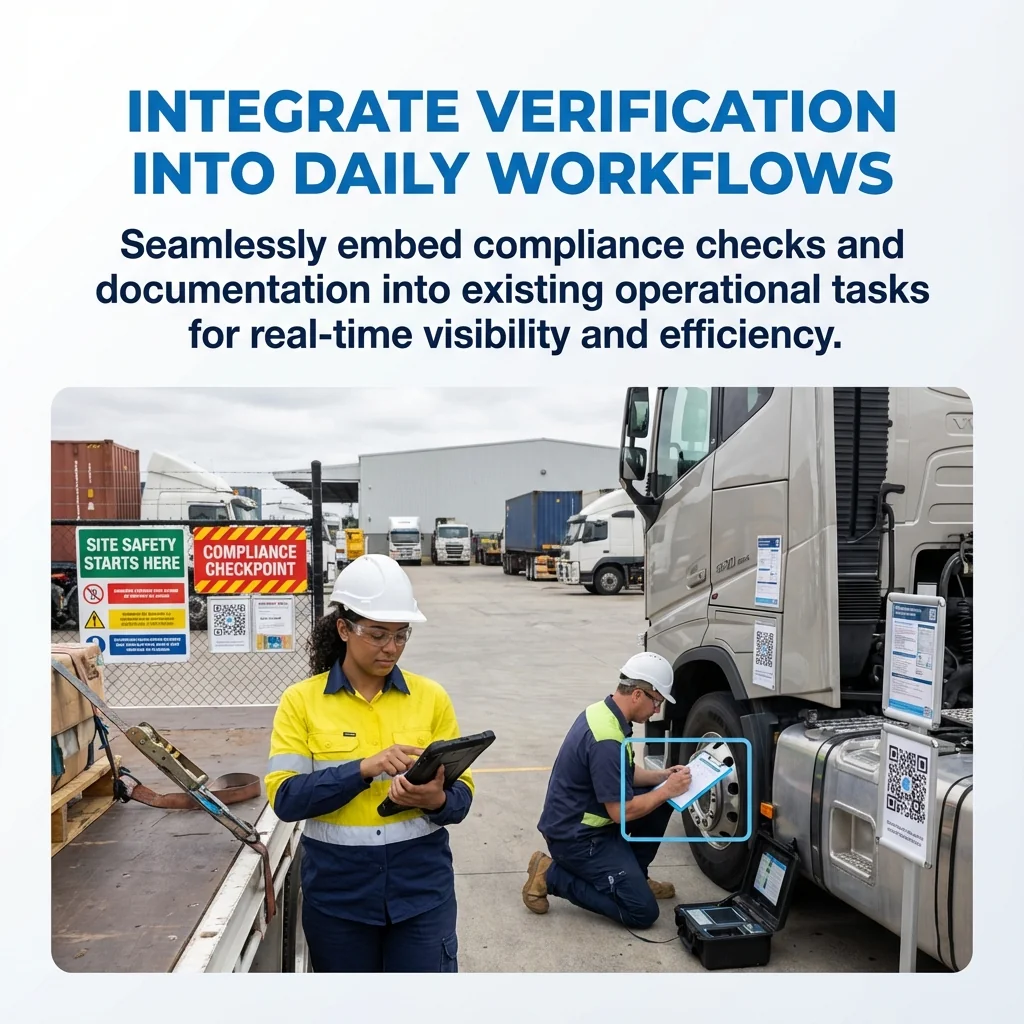
This integration reduces compliance burden while improving effectiveness. It catches problems when they can be addressed most efficiently, before vehicles leave your premises.
Your checklist should specify where each verification occurs in your operational sequence. This clarity helps staff understand compliance as part of their regular duties, not additional paperwork.
Fatigue Management Checklist Items
Building on your understanding of CoR risk areas, fatigue management deserves detailed attention. Driver fatigue contributes to serious incidents and receives significant regulatory focus under the HVNL.
Your fatigue management checklist must verify that drivers can complete journeys within legal work and rest hours. It should confirm that scheduling practices don’t create pressure to exceed driving limits.
Work Diary and Record Keeping Verification
Work diaries provide your primary evidence of fatigue management compliance. Your checklist should verify that drivers maintain required records using approved systems.
Check that work diaries are completed accurately and contemporaneously. Verify that rest breaks are recorded correctly and that driving hours remain within legal limits.
Your verification process should include regular audits of work diary compliance. Identify patterns that might indicate systemic issues, such as consistently tight timeframes or frequent approaching of maximum work hours.
Pre-Journey Fitness Declarations
Drivers must be fit for duty before starting journeys. Your checklist should verify that pre-start fitness declarations are completed and that mechanisms exist for drivers to report fatigue concerns.
Include verification that supervisors respond appropriately when drivers report fatigue. This demonstrates your commitment to managing fatigue risks even when it affects operational schedules.
- Fitness declaration completed before each shift
- Process for drivers to report fatigue without negative consequences
- Supervisor response procedures when fatigue is reported
- Alternative arrangements when drivers are not fit for duty
Schedule Verification and Journey Planning
Your fatigue management extends beyond driver compliance to scheduling practices. Verify that journey times are calculated realistically, accounting for speed limits, traffic conditions, and required rest breaks.
Check that customer delivery windows allow for legal compliance. When tight timeframes are identified, your checklist should trigger a risk assessment and, if necessary, negotiation of more realistic schedules.
This proactive approach to fatigue management demonstrates your systematic risk control. It shows you’re managing the factors within your control that influence driver fatigue.
Load Restraint and Mass Compliance Checks
Your fatigue management processes now connect to equally critical physical compliance areas. Load restraint procedures and mass and dimension compliance are essential verification points under CoR obligations.
These areas require different verification approaches than fatigue management. Physical inspection replaces record review. Immediate correction is possible before vehicles depart.
Load Restraint Verification Steps
Your load restraint checklist must verify that cargo is secured using appropriate methods and equipment. This verification should occur immediately after loading, before vehicles leave your premises.
Check that restraint equipment is in good condition. Verify that tie-down points are used correctly and that securing methods match the cargo type and weight.
Your checklist should document the specific restraint method used for each load. This creates evidence that proper consideration was given to load security requirements.
- Visual inspection of cargo security and weight distribution
- Verification of restraint equipment condition and rating
- Confirmation that tie-down points are used correctly
- Documentation of restraint method and equipment used
- Sign-off by loader and driver confirming load security
Mass and Dimension Compliance Verification
Mass compliance requires weighbridge verification for loads that might approach legal limits. Your checklist should identify which loads require weighing based on cargo type and vehicle configuration.
Verify that weighbridge tickets are obtained and reviewed before dispatch. Check that axle load limits are respected, not just gross vehicle mass.
When dimension limits are relevant, verify that height, width, and length remain within legal parameters. Check that any required permits are current and carried on the vehicle.
Documentation Requirements for Load Compliance
Your compliance documentation must accompany the load. Drivers should carry evidence of weighbridge compliance, load restraint methods, and any relevant permits.
This documentation demonstrates your systematic approach to load compliance. It provides evidence that verification occurred and that the load met legal requirements when it left your control.
Include in your checklist verification that required documentation travels with the vehicle. This simple step prevents compliance issues at roadside inspections.
Vehicle Maintenance and Inspection Requirements
From load security, your attention turns to the vehicle itself. Vehicle maintenance represents a foundational CoR risk area. An unsafe vehicle compromises all other compliance efforts.
Your vehicle maintenance checklist must verify both scheduled maintenance and daily pre-start inspections. These two approaches work together to maintain roadworthiness.
Pre-Start Vehicle Inspection Checklist
Pre-start inspections catch defects before they cause incidents or roadside violations. Your checklist should specify the items drivers must check before beginning each journey.
Include both safety-critical and compliance-related items. Check tire condition, brake function, lights and indicators, fluid levels, and safety equipment.
| Inspection Category | Key Items to Check | Action if Defect Found |
|---|---|---|
| Tires and Wheels | Tire pressure, tread depth, visible damage, wheel nuts | Do not operate if below legal minimums |
| Brakes and Steering | Brake function, air pressure, steering response | Immediate repair required |
| Lights and Signals | All lights, indicators, brake lights, reflectors | Repair before operation |
| Coupling and Load Area | Fifth wheel security, trailer connection, load bed condition | Secure before departure |
Your pre-start checklist must include a defect reporting process. When drivers identify problems, they need clear procedures for reporting and resolving issues before operating the vehicle.
Scheduled Maintenance Verification
Scheduled maintenance keeps vehicles roadworthy between inspections. Your checklist should verify that service schedules are established based on manufacturer recommendations and operational demands.
Check that scheduled maintenance occurs on time. Verify that service records document work completed and any issues identified during servicing.
Include verification that maintenance addresses items identified in pre-start inspections. This connection between daily checks and scheduled maintenance demonstrates your systematic approach.
Defect Management Procedures
Your vehicle maintenance checklist must include robust defect management. When defects are identified, verify that vehicles are taken out of service until repairs are completed.
Check that temporary repairs meet safety standards and that permanent repairs are scheduled promptly. Verify that drivers are informed when vehicles return to service.
This defect management process demonstrates your commitment to maintaining roadworthy vehicles. It shows you don’t compromise safety for operational convenience.
Speed Management and Journey Planning
Your vehicle maintenance verification now extends to how those vehicles are operated. Speed compliance connects directly to your journey planning and scheduling practices.
Speed management under CoR goes beyond telling drivers to obey limits. It requires examining whether your operational practices create pressure or incentives to exceed safe speeds.
Journey Planning Verification for Speed Compliance
Your speed compliance checklist must verify that journey times are calculated using actual legal speed limits. This calculation should account for different limits on various road types.
Check that travel time estimates don’t require exceeding speed limits to meet delivery schedules. When tight timeframes are identified, trigger a review and adjustment before dispatch.
- Journey time calculated using legal speed limits for route
- Buffer time included for traffic and delays
- Delivery windows confirmed as achievable within legal speeds
- Customer communication when timeframes require adjustment
This proactive verification prevents creating situations where drivers feel compelled to speed. It demonstrates your systematic approach to managing speed compliance risks.
Speed Monitoring and GPS Data Review
Many operations use GPS systems that record vehicle speeds. Your checklist should include periodic review of this data to identify potential speed compliance issues.
Verify that speed monitoring systems are functioning correctly. Check that data is reviewed regularly and that patterns of concern trigger investigation and corrective action.
When speed issues are identified, your checklist should ensure that root causes are examined. Is the problem driver behavior, unrealistic scheduling, or external factors like traffic conditions?
Speed Limiter Verification
Where vehicles are fitted with speed limiters, verify that these devices are functioning correctly and set to appropriate limits. Include checks that limiters haven’t been tampered with or disabled.
Your maintenance checklist should include speed limiter verification during scheduled services. This provides regular confirmation that these safety devices remain effective.
Documentation of speed limiter settings and function provides evidence of your systematic approach to managing speed risks across your fleet.
Documentation and Record Keeping for CoR Compliance
Your verification activities across all risk areas now require proper documentation. Record keeping transforms your checklist from operational tool to compliance evidence.
Documentation requirements under Chain of Responsibility support the primary duty to take reasonably practicable measures. Records demonstrate what measures you implemented and how you verified their effectiveness.
Essential CoR Compliance Records
Your record keeping system must capture evidence across all six CoR risk areas. This creates a complete picture of your compliance approach.
Maintain records for the periods specified in HVNL regulations. Different record types have different retention requirements, typically ranging from two to five years.
| Record Type | Content to Document | Typical Retention Period |
|---|---|---|
| Driver Qualification | License verification, training completion, medical certificates | Duration of employment plus 5 years |
| Vehicle Maintenance | Service records, inspection results, defect reports | Life of vehicle plus 2 years |
| Journey Documentation | Work diaries, trip records, weighbridge tickets, load documentation | 2 years from journey completion |
| System Documentation | Policies, procedures, risk assessments, training materials | Current version plus 5 years |
Creating Audit-Ready Documentation
Your documentation should support both internal audits and potential regulatory review. Organize records logically so they can be retrieved efficiently when needed.
Verify that documentation is complete and legible. Check that sign-offs are present where required and that dates accurately reflect when activities occurred.
Your checklist should include regular documentation audits. These internal reviews identify gaps before they become compliance issues during external audits.
Digital Record Management Systems
Digital systems offer advantages for CoR documentation. They enable better organization, easier retrieval, and automated compliance monitoring.
If you use digital systems, verify that data is backed up securely. Check that access controls prevent unauthorized changes to compliance records.
Your digital documentation should maintain the same integrity as paper records. Ensure that electronic signatures and timestamps provide reliable evidence of when verification occurred and who completed it.
Key Questions About CoR Compliance Checklists
What is a logistics checklist?
A logistics checklist is a systematic tool that documents and verifies all operational steps in the supply chain. It ensures accuracy, compliance, and efficiency by confirming each task meets quality standards before proceeding to the next stage.
How often should CoR compliance checklists be reviewed?
Review your CoR compliance checklist annually as a minimum, or whenever regulatory changes occur. Also review after incidents or near-misses to identify whether checklist improvements could prevent recurrence.
Who is responsible for completing CoR checklist items?
Responsibility depends on the specific checklist item and which party in the Chain of Responsibility has control over that risk area. Operators typically manage vehicle maintenance items, schedulers handle journey planning verification, and loaders complete load restraint checks. Your checklist should clearly assign each verification task.