
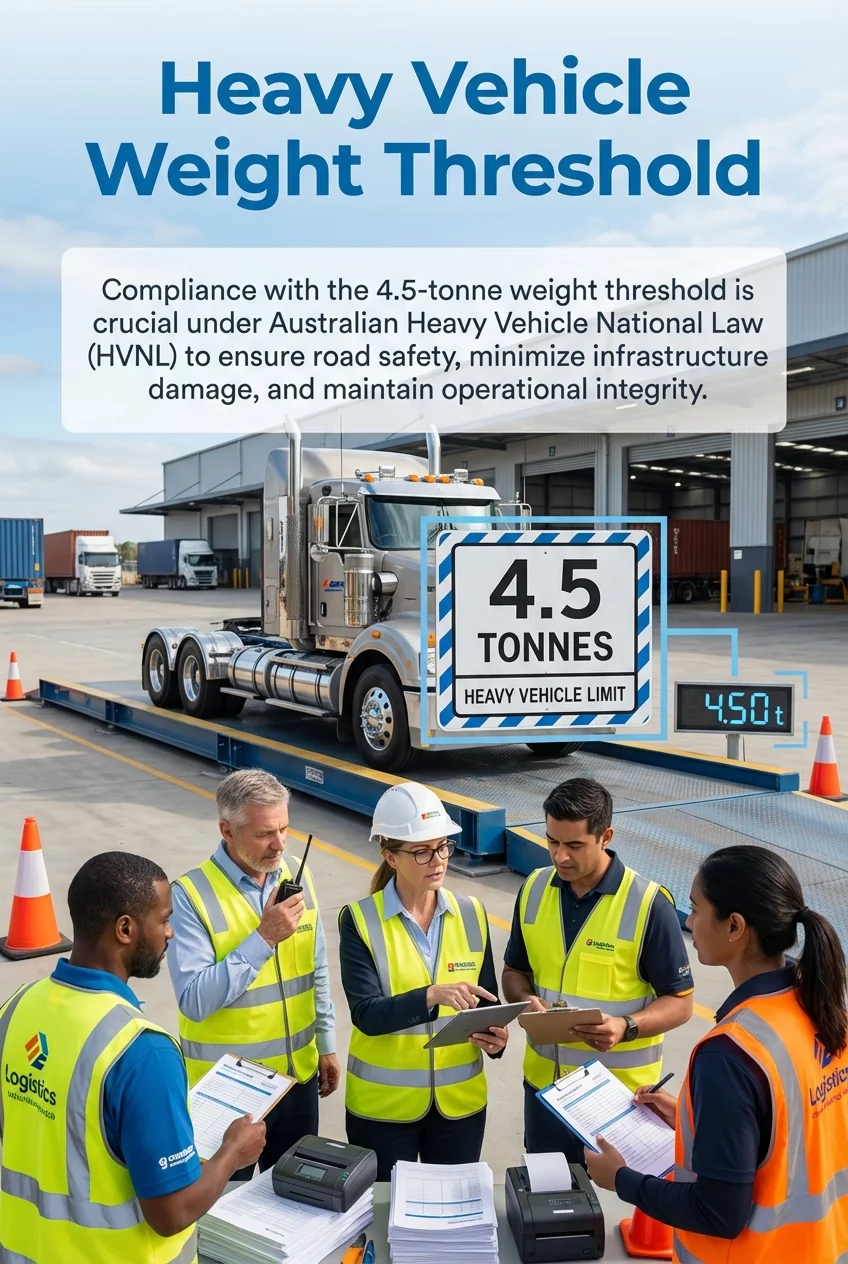
The Heavy Vehicle National Law (HVNL) establishes the regulatory framework for operating heavy vehicles over 4.5 tonnes gross vehicle mass across most of Australia. This legislation creates uniform safety and compliance standards that replaced fragmented state-based systems, with the National Heavy Vehicle Regulator (NHVR) administering enforcement.
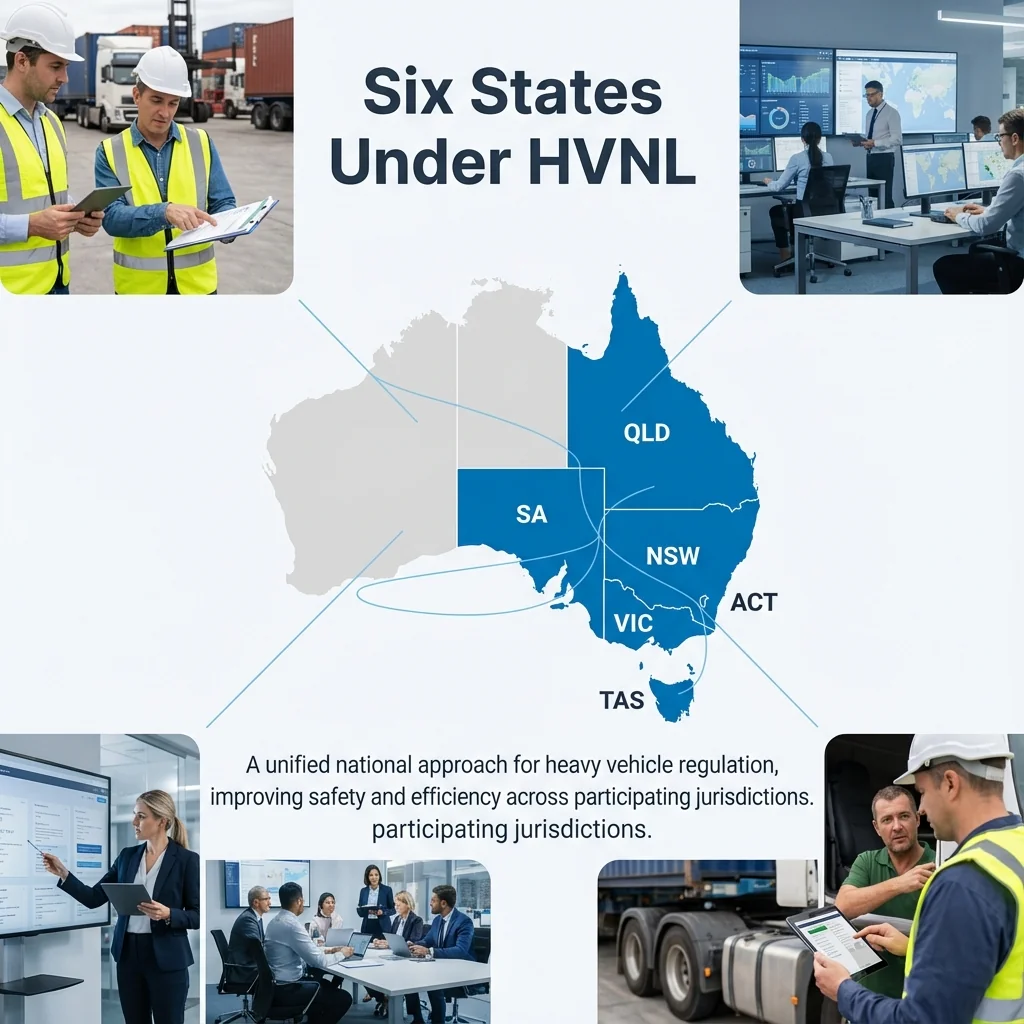
Since commencing on 10 February 2014, the HVNL applies in six participating jurisdictions: Queensland, New South Wales, Victoria, South Australia, Tasmania, and the Australian Capital Territory.
The law fundamentally changed how transport businesses operate by introducing Chain of Responsibility (CoR) principles. These extend legal duties beyond drivers to every party whose decisions affect heavy vehicle safety.
Understanding this regulatory framework isn’t about ticking boxes. It’s about building operational systems that protect your business, your people, and the community.

After working across major supply chains for 25 years, I’ve seen how effective HVNL compliance transforms businesses from reactive firefighting to proactive safety leadership. This creates measurable benefits: reduced insurance premiums, stronger customer relationships, and genuine competitive advantage.
This guide walks through the HVNL’s structure, the five core regulations, how the NHVR operates, and what Chain of Responsibility means for your daily operations. You’ll finish with a clear picture of how these requirements integrate into practical business systems.
What Is the Heavy Vehicle National Law
The Heavy Vehicle National Law represents Australia’s harmonized approach to regulating the heavy vehicle industry.
This legislation governs the operation of heavy vehicles, defined as vehicles with gross vehicle mass exceeding 4.5 tonnes. It covers trucks, buses, and combination vehicles that form the backbone of Australia’s freight network.
Legislative Framework and Scope
The HVNL operates as primary legislation in Queensland, New South Wales, Victoria, South Australia, Tasmania and the Australian Capital Territory. Western Australia and the Northern Territory maintain separate heavy vehicle laws, though alignment discussions continue.
This national approach replaced the previous patchwork of state regulations. Transport operators no longer navigate eight different rule sets when crossing state borders.
The law establishes minimum standards for vehicle operation, driver conduct, and business practices. It creates consistent enforcement mechanisms and penalty structures across participating jurisdictions.
Core Purpose and Road Safety Objectives
The HVNL exists to improve road safety outcomes while supporting efficient freight movement. These objectives balance each other rather than compete.
Road safety improvements target fatigue-related incidents, overloaded vehicles, and mechanical failures. Each poses significant risks to all road users, not just those in the heavy vehicle industry.
Economic efficiency comes through standardized access arrangements and streamlined compliance processes. Businesses gain clearer operational parameters and reduced administrative burden from dealing with multiple state systems.
The legislation recognizes that safety and productivity reinforce each other. Well-maintained vehicles operated by adequately rested drivers move freight more reliably than those cutting corners.
History and Implementation of the HVNL
Understanding where the HVNL came from helps explain why it operates the way it does today.
The Road to National Harmonization
Before 2014, heavy vehicle operators faced different rules in each Australian state and territory. A truck traveling from Brisbane to Melbourne crossed three different regulatory regimes, each with unique requirements for rest breaks, speed limits, and vehicle specifications.
This fragmentation created compliance challenges and economic inefficiencies. Operators maintained multiple sets of documentation and trained staff on jurisdiction-specific variations.
The Council of Australian Governments (COAG) recognized that national freight networks required national regulation. Years of negotiation between federal, state, and territory governments led to the HVNL framework.
Commencement and Phased Rollout
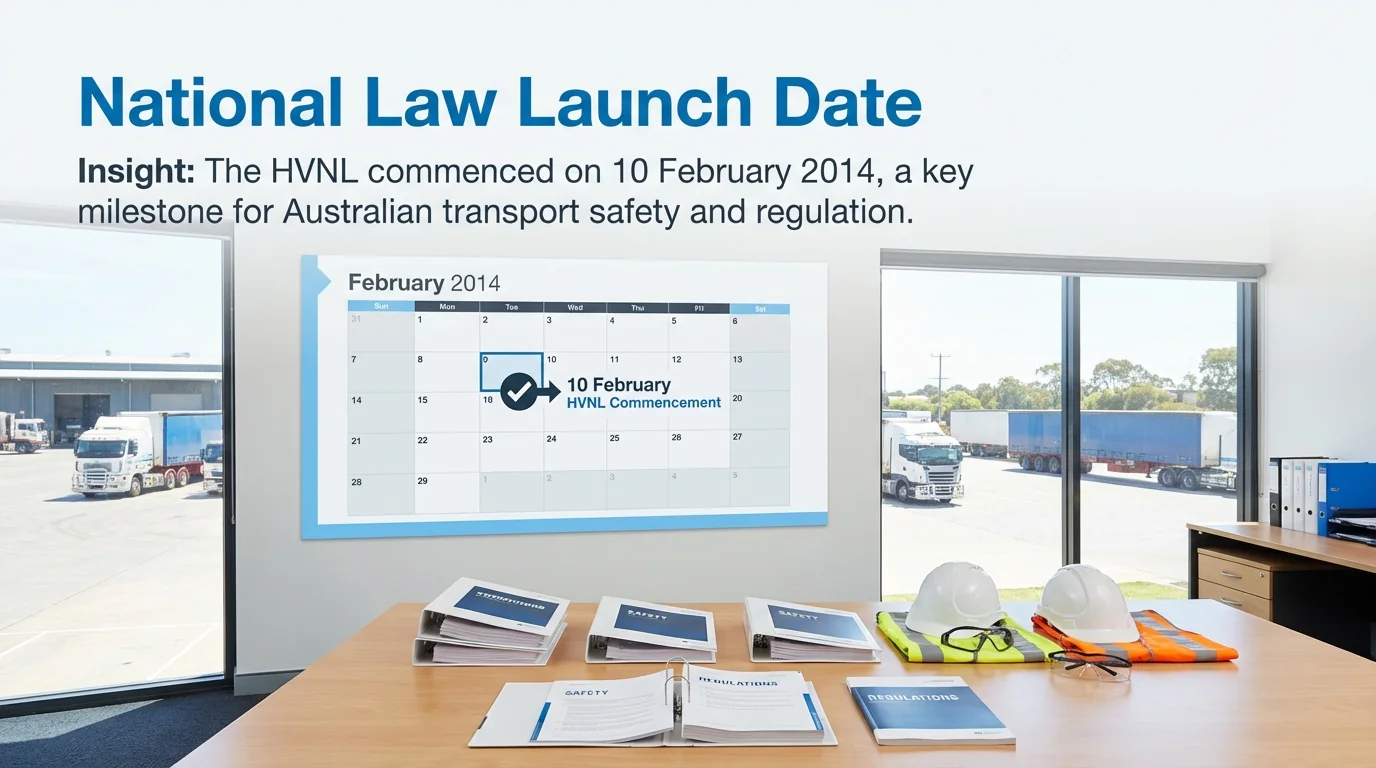
The Heavy Vehicle National Law commenced on 10 February 2014 in Queensland. Other participating jurisdictions adopted the law progressively throughout 2014.
This phased approach allowed the newly established National Heavy Vehicle Regulator to build operational capacity. Systems for registrations, permits, and compliance monitoring required substantial development.
Western Australia and the Northern Territory chose not to participate initially. Both jurisdictions cited concerns about maintaining local control over road access and enforcement priorities.
Evolution and Reform Initiatives
The HVNL hasn’t remained static since implementation. Regular reviews identify areas needing refinement based on operational experience.
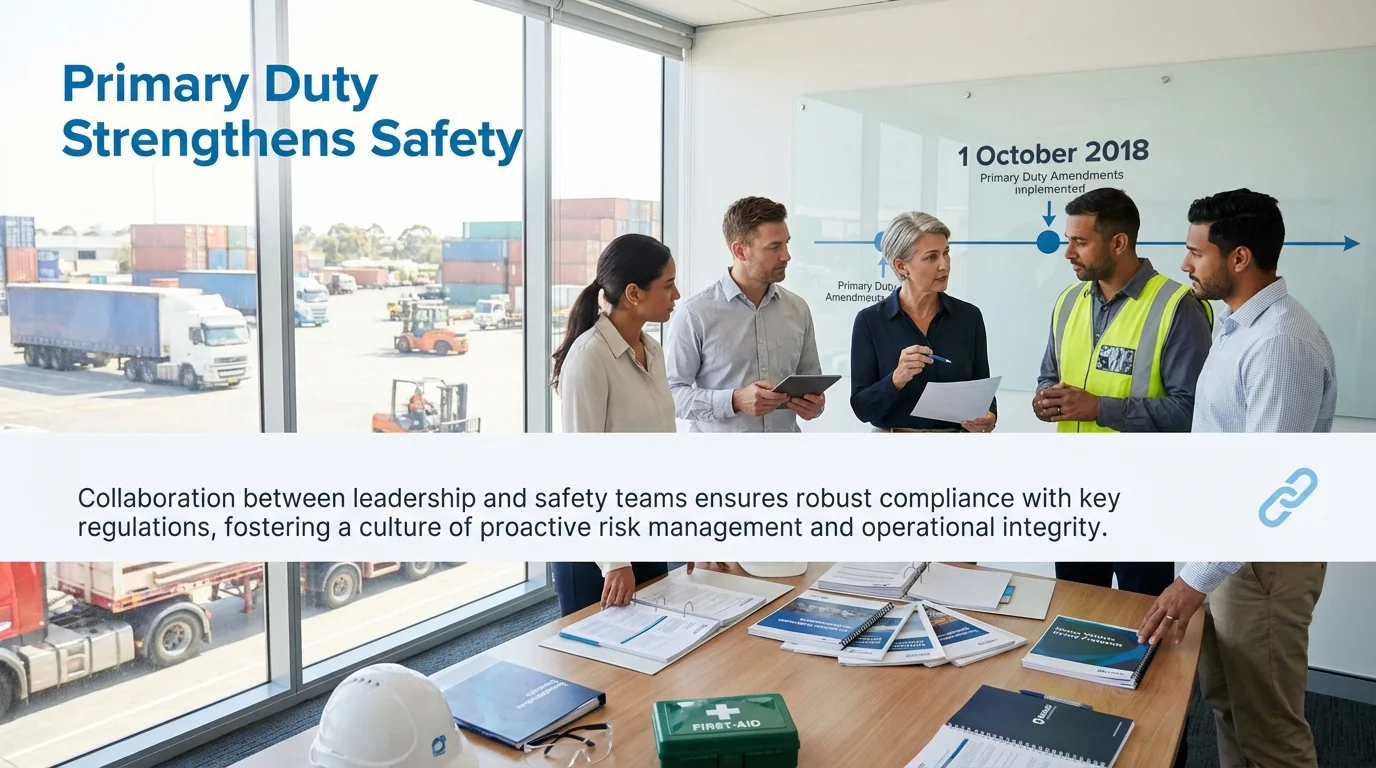
Significant amendments commencing 1 October 2018 introduced a “primary duty” for CoR parties. This change strengthened the Chain of Responsibility framework by establishing positive obligations rather than just prohibitions.
Current consultation on proposed HVNL Mass, Dimension, and Loading amendments considers changes including increasing General Mass Limits to current Concessional Mass Limits. These reforms respond to industry productivity needs while maintaining safety standards.
The NHVR conducts ongoing stakeholder engagement to identify practical improvements. This includes simplifying permit processes, updating vehicle standards, and clarifying compliance expectations.
Key Objectives of the Heavy Vehicle National Law
The HVNL balances multiple objectives that sometimes create tension but ultimately work together.
Improving Road Safety Standards
Road safety sits at the core of the HVNL’s purpose. Heavy vehicles involved in incidents often produce severe outcomes due to vehicle mass and momentum.
Poor maintenance or inadequate load restraint can lead to serious safety incidents. The law establishes preventive standards to address these risks before incidents occur.
Fatigue management provisions recognize that tired drivers make poor decisions. Work and rest requirements create enforceable boundaries around driving hours.
Vehicle standards ensure that heavy vehicles maintain roadworthy condition. Regular inspections and maintenance requirements prevent mechanical failures that endanger everyone.
Supporting Economic Efficiency
Freight movement underpins Australia’s economy. The HVNL supports efficient logistics while maintaining safety boundaries.
Consistent regulations across participating jurisdictions reduce compliance costs. Operators design systems once rather than customizing for each state.
Performance-based standards allow modern, well-maintained vehicles greater operating flexibility. This rewards investment in safety technology and maintenance systems.
Streamlined access arrangements through the National Heavy Vehicle Accreditation Scheme reduce administrative burden for operators demonstrating strong safety cultures.
Establishing Clear Accountability
The HVNL creates transparent accountability through Chain of Responsibility principles. Legal duties extend to everyone whose decisions affect heavy vehicle safety.
This approach recognizes that drivers alone cannot ensure compliance. Schedulers setting unrealistic delivery times, loaders exceeding weight limits, and managers cutting maintenance budgets all influence safety outcomes.
Clear accountability drives better decision-making throughout supply chains. Each party understands their obligations and the consequences of non-compliance.
The Five HVNL Regulations Explained
The Heavy Vehicle National Law operates through five subordinate regulations covering specific operational areas.
Heavy Vehicle National Law Fatigue Management Regulation
The Fatigue Management Regulation establishes work and rest requirements for heavy vehicle drivers. Fatigue significantly impairs reaction times and decision-making capacity.
Standard hours provide maximum work limits and minimum rest requirements. These apply unless operators adopt alternative fatigue management approaches.
Basic Fatigue Management (BFM) allows slightly extended hours in exchange for additional record-keeping. Advanced Fatigue Management (AFM) permits customized schedules based on fatigue science principles.
Work diary requirements create auditable records of driving hours and rest breaks. Drivers must maintain accurate entries, and operators must monitor compliance.
The regulation applies to all parties in the Chain of Responsibility. Schedulers, consignors, and loading managers share obligations to ensure schedules allow legal rest breaks.
Heavy Vehicle National Law Vehicle Standards Regulation
The Vehicle Standards Regulation sets minimum maintenance and roadworthiness requirements. These standards ensure heavy vehicles remain mechanically sound throughout their service life.
Regular inspections identify wear and defects before they cause failures. Operators must establish maintenance schedules appropriate to vehicle usage and operating conditions.
Defect reporting systems create pathways for drivers and mechanics to flag problems. Serious defects must ground vehicles until repairs are completed.
The regulation covers lighting, braking systems, steering components, load restraint equipment, and structural integrity. Each element contributes to safe vehicle operation.
Heavy Vehicle National Law Mass, Dimension and Loading Regulation
The Mass, Dimension and Loading Regulation governs vehicle weights, sizes, and load security. Overloaded or improperly loaded vehicles create significant safety hazards.
Mass limits protect road infrastructure and vehicle mechanical components. Exceeding these limits accelerates pavement damage and brake system wear.
Dimension limits ensure vehicles fit within road geometry. Height, width, and length restrictions prevent bridge strikes and maintain traffic flow.
Load restraint requirements prevent cargo movement during transport. Unsecured loads can shift during braking or cornering, causing rollovers or striking other vehicles.
Different vehicle configurations have specific limits. Heavy trailers are commonly described in three main types – dog trailers, pig trailers and semitrailers, each with distinct characteristics affecting mass distribution.
Heavy Vehicle National Law Registration Regulation
The Registration Regulation establishes requirements for registering heavy vehicles under the national scheme. Registration confirms vehicles meet applicable standards and operators have paid required charges.
Registration records maintain vehicle history and ownership details. This information supports compliance monitoring and incident investigation.
The regulation sets registration periods, renewal processes, and transfer procedures. It establishes the administrative framework for the national heavy vehicle register.
Heavy Vehicle National Law General Regulation
The General Regulation covers operational matters not addressed in other specific regulations. This includes driver licensing requirements, speed compliance, and general operational conduct.
Driver qualification standards ensure operators hold appropriate licenses for vehicle types and configurations. Experience requirements apply to certain high-risk combinations.
Speed compliance provisions establish obligations for both drivers and parties influencing journey scheduling. Tight delivery windows that require speeding to meet create CoR liability.
The regulation addresses administrative matters including notice requirements, information provision, and enforcement procedures.
Role of the National Heavy Vehicle Regulator
The NHVR administers and enforces the Heavy Vehicle National Law across participating jurisdictions.
Regulatory Functions and Authority
The National Heavy Vehicle Regulator operates as the single national body responsible for HVNL administration. This consolidates functions previously spread across state transport agencies.
Registration and licensing services form core operational activities. The NHVR processes applications, maintains records, and issues permits for oversize and overmass vehicles.
Access management determines which vehicles can use specific road networks. This involves assessing vehicle configurations against road infrastructure capacity.
The regulator develops operational policies interpreting legislative requirements. These guidance documents help operators understand their obligations.
Compliance Monitoring and Enforcement
The NHVR conducts compliance activities ranging from education to prosecution. This graduated approach matches enforcement action to risk and conduct.
Roadside inspections check vehicle condition, load security, and driver compliance with work and rest requirements. Inspectors can ground vehicles with serious defects.
Audits examine operator systems and records. These assessments verify that documented procedures match actual practices.
The regulator issues infringement notices for less serious breaches. More serious or repeated contraventions may result in prosecution.
Industry Engagement and Support
The NHVR provides education and guidance to support voluntary compliance. Most operators want to comply but need clarity about requirements.
Industry consultation informs policy development and regulatory refinement. The regulator maintains advisory groups covering different transport sectors.
Online resources include fact sheets, videos, and interactive tools. These materials explain complex requirements in accessible formats.
The National Heavy Vehicle Accreditation Scheme recognizes operators with mature safety management systems. Accreditation delivers operational benefits while reducing compliance burden.
Understanding Chain of Responsibility
Chain of Responsibility fundamentally changed how heavy vehicle safety obligations operate.
CoR Principles and Legal Framework
Traditional road safety law focused on drivers as the primary responsible party. This approach ignored that drivers often face pressures from others in the supply chain.
CoR recognizes that multiple parties influence heavy vehicle safety. Employers, schedulers, consignors, consignees, loaders, and loading managers all make decisions affecting compliance.
The legal framework establishes that each party must take reasonable steps to prevent breaches. This creates shared responsibility across the entire transport chain.
Reasonable steps depend on the party’s role and influence. A consignor controlling delivery schedules has different obligations than a receiver with no scheduling input.
Parties in the Chain
The HVNL identifies specific parties with Chain of Responsibility duties. Understanding which role you occupy determines your obligations.
Employers control driver employment conditions and vehicle maintenance. They establish systems and cultures that either support or undermine compliance.
Operators may differ from employers in some business structures. They make decisions about vehicle deployment and operational practices.
Schedulers determine journey timing and route planning. Unrealistic schedules create pressure to speed or skip rest breaks.
Consignors dispatch freight and often control delivery timeframes. Their booking systems and contract terms shape operational reality.
Consignees receive freight and may impose unloading delays or access restrictions. These decisions affect driver hours and schedule compliance.
Loaders physically place cargo and secure loads. They directly control whether vehicles remain within mass limits and loads stay restrained.
Loading managers supervise loading operations. They establish loading procedures and quality control processes.
Primary Duty Under CoR
The primary duty introduced in 2018 amendments requires each party to ensure safety so far as reasonably practicable. This positive obligation goes beyond simply avoiding breaches.
Reasonably practicable means taking action unless the cost grossly outweighs the risk. This standard requires active risk management, not passive compliance.
Each CoR party must:
- Identify risks their decisions create
- Implement controls proportionate to those risks
- Monitor control effectiveness
- Review and improve systems over time
This approach aligns heavy vehicle safety with workplace health and safety principles. It emphasizes systematic risk management over reactive problem-solving.
Fatigue Management Under the HVNL
Fatigue management represents one of the most operationally significant HVNL requirements.
Standard Hours Framework
Standard hours establish maximum work limits and minimum rest requirements. These apply unless an operator adopts an approved alternative.
Solo drivers face work limits over different periods: single days, multiple consecutive days, and extended cycles. These stacked limits prevent cumulative fatigue.
Two-up operations allow extended hours when two drivers share driving duties. Both drivers must meet minimum rest requirements before commencing.
Rest breaks must provide genuine recovery opportunity. Breaks spent unloading, refueling, or conducting maintenance don’t count as rest.
Work Diary Requirements
Work diaries create auditable records of driving hours and rest breaks. Accurate record-keeping allows drivers, operators, and regulators to verify compliance.
Drivers must record all work time, not just driving. This includes loading, unloading, maintenance, and administrative tasks.
Entries must be contemporaneous. Completing work diaries days later invites errors and raises compliance concerns.
Electronic work diaries are increasingly common. These systems automatically record data from vehicle systems, reducing administrative burden and improving accuracy.
Operators must maintain systems for reviewing work diaries. Regular monitoring identifies compliance issues and schedule problems requiring correction.
Alternative Fatigue Management Options
Basic Fatigue Management allows slightly extended hours in exchange for additional controls. Operators must implement approved BFM procedures and monitoring systems.
Advanced Fatigue Management permits highly customized schedules based on scientific fatigue principles. AFM requires sophisticated systems demonstrating equivalent or better safety outcomes than standard hours.
Both alternatives demand stronger operational systems than standard hours. This tradeoff exchanges flexibility for management capability and investment.
Participating Jurisdictions and National Application
Understanding where the HVNL applies helps operators design appropriate compliance systems.
Current Participating Jurisdictions
Six jurisdictions currently operate under the Heavy Vehicle National Law. Queensland, New South Wales, Victoria, South Australia, Tasmania, and the Australian Capital Territory adopted the national scheme between February and December 2014.
These jurisdictions represent the majority of Australia’s population and freight task. The national scheme covers key freight corridors between major capital cities.
Within participating jurisdictions, the NHVR handles registration, permits, and compliance monitoring. State and territory police maintain roadside enforcement capability under NHVR coordination.
Non-Participating Jurisdictions
Western Australia and the Northern Territory maintain separate heavy vehicle regulatory systems. Both jurisdictions have considered joining the national scheme but retain independent frameworks.
Operators crossing into these jurisdictions must comply with their specific requirements. This creates ongoing complexity for national transport networks.
Some regulatory alignment exists through voluntary cooperation. Western Australia and the Northern Territory adopt certain national standards even while maintaining separate administration.
Cross-Border Operations
Transport operators frequently cross jurisdiction boundaries. Understanding how obligations change at borders prevents compliance gaps.
When entering non-participating jurisdictions, different work diary formats and mass limit calculations may apply. Drivers and schedulers need clear procedures for these transitions.
The NHVR provides guidance on cross-border operations. This includes explaining which requirements carry across borders and where jurisdiction-specific rules apply.
Long-term, full national participation remains the goal. Complete harmonization would eliminate remaining compliance complexity for interstate operators.
Quick Answers to Common HVNL Questions
What is the chain of responsibility around heavy vehicle national law?
Chain of Responsibility extends legal duties to all parties whose decisions affect heavy vehicle compliance. This includes employers, operators, schedulers, consignors, consignees, loaders, and loading managers. Each party must take reasonable steps to prevent breaches.
How does the 4.5 tonne threshold work in practice?
Vehicles with gross vehicle mass exceeding 4.5 tonnes fall under HVNL requirements. This threshold captures most trucks and heavy trailers while excluding typical light commercial vehicles. Gross vehicle mass includes the vehicle, load, fuel, and occupants.
What happens if your business operates in both participating and non-participating jurisdictions?
Operations must comply with applicable requirements in each jurisdiction. This means following HVNL rules in participating states and separate regulations in Western Australia and Northern Territory. Develop procedures addressing jurisdiction-specific requirements and train staff on these differences.
The Heavy Vehicle National Law creates the regulatory foundation for safe, efficient freight movement across Australia. Understanding this framework helps transport businesses build systems that protect people while supporting operational performance.
Compliance isn’t about avoiding penalties. It’s about creating operational capability that delivers reliability, reduces risk, and builds competitive advantage. The businesses that grasp this thrive in an environment where others struggle.
Start by reviewing how your current systems address the five core regulations. Identify gaps between documented procedures and actual practices. Then build the capability to close those gaps systematically.
For businesses needing support translating these requirements into practical systems, understanding HVNL compliance provides the foundation for sustainable operations. The investment in getting this right pays dividends through reduced incidents, lower insurance costs, and stronger customer relationships.