
While US federal agencies have established structured training and certification pathways for Contracting Officer’s Representatives (CORs) who perform technical functions in contract administration, Australian transport operators face a markedly different compliance landscape. There’s no single federal certification body for Chain of Responsibility training here. Instead, the requirements emerge directly from the Heavy Vehicle National Law.
What matters in Australia is competency, not a certificate on the wall.
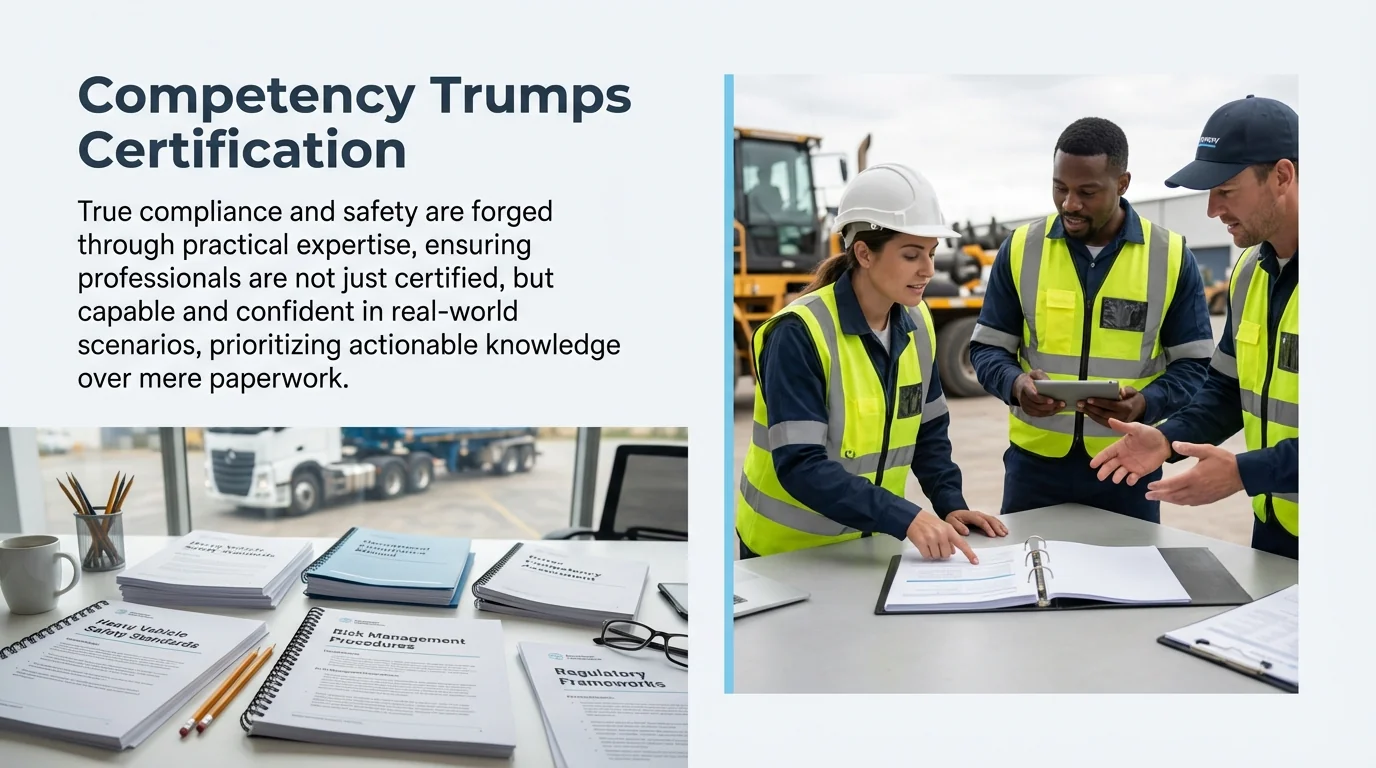
Your CoR training needs depend entirely on your specific role within the supply chain. Someone approving loads requires different knowledge than someone scheduling drivers. Someone managing compliance systems needs broader understanding than someone conducting pre-start checks.
The regulatory framework establishes duties for every party in the supply chain. Training ensures you understand your specific obligations and can execute them consistently. This guide examines how CoR training requirements actually work in Australian transport operations.
The Regulatory Foundation of CoR Training
The Heavy Vehicle National Law doesn’t mandate specific training courses. It establishes legal duties instead.
These duties apply to anyone who influences road safety outcomes through their decisions or actions. Executives who set delivery timeframes. Schedulers who allocate work. Loading supervisors who approve configurations. Compliance managers who design systems.
Training becomes your mechanism for demonstrating due diligence. When an incident occurs, regulators will examine whether you possessed the knowledge and skills necessary to fulfil your duties. Appropriate training provides that foundation.
Who Needs CoR Training
Your training requirements stem from your role in the supply chain. Consider these common positions:
- Transport managers coordinating fleet operations
- Schedulers determining route assignments and delivery windows
- Loading supervisors approving vehicle configurations
- Procurement teams establishing contract terms
- Operations directors setting performance standards
- Compliance officers designing safety systems
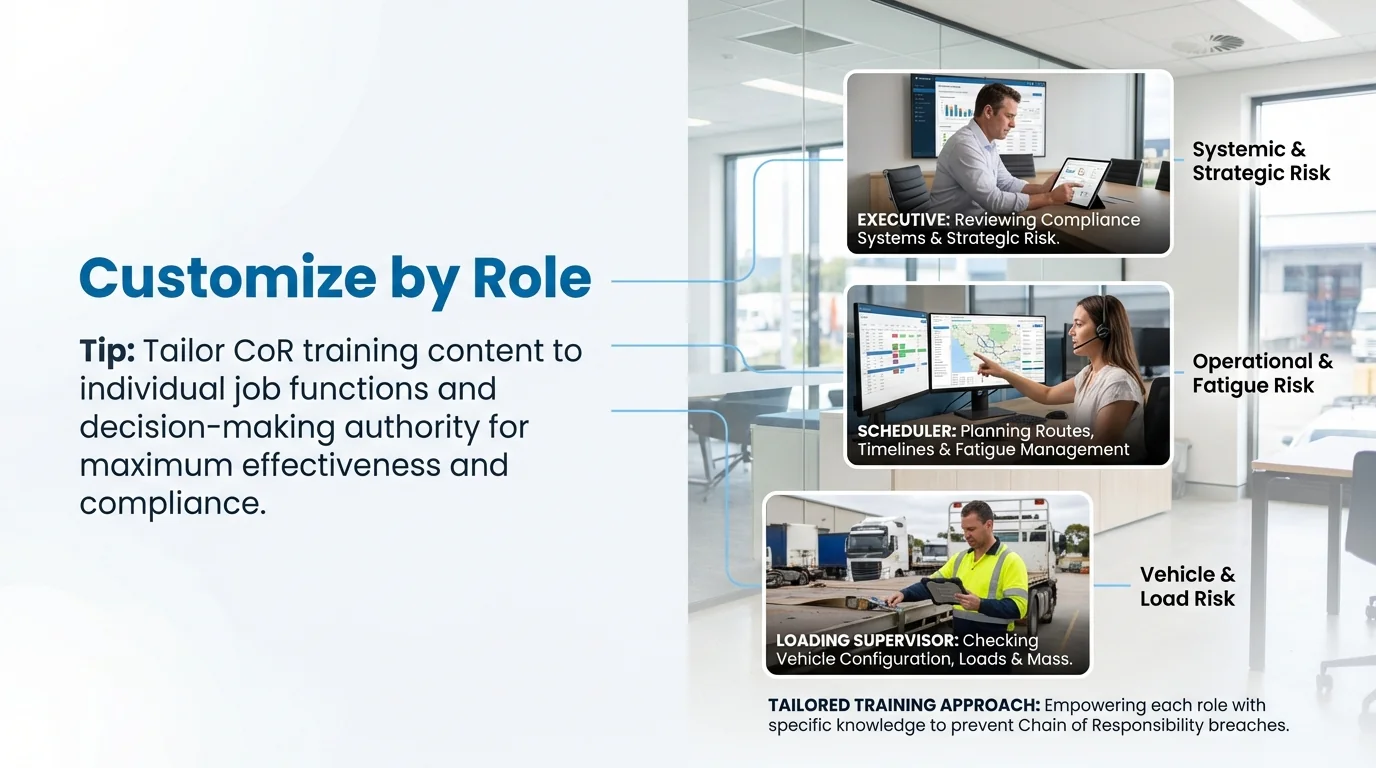
Each role carries different knowledge requirements. A scheduler needs depth on fatigue management regulations. A loading supervisor requires expertise in mass and dimension limits.
The Due Diligence Standard
CoR training serves one primary purpose: establishing your capacity to meet due diligence obligations. This means demonstrating you’ve taken reasonable steps to prevent breaches before they occur.
Training alone doesn’t satisfy due diligence. You need documented systems, regular monitoring, and evidence of consistent application. But training forms the foundational layer.
Regulators expect your training to be current, relevant to your role, and delivered by someone with appropriate expertise. Generic online modules rarely meet this standard for complex operational roles.
Core Knowledge Areas for Chain of Responsibility
Now that you understand why training matters, let’s examine what knowledge you actually need. CoR training covers six fundamental areas that every supply chain participant should understand.
Heavy Vehicle National Law Structure
You need working knowledge of how HVNL creates obligations. Not legal expertise, but practical understanding of how the law applies to daily decisions.
The law establishes primary duties that apply regardless of your specific role. These include ensuring your conduct doesn’t cause or contribute to breaches of road transport laws. Understanding this causation principle is fundamental.
Executive officers carry additional specific duties. If you’re a director or senior manager, your CoR obligations extend beyond operational decisions to governance and system oversight.
The Five CoR Breach Categories
Australian CoR legislation addresses five specific breach types. Your training should provide depth on each:
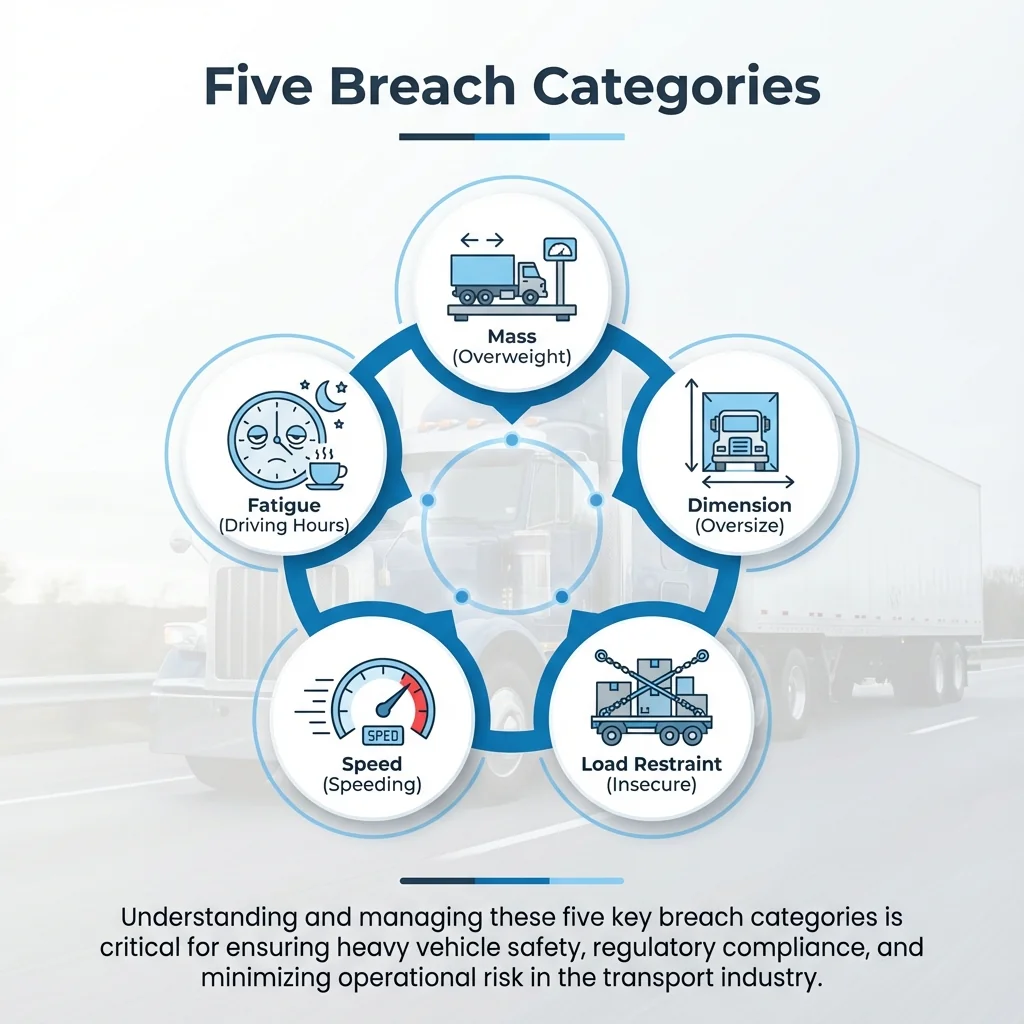
| Breach Category | Primary Risk Areas | Typical Control Points |
|---|---|---|
| Mass | Loading procedures, weighing protocols | Load planning, weighbridge access, documentation |
| Dimension | Vehicle configuration, load restraint | Pre-departure checks, route selection, pilot requirements |
| Load Restraint | Securing methods, equipment condition | Loading standards, inspection processes, equipment maintenance |
| Speed | Scheduling pressures, route planning | Delivery timeframes, traffic considerations, vehicle limitations |
| Fatigue | Work allocation, recovery periods | Scheduling systems, work hour tracking, fatigue management plans |
You don’t need equal expertise across all five. Focus on the categories your decisions directly influence.
Risk Assessment and Control Methods
Effective CoR compliance requires systematic risk identification. Training should equip you to recognize situations where your actions might contribute to potential breaches.
This involves understanding standard risk assessment methodologies adapted for transport operations. You’ll learn to evaluate likelihood and consequence, prioritize control measures, and document your assessment process.
Risk assessment isn’t a one-time exercise. Your training should cover how to review and update assessments as operations change.
Documentation and Evidence Standards
Regulators expect documented evidence of your compliance efforts. Training should clarify what records you need to maintain and how long to retain them.
Different roles require different documentation. Schedulers need evidence of how they allocated work. Loading supervisors need records of weight verification. Executives need evidence of system oversight.
Your training should provide practical guidance on creating audit trails that demonstrate due diligence without creating excessive administrative burden.
Supply Chain Visibility and Communication
CoR obligations extend across organizational boundaries. You need to understand how to communicate safety requirements to other parties in the supply chain.
This includes contract terms that specify safety expectations, induction processes for new suppliers, and incident reporting protocols that ensure information flows appropriately.
Training should address both upstream communication with customers and consignors, and downstream communication with transport providers and drivers.
Continuous Improvement Systems
CoR compliance isn’t static. Your safety management system requires regular review and refinement based on operational experience and regulatory changes.
Training should explain how to establish feedback mechanisms, conduct internal audits, and implement corrective actions when issues emerge. This includes understanding incident investigation methodologies that identify systemic causes rather than blaming individuals.
Training Delivery Methods and Quality Indicators
With the knowledge requirements established, consider how training should be delivered. Method matters as much as content when demonstrating due diligence.
Interactive Workshop Format
Effective CoR training requires active participation, not passive information receipt. Workshop formats that incorporate scenario analysis, group discussion, and practical exercises produce better outcomes than lecture-style delivery.
Participants should work through real situations they encounter in their roles. A scheduler should practice evaluating whether proposed delivery timeframes create speed or fatigue risks. A loading supervisor should assess whether a particular configuration requires dimension permits.
This approach builds practical judgment, not just theoretical knowledge.
Role-Specific Content Customization
Generic CoR training often fails to meet due diligence standards because it doesn’t address your specific decision-making context. Quality training programs customize content based on participant roles.
Executives need governance focus, covering board-level oversight, resource allocation for safety systems, and organizational culture development. Operational managers need process design emphasis. Frontline supervisors need procedure implementation detail.
The regulatory framework remains consistent across roles. The application differs significantly.
Trainer Qualifications and Experience
CoR training quality depends heavily on trainer expertise. Look for trainers with both regulatory knowledge and operational experience in transport supply chains.
Academic qualifications matter less than demonstrated understanding of how compliance works in practice. The best trainers can explain not just what the law requires, but how to integrate those requirements into existing business processes.
TAE certification indicates teaching competency but doesn’t guarantee transport expertise. Verify trainers understand your industry sector and the specific challenges you face.
Assessment and Competency Verification
How do you know participants actually gained required knowledge? Quality training programs include assessment components that verify understanding.
This might involve scenario-based questions that test judgment, practical exercises that demonstrate skill application, or structured discussions that reveal comprehension depth. Simple multiple-choice tests rarely provide adequate verification for complex roles.
Assessment should align with the knowledge requirements for specific roles. Executives need to demonstrate understanding of system oversight principles. Operational staff need to show they can apply procedures correctly.
Determining Training Frequency and Refresher Requirements
Initial training establishes baseline knowledge. Maintaining competency requires ongoing refresher training and updates as regulations evolve.
Initial Training Timeframes
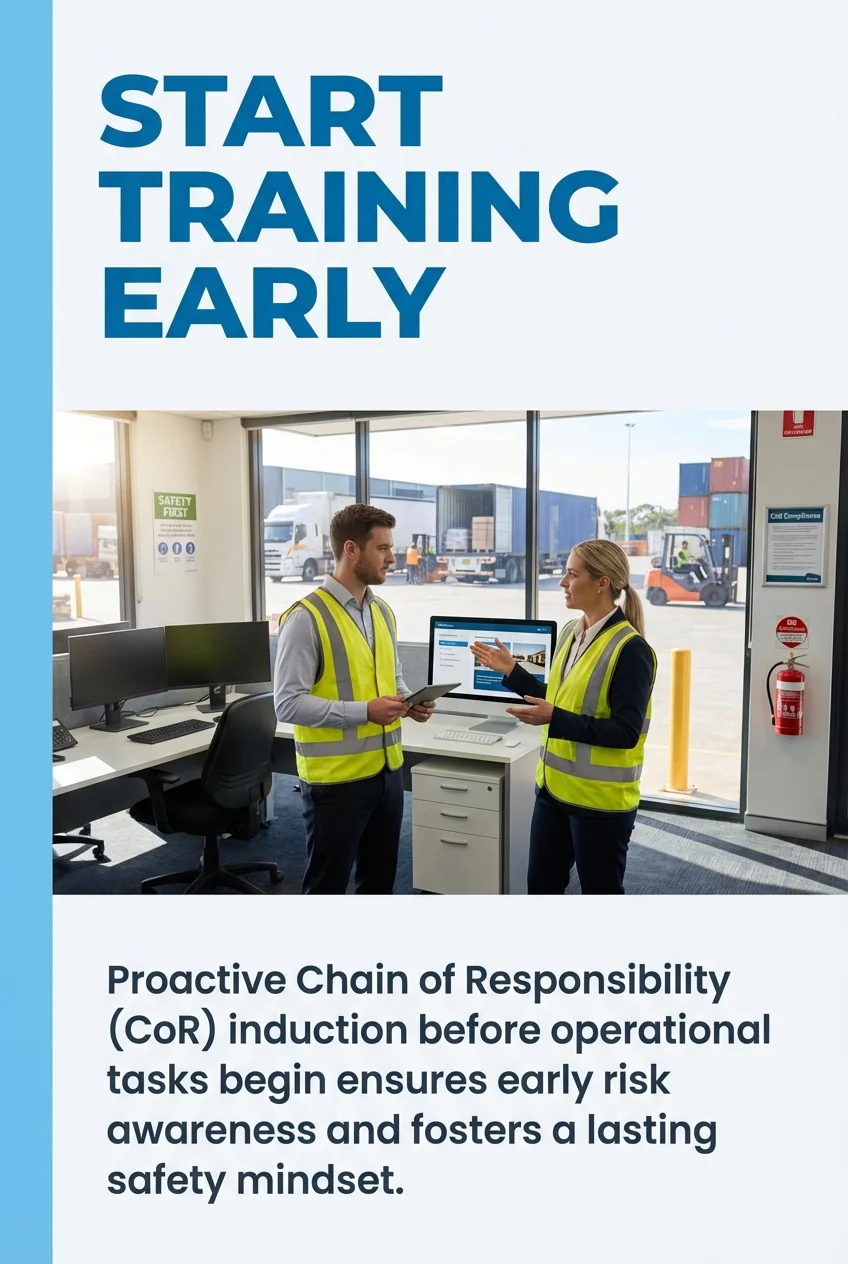
New employees with CoR responsibilities should complete initial training before making decisions that could influence road safety outcomes. This means training during onboarding, not six months into the role.
The training duration depends on role complexity. Executives might need half-day sessions focused on governance obligations. Operational managers might require full-day or multi-day programs covering detailed procedures. Frontline supervisors need role-specific training lasting several hours.
Rushing training to meet arbitrary timeframes compromises effectiveness. Allocate sufficient time for participants to absorb information and practice application.
Refresher Training Cycles
CoR knowledge degrades over time. Procedures get forgotten. New risks emerge. Regulations change. Refresher training addresses this degradation.
Most organizations implement refresher training on two or three-year cycles. Annual refreshers work better for complex roles where decisions carry significant risk. Less frequent cycles might suffice for simpler roles with clear procedures.
Refresher training shouldn’t simply repeat initial content. Focus on areas where incidents or audits reveal knowledge gaps, regulatory changes affecting your operations, and emerging industry practices.
Trigger-Based Training Updates
Certain events should trigger immediate training updates regardless of scheduled refresher cycles. These include:
- Significant regulatory changes affecting your operations
- Incidents revealing systemic knowledge gaps
- Changes in operational processes that alter risk profiles
- Introduction of new technology affecting compliance
- External audits identifying training deficiencies
Document these trigger events and your training response. This demonstrates your organization’s commitment to maintaining current knowledge.
Integrating CoR Training Into Safety Management Systems
Training exists within broader safety management frameworks. Effective integration ensures knowledge translates into consistent operational practice.
Linking Training to Job Descriptions
Your position descriptions should explicitly identify CoR obligations relevant to each role. This creates clear expectations that training programs can address directly.
Job descriptions should specify required competencies, not just training completion. A scheduler’s position description might require demonstrated ability to evaluate fatigue risks in work allocation. A loading supervisor’s might require competency in mass management procedures.
This competency focus shifts training from compliance checkbox to capability development.
Performance Management Integration
CoR competencies should feature in performance reviews and development plans. Managers should assess whether employees apply their training knowledge consistently in daily decisions.
This doesn’t mean punishing mistakes. It means identifying where additional coaching might help, recognizing good safety judgment, and ensuring knowledge application remains visible in performance conversations.
Performance integration reinforces that CoR compliance matters to the organization beyond mere regulatory adherence.
Documentation Within Management Systems
Your safety management system should document training requirements, delivery records, assessment outcomes, and refresher schedules. This creates the audit trail regulators expect during compliance reviews.
Documentation should include participant lists, training content outlines, assessment results, and trainer qualifications. Maintain these records for at least five years to cover typical regulatory investigation timeframes.
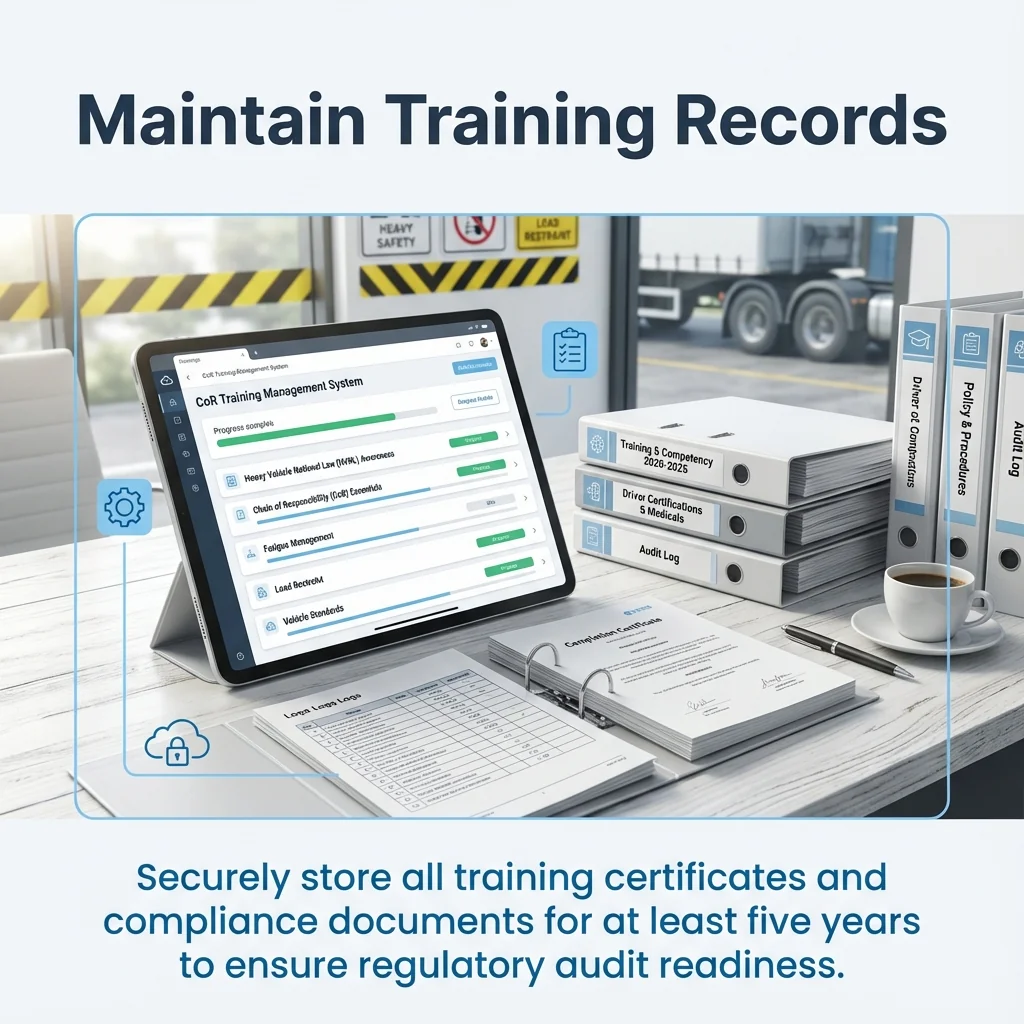
Digital systems work well for tracking training status across large organizations. Whatever system you use, ensure it provides reliable evidence of who received what training and when.
Continuous Improvement Feedback Loops
Training programs should evolve based on operational feedback. When incidents occur, assess whether inadequate training contributed. When audits identify issues, consider whether training gaps exist.
This feedback loop ensures training remains relevant and effective. It also demonstrates your organization’s commitment to learning from experience.
Regular training program reviews should consider participant feedback, assessment outcomes, incident patterns, and audit findings. Update content and delivery methods based on these inputs.
Industry-Specific Training Considerations
CoR principles apply across all transport operations. Implementation details vary significantly by industry sector.
Construction and Infrastructure Logistics
Construction sector training needs particular emphasis on dimension and mass management. Projects often involve oversize loads, complex route planning, and coordination with multiple contractors.
Training should address permit requirements, escort procedures, and communication protocols between site supervisors and transport coordinators. The dynamic nature of construction work requires flexible compliance approaches.
Executive training should cover how project bidding and contract terms can create downstream safety pressures if not carefully structured.
Retail and FMCG Distribution
Retail distribution typically involves tight delivery windows and high-frequency operations. Training must address how scheduling systems prevent speed and fatigue risks under these pressures.
Warehouse operations training should emphasize load restraint and mass management for mixed loads. Loading supervisors need skills in optimizing vehicle utilization without exceeding legal limits.
Contract negotiations training for procurement teams should cover how to specify delivery requirements that don’t compromise safety.
Mining and Resources Transport
Mining operations face unique challenges around fatigue management for long-distance remote area transport. Training needs depth on work-rest hour requirements and fatigue management plans.
The interface between mine site operations and public road transport creates particular compliance complexity. Training should address how site access procedures integrate with broader CoR obligations.
Mass management becomes critical with bulk commodity transport. Loading supervisors need detailed understanding of payload optimization within legal limits.
Manufacturing Supply Chains
Manufacturing sector training should emphasize how production scheduling decisions can create transport safety pressures. Just-in-time delivery models require careful design to avoid speed or fatigue risks.
Packaging and load configuration decisions made on production lines affect restraint requirements. Training should extend to production supervisors who influence these decisions.
Contract management training should address how supplier agreements specify transport safety expectations throughout the supply chain.
Selecting Training Providers and Evaluating Quality
The training provider market varies significantly in quality. Selecting appropriate providers requires careful evaluation beyond cost considerations.
Provider Qualification Assessment
Start by verifying trainer qualifications and experience. Request details of their transport industry background, regulatory expertise, and client portfolio in your sector.
Ask for training program outlines that show content depth and delivery methodology. Quality providers can articulate their pedagogical approach and how it builds practical competency.
Check whether providers offer customization for different roles or deliver standardized content regardless of participant needs. Customization indicates deeper understanding of CoR complexity.
Content Relevance Verification
Request sample materials or attend a trial session before committing to organization-wide delivery. Assess whether content addresses your specific operational challenges or provides only generic regulatory overview.
Quality content includes case studies relevant to your industry, scenario exercises reflecting real decisions your staff make, and practical tools participants can apply immediately.
Avoid providers who promise certification without rigorous assessment, claim to guarantee compliance through training alone, or suggest their approach eliminates regulatory risk entirely.
Post-Training Support Services
CoR competency develops through ongoing application, not single training events. Quality providers offer post-training support including consultation on specific situations, access to updated materials as regulations change, and refresher training as part of long-term relationships.
This ongoing support indicates provider commitment to your compliance success rather than transactional training delivery.
Value Beyond Cost Considerations
Training represents investment in organizational capability and regulatory defense. The cheapest provider rarely delivers the best outcome.
Calculate value by considering reduced incident risk, improved regulatory standing, enhanced operational efficiency through better compliance integration, and staff capability development.
Quality training might cost more per participant but deliver significantly better risk mitigation and operational benefits.
Building Internal CoR Training Capability
Large organizations often develop internal training capability rather than relying entirely on external providers. This approach offers consistency and ongoing accessibility.
Internal Trainer Development
Building internal capability starts with identifying suitable trainer candidates. Look for employees with strong operational knowledge, communication skills, and respected standing within the organization.
These candidates need comprehensive CoR knowledge through advanced training programs. They should also complete training and assessment qualifications (TAE40116 or successor) to develop effective delivery skills.
Internal trainers bring operational credibility that external providers might lack. They understand your specific processes and can customize examples accordingly.
Training Material Development
Internal programs require quality training materials specific to your operations. This includes presentation content, scenario exercises, assessment tools, and participant resources.
Material development takes significant time and expertise. Many organizations engage external consultants to create initial materials, then maintain and update them internally.
Materials should reflect your actual procedures, use your terminology, and address your specific risk profile. Generic materials undermine internal program credibility.
Quality Assurance Processes
Internal training programs need quality assurance mechanisms to maintain standards. This might include observation of training delivery, participant feedback collection, assessment result analysis, and periodic external reviews.
Regular quality reviews ensure internal programs remain current and effective. They also provide evidence of your organization’s commitment to training quality during regulatory reviews.
Measuring Training Effectiveness and Compliance Outcomes
Training investment requires measurement to verify effectiveness. Multiple indicators help assess whether training achieves intended outcomes.
Immediate Knowledge Assessment
Post-training assessments measure immediate knowledge gain. While these don’t guarantee long-term retention or application, they verify participants understood core concepts.
Assessment results should inform training program refinement. Consistently poor performance on specific topics suggests content needs clearer explanation or more practice opportunities.
Track assessment results over time to identify trends. Declining pass rates might indicate training content hasn’t kept pace with operational changes.
Behavioral Observation and Application
The real test comes through observing whether staff apply training knowledge in daily decisions. This requires managers to actively monitor compliance-related behaviors.
Behavioral observation might reveal gaps between knowledge and application. Perhaps staff understand requirements but lack confidence in applying them. Perhaps competing priorities discourage proper procedures.
These observations should feed back into training refinement and broader system improvements.
Incident Pattern Analysis
Incident and near-miss data reveals whether training effectively reduces risk. Analyze whether incidents involve knowledge failures, judgment errors, or systemic pressures that override good knowledge.
Knowledge failures suggest training gaps. Judgment errors might indicate need for more scenario practice. Systemic pressures require organizational changes beyond training.
Regular incident review should inform training content updates and delivery method adjustments.
Audit and Inspection Outcomes
External audit findings and regulatory inspection results provide objective training effectiveness indicators. Consistent issues around specific compliance areas suggest training hasn’t adequately addressed those topics.
Positive audit outcomes validate training investment. Document these successes as evidence of your program’s effectiveness.
Common Training Gaps and How to Address Them
Experience reveals recurring training deficiencies across the transport sector. Understanding these patterns helps you avoid similar gaps.
Many organizations focus training exclusively on operational staff while neglecting executive and management education. This creates disconnect between governance decisions and operational reality. Executives need understanding of their specific CoR obligations and how organizational decisions affect downstream safety.
Training often addresses regulatory knowledge without building practical application skills. Participants learn what the law requires but not how to integrate requirements into daily work. Scenario-based training and workplace application exercises address this gap.
Refresher training frequently becomes stale repetition of initial content rather than building on foundational knowledge. Effective refreshers focus on advanced topics, emerging risks, and lessons learned since initial training.
Documentation of training often fails to demonstrate competency achievement, showing only attendance records. Quality documentation includes assessment outcomes, competency verification, and evidence of knowledge application in role.
Training programs sometimes exist in isolation from broader safety management systems. Effective training integrates with job descriptions, performance management, risk assessments, and continuous improvement processes.
Moving Forward With Your CoR Training Strategy
CoR training requirements aren’t about checking regulatory boxes. They’re about building organizational capability to manage transport safety risks systematically.
Start by clarifying CoR responsibilities across your organization. Map who makes decisions that influence safety outcomes. Then determine what knowledge each role requires to fulfil those responsibilities competently.
Evaluate your current training against these requirements. Where do gaps exist? What roles need more comprehensive coverage? How well does your training translate into operational practice?
Select training delivery methods that match your organizational needs and resources. External providers work well for initial capability building. Internal programs suit organizations with sufficient scale and expertise to maintain quality.
Integrate training into broader safety management frameworks. Document requirements clearly, track delivery consistently, measure outcomes systematically, and refine programs based on operational feedback.
CoR training succeeds when it changes how people think about daily decisions. The goal isn’t remembering regulatory details. It’s developing judgment that recognizes safety implications and responds appropriately.
This judgment develops through quality initial training, regular reinforcement, practical application opportunities, and organizational cultures that value compliance as operational advantage rather than regulatory burden.
Your training program should evolve continuously as operations change, regulations develop, and your organization learns from experience. Review training effectiveness regularly through incident analysis, audit outcomes, and staff feedback. Update content and delivery methods accordingly.
Organizations that approach CoR training strategically, with clear competency objectives and integration into broader systems, build genuine compliance capability. Those that treat training as isolated compliance activity rarely achieve sustainable outcomes.
The regulatory framework provides flexibility in how you meet obligations. Use that flexibility to design training that serves both compliance requirements and operational effectiveness. Done well, CoR training enhances efficiency while reducing risk.