
Supply chain risk management issues now threaten business continuity more than ever. Financial instability, geopolitical tensions, supplier failures, environmental disruptions, and cybersecurity threats create a complex web of vulnerabilities that can halt operations overnight.
Effective supply chain risk management demands more than reactive responses. It requires systematic identification of threats, detailed assessment of exposure, and proactive mitigation strategies that build genuine resilience. Organizations must map their entire supply network, understand dependencies, and implement controls that prevent disruptions before they cascade through operations.
This article examines eight critical supply chain risks and provides actionable mitigation strategies. You’ll discover how to diversify suppliers strategically, leverage technology for visibility, develop robust contingency plans, and transform risk management from a compliance activity into a source of operational advantage.
We’ll cover financial risks from currency fluctuations and inflation, geopolitical threats from trade policy shifts, supplier reliability issues, environmental disruptions, cybersecurity vulnerabilities, operational failures, demand forecasting challenges, and compliance complexities. Each section includes practical approaches for reducing exposure and strengthening your supply chain against emerging threats.
What Are Supply Chain Risks?
Supply chain risks are potential disruptions that threaten the flow of goods, services, or information from suppliers to customers. These threats originate from both internal operations and external forces beyond direct control.
Internal supply chain risks include inadequate inventory management, poor demand forecasting, operational inefficiencies, and system failures. These business risks stem from planning gaps, process weaknesses, or insufficient monitoring of supply chain performance.
External supply chain risks encompass natural disasters, geopolitical instability, supplier bankruptcy, trade restrictions, and economic volatility. These disruptions often arrive without warning and impact multiple organizations simultaneously.
Supply chains have grown increasingly interconnected. A single supplier failure can ripple through dozens of downstream businesses. Understanding these dependencies forms the foundation for effective risk management.
The complexity of global supply networks amplifies risk exposure. Organizations often lack visibility beyond first-tier suppliers, creating blind spots where disruptions can originate undetected.
Why Supply Chain Risk Management Matters
Supply chain disruptions carry significant financial consequences. Lost revenue, increased costs, and damaged customer relationships can persist long after operations resume.
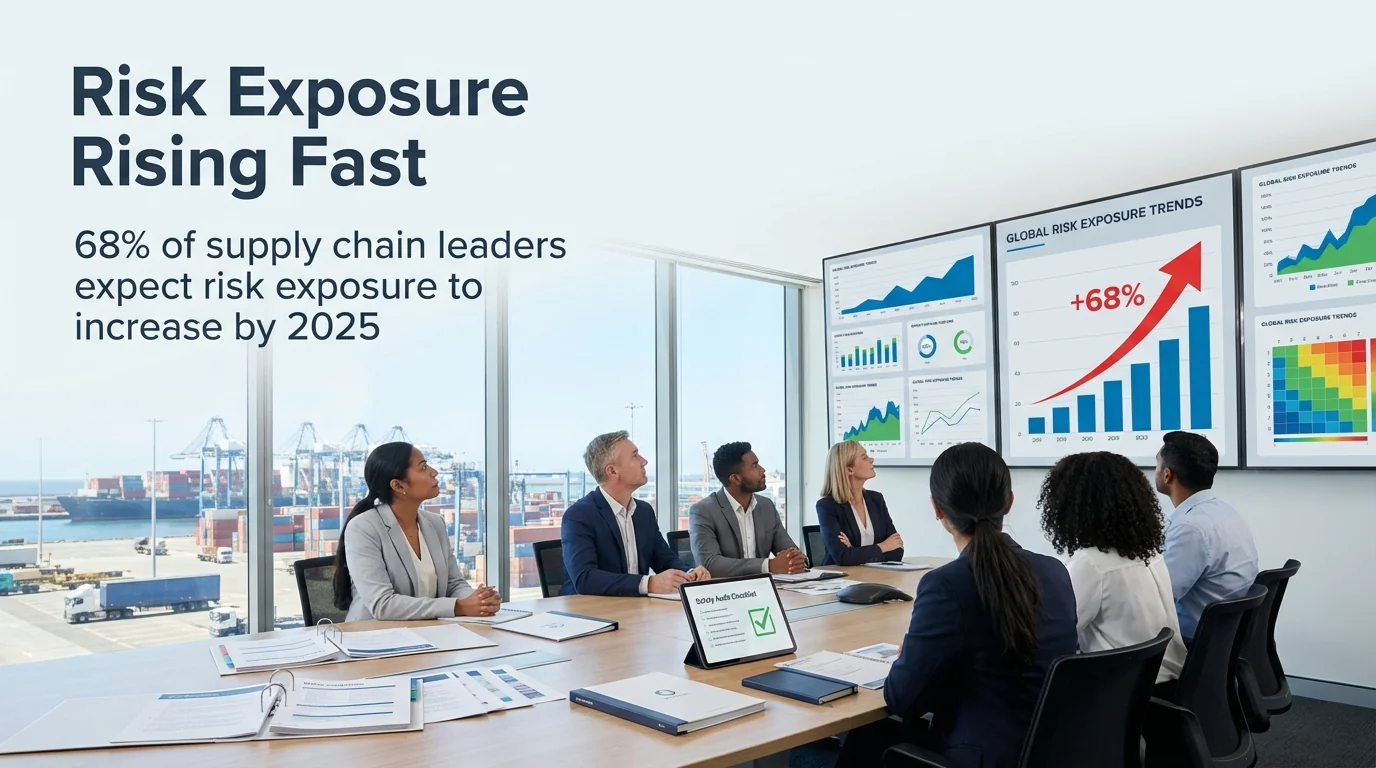
According to research from Ivalua, 68% of supply chain leaders expect risk exposure to increase by 2025. This trend reflects growing complexity in global trade, technological dependencies, and environmental volatility.
Organizations without structured risk management approaches respond reactively. They scramble during crises rather than executing predetermined contingency plans. This reactive stance increases recovery time and magnifies operational impact.
Supply chain resilience delivers direct business benefits. Companies with robust risk management frameworks maintain service levels during disruptions, protect profit margins, and strengthen customer confidence.
Risk assessment processes identify vulnerabilities before they manifest as disruptions. This proactive approach enables targeted mitigation strategies that address the highest-probability, highest-impact threats.
Organizations that map their supply chain end-to-end gain visibility into dependencies and concentration risks. This intelligence supports strategic decisions about supplier diversification, inventory positioning, and alternative sourcing.
1. Financial Risks
Financial risks in supply chains stem from currency fluctuations, inflation, supplier financial instability, and cost volatility. These threats directly impact profitability and operational sustainability.
Currency Exchange Volatility
Currency exchange rate movements affect organizations with international suppliers. Sudden devaluations can increase procurement costs by double-digit percentages overnight.
Companies source components from multiple countries simultaneously. Exchange rate volatility creates unpredictable cost structures that complicate budgeting and pricing decisions.
Organizations manage currency risk through hedging strategies, forward contracts, and diversified sourcing across currency zones. These approaches reduce exposure to single-currency movements.
Inflation and Input Cost Increases
Inflation drives up raw material costs, transportation rates, and labor expenses. Economic volatility creates periods where supplier costs escalate faster than organizations can adjust pricing.
Supply chain managers track commodity indexes and economic indicators to anticipate cost pressures. This forward visibility enables negotiation of fixed-price contracts during favorable periods.
Long-term supplier agreements with escalation clauses protect both parties. These contracts balance cost predictability with mechanisms for sustainable price adjustments.
Supplier Financial Instability
Supplier bankruptcy eliminates critical sources overnight. Financial distress at key suppliers creates immediate sourcing challenges and potential production stoppages.
Organizations conduct regular financial health assessments of critical suppliers. Credit ratings, financial statements, and payment behavior patterns provide early warning signals.
Risk mitigation strategies include supplier diversification, financial monitoring systems, and backup supplier qualifications. These approaches reduce dependence on financially vulnerable partners.
| Financial Risk Type | Primary Impact | Mitigation Approach |
|---|---|---|
| Currency Volatility | Procurement cost unpredictability | Hedging strategies, multi-currency sourcing |
| Inflation Pressure | Margin compression | Fixed-price contracts, early negotiation |
| Supplier Insolvency | Source elimination | Financial monitoring, backup qualifications |
2. Geopolitical Risks
Geopolitical risks arise from political instability, trade policy changes, sanctions, and international conflicts. These external forces reshape supply chain viability with little advance notice.
Trade Wars and Tariff Changes
Trade tensions between major economies create sudden cost increases and sourcing restrictions. The U.S. imposed additional tariffs on roughly $380 billion worth of Chinese goods during recent trade conflicts.

Organizations with concentrated sourcing in affected regions face immediate margin pressure. Tariffs often arrive faster than businesses can establish alternative supply sources.
Supply chain mapping identifies geopolitical exposure across the supplier network. This visibility enables proactive evaluation of alternative sourcing regions before trade restrictions take effect.
Regulatory Compliance Complexity
Environmental regulations, trade compliance requirements, and transparency standards constantly change. According to Marsh analysis, constantly evolving environmental, trade, and transparency regulations increase compliance risk.
Organizations maintain regulatory monitoring systems that track changes across operating jurisdictions. This intelligence supports timely adjustments to supply chain practices and supplier requirements.
Compliance management extends beyond internal operations to supplier performance. Audit programs verify that suppliers meet regulatory standards for labor practices, environmental controls, and data security.
Political Instability and Sanctions
Political upheaval disrupts transportation networks and supplier operations. Sanctions eliminate entire countries as viable sourcing regions overnight.
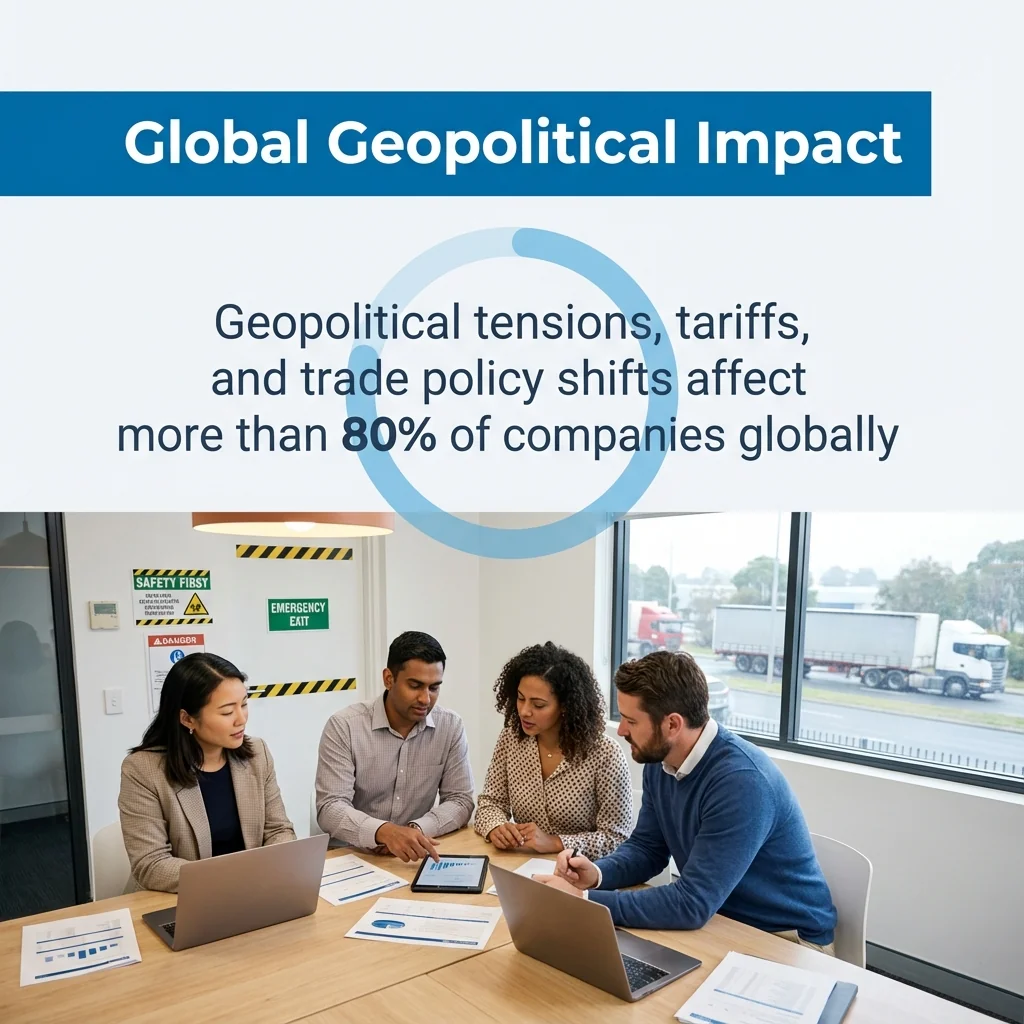
According to Secureframe research, geopolitical tensions, tariffs, and trade policy shifts affect more than 80% of companies globally.
Scenario planning exercises evaluate supply chain vulnerability to political disruptions. Organizations develop contingency responses for probable geopolitical scenarios affecting critical sourcing regions.
Learn more about managing risks in global supply chains through strategic diversification.
3. Supplier Performance and Reliability Issues
Supplier performance risks include quality failures, delivery delays, capacity constraints, and relationship breakdowns. These supply risks directly impact production schedules and customer commitments.
Quality Control Failures
Supplier quality issues create downstream problems throughout operations. Defective components halt production lines, trigger rework cycles, and generate customer returns.
Organizations implement supplier quality management programs with clear specifications, regular audits, and performance scorecards. These systems identify quality trends before they escalate into disruptions.
Joint quality improvement initiatives strengthen supplier capabilities. Technical support, training programs, and process consulting help suppliers meet quality requirements consistently.
Delivery Reliability Problems
Late deliveries disrupt production schedules and compromise customer service levels. Supplier delivery performance variability complicates inventory planning and increases safety stock requirements.
Performance monitoring systems track supplier on-time delivery rates, lead time consistency, and order accuracy. This data identifies unreliable suppliers requiring attention or replacement.
Transportation partnerships with multiple carriers reduce dependence on single logistics providers. Diversified transportation capacity maintains delivery reliability when individual carriers face disruptions.
Supplier Diversification Strategies
Single-source dependencies create concentration risk. Organizations strategically diversify suppliers for critical components to prevent disruption from individual supplier failures.
Dual-sourcing approaches maintain relationships with multiple qualified suppliers. This strategy balances economies of scale with supply continuity protection.
Regional diversification reduces exposure to localized disruptions. Supplier networks spanning multiple geographic regions withstand natural disasters, political instability, and transportation disruptions.
| Supplier Risk Factor | Operational Impact | Management Strategy |
|---|---|---|
| Quality Inconsistency | Production delays, rework costs | Audit programs, performance scorecards |
| Delivery Variability | Schedule disruptions, excess inventory | Performance tracking, carrier diversification |
4. Environmental and Natural Disaster Risks
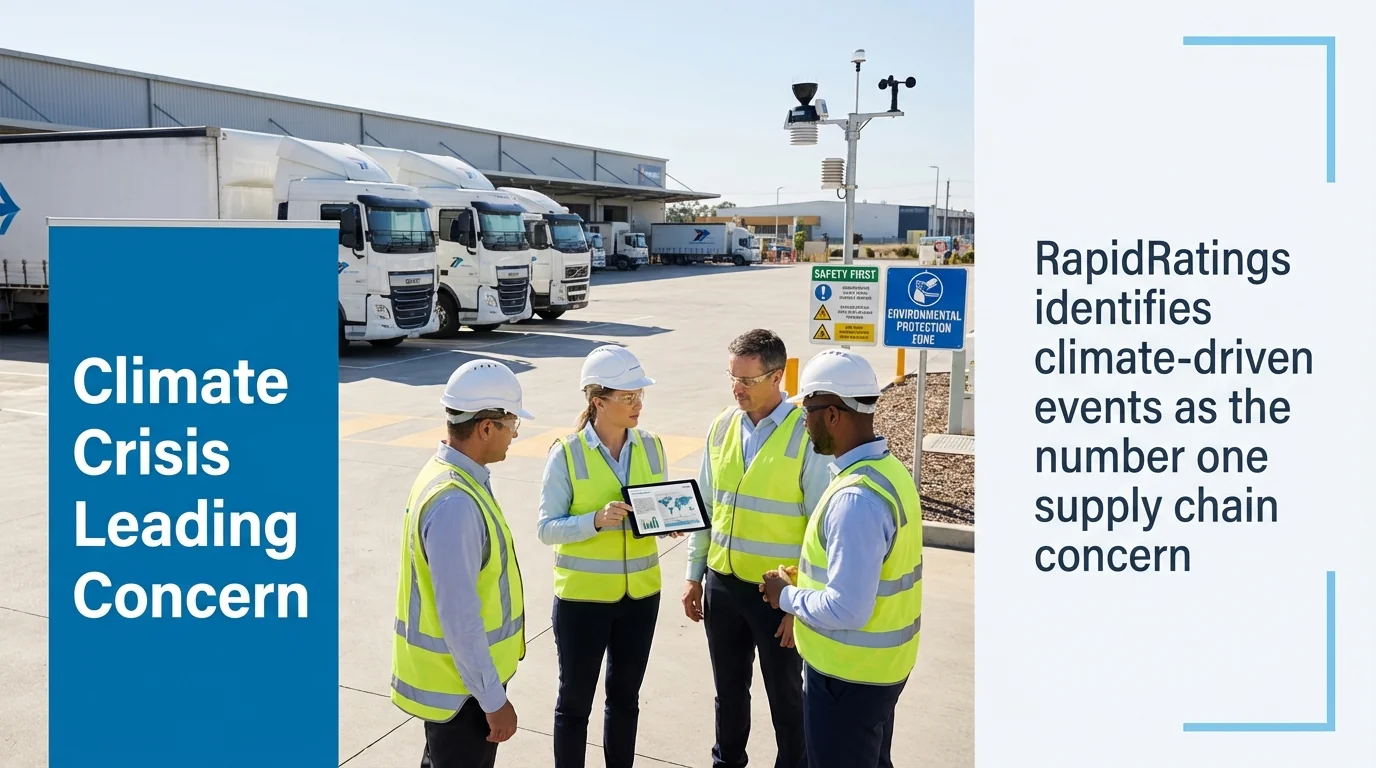
Natural disasters and environmental risks threaten supply chain continuity through facility damage, transportation network disruption, and supplier shutdowns. RapidRatings identifies climate-driven events as the number one supply chain concern.
Natural Disaster Vulnerability
Earthquakes, hurricanes, floods, and wildfires damage facilities and disrupt transportation infrastructure. These events can eliminate critical suppliers or block logistics routes for extended periods.
Geographic mapping identifies supply chain exposure to natural disaster zones. Organizations assess which suppliers and transportation routes face elevated risk from specific environmental threats.
Business continuity plans for natural disasters include alternative suppliers, backup facilities, and rerouting protocols. These contingency measures enable rapid response when disasters strike.
Climate Change Impacts
Climate change increases frequency and severity of weather-related disruptions. Rising temperatures, changing precipitation patterns, and extreme weather events create new supply chain vulnerabilities.
Organizations incorporate climate risk assessments into supplier evaluation processes. This analysis identifies suppliers in regions facing elevated climate-related threats.
Adaptation strategies include facility hardening, alternative sourcing development, and increased inventory buffers for climate-vulnerable supply chains.
Environmental Compliance Requirements
Environmental regulations increasingly affect supply chain operations. Carbon reporting requirements, emissions reduction targets, and sustainable sourcing mandates reshape supplier relationships.
Supply chain sustainability programs track environmental performance across the supplier network. These initiatives ensure compliance while potentially reducing operational costs through efficiency improvements.
Supplier development efforts help partners meet environmental standards. Technical assistance and resource sharing strengthen supplier environmental capabilities.
5. Cybersecurity and Technology Risks
Cybersecurity risks threaten supply chain operations through data breaches, system disruptions, and ransomware attacks. Digital dependencies create new vulnerability points across interconnected supply networks.
Ransomware and Cyberattacks
Ransomware attacks can shut down operations for days or weeks. These cyber risks affect not only direct systems but also supplier capabilities and transportation networks.
According to Art of Procurement analysis, cyber risks are forecast to increase, particularly as smaller suppliers become more digital.
Cybersecurity requirements extend to suppliers through contractual obligations and audit programs. Organizations verify that partners maintain adequate security controls protecting shared systems and data.
System Integration Vulnerabilities
Integrated supply chain systems create efficiency but also introduce risk. System failures or security breaches can cascade across multiple organizations simultaneously.
Organizations implement redundancy in critical systems and maintain offline backup capabilities. These measures ensure continued operations during technology disruptions.
Access controls and monitoring systems limit exposure from compromised accounts or insider threats. Regular security assessments identify and remediate vulnerabilities before exploitation.
Data Breach Consequences
Supply chain data breaches expose sensitive information about operations, customers, and competitive positioning. These incidents damage relationships and create regulatory compliance issues.
Data protection protocols govern information sharing with suppliers. Organizations classify data sensitivity and apply appropriate security controls to different information types.
Incident response plans address potential data breaches with predefined communication protocols, containment procedures, and recovery steps.
Explore how technology supports proactive risk management through improved visibility and monitoring.
6. Operational Risks and Process Failures
Operational risks arise from internal process weaknesses, equipment failures, workforce issues, and system inadequacies. These supply chain disruptions often result from controllable factors within organizational influence.
Equipment and Infrastructure Failures
Equipment breakdowns halt production and create delivery delays. Critical infrastructure failures affect multiple operations simultaneously.
Preventive maintenance programs reduce equipment failure rates through scheduled inspections and component replacements. These systematic approaches minimize unplanned downtime.
Backup equipment and redundant systems provide continuity when primary assets fail. Critical operations require protection through spare capacity or rapid deployment alternatives.
Process Inefficiency and Errors
Inefficient processes increase costs, extend lead times, and reduce reliability. Human errors in manual processes create quality issues and information inaccuracies.
Process standardization reduces variability and error rates. Documented procedures, training programs, and quality checks strengthen operational consistency.
Automation eliminates manual steps prone to human error. Technology investments in order processing, inventory management, and quality control improve accuracy and speed.
Workforce Disruptions
Labor shortages, skill gaps, and workforce disruptions affect operational capacity. Dependence on specialized knowledge creates vulnerability when key personnel depart.
Cross-training programs distribute critical knowledge across multiple team members. This redundancy prevents single points of failure from individual personnel changes.
Workforce planning anticipates capacity needs and identifies skill requirements. Proactive recruitment and development programs ensure adequate staffing for operational demands.
7. Demand Planning and Forecasting Challenges
Demand planning risks result from inaccurate forecasts, market volatility, and inventory management failures. These challenges create either excess inventory costs or stockout situations.
Forecasting Accuracy Issues
Inaccurate demand forecasts drive poor inventory decisions. Overestimation creates excess stock and obsolescence costs. Underestimation causes stockouts and lost sales.
According to EIQ analysis, AI-driven demand forecasting models integrate real-time POS, weather, and social data for improved accuracy.
Organizations implement demand sensing technologies that capture real-time signals from multiple sources. These systems detect demand pattern changes faster than traditional forecasting methods.
Inventory Management Complexity
Inventory positioning balances service levels against carrying costs. Poor inventory management creates either excessive working capital investment or inadequate buffer stocks.
Safety stock calculations consider lead time variability, demand uncertainty, and desired service levels. Strategic inventory placement protects against supply chain disruptions without excessive investment.
Buffer stock strategies position inventory at critical network points. These reserves enable continued operations during supplier disruptions or demand spikes.
Market Volatility Response
Rapid market changes outpace traditional planning cycles. Organizations must adapt quickly to demand shifts, competitive actions, and economic changes.
Scenario planning develops response strategies for probable demand scenarios. These contingency plans enable rapid execution when market conditions shift.
Flexible manufacturing and sourcing capabilities support quick adjustments. Organizations maintain relationships with multiple suppliers and configure operations for rapid changeovers.
8. Mitigation Strategies and Best Practices
Effective supply chain risk management combines multiple mitigation strategies into a structured framework. Organizations implement layered defenses addressing different risk types and severity levels.
Supply Chain Visibility and Mapping
End-to-end supply chain mapping identifies all suppliers, transportation routes, and dependencies. This visibility enables risk assessment across the entire network.
According to TPRA research, many firms underutilize digital monitoring tools for supplier performance, ESG data, and disruption signals.
Visibility platforms provide real-time monitoring of supplier performance, logistics status, and disruption alerts. These systems enable proactive responses before issues escalate.
Contingency Planning and Scenario Analysis
Contingency plans define response protocols for probable disruption scenarios. These predetermined actions enable rapid deployment during actual events.
Scenario planning exercises evaluate supply chain vulnerability to specific threats. Teams develop response strategies, identify resource requirements, and establish communication protocols.
Regular testing validates contingency plan effectiveness. Simulation exercises identify gaps requiring refinement before real disruptions occur.
Technology and Predictive Analytics
Predictive analytics identify emerging risks through pattern recognition and early warning indicators. These systems analyze supplier performance data, market signals, and external threat intelligence.
Risk monitoring platforms aggregate data from multiple sources into unified dashboards. Supply chain managers gain comprehensive visibility into threat levels across different risk categories.
Artificial intelligence enhances risk prediction accuracy. Machine learning models identify risk patterns humans might miss and continuously improve through feedback loops.
Check this practical checklist for implementing risk management controls across your organization.
Building Supply Chain Resilience
Supply chain resilience represents the ultimate risk management objective. Resilient supply chains withstand disruptions, recover quickly, and maintain service levels during crises.
Resilience strategies include supplier diversification, inventory buffers, flexible capacity, and robust communication networks. These elements work together to absorb and respond to disruptions.
Continuous improvement processes strengthen resilience over time. Organizations learn from disruptions, refine mitigation strategies, and adapt to emerging threat patterns.
| Mitigation Strategy | Primary Benefit | Implementation Approach |
|---|---|---|
| Supply Chain Mapping | Risk visibility | Digital platforms, supplier surveys |
| Scenario Planning | Prepared responses | Workshops, simulation exercises |
Moving Forward with Supply Chain Risk Management
Supply chain risk management demands systematic approaches addressing financial threats, geopolitical uncertainty, supplier vulnerabilities, environmental disruptions, cybersecurity challenges, operational weaknesses, demand volatility, and compliance complexity.
Organizations strengthen resilience through supplier diversification, enhanced visibility, contingency planning, technology deployment, and continuous improvement. These mitigation strategies transform risk management from reactive crisis response into proactive operational advantage.
Start with supply chain mapping to understand current exposure. Identify critical suppliers, assess vulnerability to specific threat types, and prioritize mitigation efforts based on risk severity.

Develop scenario-based contingency plans for your highest-impact risks. Define response protocols, establish communication procedures, and test plans through simulation exercises.
Invest in visibility technology that monitors supplier performance and detects emerging disruptions. Real-time awareness enables proactive responses before issues cascade through operations.
Build supplier partnerships focused on mutual resilience. Collaborative relationships strengthen the entire supply network against shared threats and create competitive advantages through superior reliability.