
Achieving Chain of Responsibility compliance demands more than gathering paperwork. You need systematic safety management that threads through your entire operation.
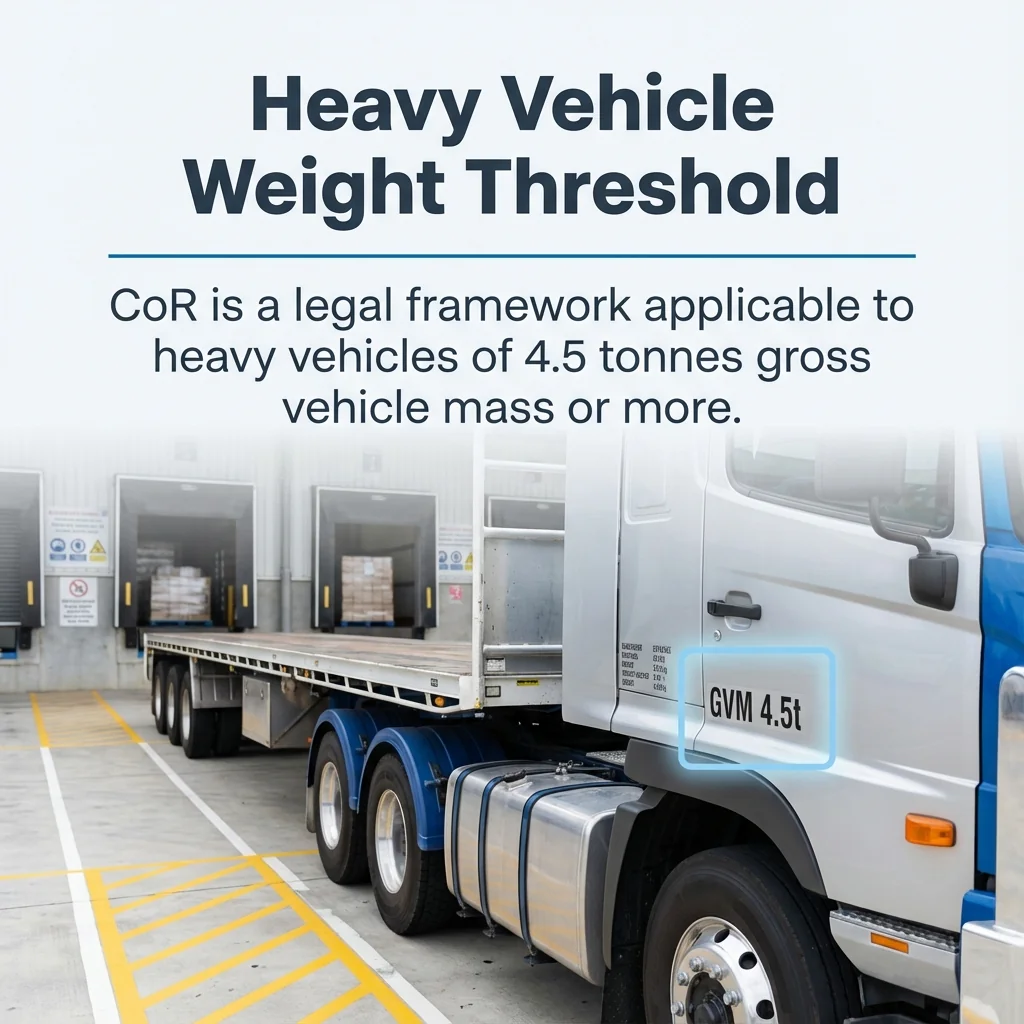
CoR compliance sits at the intersection of regulatory adherence and operational excellence. CoR is a legal framework under the Heavy Vehicle National Law applicable to heavy vehicles of 4.5 tonnes gross vehicle mass or more. The framework affects everyone in your supply chain, from senior management to warehouse staff.
This guide walks through the practical steps required to establish, demonstrate, and maintain CoR compliance. You’ll understand how to structure your safety management system, prepare documentation that withstands audits, and embed compliance into daily operations.
The difference between businesses that achieve certification and those that struggle comes down to approach. Successful operators treat CoR as a system, not a checklist. They build processes that make compliance sustainable rather than pursuing documentation for audit purposes alone.
What CoR Certification Means for Your Operation
Certificate of Recognition (COR) demonstrates that your business maintains a functioning safety management system that meets HVNL requirements.
Unlike simple compliance declarations, COR certification requires external verification through a certifying partner audit. The process examines whether your safety systems actually function in practice, not just on paper.
The Legal Foundation
Chain of Responsibility obligations extend across five key areas. Fatigue management ensures drivers operate within work and rest requirements. Speed compliance prevents delivery pressures from encouraging unsafe driving practices.
Mass and dimension compliance covers loading within legal limits. Load restraint verification protects against shifting cargo. Vehicle condition maintenance keeps heavy vehicles roadworthy.
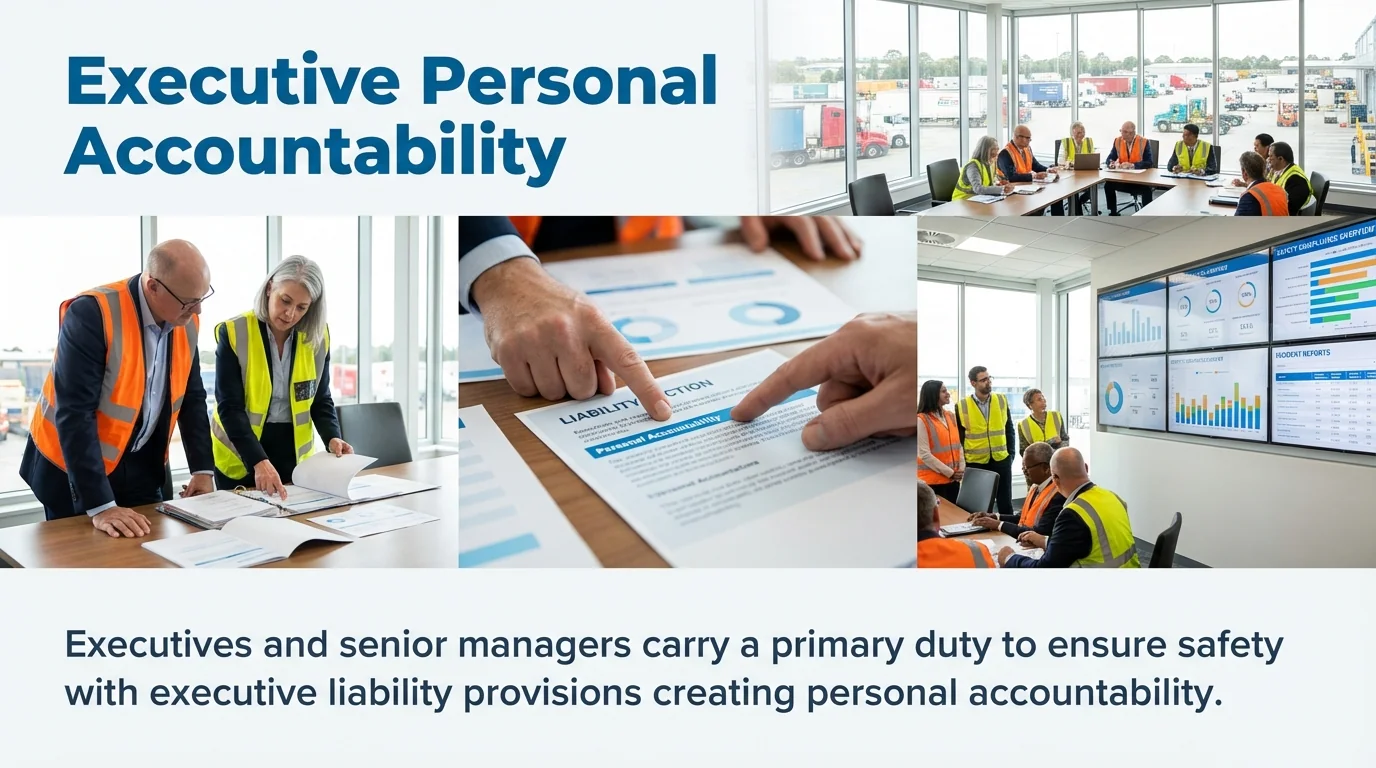
Executives and senior managers carry a primary duty to ensure safety, with executive liability provisions creating personal accountability for compliance failures. This obligation requires active oversight, not passive approval.
Why Pursue Certification
COR certification delivers tangible operational benefits beyond regulatory compliance. Safety management systems reduce incidents through systematic risk identification and control measures.
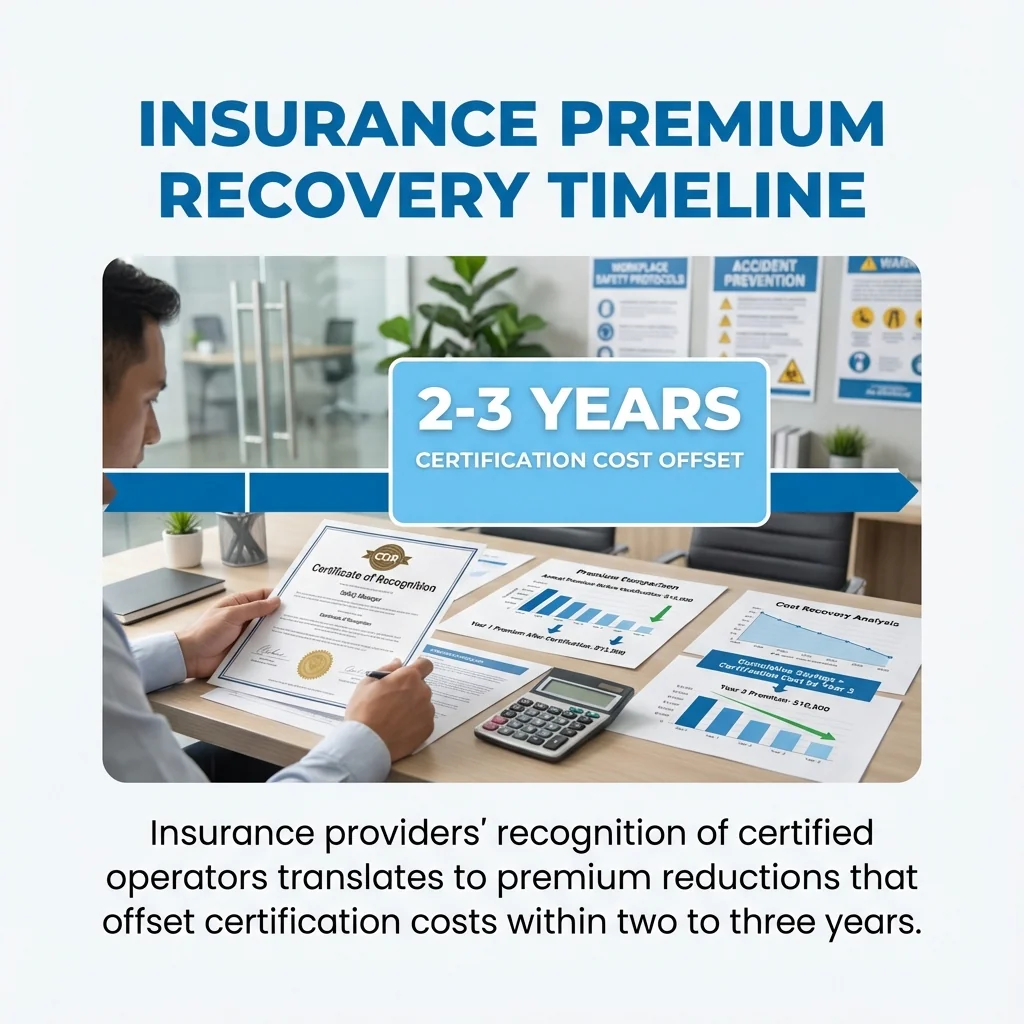
Insurance providers recognize certified operators as lower risk. This recognition translates to premium reductions that offset certification costs within two to three years.
Major clients increasingly require COR certification from transport and logistics suppliers. Certification opens tender opportunities that remain closed to non-certified operators. This requirement reflects the contractual liability clients face under CoR legislation.
Documented safety systems improve employee engagement. Workers understand expectations clearly when procedures exist in writing. Training becomes more effective when linked to documented standards.
Prerequisites Before Starting Certification
Successful COR certification requires specific organizational capabilities. These prerequisites aren’t optional. Missing elements cause certification delays or audit failures.
Management Commitment
Senior leadership must actively participate in safety management. This participation goes beyond approving budgets or signing policies.
Executives need to understand their due diligence obligations. They should attend CoR training appropriate to their role. They must receive regular compliance reports and respond to identified risks.
Budget allocation for safety systems, training, and audits demonstrates genuine commitment. Certification requires investment in time, resources, and ongoing monitoring.
Baseline Safety Capability
Your business needs foundational safety practices before pursuing certification. Basic workplace health and safety policies should exist. Incident reporting processes must function.
You should maintain records of vehicle inspections, driver licenses, and maintenance activities. These records don’t need perfect organization yet, but they must exist.
A designated person should coordinate health and safety activities. This role might not be full-time initially, but someone needs accountability for safety outcomes.
Operational Stability
Certification works best when operations follow consistent patterns. Businesses experiencing major restructuring, ownership changes, or operational upheaval should stabilize first.
Your team needs capacity to implement new systems. Stretched operations struggling with basic service delivery lack bandwidth for certification projects.
Form Your COR Team and Assign Clear Responsibilities
Building an effective COR team starts with identifying the right people across your organization. Understanding CoR compliance requirements helps determine which roles need representation.
Leadership Appointments
Designate an executive sponsor from senior management. This person carries ultimate accountability for certification success and ongoing compliance maintenance.
Your executive sponsor should attend monthly steering meetings. They remove organizational barriers, approve resource allocation, and represent safety in boardroom discussions.
Appoint an internal auditor who will coordinate certification activities. This person needs sufficient seniority to influence operational managers and allocate staff time to compliance activities.
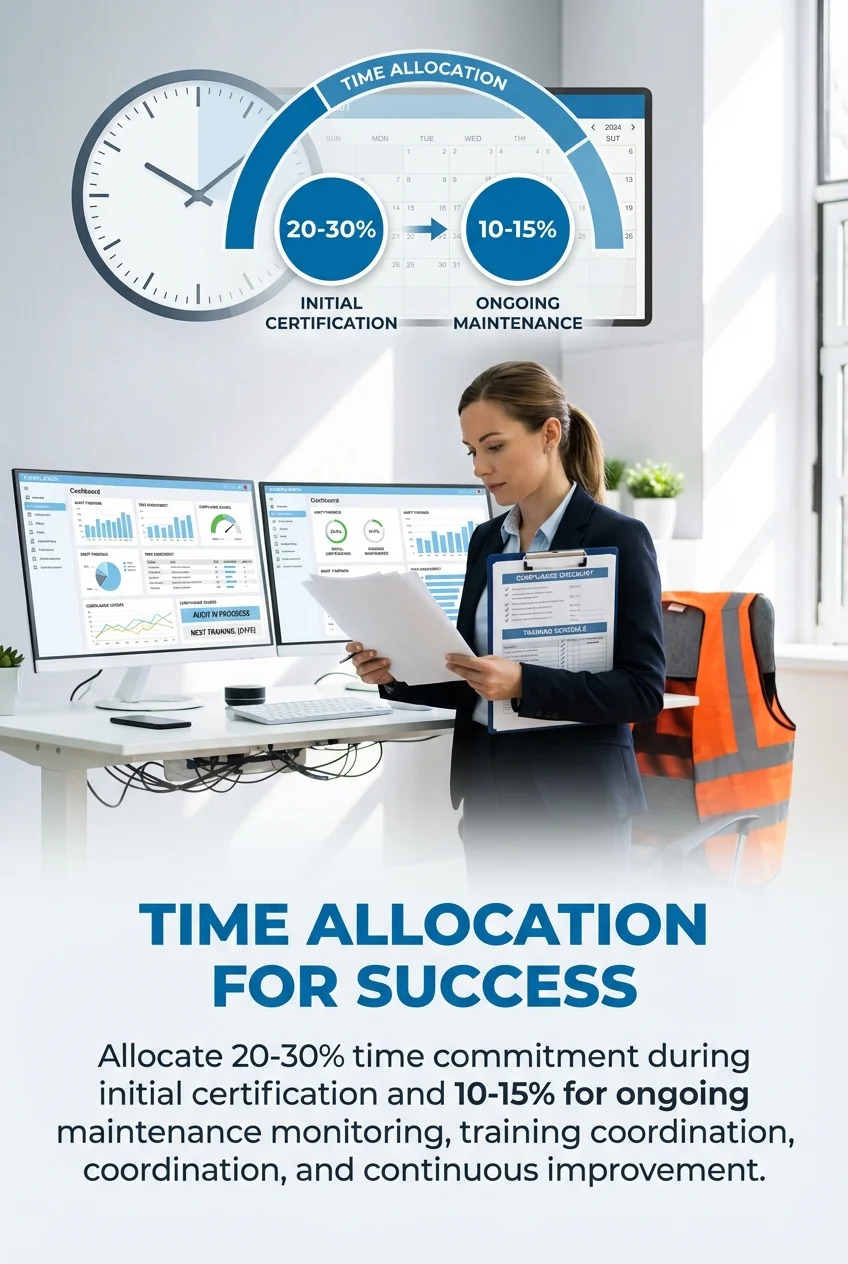
The internal auditor role demands 20-30% time commitment during initial certification. Ongoing maintenance requires 10-15% allocation for monitoring, training coordination, and continuous improvement.
Cross-Functional Representation
Include operations managers who oversee day-to-day transport activities. They understand practical constraints and can identify workable solutions during system design.
HR representatives handle training coordination, competency verification, and workforce capability development. Safety culture depends on effective people management.
Procurement or commercial teams address supplier and subcontractor management. CoR obligations extend through your supply chain. Contract terms must include appropriate safety requirements.
Maintenance supervisors contribute vehicle condition expertise. They understand inspection schedules, defect management, and maintenance record systems.
Define Decision-Making Authority
Document who approves policies, authorizes safety expenditure, and makes compliance decisions. Unclear authority creates delays and inconsistent approaches.
Establish escalation pathways for safety concerns. Workers need to know how to raise issues when standard channels fail to address serious risks.
Set meeting schedules and attendance expectations. Regular cadence maintains momentum and demonstrates management commitment to certifying partners.
Develop and Document Safety Policies and Procedures
The NHVR promotes Safety Management Systems as the practical framework for meeting CoR safety duties. Your policies and procedures form the documented foundation of this system.
Core Policy Development
Start with a master CoR policy statement. This document articulates your organization’s commitment to heavy vehicle safety and compliance with HVNL obligations.
Your policy should identify the five CoR obligation areas. State how your business manages fatigue, speed, mass and dimension, load restraint, and vehicle condition.
Address roles and responsibilities explicitly. Define what executives, managers, supervisors, and workers must do to maintain compliance. Include expectations for suppliers and subcontractors.
Develop specific procedures for each obligation area. Fatigue management procedures cover driver scheduling, journey planning, and fatigue risk assessment. Speed procedures address route planning, delivery scheduling, and driver performance monitoring.
Load and Vehicle Standards
Mass and dimension procedures detail weighing requirements, load planning processes, and oversize load management. Load restraint requirements are supported by the National Transport Commission (NTC) Load Restraint Guide 2018.
Create vehicle maintenance schedules aligned with manufacturer specifications. Document inspection procedures, defect reporting processes, and maintenance verification requirements.
Build pre-start inspection checklists that drivers complete before each shift. These checks create documented evidence of vehicle condition monitoring.
Risk Management Framework
Establish a systematic risk assessment process. This process identifies hazards, evaluates risks, and implements control measures across your operation.
Document how you assess new activities, equipment, or operational changes. Risk assessment shouldn’t happen only during initial certification. It must occur whenever circumstances change.
Create an incident investigation procedure. This procedure guides root cause analysis and corrective action implementation when safety events occur.
Communication and Consultation
Define how safety information flows through your organization. Workers need to receive relevant policies, procedures, and safety updates.
Establish consultation mechanisms. Regular toolbox meetings, safety committees, and feedback channels ensure worker participation in safety management.
Document how you communicate CoR requirements to suppliers and subcontractors. Contract terms, induction processes, and ongoing monitoring maintain supply chain compliance.
| Policy Area | Key Components | Review Frequency |
|---|---|---|
| Fatigue Management | Driver scheduling, journey planning, break requirements, fatigue risk assessment | Annual or after incidents |
| Speed Compliance | Route planning, delivery windows, performance monitoring, driver coaching | Annual or after incidents |
| Mass and Dimension | Load planning, weighing procedures, oversize permits, axle loading | Annual or after incidents |
| Load Restraint | NTC Guide application, restraint selection, inspection procedures, documentation | Annual or after incidents |
| Vehicle Condition | Maintenance schedules, pre-start inspections, defect management, repair verification | Annual or after incidents |
Gather and Organize Required Documentation
COR audits assess whether your safety management system functions through documented evidence. An essential CoR compliance checklist helps identify documentation requirements.
Evidence Categories
Training records prove competency development. Collect attendance sheets, training materials, competency assessments, and qualification certificates for all personnel.
Vehicle documentation includes registration certificates, maintenance logs, inspection records, and defect reports. These records demonstrate ongoing vehicle condition management.
Driver records contain licenses, medical certificates, fatigue work diaries, and incident reports. Maintain current copies accessible for audit verification.
Load documentation encompasses weight certificates, load plans, restraint calculations, and inspection checklists. This evidence proves mass and restraint compliance.
Journey records show route plans, delivery schedules, and actual performance data. This information demonstrates realistic scheduling that doesn’t encourage speed violations.
Digital Document Management
Paper-based systems create compliance risks. Missing documents during audits suggest system failures regardless of actual practices.
Implement a digital document management system. Cloud-based platforms provide secure storage, version control, and audit trail capabilities.
Organize documents by obligation area and document type. Logical structure enables quick retrieval during internal audits or certifying partner assessments.
Set retention periods for each document type. Some records require retention for the asset’s operational life. Others need preservation for specific periods after events.
Record Verification
Audit your documentation quarterly during initial certification. Check for completeness, currency, and accessibility.
Identify gaps systematically. Create action plans to generate missing records through operational activities rather than backdating documentation.
Train staff on record-keeping expectations. Compliance depends on capturing information during normal operations, not reconstructing records for audits.
Implement Employee Training Programs
Training transforms written procedures into operational capability. Your workforce needs to understand CoR obligations relevant to their roles.
Role-Based Training Design
Senior management requires executive-level CoR training. This training covers due diligence obligations, regulatory penalties, and governance requirements.
Managers and supervisors need detailed training on safety management system implementation. They must understand how to apply procedures, monitor compliance, and identify risks.
Operational staff require practical training on their specific obligations. Drivers learn fatigue management, pre-start inspections, and load restraint verification. Warehouse staff understand loading procedures and mass limits.
Administrative personnel need awareness training. They should recognize CoR implications in scheduling, dispatch, and procurement activities.
Training Delivery Methods
Combine classroom sessions, online modules, and practical demonstrations. Different learning styles require varied approaches for effective knowledge transfer.
Classroom training works well for policy introduction and complex concepts. Interactive sessions encourage questions and discussion.
Online training provides flexibility for geographically dispersed teams. Modules allow self-paced learning with knowledge checks.
Practical demonstrations ensure skills development. Load restraint training, vehicle inspections, and journey planning benefit from hands-on practice.
Competency Verification
Training attendance alone doesn’t prove competency. Assess whether participants understand and can apply learned concepts.
Use written assessments for knowledge verification. Multiple-choice questions, case studies, and scenario analysis test comprehension.
Conduct practical observations for skill-based competencies. Watch drivers complete pre-start inspections or warehouse staff secure loads.
Maintain detailed training records. Document who attended which sessions, assessment results, and competency status.
Refresher Training Schedule
Initial training requires reinforcement. Schedule annual refresher sessions to maintain knowledge and address procedure updates.
Provide targeted retraining when incidents occur. Use safety events as learning opportunities to prevent recurrence.
Include CoR components in induction training. New employees need safety system understanding from day one.
| Role Level | Training Focus | Duration |
|---|---|---|
| Executive/Board | Due diligence obligations, governance, regulatory environment | Half-day workshop |
| Senior Management | Safety management systems, audit processes, continuous improvement | Full-day workshop |
| Operational Managers | Procedure implementation, monitoring, risk assessment | Two-day course |
| Frontline Staff | Role-specific obligations, practical procedures, reporting | Half-day practical session |
Conduct Internal Audits for Self-Assessment
Internal audits identify gaps before external certification audits. This proactive approach prevents certification delays and demonstrates system maturity.
Audit Planning
Schedule your first internal audit three months before engaging a certifying partner. This timing allows gap closure while maintaining certification momentum.
Use the same audit framework that certifying partners apply. Most certification programs align with Australian Standards for occupational health and safety management systems.
Assign audit responsibilities to trained internal auditors. These individuals need objectivity and sufficient authority to report findings honestly.
Audit Execution
Review documentation systematically. Check policies, procedures, training records, and operational evidence against certification requirements.
Conduct interviews across organizational levels. Ask executives about governance, managers about implementation, and workers about practical application.
Observe operations directly. Watch pre-start inspections, load restraint activities, and journey planning processes in action.
Verify that documented procedures match actual practices. Gaps between written processes and operational reality indicate system weaknesses.
Gap Analysis and Action Planning
Categorize findings by severity. Critical gaps affect certification eligibility. Major gaps indicate significant system weaknesses. Minor gaps suggest improvement opportunities.
Create action plans with specific tasks, responsible parties, and completion dates. Vague commitments to “improve documentation” won’t drive compliance.
Track corrective actions through to completion. Unresolved findings during certification audits raise questions about management commitment.
Pre-Audit Preparation
Conduct a final internal audit two weeks before the certifying partner assessment. This check confirms that previous gaps remain closed.
Prepare an evidence package for auditors. Organize documentation logically with clear indexing. Easy access demonstrates system maturity.
Brief employees on audit expectations. They should understand their role in answering auditor questions honestly about actual practices.
Engage Certifying Partners and Navigate External Audits
External certification requires partnering with an accredited certifying partner. These organizations conduct independent assessments and issue COR certificates.
Selecting a Certifying Partner
Research accredited certifying partners operating in your region. Look for organizations with heavy vehicle industry experience and understanding of your operational context.
Compare assessment approaches and fee structures. Some partners offer gap analysis services before formal certification audits. Others provide ongoing support through certification maintenance.
Request references from similar businesses. Certifying partner familiarity with your industry type improves audit efficiency.
Certification Audit Process
The certification audit occurs in two stages. Stage one reviews documentation and identifies any critical gaps. Stage two assesses implementation through site visits and interviews.
Stage one happens remotely through document review. Auditors examine policies, procedures, training materials, and evidence samples.
Address any stage one findings before stage two commences. Critical gaps must close for certification progression.
Stage two involves on-site assessment. Auditors observe operations, interview personnel, and verify that documented systems function in practice.
Managing Audit Findings
Certification doesn’t require perfection. Minor findings won’t prevent certificate issuance if overall system effectiveness is demonstrated.
Major findings may require corrective action before certification approval. Implementation of Chain of Responsibility must show genuine operational integration, not just documentation.
Critical findings indicate fundamental system failures. These require substantial remediation and potential re-audit.
Respond to findings constructively. Demonstrate how corrective actions address root causes rather than superficial fixes.
Maintain Compliance Through Continuous Improvement
COR certification requires ongoing maintenance. Your safety management system must evolve with operational changes and regulatory updates.
Scheduled Activities
Safe scheduling requires ensuring trip times, rest breaks, and loading windows are realistic and comply with work and rest limits under fatigue regulations.
Conduct internal audits quarterly. Regular assessment maintains system integrity and identifies emerging issues early.
Review policies annually. Update procedures to reflect operational changes, regulatory amendments, or lessons from incidents.
Deliver refresher training on schedule. Knowledge retention requires regular reinforcement.
Performance Monitoring
Track leading indicators of compliance health. Monitor inspection completion rates, training currency, and corrective action closure times.
Analyze incident trends. Look for patterns indicating systemic issues rather than isolated events.
Review supplier and subcontractor compliance. Their performance affects your CoR liability.
Management Review
Present compliance reports to senior management quarterly. These reports should cover audit findings, incident analysis, training status, and system effectiveness.
Executive oversight demonstrates due diligence and maintains organizational focus on safety management.
Use management reviews to approve system changes, resource allocation, and continuous improvement initiatives.
Recertification Preparation
COR certification typically requires renewal every three years. Maintenance audits occur during the certification period to verify ongoing compliance.
Treat maintenance audits with the same rigor as initial certification. System degradation between audits risks certificate suspension.
Document continuous improvement activities. Certifying partners expect to see system maturation, not stagnation.
Building Sustainable CoR Compliance
Successful CoR compliance becomes embedded in how your business operates. The investment in safety management systems, training, and documentation delivers returns through reduced incidents, improved efficiency, and expanded business opportunities.
Start with your compliance team and executive sponsor. Develop policies that reflect your actual operations. Build documentation systems that capture evidence through normal activities.
Train your workforce thoroughly. Conduct internal audits that identify gaps honestly. Engage a certifying partner when your system demonstrates genuine maturity.
Businesses must ensure that delivery timeframes and payment structures do not encourage speeding. This obligation requires examining commercial arrangements, not just driver behavior.
Remember that penalties for Category 1 offences reach up to AUD $300,000 and 5 years’ imprisonment for individuals, with corporations facing up to AUD $3 million. These consequences make compliance a business imperative, not an administrative burden.

Maintain your certification through continuous improvement. Review and update your systems regularly. Keep training current and documentation accessible.
The businesses that excel at CoR compliance treat it as an operational advantage. They build safety culture, reduce risk exposure, and position themselves as preferred suppliers to major clients. Your systematic approach to compliance determines whether certification becomes a competitive strength or an ongoing struggle.