
A Safety Management System (SMS) is an organization-wide framework that integrates safety policies, risk management processes, assurance mechanisms, and promotion activities into daily operations. Organizations implementing these practices systematically identify workplace hazards, control risks, monitor safety performance, and foster culture change across all levels. Effective SMS implementation centers on four interconnected pillars: safety policy establishing leadership commitment and objectives, safety risk management for hazard identification and mitigation, safety assurance providing verification through audits and data analysis, and safety promotion building workforce engagement through training and communication. When implemented properly, these components work together to prevent workplace injuries, reduce compensation costs, ensure regulatory compliance, and create sustainable safety improvements that protect workers while enhancing operational efficiency.
Understanding how to implement these core components requires examining both regulatory frameworks and practical application strategies. The following sections detail each pillar’s requirements and provide actionable guidance for organizations at any stage of SMS development.
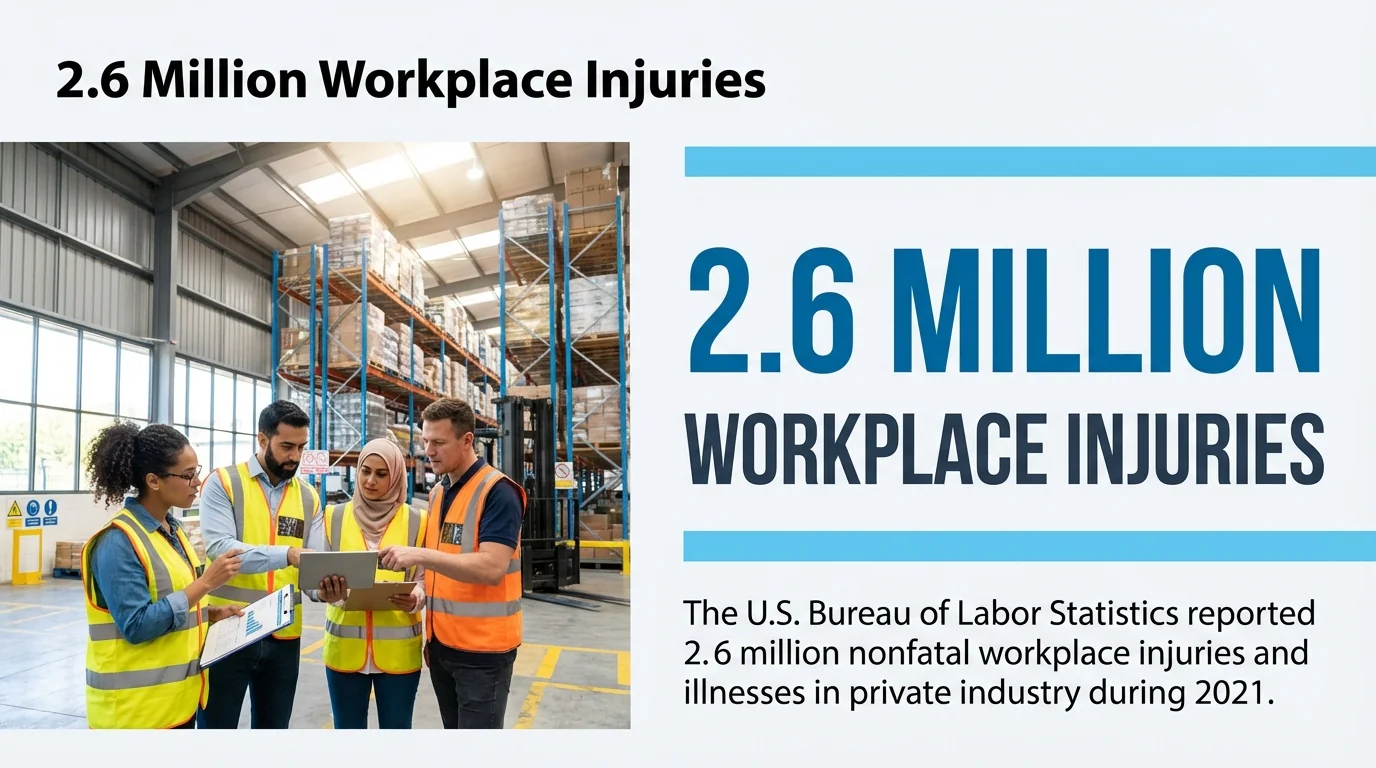
This comprehensive approach matters now more than ever. The U.S. Bureau of Labor Statistics reported 2.6 million nonfatal workplace injuries and illnesses in private industry during 2021, with an incidence rate of 2.7 cases per 100 full-time equivalent workers. These numbers represent real people experiencing harm, families facing hardship, and organizations bearing substantial costs. Structured SMS practices provide the systematic tools needed to reduce these incidents while building organizational resilience.
What Defines an Effective Safety Management System
An SMS represents a formal, systematic approach to managing workplace safety. It extends beyond reactive incident response to establish proactive identification and control of hazards before they cause harm.
The system integrates safety considerations into every business process. From procurement decisions to operational procedures, safety becomes embedded rather than treated as a separate function. This integration ensures safety remains visible during strategic planning, resource allocation, and performance evaluation.
Modern SMS frameworks follow the Plan-Do-Check-Act cycle driving continuous improvement. Organizations plan by setting objectives and identifying hazards, do by implementing controls and training, check by monitoring performance and conducting audits, and act by addressing deficiencies and improving processes. This cyclical approach ensures the system evolves as conditions change.
ISO 45001 specifies requirements for establishing, implementing, maintaining, and continually improving an occupational health and safety management system. This international standard provides a globally recognized framework that organizations can adapt to their specific contexts while maintaining consistency with accepted best practices.
Core Characteristics of High-Performing Systems
Successful systems share several defining characteristics. They operate through documented processes that provide consistency while allowing flexibility for different situations. They emphasize prevention rather than merely responding after incidents occur. They engage workers at all levels rather than treating safety as management’s sole responsibility.
These systems also maintain transparency. Workers understand how safety decisions get made, how to report concerns, and what actions management takes in response. This openness builds trust and encourages participation.
Data drives effective systems. Organizations collect meaningful metrics, analyze trends, and use findings to guide decisions. Leading indicators like near-miss reports and hazard observations complement lagging indicators like injury rates to provide comprehensive performance visibility.
How SMS Differs from Traditional Safety Programs
Traditional safety programs often focus narrowly on compliance and reactive measures. SMS takes a broader, more strategic approach. Where traditional programs may emphasize personal protective equipment and behavior-based interventions, SMS addresses system-level factors creating hazards.
The SMS approach recognizes that individual actions occur within organizational contexts. Rather than blaming workers for incidents, it examines how policies, procedures, equipment design, and workplace organization contribute to safety outcomes.
This systems thinking leads to more sustainable improvements. Addressing root causes prevents recurrence more effectively than focusing solely on immediate incident factors.
The Four Pillars Supporting Safety Management Excellence
Understanding SMS structure requires examining its four foundational components. These pillars work together, each supporting and reinforcing the others.
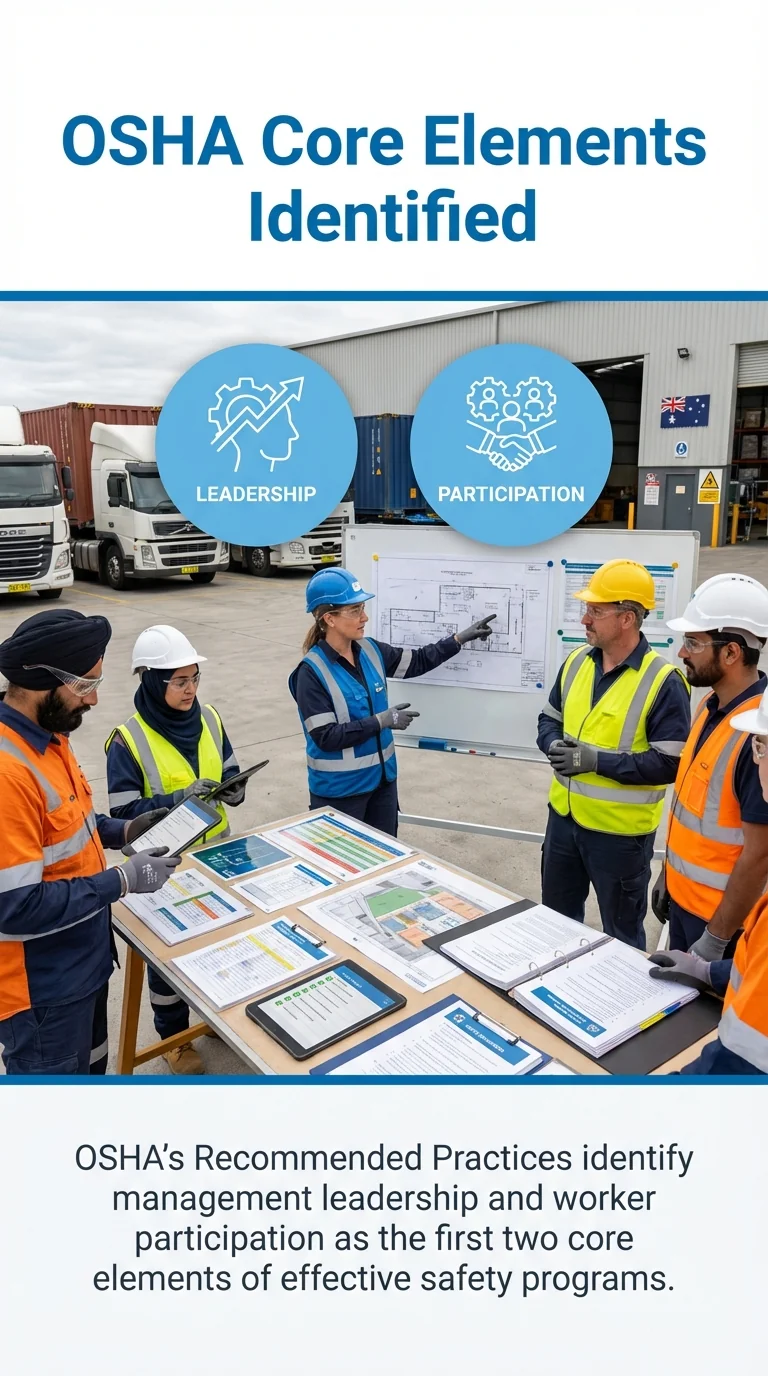
OSHA’s Recommended Practices for Safety and Health Programs identify management leadership and worker participation as the first two core elements of an effective safety and health program. These elements align closely with the SMS pillar approach while emphasizing the human factors essential for success.
Safety Policy: Establishing Direction and Commitment
Safety policy sets organizational direction. It articulates management’s commitment to protecting workers, defines safety objectives, and establishes accountability throughout the organization.
Effective policies communicate specific expectations rather than generic statements. They identify who holds responsibility for safety functions, what resources will be allocated, and how the organization will measure success.
Leadership visibility matters tremendously. When executives actively participate in safety activities, attend safety meetings, and visibly prioritize safety in resource allocation decisions, it signals genuine commitment that cascades throughout the organization.
The policy should also define how safety integrates with other business objectives. Rather than positioning safety as competing with productivity or cost management, effective policies demonstrate how safety supports overall business performance.
Safety Risk Management: Identifying and Controlling Hazards
Risk management forms the operational core of SMS. Organizations systematically identify potential hazards, assess associated risks, implement controls, and verify effectiveness.
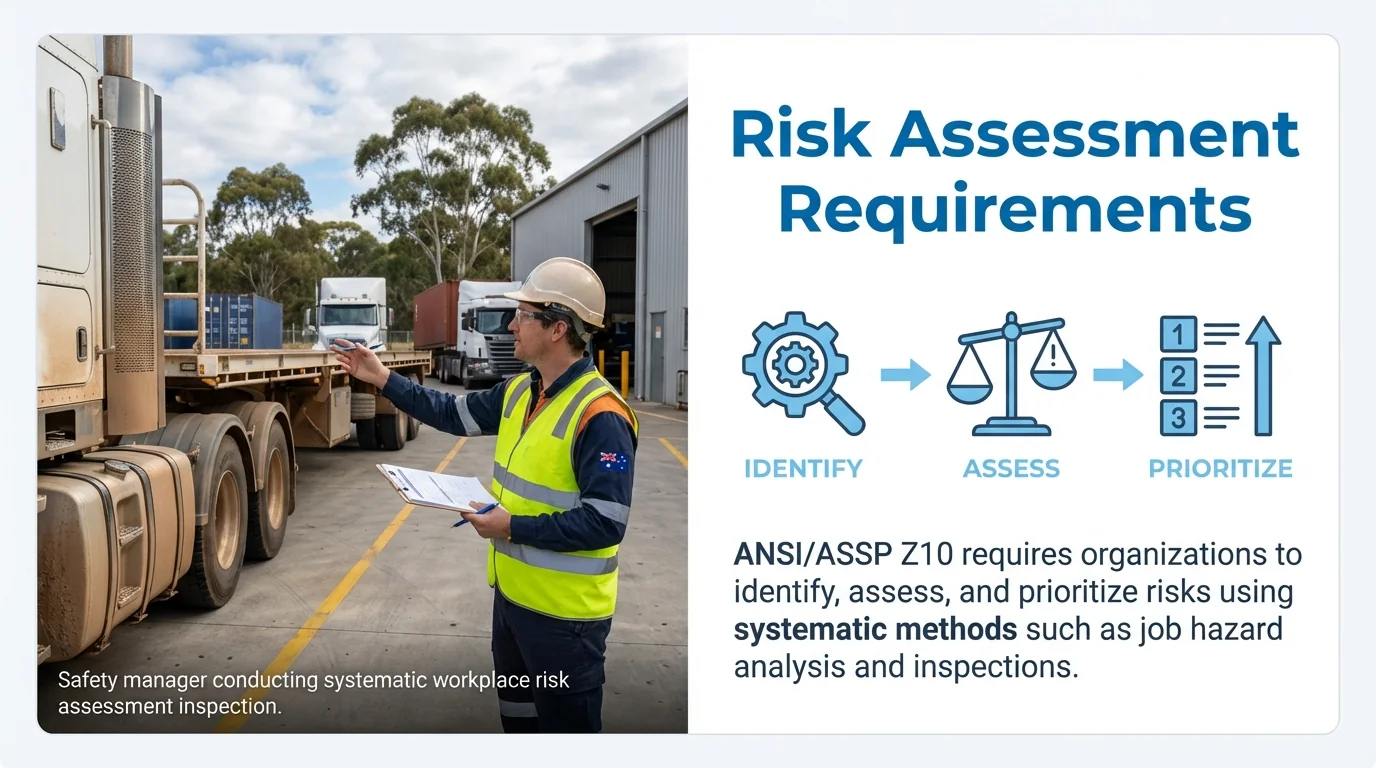
ANSI/ASSP Z10 requires organizations to identify, assess, and prioritize risks to workers using systematic methods such as job hazard analysis, inspections, and risk assessment tools. These structured approaches ensure hazards don’t get overlooked due to familiarity or assumptions.
The risk management process begins with comprehensive hazard identification. Organizations use multiple methods including workplace inspections, job safety analyses, incident investigations, worker reports, and review of industry information. No single method captures all hazards, so effective systems employ diverse identification strategies.
Once identified, hazards receive risk assessment. This evaluation considers both the severity of potential consequences and the likelihood of occurrence. This prioritization helps organizations allocate resources effectively, addressing highest-risk exposures first.
Control selection follows the hierarchy of controls. Organizations first attempt to eliminate hazards entirely. When elimination isn’t feasible, they implement engineering controls that reduce exposure without relying on worker behavior. Administrative controls and personal protective equipment provide additional layers but are considered less effective as primary controls.
Safety Assurance: Monitoring and Verification
Safety assurance ensures the SMS functions as intended. Through audits, inspections, data analysis, and incident investigations, organizations verify that controls remain effective and identify improvement opportunities.
Regular workplace inspections provide frontline visibility into control effectiveness. These inspections check that engineering controls function properly, workers follow established procedures, and conditions haven’t changed in ways that create new hazards.
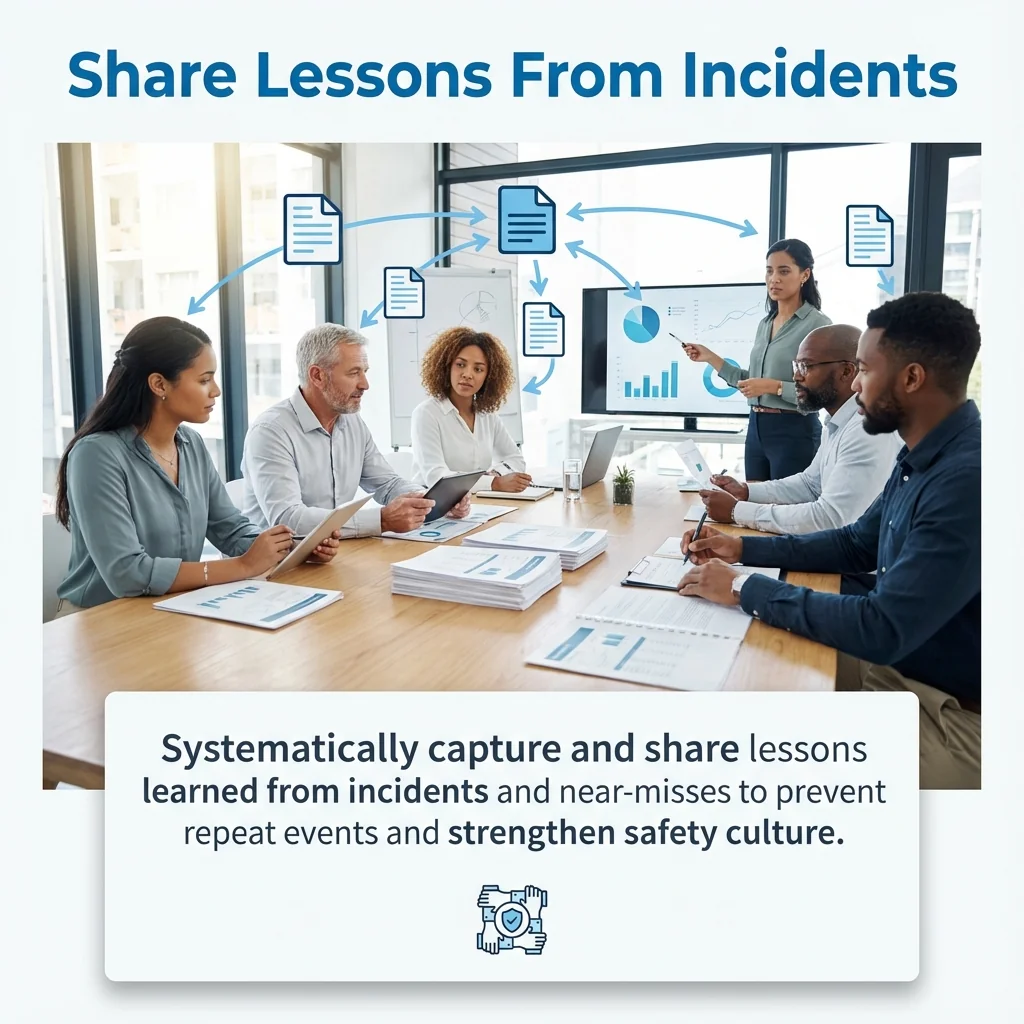
Incident investigation forms another critical assurance element. Rather than simply documenting what happened, thorough investigations examine why incidents occurred and what system factors contributed. Organizations that systematically capture and share lessons learned from incidents and near-misses help prevent repeat events and strengthen safety culture by supporting organizational learning.
Performance monitoring tracks both leading and lagging indicators. Lagging indicators like injury rates show historical performance. Leading indicators like safety training completion, hazard reports submitted, and corrective actions closed provide forward-looking insight into system health.
| Assurance Activity | Purpose | Frequency |
|---|---|---|
| Workplace Inspections | Verify control effectiveness and identify new hazards | Monthly or as operations dictate |
| System Audits | Assess SMS compliance and effectiveness | Annually with periodic reviews |
| Incident Investigations | Identify root causes and prevent recurrence | As incidents occur |
| Performance Reviews | Evaluate metrics against objectives | Quarterly with annual comprehensive review |
Safety Promotion: Building Culture and Capability
Safety promotion develops the human capabilities and organizational culture necessary for SMS success. This pillar encompasses training, communication, and workforce engagement activities that build safety awareness and competence.
Training provides workers with knowledge and skills needed to work safely. Effective training goes beyond generic content to address specific hazards workers encounter, equipment they operate, and procedures they must follow. Training also builds competence in hazard recognition so workers can identify unsafe conditions and take appropriate action.
Communication keeps safety visible throughout the organization. Regular safety meetings, hazard alerts, performance updates, and leadership messages maintain awareness and demonstrate ongoing commitment. Two-way communication matters as much as top-down messaging. Organizations need robust systems for workers to report hazards, suggest improvements, and raise concerns without fear of retaliation.
Worker participation strengthens both system effectiveness and organizational culture. When workers contribute to hazard identification, help develop procedures, and participate in safety committees, they bring frontline knowledge that management often lacks. This participation also builds ownership, making workers partners in safety rather than merely subjects of safety rules.
Implementing SMS: From Planning to Operation
Understanding SMS components differs from successfully implementing them. Effective implementation requires systematic planning, resource allocation, and change management.
Conducting the Initial Gap Assessment
Implementation begins with understanding current state. A comprehensive gap assessment compares existing safety practices against SMS requirements to identify what needs development.
This assessment examines each SMS pillar. For safety policy, it evaluates whether clear direction exists, leadership demonstrates commitment, and accountability is defined. For risk management, it reviews hazard identification methods, assessment processes, and control implementation. For safety assurance, it checks monitoring systems, audit processes, and investigation protocols. For safety promotion, it assesses training programs, communication channels, and worker participation mechanisms.
Document the findings clearly. Identify strengths to build upon and gaps requiring attention. Prioritize gaps based on risk and regulatory requirements. This assessment provides the roadmap for implementation planning.
Building the Implementation Plan
The implementation plan translates gap assessment findings into action. It defines specific objectives, assigns responsibilities, establishes timelines, and identifies required resources.
Effective plans break implementation into manageable phases. Attempting to implement all SMS elements simultaneously overwhelms organizations and dilutes focus. Instead, sequence activities logically. Establish policy and leadership commitment first, as these provide foundation for other elements. Develop risk management processes next, since hazard identification and control form the operational core. Build assurance and promotion activities progressively as the system matures.
Each implementation phase needs clear deliverables, responsible parties, completion dates, and success criteria. This specificity maintains momentum and enables progress tracking.
Resource requirements deserve careful attention. Implementation requires staff time for training, system development, and change management. It may require technology investments for data management and communication. Budget these resources realistically and secure necessary approvals before beginning implementation.
Developing Documentation and Procedures
SMS requires documentation that defines how the system operates. This documentation shouldn’t become bureaucratic paperwork that nobody uses. Instead, develop practical documents that guide daily work.
Start with the safety policy document. This should clearly state management commitment, define safety objectives, establish organizational responsibilities, and describe how safety integrates with business operations. Keep it concise but complete.
Develop procedures for key SMS processes. Document how hazard identification occurs, how risk assessments get conducted, how controls are selected and implemented, how incidents get investigated, and how the system gets audited. These procedures ensure consistency while providing guidance for staff performing these functions.
Create forms and tools that support these processes. Hazard identification checklists, risk assessment matrices, inspection templates, and investigation forms help standardize approaches and ensure important elements aren’t overlooked.
Rolling Out Training and Communication
People make SMS work. Comprehensive training ensures everyone understands their roles and possesses necessary capabilities.
Leadership training comes first. Executives and managers need to understand SMS principles, their responsibilities, and how to demonstrate visible commitment. This training should address both system elements and the leadership behaviors that foster safety culture.
Train staff who will operate SMS processes. Those conducting hazard assessments need training in assessment methodologies. Those investigating incidents need training in root cause analysis. Those conducting audits need training in audit techniques. Build competence before assigning responsibilities.
All workers need awareness training covering SMS overview, reporting procedures, their participation rights and responsibilities, and specific hazards they may encounter. Make this training engaging and relevant to their actual work.
Communication about SMS implementation maintains transparency and builds support. Explain why the organization is implementing SMS, what benefits it will bring, and how it will affect daily work. Address concerns openly and provide regular updates on implementation progress.
Best Practices for Risk Management Process
Risk management effectiveness determines overall SMS success. Several practices enhance this critical process.
Using Multiple Hazard Identification Methods
Relying on a single identification method creates blind spots. Combine workplace inspections with job hazard analyses, incident investigations, worker reports, and industry information review.
Workplace inspections identify observable conditions. Schedule regular inspections covering all work areas, rotating inspection team members to bring fresh perspectives. Use detailed checklists but also encourage open-ended observation that might identify hazards not on standard lists.
Job hazard analyses break work into steps and identify hazards associated with each step. Involve workers who perform the jobs in these analyses, as they possess detailed knowledge that others lack. Update analyses when work processes change.
Encourage worker hazard reporting. Create simple reporting mechanisms that workers can use easily. Respond to all reports promptly and communicate back to reporters what actions were taken. This responsiveness encourages continued reporting.
Conducting Thorough Risk Assessments
Risk assessment quality directly affects control selection. Superficial assessments lead to inadequate controls.
Use consistent assessment criteria across the organization. Define severity levels clearly, from minor injuries to fatalities. Define probability levels based on frequency of exposure and likelihood of occurrence. This consistency enables meaningful prioritization.
Consider all potential consequences. A single hazard might cause injuries, property damage, environmental releases, and production disruptions. Assess all consequence types to understand full risk.
Document assessment rationale. Recording why specific severity and probability ratings were assigned creates accountability and enables meaningful review by others with different perspectives.
Applying the Hierarchy of Controls Systematically
Control selection determines whether risks actually get reduced. Always start at the top of the hierarchy and work down.
Elimination removes the hazard entirely. Can the hazardous substance be substituted with something safer? Can the hazardous task be eliminated from the process? Elimination provides the most reliable protection.
Engineering controls modify equipment or environments to reduce exposure. Machine guards, ventilation systems, and ergonomic workstation designs protect workers without requiring behavior change. These controls work consistently when properly maintained.
Administrative controls modify how work gets performed. Job rotation, work permits, and procedures reduce exposure but depend on consistent implementation. Use administrative controls to supplement engineering controls, not replace them.
Personal protective equipment provides a final barrier. Select PPE appropriate for specific hazards, train workers in proper use, and ensure consistent availability. PPE works only when worn correctly and consistently.
| Control Level | Example Applications | Effectiveness Factors |
|---|---|---|
| Elimination | Removing hazardous processes, substituting safer materials | Most effective when feasible |
| Engineering | Machine guarding, ventilation systems, ergonomic design | Highly effective, requires proper maintenance |
| Administrative | Work procedures, job rotation, permits, signage | Moderate effectiveness, depends on consistent application |
| PPE | Safety glasses, gloves, respirators, hearing protection | Least effective as primary control, essential as backup |
Verifying Control Effectiveness
Implementing controls doesn’t guarantee effectiveness. Verification confirms that controls work as intended.
Inspect controls regularly. Check that engineering controls function properly and haven’t been bypassed. Observe whether workers follow procedures consistently. Verify that required PPE is available and being used.
Monitor exposure data when available. Air sampling, noise measurements, and ergonomic assessments provide objective evidence of control effectiveness. These measurements help identify when controls degrade or conditions change.
Solicit worker feedback. Workers using controls daily often notice issues that periodic inspections miss. Create channels for workers to report control problems and respond promptly when they do.
Building Effective Safety Assurance Mechanisms
Assurance activities verify that SMS operates as designed and delivers intended results. Robust assurance requires multiple complementary approaches.
Designing Meaningful Performance Metrics
What gets measured gets managed. Select metrics that drive desired behaviors and provide insight into system health.
Balance leading and lagging indicators. Injury rates represent important lagging indicators showing historical performance. However, they provide limited forward visibility, especially in smaller organizations where statistical variation can obscure trends.
Leading indicators predict future performance. Track hazard reports submitted, corrective actions completed on time, safety training completion rates, inspection findings, and near-miss reporting. These indicators show system activity and engagement before incidents occur.
Ensure metrics align with objectives. If an objective is improving hazard identification, track the number and quality of hazards reported. If an objective is strengthening investigation quality, assess investigation thoroughness and corrective action effectiveness.
Conducting Effective Safety Audits
Audits provide systematic examination of SMS compliance and effectiveness. Well-designed audits identify system weaknesses before they lead to incidents.
Develop detailed audit protocols. Define what will be examined, what documentation will be reviewed, who will be interviewed, and what observations will be made. This structure ensures consistency across audits and comprehensive coverage.
Use qualified auditors. Auditors need to understand SMS requirements, possess assessment skills, and maintain objectivity. Consider using auditors from outside the audited area to provide independent perspective.
Focus on system effectiveness, not just compliance. Verify that documented procedures exist, but also assess whether they’re being followed and whether they’re actually effective. Compliance without effectiveness indicates need for system revision.
Follow up on audit findings. Develop corrective action plans addressing identified deficiencies. Track these actions to completion and verify effectiveness. Audits without follow-up waste resources and undermine credibility.
Investigating Incidents Thoroughly
Every incident represents a system failure and learning opportunity. Thorough investigation identifies root causes enabling prevention of recurrence.
Begin investigation promptly. Evidence degrades, memories fade, and conditions change. Immediate investigation captures the most accurate information about what occurred.
Investigate systematically. Document the sequence of events, identify direct and contributing causes, and examine system factors that allowed the incident to occur. Look beyond individual actions to organizational factors like inadequate training, unclear procedures, or insufficient resources.
Use structured investigation methods. Root cause analysis techniques like the “5 Whys” or fishbone diagrams help investigators probe deeper than superficial causes. These methods prevent stopping at “worker error” when system factors contributed.
Focus on prevention, not blame. The investigation goal is understanding what happened and why so it can be prevented. When investigations become blame-focused, people become defensive and information quality suffers. Create a just culture that distinguishes between honest mistakes, at-risk behaviors, and reckless conduct.
Share investigation findings. Communicate lessons learned throughout the organization. Similar conditions likely exist elsewhere. Broadcasting findings helps prevent incidents in other areas while demonstrating that the organization values learning.
Fostering Safety Culture Through Promotion Activities
Technical systems and procedures matter, but culture determines whether they get used effectively. Safety promotion builds the shared values, beliefs, and behaviors that define organizational safety culture.
Developing Effective Safety Training Programs
Training builds the knowledge and skills workers need to work safely. Generic training often fails because it doesn’t connect to workers’ actual hazards and tasks.
Conduct training needs assessment. Identify what knowledge and skills workers need based on hazards they face, equipment they use, and procedures they must follow. Don’t waste time on irrelevant content.
Make training engaging and practical. Use examples from actual workplace conditions. Incorporate hands-on practice when developing skills. Avoid lecture-heavy approaches that induce passive learning.
Provide training in formats workers can access. Consider literacy levels, language diversity, and learning preferences. Offer multiple formats including classroom instruction, online modules, and on-the-job training.
Verify learning occurred. Testing or demonstration confirms workers gained intended knowledge and skills. This verification also identifies areas needing reinforcement.
Refresh training regularly. Initial training fades over time. Provide periodic refresher training and additional training when procedures change or new hazards are introduced.
Establishing Strong Communication Channels
Effective communication keeps safety visible and ensures information flows throughout the organization.
Use multiple communication methods. Safety meetings, email updates, posted information, and digital displays reach different audiences. Combine approaches to ensure broad coverage.
Make safety communication regular and predictable. When safety communication occurs sporadically, it signals low priority. Regular communication maintains awareness and demonstrates ongoing commitment.
The Joint Commission guidance on culture of safety stresses that leadership must establish trust, accountability, and psychological safety. These elements require open, honest communication where concerns can be raised without fear.
Ensure communication flows multiple directions. Top-down communication from management to workers matters, but so does upward communication from workers to management and lateral communication across work groups. Create mechanisms supporting all communication directions.
Engaging Workers in Safety Management
Worker participation strengthens SMS effectiveness while building safety culture. Workers bring frontline knowledge that management and safety professionals lack.
Establish safety committees with worker representation. These committees provide structured forums for worker input on safety decisions. Ensure committees have real authority to investigate issues and recommend solutions, not just advisory roles.
Involve workers in hazard identification. Workers often recognize hazards that others overlook because they work with them daily. Provide multiple easy mechanisms for workers to report hazards and concerns.
Include workers in procedure development. Workers who help develop procedures understand them better and are more likely to follow them. Worker input also helps identify practical considerations that desk-based procedure writers might miss.
Respond to worker input. Nothing kills participation faster than ignored suggestions. Even when suggestions can’t be implemented, explain why and what alternatives are being pursued. This responsiveness demonstrates that input is valued.
Recognize and celebrate safety contributions. Acknowledge workers who report hazards, suggest improvements, or demonstrate safety leadership. This recognition reinforces desired behaviors and encourages others.
Maintaining Regulatory Compliance
SMS helps organizations meet regulatory requirements systematically. Understanding applicable regulations and integrating compliance into SMS processes prevents violations.
Identifying Applicable Requirements
Organizations face safety regulations from multiple sources. Federal OSHA standards apply broadly to most employers. Some states operate their own OSHA programs with additional or stricter requirements. Industry-specific regulations may also apply.
Conduct a comprehensive regulatory review. Identify all safety and health regulations applicable to your industry, operations, and locations. Document these requirements and maintain this information as regulations change.
Pay attention to regulatory updates. Agencies periodically issue new standards or revise existing ones. Subscribe to regulatory agency updates and monitor industry associations for compliance information.
Consider voluntary standards. While not legally required, consensus standards like ANSI/ASSP standards and ISO standards represent recognized best practices. Following these standards often exceeds regulatory minimums while providing legal defensibility.
Integrating Compliance into SMS Processes
Rather than treating compliance as separate from SMS, integrate regulatory requirements into SMS processes.
When identifying hazards, reference applicable regulations. Regulations often specify hazards that must be addressed and control methods required. This integration ensures compliance while supporting systematic hazard management.
Build regulatory requirements into procedures. When regulations specify how something must be done, incorporate those requirements directly into operating procedures. This integration makes compliance automatic rather than requiring separate tracking.
Include compliance verification in audits. Audit protocols should specifically verify compliance with applicable regulations. This verification provides documented evidence of compliance efforts.
Train workers on regulatory requirements relevant to their work. Workers should understand not just what to do, but also why requirements exist and what regulations mandate. This understanding builds commitment beyond mere compliance.
Managing Regulatory Interactions
Organizations inevitably interact with regulatory agencies. Effective management of these interactions protects the organization while maintaining constructive relationships.
Prepare for regulatory inspections. Designate who will serve as the employer representative during inspections. Train this person on inspector rights, employer rights, and how to respond to inspector questions and requests.
Maintain required records. Regulations specify various records that must be maintained and for how long. Implement systems ensuring required records are created, maintained, and accessible when needed.
When violations are cited, respond promptly and thoroughly. Correct cited hazards immediately. If contesting citations, follow appropriate procedures and deadlines. Even when contesting, implement abatement to protect workers.
Achieving Continuous Safety Improvement
SMS is not a one-time project but an ongoing journey. Continuous improvement ensures the system remains effective as conditions change and performance advances.
Conducting Management Reviews
Periodic management reviews assess SMS performance and identify improvement needs. These reviews provide leadership perspective on system effectiveness.
Schedule reviews at defined intervals. Annual reviews at minimum, with more frequent reviews during initial implementation or when performance issues emerge. Regular scheduling ensures reviews occur rather than being perpetually postponed.
Review comprehensive performance data. Examine metrics across all SMS pillars. Look at injury rates, hazard reports, audit findings, training completion, and other relevant indicators. Consider trends over time, not just current snapshots.
Involve leadership in reviews. Senior management participation demonstrates commitment while ensuring adequate resources get allocated to address identified needs.
Document review outcomes. Record what was examined, what conclusions were reached, and what actions will be taken. This documentation creates accountability and provides historical record of system evolution.
Implementing Corrective and Preventive Actions
Effective improvement requires taking action on identified issues. Robust corrective and preventive action processes turn findings into improvements.
Establish clear corrective action procedures. Define how issues get reported, who evaluates them, who assigns responsibility for correction, and how completion gets verified. This structure ensures issues get addressed systematically rather than lost.
Prioritize actions based on risk. When resources are limited, address highest-risk issues first. This prioritization ensures maximum safety benefit from available resources.
Track actions to completion. Many corrective actions get started but never finished. Implement tracking systems that maintain visibility of open actions, remind responsible parties of deadlines, and escalate overdue items.
Verify effectiveness. After implementing corrective actions, confirm they actually solved the problem. This verification prevents declaring issues resolved when underlying problems persist.
Look for systemic issues. When similar problems occur repeatedly in different areas, system-level weaknesses likely exist. Address these systemic issues rather than treating each occurrence independently.
Benchmarking Against Industry Best Practices
Comparing performance against industry peers and recognized best practices identifies improvement opportunities.
Participate in industry benchmarking initiatives. Many industry associations collect and share safety performance data. These comparisons show where your organization performs well and where improvement potential exists.
Study organizations with excellent safety performance. What practices do they employ? How do they engage workers? What systems do they use? This research identifies proven approaches worth adopting.
Attend industry conferences and workshops. These events expose you to emerging practices and technologies. They also provide networking opportunities to discuss challenges and solutions with peers.
Stay current with standards evolution. As standards like ISO 45001 get revised, new requirements and best practices emerge. Monitor these developments and assess their applicability to your organization.
Measuring SMS Success and Impact
Organizations need to evaluate whether SMS delivers intended benefits. Multiple metrics provide different perspectives on system effectiveness and business impact.
Safety Performance Indicators
Traditional injury metrics remain important but tell an incomplete story. Track Total Recordable Incident Rate (TRIR), Days Away, Restricted, or Transferred (DART) rate, and Lost Workday rate. These standardized metrics enable comparison across time periods and against industry benchmarks.
Monitor injury severity, not just frequency. An injury-free year where multiple near-misses occurred suggests different risk levels than a year with minor first aid injuries but no serious exposure. Severity-weighted metrics provide additional insight.
Track leading indicator trends. Increases in hazard reports or near-miss reporting may indicate improved awareness rather than deteriorating conditions. Analyze trends with this context.
Financial Impact Assessment
Safety improvements deliver measurable financial benefits. According to the National Council on Compensation Insurance, workers’ compensation benefits paid in 2020 were on the order of tens of billions of dollars. Organizations implementing effective SMS reduce their share of these costs.
Calculate direct cost savings from reduced injuries. Workers’ compensation premiums, medical costs, and productivity losses represent quantifiable expenses that decline as injury rates improve.
Consider indirect cost impacts. Safety improvements often yield productivity gains, quality improvements, and reduced equipment damage. While harder to quantify precisely, these benefits can exceed direct injury cost savings.
Track insurance impacts. Many insurers offer premium discounts for organizations with mature safety management systems. Experience modification rates also improve as claim history improves, delivering ongoing savings.
Cultural Indicators
Safety culture improvements may precede measurable injury reductions. Monitor culture indicators to assess system impact on organizational attitudes and behaviors.
Conduct periodic safety culture surveys. These surveys measure worker perceptions of management commitment, psychological safety for reporting concerns, and belief in the priority placed on safety. Track survey results over time to identify cultural shifts.
Monitor participation metrics. Increases in safety meeting attendance, hazard reports submitted, and safety suggestion volume indicate growing engagement. This engagement often predicts future injury rate improvements.
Assess management behaviors. Are managers conducting workplace visits? Do they discuss safety in performance reviews? Do they visibly respond to safety concerns? Observable leadership behaviors signal cultural priorities.
Common Implementation Challenges and Solutions
Organizations implementing SMS encounter predictable challenges. Understanding these challenges and proven solutions accelerates successful implementation.
Resource Constraints
Organizations often underestimate resources needed for SMS implementation. Staff time, technology investments, and external expertise all require budget allocation.
Build the business case clearly. Quantify expected cost savings from reduced injuries, lower insurance premiums, and improved productivity. Compare these benefits to implementation costs to demonstrate return on investment.
Phase implementation strategically. Rather than attempting everything simultaneously, sequence activities to spread resource demands over time. Early phases should target highest-risk areas to deliver quick wins that build support.
Leverage existing resources. Many organizations have relevant capabilities in quality management, environmental compliance, or operational excellence. Adapt these existing approaches to safety rather than building everything from scratch.
Resistance to Change
SMS implementation changes how people work. This change naturally generates resistance, especially when people don’t understand benefits or feel threatened.
Communicate purpose clearly and repeatedly. Explain why SMS is being implemented, what problems it will solve, and how it will benefit workers. Connect SMS to values people already hold about protecting themselves and colleagues.
Involve resisters in implementation. People resist changes imposed on them but support changes they help create. Engage skeptics in planning and implementation to build ownership.
Address concerns directly. Listen to resistance rather than dismissing it. Often resistance stems from legitimate concerns about workload, confusion about expectations, or fear of blame. Addressing these concerns reduces resistance.
Demonstrate commitment through actions. When leadership consistently prioritizes safety in resource allocation and decision-making, people recognize genuine commitment rather than another temporary initiative.
Maintaining Momentum
Initial implementation enthusiasm often wanes as competing priorities emerge. Maintaining long-term momentum requires intentional effort.
Establish regular review cycles. Scheduled management reviews, performance reporting, and audit cycles maintain visibility and accountability. These regular touchpoints prevent SMS from fading into background.
Celebrate successes. Recognize milestones achieved, improvements realized, and people who contributed. These celebrations maintain enthusiasm and demonstrate progress.
Refresh training and communication. Initial training and communication fade over time. Periodic refreshers maintain awareness and reach new employees who joined after initial implementation.
Continue leadership involvement. When executives consistently participate in safety activities, it signals ongoing priority. This visible commitment cascades throughout the organization.
Looking Forward: SMS Evolution and Emerging Practices
Safety management continues evolving. Several emerging trends shape how organizations approach SMS.
Technology Integration
Digital technologies increasingly support SMS processes. Mobile apps enable real-time hazard reporting from anywhere in the workplace. Cloud-based platforms centralize data from multiple sites for enterprise-wide visibility. Analytics tools identify patterns in incident data that manual analysis might miss.
Wearable technology monitors worker exposure to noise, chemical vapors, heat stress, and other hazards. This continuous monitoring enables earlier intervention than periodic sampling.
Virtual reality creates safe training environments for high-risk tasks. Workers can practice emergency responses and hazardous procedures without actual exposure.
Organizations should evaluate these technologies carefully. Implement technologies that solve real problems rather than adopting technology for its own sake. Ensure technology enhances rather than complicates safety management.
Focus on Psychological Safety
Traditional safety management focused heavily on physical hazards. Growing recognition of mental health and psychological safety expands SMS scope.
Organizations increasingly address work-related stress, fatigue, and mental health within SMS frameworks. These psychological factors affect both worker wellbeing and physical safety, as fatigued or distressed workers face higher injury risk.
Speaking-up culture receives greater emphasis. Workers must feel psychologically safe raising concerns without fear of retaliation or embarrassment. Organizations building this psychological safety see improved hazard identification and issue resolution.
Sustainability Integration
Safety, environmental management, and business sustainability increasingly intersect. Many hazards affecting workers also affect communities and environments. Controls addressing workplace exposures often reduce environmental releases.
Organizations integrate these related disciplines to improve efficiency and reduce overlapping effort. Unified management systems addressing safety, environment, and quality create synergies while reducing administrative burden.
This integration aligns with stakeholder expectations. Investors, customers, and communities increasingly evaluate organizations on comprehensive sustainability performance including worker safety.
Taking Action on Safety Management Excellence
Implementing effective SMS requires commitment, resources, and systematic effort. Organizations that invest in these systems protect workers while building operational resilience.
Start by assessing your current state against the four SMS pillars. Where do significant gaps exist? Which areas pose highest risk? Use this assessment to prioritize initial efforts.
Secure leadership commitment early. Without visible executive support, SMS implementation struggles. Help leaders understand both the moral imperative and business case for safety excellence.
Engage workers throughout implementation. Their frontline knowledge strengthens system design while their participation builds the safety culture necessary for sustained success.
View SMS as a journey rather than destination. Initial implementation represents just the beginning. Continuous improvement, adaptation to changing conditions, and ongoing commitment enable organizations to advance from basic compliance to safety excellence.
The practices outlined throughout this guide reflect proven approaches that organizations across industries have used successfully. Your implementation will necessarily reflect your specific context, but these fundamental principles apply broadly.
Organizations seeking additional guidance on SMS development can explore resources on implementing a safety management system and understanding the benefits of a safety management system. For those evaluating technology solutions, reviewing safety management system software essentials provides valuable perspective.
The path to safety excellence begins with the decision to systematically manage safety rather than reacting to incidents. That decision, backed by the structured approach SMS provides, transforms organizational capability to protect workers and build sustainable operations.