
A Safety Management System (SMS) rests on four integrated pillars that together transform safety from a compliance burden into an operational asset. Safety Policy sets organizational direction, Safety Risk Management identifies and controls hazards, Safety Assurance monitors effectiveness, and Safety Promotion builds culture across every level. Each pillar depends on the others, creating a reinforcing cycle where clear policy enables systematic risk management, ongoing assurance validates controls, and promotion embeds safety thinking into daily decisions. When organizations implement these components properly, they see fewer incidents, stronger regulatory standing, and measurable operational improvements.
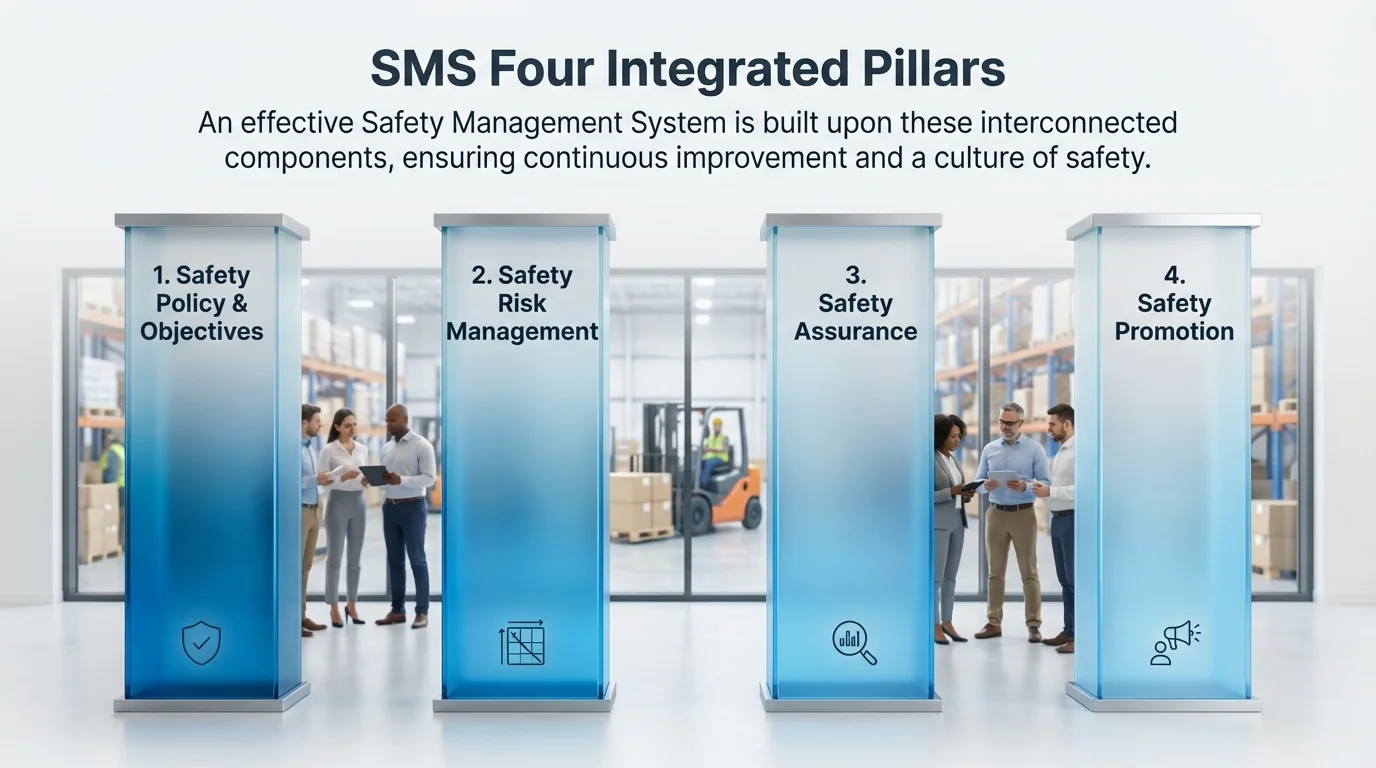
These four pillars aren’t bureaucratic inventions. They reflect 25 years of learning from heavy vehicle operations, aviation, manufacturing, and construction environments where safety failures carry real consequences.
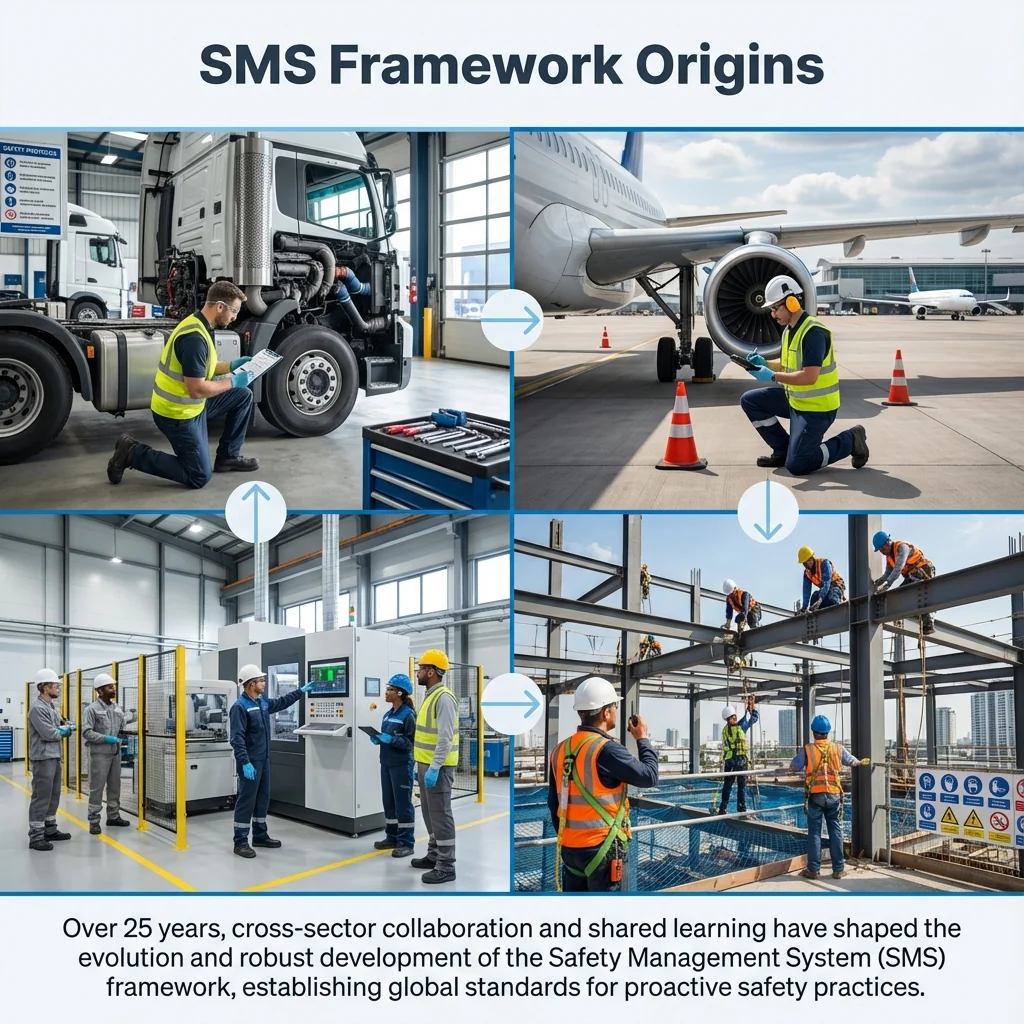
The framework applies whether you’re managing a transport fleet, running airport operations, or overseeing construction projects. Each sector adapts the components to fit their specific hazards, but the underlying structure remains consistent. What changes is how you implement each pillar to address your operational reality.
What is a Safety Management System (SMS)?
A Safety Management System reduces workplace incidents and supports regulatory compliance through structured processes that identify, assess, and control safety risks. The system integrates safety considerations into every operational decision, from daily task planning to strategic business choices.
SMS frameworks differ from traditional safety programs in one fundamental way. They shift focus from reacting to incidents toward preventing them through systematic risk management.
Think of SMS as your organization’s operating system for safety. Just as an operating system manages computer resources and coordinates software, SMS coordinates safety processes, allocates resources, and ensures different departments work toward common safety objectives.
The system touches everyone. Executives establish policy and allocate resources. Managers implement controls and monitor performance. Workers identify hazards and follow procedures. Each role contributes to the overall safety outcome.
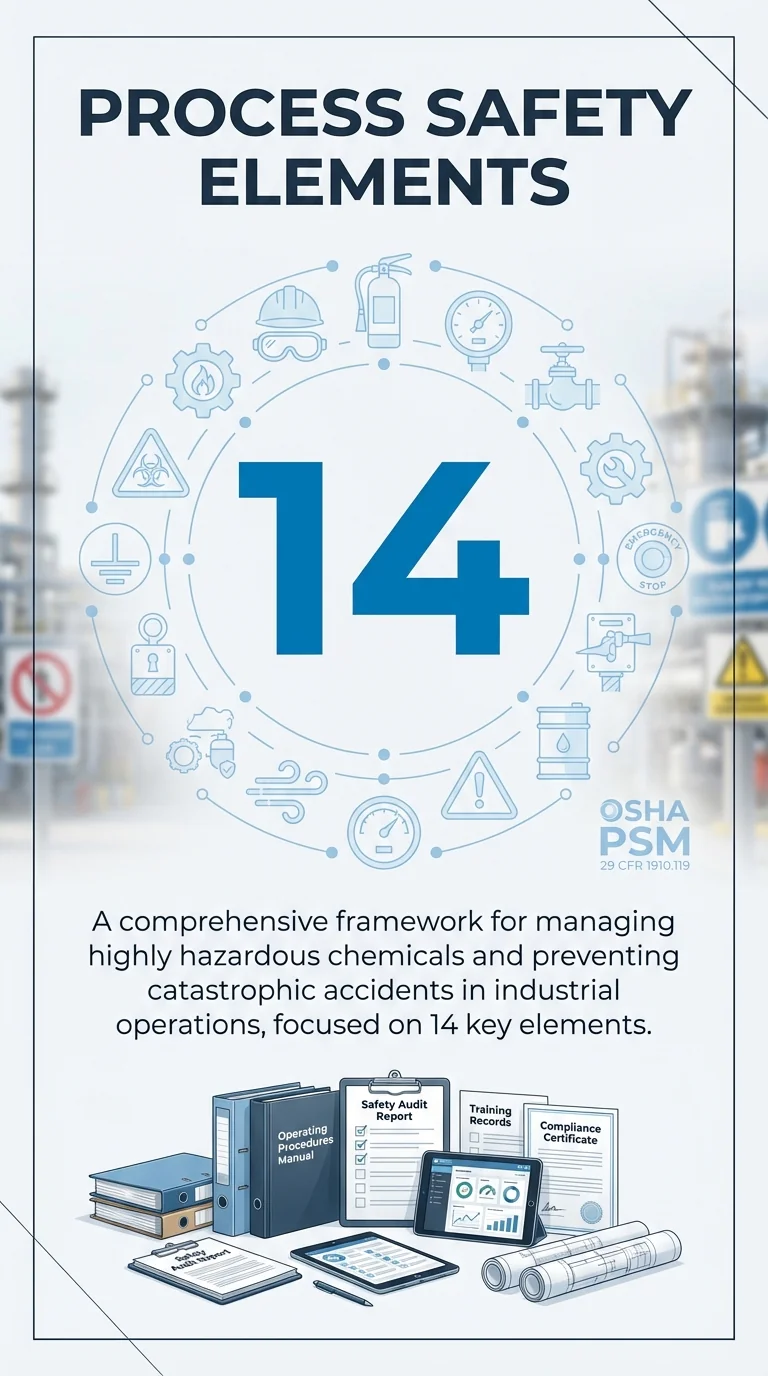
Several SMS frameworks exist across industries. ISO 45001-based OHSMS focuses on leadership commitment within a Plan-Do-Check-Act cycle, providing a structured approach to occupational health and safety management. Process Safety Management includes 14 distinct elements regulated by OSHA, specifically targeting chemical process safety in industrial operations.
All effective SMS frameworks share common DNA. They require leadership commitment, systematic hazard identification, risk assessment and control, performance monitoring, continuous improvement, and workforce engagement. The specific elements may vary, but these core functions appear consistently.
Overview of the Four SMS Components
Now that you understand SMS as an operational system, let’s examine how its four components work together. These pillars form the foundation that every effective safety management system builds upon.
Safety Policy establishes organizational commitment and defines safety objectives. This component answers the question: What does safety mean for our organization? It includes management commitment statements, accountability structures, documented objectives, and resource allocation decisions.
Safety Risk Management provides the methods to identify hazards, assess risks, and implement controls. This component tackles the operational question: What could go wrong, and how do we prevent it? It encompasses hazard identification processes, risk assessment tools, mitigation strategies, and control verification.
Safety Assurance monitors system performance and validates that controls work as intended. This component addresses: How do we know our safety system is working? It includes performance monitoring, audits, investigations, data analysis, and corrective action processes.
Safety Promotion builds the culture and competence needed to sustain the SMS. This component asks: How do we embed safety thinking throughout the organization? It covers training programs, communication systems, safety culture initiatives, and competency development.
| Component | Primary Focus | Key Question Addressed |
|---|---|---|
| Safety Policy | Direction and commitment | What does safety mean here? |
| Safety Risk Management | Hazard control | What could go wrong? |
| Safety Assurance | Performance monitoring | Is the system working? |
| Safety Promotion | Culture and competence | How do we sustain this? |
These components don’t operate in isolation. Policy decisions influence which risks receive priority attention. Risk management findings reveal where assurance monitoring should focus. Assurance data informs promotion activities. Promotion strengthens policy compliance. The cycle continues, creating a self-reinforcing system.
Understanding this interconnection matters because weak performance in any single component undermines the entire SMS. Strong policy with poor risk management leaves hazards uncontrolled. Excellent risk management without assurance means you never verify controls work. Robust assurance without promotion fails to build the culture needed to sustain performance.
Component 1: Safety Policy
With the overall framework clear, we can examine each component in detail. Safety Policy comes first because it establishes the foundation that supports all other SMS activities.
Management Commitment and Accountability
Safety Policy begins with visible, active commitment from the Accountable Executive. This individual, typically a senior leader with budget authority, holds ultimate responsibility for SMS implementation and performance.
The Accountable Executive role isn’t ceremonial. This person approves safety objectives, allocates resources, reviews performance data, and makes decisions when safety conflicts with other business priorities. Their engagement signals to the entire organization that safety matters.
Accountability structures define who does what. Document reporting relationships, decision authorities, and specific responsibilities for each key safety role. When an incident occurs or a hazard is identified, everyone should know who has authority to act.
Clear accountability prevents the diffusion of responsibility that undermines safety systems. If everyone is responsible, no one is responsible. Specific assignments ensure action happens.
Safety Objectives and Performance Targets
Safety Policy must include measurable objectives that define what success looks like. These objectives translate broad safety commitments into specific, achievable targets.
Effective safety objectives follow standard goal-setting principles. They specify what will be achieved, by when, and how progress will be measured. “Reduce reportable incidents” is too vague. “Reduce reportable incidents by 20% within 12 months, measured monthly against baseline” provides clear direction.
Set objectives at multiple levels. Organizational objectives address overall safety performance. Departmental objectives focus on specific operational areas. Individual objectives link personal accountability to safety outcomes.
Review and update objectives regularly. As you achieve targets, set new ones. As operations change, adjust objectives to reflect new risks. Static objectives lose relevance quickly in dynamic operational environments.
Documentation and Communication
Document your Safety Policy in writing. The document should be concise, accessible, and written in language your workforce understands. Avoid lengthy regulatory recitations. Focus on practical commitments and expectations.
Communicate the policy actively. Post it visibly. Include it in onboarding programs. Reference it in safety meetings. The policy should be familiar to everyone, not buried in a manual no one reads.
Review and update the policy when operations change significantly, when regulatory requirements shift, or when performance data reveals policy gaps. Annual reviews work well for most organizations, with interim updates as needed.
Component 2: Safety Risk Management (SRM)
Safety Policy establishes what your organization commits to achieving. Safety Risk Management provides the systematic processes to identify hazards, assess risks, and implement controls that prevent incidents.
Hazard Identification Processes
Hazard identification forms the foundation of SRM. If you don’t identify a hazard, you can’t control it. Effective hazard identification uses multiple methods to catch risks from different angles.
Proactive hazard identification looks for potential problems before they cause incidents. Methods include workplace inspections, job safety analyses, process reviews, and change management assessments. Schedule these activities regularly and document findings systematically.
Reactive hazard identification learns from things that have already gone wrong. Incident investigations, near-miss reports, and audit findings reveal hazards that existing controls missed. The key is to treat these events as learning opportunities, not just compliance exercises.
Worker reporting systems tap into frontline knowledge. The people doing the work often spot hazards that management misses. Create accessible reporting channels and respond to reports promptly. If workers report hazards but nothing changes, they’ll stop reporting.
Predictive hazard identification uses data analysis to spot emerging risks. Trend analysis of minor incidents, leading indicator monitoring, and predictive modeling can reveal hazards before they cause serious harm.
Risk Assessment and Analysis
Once you identify hazards, assess the risk they pose. Risk assessment evaluates both likelihood and consequence, helping you prioritize where to focus control efforts.
Use a consistent risk assessment methodology across your organization. Simple risk matrices work well for most operations. Rate each hazard’s likelihood and severity, then plot it on a matrix to determine risk level.
| Risk Level | Likelihood × Severity | Response Required |
|---|---|---|
| High | Likely severe outcomes | Immediate action required |
| Medium | Possible moderate outcomes | Planned mitigation needed |
| Low | Unlikely minor outcomes | Monitor and maintain controls |
Document your assessment criteria so different assessors reach consistent conclusions. Define what “likely” means versus “possible.” Specify what constitutes “severe” versus “moderate” harm. Without clear definitions, risk assessments become subjective and inconsistent.
Reassess risks when conditions change. New equipment, modified procedures, different personnel, or changed environments can all alter risk levels. Regular reassessment ensures your risk picture stays current.
Risk Mitigation and Control Implementation
Risk assessment identifies problems. Risk mitigation solves them. Implement controls that reduce risk to acceptable levels, prioritizing higher-risk hazards for immediate attention.
Apply the hierarchy of controls systematically. Elimination removes the hazard entirely. Substitution replaces it with something safer. Engineering controls isolate people from hazards. Administrative controls change how work is done. Personal protective equipment provides the last line of defense.
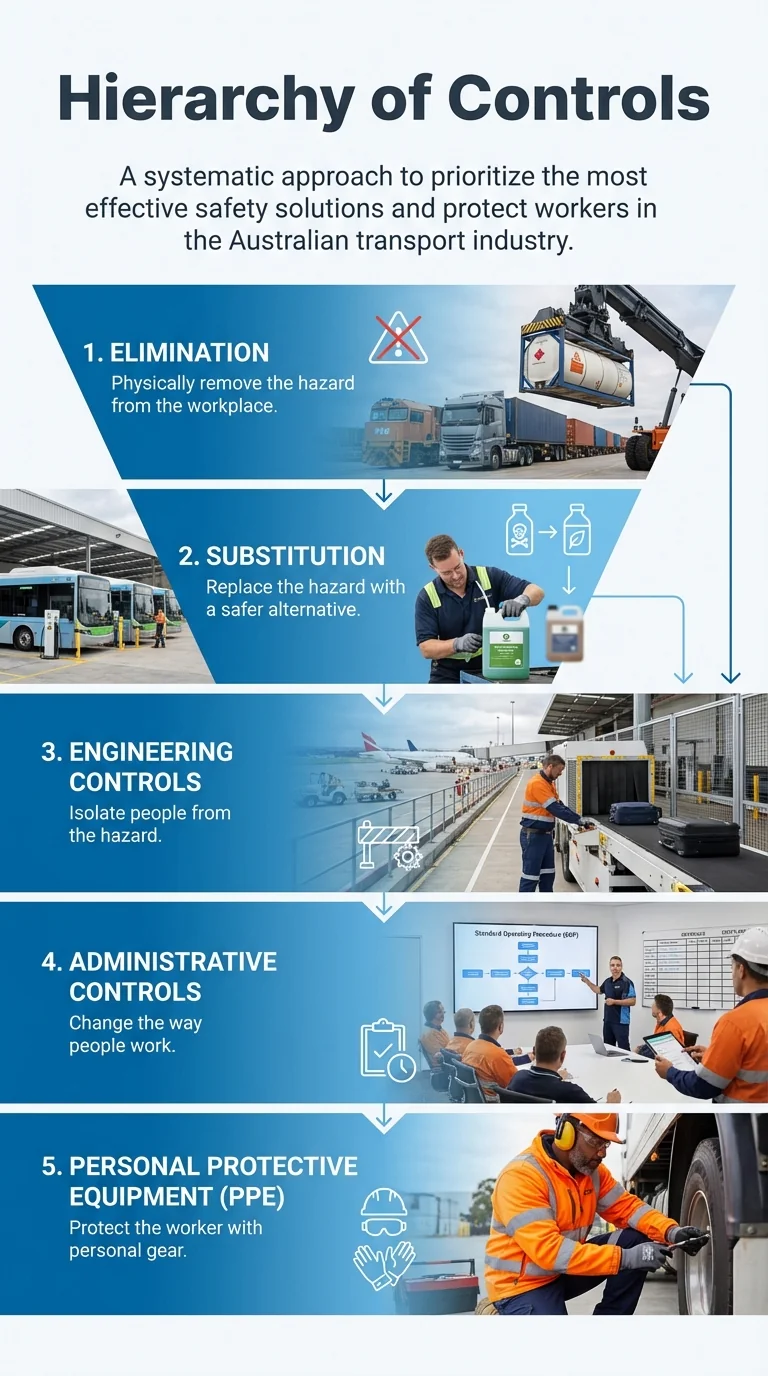
Higher-level controls provide more reliable protection. Engineering controls work automatically without depending on human compliance. Administrative controls and PPE require consistent human action, making them less reliable.
Document implemented controls clearly. Specify what control measure addresses which hazard, who is responsible for maintaining it, and how effectiveness will be verified. This documentation becomes critical during audits and investigations.
Verify that controls work as intended. Installation isn’t enough. Test controls, monitor their performance, and confirm they reduce risk to acceptable levels. This verification process links SRM directly to the Safety Assurance component.
Component 3: Safety Assurance (SA)
Safety Risk Management implements controls to manage identified hazards. Safety Assurance provides the ongoing monitoring and measurement that confirms those controls continue working effectively over time.
Safety Performance Monitoring and Measurement
Safety performance monitoring tracks leading and lagging indicators that reveal how well your SMS functions. Lagging indicators measure outcomes: incident rates, lost time injuries, property damage. They tell you what happened but can’t prevent the next incident.
Leading indicators measure activities and conditions that prevent incidents: completed inspections, training participation, hazard reports submitted, corrective actions closed on time. These indicators let you intervene before problems become incidents.
Establish specific metrics for each SMS component. For Safety Policy, track safety meeting attendance and policy review completion rates. For SRM, measure hazard identification rates and risk assessment completion. For Safety Promotion, monitor training completion and safety communication effectiveness.
Set target values for each metric and review performance against targets regularly. Monthly reviews work well for operational metrics. Quarterly reviews suit strategic measures. The key is consistency and follow-through when performance falls short.
Internal Audits and Assessments
Internal audits provide independent verification that SMS processes work as designed. Schedule audits regularly and assign them to qualified personnel who aren’t directly responsible for the areas being audited.
Audit against documented SMS procedures and regulatory requirements. Check that hazard identifications happen on schedule, risk assessments follow documented methodology, controls are implemented as specified, and documentation meets standards.
Focus audits on process effectiveness, not just compliance. A completed hazard identification form meets compliance requirements, but did the process actually identify real hazards? Were they assessed accurately? Were appropriate controls implemented? The deeper questions reveal whether your SMS delivers real safety performance.
Document audit findings clearly, including specific observations, regulatory or procedural references, and recommendations for improvement. Assign corrective actions with clear deadlines and responsible parties. Follow up to verify actions close effectively.
Incident Investigation and Analysis
Every incident represents an SMS failure. Something wasn’t identified, assessed correctly, or controlled effectively. Investigations reveal these gaps so you can fix them.
Investigate all incidents, with depth proportional to severity. Near misses and minor incidents deserve systematic review, even if they didn’t cause significant harm. They often reveal hazards that could cause serious incidents under different circumstances.
Use structured investigation methods that look beyond immediate causes. Root cause analysis, fishbone diagrams, and five-whys techniques help identify underlying system failures, not just surface-level mistakes.
Focus investigations on system improvement, not individual blame. When investigations become witch hunts, workers stop reporting incidents and near misses. You lose the learning opportunity that could prevent the next serious incident.
Track investigation findings across multiple incidents. Patterns reveal systemic issues that single-incident investigations might miss. Recurring causes signal where SMS improvements are needed most urgently.
Management Review and Continuous Improvement
Management review brings senior leaders together to evaluate SMS performance and direct improvement efforts. Schedule these reviews at least quarterly, more frequently if operations are high-risk or experiencing performance issues.
Review comprehensive performance data: incident statistics, audit findings, inspection results, training completion rates, hazard identification trends, and progress toward safety objectives. The review should cover all four SMS components, not just incident data.
Use review meetings to make decisions. Allocate resources to address identified gaps. Adjust safety objectives based on performance trends. Approve procedural changes recommended by investigations or audits. The review isn’t just information sharing. It’s where strategic safety decisions happen.
Document review decisions and track implementation. Assign action items with clear ownership and deadlines. The management review drives continuous improvement, turning data and findings into concrete system enhancements.
Component 4: Safety Promotion
The first three SMS components establish structure and processes. Safety Promotion builds the culture and competence that bring those structures to life across your entire workforce.
Training and Education Requirements
Safety training develops the knowledge and skills needed to work safely within your SMS framework. Training requirements vary by role, with more detailed instruction for those with greater safety responsibilities.
All personnel need SMS awareness training that covers basic concepts, their role in the system, hazard reporting procedures, and emergency response basics. Deliver this training during onboarding and refresh it regularly.
Personnel with safety responsibilities need role-specific training. Supervisors require training in hazard identification, incident investigation, and safety leadership. Safety personnel need detailed instruction in risk assessment, audit techniques, and SMS management.
Document training completion and maintain records that prove competency. Regulatory audits often focus heavily on training documentation. More importantly, documented training helps you identify competency gaps across your workforce.
Evaluate training effectiveness beyond attendance tracking. Test knowledge retention. Observe on-the-job application. Review incident data for patterns that suggest training gaps. Effective training changes behavior, not just checks a compliance box.
Communication and Safety Culture Development
Safety communication keeps everyone informed, engaged, and aligned with safety objectives. Communication flows in multiple directions: top-down policy and expectations, bottom-up hazard reports and concerns, and peer-to-peer safety discussions.
Establish regular communication channels. Safety meetings provide face-to-face discussion. Safety bulletins share lessons learned. Digital platforms enable real-time hazard reporting. The specific tools matter less than consistent use.
Make communication two-way. Solicit feedback on safety procedures. Ask workers about control effectiveness. When you implement changes based on worker input, acknowledge their contribution. This engagement builds ownership and trust.
Safety culture describes how your organization thinks about and acts on safety when no one is watching. Strong safety culture means workers choose safe practices because they believe in them, not because someone might catch them if they don’t.
Culture develops slowly through consistent actions that demonstrate what the organization truly values. When safety conflicts with production and safety wins, that builds culture. When leadership responds seriously to hazard reports, that builds culture. When investigations focus on learning rather than blame, that builds culture.
Measure culture through surveys, observation, and behavioral indicators. High hazard reporting rates often indicate strong culture, workers feel safe raising concerns. Low incident rates with high near-miss reporting suggests workers catch problems early. These patterns reveal cultural health.
The 12 Elements of SMS Explained
Organizations often break the four SMS components into 12 specific elements that provide more detailed implementation guidance. While naming varies across frameworks, these elements map consistently to the four core pillars.
Safety Policy Elements
Safety Policy expands into three elements. Management commitment and responsibility defines leadership roles and accountability structures. Safety policies and objectives document organizational safety direction and measurable targets. Documentation establishes the systems for maintaining required records and procedures.
These elements answer the foundational questions: Who is accountable? What are we trying to achieve? How do we document our commitments?
Safety Risk Management Elements
SRM typically includes four elements. Hazard identification processes define how the organization proactively finds potential safety issues. Risk assessment and analysis provides methodology for evaluating hazard severity and likelihood. Risk mitigation and control establishes the hierarchy and implementation of protective measures. Change management ensures new processes and equipment undergo safety review before implementation.
These elements address the operational challenge of preventing incidents through systematic hazard control. Change management connects explicitly to hazard identification, ensuring changes don’t introduce new risks.
Safety Assurance Elements
Safety Assurance breaks into three elements. Safety performance monitoring and measurement tracks leading and lagging indicators across the system. Management review and continuous improvement provides the decision-making forum for strategic safety direction. Internal audits and assessments offer independent verification of SMS effectiveness.
Together these elements answer whether the SMS is working and where improvements are needed. They provide the feedback loops that enable continuous improvement.
Safety Promotion Elements
Safety Promotion encompasses two elements. Training and education develops workforce competency in safety-critical knowledge and skills. Safety communication and culture builds the organizational environment where safety thinking becomes habitual.
These elements recognize that systems and procedures only work when supported by capable, engaged people who understand their safety role. Technical excellence without cultural support produces paper compliance, not operational safety.
| Component | Element Count | Primary Focus Areas |
|---|---|---|
| Safety Policy | 3 elements | Commitment, objectives, documentation |
| Safety Risk Management | 4 elements | Identification, assessment, mitigation, change control |
| Safety Assurance | 3 elements | Monitoring, review, audits |
| Safety Promotion | 2 elements | Training, communication, culture |
How the SMS Components Work Together
Understanding individual components matters, but SMS effectiveness depends on how they integrate into a functioning whole. Each component supports and reinforces the others in a continuous cycle.
Safety Policy establishes objectives that give SRM focus. When policy commits to reducing vehicle incidents by 25%, SRM processes prioritize vehicle-related hazards for assessment and control. Clear policy direction makes risk management efforts more targeted and effective.
SRM findings inform Safety Assurance monitoring. When risk assessments identify forklift operations as high-risk, assurance activities focus more monitoring attention on forklift controls. Audit schedules, inspection priorities, and performance metrics align with assessed risk levels.
Safety Assurance data drives Safety Promotion priorities. If audits reveal training gaps in hazard identification, promotion activities emphasize hazard recognition training. When investigations show cultural issues around reporting, communication efforts focus on building psychological safety.
Safety Promotion strengthens Safety Policy implementation. Trained, engaged workers understand and support safety objectives. Strong safety culture means policy commitments translate into actual operational behavior, not just documented promises.
This integration creates a self-improving system. Policy sets direction, SRM implements controls, Assurance verifies effectiveness, Promotion builds capability, and lessons learned feed back into updated policy. The cycle continues, driving incremental improvement over time.
Integration also means component weaknesses compound. Weak policy leaves SRM without clear direction. Poor SRM leaves Assurance with inadequate controls to monitor. Ineffective Assurance means problems go undetected. Insufficient Promotion means workers lack capability to implement procedures properly.
Organizations implementing SMS should build all four components in parallel, not sequentially. Attempting to perfect policy before starting risk management wastes time and misses integration benefits. Better to develop all four components together, even if imperfectly, then improve the integrated system through management review and continuous improvement processes.
Quick Answers to Common Questions
What are five key elements of a Safety Management System? Authoritative aviation guidance organizes SMS around four core components: safety policy and objectives, safety risk management, safety assurance, and safety promotion. These are sometimes described as five elements when performance monitoring is highlighted separately. Safety policy sets direction, risk management controls hazards, assurance checks that controls work, promotion builds culture and competence, and performance monitoring uses indicators and data to measure and improve safety outcomes.
What are the 12 elements of SMS? ICAO defines four primary SMS components, which regulators and training bodies frequently expand into roughly a dozen practical elements covering policy, organization, risk processes, assurance activities, and promotion of safety culture. While the exact wording and count varies by organization, they consistently map back to the four ICAO pillars: policy and objectives, risk management, assurance, and promotion.
What are the 7 core elements of a safety program? High-quality safety programs, whether framed as SMS in aviation or broader workplace safety systems, share similar building blocks: leadership commitment, engagement of personnel, systematic hazard and risk processes, effective controls, training, evaluation, and strong communication. Different standards may label or group them differently, but these seven functions appear consistently as the backbone of effective safety management programs.
Taking the Next Step
You now understand the four SMS components, how they break down into specific elements, and how they integrate to create operational safety performance. The structure makes sense on paper. Implementation is where theory meets operational reality.
Start with a gap analysis. Review your current safety activities against the four components. Where do formal processes exist? Where do you operate informally or inconsistently? Where are genuine gaps with no activity?
Prioritize gaps based on operational risk. Address high-risk areas first, even if documentation isn’t perfect. Better to have working controls with incomplete paperwork than polished procedures protecting nothing.
Build SMS systematically but not sequentially. Develop all four components together, accepting that early versions will be imperfect. Use management review to identify weaknesses and drive improvements over time.

Remember that SMS is a management system, not a safety program. It changes how your organization makes decisions, allocates resources, and conducts operations. That change takes time, sustained leadership commitment, and consistent action that demonstrates safety truly matters.
The payoff extends beyond regulatory compliance. Organizations with mature SMS see fewer incidents, reduced insurance costs, improved operational efficiency, and stronger employee engagement. Safety becomes a source of operational advantage, not just a cost center.
If you need support implementing a safety management system tailored to transport and supply chain operations, explore detailed SMS implementation guidance that covers practical application in heavy vehicle environments. For insights into specific tools that support SMS effectiveness, review essential SMS tools and technologies. To understand the business benefits beyond compliance, examine how SMS delivers measurable operational advantages.