
A transport safety management plan establishes the framework your organisation uses to prevent crashes, reduce injuries, and maintain operational continuity across all transport activities. This structured approach integrates policy development, risk management processes, operational procedures, monitoring systems, and continual improvement mechanisms into a cohesive safety framework.
Your safety management plan serves as the written documentation describing workplace hazards and the controls your organisation implements to protect workers. The plan details policies, procedures, and work practices designed to mitigate identified risks systematically.
Developing an effective transport safety management plan requires understanding regulatory requirements, establishing organisational commitment, and implementing processes that integrate safety into daily operations. This guide examines the essential components, regulatory frameworks, and practical implementation strategies for creating a safety management plan that delivers measurable improvements in transport safety performance.
What Defines a Transport Safety Management Plan
A transport safety management plan represents a structured, risk-based framework that sets out how an organisation will prevent crashes, injuries, and operational disruptions across its transport activities. The plan integrates policy, risk management, operations, monitoring, and continual improvement into daily business processes.
The safety management plan forms the central documentation for your organisation’s approach to transport safety. This written plan describes potential hazards in the workplace and outlines company policies, controls, and work practices used to protect workers from those hazards and risks.
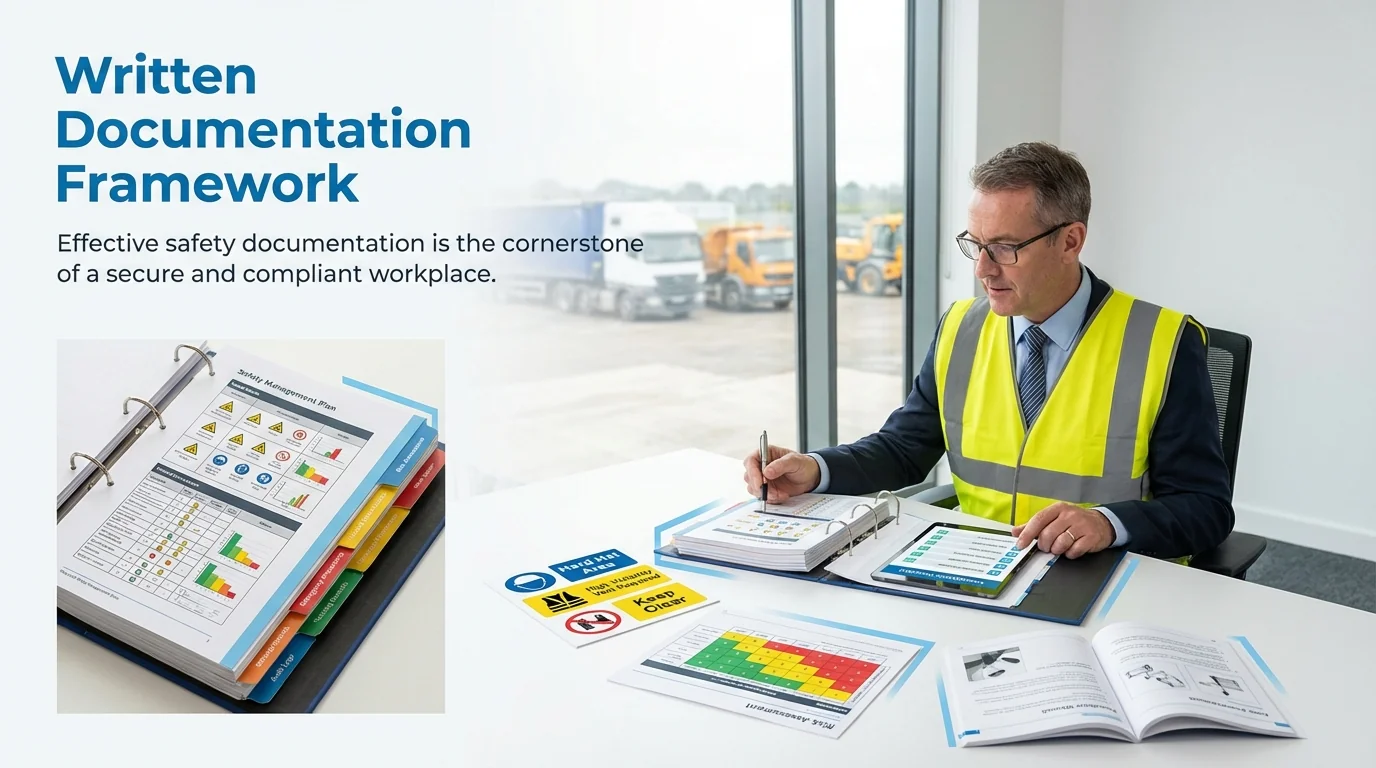
Transport safety management plans address multiple operational areas. These include vehicle maintenance procedures, driver training requirements, journey management processes, incident reporting systems, and emergency response protocols. Each element contributes to reducing safety risks across your transport operations.
Core Purpose and Objectives
Your safety management plan establishes clear objectives for preventing incidents and protecting workers. The plan documents how your organisation identifies hazards, assesses risks, implements controls, and monitors effectiveness over time.
The plan serves as your organisation’s commitment to safety. It communicates safety expectations to all personnel, defines roles and responsibilities, and establishes accountability mechanisms for safety performance.
Safety management plans provide the foundation for systematic risk reduction. By documenting processes and procedures, your organisation creates consistency in safety practices and establishes measurable benchmarks for improvement.
Integration with Operations
Effective safety management plans integrate seamlessly with existing operational processes. The plan should not exist as a separate compliance exercise but rather embed safety considerations into procurement, scheduling, route planning, and performance management activities.
Your plan defines how safety information flows through the organisation. This includes mechanisms for reporting hazards, communicating safety updates, and escalating concerns that require management attention.
Operational integration ensures safety considerations influence decision-making at all levels. When safety processes align with business operations, compliance becomes more sustainable and safety culture strengthens organically.
Federal Regulatory Requirements and Compliance
Transport safety management plans must comply with applicable federal regulations governing transport operations. Understanding these regulatory requirements provides the foundation for developing compliant safety management systems.
The Public Transportation Agency Safety Plan (PTASP) final rule (49 C.F.R. Part 673) requires public transportation systems receiving FTA funds to develop safety plans. These plans must include processes and procedures necessary for implementing a safety management system.

FHWA Work Zone Safety Requirements
The Federal Highway Administration establishes requirements for work zone safety and traffic management. These regulations mandate specific approaches to protecting workers and maintaining traffic flow in construction and maintenance zones.
Work zone safety regulations require transportation management plans for significant projects. These plans must address temporary traffic control, transportation operations, and public information components to minimise work zone impacts.
Compliance with FHWA requirements involves developing procedures that address work zone setup, traffic control device placement, worker protection measures, and public communication strategies for projects affecting roadway operations.
FTA Safety Management System Requirements
The Federal Transit Administration requires transit agencies to implement safety management systems. These systems must include safety policies, risk management processes, safety assurance mechanisms, and safety promotion activities.
FTA regulations establish minimum standards for transit safety management. Agencies must document their SMS processes, designate accountable executives, and implement safety performance monitoring systems.
Transit safety management plans must demonstrate how organisations identify hazards, assess safety risks, develop mitigation strategies, and evaluate the effectiveness of safety controls over time.
FMCSA Compliance Considerations
The Federal Motor Carrier Safety Administration regulates commercial motor vehicle operations. FMCSA requirements address driver qualifications, vehicle maintenance, hours of service, and operational safety standards.
Safety management plans for motor carrier operations must incorporate FMCSA compliance requirements. This includes procedures for driver qualification file maintenance, vehicle inspection programs, and compliance monitoring processes.
Organisations operating commercial motor vehicles must demonstrate systematic approaches to meeting FMCSA regulations. Your safety management plan should document how your organisation maintains ongoing compliance with federal motor carrier safety standards.
Key Components of a Transport Safety Management Plan
A transport safety management plan comprises several essential elements that work together to create systematic safety management. Each component serves a specific function in hazard identification, risk mitigation, and safety performance improvement.
Safety Policy Statement
Your safety policy statement communicates organisational commitment to safety. This statement should articulate safety values, establish safety objectives, and designate accountability for safety performance at the executive level.
The policy statement sets expectations for safety behaviour throughout the organisation. It should be signed by the highest organisational authority and communicated to all personnel involved in transport operations.
Effective safety policy statements are concise, specific, and actionable. The statement should reference relevant regulatory requirements and establish clear principles guiding safety decision-making across the organisation.
Roles and Responsibilities Framework
Your safety management plan must clearly define roles and responsibilities for safety management. This includes designating accountable executives, safety officers, operational managers, and individual worker responsibilities.
The roles framework establishes who performs hazard identification, conducts risk assessments, implements controls, monitors performance, and reviews safety management system effectiveness. Clear accountability prevents gaps in safety management coverage.
| Role | Primary Responsibilities | Authority Level |
|---|---|---|
| Accountable Executive | Overall SMS accountability, resource allocation, policy approval | Final decision authority |
| Safety Manager | SMS implementation, compliance monitoring, safety reporting | Operational authority |
| Operations Managers | Hazard identification, control implementation, team training | Department authority |
| Workers | Following procedures, reporting hazards, participating in training | Individual responsibility |
Document reporting relationships between safety roles. This clarifies escalation pathways for safety concerns and ensures appropriate personnel receive safety information requiring action.
Safety Procedures and Work Instructions
Safety procedures translate policy into operational practice. Your plan should include documented procedures for high-risk activities, routine operations, and emergency response situations.
Procedures should be specific, practical, and accessible to personnel performing the work. Each procedure should identify the activity, required safety controls, step-by-step instructions, and verification requirements.
Work instructions complement broader procedures by providing detailed guidance for specific tasks. These instructions should reflect actual work practices and incorporate lessons learned from incidents and near-misses.
Safety Management System Integration
Safety management systems provide the structured approach for managing safety risks systematically. Your transport safety management plan should integrate SMS principles to create sustainable safety performance improvement.
SMS represents a formal, organisation-wide, data-driven approach to managing safety risk. The system establishes processes for identifying hazards, assessing risks, implementing controls, and monitoring effectiveness continuously.
The Four SMS Components
Safety management systems comprise four integrated components. Safety management policy establishes organisational commitment and defines the safety management framework. This component includes safety objectives, accountable executives, and organisational structure for safety management.
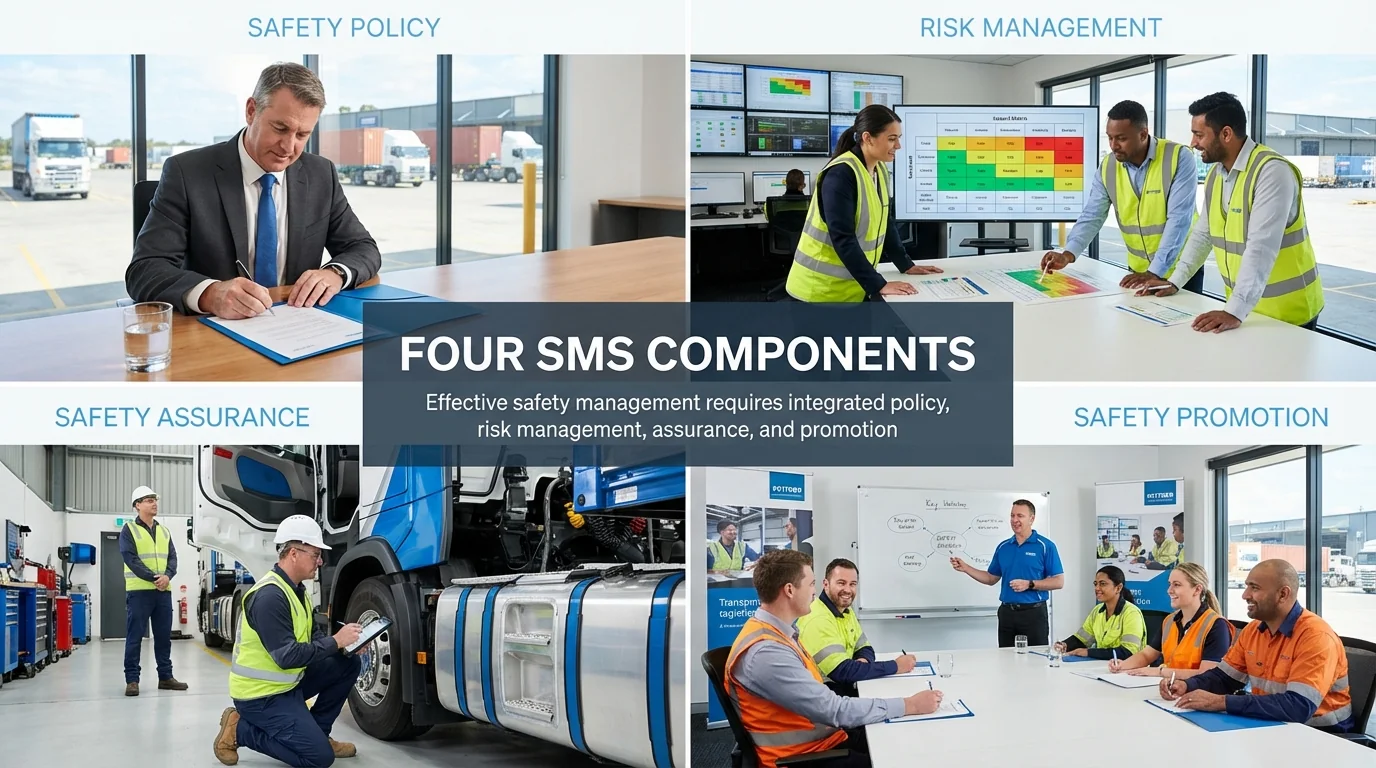
Safety risk management encompasses processes for identifying hazards, analysing risks, and implementing mitigations. This systematic approach ensures your organisation addresses safety risks before they result in incidents.
Safety assurance involves monitoring safety performance, evaluating the effectiveness of risk controls, and identifying opportunities for improvement. This component includes audits, investigations, and performance measurement activities.
Safety promotion focuses on building safety culture through training, communication, and employee involvement. This component ensures personnel understand their safety responsibilities and remain engaged in safety management activities.
SMS Implementation Approach
Implementing SMS requires phased development. Start by establishing your safety policy and organisational structure. This foundation supports subsequent development of risk management processes and performance monitoring systems.
Develop risk management processes that suit your operational complexity. Small organisations may use simplified hazard registers and risk matrices, while larger operations require more sophisticated risk assessment tools and tracking systems.
Build safety assurance mechanisms progressively. Begin with basic performance indicators and incident tracking, then expand to include audits, inspections, and advanced analytics as your SMS matures.
Data-Driven Safety Management
Effective SMS relies on data to inform safety decisions. Your plan should establish what safety data you collect, how you analyse that data, and how analysis results drive safety improvements.
Safety data sources include incident reports, inspection findings, hazard reports, training records, and operational performance metrics. Establish consistent data collection processes that generate reliable information for trend analysis.
Use data analysis to identify patterns, predict emerging risks, and evaluate control effectiveness. Regular data review sessions should inform safety planning and resource allocation decisions.
Transportation Management Plan Requirements
Transportation Management Plans address work zone safety and traffic management for construction and maintenance projects. TMPs ensure project activities minimise impacts on traffic flow while protecting workers and road users.
TMPs apply to significant projects that affect roadway operations. The plan describes strategies for maintaining safety and mobility through work zones during project duration.
Significant Projects Classification
Agencies must establish criteria for classifying projects as significant. These criteria typically consider factors including project duration, traffic volumes, roadway importance, and anticipated impacts on mobility.
Significant project designation triggers TMP requirements. Projects meeting established thresholds must develop plans addressing temporary traffic control, transportation operations, and public information components.
Classification criteria should reflect your operational environment. Urban areas may have lower thresholds than rural locations due to higher traffic volumes and limited alternative routes.
Temporary Traffic Control Plans
Temporary traffic control plans specify traffic control device placement, work zone configurations, and traffic management strategies. TTC plans must comply with Manual on Uniform Traffic Control Devices standards.
Your TTC plan should address each project phase. This includes initial setup, active work periods, and final restoration. Each phase requires specific traffic control measures appropriate to work activities and traffic conditions.
TTC plans must consider all road users. This includes provisions for pedestrians, cyclists, and transit vehicles affected by work zone operations. Universal design principles ensure work zones remain navigable for all users.
Transportation Operations Component
The transportation operations component addresses strategies for maintaining traffic flow through work zones. This includes traffic monitoring, incident management, traveller information systems, and demand management approaches.
Transportation operations plans should identify specific strategies for your project conditions. Options include temporary signals, detour routes, public transport accommodations, and intelligent transportation system deployment.
Coordinate transportation operations with regional traffic management centers. This coordination enables real-time response to changing conditions and helps maintain network-wide traffic flow during project implementation.
Public Information Strategy
Public information components ensure affected road users receive timely, accurate information about work zones. Your strategy should identify target audiences, key messages, communication channels, and timing for information dissemination.
Develop public information plans early in project planning. Early communication helps road users plan alternative routes, adjust travel times, or modify travel modes before work zone impacts begin.
Use multiple communication channels to reach diverse audiences. Options include media releases, social media, variable message signs, project websites, and direct stakeholder engagement for projects with significant community impacts.
Developing Your Safety Management Plan Step by Step
Creating an effective safety management plan requires systematic development. This process ensures your plan addresses all essential elements and reflects your operational reality.
Step 1: Conduct Gap Analysis
Start by assessing your current safety management practices against regulatory requirements and industry best practices. This gap analysis identifies what you already do well and where improvements are needed.
Review existing safety documentation, policies, and procedures. Document what safety management processes currently exist, how they function, and where gaps or inconsistencies occur.
Engage personnel at all levels in gap analysis. Frontline workers often identify practical gaps that management may not recognise. This inclusive approach builds buy-in for subsequent plan development.
Step 2: Establish Safety Policy
Develop your safety policy statement with senior leadership involvement. The policy should reflect genuine organisational commitment and establish clear safety objectives that guide subsequent plan development.
Draft policy language that is specific to your operations. Generic policy statements lack credibility. Reference your actual operational context, specific safety challenges, and regulatory obligations.
Obtain formal policy approval from your accountable executive. This approval demonstrates leadership commitment and provides authority for implementing safety management processes throughout the organisation.
Step 3: Define Organisational Structure
Establish the organisational structure for safety management. Designate your accountable executive, safety manager, and key safety roles throughout the organisation.
Document reporting relationships between safety positions. Create an organisational chart showing how safety responsibilities distribute across your operational structure.
Develop position descriptions for safety roles. These descriptions should specify qualifications, responsibilities, authority levels, and performance expectations for each safety management position.
Step 4: Develop Risk Management Processes
Create systematic processes for hazard identification and risk assessment. Document how your organisation identifies hazards, analyses associated risks, determines risk acceptability, and selects appropriate controls.
Develop risk assessment tools appropriate for your operations. This may include hazard registers, risk matrices, job safety analyses, or more sophisticated risk modelling tools depending on operational complexity.
Establish risk acceptance criteria. Define what level of risk requires immediate action, management approval, or executive decision-making. Clear criteria enable consistent risk management decisions.
Step 5: Document Safety Procedures
Develop documented procedures for key operational activities. Prioritise high-risk activities and operations with significant safety implications. Procedures should be practical, clear, and reflect actual work practices.
Involve workers who perform the activities in procedure development. Their input ensures procedures are practical and increases likelihood of adherence during operations.
Format procedures for easy reference. Use clear headings, numbered steps, visual aids, and simple language. Procedures should be readily accessible to workers at their work locations.
Step 6: Establish Performance Monitoring
Define safety performance indicators you will track. Select both leading indicators (proactive measures) and lagging indicators (outcome measures) that provide balanced performance visibility.
Establish data collection processes for each indicator. Specify who collects data, how frequently, what tools are used, and where data is stored for analysis.
Create reporting mechanisms that present performance data to appropriate stakeholders. Regular performance reports maintain safety visibility and inform management decision-making.
Step 7: Implement Training Programs
Develop training programs that address safety management plan requirements. Training should cover safety policy, individual responsibilities, specific procedures, and emergency response requirements.
Tailor training to different audience needs. Executives require different training than frontline supervisors or operational personnel. Each group needs information relevant to their responsibilities.
Establish training records systems. Document who receives training, when training occurs, what topics are covered, and when refresher training is required. Maintain records demonstrating ongoing competency.
Step 8: Plan Implementation Rollout
Create an implementation plan with specific milestones, responsibilities, and timelines. Phased implementation often works better than attempting complete implementation simultaneously.
Communicate implementation plans throughout the organisation. Personnel need to understand what changes are coming, why they matter, and how implementation affects their work.
Provide resources necessary for implementation success. This includes time, tools, training, and personnel support required to establish new safety management processes.
Work Zone Safety and Temporary Traffic Control
Work zone safety requires systematic approaches to protecting workers while maintaining traffic flow. Your safety management plan must address work zone risks comprehensively.
Work zones present unique safety challenges where roadway operations continue during construction or maintenance activities. These environments require careful planning to protect both workers and road users.
Work Zone Risk Assessment
Conduct risk assessments for each work zone configuration. Consider traffic speeds, volumes, work duration, worker exposure, and roadway geometry when evaluating work zone risks.
Identify specific hazards present in your work zone. These may include vehicle intrusions, struck-by incidents, equipment operation hazards, or environmental factors affecting safety.
Develop mitigation strategies for identified risks. Controls may include positive protection devices, advance warning systems, speed management techniques, or work zone configuration modifications that reduce worker exposure.
Temporary Traffic Control Device Selection
Select traffic control devices appropriate for your work zone conditions. Device selection should consider traffic speeds, available sight distance, work duration, and environmental conditions.
Follow Manual on Uniform Traffic Control Devices guidance for device placement. Proper placement ensures road users receive adequate warning and guidance through work zones.
Inspect traffic control devices regularly. Damaged or poorly positioned devices compromise work zone safety. Establish daily inspection procedures and immediate correction processes for identified deficiencies.
Worker Protection Measures
Implement positive protection for workers when feasible. Barriers separating workers from traffic flow provide significantly better protection than traffic control devices alone.
Establish work zone access controls. Limit work zone entry to authorised personnel and ensure all workers receive appropriate training before entering work zones.
Require high-visibility apparel for all workers in or near roadways. Visibility requirements should reflect work zone conditions, including nighttime operations or adverse weather situations.
Work Zone Safety Culture
Build safety culture specific to work zone operations. This includes supervisor engagement, worker empowerment to stop unsafe work, and recognition of safe work zone practices.
Conduct regular work zone safety talks. Brief workers on specific hazards, planned controls, and expected conditions before beginning work zone operations each day.
Investigate work zone near-misses. These events provide opportunities to identify systemic issues and implement improvements before serious incidents occur.
Risk Assessment and Mitigation Strategies
Risk assessment forms the foundation for effective safety management. Your plan should establish systematic processes for identifying hazards, evaluating risks, and implementing appropriate controls.
Hazard Identification Methods
Use multiple methods to identify hazards comprehensively. Workplace inspections reveal environmental and equipment hazards. Job safety analyses identify task-specific risks. Incident investigations uncover hazards that contributed to past events.
Encourage hazard reporting from all personnel. Frontline workers often identify hazards before they result in incidents. Establish accessible reporting mechanisms and ensure reported hazards receive timely response.
Review operational changes for new hazards. Changes in equipment, procedures, personnel, or operational conditions may introduce hazards not previously present. Conduct change management reviews that include hazard identification.
Risk Evaluation Framework
Develop consistent criteria for evaluating risk severity and likelihood. Risk matrices provide straightforward tools for categorising risks and establishing priorities for risk treatment.
Consider both the potential severity of consequences and the likelihood of occurrence. High-severity, high-likelihood risks require immediate attention. Lower-priority risks may be acceptable with monitoring.
Establish risk acceptance criteria appropriate for your organisation. Define what level of risk requires executive approval, what risks require immediate mitigation, and what residual risks are acceptable with controls in place.
Hierarchy of Controls Application
Apply the hierarchy of controls when selecting risk mitigations. Elimination provides the most effective control by removing the hazard entirely. When elimination is not feasible, progress through substitution, engineering controls, administrative controls, and finally personal protective equipment.
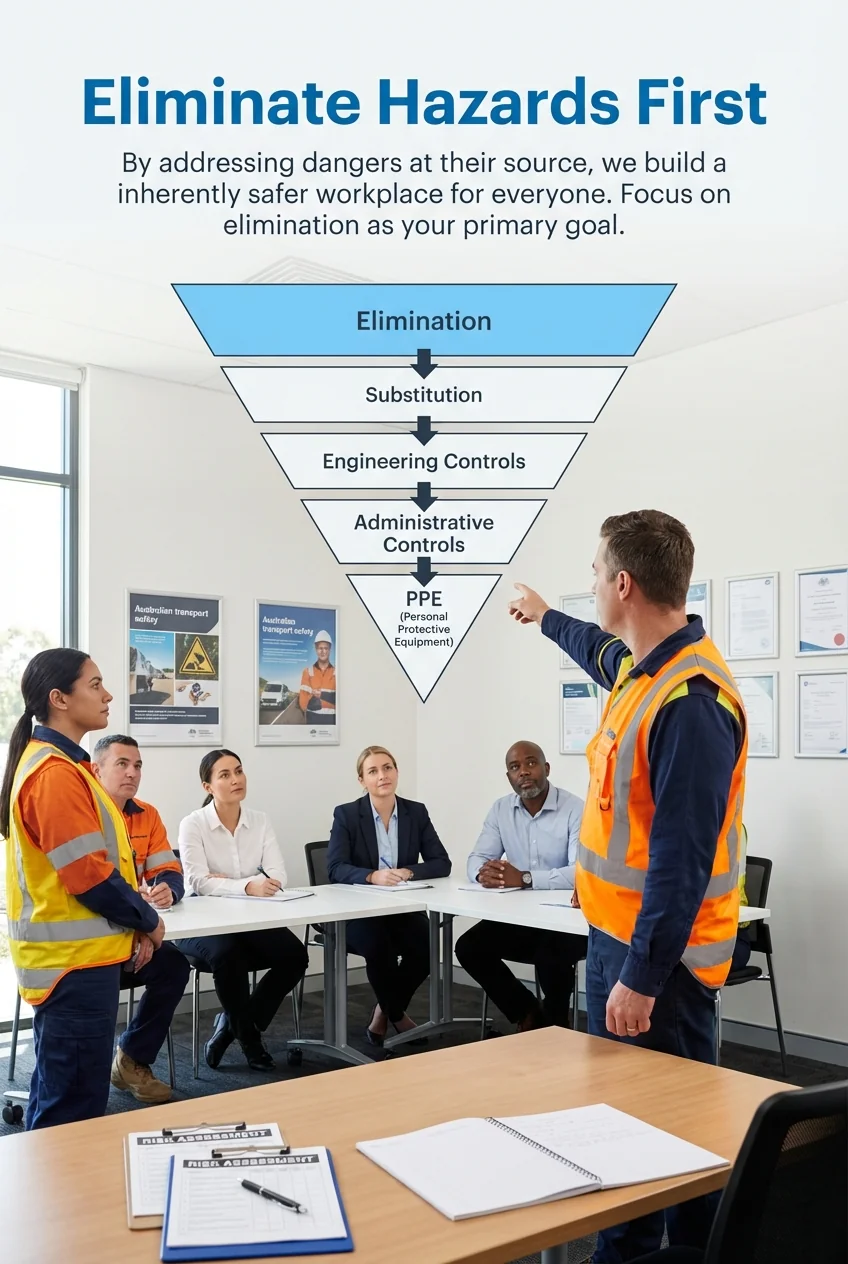
Engineering controls provide more reliable protection than administrative controls. Physical barriers, interlocks, and equipment modifications reduce reliance on human behaviour for safety.
Use multiple control layers for high-risk activities. Defence-in-depth approaches recognise that individual controls may fail. Multiple independent controls provide redundancy that improves overall safety.
Control Effectiveness Monitoring
Monitor the effectiveness of implemented controls. Controls that look good on paper may prove ineffective in operational reality. Regular verification ensures controls function as intended.
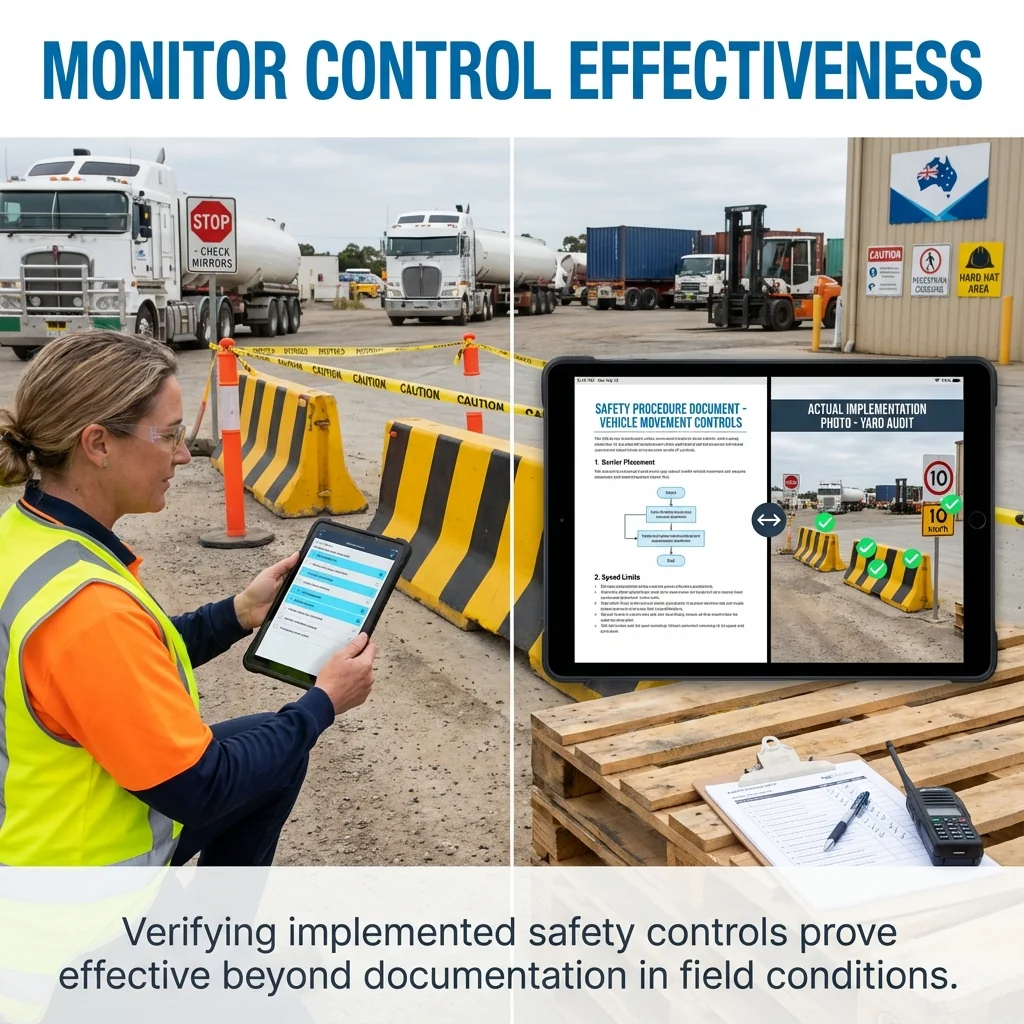
Establish verification methods appropriate for each control type. Engineering controls may require periodic inspection and testing. Administrative controls require auditing and observation to verify compliance.
Update risk assessments when controls prove ineffective. If monitoring reveals control failures, reassess the risk and implement more effective mitigations. Risk management is iterative, not one-time activity.
Training Programs and Competency Development
Effective safety management requires competent personnel at all levels. Your plan should establish training programs that develop necessary safety competencies throughout the organisation.
Training Needs Assessment
Identify training needs systematically. Consider regulatory requirements, identified risks, job-specific requirements, and individual competency gaps when determining training priorities.
Different roles require different training. Executives need strategic safety leadership training. Supervisors require training in hazard recognition, incident investigation, and employee coaching. Workers need task-specific safety training relevant to their activities.
Reassess training needs periodically. Changes in operations, regulations, or identified risks may create new training requirements. Annual training needs assessments ensure your program remains current.
Training Program Development
Develop training programs with clear learning objectives. Each program should specify what participants will know or be able to do after completing training.
Use training methods appropriate for your content and audience. Hands-on practice works well for procedural training. Classroom instruction suits policy and regulatory content. Scenario-based learning effectively develops decision-making skills.
Incorporate adult learning principles. Adults learn best when training is relevant to their work, builds on existing knowledge, and provides opportunities for practice and feedback.
| Training Topic | Target Audience | Frequency |
|---|---|---|
| Safety policy and SMS overview | All personnel | Annual |
| Hazard recognition and reporting | All personnel | Annual |
| Job-specific safety procedures | Role-specific | Initial and as needed |
| Emergency response | All personnel | Annual |
| Incident investigation | Supervisors and managers | Initial and refresher as needed |
Competency Verification
Verify that training achieves intended competency development. Testing, observation, and practical demonstrations confirm participants gained required knowledge and skills.
Establish competency standards for high-risk activities. Define what knowledge, skills, and experience qualify someone to perform specific work. Verify competency before authorising personnel to perform these activities independently.
Maintain training records demonstrating competency. Records should show who completed training, when training occurred, verification methods used, and results achieved. These records demonstrate regulatory compliance and support safety assurance.
Ongoing Professional Development
Support continuing education for safety professionals. Safety management expertise requires staying current with evolving regulations, emerging technologies, and advancing safety management practices.
Provide opportunities for safety personnel to attend conferences, workshops, and professional development programs. External training exposes your team to innovative approaches and industry best practices.
Encourage professional certifications relevant to your operations. Certifications demonstrate competency and commitment to professional excellence in safety management.
Monitoring and Performance Evaluation
Systematic performance monitoring enables you to evaluate safety management plan effectiveness and identify improvement opportunities. Your plan should establish what you measure, how you measure it, and how measurement results inform decisions.
Safety Performance Indicators
Select performance indicators that provide meaningful insight into safety management effectiveness. Use both leading indicators that predict future performance and lagging indicators that measure safety outcomes.
Leading indicators include metrics such as hazard reports submitted, safety training completion rates, audit findings, and near-miss reporting frequency. These measures indicate whether your safety management processes are functioning.
Lagging indicators measure safety outcomes including incident rates, severity rates, lost-time injuries, and property damage. While these measures indicate results, they provide limited insight into underlying safety management effectiveness.
Data Collection and Analysis
Establish reliable data collection processes. Define data sources, collection frequency, responsible personnel, and quality control measures ensuring data accuracy.
Analyse data to identify trends and patterns. Look for increasing or decreasing trends, seasonal variations, correlations between different metrics, and outliers requiring investigation.
Present data analysis results in formats that support decision-making. Trend charts, heat maps, and comparative analyses help stakeholders understand performance patterns and prioritise improvement efforts.
Safety Audits and Inspections
Conduct regular safety audits evaluating compliance with your safety management plan. Audits should examine whether documented processes are being followed and whether they remain effective.
Schedule inspections of facilities, equipment, and work areas. Inspections identify hazards requiring correction and verify that implemented controls remain in place and functional.
Document audit and inspection findings systematically. Track identified deficiencies through correction and verification. Analyse patterns in findings to identify systemic issues requiring management attention.
Management Review Process
Establish management review processes where leadership evaluates safety management system performance. Reviews should occur at defined intervals and address performance data, audit findings, incident trends, and improvement opportunities.
Management reviews should result in decisions and actions. These may include resource allocation changes, policy updates, new risk mitigations, or strategic direction adjustments based on performance evidence.
Document management review outcomes. Record what was reviewed, decisions made, actions assigned, and follow-up requirements. This documentation demonstrates active management engagement in safety management.
Continuous Improvement and Plan Maintenance
Your safety management plan should evolve continuously. Regular review and improvement ensure the plan remains effective as your operations, regulations, and safety knowledge advance.
Incident Investigation and Learning
Investigate incidents to identify causal and contributing factors. Effective investigations look beyond immediate causes to identify underlying systems failures that allowed incidents to occur.
Use investigation findings to drive improvements. Implement corrective actions that address root causes, not just obvious symptoms. Systemic improvements prevent recurrence more effectively than individual-focused corrections.
Share lessons learned throughout the organisation. When one location identifies an issue, other locations with similar operations may face the same risk. Systematic lesson dissemination multiplies the value of each investigation.
Safety Management Plan Review
Review your safety management plan periodically. Annual reviews ensure the plan reflects current operations, incorporates regulatory changes, and addresses emerging risks.
Update the plan based on experience. If procedures prove impractical, revise them. If risk assessments were inaccurate, update them. The plan should reflect operational reality, not theoretical ideals.
Involve diverse personnel in plan reviews. Different perspectives identify different improvement opportunities. Inclusive review processes produce more robust plans.
Regulatory Update Monitoring
Monitor regulatory developments affecting your operations. Subscribe to agency updates, participate in industry associations, and maintain awareness of proposed regulatory changes.
Assess how regulatory changes affect your safety management plan. New requirements may necessitate procedure updates, additional training, or new safety management processes.
Implement regulatory changes proactively. Waiting until enforcement begins puts your organisation at risk. Early implementation demonstrates commitment to compliance and often proves operationally easier.
Benchmarking and Industry Best Practices
Compare your safety performance and practices against industry benchmarks. Benchmarking identifies where you perform well and where improvement opportunities exist.
Study best practices from high-performing organisations. While your specific plan must reflect your unique operations, proven approaches from other organisations often transfer effectively.
Participate in industry safety initiatives. Collaborative safety programs provide opportunities to learn from peers and contribute to industry-wide safety advancement.
Building Sustainable Safety Culture
Your safety management plan provides the structure for safety management, but sustainable safety performance requires strong safety culture. Culture determines whether documented processes translate into consistent safe behaviours.
Leadership Engagement
Safety culture starts with visible leadership commitment. Leaders must demonstrate that safety truly matters through their decisions, behaviours, and communications.
Leaders should regularly engage with safety activities. This includes participating in safety meetings, conducting workplace visits focused on safety, and personally recognising safe behaviours.
Leadership must respond decisively to safety concerns. When leaders take swift action on reported hazards and safety issues, personnel learn that safety reports matter and reporting is valued.
Employee Empowerment
Empower workers to stop unsafe work. Personnel closest to operations often recognise hazards first. They need authority and organisational support to halt work when safety is compromised.
Create accessible mechanisms for raising safety concerns. Anonymous reporting options, safety committees, and direct supervisor communication all provide channels for surfacing safety issues.
Respond positively to reported concerns. Even when reported concerns prove unfounded, positive responses encourage continued engagement. Negative responses shut down safety communication.
Recognition and Accountability
Recognise individuals and teams demonstrating safety excellence. Recognition reinforces desired behaviours and signals what the organisation values.
Hold personnel accountable for safety responsibilities. Accountability applies at all levels, from executives to frontline workers. Consistent accountability demonstrates that safety expectations are serious.
Focus accountability on systems and behaviours, not blame. Just culture principles recognise that most safety failures reflect system weaknesses rather than individual malice. System improvements prevent recurrence better than punishment.
Developing an effective transport safety management plan requires commitment, systematic development, and ongoing attention. Your plan establishes the framework for preventing incidents and protecting workers across your transport operations.
Start with clear policy and leadership commitment. Build systematic processes for managing risks. Monitor performance to identify what works and what needs improvement. Engage personnel at all levels in safety management. Continuously refine your approach based on experience and evidence.
The investment you make in your safety management plan pays dividends through reduced incidents, improved regulatory compliance, and enhanced operational performance. Effective safety management protects your people, your operations, and your organisation’s reputation in the transport industry.