
Queensland’s Parliament has officially passed the Heavy Vehicle National Law Amendment Bill 2025, confirming that the most significant overhaul of Australia’s heavy vehicle compliance framework in over a decade will commence in mid-2026. These amendments transform Chain of Responsibility (CoR) obligations by mandating Safety Management Systems (SMS) across the supply chain, introducing enforceable “fit to drive” duties that extend beyond fatigue, streamlining accreditation frameworks, and modernizing mass management rules to support both safety and productivity. For transport operators, consignors, schedulers, and everyone in the CoR chain, these changes represent a fundamental shift from reactive compliance to proactive risk management.
The Heavy Vehicle National Law (HVNL) 2026 amendments mark the culmination of a reform process that began in 2019, guided by extensive consultation between the National Transport Commission (NTC), National Heavy Vehicle Regulator (NHVR), and industry stakeholders. The legislative package addresses critical safety gaps identified through incident analysis while enabling operational flexibility for compliant operators.
Understanding what’s changing, when it takes effect, and how to prepare isn’t optional. The amendments create new legal obligations that apply whether your business currently holds accreditation or not.
Timeline and Implementation Status
The Heavy Vehicle National Law Amendment Bill 2025 passed through Queensland Parliament and will commence in mid-2026, marking the official start date for the most substantial HVNL reforms since the law’s inception. Queensland’s legislative approval triggers implementation across all participating jurisdictions under the national framework.
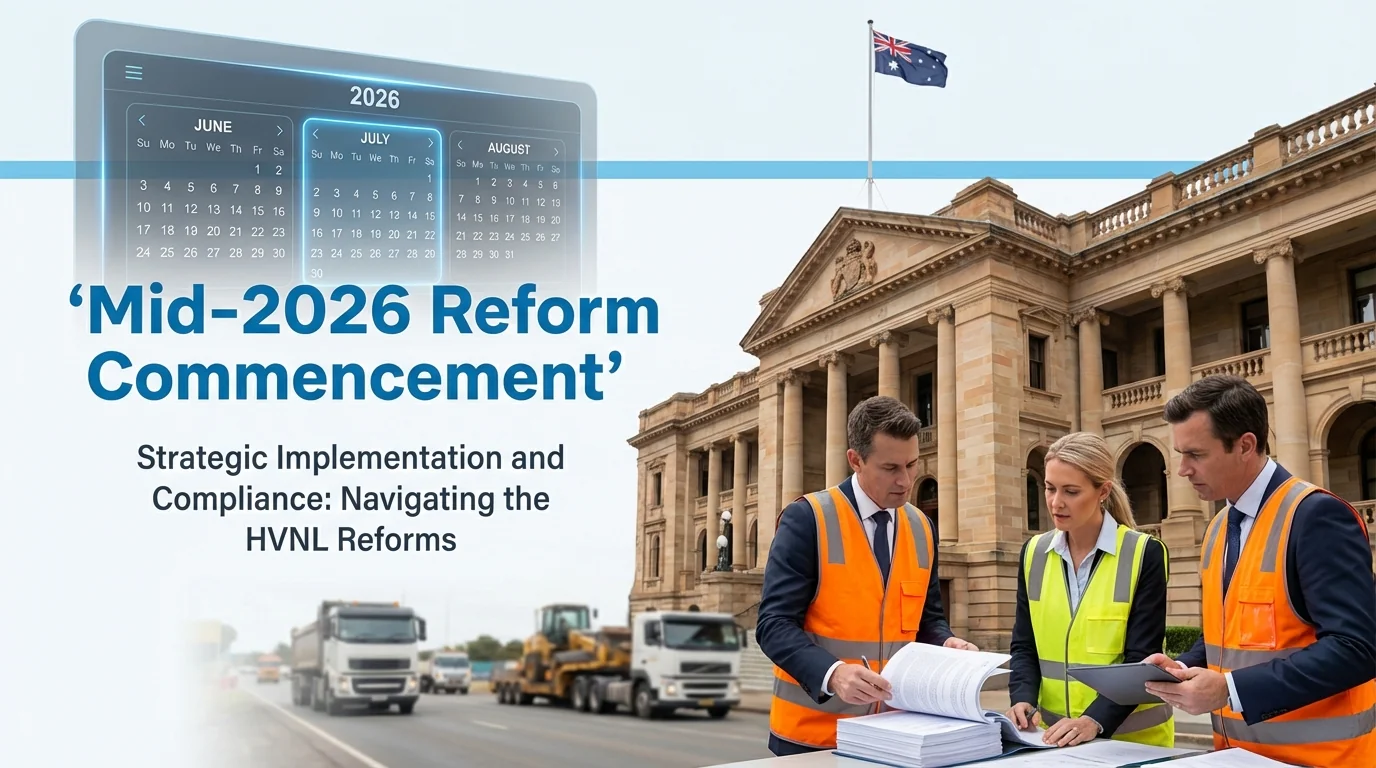
The NHVR has already begun preparing implementation resources, while the reform process that started in 2019 involved extensive consultation leading to this legislative package. Transport ministers approved the final amendments after multiple rounds of stakeholder feedback, balancing safety improvements with practical industry concerns.
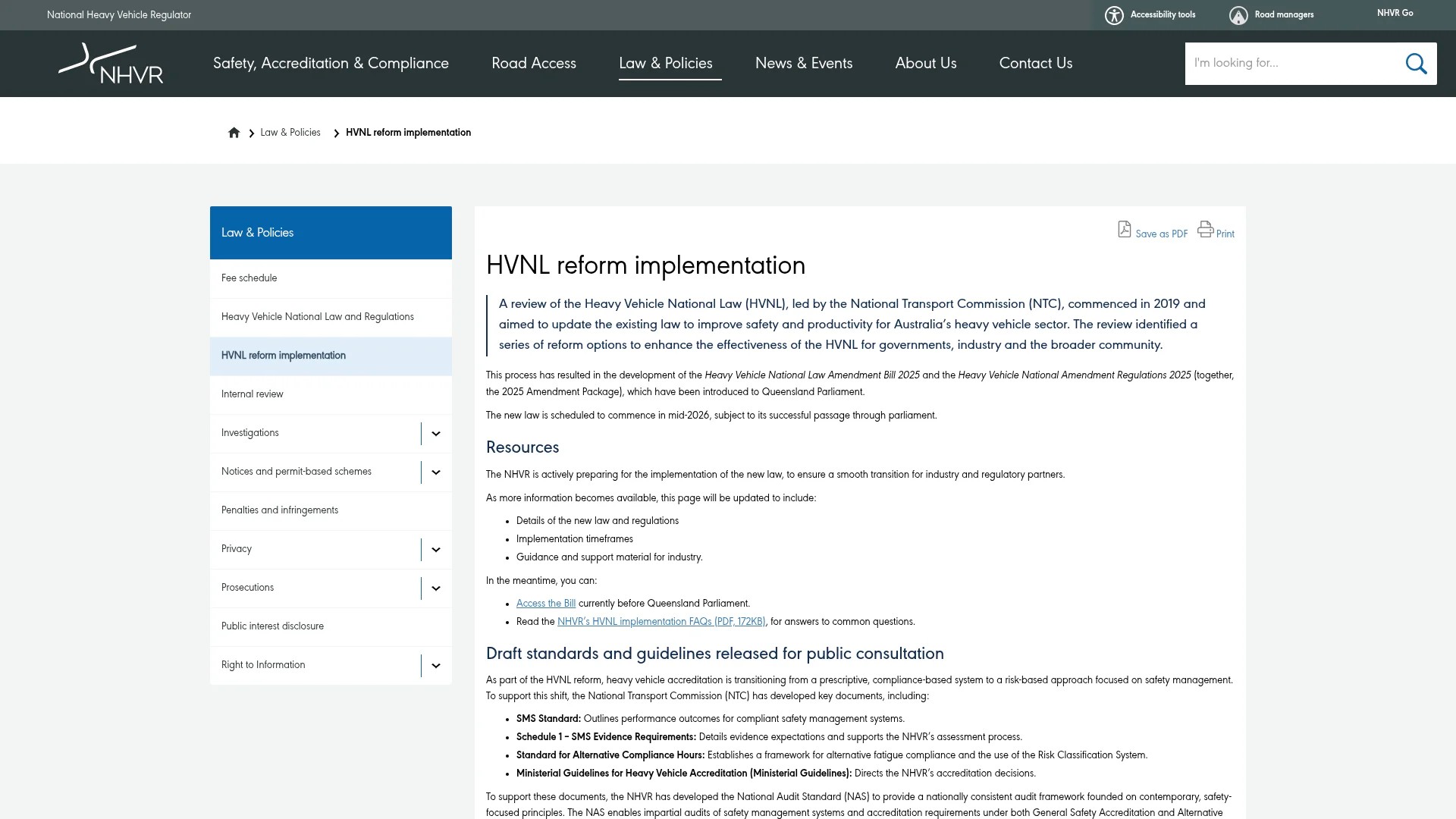
Current Consultation Windows
Several statutory instruments remain open for public consultation as the NHVR finalizes implementation details. These consultations focus on the operational specifics that will govern how operators comply with the amended Heavy Vehicle National Law.
Key consultation areas include the Ministerial Guidelines for Heavy Vehicle Accreditation, which outline how the new accreditation framework will operate in practice. The National Audit Standard (NAS) is also under review to align audit methodologies with SMS requirements.
Industry operators should participate in these consultations now. The NHVR regularly publishes discussion papers and draft regulations on their official implementation page, with submission deadlines typically 30 days after publication.

Transition Period Preparation
Between now and mid-2026, businesses must conduct gap analyses against new requirements. The transition period provides time to develop or upgrade safety management frameworks, train personnel on expanded CoR duties, and establish systems for documenting compliance activities.
Operators with existing NHVAS accreditation will need to assess whether their current systems meet the updated standards. Those without formal accreditation should evaluate whether the new alternative compliance pathways offer business advantages worth pursuing.
Safety Management System Requirements Under the 2026 Amendments
Safety Management Systems become the cornerstone of Heavy Vehicle National Law compliance from mid-2026 onward. The amendments mandate that all parties in the Chain of Responsibility implement systematic approaches to identifying, assessing, and controlling transport safety risks.
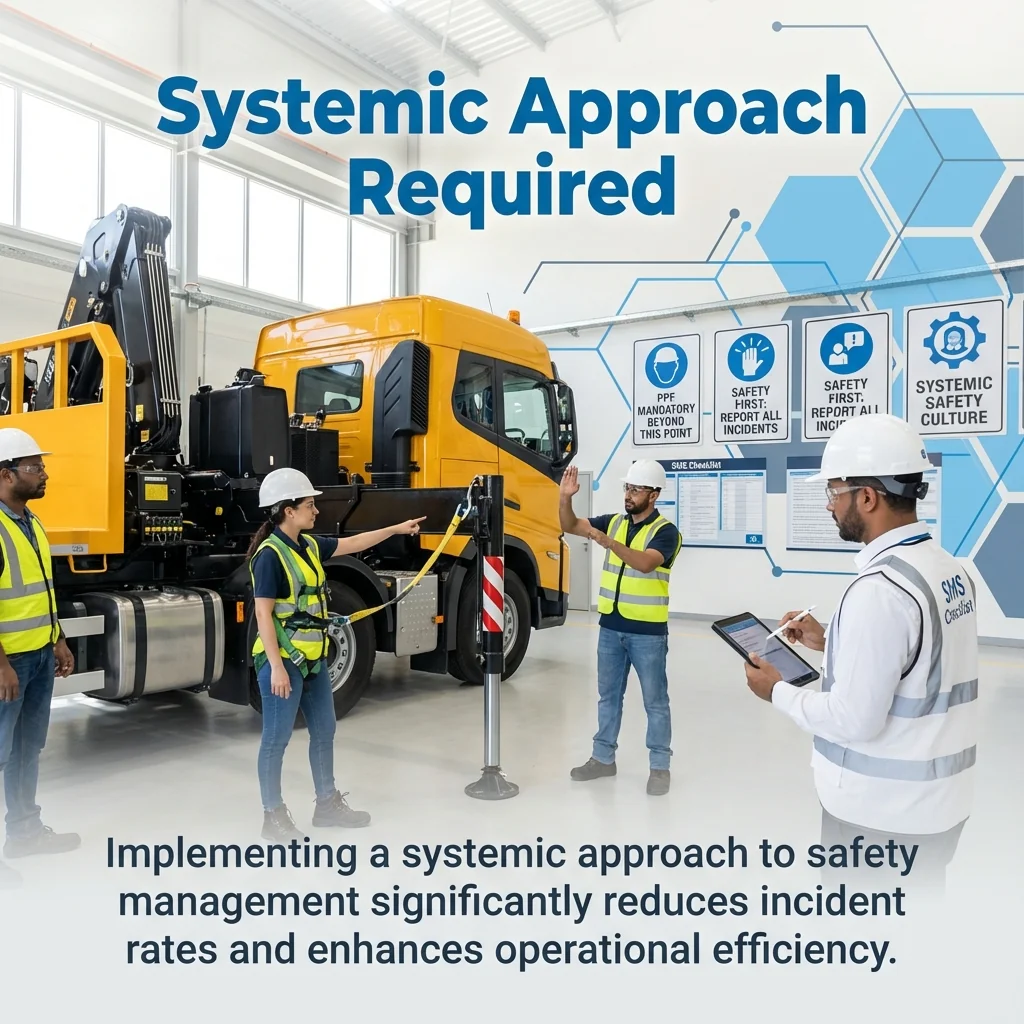
An SMS under the new framework requires documented processes for risk identification, control measure implementation, performance monitoring, and continuous improvement. These aren’t suggestions or best practices. They’re enforceable legal requirements.
What Constitutes an Adequate SMS
The HVNL amendments define SMS standards that apply whether you’re seeking accreditation or operating under the base law. Your system must demonstrate how you identify safety risks specific to your operations.
| SMS Component | Regulatory Requirement | Practical Implementation |
|---|---|---|
| Risk Identification | Documented process for identifying transport safety risks | Regular workplace inspections, incident analysis, driver feedback mechanisms |
| Control Measures | Systems to eliminate or minimize identified risks | Vehicle maintenance schedules, route planning protocols, fatigue management procedures |
| Performance Monitoring | Methods to verify controls are working | Audit programs, compliance checks, KPI tracking, incident trend analysis |
| Continuous Improvement | Processes to review and update systems | Management reviews, corrective action tracking, system effectiveness assessments |
Control measures must address the full range of CoR obligations: mass, dimension, loading, speed, fatigue, vehicle standards, and now the expanded duty to ensure drivers are fit to drive. Documentation requirements increase significantly under these amendments.
SMS Integration Across the Supply Chain
The amendments emphasize that SMS requirements apply to all parties who exercise control over transport operations. Consignors scheduling deliveries, loading managers determining load configurations, and transport operators managing driver rosters all need documented systems.
Your SMS must interface with other parties’ systems. If you’re a consignor, your scheduling processes need to account for reasonable transit times based on your transport provider’s fatigue management requirements. If you’re an operator, your loading procedures must align with consignor requirements while maintaining compliance with mass limits.
This shared responsibility model makes communication and documentation critical. Written agreements that clearly define each party’s safety obligations provide evidence of systematic risk management.
New Fit to Drive Duty Requirements
The 2026 amendments introduce an explicit duty requiring parties in the CoR chain to ensure drivers are not impaired by fatigue or otherwise unfit to drive. This extends beyond existing work and rest hour requirements to create a broader health and capability obligation.
Under the expanded duty, “unfit to drive” captures impairment from fatigue, illness, injury, or substance effects. Parties must have systems to identify when drivers shouldn’t operate vehicles, even if they’re technically compliant with rest hour requirements.
Operationalizing the Fit to Drive Duty
Implementing this duty requires practical assessment mechanisms. Operators need processes for drivers to report when they’re unwell or fatigued beyond what rest hours address. Schedulers must accommodate these situations without creating pressure to drive when impaired.
- Pre-trip health declarations that enable drivers to report fitness concerns without penalty
- Clear protocols for what happens when a driver reports unfitness, including alternative coverage arrangements
- Training for supervisors to recognize signs of impairment during workplace interactions
- Documented decision-making processes when fitness to drive is questionable
- Communication channels between drivers, operators, and other CoR parties about fitness status
The duty applies even when drivers are independent contractors or subcontractors. If your business controls aspects of the transport task, you’re responsible for ensuring the driver is fit to perform it.
Documentation and Evidence Requirements
Demonstrating compliance with the fit to drive duty requires records showing your systems are functioning. Health declaration forms, supervisor observation logs, and incident response records become critical compliance evidence.
When an incident occurs, regulators will examine whether your SMS included adequate fit to drive controls and whether those controls were actually implemented. “We trust our drivers to make the right call” won’t satisfy the primary duty standard.
Alternative compliance pathways in the updated accreditation framework may offer more flexibility in how you demonstrate fit to drive compliance, but the underlying obligation applies to everyone operating under the Heavy Vehicle National Law.
Updated Accreditation Framework
The HVNL amendments restructure the National Heavy Vehicle Accreditation Scheme (NHVAS) to create clearer pathways for operators seeking regulatory flexibility. The new framework distinguishes between basic and advanced accreditation levels, each with corresponding operational concessions.
Two primary accreditation categories emerge from the reforms: general safety accreditation and alternative compliance accreditation. Both require demonstrated SMS capability but differ in their focus and benefits.
General Safety Accreditation Pathway
General safety accreditation provides a foundation level recognizing operators with functioning safety management systems. This category suits businesses wanting regulatory recognition without pursuing specialized operational concessions.
Requirements include documented SMS covering all relevant CoR obligations, evidence of system implementation through operational records, and successful completion of an external audit against the National Audit Standard. The NHVR maintains an approved auditor register for businesses seeking this accreditation.
Benefits include regulatory recognition, potential insurance premium reductions, and preferred supplier status with major consignors who require accredited transport providers. Some jurisdictions may offer additional concessions for accredited operators.
Alternative Compliance Accreditation Options
Alternative compliance accreditation enables operators to access specific regulatory concessions by demonstrating advanced SMS capability in targeted areas. The amended framework includes pathways for fatigue management, mass management, and maintenance management.
Fatigue management accreditation allows approved operators to use alternative work and rest hour arrangements beyond standard requirements. This accreditation demands robust systems for monitoring driver fatigue, managing schedules, and ensuring drivers remain fit to drive under extended operating parameters.
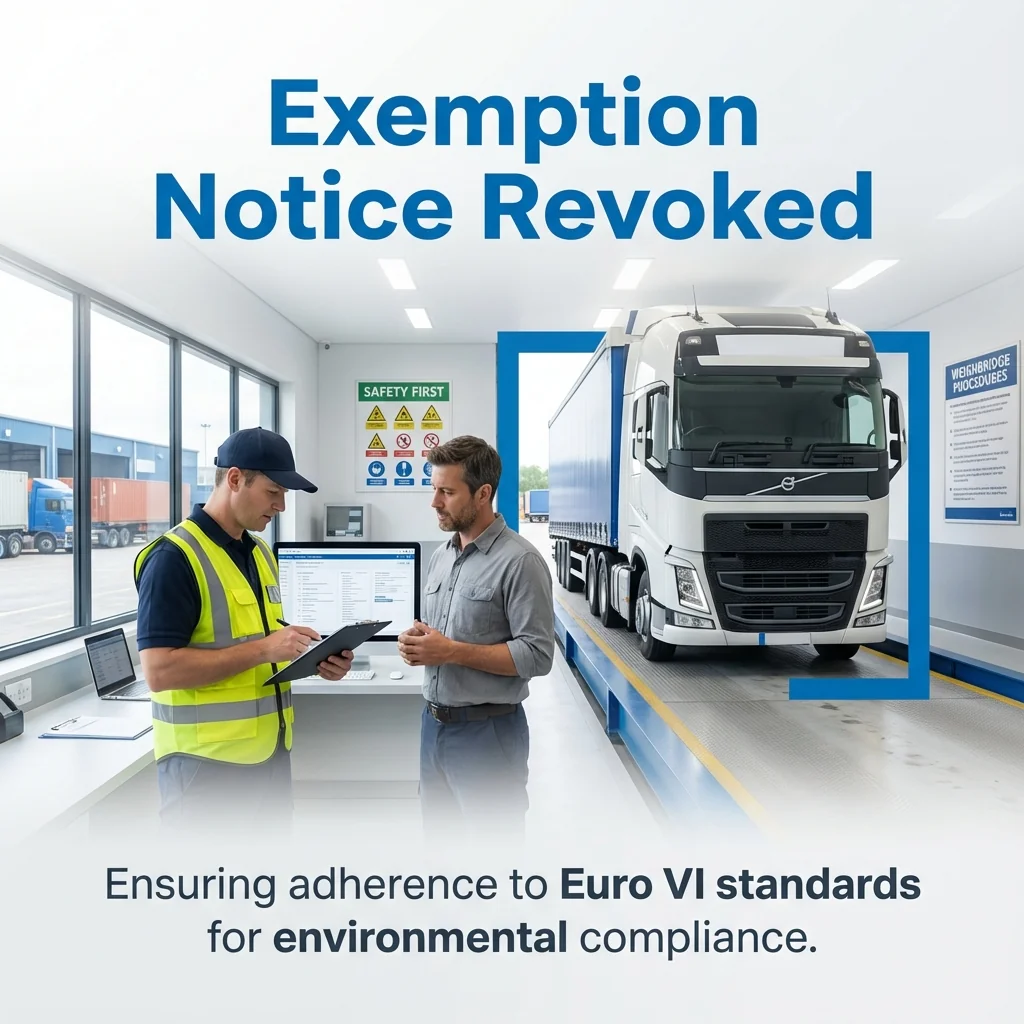
Mass management accreditation provides access to higher mass limits for operators with verified systems for ensuring vehicles remain within approved limits. Given that the National Class 3 Euro VI Vehicle Mass Exemption Notice 2025 will be revoked when amendments take effect in July 2026, operators currently using exemption notices need to transition to formal accreditation to maintain higher operating masses.
Ministerial Guidelines and Audit Standards
The Ministerial Guidelines for Heavy Vehicle Accreditation currently under consultation will define specific requirements for each accreditation category. These guidelines translate legislative requirements into measurable standards auditors can verify.
The National Audit Standard determines how auditors assess SMS effectiveness. Updated NAS documents align audit criteria with the expanded CoR duties, including fit to drive requirements and enhanced documentation standards.
Operators planning to seek accreditation should review draft guidelines during consultation periods and build systems that address the identified criteria. Waiting until final guidelines are published in 2026 leaves minimal time for system development before the commencement date.
Productivity Improvements Through Mass and Dimension Changes
Alongside safety-focused reforms, the HVNL amendments include productivity measures that benefit operators with strong compliance systems. Mass limit adjustments and dimension rule updates enable more efficient operations for businesses meeting enhanced safety standards.
The reforms rationalize general mass limits (GML) by providing clearer pathways for operators to access higher limits without navigating complex exemption processes. This aligns mass management with the risk-based regulation approach underpinning the broader amendments.
Mass Management Under the New Framework
Mass management becomes more streamlined for accredited operators while base requirements tighten for those without formal systems. The amendments recognize that operators with verified mass management systems pose lower risks and deserve operational flexibility.
Higher mass limits will require either mass management accreditation or demonstrated SMS capability in this area. The transition away from exemption notices means operators must formalize their compliance approaches to maintain productivity advantages.
Practical implementation requires:
- Documented loading procedures that verify mass before dispatch
- Systems for ensuring weighbridge data is accurate and used in compliance decisions
- Training for loading personnel on legal mass limits and consequences of overloading
- Records demonstrating consistent application of mass management procedures
- Integration with consignor systems to manage payload planning
Dimension Regulation Updates
Dimension rules see clarification rather than wholesale change, but the amendments provide more consistent national standards. This reduces complexity for operators working across multiple jurisdictions.
The updated framework maintains existing dimension limits for standard vehicles while creating clearer processes for accessing higher dimensions through permits or notices. Operators need to understand which dimension parameters require permits versus those available under general access.
Enforcement and Penalty Updates
The HVNL amendments include revised penalty structures that reflect the seriousness of compliance failures under the enhanced duty framework. Penalties increase for breaches involving SMS failures, particularly where inadequate systems contribute to safety incidents.
Regulators gain clearer enforcement tools to address systemic compliance issues rather than just individual breaches. This shift emphasizes that compliance is about having functioning systems, not just avoiding specific violations.
Primary Duty and Penalty Alignment
The amendments strengthen the primary duty provisions within Chain of Responsibility obligations. Parties who fail to eliminate or minimize safety risks through adequate systems face higher penalties than under previous provisions.
Penalty calculations consider whether the breach resulted from systemic failures. A single overloaded vehicle might indicate an isolated error, but repeated violations suggest inadequate mass management systems. Enforcement responses escalate accordingly.
| Breach Type | Focus Area | Compliance Response |
|---|---|---|
| Isolated Incident | Single breach with evidence of functioning SMS | Lower penalties, corrective action focus |
| Systemic Failure | Pattern indicating inadequate systems | Higher penalties, improvement notices, potential accreditation suspension |
| SMS Absence | No documented risk management system | Maximum penalties, enforceable undertakings |
Improvement Notices and Enforceable Undertakings
Regulators can issue improvement notices requiring specific SMS enhancements within defined timeframes. These notices address systemic issues before they result in serious incidents.
Enforceable undertakings provide an alternative to prosecution in some cases, allowing operators to commit to specific improvements under regulatory oversight. This approach emphasizes fixing problems over purely punitive responses.
For businesses with existing compliance programs, these enforcement mechanisms shouldn’t create concern. They target operators without adequate systems or those who fail to implement their documented processes.
Current Consultation Process and Participation
Multiple statutory instruments supporting the HVNL amendments remain under active consultation through early 2026. These consultations determine operational details that will govern daily compliance activities.
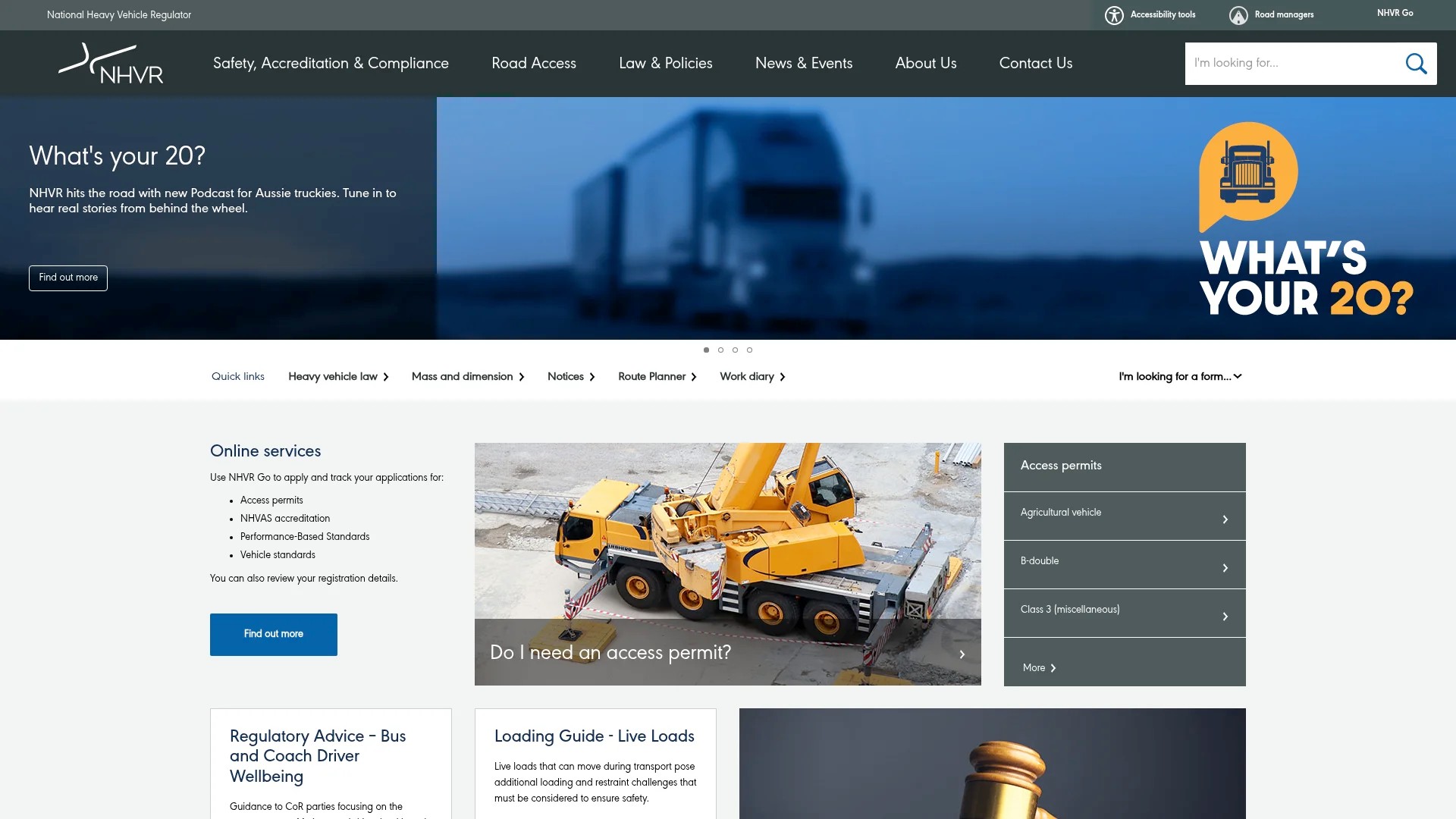
The NHVR publishes consultation papers, draft regulations, and discussion documents through their official website. Each consultation includes background materials explaining the proposed approach and specific questions seeking industry feedback.
Key Consultation Areas
Current consultation priorities include the Ministerial Guidelines for Heavy Vehicle Accreditation, which define specific requirements for each accreditation category. Industry input helps ensure guidelines are practical and achievable while maintaining safety standards.
The National Audit Standard consultation addresses how auditors will assess SMS effectiveness under the new framework. Operator feedback on audit methodologies ensures standards are clear and consistent across auditors.
Additional consultations cover alternative compliance frameworks for specific operational contexts, particularly around fatigue management and mass management concessions.
How to Participate Effectively
Review consultation documents thoroughly, focusing on how proposed requirements would apply to your specific operations. Generic feedback carries less weight than detailed explanations of practical implementation challenges.
Submissions should include:
- Specific references to the consultation questions or draft regulation sections
- Practical examples from your operations illustrating concerns or supporting proposals
- Alternative approaches if you identify problems with proposed requirements
- Evidence supporting your positions, whether operational data or safety performance records
The NTC and NHVR genuinely consider industry input when finalizing regulations. Well-reasoned submissions have influenced multiple aspects of the final amendments throughout this reform process.
Information Sessions and Resources
The NHVR conducts information sessions explaining the amendments and implementation requirements. These sessions provide opportunities to ask questions and understand regulator expectations.
Session announcements appear on the NHVR website with registration links. Virtual attendance options ensure operators outside major centers can participate.
Official guidance materials, including fact sheets and implementation checklists, will be published progressively as final regulations are confirmed. Bookmark the NHVR implementation page to access these resources as they become available.
Preparing Your Business for Mid-2026 Commencement
With mid-2026 commencement confirmed, businesses have approximately 18 months to prepare. That timeline might seem generous, but developing adequate SMS frameworks, training personnel, and establishing documentation systems takes substantial effort.
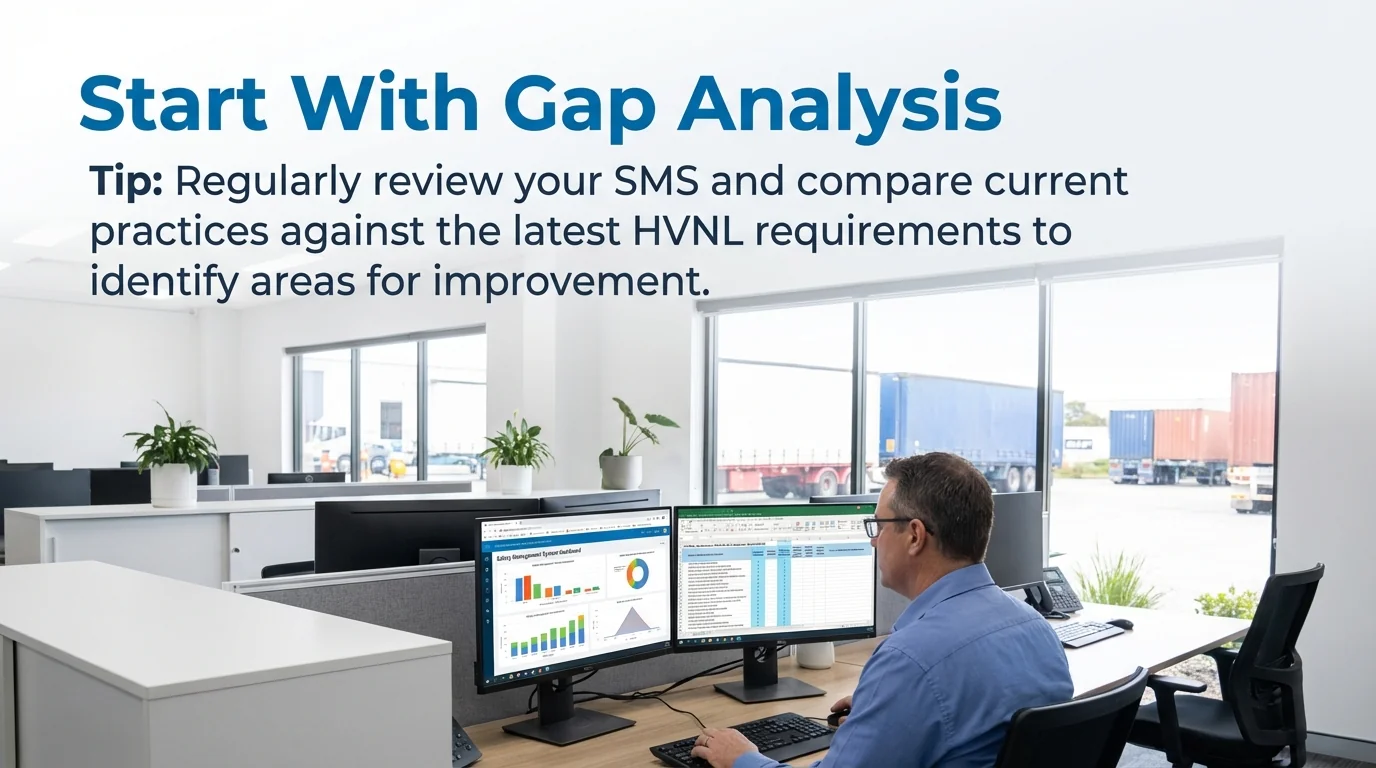
Start with a gap analysis comparing your current practices against the amended HVNL requirements. Understanding Chain of Responsibility obligations provides foundation knowledge for this assessment.
Immediate Action Steps
Conduct a comprehensive review of existing safety systems against the SMS requirements outlined in consultation documents. Identify specific gaps where your current approach doesn’t meet the documented, systematic standards the amendments require.
Assign responsibility for SMS development and implementation to appropriate personnel. This isn’t a project you can delegate to junior staff. Senior management must drive safety system development to ensure adequate resources and organizational buy-in.
Engage with your role as an HVNL duty holder by mapping exactly where your business exercises control over transport operations. Each control point requires corresponding risk management processes.
System Development Timeline
Allocate 6-9 months for developing or upgrading your SMS framework. This includes documenting processes, creating templates and forms, and establishing monitoring mechanisms.
Plan 3-4 months for implementation and embedding. Systems need to move from documents to actual operational practice, which requires training, supervision, and adjustment based on real-world application.
Reserve 3 months before commencement for verification activities. This might include internal audits, practice runs of documentation systems, or preliminary assessments against the National Audit Standard.
Training and Capability Development
Personnel at all levels need training on the amended requirements. Drivers must understand fit to drive obligations and reporting processes. Schedulers require training on how their decisions impact CoR compliance. Management needs detailed knowledge of SMS requirements and their verification responsibilities.
Don’t underestimate the cultural change required. The amendments shift compliance from following specific rules to managing safety risks systematically. That requires different thinking patterns and work habits.
Professional Chain of Responsibility implementation support can accelerate this process by providing frameworks tailored to your operations rather than starting from scratch.
Considering Accreditation Pathways
Evaluate whether pursuing accreditation aligns with your business strategy. If you need operational concessions like alternative fatigue management or higher mass limits, accreditation becomes necessary.
Even without immediate need for concessions, accreditation offers commercial advantages through demonstrated compliance capability. Major consignors increasingly require transport providers to hold NHVAS accreditation.
Starting the accreditation process early in 2025 positions you to achieve certification soon after commencement, gaining competitive advantage while others are still developing basic systems.
Understanding the Strategic Compliance Context
These amendments represent more than regulatory changes requiring administrative response. They signal a fundamental shift in how Australian transport regulation operates, moving decisively toward risk-based approaches that reward systematic safety management.
Businesses that view the HVNL 2026 amendments as compliance burdens will struggle. Those recognizing them as frameworks for operational excellence will gain competitive advantages through better safety performance, lower incident costs, and preferred supplier status.
The consultation process remains open precisely because regulators want practical, workable requirements. Your participation shapes the final implementation details that govern your operations for years to come.
Chain of Responsibility fundamentals haven’t changed, but the amendments significantly strengthen how those obligations must be discharged. Understanding both the conceptual framework and practical implementation requirements positions your business to navigate these changes successfully.
Proactive preparation starting now avoids the compliance rush as mid-2026 approaches. Businesses developing robust systems early will be training competitors’ personnel on what good practice looks like when the amendments commence.
The Heavy Vehicle National Law amendments arriving in 2026 demand attention, but they also create opportunities for businesses committed to genuine safety performance over mere technical compliance.