
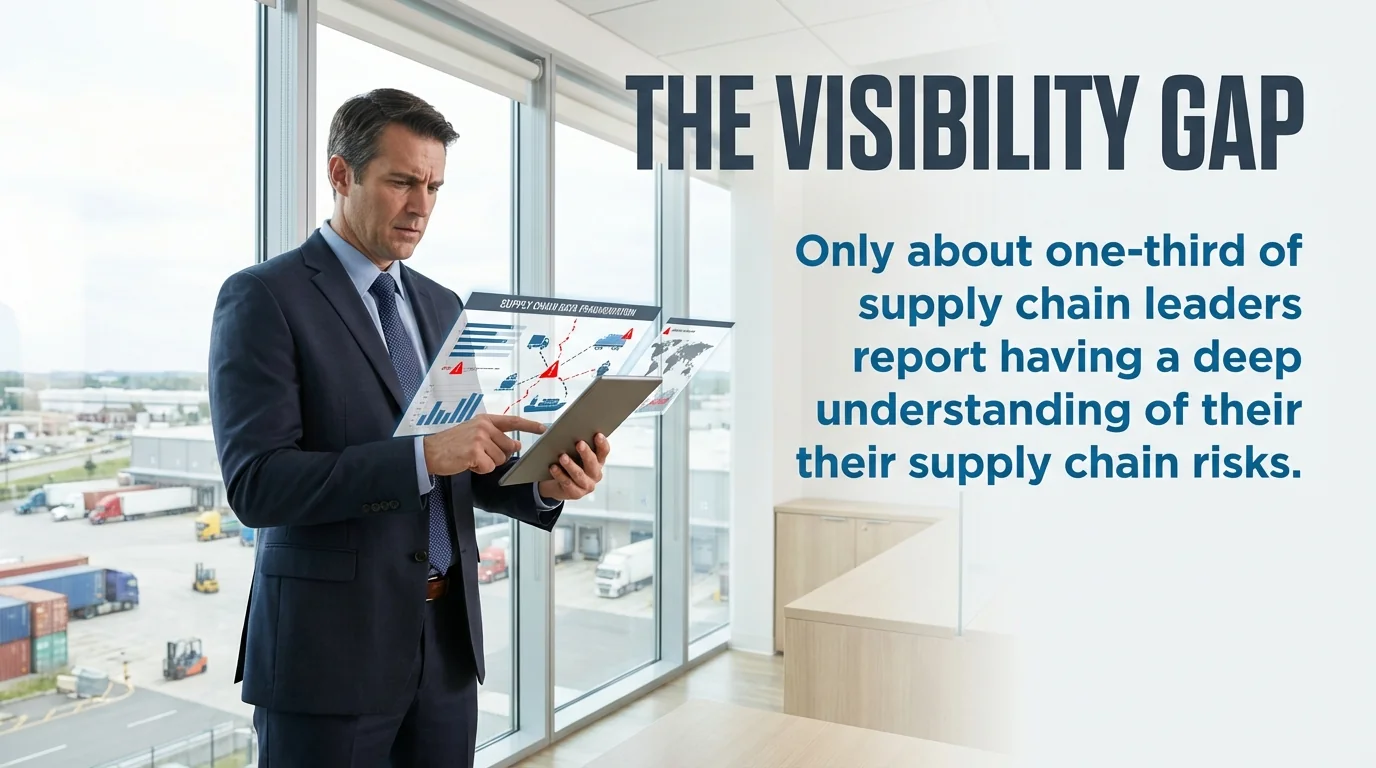
Managing risks in global supply chains requires deliberate planning across multiple operational layers. Most businesses recognise suppliers, logistics routes, and inventory levels as fundamental risk points. Yet only about one‑third of supply chain leaders report having a deep understanding of their supply chain risks.
This gap creates exposure. Without structured risk identification, assessment, and mitigation processes, organisations face supply chain disruptions they could have anticipated.
Effective supply chain risk management strategies connect operational visibility with contingency planning. They transform reactive problem-solving into proactive risk mitigation.
This guide examines proven approaches to managing global supply chain risks. You’ll gain clarity on risk identification frameworks, supplier evaluation methods, mitigation tactics, and technology integration. The objective is operational resilience built on practical risk assessment processes.
What Is Supply Chain Risk Management?
Supply chain risk management encompasses the systematic identification, assessment, and mitigation of threats that could disrupt your operations. These risks span supplier reliability, transportation vulnerabilities, geopolitical instability, natural disasters, and cybersecurity threats.
The process involves mapping your entire supply network. This includes tracking where materials originate, which suppliers provide critical components, and how goods move through transportation networks.
Risk management strategies then layer protective measures across these touchpoints. You establish alternative suppliers, create inventory buffers, and build contingency protocols that activate when disruptions occur.
This systematic approach differs fundamentally from crisis response. Rather than reacting after problems emerge, you anticipate potential failure points and implement safeguards before disruptions materialise.
Core Components of Effective SCRM
Supply chain risk management strategies operate through four connected activities. Each builds on the previous stage to create operational resilience.
Risk identification maps potential threats across your supply network. You document supplier dependencies, transportation routes, and operational bottlenecks that could trigger disruptions.
Risk assessment evaluates likelihood and impact. Not every identified risk warrants the same response. You prioritise based on probability and potential business consequences.
Risk mitigation implements protective measures. These range from diversification of suppliers to inventory buffers, technology integration, and contractual safeguards.
Continuous monitoring tracks emerging threats. Markets shift, suppliers face financial pressure, and geopolitical conditions evolve. Regular assessment ensures your strategies remain current.
Why Global Supply Chain Risk Management Matters
Global supply chains extend across borders, currencies, and regulatory environments. This complexity multiplies risk exposure significantly compared to domestic operations.
A supplier disruption in one country can halt production thousands of kilometres away. Transportation delays at ports cascade through logistics networks. Geopolitical tensions reshape access to critical materials.
Recent years demonstrated this vulnerability starkly. Organisations with limited supply chain visibility struggled when suppliers faced unexpected shutdowns. Those with established risk mitigation strategies adapted more successfully.
Business Continuity and Competitive Advantage
Strong supply chain risk management directly protects business continuity. When disruptions occur, you maintain operations while competitors scramble to source alternatives.
This resilience translates to customer trust. Clients rely on consistent delivery schedules. Organisations that honour commitments despite external disruptions strengthen customer relationships and market position.
Financial performance benefits as well. Supply chain disruptions create direct costs through expedited shipping, production delays, and lost revenue. Mitigation strategies reduce these financial impacts substantially.
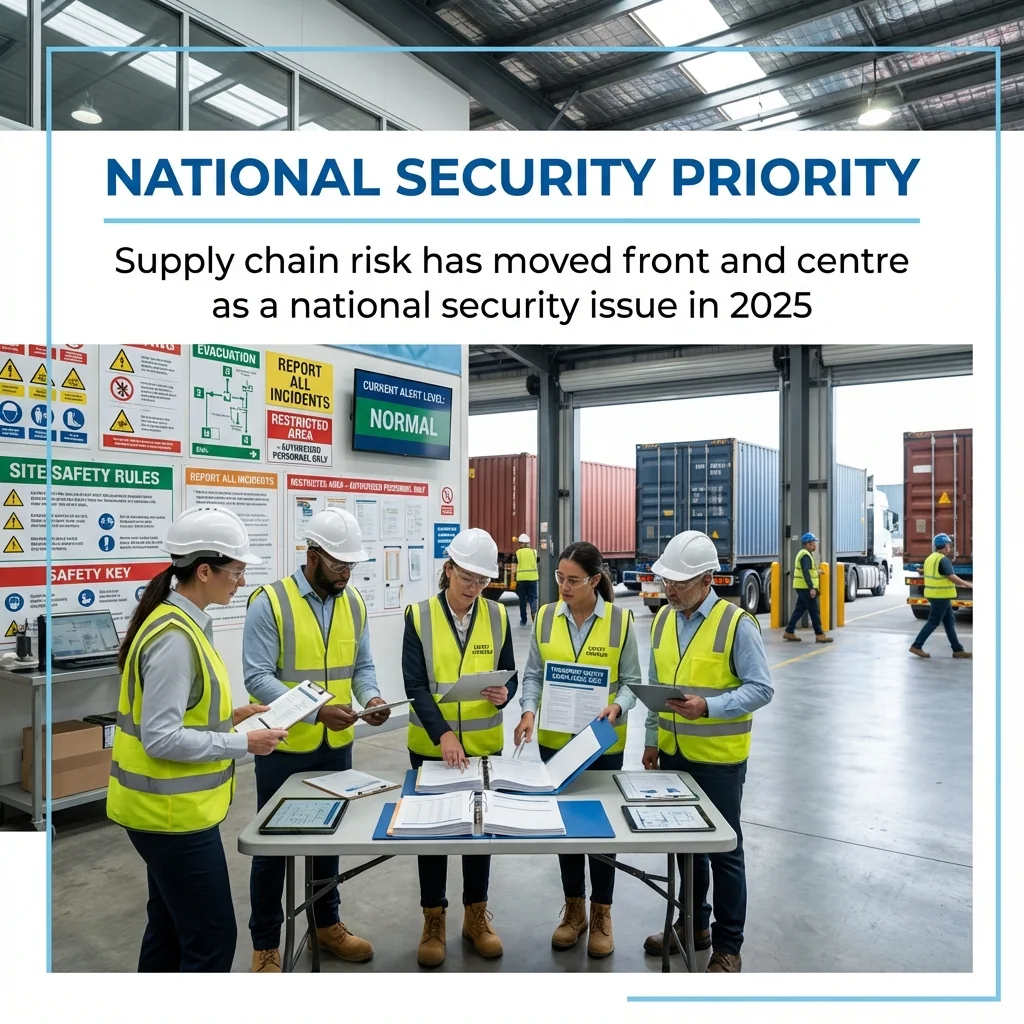
Regulatory compliance represents another critical factor. Supply chain risk has moved front and centre as a national security issue in 2025. Governments increasingly mandate transparency around sourcing, particularly for critical materials and technologies.
Types of Supply Chain Risks
Supply chain risks emerge from multiple sources, each requiring distinct mitigation approaches. Understanding these categories helps you build targeted protection strategies.
Supplier Risk
Supplier risk stems from your vendors’ operational stability, financial health, and compliance standards. A supplier facing bankruptcy leaves you scrambling for alternatives. Quality failures damage your reputation even when the fault lies upstream.
Geographic concentration amplifies this risk. When multiple suppliers operate in the same region, a single natural disaster or political event can eliminate several sourcing options simultaneously.
Financial instability in suppliers creates subtle but significant threats. A vendor struggling with cash flow may cut corners on quality, delay deliveries, or suddenly cease operations without warning.
Geopolitical Risks
Geopolitical risks include trade policies, tariffs, sanctions, and political instability that disrupt cross-border supply chains. These factors can emerge suddenly and reshape entire sourcing strategies.
Trade tensions between major economies create uncertainty for organisations operating across multiple markets. Tariff structures shift, import regulations change, and compliance requirements evolve with political relationships.
Political instability in manufacturing regions threatens production continuity. Civil unrest, government transitions, and regulatory changes can halt operations or restrict access to critical suppliers.
Natural Disasters and Climate Risks
Natural disasters disrupt transportation networks, damage facilities, and force temporary supplier closures. Earthquakes, floods, hurricanes, and wildfires create immediate operational challenges.
Climate change intensifies these risks. Extreme weather events occur with greater frequency and severity. Regions historically stable for operations now face unprecedented environmental threats.
Secondary effects amplify the impact. A natural disaster affecting a port creates transportation delays across entire logistics networks. Suppliers in adjacent regions face power outages and infrastructure damage.
Cybersecurity Threats
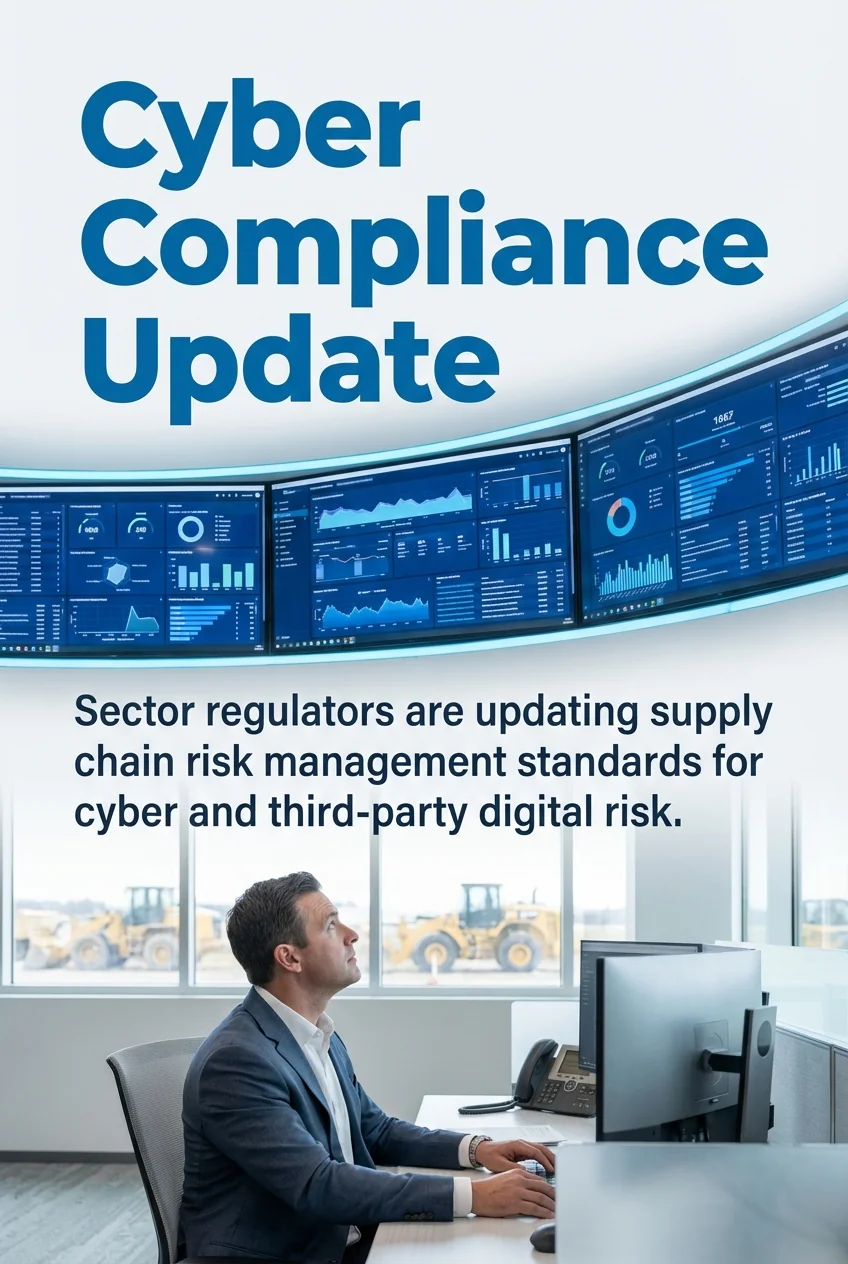
Cybersecurity threats target digital infrastructure that coordinates modern supply chains. Sector regulators are updating supply chain risk management standards for cyber and third‑party digital risk, particularly in critical infrastructure sectors.
Ransomware attacks can paralyse logistics systems, preventing order processing and shipment tracking. Data breaches expose proprietary product designs, supplier relationships, and pricing structures.
Third-party technology vendors introduce additional vulnerability. Your supply chain visibility platforms, inventory management systems, and communication tools all represent potential entry points for cyber threats.
Demand Volatility and Market Shifts
Demand volatility creates mismatches between inventory levels and actual orders. Sudden demand spikes leave you unable to fulfil orders. Unexpected drops strand capital in excess inventory.
Market shifts alter customer preferences, regulatory requirements, and competitive pressures. Products that moved consistently for years may suddenly face reduced demand.
Economic downturns affect purchasing patterns across entire markets. Organisations heavily concentrated in specific sectors face amplified exposure when those industries contract.
Transportation and Logistics Disruptions
Transportation disruptions stem from infrastructure failures, capacity constraints, and regulatory changes. Port congestion delays shipments by weeks. Carrier bankruptcies eliminate logistics capacity suddenly.
Fuel price volatility affects transportation costs dramatically. Sudden increases strain budgets and may require pricing adjustments or route optimisation.
Regulatory changes in transportation sectors create compliance challenges. New safety requirements, environmental standards, and cross-border documentation rules add complexity and potential delay points.
Common Supply Chain Disruptions and Challenges
Understanding how disruptions manifest helps you design effective countermeasures. Real-world challenges rarely arrive as isolated incidents.
Supplier failures typically combine financial stress with operational issues. A vendor experiencing cash flow problems may delay payments to their suppliers, creating cascade effects through the supply network.
Port congestion demonstrates how localised issues amplify systemically. When major shipping hubs experience delays, containers accumulate, ships wait for berth space, and logistics schedules collapse across multiple routes.
Quality failures often stem from undisclosed supplier changes. A vendor switches sub-tier suppliers without notification, introducing materials that don’t meet specifications.
Compounding Risk Factors
The most severe disruptions occur when multiple risk factors converge. A natural disaster affecting a supplier region combines with transportation delays and creates extended outages.
Supply chain resilience, tariffs, geopolitics, and digital transformation represent interconnected themes shaping investment decisions for manufacturers in 2025.

Organisations with limited supply chain visibility struggle to identify these compound risks before they trigger operational impacts. Mapping dependencies across your supply network reveals these potential convergence points.
The Risk Assessment Process: Identify, Assess, Mitigate, Monitor
Structured risk assessment follows a systematic progression. Each stage builds the foundation for effective mitigation strategies.
Risk Identification
Risk identification requires mapping your complete supply network. Document every supplier, their geographic locations, and the specific materials or services they provide.
Identify single points of failure where no alternative exists. These represent your highest vulnerability zones requiring immediate attention.
Assess transportation routes and logistics dependencies. Which ports do your shipments transit? What happens if a specific route becomes unavailable?
Review supplier financial health through credit reports and payment history. Financial instability often precedes operational disruptions.
Map sub-tier suppliers when possible. Your direct vendors rely on their own supply networks. Understanding these connections reveals hidden dependencies.
Risk Assessment and Prioritisation
Risk assessment evaluates each identified threat across two dimensions: probability and potential impact. Not every risk warrants equal attention or resources.
Create a risk matrix plotting likelihood against business consequences. High-probability, high-impact risks demand immediate mitigation efforts. Low-probability, low-impact scenarios may justify monitoring without active intervention.
Quantify potential financial impacts where possible. Calculate costs of production delays, expedited shipping, and lost revenue to prioritise mitigation investments.
Consider cumulative exposure across your supplier base. Multiple medium-risk suppliers in the same geographic region may collectively represent high risk.
Risk Mitigation Implementation
Risk mitigation transforms assessment into protective action. The specific strategies depend on your risk profile and operational constraints.
Supplier diversification reduces dependency on single vendors. Identify alternative suppliers for critical components and establish relationships before disruptions occur.
Inventory buffers provide time to respond when disruptions emerge. Strategic stock levels for critical materials balance carrying costs against disruption protection.
Contractual protections establish supplier obligations and performance standards. Include business continuity requirements, alternative sourcing provisions, and audit rights in vendor agreements.
Geographic diversification spreads risk across regions. Avoid clustering suppliers in areas vulnerable to common threats like natural disasters or political instability.
Continuous Monitoring and Adaptation
Supply chain risk management requires ongoing attention, not one-time implementation. Markets evolve, suppliers face new pressures, and geopolitical conditions shift.
Establish regular supplier reviews examining financial health, quality metrics, and delivery performance. Early warning indicators allow proactive responses before failures occur.
Monitor external risk factors including political developments, weather patterns, and economic indicators relevant to your supply regions.
Update risk assessments quarterly or when significant changes occur. New suppliers, altered transportation routes, and expanded operations introduce fresh risk exposures.
Test contingency plans periodically. Simulate supplier failures or transportation disruptions to validate your response procedures and identify gaps.
10 Proven Risk Mitigation Strategies
These strategies provide actionable frameworks for reducing supply chain vulnerability. Implementation should align with your specific risk profile.
1. Diversify Your Supplier Base
Diversification of suppliers eliminates single points of failure. Establish relationships with multiple vendors for critical materials and components.
Qualify backup suppliers thoroughly before disruptions occur. Conduct quality audits, verify production capacity, and test their materials in your processes.
Maintain active relationships with alternative suppliers through periodic orders. Vendors you’ve never worked with may lack capacity when you need them urgently.
Balance costs against resilience. Multiple suppliers may increase unit prices slightly, but this investment protects against far larger disruption costs.
2. Implement Strategic Inventory Buffers
Strategic inventory management creates time to respond when supply chain disruptions occur. Buffer stock for critical materials provides operational continuity during supplier transitions.
Analyse historical demand patterns and supplier lead times to determine appropriate buffer levels. Overstocking ties up capital unnecessarily. Understocking leaves you vulnerable.
Focus buffers on items with limited supplier options, long lead times, or high criticality to production. Not every component warrants increased inventory investment.
Position inventory strategically across your network. Regional distribution centres reduce transportation dependencies and enable faster customer response.
3. Enhance Supply Chain Visibility
Supply chain visibility reveals potential disruptions before they impact operations. Track supplier performance, shipment locations, and inventory levels in real time.
Implement tracking systems that monitor key performance indicators across your supply network. Alert mechanisms flag developing issues requiring attention.
Extend visibility beyond direct suppliers into sub-tier relationships. Understanding your suppliers’ supply chains reveals hidden dependencies and risks.
Share relevant data with supply chain partners. Collaborative visibility improves coordination and enables faster joint responses to emerging threats.
4. Develop Comprehensive Contingency Plans
Contingency planning establishes procedures before crises occur. Document specific actions for common disruption scenarios including supplier failures, transportation delays, and quality issues.
Assign clear responsibilities for contingency activation. Ambiguity during disruptions wastes critical response time.
Create decision trees that guide responses based on disruption severity and type. Different scenarios require different actions.
Test contingency plans through tabletop exercises and simulations. Identify gaps and refine procedures based on these assessments.
5. Build Strong Supplier Relationships
Strong supplier relationships create preferential treatment during capacity constraints. Vendors prioritise customers they value beyond transactional interactions.
Communicate regularly with key suppliers about forecasts, product changes, and business developments. Information sharing strengthens partnerships.
Visit supplier facilities to understand their operations, capabilities, and potential constraints. Direct observation reveals risks that reports miss.
Support supplier development through technical assistance and reasonable payment terms. Vendors facing financial stress may struggle to maintain quality and delivery performance.
6. Conduct Regular Supplier Assessments
Supplier evaluation processes identify deteriorating performance before failures occur. Regular assessment creates opportunities for corrective action.
Review financial stability through credit reports and payment history analysis. Financial stress often precedes operational problems.
Audit quality management systems and production processes. Verify suppliers maintain standards consistent with your requirements.
Assess business continuity capabilities. Does your supplier have contingency plans for their own disruptions?
Evaluate ethical and environmental compliance. Regulatory violations or labour issues can disrupt operations and damage your reputation.
7. Leverage Technology for Risk Management
Technology integration transforms supply chain risk management from reactive to predictive. Modern platforms provide visibility, analysis, and early warning capabilities.
Supply chain visibility software tracks shipments, monitors supplier performance, and flags potential delays. Real-time data enables faster response to developing issues.
Predictive analytics identify risk patterns and forecast potential disruptions. Historical data reveals seasonal vulnerabilities and supplier reliability trends.
Blockchain technology creates transparent, auditable records of materials provenance and supplier compliance. This visibility reduces fraud risk and improves regulatory compliance.
Artificial intelligence and machine learning algorithms analyse vast data sets to identify non-obvious risk factors and suggest mitigation actions.
8. Geographic Risk Distribution
Geographic diversification prevents regional events from eliminating multiple supply sources simultaneously. Spread suppliers across different areas with distinct risk profiles.
Map natural disaster vulnerabilities across your supplier regions. Avoid clustering vendors in earthquake zones, flood plains, or hurricane-prone areas.
Consider political stability when selecting supplier locations. Regions experiencing civil unrest or frequent regulatory changes introduce operational uncertainty.
Balance proximity benefits against concentration risks. Nearshoring reduces lead times but may cluster suppliers geographically.
9. Establish Clear Communication Protocols
Communication protocols ensure information flows quickly when disruptions occur. Establish contact procedures, escalation paths, and update frequencies before crises emerge.
Create supplier contact directories with multiple communication channels. Primary contacts may be unavailable during emergencies.
Define information requirements for different disruption types. What details do you need to assess impact and initiate responses?
Implement notification systems that alert relevant stakeholders automatically when specific triggers occur.
10. Build Operational Flexibility

Design products and processes that accommodate alternative materials when possible. Material substitution provides options when preferred suppliers face disruptions.
Maintain flexible production schedules that allow sequence adjustments. Shift production to available materials while awaiting delayed components.
Cross-train personnel to perform multiple roles. Workforce flexibility enables rapid reallocation during disruptions.
Best Practices for Supply Chain Risk Management
Effective supply chain risk management integrates multiple practices into cohesive protection strategies.
Executive Sponsorship and Cross-Functional Collaboration
Supply chain risk management requires support beyond procurement teams. Executive sponsorship ensures adequate resources and organisational priority.
Create cross-functional risk management teams including procurement, logistics, finance, legal, and operations representatives. Different functions identify distinct risk factors.
Establish regular review cadences where leadership evaluates risk assessments and approves mitigation investments.
Documentation and Knowledge Management
Document your supply chain risk management processes, assessment findings, and mitigation strategies. Institutional knowledge protects against personnel turnover.
Maintain current supplier databases including contact information, capabilities, financial status, and performance history.
Record lessons learned from past disruptions. These experiences inform future risk assessment and response planning.
Continuous Improvement Mindset
Supply chain risk management evolves through iterative refinement. Review what worked and what failed after each disruption.
Update assessment methodologies as new risk factors emerge. The threat environment changes constantly.
Benchmark your approaches against industry practices. Learn from how other organisations manage similar risks.
Balanced Cost Considerations
Supply chain resilience requires investment. Balance mitigation costs against potential disruption impacts using total cost of ownership thinking.
Some organisations focus excessively on unit price when selecting suppliers. This approach ignores risk exposure and potential disruption costs.
Evaluate suppliers on total value including quality, reliability, financial stability, and risk profile alongside pricing.
The Role of Technology in SCRM
Technology enables capabilities that manual processes cannot achieve at scale. Modern supply chain risk management depends on integrated digital tools.
Supply Chain Visibility Platforms
Visibility platforms aggregate data across your supply network into unified dashboards. Track shipments, monitor supplier performance, and identify developing issues in real time.
These systems connect with carriers, suppliers, and internal systems to provide end-to-end transparency. Automated alerts notify relevant personnel when exceptions occur.
Cloud-based platforms enable access from anywhere, facilitating rapid response during disruptions regardless of personnel location.
Predictive Analytics and AI
Artificial intelligence analyses historical patterns to forecast potential disruptions. Machine learning algorithms identify risk factors that human analysis might miss.
Predictive models incorporate weather data, political indicators, financial metrics, and operational performance to assess emerging threats.
These capabilities shift risk management from reactive to proactive. Address potential issues before they impact operations.
Blockchain for Supply Chain Transparency
Blockchain creates immutable records of materials provenance, supplier compliance, and quality verification. This transparency reduces fraud and improves regulatory compliance.
Smart contracts automate compliance verification and payment processing based on predefined conditions. Reduce administrative burden while ensuring standards adherence.
Distributed ledger technology enables secure information sharing across supply chain partners without centralised data repositories.
IoT and Real-Time Monitoring
Internet of Things devices provide real-time data on shipment location, environmental conditions, and asset status. Temperature sensors protect sensitive materials during transit.
GPS tracking monitors shipment progress and identifies delays immediately. Proactive notification enables response before customers experience impacts.
Automated data collection eliminates manual reporting gaps and improves information accuracy.
Building Supply Chain Resilience
Supply chain resilience extends beyond risk mitigation. It encompasses your organisation’s ability to absorb shocks and recover quickly.
Resilience as Competitive Advantage
Organisations demonstrating consistent delivery despite market disruptions earn customer trust and market share. Business continuity becomes a differentiating capability.
Resilient supply chains support growth strategies. Enter new markets and launch products confidently when your supply networks can adapt to changing demands.
Cultural Elements of Resilience
Resilience requires organisational culture that values preparation and continuous improvement. Teams that learn from disruptions grow stronger through challenges.
Encourage open communication about risks and near-misses. Staff closest to operations often identify developing issues before they appear in reports.
Reward proactive risk identification and successful mitigation. What gets measured and recognised gets prioritised.
Financial Resilience
Financial buffers enable rapid response when disruptions require expedited shipping or alternative sourcing. Organisations operating with minimal working capital struggle to absorb unexpected costs.
Insurance products provide additional protection against specific risks including cargo loss, supplier default, and business interruption.
Regulatory Compliance and SCRM
Regulatory requirements increasingly mandate supply chain transparency and risk management. Compliance represents both obligation and opportunity.
Evolving Regulatory Landscape
Governments worldwide implement supply chain due diligence requirements. These regulations address forced labour, environmental standards, and conflict minerals.
Sector-specific requirements govern critical infrastructure and controlled technologies. Energy, defence, and telecommunications face heightened scrutiny.
Compliance as Risk Mitigation
Strong compliance programs reduce regulatory risk while improving supplier quality and ethical standards. Documentation supporting compliance provides transparency during audits.
Supplier assessment processes that verify regulatory compliance simultaneously identify operational risks. Financial penalties and reputational damage from compliance failures represent significant threats.
Measuring SCRM Performance
Effective measurement demonstrates program value and identifies improvement opportunities. Track metrics that reflect actual resilience rather than just activity.
Key Performance Indicators
Supplier performance metrics include on-time delivery rates, quality defect levels, and lead time consistency. Declining performance indicates developing risks.
Supply chain disruption frequency and duration quantify actual impact. Measure how often disruptions occur and how quickly you recover.
Inventory turnover balanced against stockout frequency indicates whether buffer strategies achieve optimal levels.
Cost metrics should capture total cost of ownership including risk mitigation investments and disruption impacts avoided.
Continuous Assessment
Review risk management performance quarterly. Analyse which mitigation strategies proved effective and which require adjustment.
Benchmark against industry standards where available. Understand how your resilience compares to sector norms.
Survey internal stakeholders on risk awareness and mitigation effectiveness. Frontline perspectives reveal program strengths and gaps.
Future Trends in Supply Chain Risk Management
Supply chain risk management continues evolving as technology advances and threat environments shift.
Increased Automation and AI Integration
Artificial intelligence will assume greater roles in risk prediction, mitigation strategy selection, and response automation. Machine learning improves continuously as data accumulates.
Autonomous systems may manage routine risk responses while escalating complex scenarios to human decision-makers.
Sustainability and Climate Risk Integration
Climate change creates new supply chain risks while intensifying existing environmental threats. Risk management must incorporate climate scenario planning.
Sustainability requirements from customers and regulators influence supplier selection and risk assessment criteria.
Nearshoring and Regionalisation
Organisations continue evaluating sourcing strategies that reduce global supply chain complexity. Nearshoring offers shorter lead times and reduced geopolitical exposure.
Regional supply networks provide resilience benefits but require careful assessment of local risk factors.
Taking Action on Supply Chain Risk Management
Supply chain risk management protects business continuity and enables growth. The strategies outlined here provide frameworks for building resilience.
Start with risk identification across your supply network. Map suppliers, dependencies, and potential failure points systematically.
Prioritise mitigation efforts based on impact and likelihood. Focus resources where they deliver the greatest protection.
Implement visibility tools that provide early warning of developing issues. Information advantage enables proactive responses.
Consider exploring detailed approaches to supply chain risk management that align with your operational requirements. For organisations managing supplier relationships specifically, supplier risk mitigation strategies offer targeted protection.
Test contingency plans regularly through simulations. Validate your procedures and identify gaps before actual disruptions occur.
Build cross-functional collaboration that engages procurement, operations, finance, and executive leadership. Supply chain resilience requires organisational commitment.
Review and update risk assessments quarterly. The threat environment evolves constantly, and your strategies must adapt accordingly.
Effective supply chain risk management transforms vulnerability into competitive advantage. Organisations that navigate disruptions successfully earn customer trust and market position that competitors struggle to match.