
Supply chain disruptions cost businesses billions annually. The difference between companies that survive these shocks and those that don’t comes down to one thing: proactive risk management.
Supply chain risk management involves identifying, assessing, and mitigating threats across your entire network. This includes suppliers, transportation, manufacturing, distribution, and third-party vendors. When done well, it protects your business from everything from cybersecurity attacks to natural disasters.
The most effective organizations don’t wait for disruptions. They build resilience into their supply chain through scenario planning, supplier diversification, and continuous monitoring. These strategies transform potential vulnerabilities into manageable challenges.
This guide examines ten detailed supply chain risk management examples. You’ll see how major organizations handle economic pressures, environmental threats, cyber risks, and geopolitical challenges. Each example includes specific mitigation strategies you can adapt to your own operations.
Understanding these real-world applications helps you anticipate problems before they escalate. You’ll learn which risks demand immediate attention and how to build systems that withstand unexpected shocks. The goal is business continuity even when external conditions deteriorate.
Understanding Supply Chain Risk Management
Supply chain risk management requires systematic identification of potential disruptions. This process examines every link in your network, from raw materials procurement to final delivery.
Effective programs assess both likelihood and impact. A low-probability event with catastrophic consequences demands different treatment than frequent minor disruptions. Risk matrices help prioritize where to focus resources.
The best systems integrate risk assessment into daily operations. Rather than annual reviews, continuous monitoring identifies emerging threats. Technology platforms track supplier performance, transportation delays, and quality variations in real time.
Organizations must balance efficiency with resilience. Just-in-time inventory reduces costs but increases vulnerability. Strategic buffer stocks and supplier diversification add expense but provide security. The optimal balance depends on your industry, margins, and competitive position.
Supply chain resilience comes from transparency. You need visibility not just into your direct suppliers but their suppliers too. Multi-tier mapping reveals hidden dependencies and concentration risks.
Key Components of Risk Management Programs
Risk identification starts with comprehensive supply chain mapping. Document every supplier relationship, transportation route, and distribution channel. Include third-party vendors who support operations.
Assessment follows identification. Evaluate each element for vulnerability to disruptions. Consider financial stability, geographic concentration, regulatory compliance, and cybersecurity posture.
Mitigation strategies address identified gaps. Options include supplier diversification, contract terms requiring business continuity plans, insurance coverage, and inventory buffers. Choose interventions based on cost-benefit analysis.
Regular audits validate controls remain effective. Conduct supplier site visits, review financial statements, and test backup procedures. Requirements evolve as threats change.
Benefits Beyond Compliance
Robust supply chain risk management delivers operational advantages. Reduced disruptions mean consistent delivery to customers. This builds trust and protects market share.
Better supplier relationships emerge from collaborative risk planning. When you help suppliers strengthen their operations, both parties benefit. Shared investments in technology and training create mutual dependencies.
Cost savings follow from fewer emergency interventions. Rush orders, expedited shipping, and production downtime disappear. Predictable operations enable better resource planning.
Insurance premiums decrease when carriers recognize your risk controls. Documented mitigation strategies and incident response plans demonstrate professionalism. Lower rates improve your competitive position.
Example 1: Cybersecurity Threats and Supply Chain Attacks
Cyber risks represent one of the fastest-growing supply chain threats. Attackers increasingly target software, hardware, and service providers rather than end organizations directly.
Maersk had to reinstall around 4,000 servers and 45,000 PCs to recover from the NotPetya cyberattack. The malware entered through compromised accounting software used across their operations. Recovery took weeks and cost hundreds of millions.
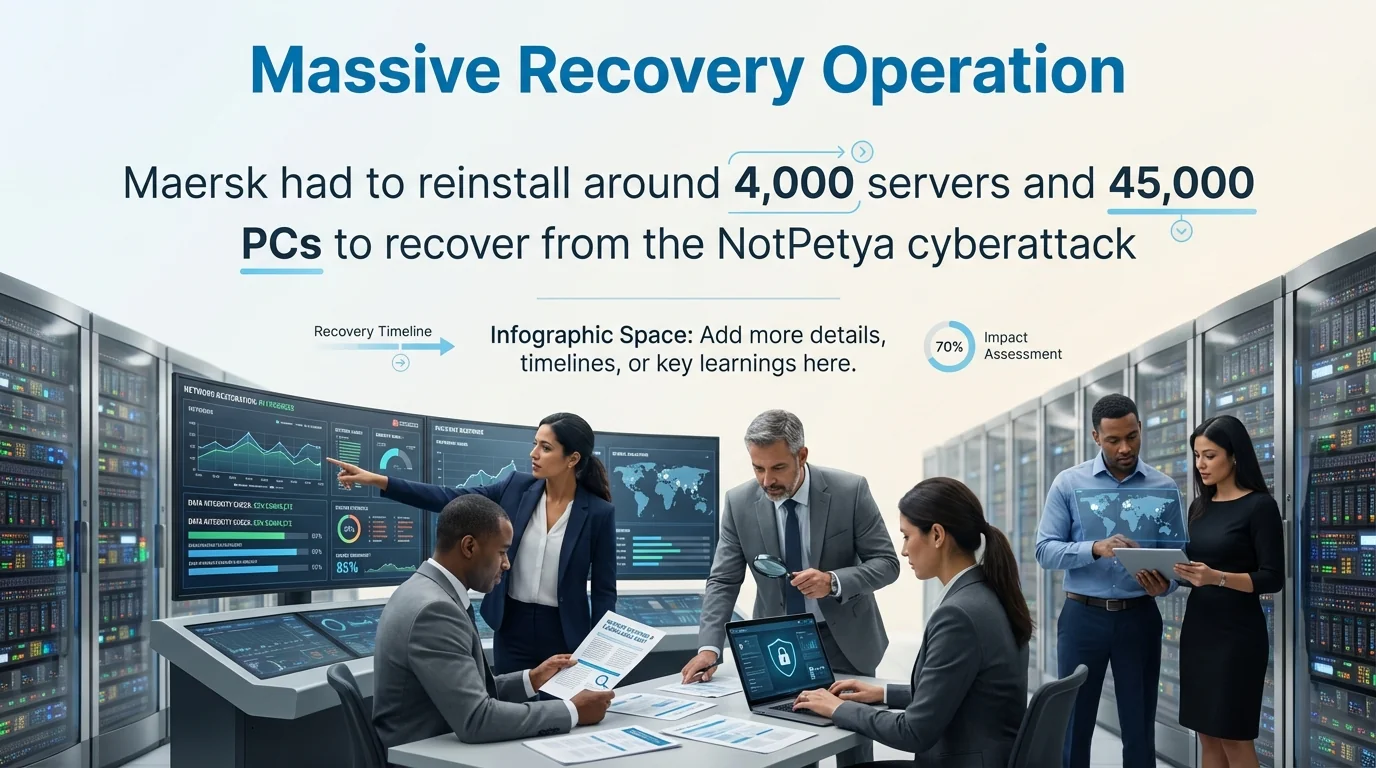
The incident demonstrated how third-party vendor vulnerabilities expose entire networks. A single weak link provides entry to sophisticated attackers. Once inside, malware spreads rapidly through interconnected systems.
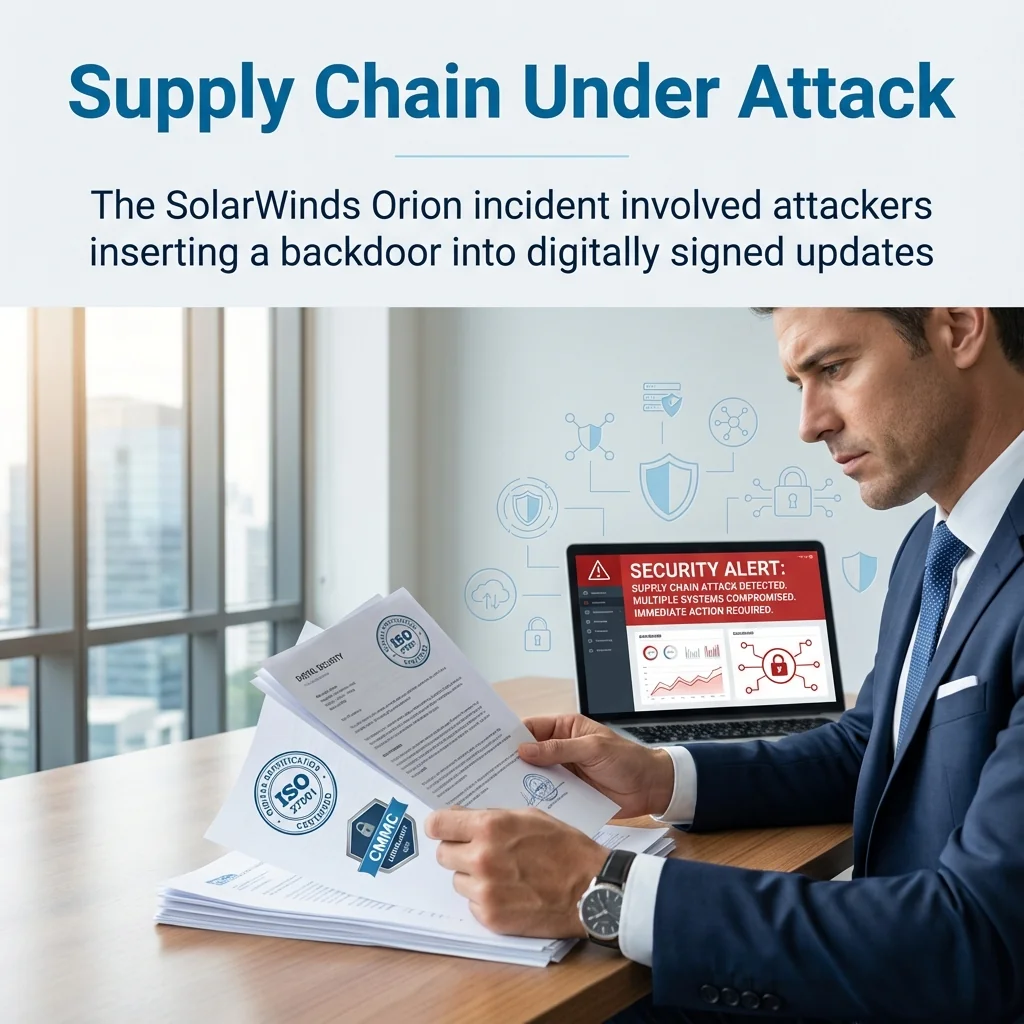
Modern supply chain attacks exploit trust relationships. The SolarWinds Orion incident involved attackers inserting a backdoor into digitally signed updates. Organizations installed compromised software believing it came from a legitimate source.
Implementing Cybersecurity Controls
Start with comprehensive vendor security assessments. Review each third-party vendor’s cybersecurity practices before contracting. Request evidence of penetration testing, employee training, and incident response capabilities.
Require vendors to maintain specific security standards. Include contractual obligations for encryption, access controls, and vulnerability patching. Specify notification requirements for security incidents.
Implement network segmentation to contain potential breaches. Isolate critical systems from general networks. Limit vendor access to only the data and systems they absolutely need.
Conduct regular security audits of high-risk suppliers. Review logs, test controls, and verify compliance with contractual requirements. Address deficiencies immediately.
Continuous Monitoring Strategies
Cisco invested heavily in tools and processes for continuous monitoring of supplier risk and scenario-based disruption simulations. This approach identifies vulnerabilities before attackers exploit them.
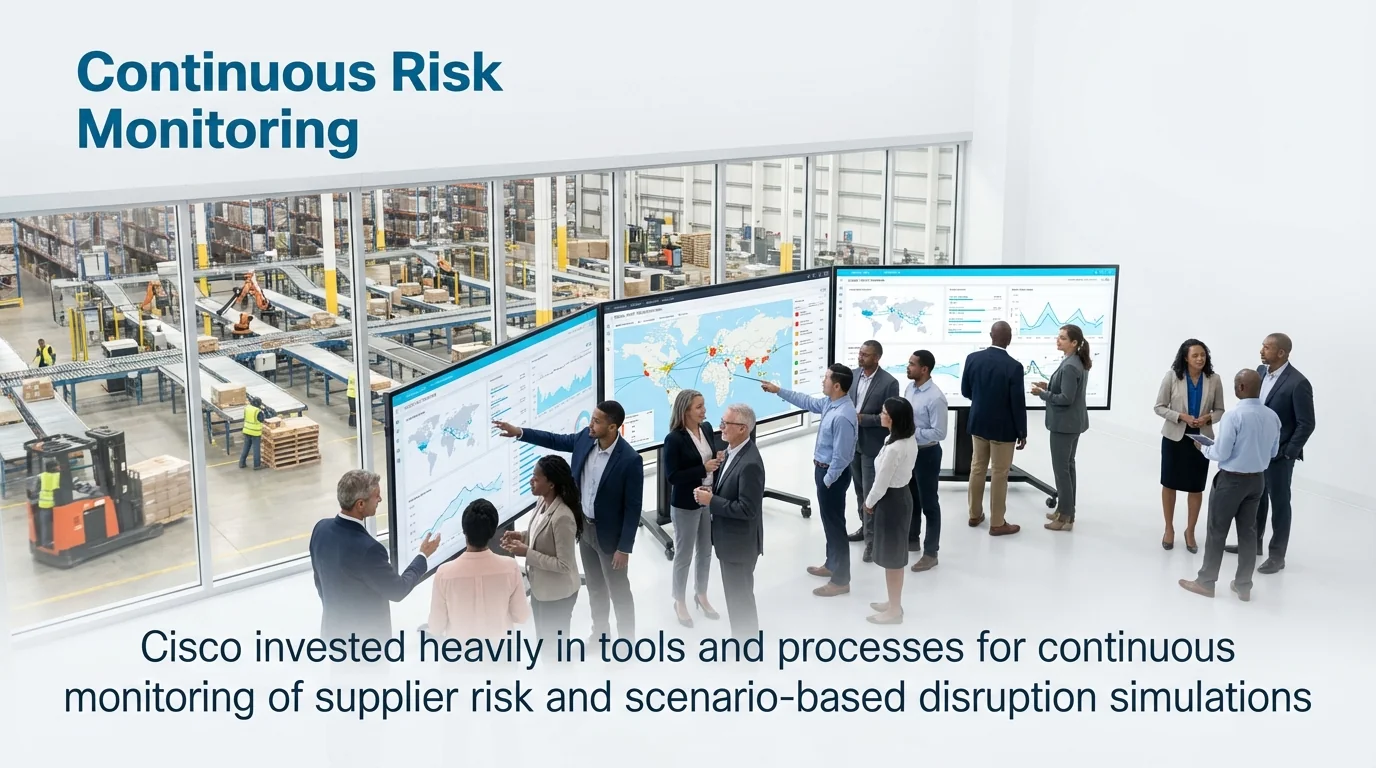
Deploy threat intelligence platforms that track vendor-related risks. Monitor for data breaches, vulnerability disclosures, and suspicious network activity. Automated alerts enable rapid response.
Test incident response procedures regularly. Simulate supply chain attacks to identify gaps in your detection and recovery capabilities. Update plans based on lessons learned.
Build redundancy into critical technology dependencies. Maintain alternative suppliers for essential software and services. This limits exposure when a vendor experiences security incidents.
Example 2: Natural Disasters and Environmental Risks
Environmental disruptions affect supply chains with little warning. Earthquakes, floods, hurricanes, and wildfires damage facilities, block transportation routes, and interrupt utilities.
The 2011 Tōhoku earthquake and tsunami disrupted Toyota’s just-in-time production system. The disaster damaged hundreds of suppliers simultaneously, halting assembly lines globally. Recovery required months of coordination.

Geographic concentration amplifies environmental risks. When multiple suppliers operate in the same region, a single disaster affects your entire network. Diversification across locations provides protection.
Climate change intensifies environmental threats. Extreme weather events occur more frequently and with greater severity. Supply chains designed for historical weather patterns face increasing vulnerability.
Geographic Diversification Approaches
Map supplier locations to identify concentration risks. Look for clusters where natural disasters could affect multiple vendors simultaneously. Prioritize diversification in high-risk areas.
Schneider Electric has regionalized its supply chain to reduce lead times and exposure to geopolitical shocks. This strategy also limits environmental risk exposure.
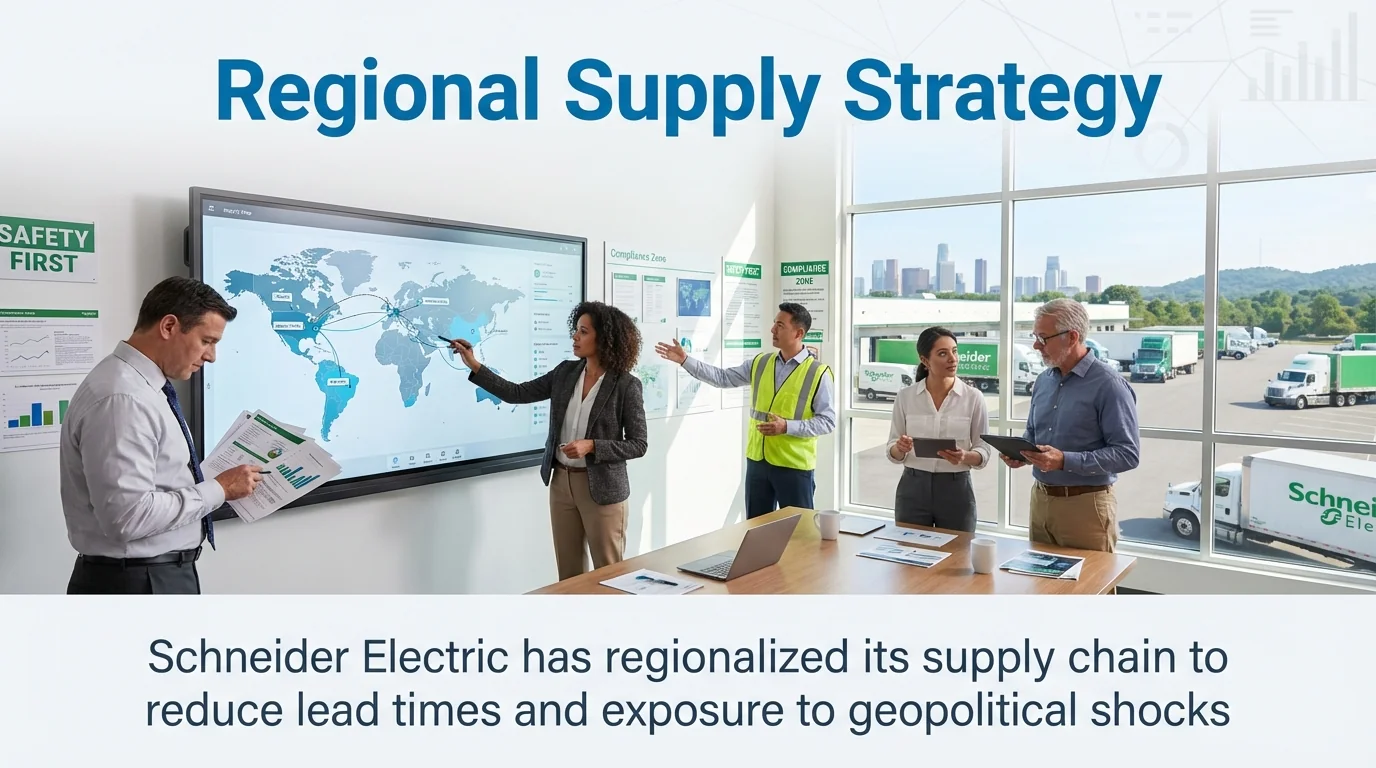
Establish suppliers in different geographic regions. Balance proximity advantages against disaster correlation. Multiple suppliers in distant locations provide better resilience than local concentration.
Consider climate projections when evaluating new supplier locations. Areas with increasing flood risk, water scarcity, or extreme heat present long-term vulnerabilities. Factor environmental trends into sourcing decisions.
Business Continuity Planning
Require suppliers to maintain documented business continuity plans. These should address facility loss, utility outages, and transportation disruptions. Review plans annually and after significant incidents.
Test supplier recovery capabilities through tabletop exercises. Simulate disasters affecting their operations. Evaluate response times, communication procedures, and backup production capacity.
Maintain strategic inventory buffers for critical components. Calculate optimal stock levels based on supplier lead times and disaster recovery estimates. Review quantities as supply chain configurations evolve.
Establish alternative transportation routes before disruptions occur. Identify backup ports, airports, rail lines, and trucking lanes. Negotiate contingency agreements with logistics providers.
Example 3: Supplier Financial Instability and Bankruptcy
Supplier financial problems create immediate supply chain risks. Bankruptcy, liquidity crises, and ownership changes disrupt production. Early detection enables proactive mitigation.
Financial distress often appears gradually through warning signs. Payment term extension requests, quality deterioration, and workforce reductions indicate underlying problems. Monitoring these signals allows intervention before collapse.
Supplier relationships involve significant dependencies. Proprietary designs, specialized tooling, and quality certifications can’t transfer quickly. Sudden supplier failure leaves you scrambling for alternatives.
Financial Health Monitoring
Review supplier financial statements regularly. Analyze debt levels, working capital, and profitability trends. Compare metrics against industry benchmarks to identify deterioration.
Monitor credit ratings and payment histories. Subscribe to commercial credit services that track supplier financial changes. Set alerts for downgrades or negative reports.
Conduct site visits to observe operational health. Look for deferred maintenance, reduced inventory levels, and employee morale issues. Physical conditions often reflect financial stress.
Establish trigger points requiring intervention. Define thresholds for financial metrics that demand action. Responses might include increased monitoring, deposits into escrow accounts, or qualification of backup suppliers.
Relationship Management Strategies
Build collaborative relationships with strategic suppliers. Understand their business challenges and market pressures. Strong relationships enable honest discussions about financial difficulties.
Provide support to suppliers facing temporary challenges. Options include advance payments, reduced payment terms, or assistance securing additional financing. Helping valuable partners strengthens long-term relationships.
Maintain qualified backup suppliers for critical components. Keep alternative vendors engaged through small orders. This ensures they can ramp production quickly if your primary supplier fails.
Negotiate contract provisions protecting your interests. Include rights to tooling, designs, and inventory in bankruptcy scenarios. Specify notification requirements for financial difficulties.
Example 4: Geopolitical Risks and Trade Policy Changes
Political decisions create supply chain uncertainty. Tariffs, trade restrictions, sanctions, and regulatory changes affect costs and availability. Organizations must adapt quickly to policy shifts.
Apple has shifted product assembly to countries such as India and Vietnam. This diversification reduces concentration in single markets and limits exposure to trade policy changes.
Tariff impacts extend beyond direct costs. Supply chain restructuring, new supplier qualification, and logistics reconfiguration require time and investment. Early planning minimizes disruption.
Regulatory complexity increases with geographic diversity. Each country imposes unique requirements for labor practices, environmental standards, and product specifications. Compliance demands detailed knowledge.
Trade Policy Monitoring
Track proposed legislation affecting your supply chain. Monitor trade negotiations, regulatory consultations, and policy announcements. Understanding timing enables proactive responses.
Analyze exposure to potential policy changes. Calculate impact of tariffs on different sourcing scenarios. Model cost and lead time implications of alternative configurations.
Engage industry associations advocating for favorable policies. Collective action influences regulatory outcomes. Participation provides early insight into policy directions.
Develop contingency plans for multiple scenarios. Prepare options for tariff increases, trade restrictions, and market access limitations. Having pre-approved alternatives accelerates implementation.
Supply Chain Reconfiguration
Diversify sourcing across multiple countries. Reduce dependence on single markets vulnerable to policy changes. Balance costs against political risk exposure.
Investigate free trade agreements benefiting your products. Sourcing from agreement member countries can eliminate or reduce tariffs. Verify rules of origin requirements.
Consider regional manufacturing strategies. Locate production near major markets to minimize trade barrier exposure. Evaluate total landed cost including tariffs and logistics.
Build flexibility into supplier contracts. Negotiate provisions allowing location changes or volume adjustments. Flexibility enables rapid response to policy shifts.
Example 5: Materials Shortages and Commodity Price Volatility
Raw material availability affects production schedules and costs. Shortages emerge from demand surges, supply disruptions, or speculation. Price volatility complicates budgeting and margin management.
Semiconductor shortages demonstrated cascading supply chain effects. Limited chip availability disrupted automotive, electronics, and appliance manufacturing. Companies without supply agreements faced extended delays.
Commodity price swings affect profitability when contracts don’t include escalation clauses. Rapid increases squeeze margins. Organizations need strategies managing both physical supply and financial exposure.
Strategic Sourcing Practices
Secure long-term supply agreements for critical materials. Lock in volumes and pricing to ensure availability. Balance commitment costs against shortage risks.
Diversify material sources across multiple suppliers. Avoid dependence on single vendors vulnerable to disruptions. Qualify alternatives before shortages emerge.
Monitor commodity markets for early warning signals. Track inventory levels, production forecasts, and geopolitical developments affecting supply. Anticipate shortages before they materialize.
Build relationships with material suppliers’ account managers. Prioritized customers receive allocation during shortages. Consistent communication strengthens relationships.
Financial Risk Management
Use hedging instruments to manage commodity price exposure. Options, futures, and forward contracts lock in prices. Work with procurement and finance teams to develop strategies.
Negotiate price adjustment mechanisms in customer contracts. Pass through raw material cost changes rather than absorbing volatility. Clauses should specify triggers and adjustment calculations.
Maintain strategic inventory during favorable pricing periods. Buffer stocks protect against short-term shortages and price spikes. Calculate optimal levels based on carrying costs and shortage risks.
Evaluate material substitution opportunities. Engineering changes reducing dependence on constrained materials improve resilience. Collaborate with suppliers on alternative specifications.
Example 6: Economic Disruptions and Demand Volatility
Economic cycles create supply chain challenges. Recessions reduce demand while expansions strain capacity. Organizations need flexibility managing volume fluctuations.
Inflation affects costs throughout supply chains. Transportation, labor, materials, and overhead all increase. Companies must decide whether to absorb costs or adjust pricing.
Walmart used data analytics during COVID-19 to rebalance inventory and adjust assortments. Rapid demand shifts required constant optimization of stock levels and product mix.
Demand Forecasting Improvements
Implement advanced analytics for demand prediction. Machine learning algorithms identify patterns in historical data. Better forecasts reduce excess inventory and stockouts.
Incorporate external data sources into forecasting models. Economic indicators, weather patterns, and social media trends provide signals. Multiple data streams improve accuracy.
Shorten planning cycles to reflect current conditions. Monthly or weekly forecasts capture changes faster than quarterly plans. Agility enables appropriate inventory positions.
Collaborate with customers on demand visibility. Shared forecasts and point-of-sale data improve planning accuracy. Joint business planning aligns expectations.
Flexible Capacity Strategies
Negotiate variable capacity agreements with suppliers. Pay premiums for guaranteed minimums with options for increases. Flexibility costs less than excess fixed capacity.
Maintain relationships with multiple suppliers at different volume levels. Primary vendors handle base demand while secondary suppliers provide surge capacity. This balances efficiency and flexibility.
Invest in postponement strategies delaying final product configuration. Build generic inventory customized based on actual orders. This reduces forecast risk.
Develop rapid product transition capabilities. Quick changeovers between products enable response to demand shifts. Manufacturing flexibility supports multiple scenarios.
Example 7: Quality Control and Compliance Failures
Quality problems disrupt supply chains and damage reputations. Defective materials, contaminated products, and specification violations create liability. Prevention requires rigorous controls.
Regulatory compliance failures trigger recalls and production stops. Industries like pharmaceuticals, food, and automotive face strict requirements. Violations result in significant penalties.
Unilever uses traceability for agricultural commodities to manage environmental and human-rights risks. This visibility enables rapid response when problems emerge.
Supplier Quality Management
Establish clear quality specifications in supplier contracts. Define acceptable tolerance ranges, testing procedures, and documentation requirements. Eliminate ambiguity.
Conduct regular supplier audits verifying process controls. Review testing equipment calibration, operator training, and statistical process control implementation. Document findings and corrective actions.
Implement incoming inspection procedures for critical materials. Test samples before releasing inventory to production. Catching defects early minimizes impact.
Require suppliers to maintain quality management system certifications. Standards like ISO 9001 demonstrate commitment to consistent processes. Verify certifications remain current.
Traceability Systems
Deploy technology tracking materials throughout your supply chain. Serialization enables precise identification of affected lots during quality issues. Rapid response limits damage.
Require suppliers to maintain detailed production records. Batch numbers, date codes, and operator information support root cause analysis. Complete documentation enables effective investigations.
Conduct regular traceability exercises testing system effectiveness. Simulate recalls tracking products through distribution. Measure time required to locate affected inventory.
Integrate quality data across supply chain partners. Shared visibility into test results and defect rates improves collaboration. Transparency builds accountability.
Example 8: Transportation and Logistics Disruptions
Transportation problems interrupt material flow and delay deliveries. Port congestion, driver shortages, equipment unavailability, and weather delays all create challenges. Logistics resilience protects operations.
Capacity constraints emerge periodically in transportation markets. Tight conditions increase costs and extend lead times. Organizations need alternatives when primary options fail.
Carrier Relationship Management
Develop strategic partnerships with core transportation providers. Preferred customers receive priority during capacity crunches. Consistent volumes strengthen relationships.
Diversify across multiple carriers and transportation modes. Don’t depend on single providers vulnerable to disruptions. Maintain qualified alternatives.
Monitor carrier financial health and service performance. Track on-time delivery rates, damage claims, and equipment availability. Address deteriorating performance quickly.
Negotiate contract provisions protecting your interests. Include guaranteed capacity commitments and service level requirements. Specify penalties for non-performance.
Logistics Network Design
Evaluate distribution center locations optimizing cost and resilience. Multiple facilities provide alternatives when regions face disruptions. Balance network complexity against flexibility benefits.
Maintain relationships with third-party logistics providers offering supplemental capacity. Engage them periodically to ensure readiness. Quick scalability supports demand surges.
Invest in transportation management systems providing visibility. Real-time tracking enables proactive problem resolution. Data supports better decision-making.
Develop contingency plans for major transportation disruptions. Identify alternative routes, ports, and carriers before problems emerge. Pre-negotiated agreements accelerate implementation.
Example 9: Technology Dependencies and System Failures
Digital systems underpin modern supply chains. Enterprise resource planning, warehouse management, and transportation systems enable coordination. Technology failures disrupt operations.
Cloud service outages affect multiple organizations simultaneously. When providers experience problems, dependent companies lose critical capabilities. Backup systems provide continuity.
System Redundancy Planning
Implement redundant infrastructure for critical systems. Multiple servers, backup power supplies, and data replication protect against hardware failures. High availability architectures minimize downtime.
Maintain disaster recovery sites capable of assuming operations. Test failover procedures regularly to verify readiness. Recovery time objectives should reflect business requirements.
Document manual procedures for essential processes. When systems fail, employees need alternatives maintaining critical functions. Regular training ensures competency.
Negotiate service level agreements with technology vendors. Define acceptable downtime and response requirements. Financial penalties incentivize reliability.
Data Backup and Recovery
Implement frequent backup procedures for all critical data. Store copies in geographically separate locations. Test restoration processes regularly.
Protect backup data from cybersecurity threats. Offline or immutable backups prevent ransomware encryption. Secure storage limits unauthorized access.
Define recovery point objectives specifying acceptable data loss. Balance backup frequency against system performance. Critical data requires more frequent protection.
Conduct regular disaster recovery tests validating procedures. Measure actual recovery times against objectives. Address gaps immediately.
Example 10: Labor Shortages and Workforce Disruptions
Workforce availability affects supply chain operations. Labor shortages, strikes, and skill gaps constrain capacity. Organizations need strategies maintaining productivity.
Demographic trends reduce available workers in many industries. Aging populations and changing career preferences create persistent shortages. Automation partially addresses gaps.
Workforce Planning Strategies
Develop comprehensive training programs building internal capabilities. Cross-training provides flexibility when absences occur. Skilled employees improve productivity.
Invest in automation reducing labor requirements. Robotics, automated guided vehicles, and warehouse management systems improve efficiency. Technology investments pay long-term dividends.
Build relationships with staffing agencies providing temporary labor. Supplemental workers address peak periods and absences. Maintain contacts before urgent needs emerge.
Evaluate supplier labor practices during qualification. Assess workforce stability, training programs, and retention rates. Supplier labor problems become your problems.
Business Continuity Considerations
Develop contingency plans for labor disruptions. Identify critical functions requiring minimum staffing. Prepare to prioritize essential operations.
Cross-train employees across multiple functions. Flexibility enables redeployment during disruptions. Broader skills improve engagement.
Maintain positive labor relations reducing strike risks. Address employee concerns proactively. Good relationships support business continuity.
Monitor supplier labor situations for early warning signals. Contract negotiations and workplace disputes indicate potential disruptions. Advance notice enables contingency planning.
Building Integrated Risk Management Programs
Effective supply chain risk management requires systematic integration across functions. Procurement, operations, logistics, and finance must collaborate. Siloed approaches miss critical interdependencies.
Technology platforms enable comprehensive risk monitoring. Supply chain risk management software tracks suppliers, transportation, inventory, and quality simultaneously. Integrated data reveals patterns individual systems miss.
Organizations should conduct regular scenario planning exercises. Simulate various disruptions testing response capabilities. Learning occurs before real incidents.
Risk management programs need executive sponsorship. Senior leadership provides resources and removes barriers. Their involvement signals strategic importance.
Implementation Roadmap
Start with comprehensive supply chain mapping. Document all suppliers, locations, and dependencies. Complete visibility enables risk identification.
Conduct initial risk assessments prioritizing threats. Evaluate likelihood and potential impact. Focus early efforts on highest-priority risks.
Develop mitigation strategies for priority risks. Define specific actions, responsibilities, and timelines. Allocate necessary resources.
Implement monitoring systems tracking key risk indicators. Automated alerts enable rapid response. Regular reporting maintains visibility.
Test response procedures through exercises and real events. Document lessons learned and update plans. Continuous improvement strengthens resilience.
Measuring Risk Management Effectiveness
Organizations need metrics demonstrating program value. Measurements should reflect both prevention and response effectiveness. Data supports continuous improvement.
Track disruption frequency and severity over time. Declining incidents indicate effective mitigation. Compare performance against industry benchmarks.
Measure response times when disruptions occur. Faster detection and resolution minimize impact. Set targets and monitor performance.
Calculate cost savings from avoided disruptions. Estimate expenses prevented through proactive interventions. Quantified benefits justify continued investment.
Monitor supply chain resilience through recovery time metrics. How quickly do operations return to normal? Improving recovery demonstrates enhanced capabilities.
| Performance Metric | Measurement Approach | Target Improvement |
|---|---|---|
| Disruption frequency | Count incidents per quarter | 20% annual reduction |
| Detection time | Hours from incident to identification | Under 4 hours |
| Resolution time | Hours from detection to normal operations | Under 48 hours |
| Financial impact | Revenue loss per incident | Minimize to under 0.1% annual revenue |
| Supplier compliance | Percentage meeting risk requirements | Above 95% |
Next Steps for Your Organization
Supply chain risk management protects business continuity. The examples above demonstrate how organizations address diverse threats through systematic approaches.
Start by assessing your current vulnerabilities. Map your supply chain and identify concentration risks. Prioritize based on likelihood and potential impact.
Develop relationships with suppliers viewing risk management as partnership. Collaborative approaches strengthen entire networks. Shared investments benefit all parties.
Implement monitoring systems providing early warning of emerging threats. Technology enables proactive responses before disruptions escalate. Real-time visibility supports better decisions.
Regular testing validates your preparedness. Conduct exercises simulating various scenarios. Learning through practice builds confidence and reveals gaps.
Supply chain resilience requires ongoing commitment. Threats evolve as business environments change. Organizations adapting their risk management programs maintain competitive advantages through uncertainty.
For more insights on protecting your operations, explore our guide on effective strategies for supply chain risk management. You’ll find practical frameworks for building resilience into your network.
Consider reviewing our essential checklist for managing supply chain risks to ensure you’ve addressed critical areas. This resource provides actionable steps for immediate implementation.
Understanding strategies to mitigate supplier risk strengthens your most critical relationships. Supplier stability directly affects your operational reliability.