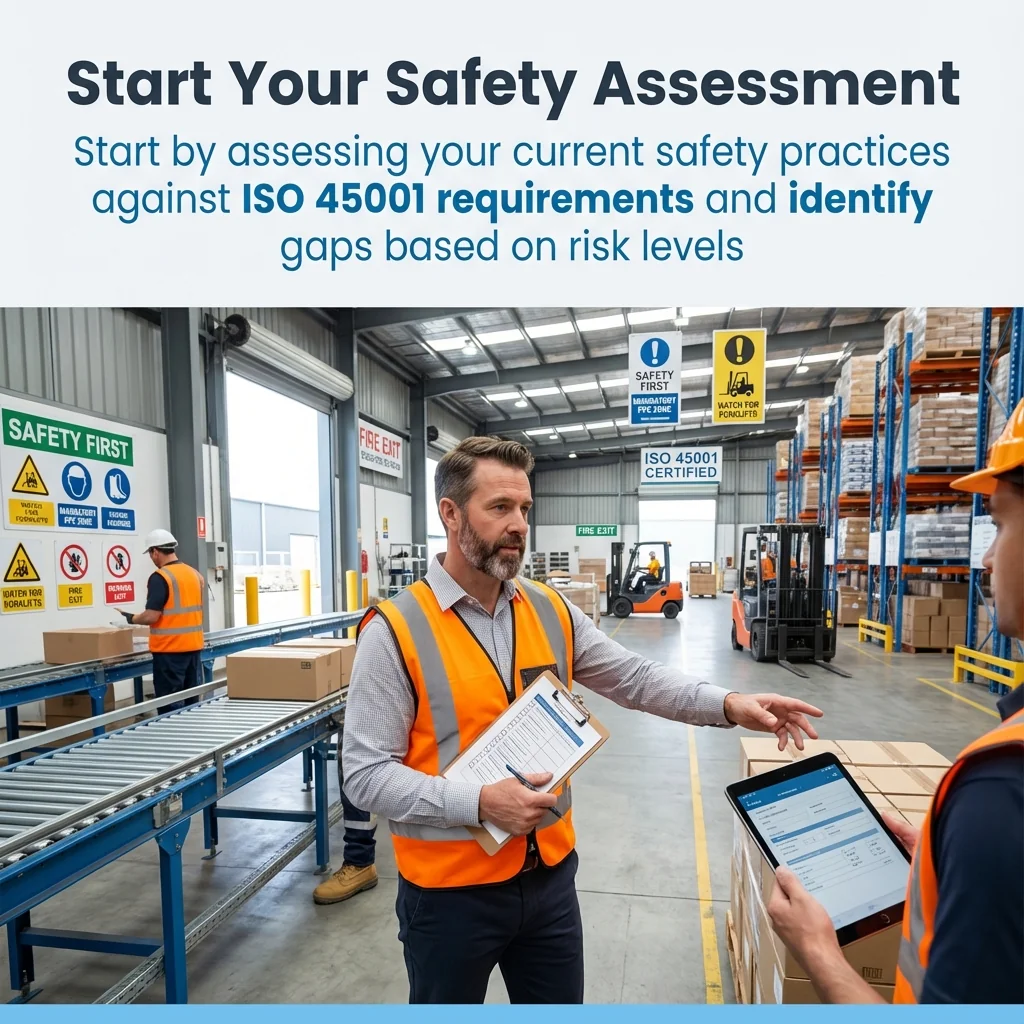
ISO 45001 represents the most authoritative framework for occupational health and safety management systems worldwide. This standard provides organizations with a systematic approach to preventing workplace injuries and illnesses while improving overall safety performance. ISO 45001 is the globally recognized standard for Occupational Health and Safety Management Systems, replacing OHSAS 18001. Unlike reactive safety approaches, ISO 45001 emphasizes proactive risk identification and control measures before incidents occur.
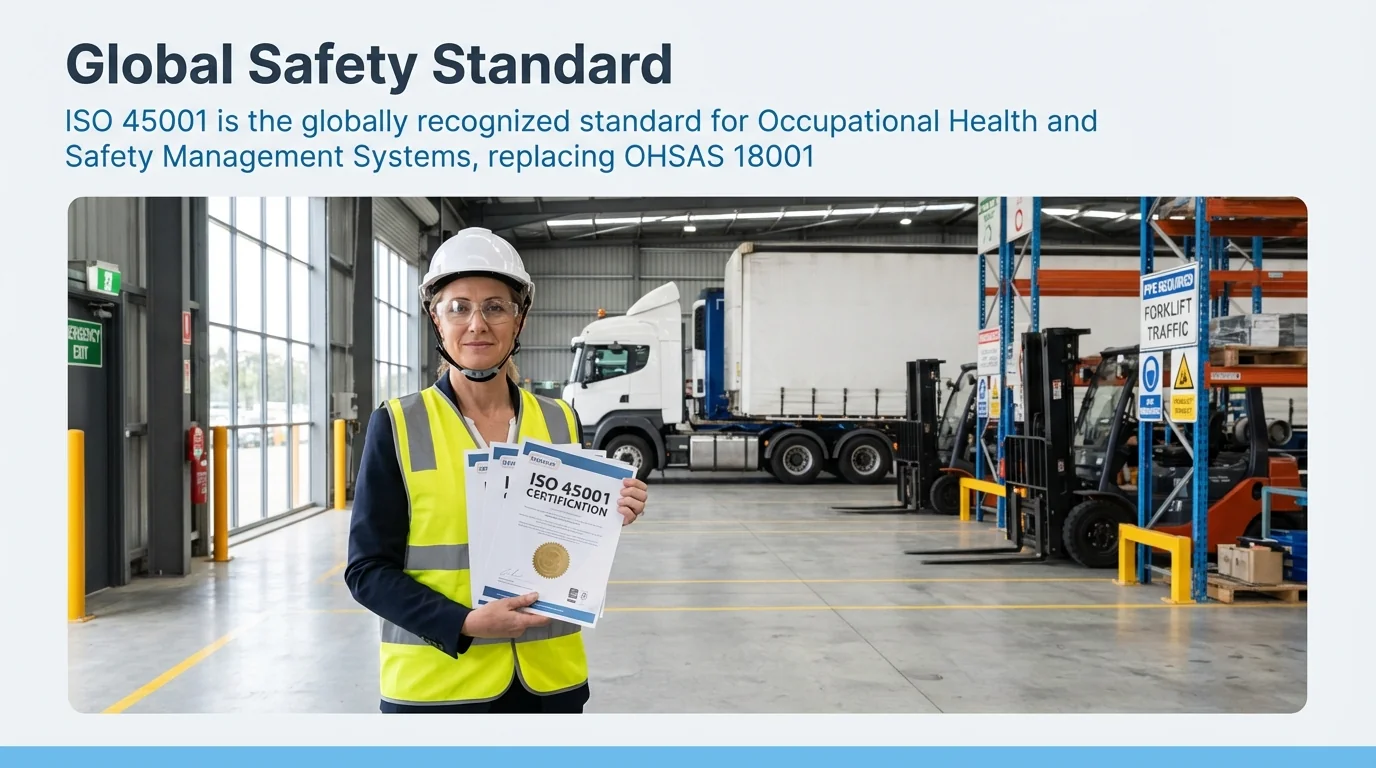
The standard applies to organizations of all sizes and industries. Whether you operate in manufacturing, logistics, construction, or services, ISO 45001 provides practical tools for protecting your workers.
For businesses managing supply chains with transport components, the connection between workplace safety standards and operational compliance becomes particularly significant. Understanding how systematic safety management supports broader business objectives helps organizations build resilient, sustainable operations.
What ISO 45001 Delivers to Your Organization
ISO 45001 provides a structured framework for managing occupational health and safety risks. The standard helps organizations identify hazards, assess risks, and implement controls before workers get hurt.
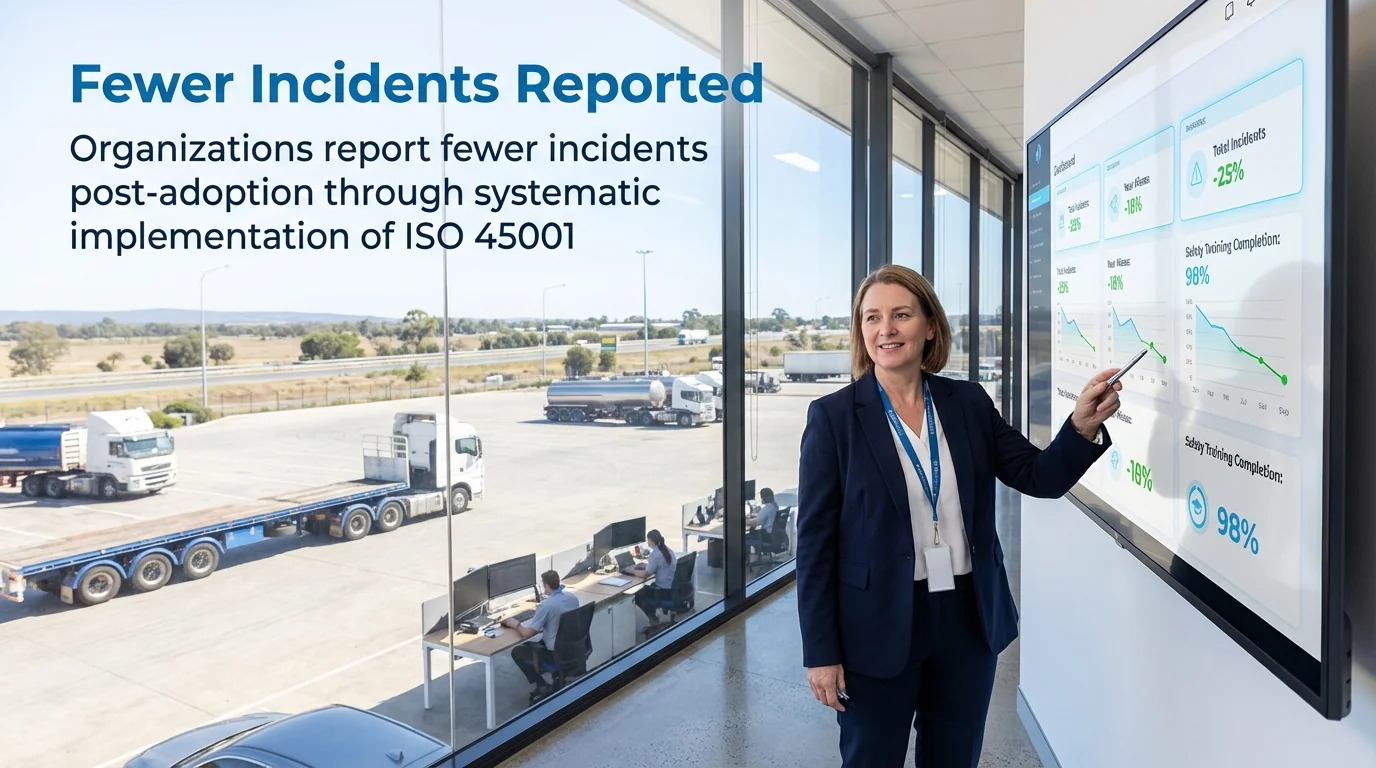
Organizations report fewer incidents post-adoption through systematic implementation of ISO 45001. This reduction happens because the management system requires regular hazard identification, risk assessment, and control verification processes.
Core Components of the Management System
The standard operates through a Plan-Do-Check-Act methodology. This cycle ensures continuous improvement rather than static compliance.
Organizations begin by establishing safety policies and objectives. Leadership defines roles, responsibilities, and accountability structures. Workers participate in identifying hazards and developing solutions.
Implementation involves operational controls, emergency preparedness, and competence development. Organizations document procedures, train workers, and communicate requirements throughout their operations.
Risk-Based Approach to Safety
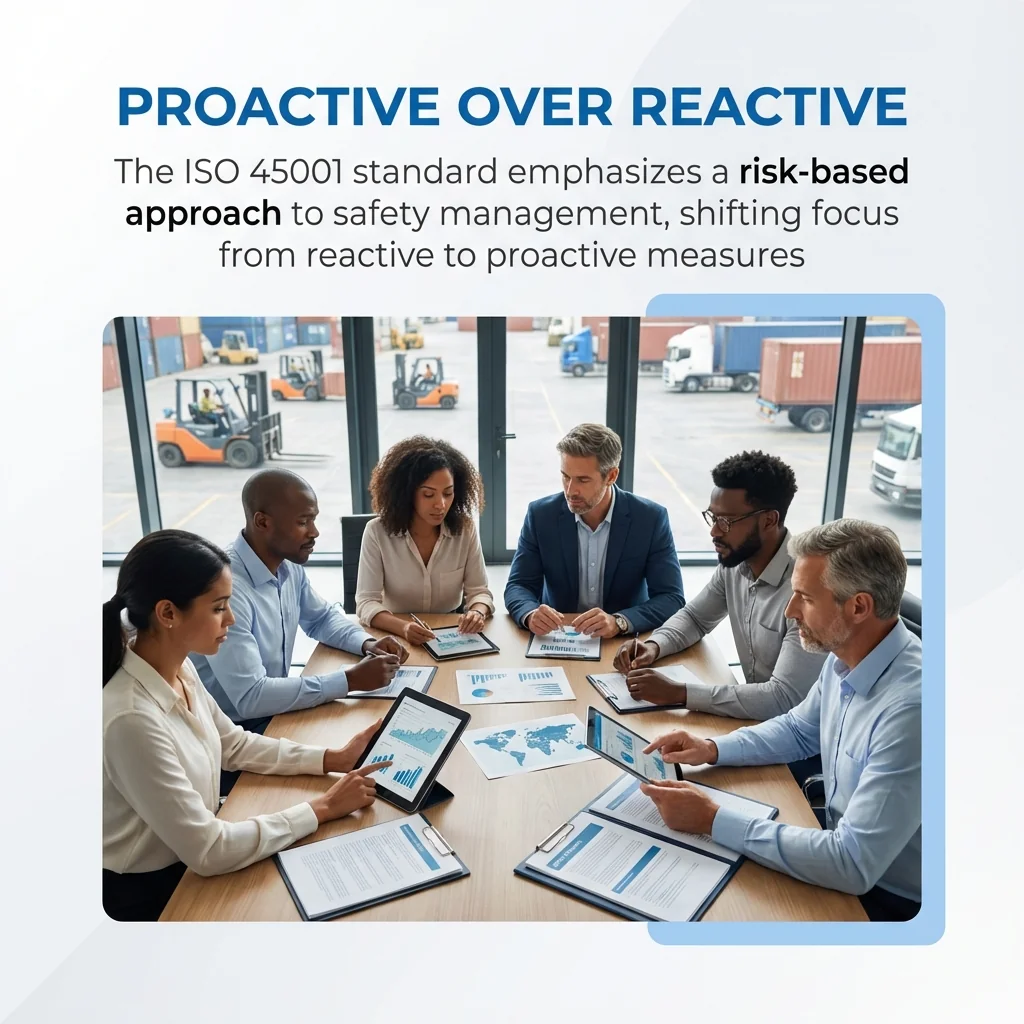
The ISO 45001 standard emphasizes a risk-based approach to safety management, shifting focus from reactive to proactive measures. This represents a fundamental change from previous approaches that responded to incidents after they occurred.
Risk assessment happens at multiple levels. Organizations evaluate routine operations, non-routine activities, and emergency situations. They consider physical, chemical, biological, and psychosocial hazards.
The assessment process examines how different hazards might harm workers. Organizations then prioritize controls based on risk severity and implement measures to eliminate or minimize exposure.
Why Organizations Need ISO 45001
Workplace injuries create direct costs through medical expenses and compensation claims. They also generate indirect costs through productivity losses, replacement worker training, and damaged equipment.
The financial impact extends beyond immediate incident costs. Insurance premiums increase following poor safety records. Organizations face potential legal penalties and regulatory scrutiny.
Business Performance Benefits
Organizations implementing ISO 45001 experience operational improvements beyond injury reduction. Safety management systems enhance process efficiency by eliminating hazards that cause production disruptions.
Worker morale improves when organizations demonstrate genuine commitment to safety. Engaged workers contribute more effectively and remain with employers longer. Reduced turnover lowers recruitment and training costs.
Supply chain partners increasingly require safety management system certification. Major contractors specify ISO 45001 compliance in tender requirements. Organizations without certification lose business opportunities.
Legal and Regulatory Compliance
ISO 45001 helps organizations meet international standards and reduce the risk of legal or regulatory penalties. The management system provides structured processes for identifying applicable legal requirements and ensuring compliance.
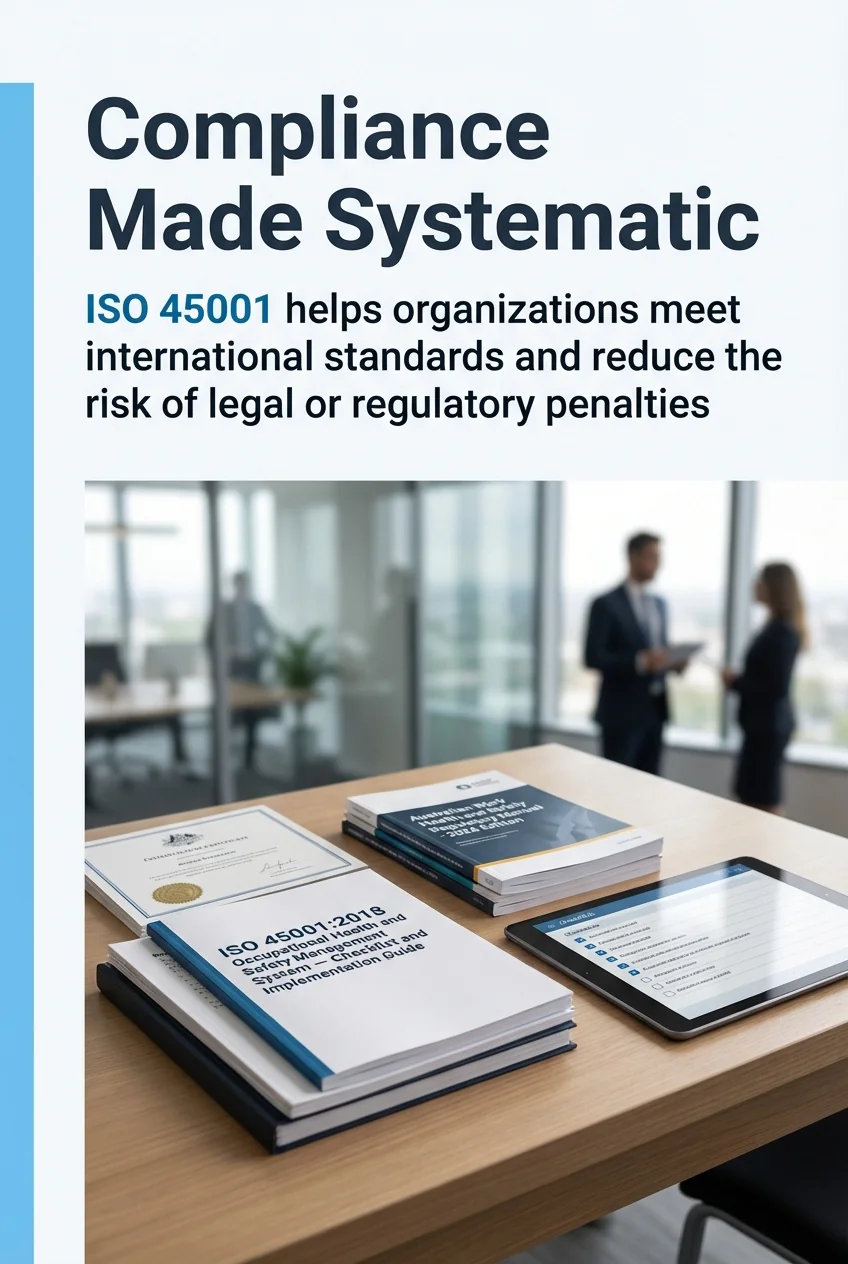
Organizations establish procedures for monitoring regulatory changes. They assess how new requirements affect operations and implement necessary controls. Documentation demonstrates due diligence efforts.
This systematic approach proves particularly valuable during regulatory inspections. Organizations can show auditors their hazard identification processes, control measures, and verification activities. The documented management system provides evidence of proactive safety management.
Key Benefits of ISO 45001 Implementation
The standard delivers measurable improvements across multiple business dimensions. Organizations track safety performance through leading and lagging indicators.
| Benefit Category | Impact Area | Organizational Value |
|---|---|---|
| Worker Protection | Injury and illness reduction | Healthier workforce with fewer lost time incidents |
| Cost Management | Direct and indirect costs | Lower insurance premiums and compensation claims |
| Operational Efficiency | Process disruptions | Fewer production stoppages from safety incidents |
| Market Access | Tender requirements | Qualification for contracts requiring certification |
| Stakeholder Confidence | Reputation management | Enhanced brand value and public perception |
Workplace Safety Culture Development
ISO 45001 requires leadership commitment and worker participation. Top management must demonstrate active involvement in safety management. This requirement creates cultural change within organizations.
Workers gain consultation rights throughout the management system. They participate in hazard identification, incident investigation, and improvement planning. This involvement builds ownership and accountability.
Organizations establish safety committees combining management and worker representatives. Regular meetings address emerging concerns and review performance data. Communication flows both upward and downward through organizational structures.
Integration with Other Management Systems
ISO 45001 shares common structure with ISO 9001 (quality) and ISO 14001 (environmental) standards. Organizations can integrate these management systems efficiently.
Shared processes reduce documentation requirements. Combined audits minimize disruption to operations. Integrated management reviews address multiple system requirements simultaneously.
This compatibility supports organizations managing multiple compliance frameworks. Supply chain operations often require quality, environmental, and safety certifications. Integrated systems streamline implementation and maintenance.
How ISO 45001 Framework Operates
The management system follows a systematic cycle. Organizations plan their approach, implement controls, monitor performance, and improve based on results.
Planning begins with understanding organizational context. This includes internal factors like organizational structure and external factors like regulatory requirements. Organizations identify interested parties and their safety expectations.
Leadership and Worker Participation Requirements
Top management establishes occupational health and safety policy. This policy commits the organization to worker consultation, continual improvement, and legal compliance.
Leadership assigns roles and responsibilities throughout the organization. They allocate resources for management system implementation. Accountability mechanisms ensure follow-through on safety commitments.
Worker consultation happens at all organizational levels. Organizations establish processes for workers to report hazards without fear of reprisal. They involve workers in change management affecting safety.
Operational Planning and Control
Organizations develop processes to address identified risks and opportunities. They establish operational controls for eliminating hazards or reducing risks.
Controls follow a hierarchy of effectiveness. Elimination removes the hazard completely. Substitution replaces hazardous materials or processes with safer alternatives. Engineering controls isolate workers from hazards.
Administrative controls and personal protective equipment provide additional protection layers. Organizations document control requirements and train workers on proper implementation.
Performance Evaluation Methods
ISO 45001 requires organizations to monitor and measure safety performance. They establish indicators tracking both leading measures (proactive activities) and lagging measures (incident outcomes).
Internal audits verify management system implementation. Organizations evaluate compliance with procedures and effectiveness of controls. Audit findings drive corrective actions and system improvements.
Management reviews assess overall system performance. Leadership examines audit results, incident data, and stakeholder feedback. They make decisions about resource allocation and strategic direction.
ISO 45001 Compared to OHSAS 18001
OHSAS 18001 served as the primary occupational health and safety standard before ISO 45001. Organizations holding OHSAS 18001 certification transitioned to ISO 45001 by the March 2021 deadline.
The new standard brought significant enhancements. ISO 45001 emphasizes organizational context and interested party requirements. It strengthens leadership accountability and worker participation provisions.
Enhanced Risk Management Approach
ISO 45001 adopts a broader risk perspective than OHSAS 18001. Organizations consider risks and opportunities affecting management system outcomes, not just occupational health and safety risks.
This expanded view addresses factors that might prevent the organization from achieving safety objectives. It includes strategic risks, operational dependencies, and resource constraints.
The approach aligns safety management with business planning. Organizations integrate safety considerations into decision-making processes across all levels.
Structural Alignment with Other Standards
ISO 45001 uses Annex SL high-level structure. This common framework applies across all ISO management system standards.
Organizations benefit from consistent terminology and requirements. Processes established for one management system support others. Training programs address common elements once rather than repeatedly.
The structural alignment particularly helps organizations operating integrated management systems. They can develop unified documentation, conduct combined audits, and streamline management reviews.
Organizations That Benefit from ISO 45001
Any organization employing workers can implement ISO 45001. The standard applies regardless of size, sector, or location.
High-risk industries gain particular value. Construction, manufacturing, mining, and logistics operations face significant workplace hazards. Systematic management approaches reduce exposure and prevent incidents.
Small to Medium Enterprises
Smaller organizations often lack dedicated safety resources. ISO 45001 provides structure for managing safety effectively within resource constraints.
The standard scales to organizational complexity. Small businesses implement simpler processes appropriate to their operations. They still achieve systematic hazard identification and risk control.
Certification helps smaller organizations compete for contracts with larger companies. Many supply chain partners require safety management system certification from vendors and contractors.
Organizations with Complex Supply Chains
Companies managing extensive supply chains face distributed safety risks. ISO 45001 helps coordinate safety requirements across multiple locations and contractors.
The standard provides framework for evaluating contractor safety performance. Organizations establish clear expectations and verification processes. They can demonstrate due diligence in contractor selection and management.
For businesses operating in the Australian transport sector, systematic safety management aligns with Chain of Responsibility obligations. The structured approach to hazard identification and control supports compliance with Heavy Vehicle National Law requirements. Organizations can integrate ISO 45001 processes with CoR safety systems for enhanced regulatory compliance.
Core Requirements of the Standard
ISO 45001 specifies requirements across ten main clauses. Organizations must address each requirement to achieve certification.
Context of the organization requires understanding internal and external factors affecting safety management. Organizations identify interested parties including workers, contractors, regulators, and customers.
Documented Information Requirements
The standard mandates specific documented information. Organizations must maintain occupational health and safety policy, objectives, and risk assessment results.
Operational controls require documentation appropriate to risk levels. Simple operations need basic procedures. Complex activities with significant hazards require detailed work instructions.
Organizations preserve documented information demonstrating management system operation. They keep records of monitoring results, audits, incidents, and management reviews. These records prove system effectiveness during certification audits.
Competence and Awareness Development
ISO 45001 requires organizations to ensure worker competence affecting safety performance. They identify training needs and provide appropriate development.
Training addresses specific job hazards and control measures. Workers learn emergency procedures and incident reporting requirements. They understand their consultation rights and responsibilities.
Organizations evaluate training effectiveness. They verify workers can perform tasks safely and recognize hazards. Implementing a comprehensive safety management system requires ongoing competence development programs.
Emergency Preparedness and Response
Organizations must prepare for potential emergency situations. They identify scenarios that could affect worker safety and develop response procedures.
Emergency plans address evacuation, first aid, and communication protocols. Organizations train workers on emergency procedures and conduct regular drills.
Testing reveals gaps in emergency preparedness. Organizations update plans based on drill results and lessons learned from actual incidents. This continuous improvement ensures effective emergency response.
Certification Process and Requirements
Achieving ISO 45001 certification involves structured steps. Organizations typically spend 6-12 months developing and implementing the management system before pursuing formal certification.
The process begins with gap analysis. Organizations compare current practices against standard requirements. This assessment identifies areas needing development or enhancement.
Implementation Planning
Organizations establish project teams combining management and worker representatives. They develop implementation timelines with clear milestones and responsibilities.
Resource allocation addresses training needs, documentation development, and system implementation. Management commitment proves essential for successful deployment.
Many organizations engage consultants for implementation support. Examining effective safety management system examples helps organizations understand practical application.
Certification Audit Process
External certification requires third-party audit by accredited certification body. The audit occurs in two stages.
Stage one reviews documented information. Auditors verify the management system addresses all standard requirements. They identify any documentation gaps requiring correction.
Stage two examines implementation and effectiveness. Auditors interview workers, observe activities, and review records. They verify the organization operates according to documented procedures.
Successful audits result in certification. Organizations receive certificates valid for three years with annual surveillance audits maintaining certification status.
Continual Improvement Through ISO 45001
The standard requires organizations to continuously improve safety performance. Improvement happens through systematic evaluation and action.
Organizations analyze incident data to identify patterns and trends. Root cause analysis reveals underlying system weaknesses rather than blaming individuals.
Corrective Action Processes
When incidents or non-conformities occur, organizations must take corrective action. They investigate the situation, identify causes, and implement solutions.
Effective corrective action addresses system causes. Organizations look beyond immediate circumstances to examine contributing factors. They consider whether procedures need updating, training requires enhancement, or controls need strengthening.
Verification ensures corrective actions achieve intended results. Organizations monitor relevant indicators and conduct follow-up assessments. This closed-loop process prevents recurrence.
Management Review and Strategic Direction
Top management reviews safety performance at planned intervals. They examine whether the management system achieves intended outcomes and remains suitable for organizational context.
Reviews consider internal and external changes affecting safety management. New regulations, technology developments, and operational modifications create review inputs.
Management decisions allocate resources for improvement initiatives. They update objectives, modify processes, and enhance capabilities based on performance data and emerging needs.
Key Questions About ISO 45001
Which of these is a main objective of ISO 45001?
A main objective involves providing frameworks for organizations to proactively manage occupational health and safety risks. The standard aims to reduce workplace incidents by identifying hazards and implementing effective controls.
What is one advantage of ISO 45001 when it comes to integrating other management systems?
ISO 45001 uses the same high-level structure as other ISO management standards like ISO 9001 and ISO 14001. This compatibility allows organizations to integrate systems for streamlined processes and improved efficiency.
What is the uniqueness of ISO 45001 standard?
The standard takes a proactive, risk-based approach emphasizing prevention rather than reaction. It represents the first international standard setting requirements for occupational health and safety management systems applicable across all organization sizes and sectors.
Building Sustainable Workplace Safety
ISO 45001 provides tested frameworks for protecting workers and improving safety outcomes. Organizations gain systematic approaches to hazard identification, risk assessment, and control implementation.
The standard delivers value beyond injury prevention. Improved safety performance supports business objectives through reduced costs, enhanced productivity, and stronger stakeholder confidence.
Implementation requires commitment from leadership and participation from workers. Organizations succeed when they view safety management as business enabler rather than compliance burden. Modern safety management system software can streamline implementation and ongoing maintenance.
Start by assessing your current safety practices against ISO 45001 requirements. Identify gaps and prioritize improvements based on risk levels. Engage your workforce throughout the process to build ownership and sustainable change.