
A Safety Management System (SMS) operates through four interdependent pillars that work together to create sustainable safety outcomes. These components are Safety Policy, Safety Risk Management, Safety Assurance, and Safety Promotion. Each pillar serves a distinct function while reinforcing the others.
Safety Policy establishes the organizational framework through management commitment and accountability structures. Safety Risk Management identifies hazards and implements controls to mitigate risks. Safety Assurance monitors performance and verifies that safety controls remain effective. Safety Promotion builds the culture through training, communication, and continuous improvement initiatives.
Organizations implementing these four components create systems that transform safety from a compliance exercise into an operational advantage. The framework provides structure while allowing adaptation to industry-specific requirements. Understanding how these components function individually and collectively enables businesses to build robust safety management systems that protect workers, reduce incidents, and strengthen operational performance.
What is a Safety Management System (SMS)?
A safety management system is a structured approach to managing safety risk within an organization. The system integrates safety into daily operations through documented policies, defined processes, and assigned accountabilities.
SMS frameworks provide the architecture for identifying hazards before they cause harm. Organizations use these systems to establish clear safety objectives, measure performance against those objectives, and continuously improve safety outcomes. The systematic approach replaces reactive safety management with proactive risk control.
Modern SMS structures follow international standards that define core components and implementation requirements. Aviation rules and guidance consistently describe SMS as comprising Safety Policy, Safety Risk Management, Safety Assurance, and Safety Promotion. These four pillars create the foundation for effective safety management across industries.
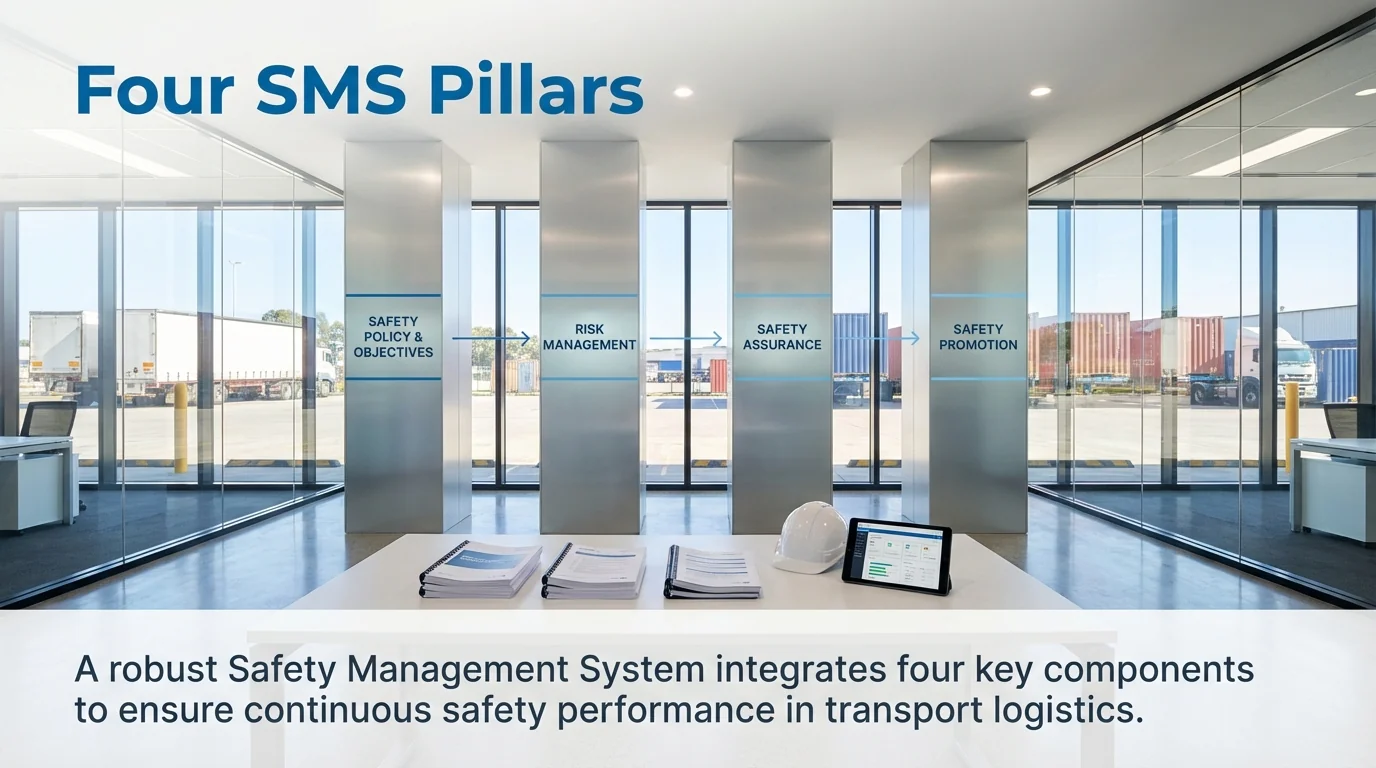
The framework applies beyond aviation to any organization managing operational safety risks. Rail operators, construction firms, manufacturing facilities, and logistics providers adapt SMS principles to their specific operational contexts. The core components remain consistent while implementation details reflect industry-specific hazards and regulatory requirements.
The Four Components of SMS: An Overview
The four components of SMS create a complete management cycle. Each component addresses a specific aspect of safety management while depending on the others for effectiveness.
Safety Policy sets the direction and establishes organizational commitment. This component answers the question of who is accountable and what the organization commits to achieving. Without clear policy, the remaining components lack authority and resources.
Safety Risk Management provides the methodology for identifying and controlling hazards. This systematic process ensures organizations address risks before incidents occur. The component translates policy commitments into practical risk controls.
Safety Assurance validates that the safety management system delivers intended results. Performance monitoring, audits, and data analysis verify that controls remain effective. This component closes the feedback loop between risk management actions and actual safety outcomes.
Safety Promotion builds the human element of the safety management system. Training, communication, and culture development ensure workers understand their roles and actively participate in safety processes. This component transforms documented systems into lived practices.
| Component | Primary Function | Key Activities |
|---|---|---|
| Safety Policy | Establishes commitment and structure | Define accountabilities, objectives, documentation |
| Safety Risk Management | Identifies and controls hazards | Hazard identification, risk assessment, mitigation |
| Safety Assurance | Monitors system effectiveness | Performance measurement, audits, data analysis |
| Safety Promotion | Builds safety culture | Training, communication, continuous improvement |
These components operate as an integrated system rather than isolated activities. Policy enables risk management. Risk management informs assurance activities. Assurance findings drive promotion initiatives. The cycle repeats continuously as organizations learn and improve.
Component 1: Safety Policy
Safety Policy establishes the organizational foundation for the entire safety management system. This component defines management commitment, assigns accountability, and sets safety objectives that drive all subsequent safety activities.
Management Commitment and the Accountable Executive
The accountable executive is the single person with ultimate authority and responsibility for safety management system implementation. This individual holds decision-making power over resources, priorities, and organizational direction. The accountable executive role cannot be delegated or shared across multiple positions.
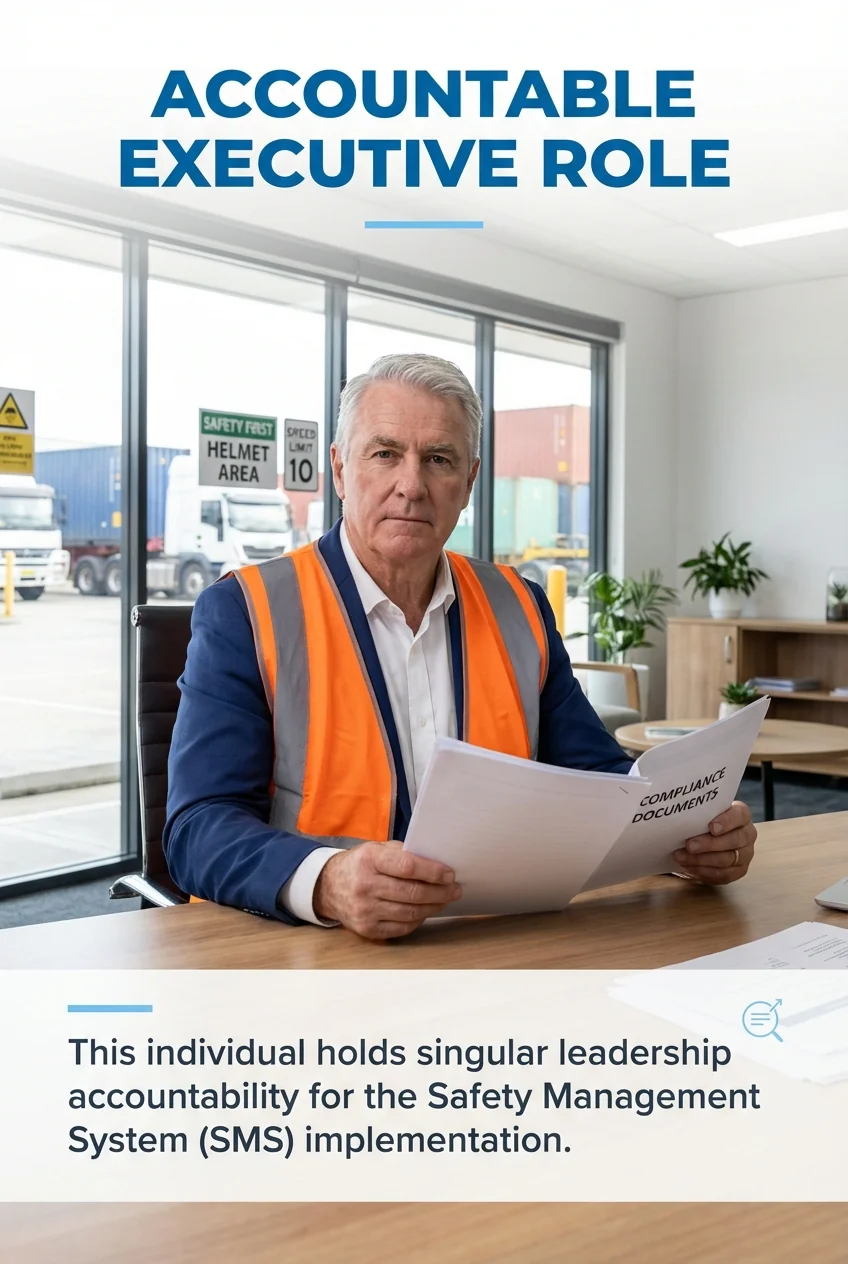
Management commitment extends beyond the accountable executive to include senior leadership participation in safety activities. Leaders demonstrate commitment through resource allocation, active participation in safety meetings, and visible support for safety initiatives. Actions matter more than written statements when establishing credible commitment.
Organizations document management commitment through formal safety policy statements. These documents articulate safety objectives, define the scope of the safety management system, and communicate expectations to all workers. The policy statement requires regular review and updates as organizational context changes.
Organizational Structure and Documentation
Safety Policy defines the organizational structure that supports safety management. Clear reporting relationships ensure safety information reaches decision-makers. Defined roles and responsibilities prevent gaps in safety accountabilities.
Documentation requirements specify what records the organization maintains. Safety policies, procedures, forms, and records create the written foundation for the safety management system. Document control processes ensure workers access current, approved information.
The organizational structure includes safety committees, working groups, and communication channels. These structures facilitate worker participation in safety management. Representation from different operational areas ensures diverse perspectives inform safety decisions.
Safety objectives translate policy commitments into measurable targets. Objectives should be specific, measurable, achievable, relevant, and time-bound. Organizations track progress toward objectives through the Safety Assurance component, creating accountability for safety performance improvements.
Component 2: Safety Risk Management (SRM)
Safety Risk Management provides the systematic process for identifying hazards and implementing controls. This component transforms reactive incident response into proactive risk prevention through structured analysis and mitigation strategies.
Hazard Identification Processes
Hazard identification begins with establishing multiple reporting channels. Workers need clear processes for reporting observed hazards, near misses, and unsafe conditions. Anonymous reporting options increase participation by reducing fear of repercussions.
Construction guidance lists hazard prevention and control as a central component, involving implementation of procedures and physical controls to eliminate or reduce identified risks. The identification process combines reactive analysis of incidents with proactive workplace inspections and job hazard analyses.
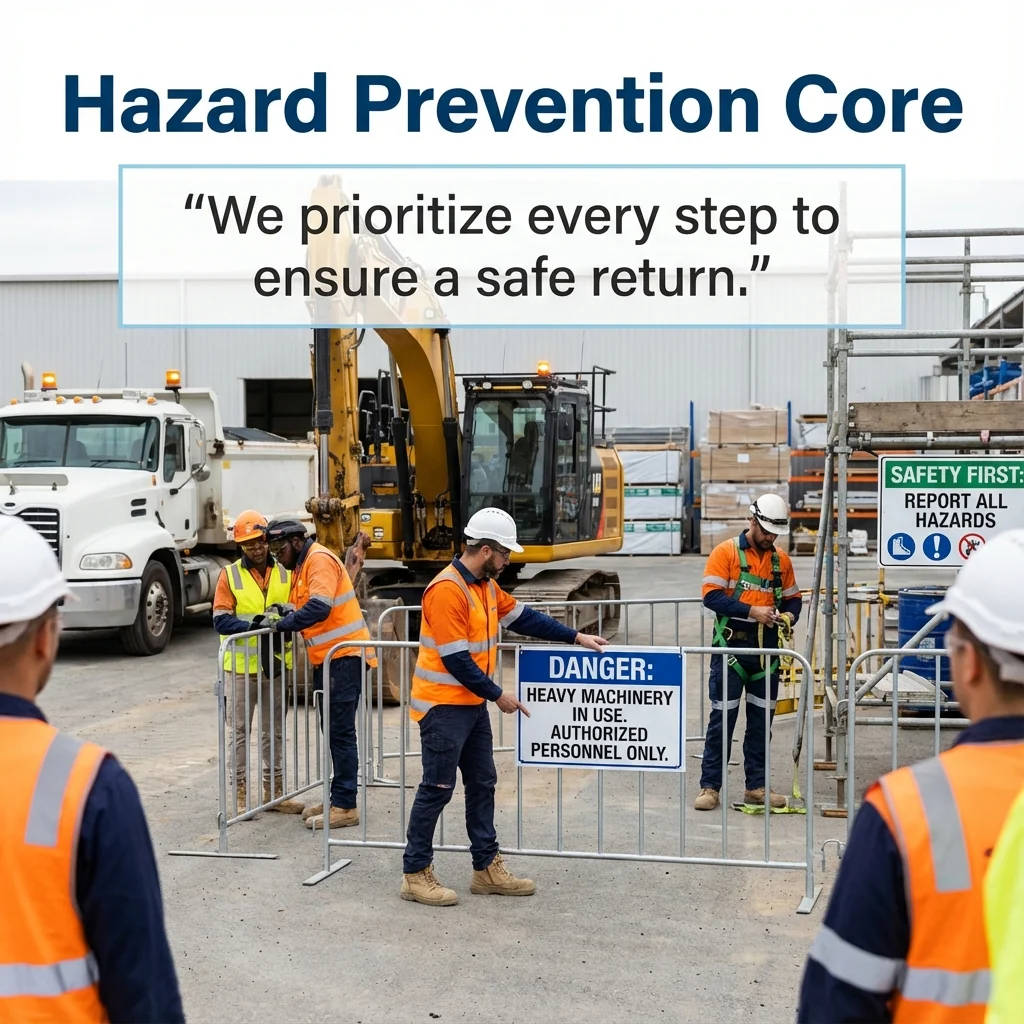
Organizations maintain hazard registers that document identified hazards, associated risks, and implemented controls. The register becomes a living document that evolves as new hazards emerge and existing hazards are controlled. Regular review ensures the register remains current and complete.
Hazard identification methods include workplace inspections, safety audits, incident investigations, and change management reviews. Different methods reveal different types of hazards. A robust system employs multiple identification approaches to capture the full range of operational risks.
Risk Assessment and Mitigation Strategies
PSM programs require process hazard analysis, using structured methods to identify and analyze hazards associated with chemical processes to prevent catastrophic releases. Organizations adapt these structured methods to their specific operational contexts and hazard profiles.
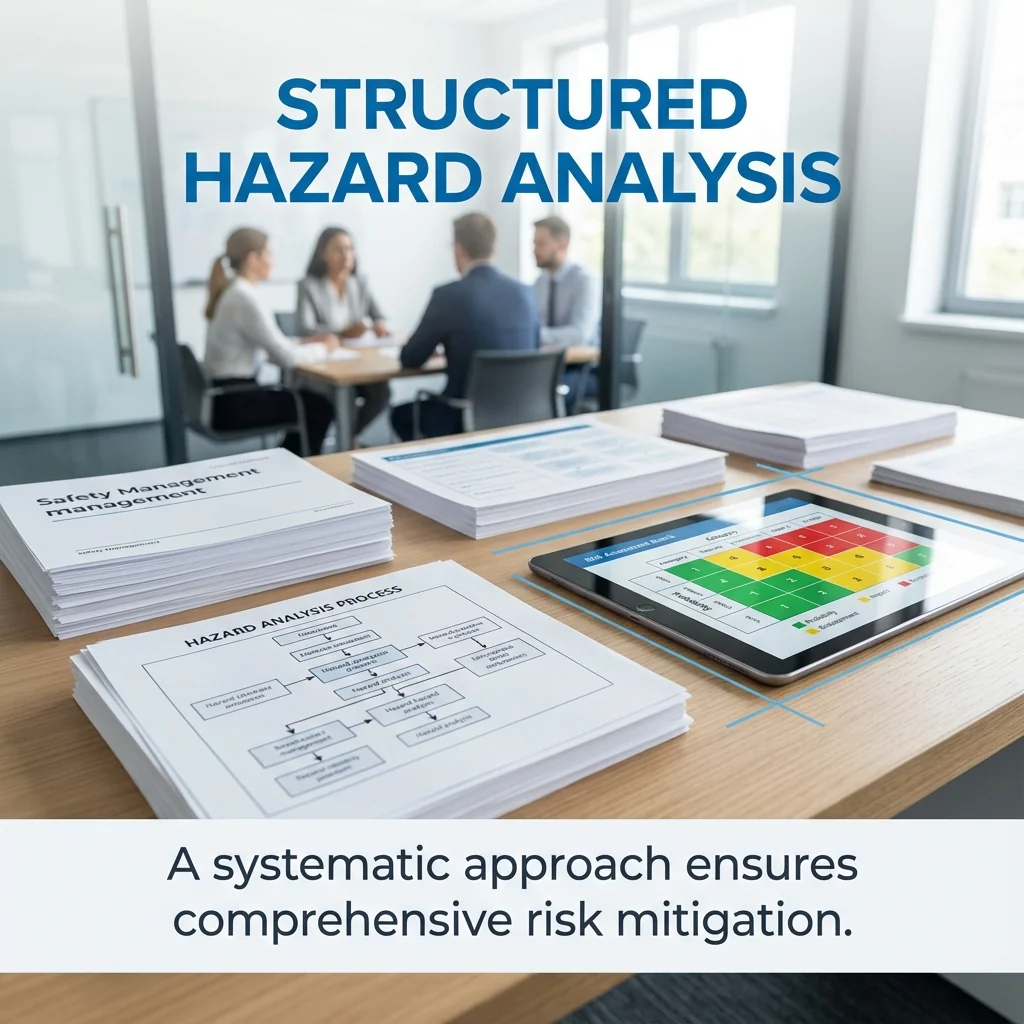
Risk assessment evaluates the likelihood and consequence of identified hazards. The assessment determines which risks require immediate attention and which can be managed through routine controls. Standardized risk matrices help ensure consistent evaluation across different hazards and operational areas.
Mitigation strategies follow the hierarchy of controls. Elimination removes the hazard entirely. Substitution replaces hazardous processes with safer alternatives. Engineering controls physically prevent exposure. Administrative controls modify work practices. Personal protective equipment provides the last line of defense when other controls cannot sufficiently reduce risk.
Control implementation requires documentation, resource allocation, and verification. Organizations document what controls apply to each hazard, assign responsibility for implementation, and establish timelines for completion. Follow-up verification confirms controls are in place and functioning as intended.
Risk acceptance decisions occur when residual risk remains after implementing reasonably practicable controls. Senior management must formally accept these residual risks based on documented risk assessment findings. The acceptance process creates accountability for risk decisions and ensures appropriate management awareness.
Component 3: Safety Assurance (SA)
Safety Assurance validates that the safety management system delivers intended safety outcomes. This component provides the feedback mechanisms that enable continuous improvement and demonstrate regulatory compliance.
Safety Performance Monitoring
Performance monitoring tracks leading and lagging indicators. Lagging indicators measure outcomes such as incident rates, injury severity, and lost-time frequency. These metrics reveal safety performance results but provide limited insight into future risk.
Leading indicators measure activities that prevent incidents. Hazard report volumes, inspection completion rates, and training participation track proactive safety activities. Organizations that monitor leading indicators can intervene before adverse outcomes occur.
Data collection systems must be reliable, consistent, and timely. Manual data collection introduces errors and delays. Technology solutions such as safety management system software automate data capture, improve accuracy, and accelerate reporting cycles.
Performance reporting provides safety information to decision-makers at appropriate frequencies. Operational managers receive frequent reports that enable rapid response to emerging issues. Senior leadership receives periodic summaries that inform strategic decisions. Board-level reporting demonstrates governance and oversight.
Audits and Management Reviews
Internal audits verify compliance with safety management system requirements. Auditors examine documentation, interview workers, and observe operations to assess implementation effectiveness. Audit findings identify gaps between documented procedures and actual practices.
Audit programs define scope, frequency, and methodology. Risk-based audit planning focuses resources on higher-risk operations and critical system elements. Qualified auditors with appropriate independence ensure objective assessment.
Management reviews occur at planned intervals to evaluate safety management system performance. Senior leadership examines audit findings, performance data, and improvement opportunities. The review process generates decisions about resource allocation, policy changes, and strategic direction.
Corrective action processes address identified deficiencies. Organizations investigate root causes, implement corrective measures, and verify effectiveness. Closed-loop corrective action prevents recurring issues and drives continuous improvement.
External audits and regulatory inspections provide additional assurance. Third-party auditors offer independent perspectives on system effectiveness. Regulatory compliance audits verify adherence to legal requirements and industry standards.
Component 4: Safety Promotion
Safety Promotion develops the organizational culture and individual competencies required for safety management system effectiveness. This component transforms documented policies and procedures into workforce knowledge and behavior.
Safety Training and Education
A health and safety management system framework includes health and safety training and instruction as a pillar, focusing on ensuring workers understand hazards, controls, and their roles. Training programs must address role-specific competency requirements and general safety awareness.
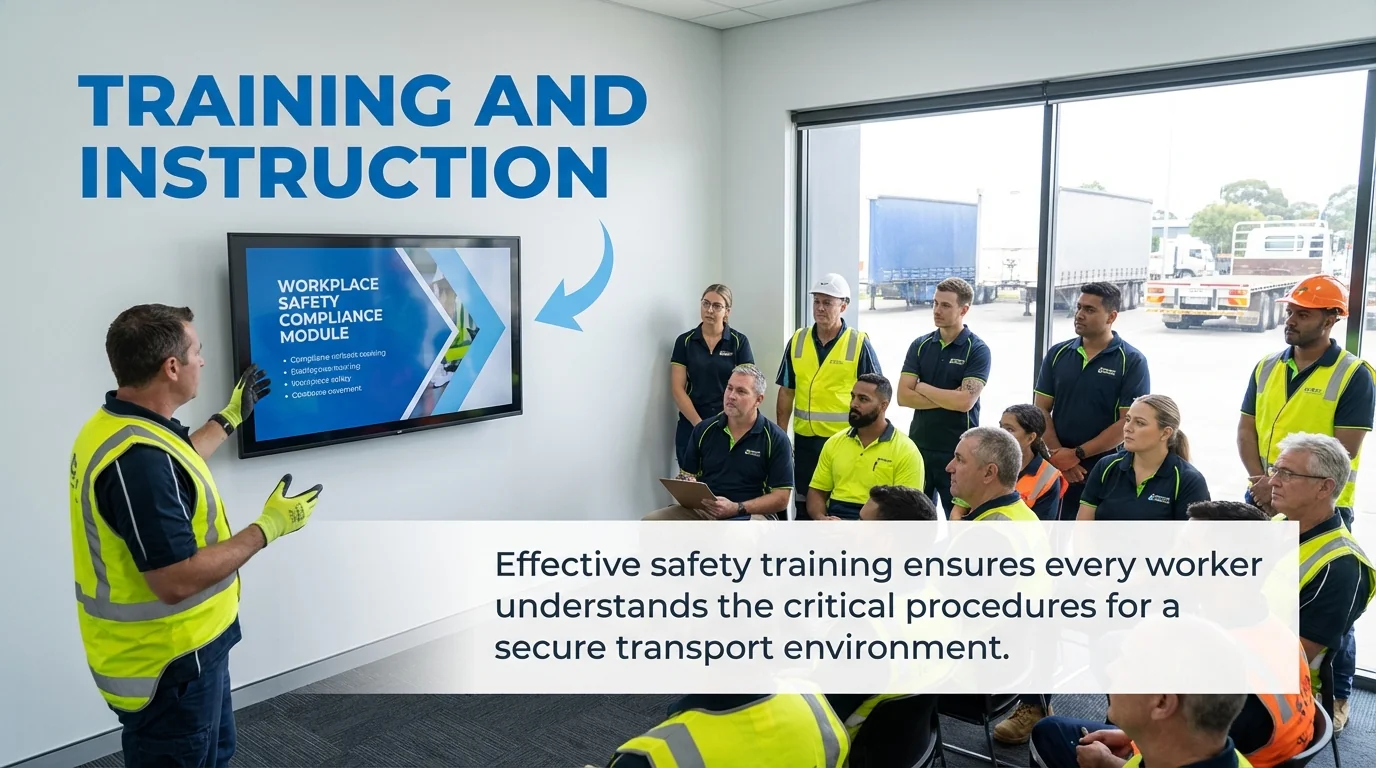
Initial training provides foundational knowledge for new workers. Orientation programs cover organizational safety policies, emergency procedures, and reporting requirements. Role-specific training addresses the hazards and controls relevant to particular job functions.
Refresher training maintains competency over time. Organizations establish training frequencies based on risk levels, regulatory requirements, and competency assessment results. Documentation systems track training completion and identify workers requiring updates.
Training effectiveness evaluation verifies that workers can apply learned knowledge. Competency assessments, workplace observations, and performance metrics indicate whether training translates into improved safety practices. Poor performance outcomes trigger training program reviews and improvements.
Different delivery methods suit different learning objectives. Classroom training works well for knowledge transfer. Hands-on practical training develops skills. E-learning provides flexibility for geographically dispersed workforces. Organizations combine methods to optimize learning outcomes while managing training costs.
Building Safety Culture
Safety culture reflects shared values, beliefs, and behaviors regarding safety. Strong safety cultures view safety as integral to operations rather than separate from production goals. Workers feel empowered to raise concerns and stop work when unsafe conditions exist.
Leadership behavior shapes safety culture more than policies or procedures. When leaders prioritize safety in resource decisions, participate in safety activities, and respond constructively to safety concerns, workers perceive that safety matters. Inconsistent leadership signals undermine written commitments.
Communication processes share safety information throughout the organization. Regular safety meetings, toolbox talks, and safety bulletins keep safety visible. Two-way communication enables workers to ask questions, challenge assumptions, and contribute ideas. The quality of dialogue matters more than the volume of information distributed.
Recognition programs reinforce desired safety behaviors. Organizations acknowledge workers who report hazards, suggest improvements, or demonstrate safety leadership. Recognition should celebrate contributions to safety rather than simply rewarding the absence of incidents.
Safety culture assessment tools measure current culture and identify improvement opportunities. Surveys, focus groups, and behavioral observations reveal worker perceptions and actual practices. Assessment findings inform targeted culture improvement initiatives and track progress over time.
How the Four Components Work Together
The four components create an integrated management system through interconnected processes and feedback loops. Each component depends on and strengthens the others.
Safety Policy provides the authority and resources that enable Safety Risk Management. Without management commitment and clear accountabilities, hazard identification and risk assessment lack organizational support. Policy establishes the “why” that motivates risk management activities.
Safety Risk Management generates the controls that Safety Assurance monitors. Assurance activities measure whether implemented controls reduce risk as intended. Performance data feeds back into risk assessment, triggering control adjustments when effectiveness falls short of expectations.
Safety Assurance findings drive Safety Promotion priorities. Audit results revealing knowledge gaps inform training needs. Performance data showing weak hazard reporting volumes triggers culture improvement initiatives. Assurance insights ensure promotion activities address actual system weaknesses rather than assumed needs.
Safety Promotion develops the workforce capabilities required for effective Safety Policy implementation. Trained workers understand their safety responsibilities. Strong safety culture motivates participation in hazard identification. Promotion activities transform written policies into organizational reality.
| Component Integration | Connection Point | Example |
|---|---|---|
| Policy → Risk Management | Provides authority and resources | Accountable executive approves risk assessment procedures |
| Risk Management → Assurance | Defines what to monitor | Implemented controls become performance indicators |
| Assurance → Promotion | Identifies improvement needs | Audit findings reveal training gaps |
| Promotion → Policy | Enables implementation | Trained workforce executes policy requirements |
The continuous improvement cycle connects all four components. Organizations identify opportunities through assurance activities. Management reviews assess findings and authorize improvements. Risk management processes incorporate improvements into updated controls. Training and communication promote new practices. The cycle repeats as organizations progressively strengthen safety performance.
Organizations implementing effective safety management systems recognize that component integration matters more than individual component excellence. A strong policy with weak assurance lacks feedback for improvement. Excellent risk management without safety promotion fails to engage the workforce. Integration creates the synergy that delivers sustainable safety outcomes.
Implementing SMS Components in Your Organization
Successful implementation requires systematic planning, phased rollout, and ongoing refinement. Organizations should approach SMS implementation as a multi-year journey rather than a one-time project.
Assessment and Planning
Begin with a gap analysis comparing current safety practices against SMS component requirements. The assessment identifies what elements already exist and what needs development. Organizations with existing safety programs often discover they possess SMS elements operating in disconnected ways.
Implementation planning prioritizes components based on regulatory requirements, operational risks, and organizational readiness. Most organizations begin with Safety Policy to establish the foundation and management commitment. Risk management processes typically follow, then assurance and promotion components.
Resource planning addresses people, systems, and budget requirements. SMS implementation requires dedicated resources for procedure development, training delivery, and system administration. Underestimating resource needs leads to implementation delays and incomplete systems.
Documentation and System Development
Document development creates the policies, procedures, and forms that operationalize SMS components. Documentation should be clear, concise, and accessible to workers who need to apply it. Overly complex documentation reduces compliance and effectiveness.
Technology selection supports SMS processes without creating administrative burden. Essential safety management tools include hazard reporting systems, audit management platforms, and training tracking solutions. Organizations should prioritize functionality that addresses their specific operational requirements.
Pilot testing validates documentation and systems before full deployment. Testing with a limited operational area reveals practical issues and enables refinement. Pilot participants provide feedback that improves system usability and acceptance.
Training and Rollout
Comprehensive training prepares the workforce for SMS implementation. Training content should address what is changing, why it matters, and what each person needs to do differently. Role-specific training ensures workers understand their particular responsibilities within the safety management system.
Phased rollout manages change impacts and allows learning from early implementation. Organizations can implement SMS components sequentially, by operational area, or by risk level. The chosen approach should match organizational culture and change capacity.
Communication throughout implementation maintains awareness and builds support. Regular updates inform workers about progress, celebrate successes, and address concerns. Leadership visibility during rollout demonstrates commitment and reinforces importance.
Monitoring and Continuous Improvement
Post-implementation monitoring tracks adoption and identifies improvement needs. Early performance data reveals whether workers are using new systems and whether those systems deliver intended results. Organizations should expect initial implementation challenges and plan for refinement.
Regular management reviews assess system maturity and effectiveness. Reviews examine compliance levels, performance trends, and stakeholder feedback. The review process generates decisions about system adjustments and resource allocation.
Organizations benefit from examining effective safety management system examples from similar industries. Learning from others’ experiences accelerates improvement while avoiding common implementation pitfalls.
Continuous improvement processes formalize how the organization identifies and implements enhancements. Improvement suggestions from workers, audit findings, and performance data all feed into a structured evaluation and implementation process. The safety management system evolves as operational context and risk profiles change.
Organizations implementing SMS components according to recognized standards can pursue certification under frameworks such as ISO 45001 management systems. Certification provides external validation of system effectiveness and demonstrates commitment to safety excellence.
The four components of a safety management system create a structured approach to operational safety. Safety Policy establishes the organizational foundation and management commitment. Safety Risk Management identifies and controls hazards before they cause harm. Safety Assurance validates system effectiveness through monitoring and review. Safety Promotion builds the culture and competencies required for sustained safety performance.
Organizations that implement these components as an integrated system rather than isolated activities achieve superior safety outcomes. The components reinforce each other through feedback loops and interconnected processes. Continuous improvement occurs naturally as assurance findings drive refinement of policies, risk controls, and promotion activities.
Implementation requires systematic planning, adequate resources, and sustained leadership commitment. Organizations should approach SMS development as a maturity journey rather than a compliance project. Those that invest in building robust safety management systems realize operational benefits that extend beyond regulatory compliance to include improved efficiency, reduced costs, and strengthened organizational reputation.
For organizations navigating these requirements, troubleshooting common SMS implementation issues becomes easier with systematic approaches to each component. Understanding why SMS matters helps maintain focus during challenging implementation phases. The result is a safety management system that protects workers, reduces incidents, and supports sustainable operational performance.